
Orderflow Atlas
- Yardımcı programlar
- Sürüm: 1.30
- Etkinleştirmeler: 5

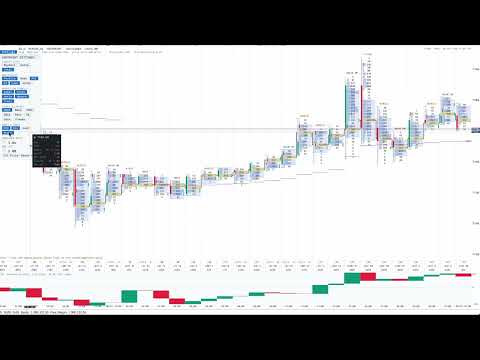
MT5 was never built to draw a footprint chart. Orderflow Atlas replaces the chart entirely.
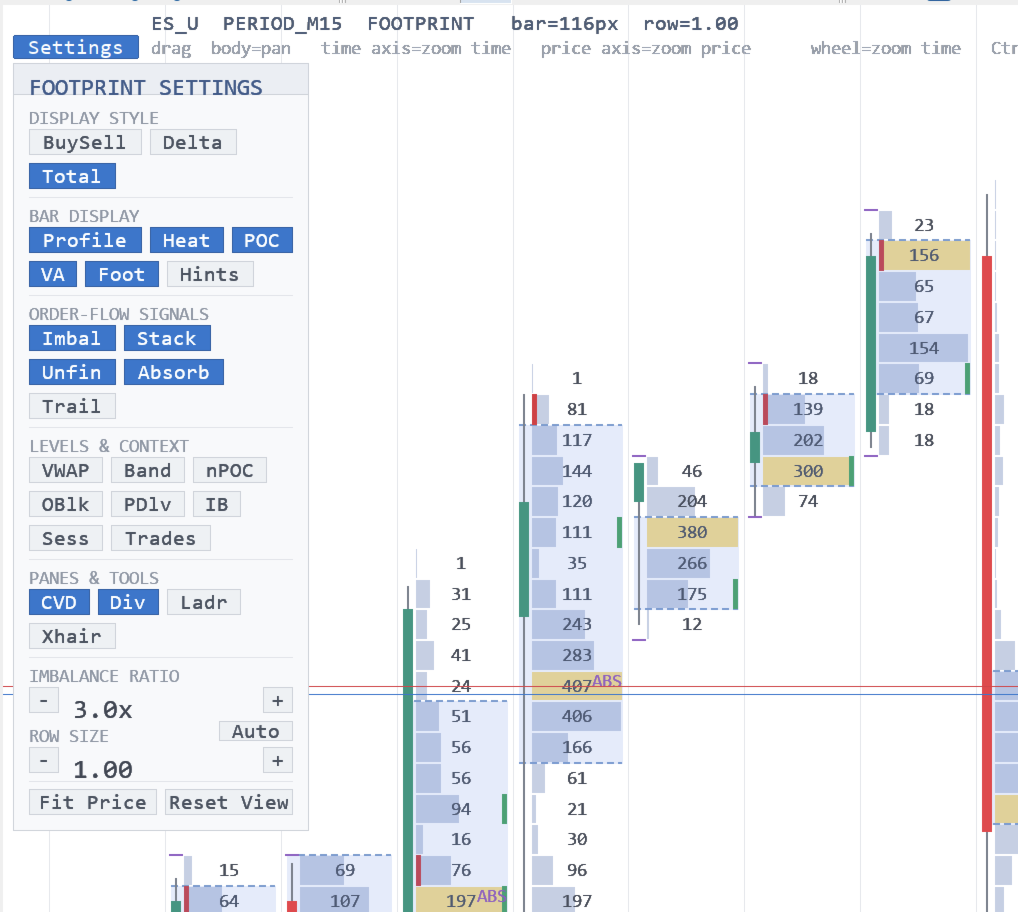
It blanks the native price display and renders everything itself on a canvas, owning its own coordinate system. Two things follow from that: you can zoom far past MT5's six native scale steps — the per-candle magnification a footprint actually needs — and the whole view repaints in about 10 milliseconds, because the chart is pixels rather than thousands of graphical objects.
The footprint
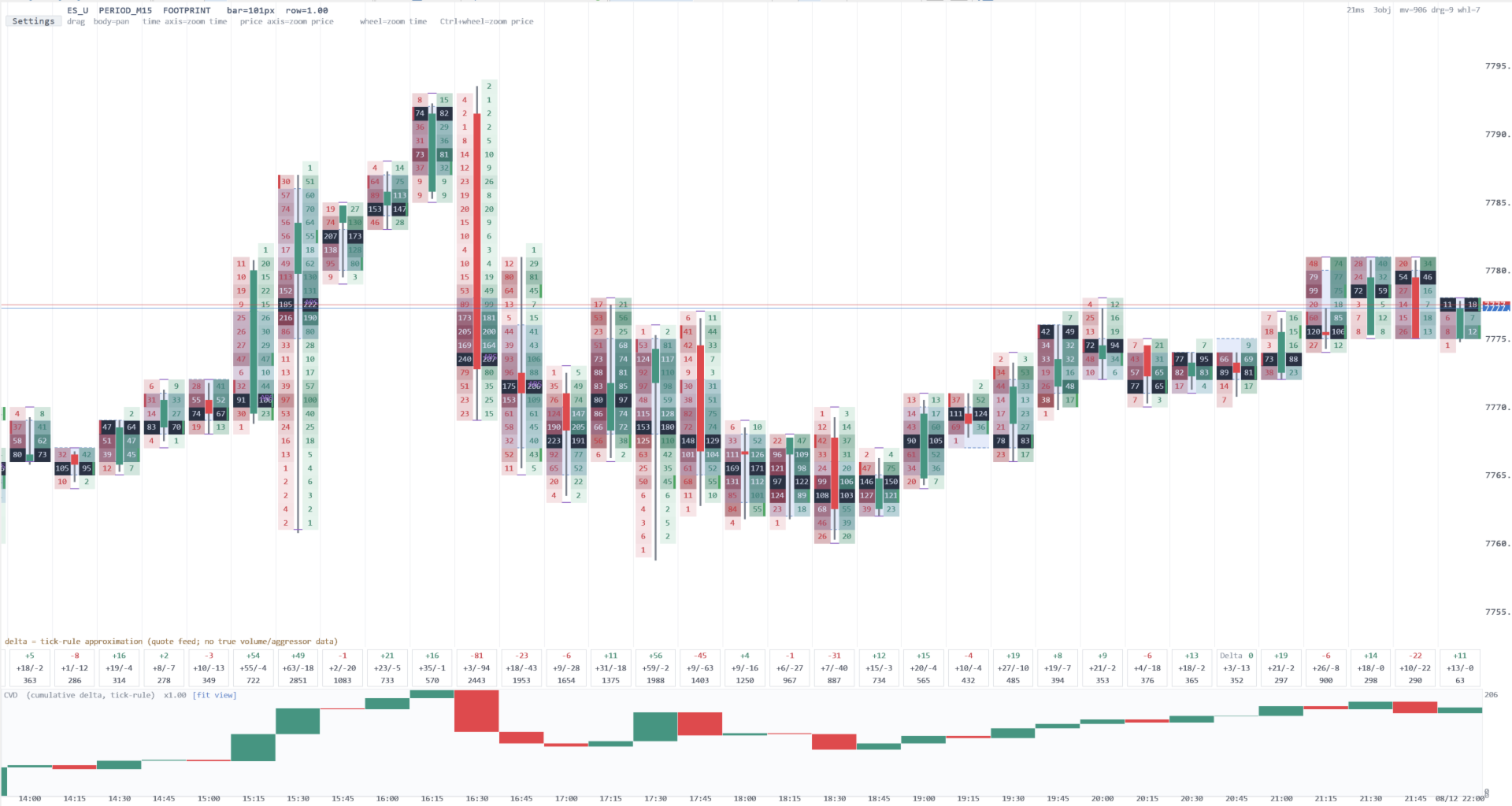
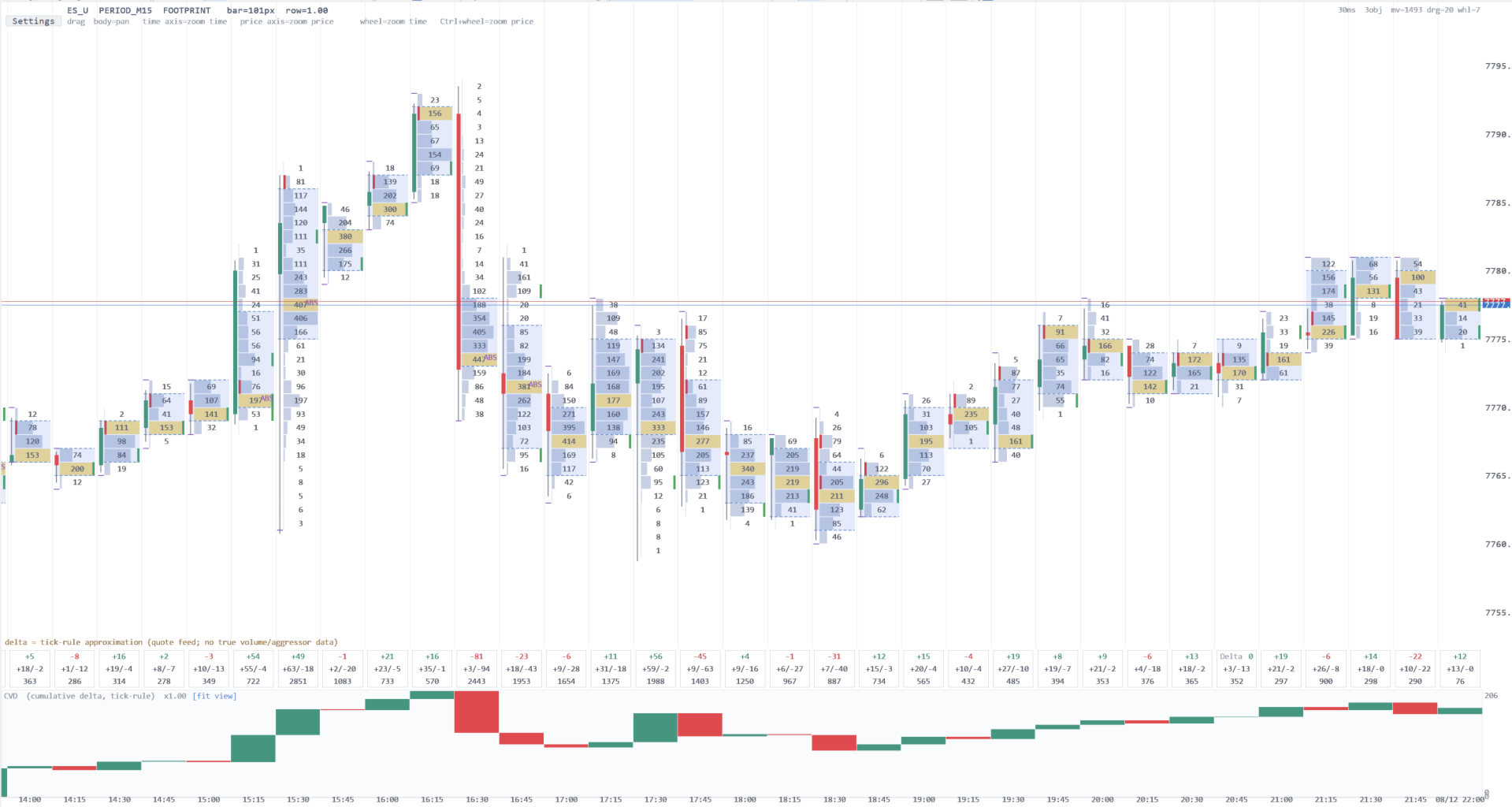
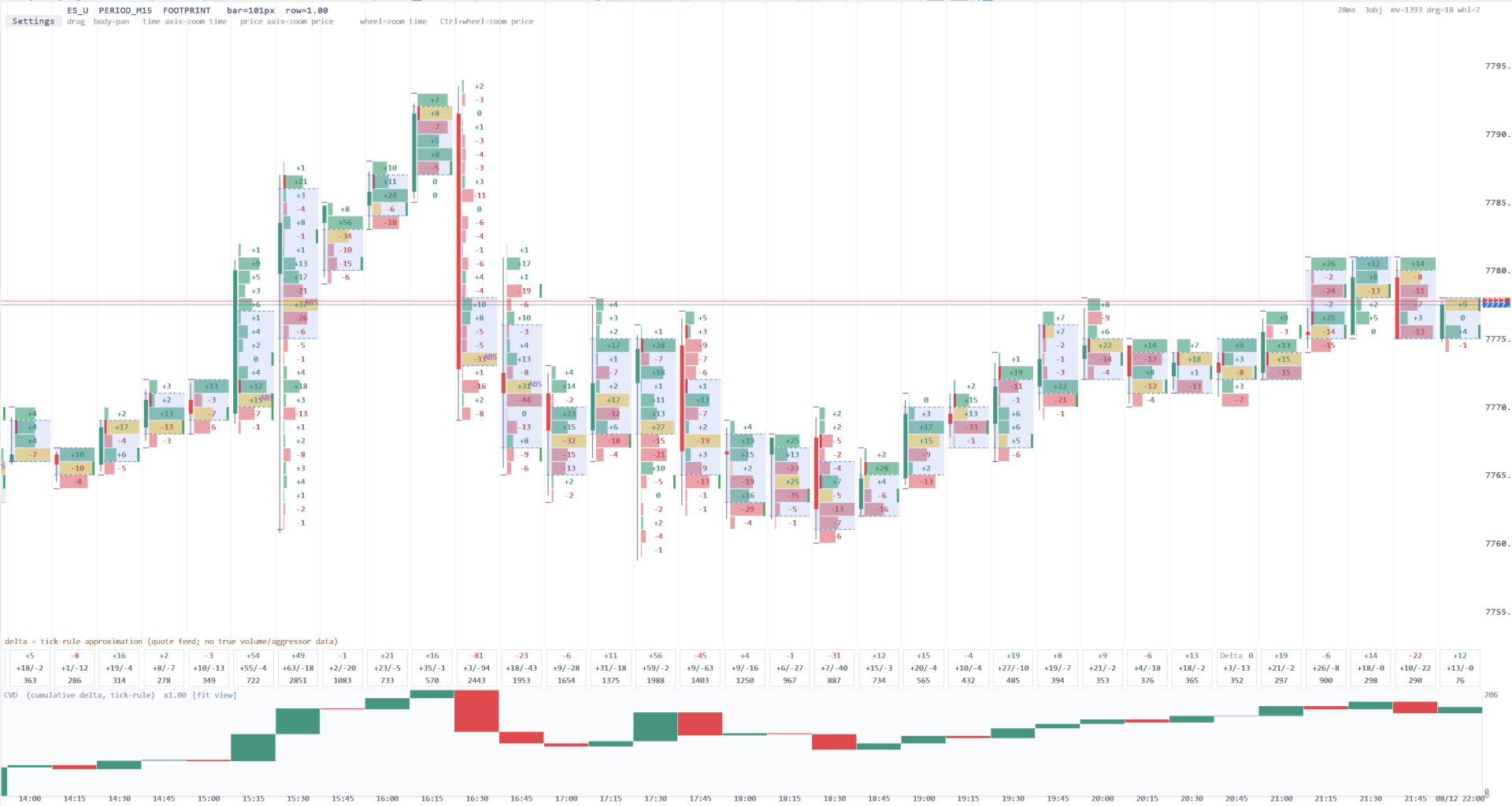
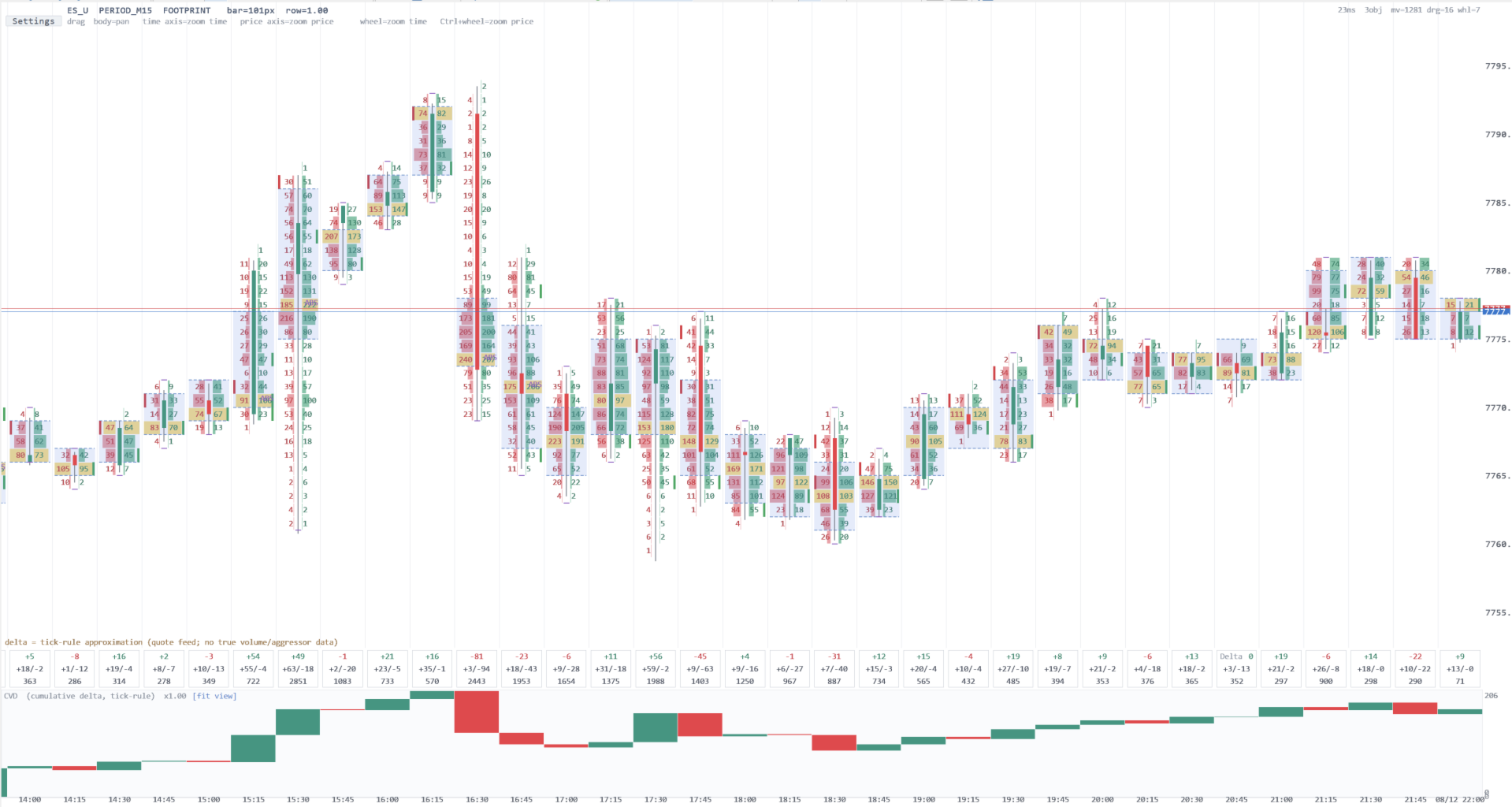
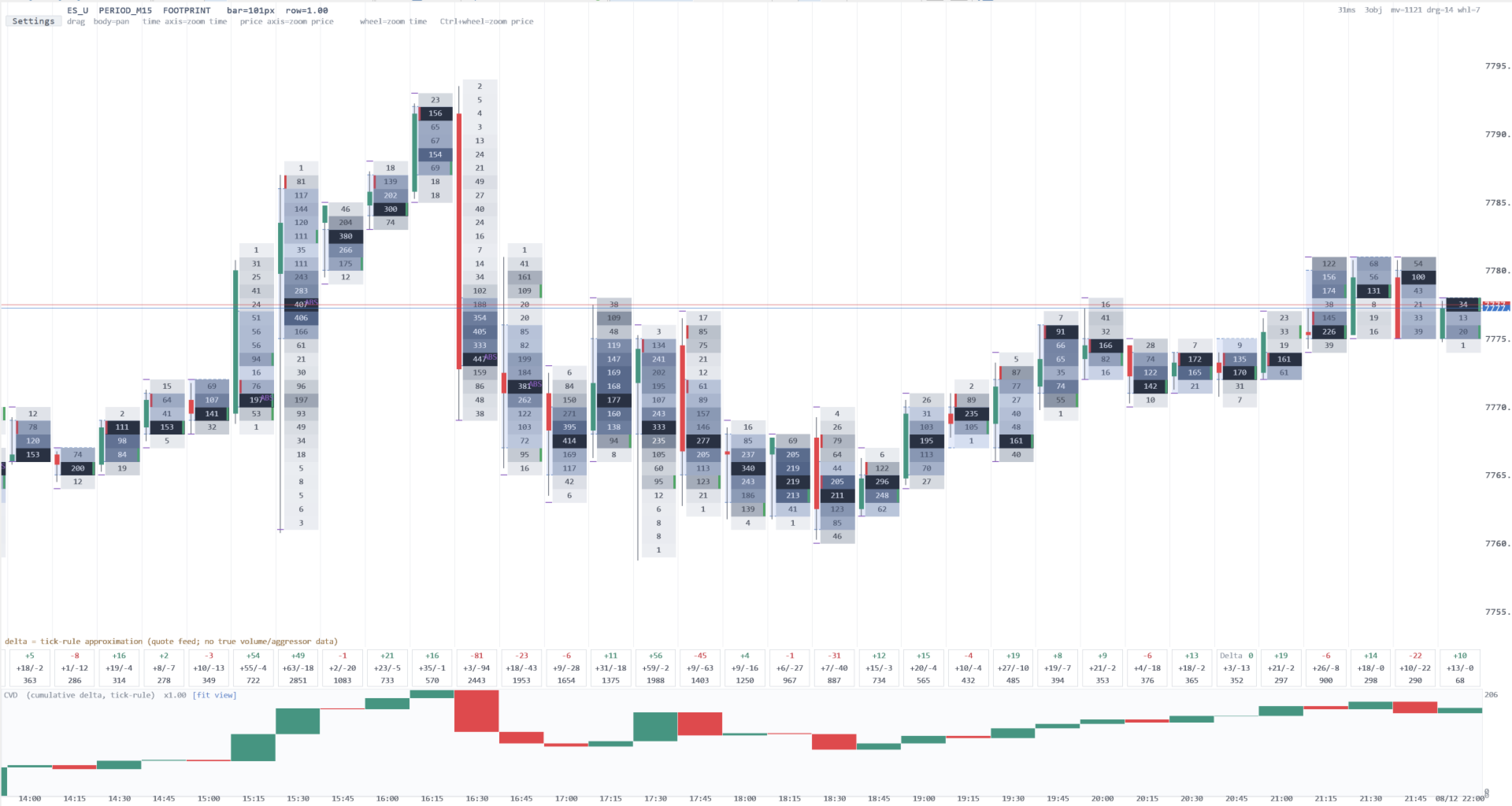
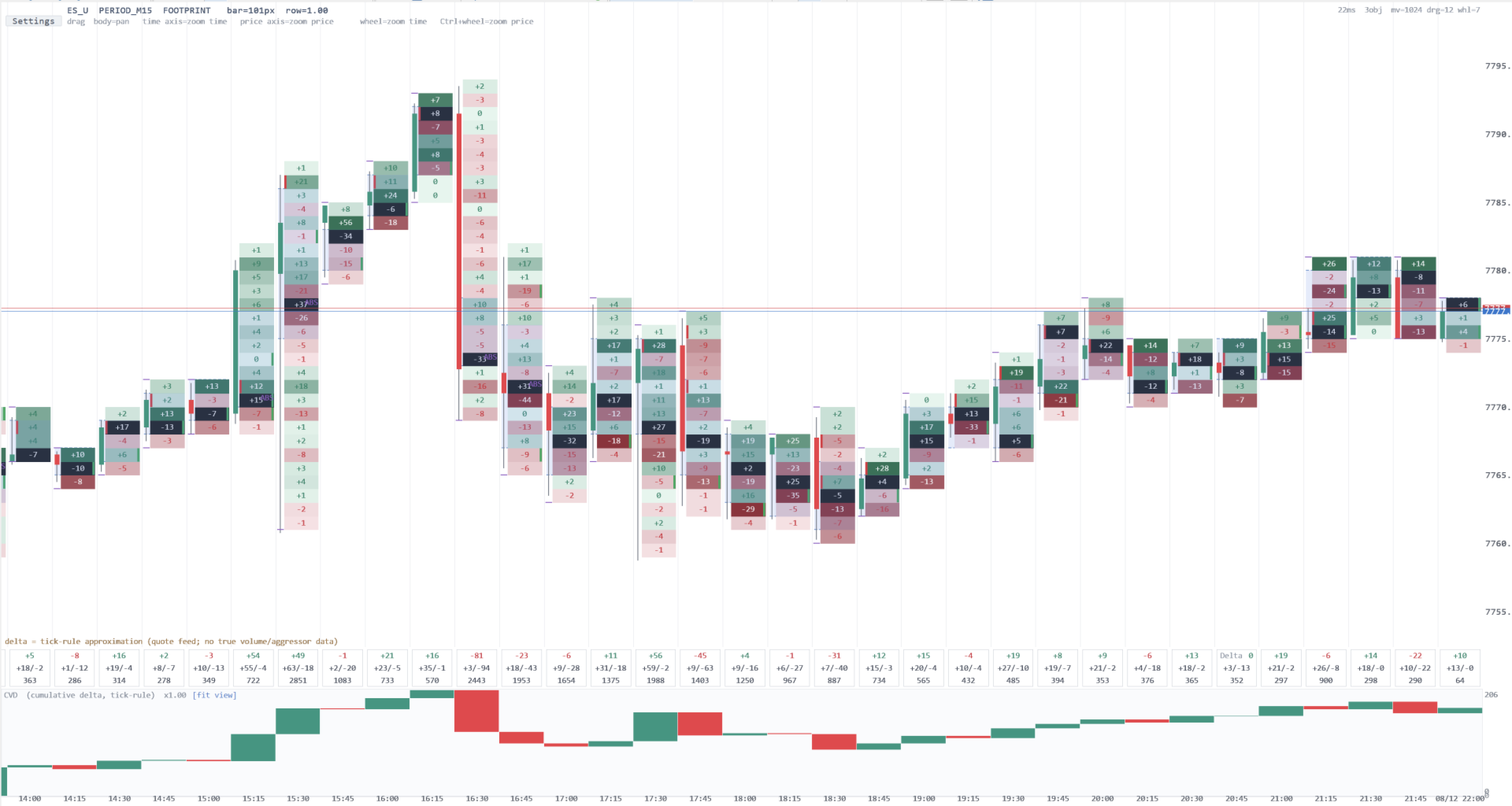
- Three cell styles — Buy & Sell (split, sell left / buy right), Delta (net), Total (combined, POC emphasised)
- Cluster or Profile mode — numbers inside cells, or magnitude carried by bars
- Volume heatmap shading, per-bar POC and a configurable value area
- Auto or manual row size, with row height tracking your vertical zoom
Order-flow signals
- Diagonal imbalance detection with stacked-imbalance runs promoted to support/resistance zones
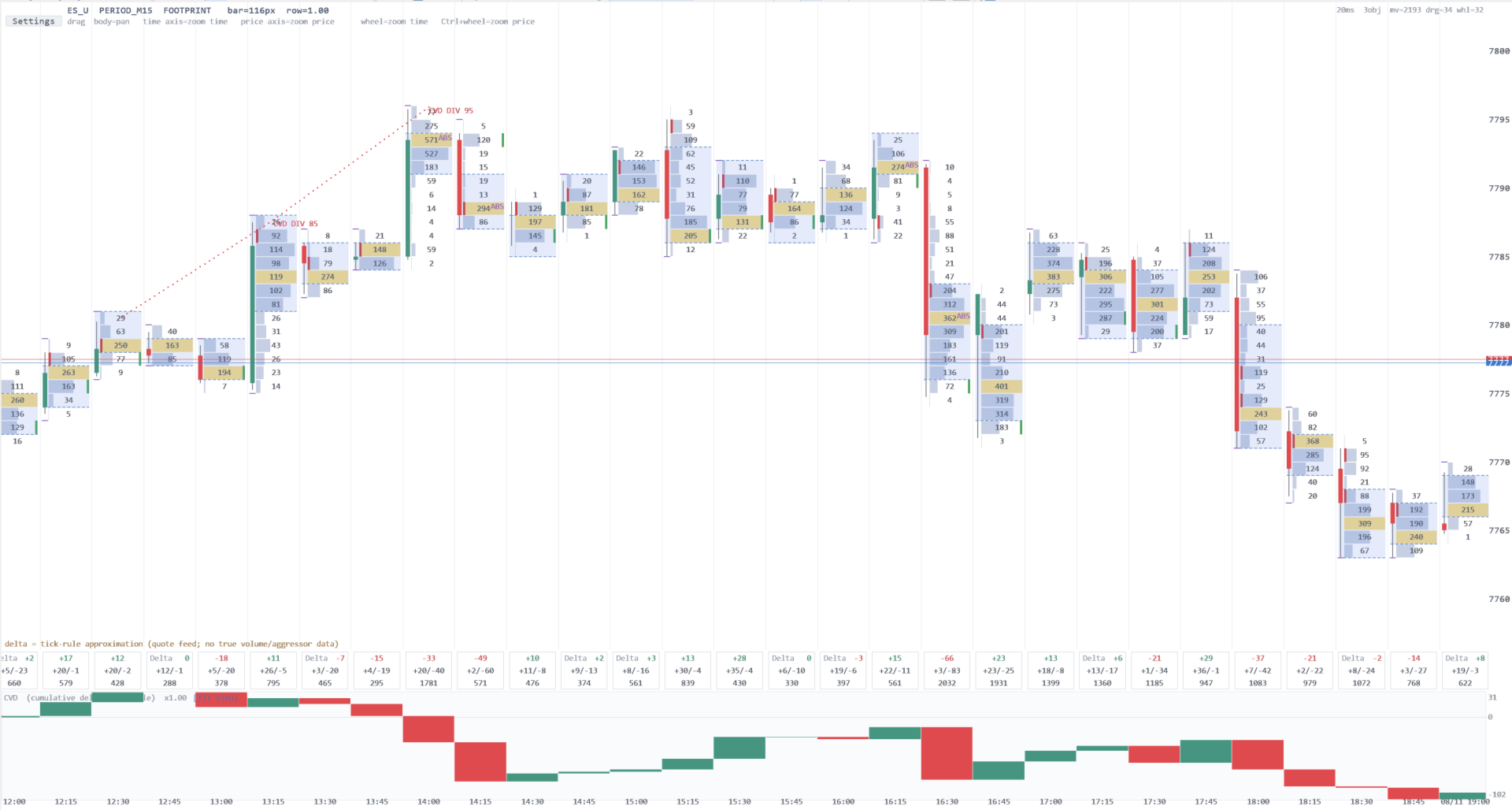
- Absorption marks where volume concentrates against near-flat delta
- Unfinished auction ticks at unfinished bar extremes
- POC migration trail across bars
- Every imbalance marker carries a hover card showing the exact two numbers compared and the resulting ratio — no mark is unverifiable
Volume ladder
A price-aligned ladder docked to the right edge, with three resizable profile columns:
| Column | Shows |
|---|---|
| VPD | Delta per price — buy-dominant green, sell-dominant red |
| SVP | Total volume across the bars on screen — follows your pan and zoom |
| DVP | Total volume across the whole trading day |
SVP and DVP each carry their own POC, VAH and VAL, drawn as labelled rules over a value-area band. Both profiles are computed on a stable, data-derived price bucket, so the levels do not move when you zoom.
Context
Session VWAP with sigma bands · prior-day high/low/close · initial balance · naked POCs · session separators · order-block zones · a CVD pane with independent zoom and automatic price/CVD divergence detection.
Optional trading system
Setups are classified by market-auction archetype, and the geometry follows from the classification rather than being bolted on afterwards:
- RESPONSIVE — fades. CVD divergence, absorption, value-edge rejection. Predicts rotation, so targets stay reachable.
- INITIATIVE — continuation. Order-block first touch, value-edge acceptance. Rides a leg to structural targets, and declines the trade outright when structure doesn't offer the required R:R.
With structure-bias gating, a flow-toxicity regime governor, daily drawdown halt, news blackout windows, and a notifications-only mode that alerts instead of ordering.
Signals read a separate footprint cache with its own stable bucket size, so a signal can never change because you zoomed the display.
Read this before buying: your feed decides the quality
Footprint fidelity is a property of your data, not of the software.
- Best case — a feed with genuine trade ticks, real volume and exchange aggressor flags. Atlas reads TICK_FLAG_BUY / TICK_FLAG_SELL and uses them whenever present.
- Typical retail case — quote-only feeds (most retail forex/CFD, and some nominally-futures feeds). Delta is then inferred by tick rule. Footprint shape is real; magnitudes are proxies. An on-chart badge states which mode you are actually in, at all times.
- Depth of Market requires a broker that publishes depth. DOM has no history and is not replayed in the strategy tester, so any depth-based reading is live-only.
Check your own feed before drawing conclusions from any order-flow tool. If it does not deliver trade ticks, no software can reconstruct them.
Backtesting
Use "Every tick based on real ticks." Other models feed synthetic ticks, and tick-rule delta computed on synthetic ticks is noise — which invalidates every order-flow signal, in this product or any other.
No performance claims
None are made here, deliberately. Internal testing showed a positive expectancy on the order-block component and a negative one on value-area breakouts — a split useful enough that the breakout entry ships disabled by default. But the sample was small and the zone engine has since changed, so that baseline is stale. Test it on your instrument, your feed and your own sample before risking capital.
Requirements
MT5 with CCanvas . A dedicated chart per symbol. Real-tick history for backtesting. A trade-tick feed with aggressor flags for full fidelity — usable, with the caveats stated above, without one.





































Excellent tool. Is there a more detailed manual on usage and trading strategies for beginner or intermediate users?