Macd MultiTimeframe tl
- Indicadores
- Versão: 2.0

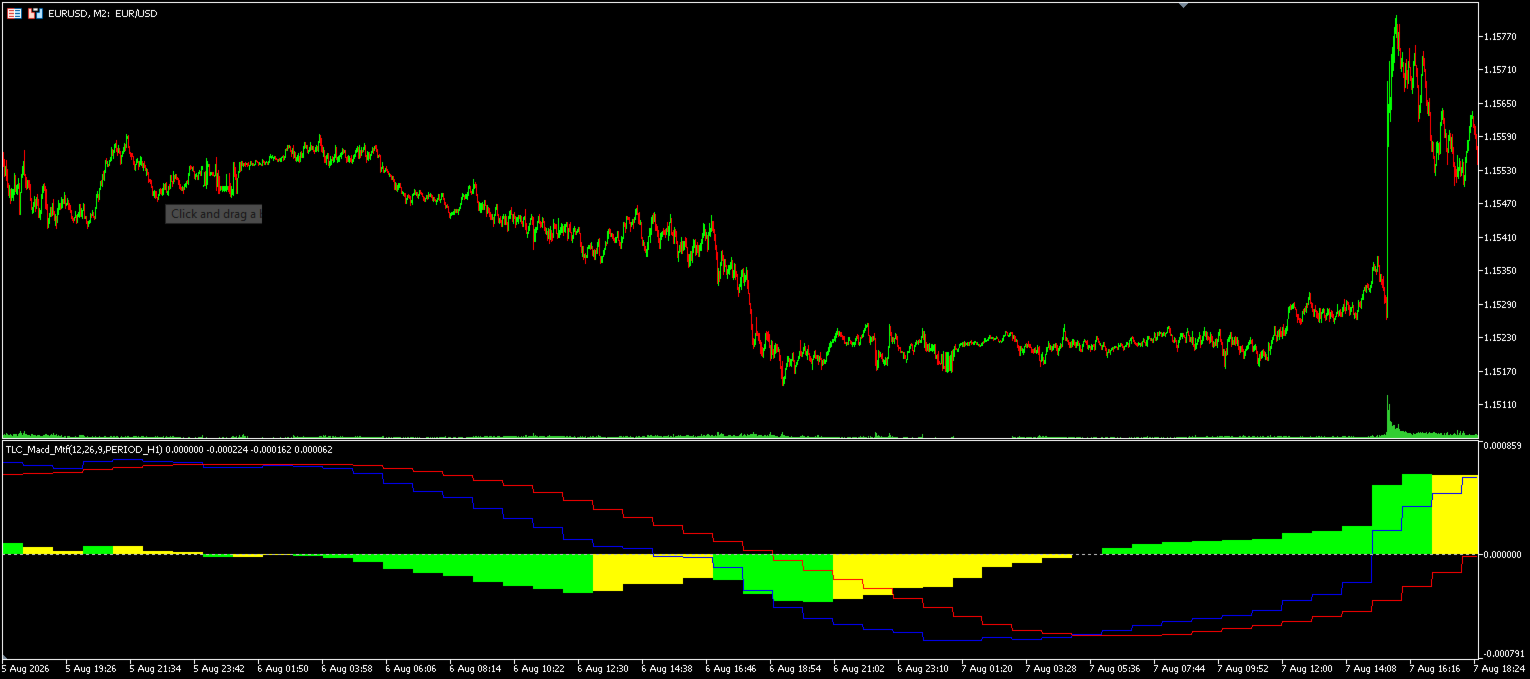
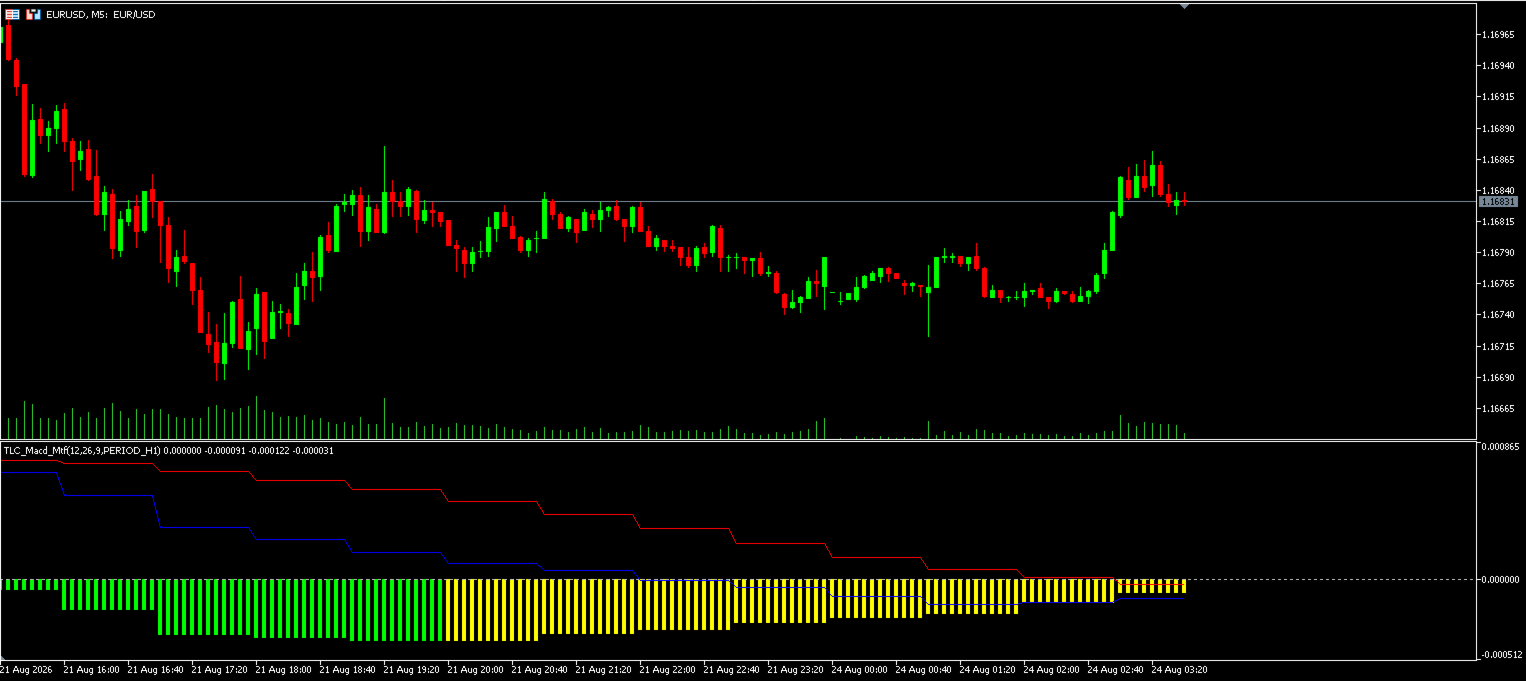
TLC MACD Multi-Timeframe plots a real MACD from a higher timeframe directly on your current chart, without you having to flip back and forth between windows.
Most "multi-timeframe" MACD indicators fake it by just using a longer period on your current timeframe. This one doesn't do that. It reads the actual MACD from the timeframe you choose (daily, for example) and holds that same reading across every bar on your chart until the next higher-timeframe bar actually closes. So what you see is exactly what the MACD looks like on that higher timeframe, not an approximation.
The histogram is split into two colors instead of one flat color, so you can see momentum direction at a glance:
Green means the histogram just grew compared to the previous higher-timeframe bar — momentum is expanding.
Yellow means it shrank — momentum is contracting.
The MACD and Signal lines are drawn on top of the histogram so they're never hidden behind it.
Inputs:
Fast EMA period (default 12)
Slow EMA period (default 26)
Signal period (default 9)
Applied price (default Close)
Higher timeframe to read from (default Daily)
The higher timeframe you choose has to be above your current chart's own timeframe — if you pick one that isn't, the indicator will tell you and refuse to load instead of showing you something meaningless.
Free to use.
Indicator buffers (for EA/indicator developers reading this via iCustom):
Buffer 0 — Gt Histogram. Momentum-expanding half of the histogram (green). Holds the value when active, 0 when the contracting side is active instead.
Buffer 1 — Lt Histogram. Momentum-contracting half of the histogram (yellow). Same 0-when-inactive behavior as buffer 0.
Buffer 2 — Macd. The higher-timeframe MACD main line value.
Buffer 3 — Signal. The higher-timeframe Signal line value.
All four buffers hold the same value across every bar belonging to the same higher-timeframe bar, updating only when a new one begins. Buffers 2 and 3 return EMPTY_VALUE for any bar where higher-timeframe history isn't available yet (e.g. right at the start of a symbol's data).