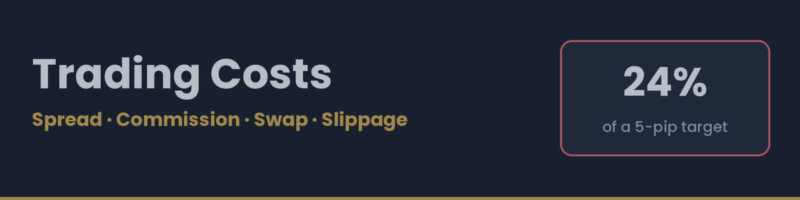

Each trading cost looks tiny on a single trade. Added up over a month, they can decide whether a strategy makes money at all. There are four of them, and which one hurts you most depends on how you trade.
- Spread: the gap between Bid and Ask, so every trade starts slightly negative. Spread cost = spread in pips × pip value × lots. A 1.2-pip spread on 1 lot of EURUSD is $12.
- Commission: a fixed fee per lot on Raw or ECN accounts, often quoted per side. $3.50 per side means $7 per round turn.
- Swap: interest charged or paid when a position is held past the daily rollover. One weekday usually charges three nights at once to cover the weekend.
- Slippage: being filled at a worse price than planned, most often around news or when a stop loss turns into a market order.
Why Small Targets Pay the Most
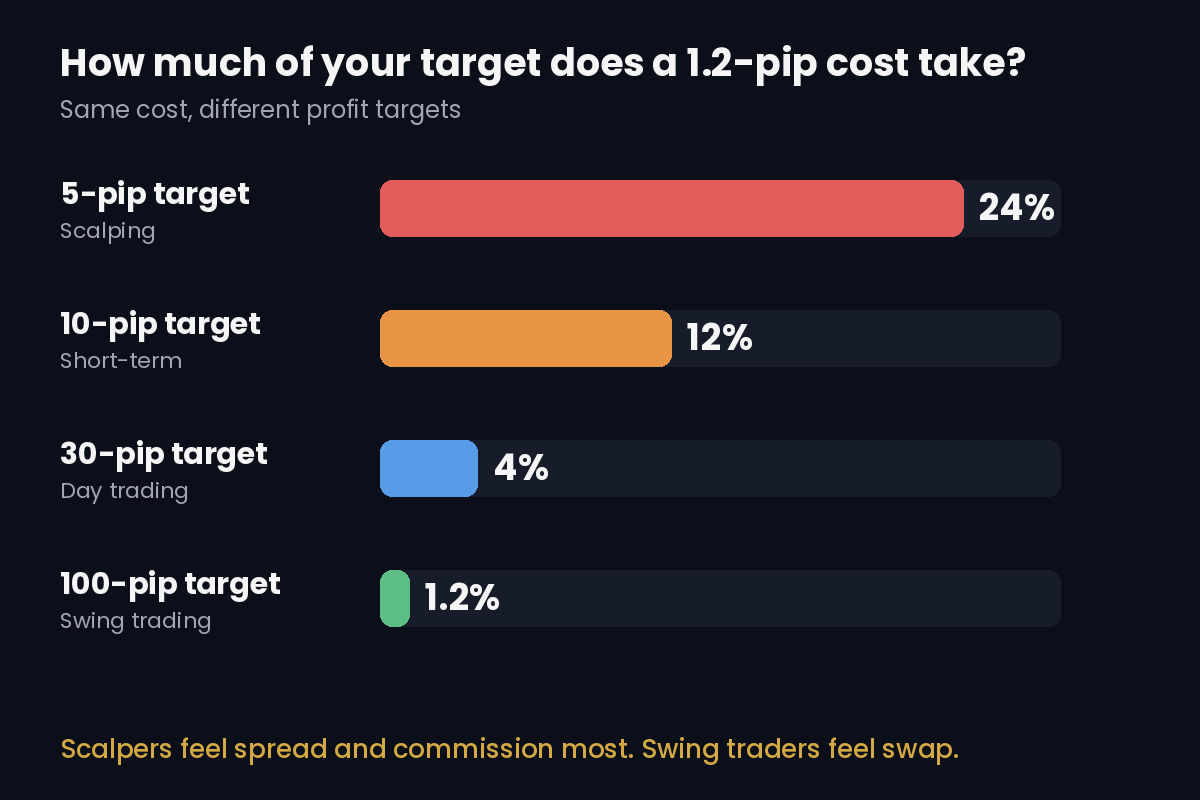
The same 1.2-pip cost takes a very different share of the profit depending on the target:
That is why scalpers feel spread and commission the most. In one example, a scalper making 200 trades a month at 0.5 lots paid about $1,600 a month on a Standard account and about $1,100 on a Raw account. On a $10,000 account, that is 11–16% a month before any profit.
For swing traders, swap is the big one. Holding 1 lot for a week with a −$7 nightly swap costs about $49, including the triple swap day. Over a month of trades, swap can cost more than spread, commission and slippage together.
How to Cut Your Costs
- Match the account type to your style: Raw or ECN for frequent trading.
- Trade in the London and New York hours, when spreads on majors and gold are tightest, and avoid the rollover hour.
- Check swap values in Market Watch › Specification before holding positions overnight.
- Run your backtest again with double the spread. If the profit almost disappears, the strategy is fragile.
Costs and Expert Advisors
A robot that places 20 trades a day pays 20 spreads a day, so cost control has to be built in. Razor Gold skips new gold trades whenever the spread is above 20 pips ($0.20) and its manual recommends Raw or ECN accounts. Velora FX holds baskets on the AUD, NZD and CAD crosses that can stay open overnight, so its guide puts low swaps next to low spreads when choosing a broker.
Trading Forex, gold and other leveraged instruments involves a high risk of loss. Cost figures above are examples; real costs depend on your broker.