Impala EA MT5
- 专家
- 版本: 2.0
- 更新: 14 十一月 2026
- 激活: 5

LEAP ONLY WHEN THE HERD TURNS: A PATIENT STOCHASTIC GRID WITH WIDE STEPS AND ONE BASKET PER SIDE.
Made for traders who want a quiet two-sided grid that ignores noise. One job: wait for a very slow, smoothed Stochastic to turn out of an extreme zone, ladder 100 pips apart, and close each side as one basket. Try it free first in the Strategy Tester with visual mode on.
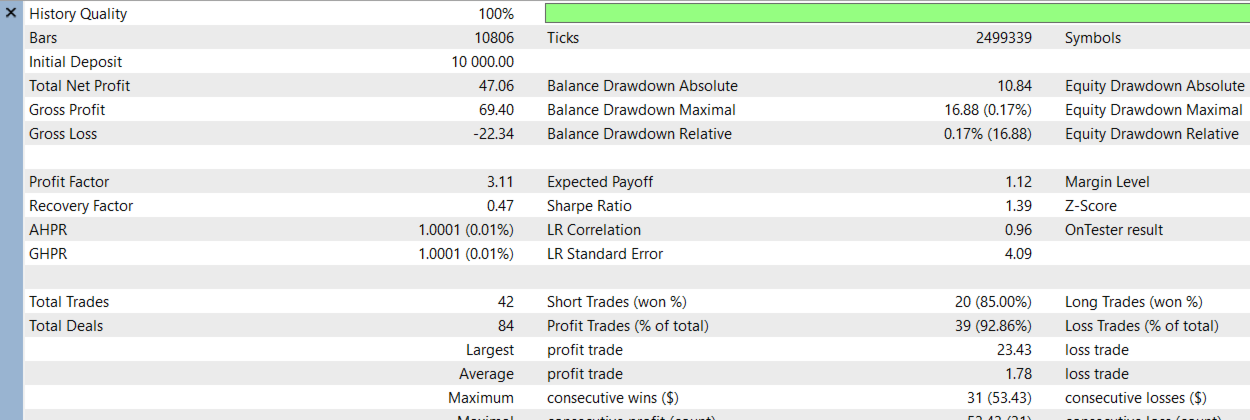
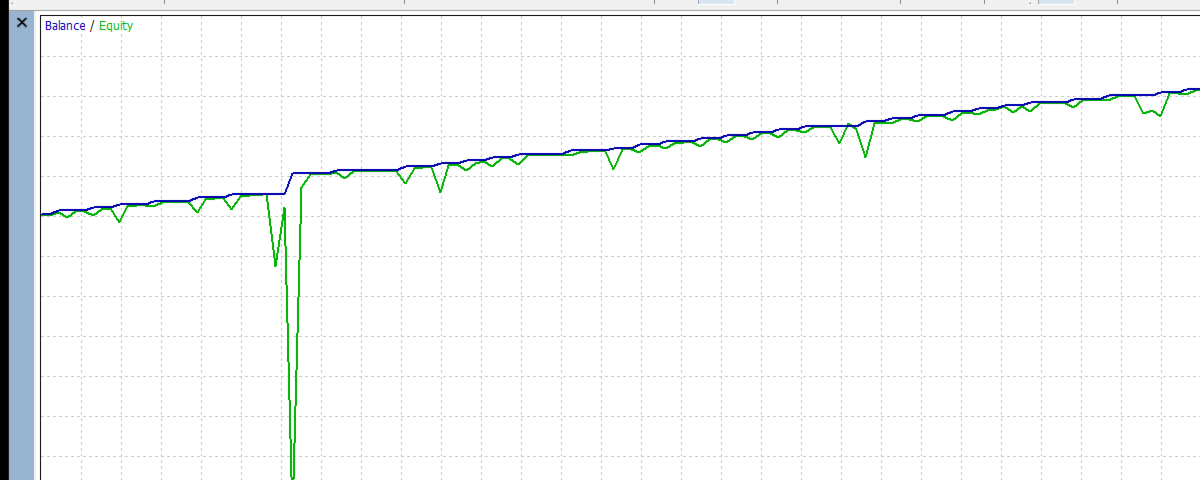
Reproduce it in two minutes: Strategy Tester, 2025.01.01 to 2026.09.30, 10,000 USD, 1 minute OHLC, default inputs.
- EURUSD H1: +47.06 USD, 42 trades, 39 of them winners, profit factor 3.11, worst equity dip 100.71 USD (1.01 percent).
- XAUUSD H1: +4.10 USD, 41 trades, worst equity dip 6.96 USD (0.07 percent).
No margin errors, no invalid volumes, no stop-out and no failed closes in either run. Small numbers at the default 0.01 lot are normal: Impala waits for its signal and banks small baskets. Your broker's data will differ, so run it yourself.
At a glance
- Stochastic 97/15/77 (smoothed) entry on the main line, read from closed bars only.
- Grid step 100 pips, slowly growing lot, one level per bar at most.
- Each side closes as one basket target.
- From the 10th order of a side, the oldest and newest orders are closed together once their sum reaches the trim target.
- Margin check with a 50 percent buffer, at most 100 orders and 0.1 lot per order.
THEN vs NOW. Then: a SELL cycle could only start when BUY orders were switched on, a refused order still moved the grid, and closes were retried again and again while the market was shut. Now: each side has its own switch, the ladder moves only after the broker confirms a fill, closes wait calmly for the session to open, and every position loop is filtered by symbol and magic number.
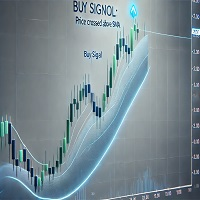
What you see now: a console panel that answers "why is it quiet?" at a glance. The SIGNAL row shows the live Stochastic reading, whether it is rising or falling since the last bar, and a plain verdict: green "buy zone, waits for the turn up", red "sell zone, waits for the turn down", or neutral. So you can watch the turn forming before the entry happens. The SPREAD row says ok or too wide, and TO TARGET and NEXT LEVEL give distances in pips.
Works with: hedging and netting accounts, manual trades and other EAs on the same symbol, any broker lot step.
Why it is called Impala
An impala grazes calmly and does not bolt at every sound. When the herd truly turns, it leaps far and lands well clear. Impala EA follows that habit. Its Stochastic uses long, smoothed periods, so ordinary wiggles do not move it; it fires only when price has stretched into an extreme and turns back. Its levels are 100 pips apart, so a normal pullback does not stack orders, and the drawdown trim waits until the tenth order before it trims the book.
One cycle in plain verbs
Waits for the Stochastic to cross back out of the oversold (below 20) or overbought (above 80) zone on a closed bar. Opens the first order of that side. Adds a level each time price moves 100 pips against the side, with a slowly growing lot and at most one level per bar. Moves the take profit of every order on that side to the shared basket target. From the tenth order, closes the oldest and the newest order together once their combined result reaches the trim target. Then grazes until the next turn.
Plain risk statement: this IS a grid. There is no stop loss and the book is never dumped at a loss. Protection works by blocking new levels: at most 100 orders, at most 0.1 lot per order, a free margin check with a 50 percent buffer, and optional margin level and netting caps.
The console panel
A dark console with teal accents sits on the left of the chart and keeps the price scale clean. It shows a status pill (WATCHING, ACTIVE, SAFETY or MARKET CLOSED), each side's orders, lots and net, the next lot, order count with the trim status, spacing, basket targets, TO TARGET and NEXT LEVEL distances, banked profit, signal reading with its slope and zone, entry gate, spread verdict, active timeframe and margin. Below it are the last five closures and the open order table. Drag it with MOVE, minimise it, and it sizes itself to its text. Nothing is drawn in non-visual tests, so optimisation stays fast.
What else is fixed in this build
- The sell-side cleanup used the buy ticket list; it now uses its own list.
- Lots follow your broker's minimum, maximum and step instead of being rounded to two decimals.
- The opposite side is no longer blocked on brokers that report no volume limit.
- The Stochastic is created once and every read is checked, so short history cannot crash the EA.
- After a restart, the ladder anchor and lot are rebuilt from the live positions.
- Orders and closes wait while the session is closed, and the filling mode is chosen for your broker.
How to start
- Run it in the Strategy Tester on your broker's data first; EURUSD H1 is a good first chart, gold works with the same defaults.
- Keep the starting lot at 0.01 for every 1000 USD of balance. If you want more, raise Lot slowly, one step at a time.
- Attach it to one chart per symbol; a second chart of Impala on the same symbol is refused, so the two cannot fight over one book.
- Watch the SIGNAL, SPREAD and TO TARGET rows for a few days before raising the lot.
Every setting explained
Orders
- Note_Orders - a label only.
- Lot - starting lot of each side (0.01). About 0.01 per 1000 USD is a sensible start.
- MaxSpread - no first order while the spread is above this many points (30).
- OrderComments - comment written on every order.
- OpenBuyOrders / OpenSellOrders - allow each side separately.
- SmallAccountMode - every level uses the minimum lot, no growth (off).
Execution
- FillingMode - Automatic asks the symbol which filling it accepts (recommended).
- MaxSlippagePoints - accepted slippage (30).
- CloseRetries - attempts before a close is tried again on the next tick (5).
- UseBrokerSideTPSL - also sends a broker copy of the target (off).
- VerboseExecution - prints every trade reply in the journal (off).
Protection
- SignalBarsDelay - bars required between two first orders (30; 0 = off).
- OneOrderPerBar - at most one new level per bar on each side (on).
- MinMarginLevelPercent - no new order below this margin level (0 = off).
- NetMaxMarginPercent - netting accounts only: stop adding when used margin passes this percent of equity (5).
Margin timeframe safety (off by default)
- UseMarginTFSafety - when on, a falling margin level lifts the signal to a higher timeframe and widens the spacing by that timeframe's ATR.
- Level1MarginPct / Level1TF - first step (6000 percent, M15).
- Level2MarginPct / Level2TF - second step (5000 percent, H1). Never below the chart timeframe.
- MarginTFHysteresisPct - extra recovery needed before stepping back (500).
- MarginTFATRPeriod - ATR length for the wider spacing (14).
Panel
- ShowPanel, PanelCorner, PanelX, PanelY - show the panel and where it starts.
- PanelBgColor, PanelTextColor, PanelFontSize - look and size.
- MaxTableRows - open order rows shown (10).
- ShowArabic - Arabic labels under the console.
- ShowChartMarks - next level lines and entry arrows.
Honest expectations
A grid manages a position; it does not predict the market. A long one-way trend will deepen the book, so choose a lot your account can carry and test on your own broker first. Impala trades rarely by design, so judge it over months, not days. Works on any symbol and timeframe, needs no DLLs and no extra files.
If you use Impala EA, a short honest review on this page, good or critical, helps other traders decide and tells me what to improve next.