
MeanReversion Pro System
- 지표
-
MeanFX
 ⚡ MeanFX 트레이딩 알고리즘 ⚡
📈 강력한 트레이딩 소프트웨어 개발 (맞춤 프로젝트는 DM 주세요)
🔹 커스텀 지표 : https://www.mql5.com/en/market/product/175255 - 버전: 4.21
- 업데이트됨: 18 6월 2026
- 활성화: 10
세 개의 독립적인 신호 엔진, BUY/SELL 신호, 두 개의 오실레이터 필터, 그리고 적응형 멀티 타임프레임 Gann Ray(갠 레이)를 하나로 통합한 고정밀 평균회귀(Mean Reversion) 인디케이터입니다.
스캘퍼를 위해 특별히 최적화된 올인원 트레이딩 도구입니다.
주요 기능
-
리페인트 없음 (No Repaint)
-
멀티 타임프레임(MTF) 지원
-
자동 TP(익절) 및 SL(손절)
-
사운드 알림
-
M3~M5 최적화
-
윅(Wick) 감지
-
캔들 돌파 확인(Candle Break)
최대 90% 승률을 목표로 설계된 업그레이드 버전도 확인해 보세요!
개념 소개기존 볼린저 밴드는 가격이 밴드 바깥에서 종가를 형성할 때만 신호를 생성합니다.
하지만 실제 시장에서는 가격이 긴 윅(꼬리)으로 밴드를 잠시 돌파한 뒤 즉시 되돌아오는 고확률 매매 기회가 자주 발생합니다.
Mean Reversion Pro는 이 두 가지 상황을 모두 포착합니다.
-
밴드 외부 종가 기반의 전통적인 진입 신호
-
윅 반전(Wick Rejection) 기반의 빠르고 강력한 반전 신호
사용자는 원하는 방식만 사용할 수도 있고, 두 가지를 동시에 사용할 수도 있습니다.
밴드를 윅으로 돌파한 후 다시 밴드 내부에서 종가가 형성되는 캔들은 가장 신뢰도가 높은 평균회귀 신호 중 하나입니다.
본 인디케이터는 이러한 패턴을 기존 종가 돌파 방식과 동일한 수준의 핵심 신호로 취급합니다.
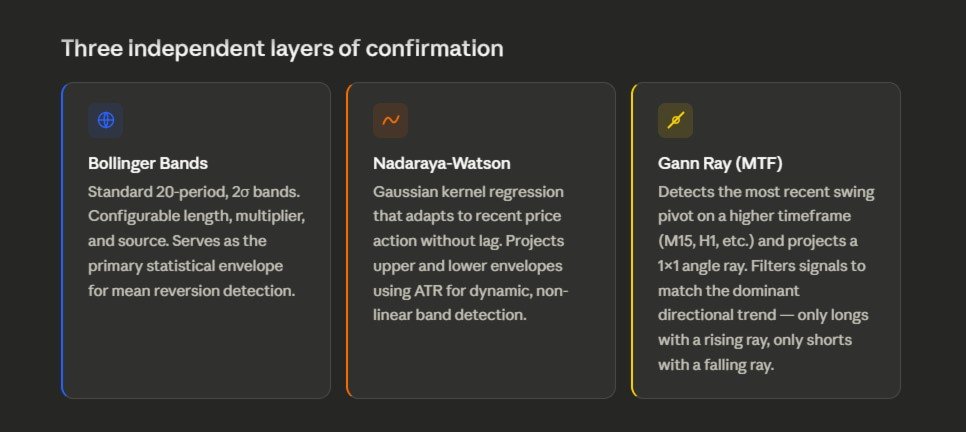
신호 엔진Bollinger Bands (볼린저 밴드)
기본 설정:
-
기간: 20
-
표준편차: 2
사용자 설정 가능:
-
기간
-
배수(Multiplier)
-
가격 소스
평균회귀 탐지를 위한 기본 통계 채널 역할을 수행합니다.
Nadaraya-Watson
가우시안 커널 회귀(Gaussian Kernel Regression)를 사용하여 최근 가격 움직임에 적응합니다.
ATR 기반의 상단 및 하단 채널을 생성하여 동적이고 비선형적인 가격 범위를 탐지합니다.
지연(Lag)을 최소화하면서 시장 구조를 반영합니다.
Gann Ray (MTF)
상위 타임프레임(M15, H1 등)의 최근 스윙 피벗을 탐지한 후 1×1 갠 각도선을 생성합니다.
추세 방향 필터로 사용됩니다.
-
상승 갠 레이 → 매수 신호만 허용
-
하락 갠 레이 → 매도 신호만 허용
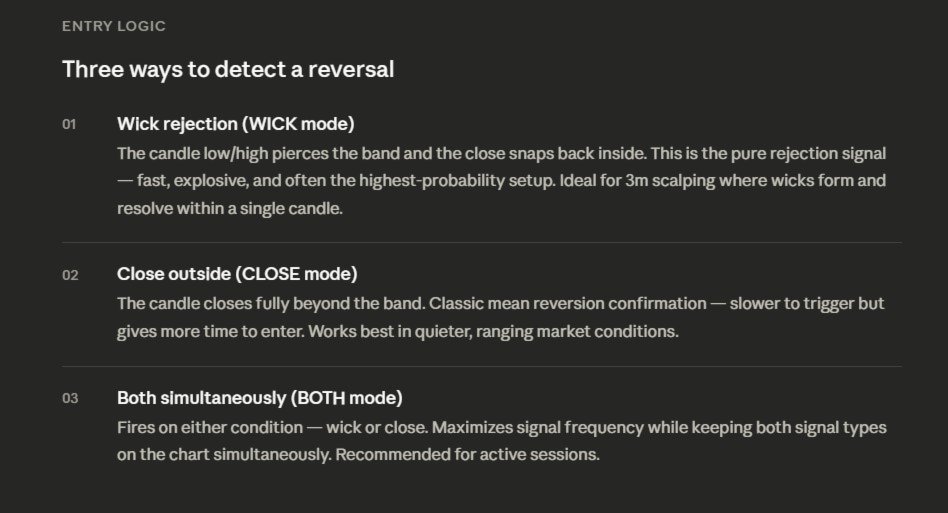
반전을 감지하는 방법은 세 가지입니다.
1. 윅 반전 모드 (WICK Mode)
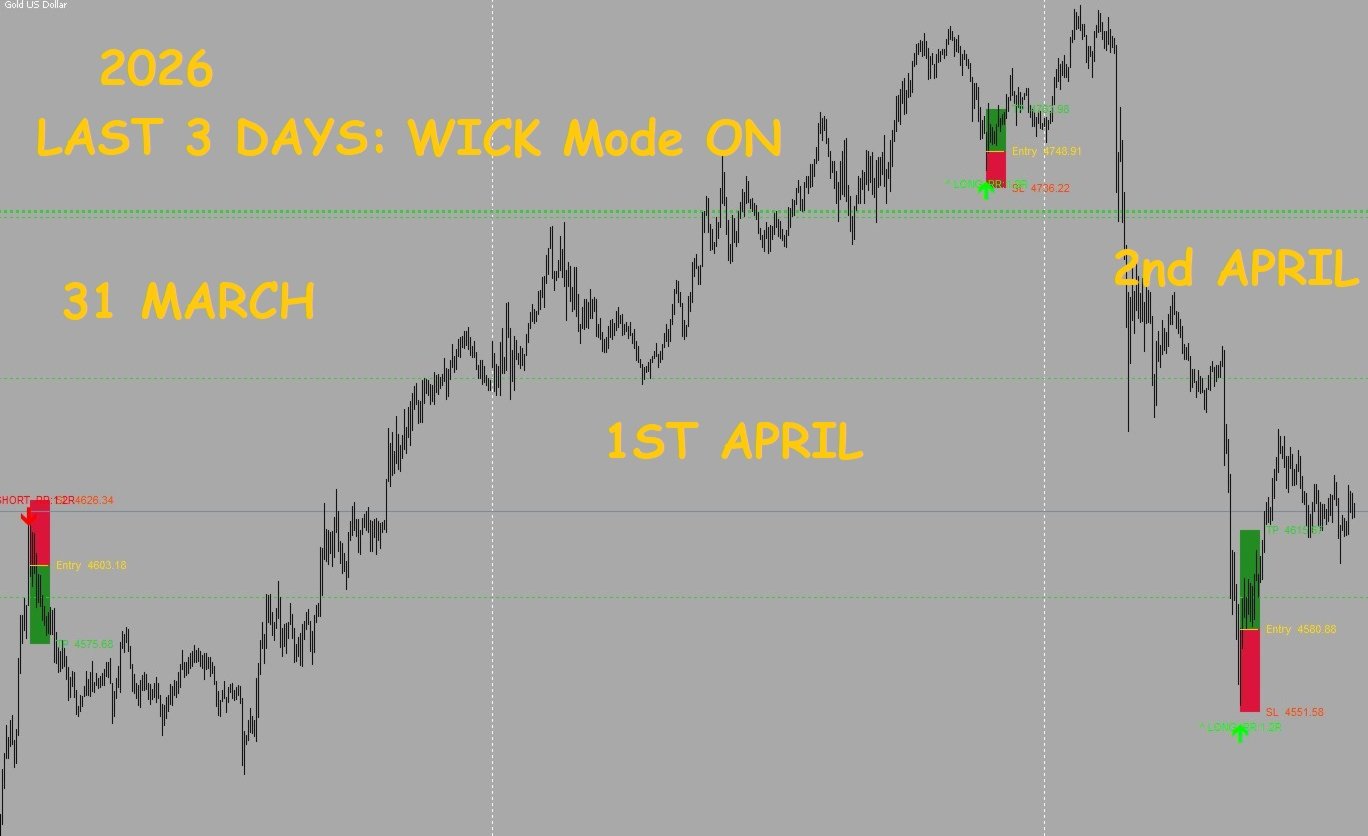
캔들의 고가 또는 저가가 밴드를 돌파하지만 종가는 다시 밴드 안에서 마감될 때 신호가 발생합니다.
특징:
-
매우 빠름
-
강한 반전 포착
-
높은 확률의 진입 기회
M3~M5 스캘핑에 이상적입니다.
2. 종가 돌파 모드 (CLOSE Mode)
캔들이 밴드 외부에서 완전히 마감될 때 신호가 발생합니다.
전통적인 평균회귀 확인 방식입니다.
특징:
-
보수적
-
신뢰도 높음
-
진입 시간 여유 확보
횡보장이나 변동성이 낮은 시장에 적합합니다.
3. 통합 모드 (BOTH Mode)
다음 조건 중 하나만 충족해도 신호가 발생합니다.
-
윅 반전
-
종가 돌파
신호 빈도를 극대화하면서 두 유형의 신호를 모두 표시합니다.
활발한 시장 환경에서 권장됩니다.
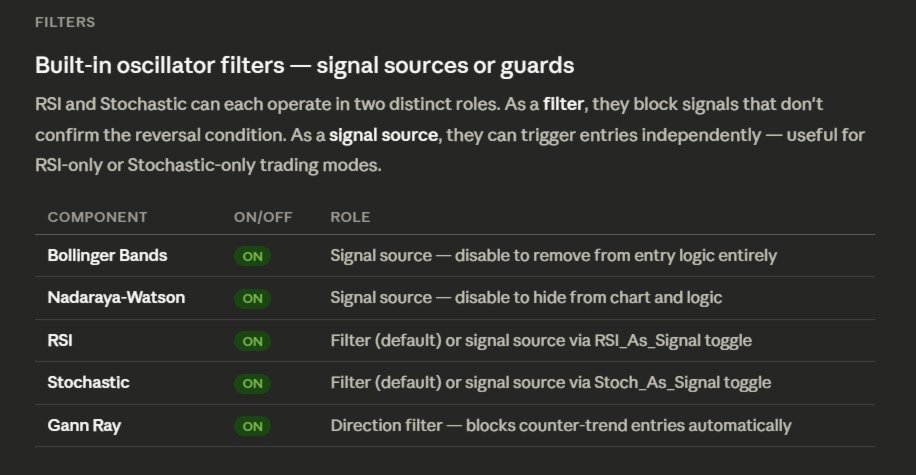
필터내장 오실레이터 필터
RSI
스토캐스틱 (Stochastic)
각 지표는 두 가지 방식으로 활용할 수 있습니다.
필터 모드
반전 조건을 확인하지 못한 신호를 차단합니다.
독립 신호 모드
다른 요소와 관계없이 자체적으로 매매 신호를 생성합니다.
예시:
-
RSI 전용 전략
-
스토캐스틱 전용 전략
| 구성 요소 | 기본 상태 | 역할 |
|---|---|---|
| Bollinger Bands | ON | 주요 신호 엔진 |
| Nadaraya-Watson | ON | 주요 신호 엔진 |
| RSI | ON | 필터 또는 신호 생성 |
| Stochastic | ON | 필터 또는 신호 생성 |
| Gann Ray | ON | 추세 방향 필터 |
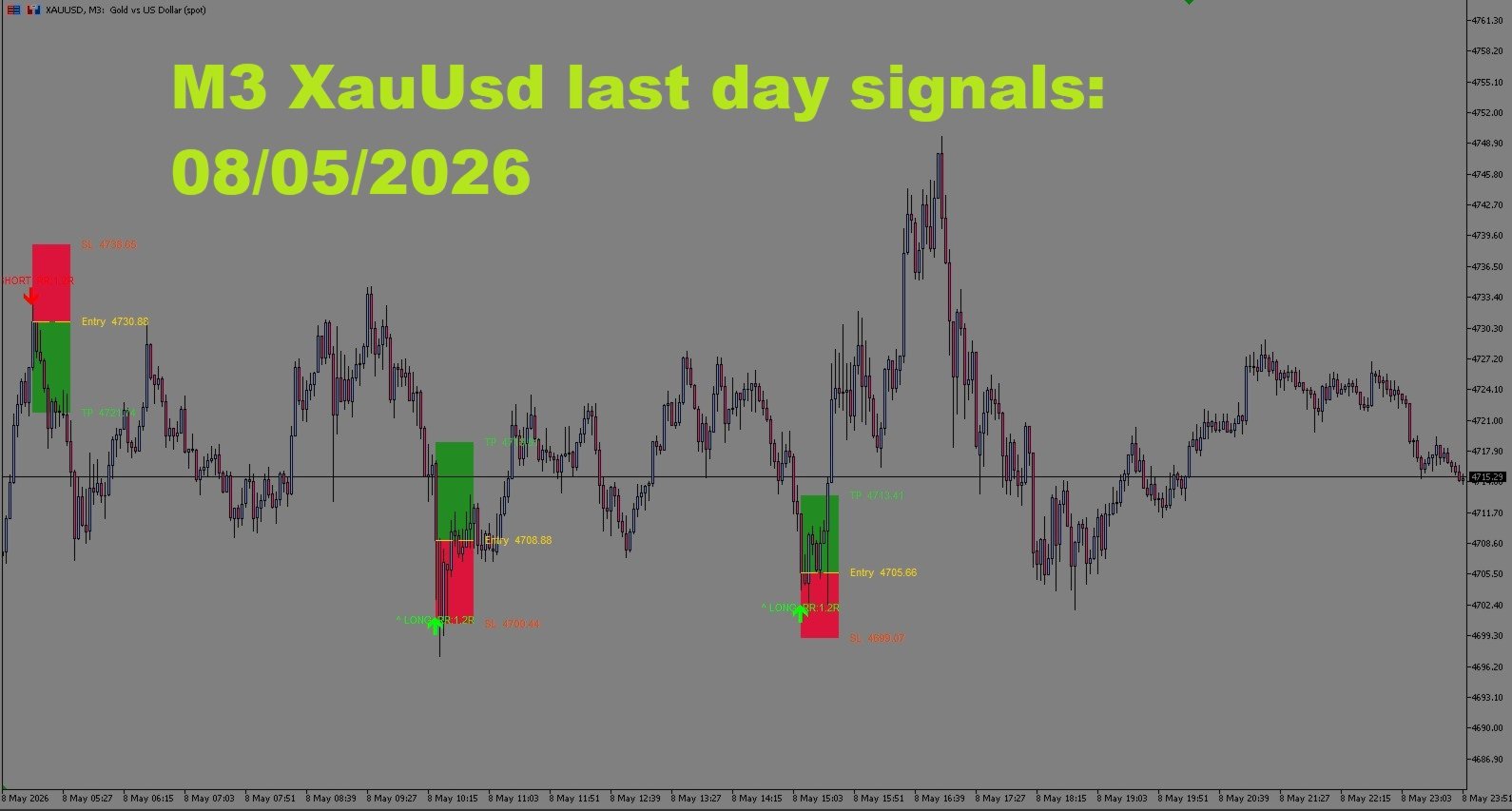
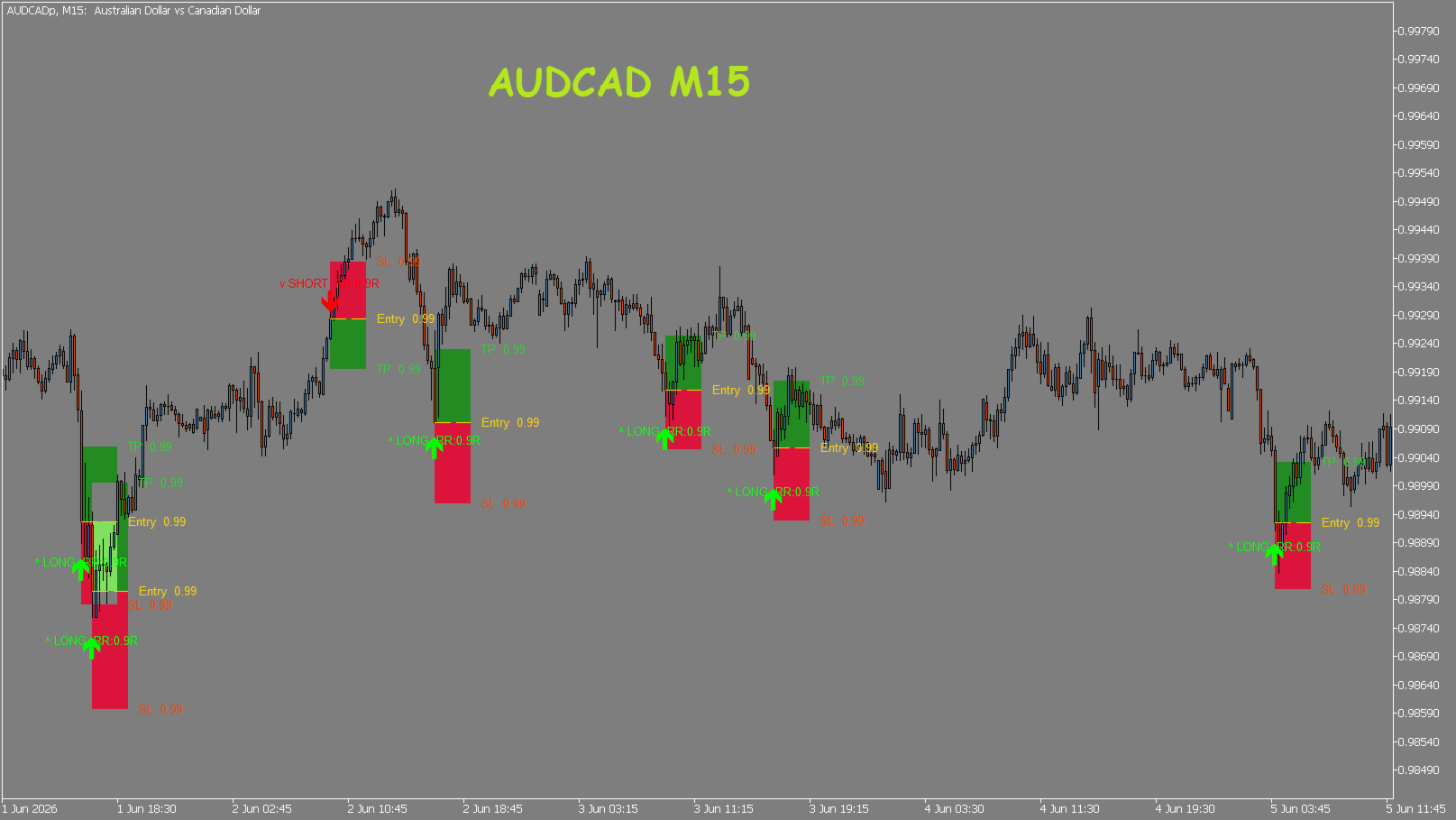
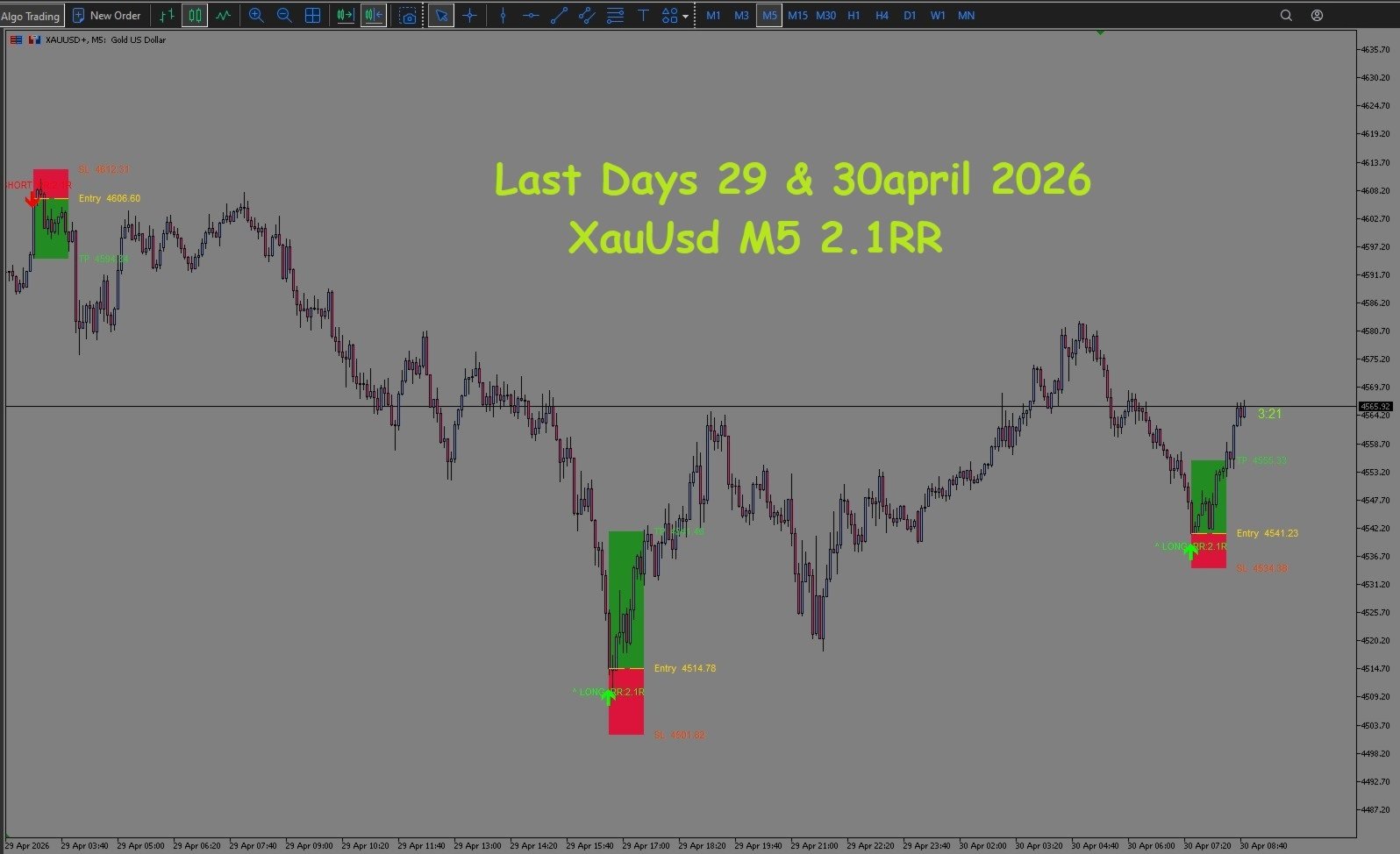
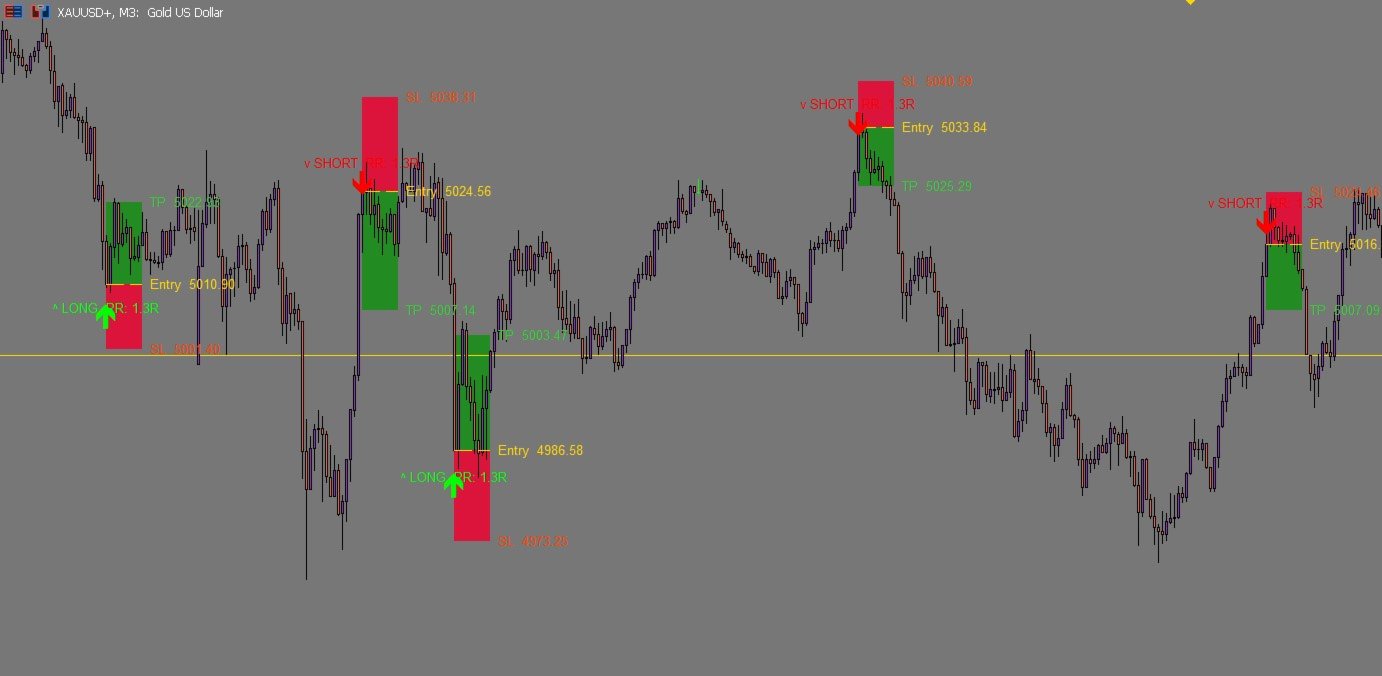
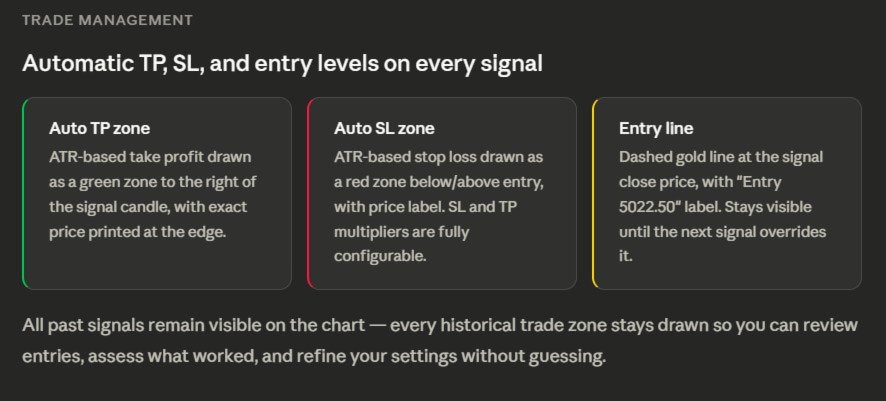
자동 TP, SL 및 진입 구간
자동 TP 구간
ATR 기반으로 계산됩니다.
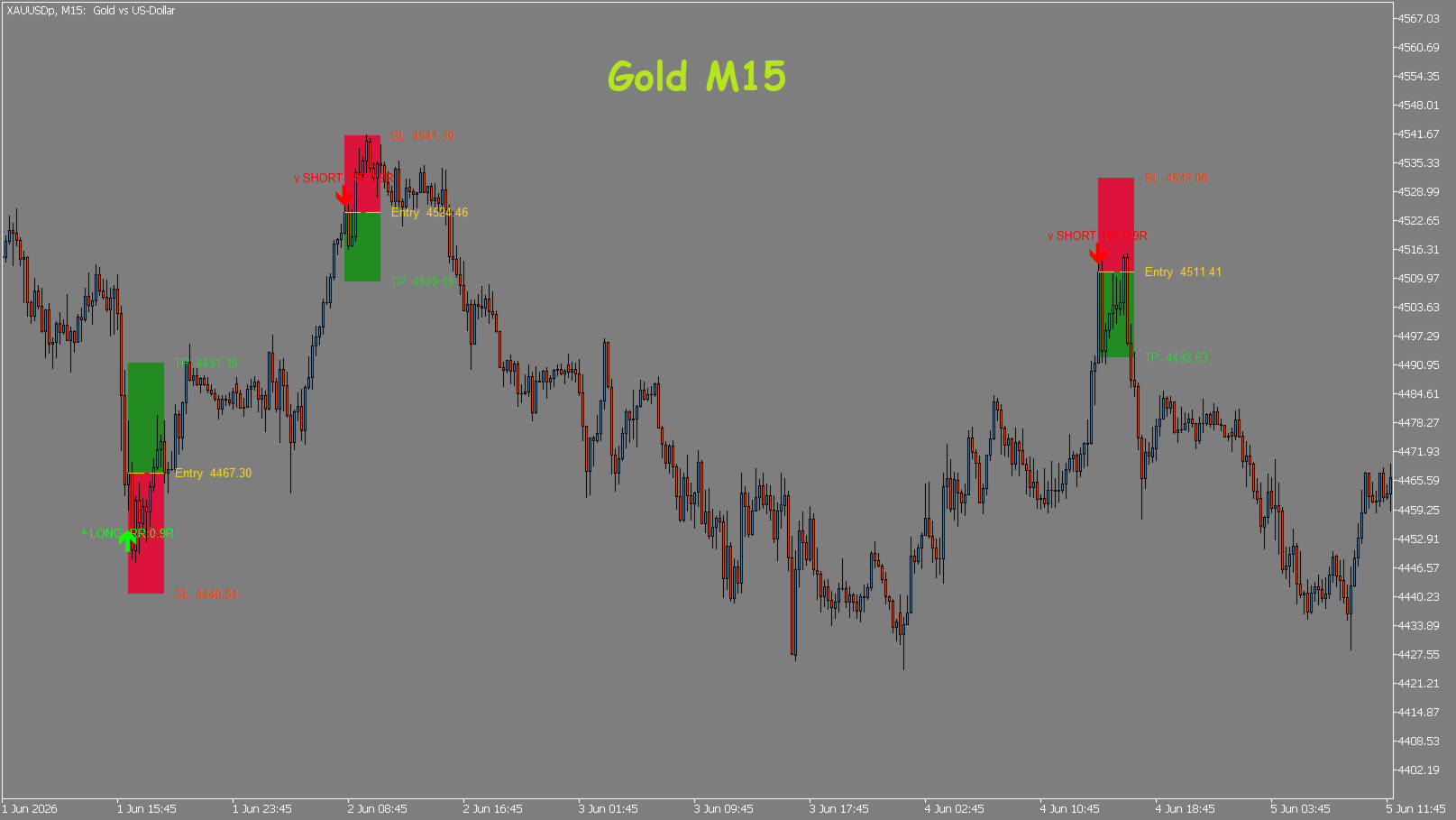
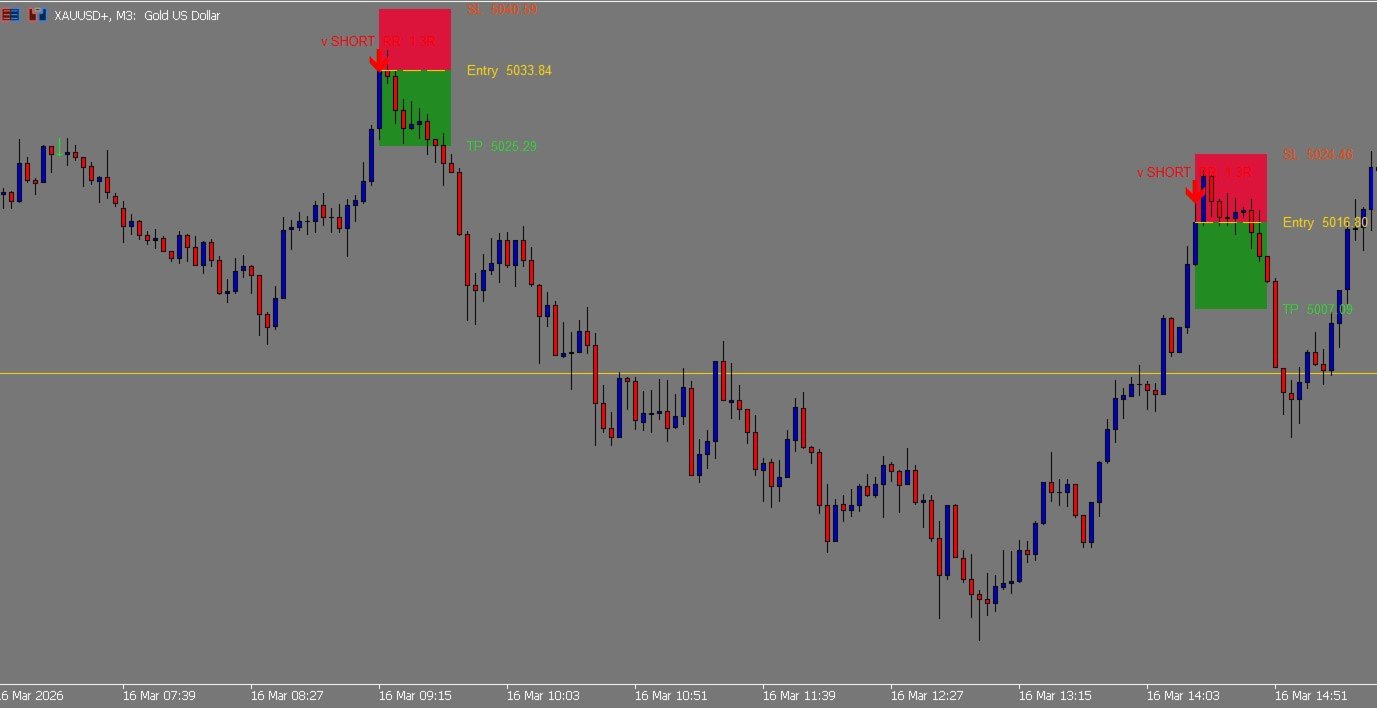
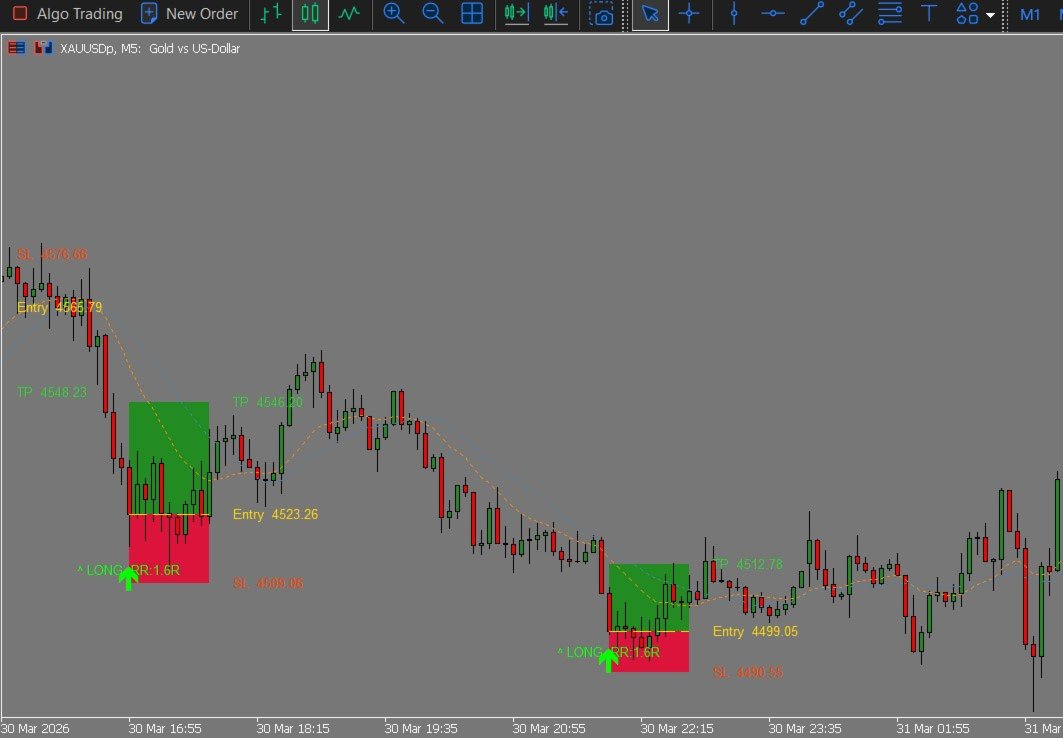
신호 캔들 오른쪽에 녹색 영역으로 표시되며 목표 가격이 함께 표시됩니다.
자동 SL 구간
ATR 기반으로 계산됩니다.
빨간색 영역과 손절 가격이 표시됩니다.
TP 및 SL 배수는 자유롭게 설정 가능합니다.
진입선 (Entry Line)
신호 발생 시 종가 위치에 금색 점선이 표시됩니다.
예시:
Entry 5022.50
다음 신호가 발생할 때까지 유지됩니다.
모든 과거 신호는 차트에 그대로 유지됩니다.
이를 통해:
-
과거 거래 검토
-
전략 분석
-
설정 최적화
-
성과 평가
를 손쉽게 수행할 수 있습니다.
리페인트 없음신호는 완전히 마감된 캔들만 기준으로 계산됩니다.
캔들이 마감된 이후에는 신호가 변경되거나 재계산되지 않습니다.
차트에 표시되는 내용은 실시간 상황과 완전히 동일합니다.
사운드 알림새로운 신호가 발생하면 다음 기능을 사용할 수 있습니다.
-
MT5 기본 사운드 알림 (.wav 파일 지원)
-
팝업 알림
-
MetaTrader 모바일 앱 푸시 알림
알림 내용:
-
진입 가격
-
TP
-
SL
-
위험 대비 보상 비율(RR)
각 신호는 한 번만 알림이 발생합니다.
추가 틱 발생 시 중복 알림은 발생하지 않습니다.
추천 설정BB Only
비활성화:
-
Nadaraya-Watson
-
RSI
-
Stochastic
-
Gann
순수 볼린저 밴드 평균회귀 전략.
NW Only
비활성화:
-
Bollinger Bands
-
모든 필터
Nadaraya-Watson 채널만 사용.
RSI Only
비활성화:
-
Bollinger Bands
-
Nadaraya-Watson
활성화:
-
RSI_As_Signal
전통적인 RSI 기반 매매 전략.
Full System
활성화:
-
Bollinger Bands
-
Nadaraya-Watson
-
RSI 필터
-
스토캐스틱 필터
-
Gann 방향 필터
여러 요소가 동시에 일치하는 고품질 신호를 제공합니다.
호환성지원 플랫폼:
-
MetaTrader 5
-
모든 금융 상품
-
모든 타임프레임
권장 거래 타임프레임: M3~M5
권장 Gann Pivot 타임프레임: M15 또는 H1
모든 설정은 MT5 재시작 후에도 저장됩니다.
중요 안내본 시스템은 100% 승률을 보장하는 시스템이 아닙니다.
최상의 결과를 얻기 위해서는 현재 시장 상황과 변동성에 맞춰 ATR 기반 설정을 조정해야 합니다.
본 인디케이터는 투자 조언 또는 금융 자문을 제공하지 않으며 수익을 보장하지 않습니다.
설치, 설정 또는 사용 중 도움이 필요하시면 언제든지 연락해 주세요.
여러분의 성공적인 트레이딩 여정을 진심으로 응원합니다.
키워드:
Mean Reversion, 평균회귀, 인디케이터, RSI, Gann, Nadaraya Watson, 엔벨로프, 채널, Take Profit, Stop Loss, Quantum Reversion, Pro, 볼린저 밴드, 확장, 소진, 스캘핑, 트레이딩, MT5
































gooood job