Reverse RSI Phantom MT4
- Indicatori
-
Kestutis Balciunas
 Con oltre 16 anni di esperienza attiva nei mercati finanziari, sono specializzato nello sviluppo di strategie di trading forex ad alte prestazioni, indicatori tecnici ed Expert Advisors automatizzati per MT4/MT5. Il mio lavoro comprende sistemi di trading progettati con precisione, orientati
 - Versione: 1.0
- Attivazioni: 20
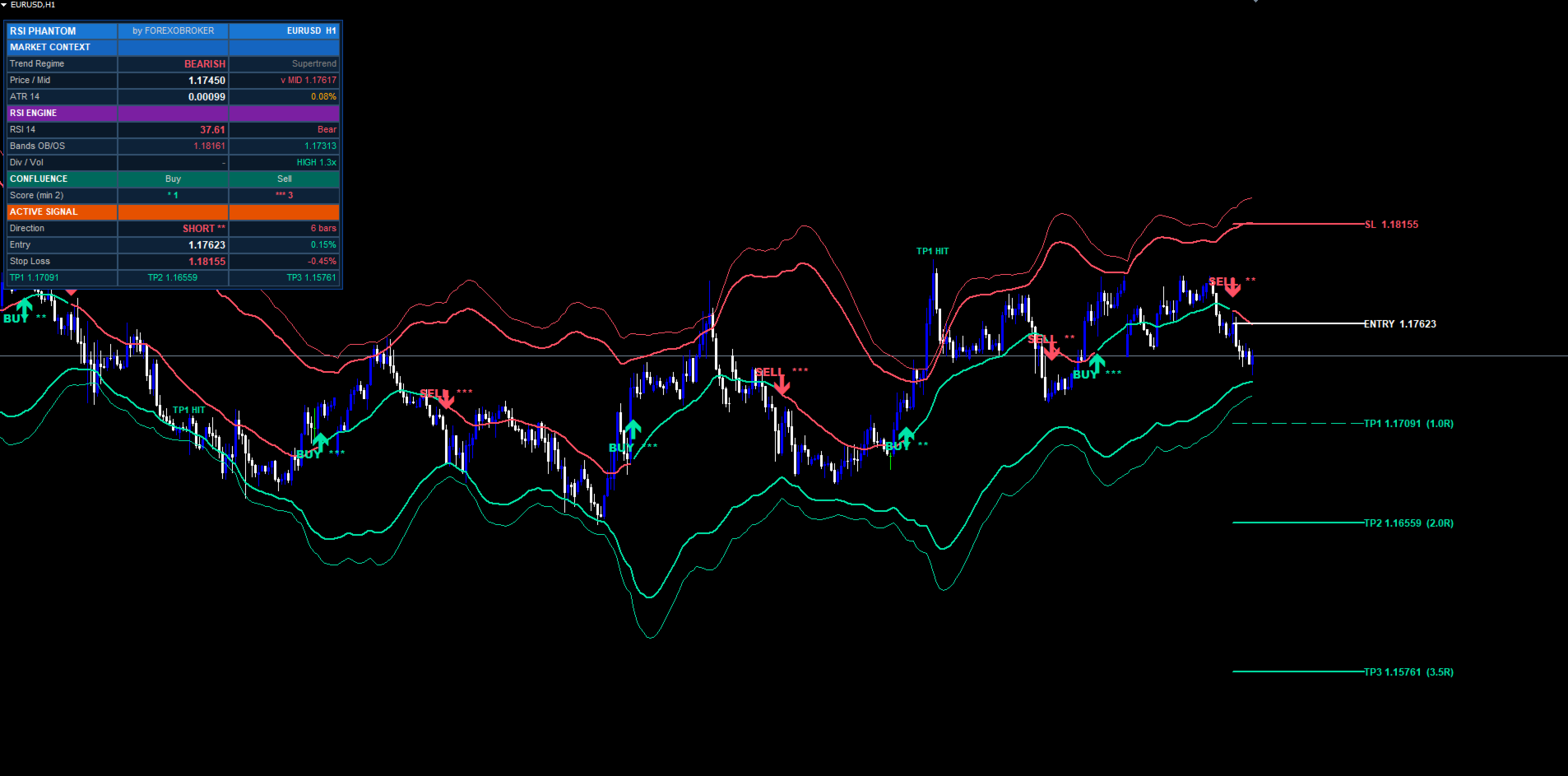
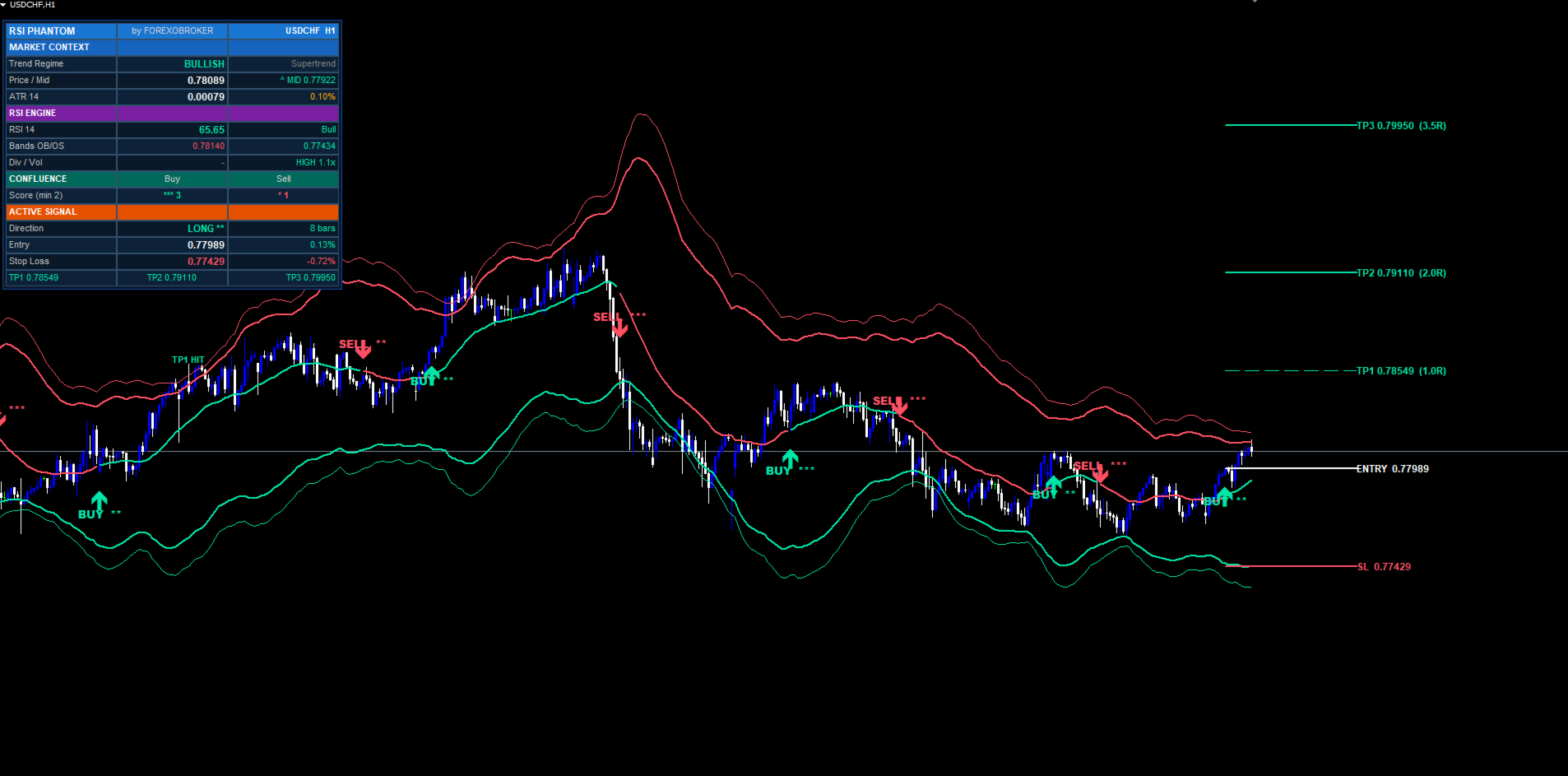
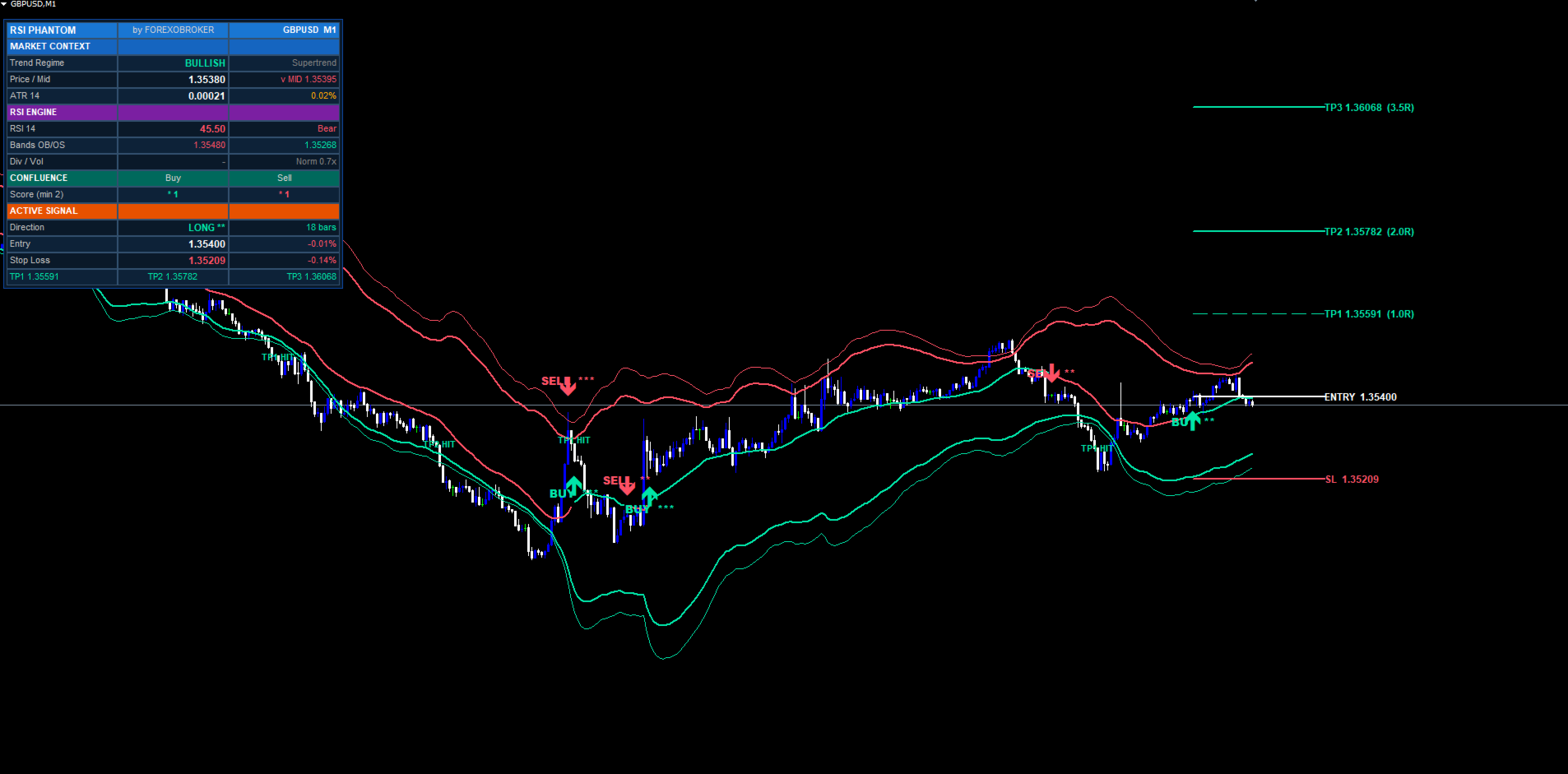
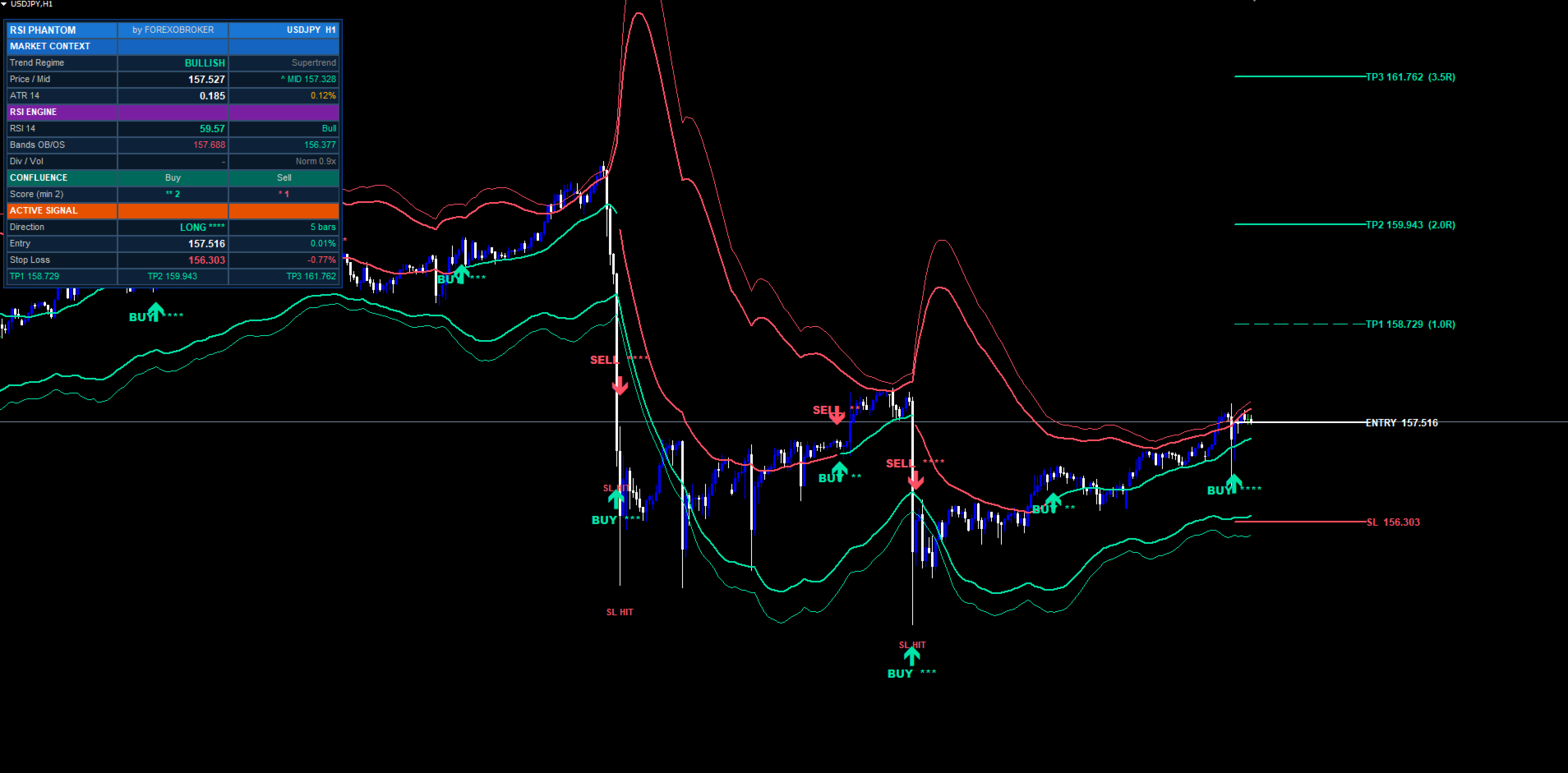
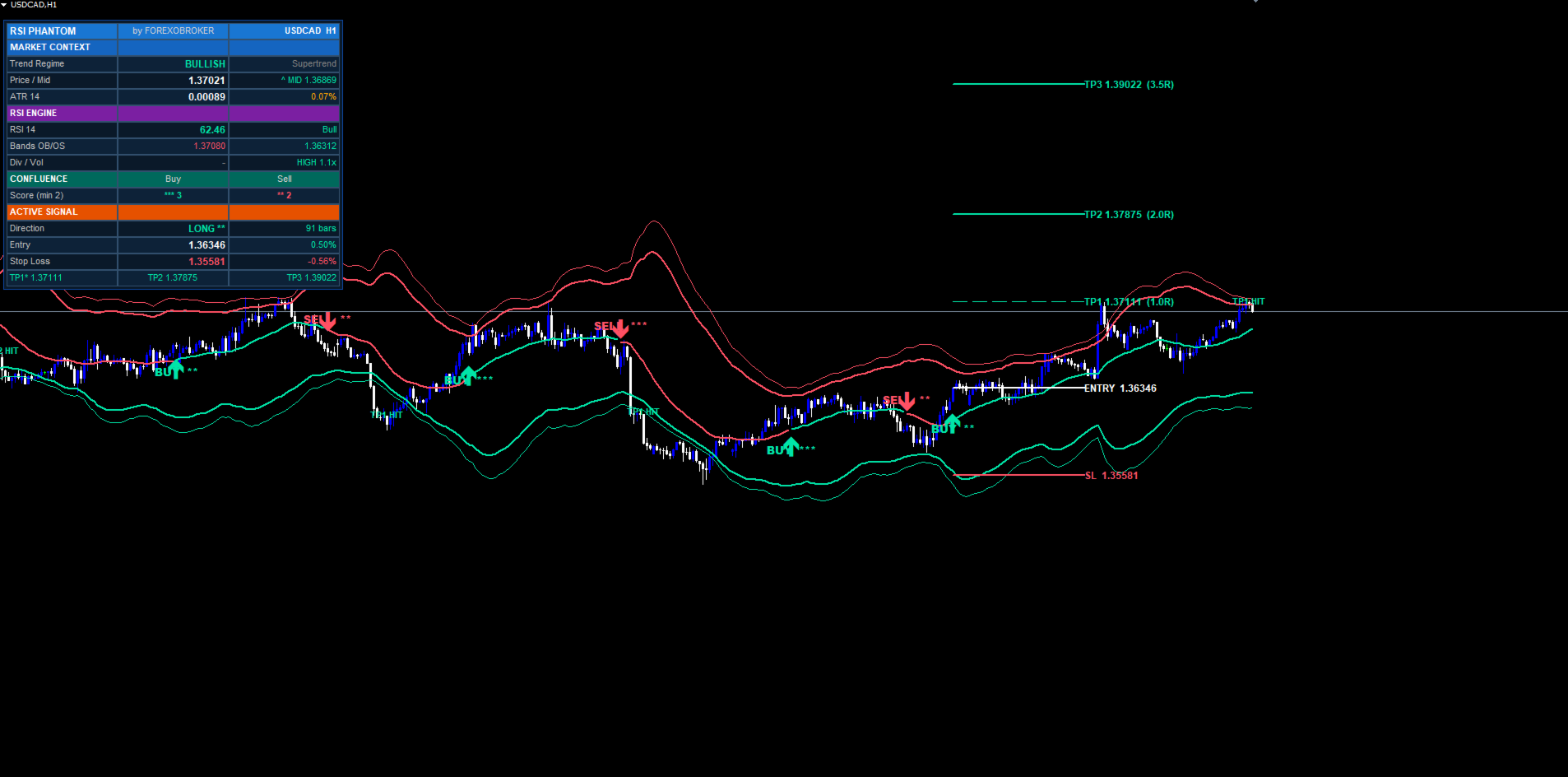
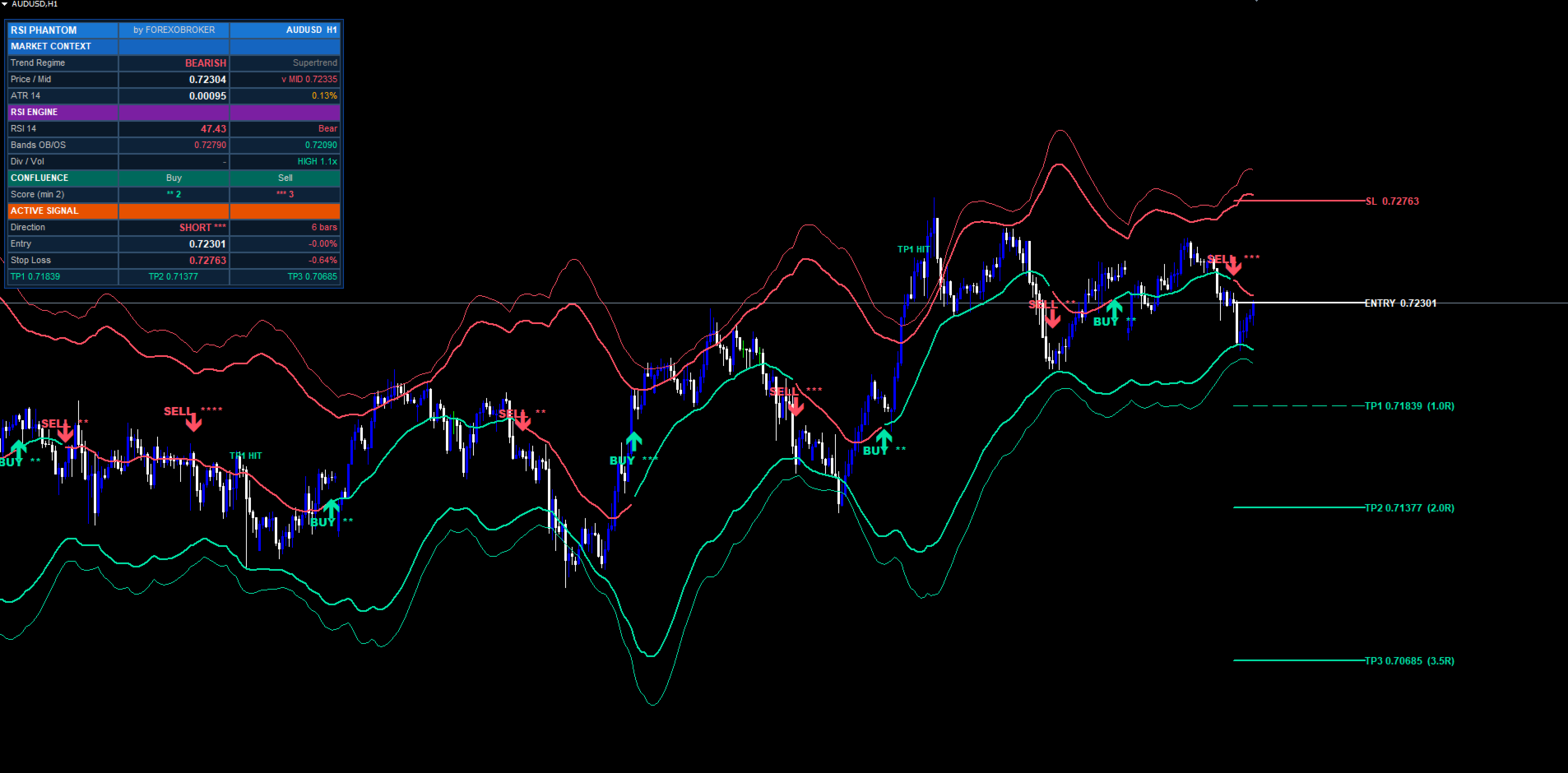
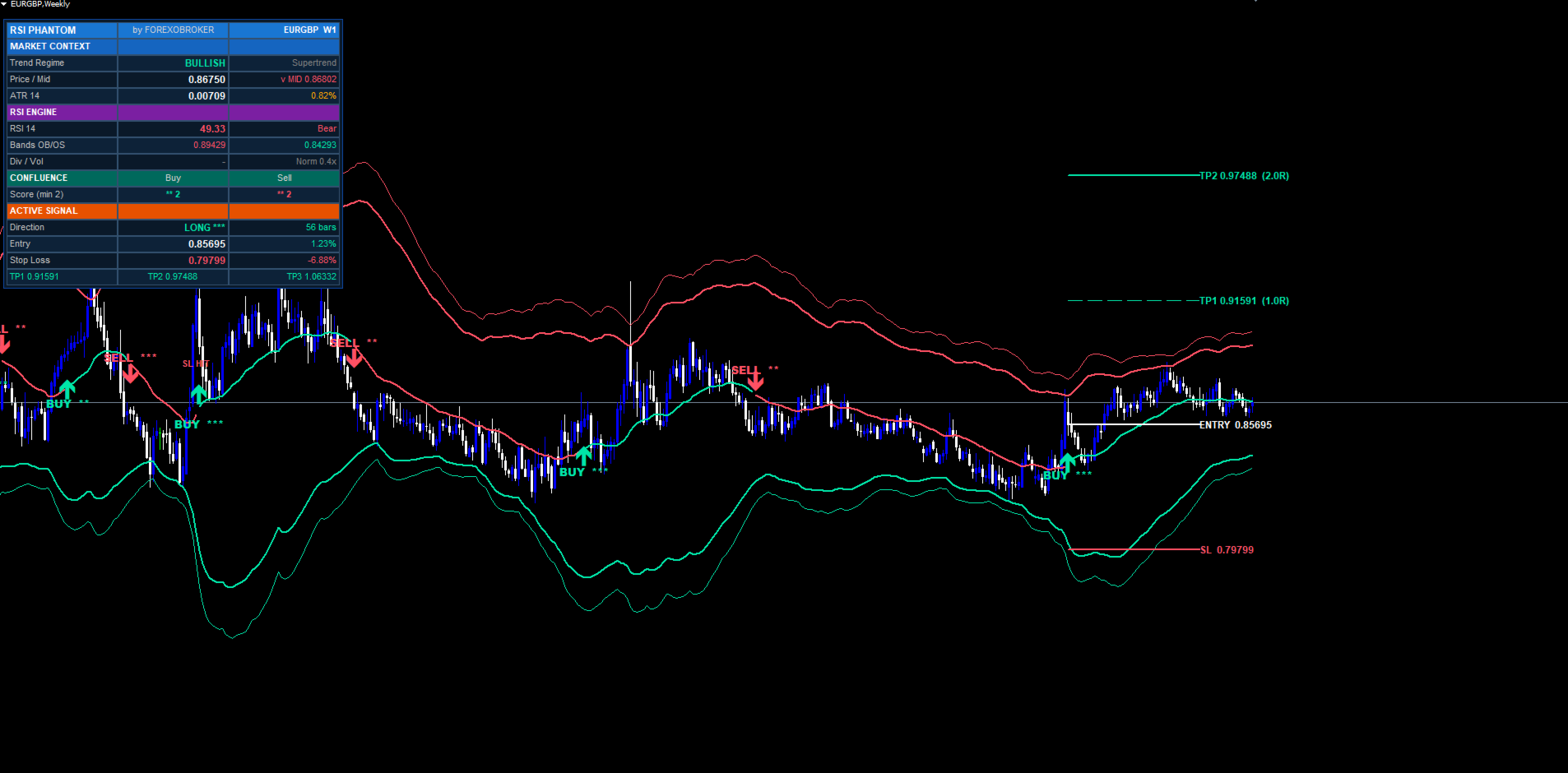
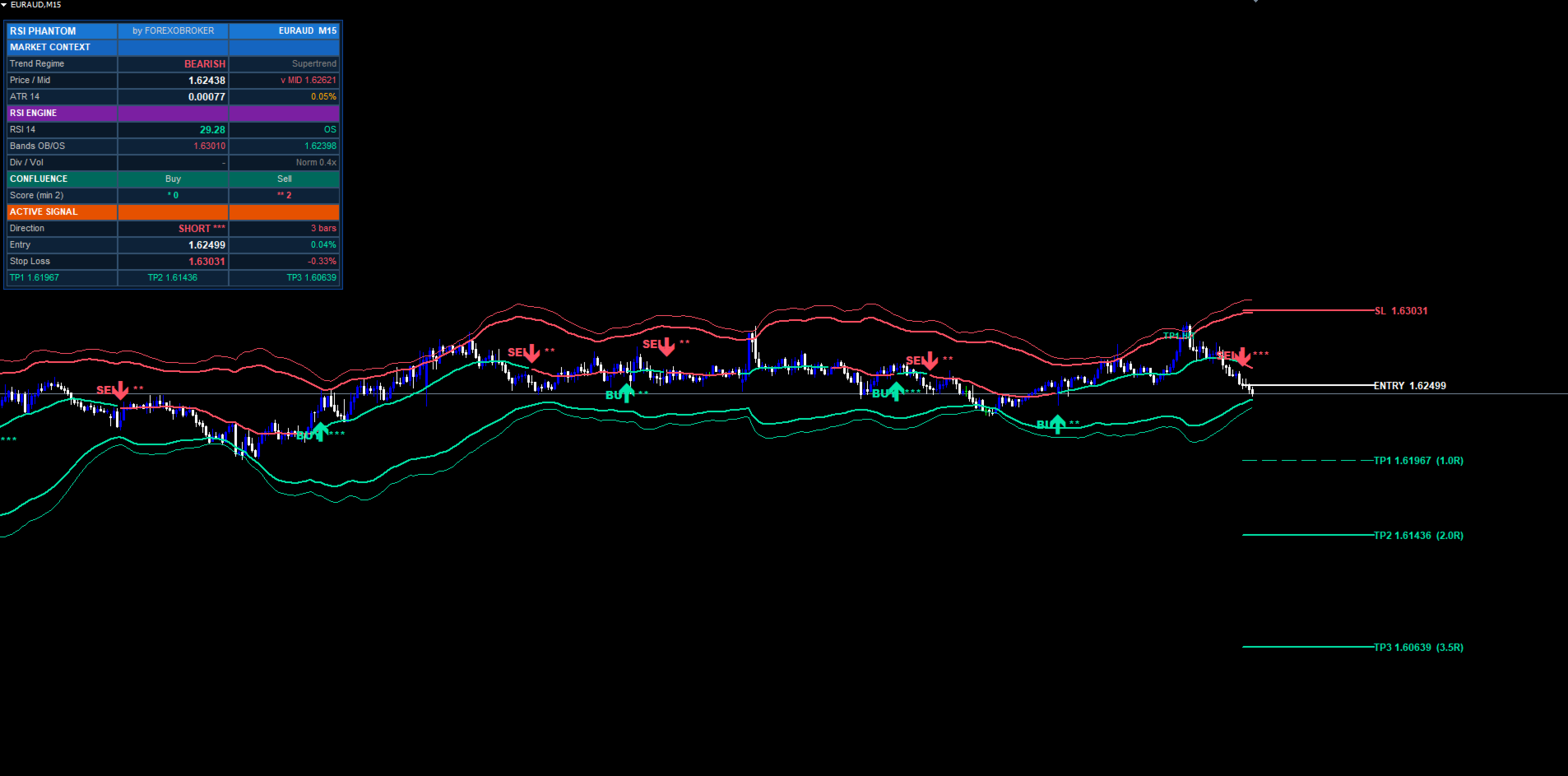
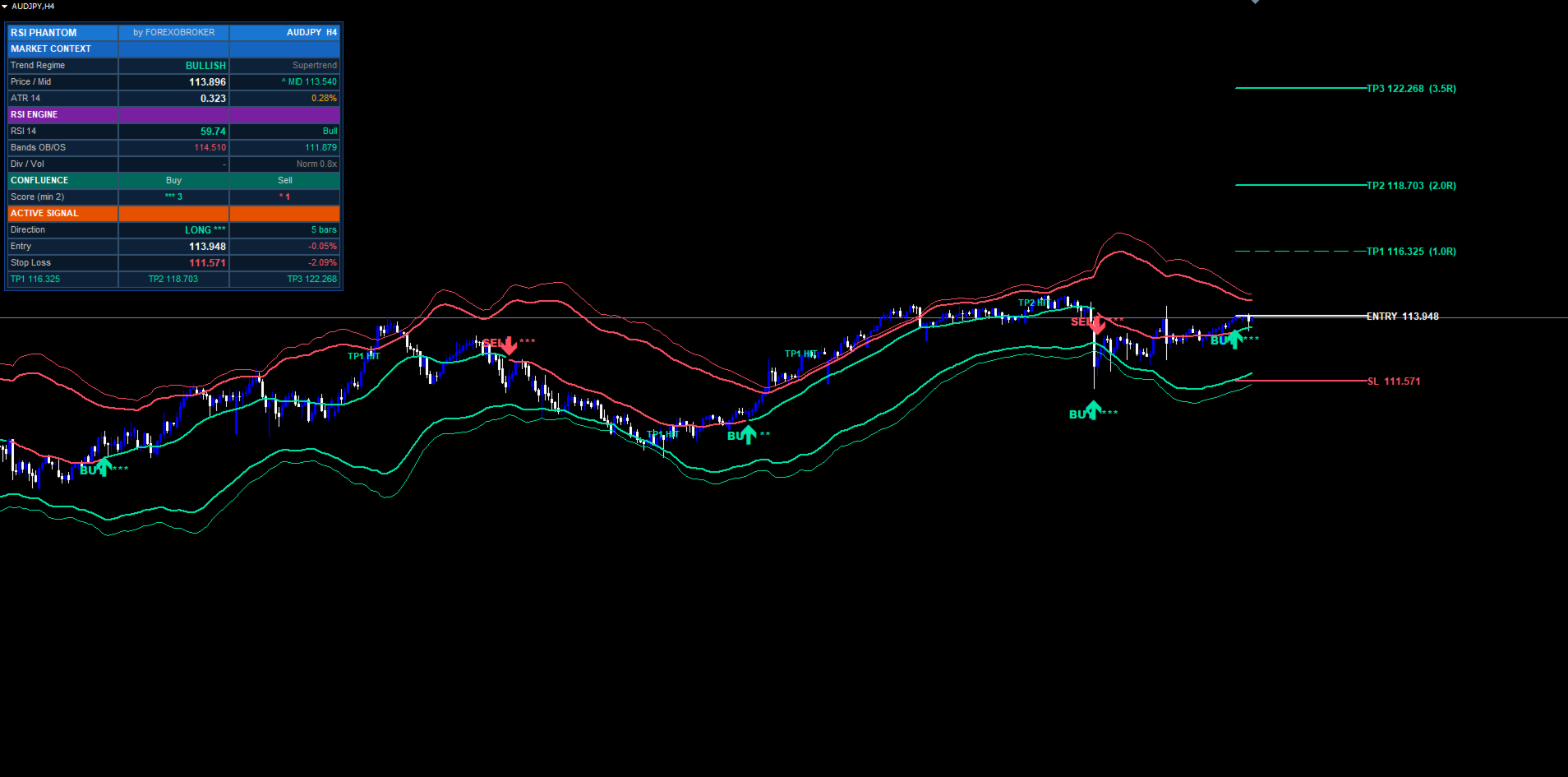
Reverse RSI Phantom è un indicatore di inversione e continuazione di tendenza non repaint per MetaTrader 4 che risolve un problema tipico di chi utilizza l’RSI: l’RSI predefinito vive in una finestra separata, quindi non puoi vedere le zone di ipercomprato e ipervenduto nello stesso spazio visivo delle candele. Reverse RSI Phantom inverte l’equazione dell’RSI per calcolare il prezzo esatto che il mercato dovrebbe stampare affinché l’RSI sia pari a 70, 50 o 30, e traccia poi questi valori come bande di livelli di prezzo in tempo reale sul grafico principale. Sopra queste bande trovi un motore di confluenza a cinque livelli, un filtro di tendenza Supertrend basato su macchina a stati applicato alla linea mediana RSI=50, un rilevatore di divergenze basato sui pivot e un sistema completo di gestione del rischio che disegna uno stop loss (SL) e tre livelli di take profit (TP) (1R, 2R, 3R) su ogni segnale confermato. Una dashboard multi‑sezione mostra in tempo reale lo stato di ogni componente e un pacchetto di avvisi completo copre ogni evento rilevato dall’indicatore.
Versione MT5 disponibile qui: Reverse RSI Phantom MT5
Altri prodotti disponibili su: Tutti i prodotti
Versione MT5 disponibile qui: Reverse RSI Phantom MT5
Altri prodotti disponibili su: Tutti i prodotti
Per esempi live e nuovi strumenti, visita il mio profilo e invia una richiesta di amicizia così non perderai nessun aggiornamento!
Come funziona
Motore di inversione dei livelli di prezzo
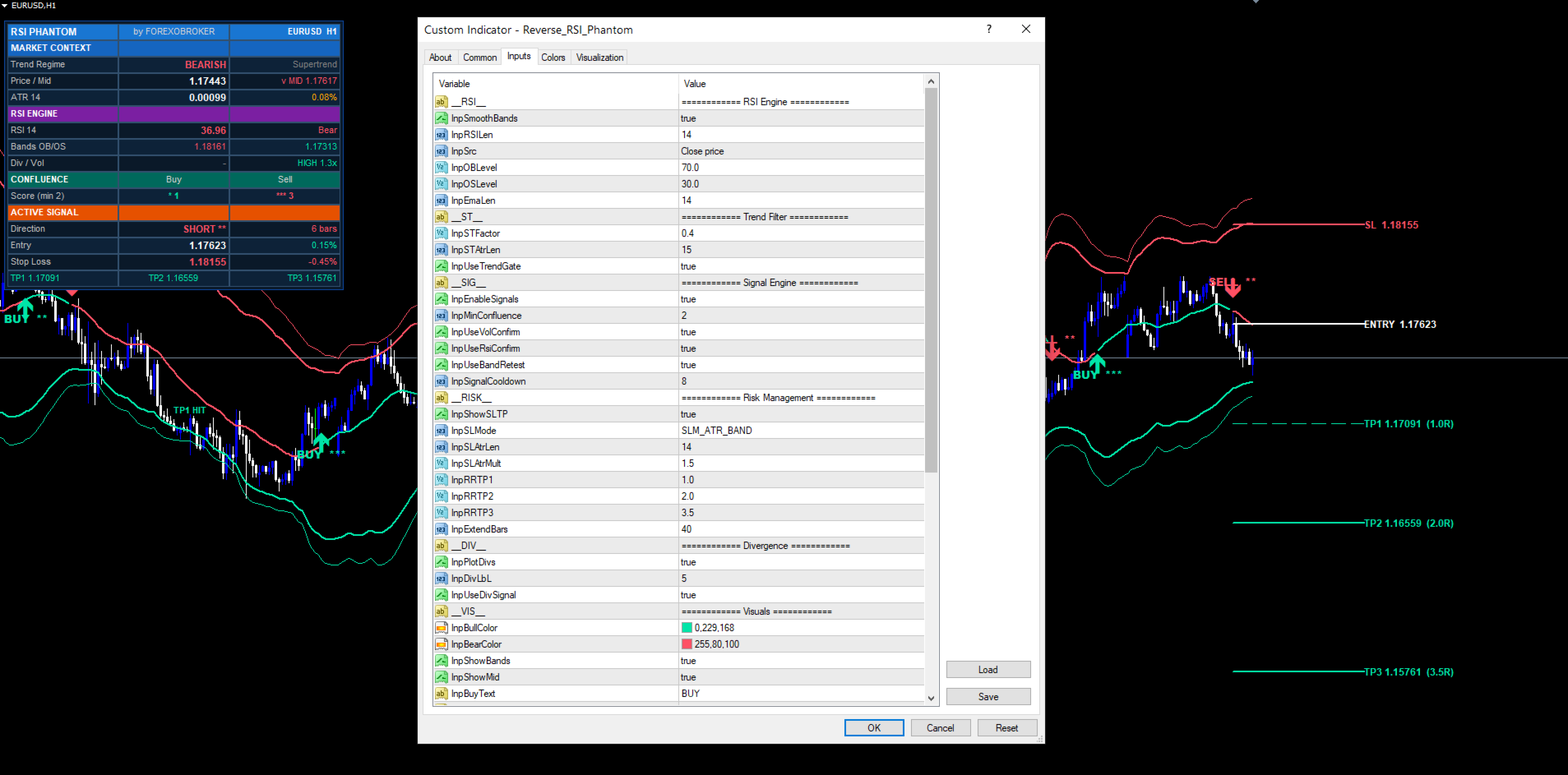
La formula standard dell’RSI trasforma le medie recenti dei movimenti al rialzo e al ribasso in un oscillatore compreso tra 0 e 100. Reverse RSI Phantom risolve questa equazione al contrario. Dato un livello target di RSI (70 per ipercomprato, 30 per ipervenduto, 50 per la linea mediana, come impostazioni predefinite), l’indicatore calcola l’incremento di prezzo esatto che produrrebbe quel valore di RSI sulla candela successiva, utilizzando le medie RMA della candela precedente per i movimenti rialzisti e ribassisti. Il risultato sono tre livelli di prezzo dinamici: una banda superiore in cui l’RSI sarebbe pari a 70, una banda inferiore in cui l’RSI sarebbe pari a 30 e una linea mediana in cui l’RSI sarebbe pari a 50. Un eventuale smoothing EMA (14 periodi di default) smorza le bande in modo che seguano il prezzo in modo fluido, senza tremare a ogni tick.
Filtro di tendenza Supertrend sulla linea mediana
Invece di applicare Supertrend direttamente al prezzo (che è rumoroso), Reverse RSI Phantom lo applica alla linea mediana RSI=50, utilizzando un ATR personalizzato calcolato sull’escursione dei massimi e minimi di quella linea. Questo genera un indicatore di regime basato sul momentum che commuta tra fase rialzista e ribassista solo quando la struttura interna dell’RSI cambia realmente. La linea mediana è colorata in verde menta quando il regime è rialzista e in rosso quando è ribassista, offrendo un segnale visivo immediato a qualsiasi livello di zoom.
Confluenza a cinque livelli
Ogni trigger grezzo (cambio di trend, attraversamento di banda o divergenza) viene valutato rispetto a cinque livelli indipendenti di confluenza prima di disegnare un segnale BUY o SELL:
- Regime di tendenza — la direzione attuale del Supertrend deve essere allineata con la direzione dell’operazione
- Conferma RSI — per i buy, l’RSI deve attraversare al rialzo il livello 30 (oppure essere > 50); per i sell, deve rompere al ribasso il livello 70 (oppure essere < 50)
- Retest della banda — il prezzo ha toccato la banda di ipercomprato o ipervenduto nelle ultime 8 candele
- Divergenza — è attiva una divergenza RSI regolare rialzista o ribassista
- Spike di volume — il volume della candela attuale è almeno 1,0× la SMA del volume a 20 candele
Ogni livello superato aggiunge un punto allo score di confluenza (da 0 a 5). Un parametro di punteggio minimo (default 2) determina quanto l’indicatore debba essere selettivo prima di disegnare un segnale. Ogni segnale è etichettato con delle stelle che mostrano quante layer sono state superate (per esempio “* 3” per una configurazione 3 su 5).
Gestione automatica del rischio — SL + 3 livelli di TP
Quando un segnale si attiva, l’indicatore calcola immediatamente uno stop loss e tre target di take profit e li disegna come linee orizzontali che si estendono verso destra sul grafico. Lo SL ha tre modalità di calcolo, selezionabili dagli input: ATR + banda (il più stretto tra uno SL a distanza ATR e uno SL ancorato alla banda), ATR puro (prezzo di ingresso più o meno ATR × moltiplicatore) oppure swing recente (massimo/minimo delle ultime 10 candele più un margine di ATR). I tre livelli di TP sono poi calcolati di default a multipli di rischio/rendimento 1R, 2R e 3R, ma ogni rapporto è completamente configurabile. Ogni livello ha un’etichetta di prezzo sul lato destro del grafico e la dashboard traccia in tempo reale i target raggiunti con segni di spunta.
Motore di segnali non repaint
Tutti i segnali sono valutati solo su candele chiuse e confermate. Il segnale sulla candela N non cambia mai dopo l’apertura della candela N+1. Il replay storico disegnato al caricamento dell’indicatore è identico ai segnali che sarebbero apparsi in tempo reale. Durante il primo replay storico, i messaggi di allerta vengono soppressi, così l’aggancio dell’indicatore non riempie il terminale di notifiche.
Dashboard multi‑sezione
Una dashboard ancorata ai pixel mostra in tempo reale lo stato del mercato in cinque sezioni: Contesto di mercato (regime di tendenza, rapporto prezzo‑linea mediana, ATR e ATR%), Motore RSI (valore e stato dell’RSI, prezzi correnti delle bande di ipercomprato/ipervenduto, flag di divergenza, spike di volume), Confluenza (punteggi buy e sell in tempo reale con rendering a stelle e soglia minima richiesta), Segnale attivo (direzione, numero di candele trascorse, prezzo di ingresso, SL con distanza percentuale, TP1/TP2/TP3 con segni di avanzamento) e Performance (conteggio corrente di trade vincenti/perdenti, totale segnali, TP colpiti, SL colpiti). Posizione, larghezza delle colonne, dimensione del font e offset X/Y della dashboard sono completamente configurabili.
Caratteristiche principali
- Livelli RSI di ipercomprato, ipervenduto e linea mediana tracciati come bande di prezzo in tempo reale sul grafico principale
- Motore di segnali non repaint — attiva solo alla chiusura confermata della candela
- Sistema di confluenza a 5 livelli con indicatori a stella direttamente sul grafico
- Stop loss basato su ATR con tre modalità di calcolo (ATR + banda, ATR puro, swing recente)
- Tre livelli di take profit con multipli rischio/rendimento configurabili (default 1R / 2R / 3R)
- Rilevamento di divergenza RSI regolare basato sui pivot
- Filtro di tendenza Supertrend a macchina a stati applicato alla linea mediana RSI=50
- Conferma tramite spike di volume (candela corrente vs SMA del volume a 20 candele)
- Cooldown dei segnali configurabile per evitare duplicati ravvicinati
- Dashboard multi‑sezione con stato live, percentuali e tracking di TP/SL colpiti
- 13 tipi di allerta: BUY, SELL, Any Signal, inversione di trend rialzista/ribassista, divergenza rialzista/ribassista, ingresso in banda superiore/inferiore, TP1/TP2/TP3 colpito, SL colpito
- Canali di allerta via pop‑up, notifica push ed e‑mail
- Etichette sul grafico solo in ASCII per la massima compatibilità tra piattaforme e font
- Funziona su qualunque simbolo e qualunque timeframe
- Disponibile sia per MT4 che per MT5 con comportamento visivo e logico identico
Migliori mercati e timeframe
Reverse RSI Phantom funziona su tutti i tipi di strumenti — major ed exotic del forex, indici, materie prime (oro, argento, petrolio), singole azioni e coppie crypto — e su tutti i timeframe da M1 a MN1. I timeframe alti (H1 e superiori) producono meno segnali ma di qualità più elevata; i timeframe bassi generano più setup. Il parametro di confluenza minima ti permette di regolare direttamente la frequenza dei segnali: impostalo su 2 per le major in H1 per avere un numero di setup equilibrato, oppure su 4 in M5 se vuoi solo le configurazioni più forti.
Guida utente completa & trading manual