What Is Drawdown in Forex? How to Calculate Maximum Drawdown and Manage Trading Losses

What Is Drawdown in Forex?
How to Calculate Maximum Drawdown and Manage Trading Losses
Forex drawdown is one of the most important metrics traders should understand when evaluating a trading strategy. Many traders focus primarily on net profit, win rate, and the number of winning trades. However, profitability alone does not determine whether a trading system is reliable. The amount of capital lost during losing periods and the ability to control risk play a crucial role in long-term trading performance.
Understanding drawdown, learning how to calculate Maximum Drawdown, and applying sound risk management principles can help traders identify weaknesses in their strategies before significant losses occur. In this article, we will explore the different types of drawdown, explain how to calculate it, and discuss practical ways to manage account equity declines.
What Is Drawdown in Forex?
Drawdown refers to the decline in an account's value from a previous peak to a subsequent low. It can occur after several losing trades, during unfavorable market conditions, or when a trading strategy performs poorly.
For example, suppose your account balance grows from $10,000 to $12,000. After several unsuccessful trades, your account value falls to $9,600. The drawdown from the $12,000 peak is $2,400, or 20%.
This figure shows how far your account has fallen from its previous high. Drawdown is therefore more than the loss on a single trade; it provides a broader picture of how an account performs during different market conditions.
Why Is Drawdown Important for Traders?
Drawdown becomes particularly important when comparing two trading strategies with similar net profits. One strategy might generate attractive returns but experience substantial capital declines along the way. Another might achieve comparable returns with smaller fluctuations and less severe losses.
For many traders, the second strategy may be easier to manage from both a risk management and psychological perspective.
Monitoring drawdown helps traders:
-
Evaluate the actual risk associated with a trading strategy.
-
Estimate the capital required to trade a system.
-
Identify weaknesses in their trading approach.
-
Avoid increasing position sizes after losses.
-
Assess the performance of Expert Advisors (EAs) and automated trading systems.
Types of Drawdown in Forex Trading
Understanding the different types of drawdown is essential for evaluating trading performance accurately. Each metric provides a different perspective on account risk.
1. Absolute Drawdown
Absolute Drawdown measures the decline in account equity relative to the initial deposit. It indicates how far the account has fallen below its starting capital.
For example, if you open a trading account with $5,000 and its value falls to $4,600, the absolute drawdown is $400.
When interpreting this metric, traders should check the calculation method used by their trading platform or performance report, as the treatment of floating profits and losses can affect the result.
2. Relative Drawdown
Relative Drawdown expresses a decline in capital as a percentage of a previous equity peak. It is particularly useful when comparing trading accounts of different sizes.
Suppose your account equity rises to $8,000 and subsequently falls to $7,200. The decline is $800, representing a 10% relative drawdown from the previous peak.
This percentage makes it easier to compare the severity of losses across accounts without relying solely on their monetary values.
3. Maximum Drawdown (Max Drawdown)
Maximum Drawdown, commonly abbreviated as Max Drawdown or MDD, measures the largest peak-to-trough decline recorded during a specified period.
For example, if your account reaches a peak of $15,000 before falling to $12,000, the drawdown during that decline is $3,000, or 20%.
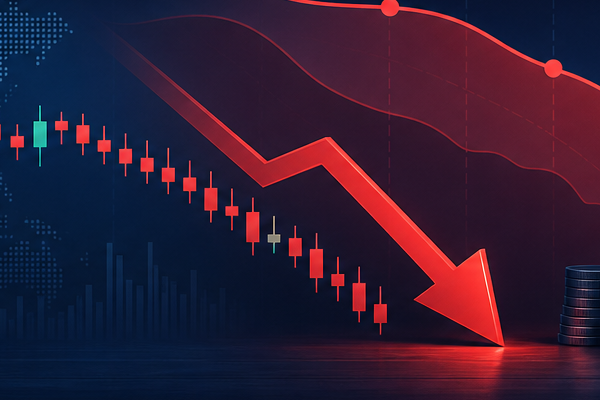
Maximum Drawdown is one of the most important metrics for evaluating a trading system because it reveals the severity of its worst historical decline. However, past performance cannot guarantee that future drawdowns will remain within the same limits.
How to Calculate Drawdown in Forex
To calculate percentage drawdown, identify the previous equity peak and the subsequent low. The standard formula is:
Drawdown (%) = (Previous Peak − Subsequent Trough) ÷ Previous Peak × 100
For example, suppose your account equity reaches $20,000 before declining to $17,000.
-
Previous equity peak: $20,000
-
Subsequent equity trough: $17,000
-
Capital decline: $3,000
-
Relative drawdown: 15%
An important consideration is whether the calculation uses Balance or Equity. Balance reflects the financial result of closed trades, while Equity also accounts for the floating profit or loss of open positions.
As a result, monitoring balance alone may conceal part of the risk associated with open trades. Traders who want a more complete picture of account exposure should understand how their platform calculates these figures.
How to Reduce Drawdown in Forex Trading
Reducing drawdown does not mean eliminating losses entirely. That is not a realistic objective in financial markets. The goal is to keep capital declines within a range that matches your account size, trading strategy, and risk tolerance.
1. Manage Position Size and Risk per Trade
One of the main causes of severe account drawdown is using position sizes that are too large relative to available capital. When too much of an account is exposed to risk on each trade, a short losing streak can produce significant losses.
Determine position size based on account equity, stop-loss distance, and the amount you are willing to risk. For example, risking 1% of a $10,000 account means risking $100 per trade. Your calculation should also account for pip value, commissions, and other trading costs.
2. Use Stop Loss Orders Properly
A Stop Loss helps define the potential loss on a position before entering the market. Trading without a clear exit plan can increase drawdown, particularly in volatile markets such as gold.
Stop-loss levels should reflect the strategy's logic and market structure rather than being placed arbitrarily close to the entry price.
3. Set a Maximum Acceptable Drawdown
Establish a predefined drawdown threshold for your trading account. If losses reach that level, consider pausing trading and reviewing the strategy before resuming.
This approach can help prevent emotional decisions, revenge trading, and the temptation to increase position sizes in an attempt to recover losses quickly.
4. Evaluate Your Strategy Through Backtesting
Before deploying a strategy on a live account, test it using historical data across different market conditions. In addition to net profit, evaluate Maximum Drawdown, consecutive losing trades, Profit Factor, and risk per trade.
Backtesting should account for spreads, commissions, slippage, and realistic execution conditions whenever possible. A strategy's historical results do not guarantee future profitability.
The Relationship Between Drawdown and Recovery
An important principle of risk management is that the percentage gain required to recover from a loss is greater than the percentage decline itself.
For example, if your account loses 20% of its value, it needs to gain 25% from the remaining balance to return to its starting point. If the account suffers a 50% drawdown, it must gain 100% to recover fully.
This mathematical relationship explains why preventing severe losses is often more effective than trying to recover capital quickly. The deeper the drawdown, the more difficult it becomes to return to the previous equity peak.
Conclusion: Why Drawdown Management Matters More Than Chasing Profits
Forex drawdown is a key metric for understanding the risk, stability, and performance of a trading strategy. By examining Absolute Drawdown, Relative Drawdown, and Maximum Drawdown, traders can make better-informed decisions about position sizing, stop-loss placement, and capital allocation.
A professional trader does not simply ask, "How much profit can this system generate?" They also ask, "How much capital could I lose while pursuing those returns?"
Answering that question helps distinguish a manageable trading strategy from one that exposes the account to excessive risk.

Introducing TW Sniper EA
For traders interested in automated gold trading, TW Sniper EA is an Expert Advisor worth exploring. Designed for XAUUSD trading, the tool focuses on trend-following, allows one trade at a time, and incorporates risk management and drawdown protection features. Its listed specifications also include hidden Stop Loss and Take Profit functionality.
Before using any Expert Advisor on a live account, test it on a demo account under your broker's trading conditions. Carefully evaluate its drawdown, exit logic, and exposure to risk. Protective features can help manage risk, but they cannot eliminate losses or guarantee profitability.