Gold Breakout Engine
- Uzmanlar
-
Peter Mueller
 I’m a 22-year-old Electrical Engineer with a strong background in programming (C,C++,C#,Python) and over five years of trading experience. Trading has become my passion, and I strive to develop high-quality expert advisors and utilities to help traders optimize their strategies.
 - Sürüm: 1.22
- Güncellendi: 1 Eylül 2026
- Etkinleştirmeler: 20
No AI, No Quantum, No Grid, No Martingale. This EA is built around a real trading concept: breakouts of major support and resistance levels.
Contact me after purchase for installation support and user guidelines.
SET FILES Price will increase based on live performance & demand. Live Signal
The Gold Breakout Engine is a portfolio of 4 different breakout strategies trading Gold (XAUUSD).
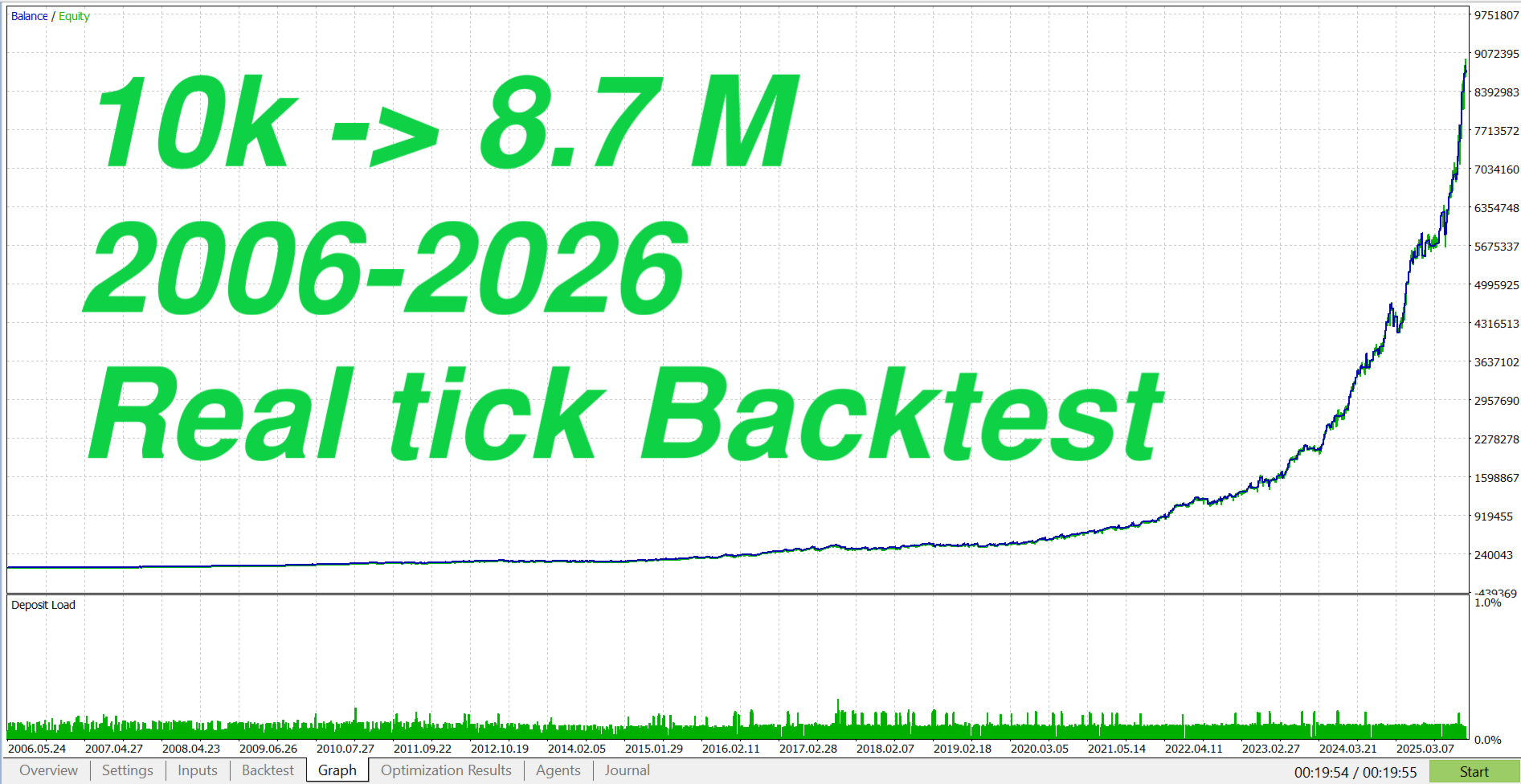
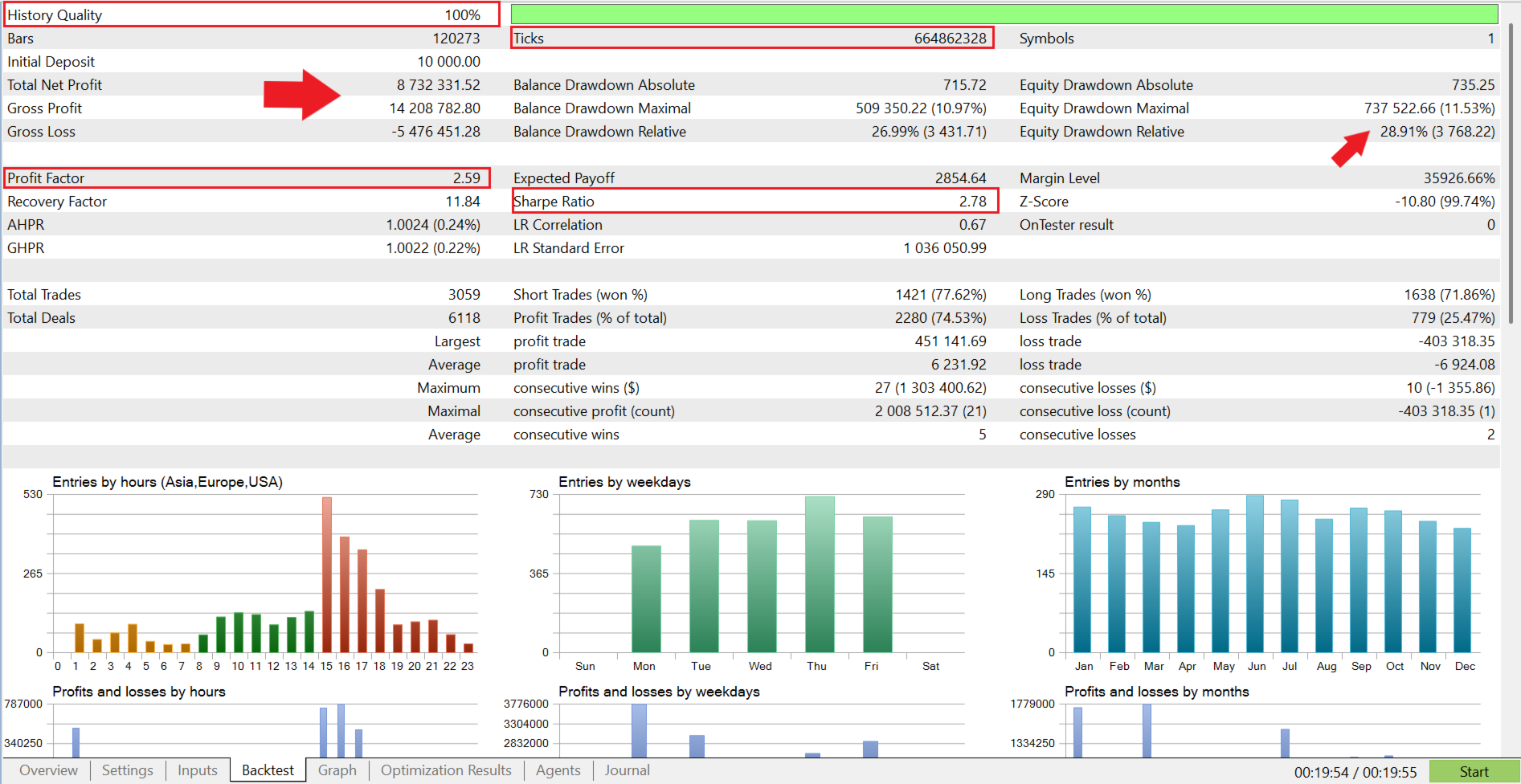
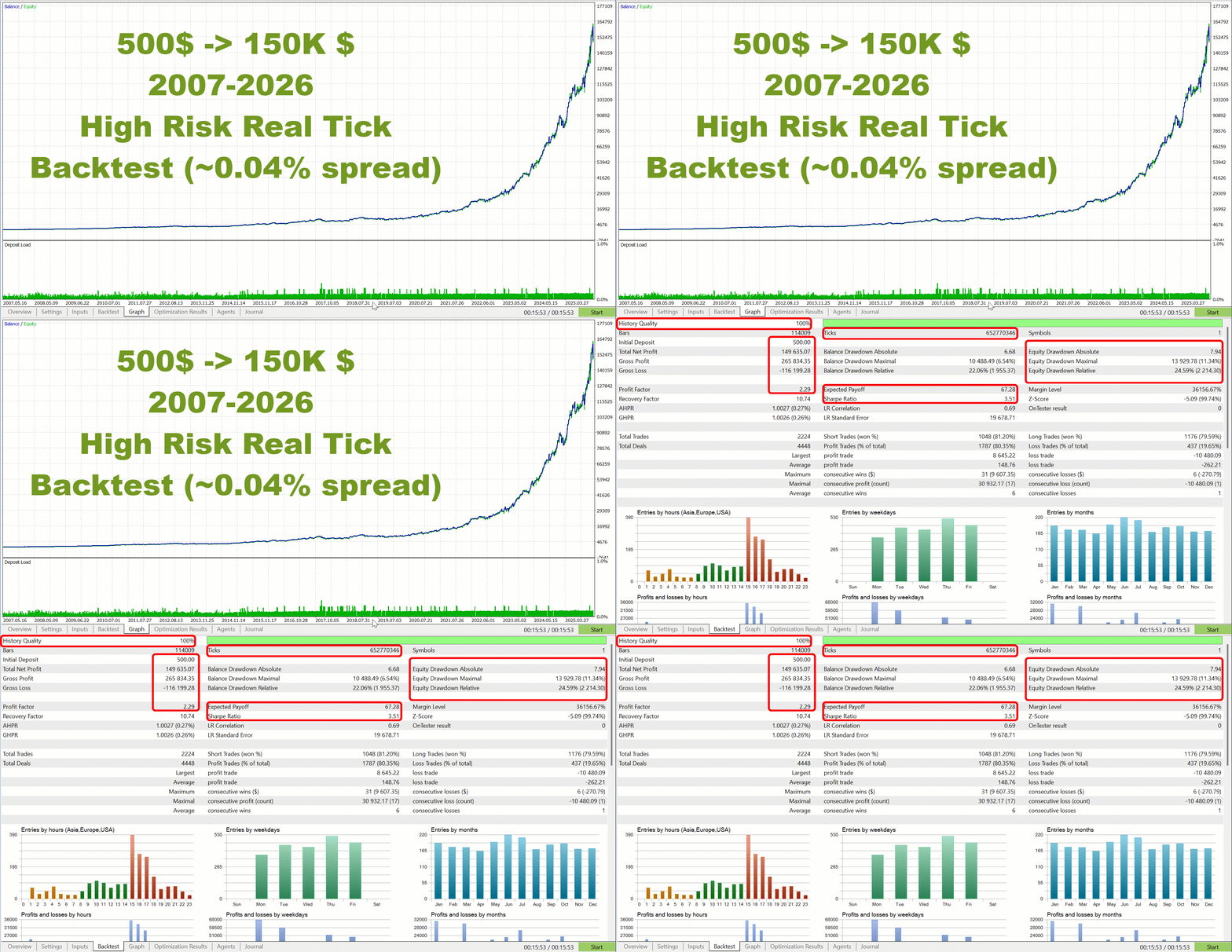
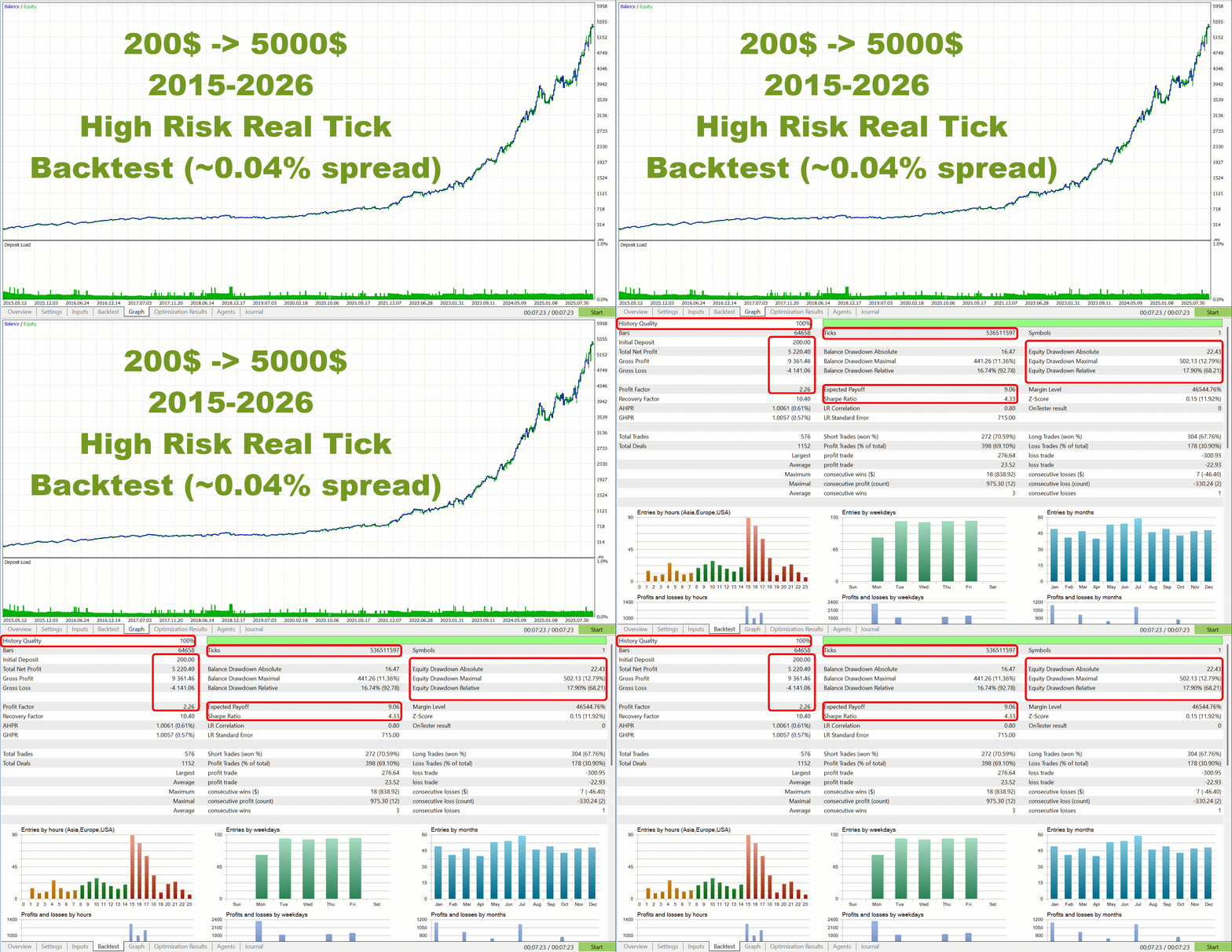
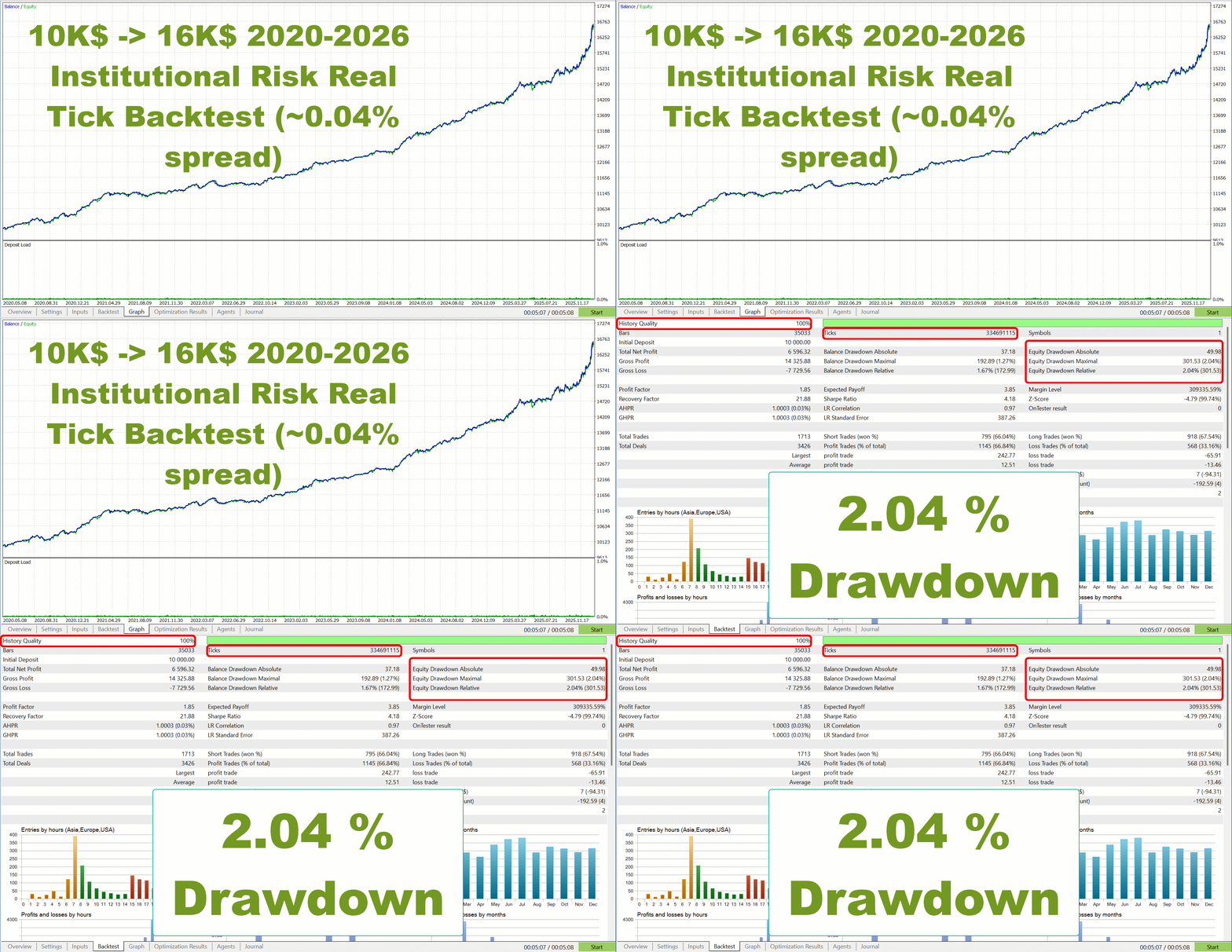
Backtests were conducted from 2007 using Dukascopy real tick data, with spreads artificially increased to ~0.005% to simulate pessimistic conditions.
This is not a HFT system. It is designed for long-term, statistically grounded trading.
This Expert Advisor performs best during strong trending conditions on Gold. Drawdowns can occur in choppy market conditions.
Minimum Account Size: 250$ (running only 1 strategy out of the 4 with high risk settings)
Works on most brokers. Performance depends on trading costs (spread, slippage, execution). Recommended Leverage > 1:30
Backtesting
Most sellers recommend testing with OHLC. I don't. I recommend using real ticks, that you can download from Dukascopy with pessimistic spreads.
The recommended backtesting period is the longest time window possible. Backtesting the strategy for only a few months or a single year can produce statistically insignificant results. It is entirely possible to select a short time period where the strategy only produced losses or only produced profits, neither of which reflects its long-term behavior.
You can run a backtest with the basic input parameters with a 10.000$ deposit. Other settings are available in the Set Files.
Input Parameters
----Display
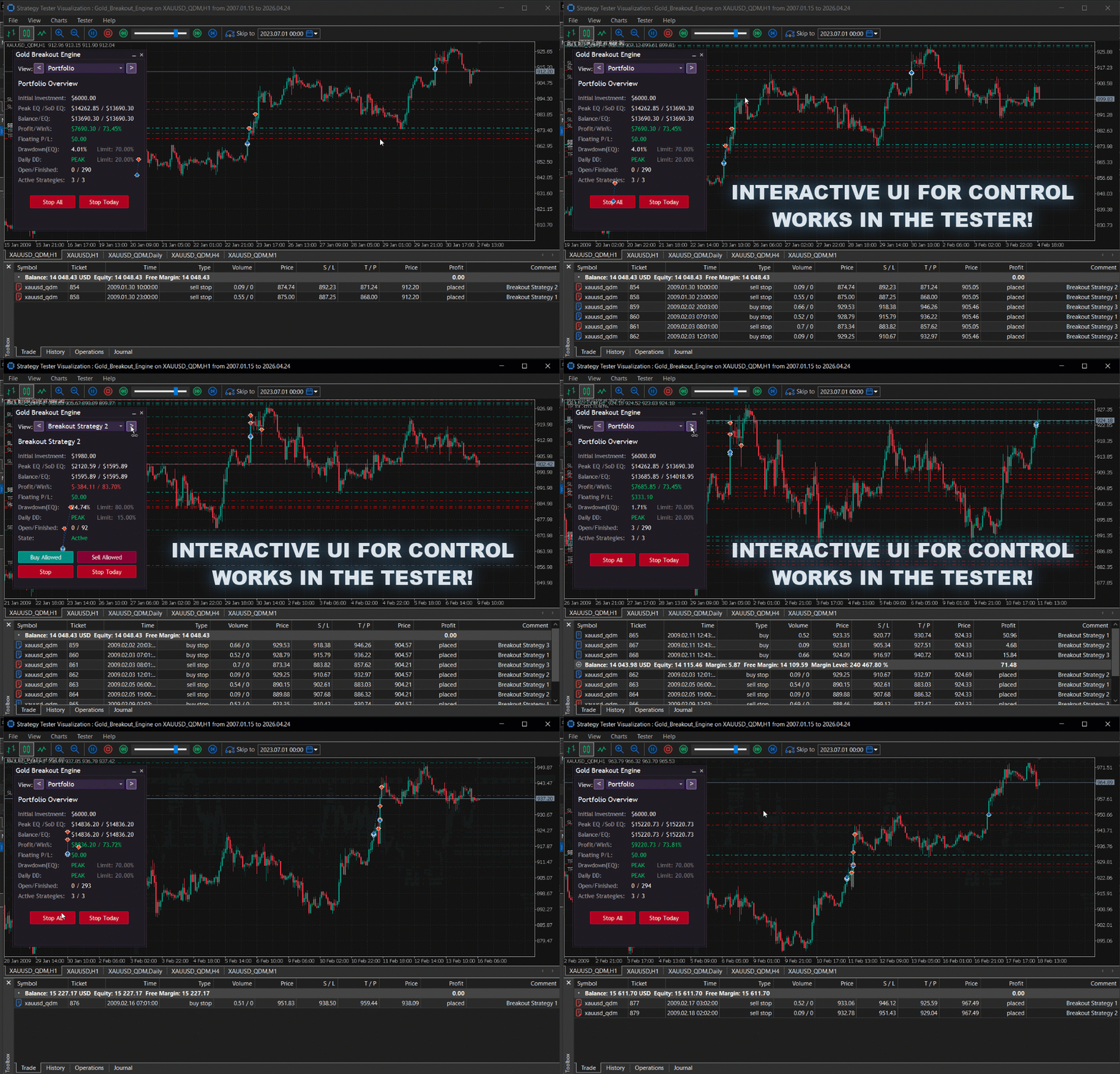
- Color Theme: Choose the color theme of the GUI (also works in the tester). See this blog post for further details.
- Chart Transformation: Use this to make your chart have a modern look. The theme of the chart will be the same as your chosen Color Theme.
- Show open trades and orders: If set to true, you will see your pending orders & trades on the chart.
----General Settings
- Investment Type: Choose between balance-percentage allocation or fixed monetary allocation for individual strategies. See the included manual for detailed explanations.
- Allowed Global Drawdown: Maximum allowed drawdown of the entire portfolio, calculated using the combined equity of all strategies.
- Allowed Global Daily Drawdown: Maximum allowed daily drawdown of the portfolio, calculated using the combined equity of all strategies.
- Risk Level: Choose between predefined risk levels. These determine the amount strategies risk on each trade. (From 0.4% to 4% of their own equity)
- Randomizer: Randomizer used for prop firm challenges. You can randomize the entry & exit levels within a point interval, you can define here. (Recommended Between 100-500 or 0)
----Strategy X (Generic for each strategy)
- Investment in "Strategy X": Amount allocated to the selected strategy. Either in percentage of your balance or in exact monetary amount (based on the selected investment type). This will be the starting equity of the strategy.
- Drawdown limit of "Strategy X": The drawdown limit of the strategy, based on its own simulated equity. (In percentage Terms)
- Daily Drawdown limit of "Strategy X": The daily drawdown limit of the strategy, based on it's own simulated equity. (In percentage Terms)
- Name and Comment of "Strategy X": The trades of this strategy will use this comment. In the layout selector combo box, you will see this as the strategies name.
Recommended Settings
The framework prioritizes risk control and capital preservation. This is why each strategy individually has it's own drawdown limit, as well as the whole portfolio.
It is recommended to run the EA with lower risk settings and lower drawdown limits as well (around 30%), though this may vary based on account size.
For small account sizes only a reduced number of strategies are recommended. (Below 500$ running one of the strategies only)
Pros
- Capital Protection: Strategy-level and portfolio-level drawdown protection.
- Easy to use: The interface and the EA itself is very easy to use and understand.
- Performance: Backtests show positive expectancy across long-term data (2017–present), even under increased trading costs.
- Control: The graphical user interface allows temporary operational control during exceptional market conditions.
- Diversification & Compatibility: This EA complements other EAs exceptionally well. Besides being a portfolio on it's own, you can also invest only a part of your balance to this EA. The EA only uses the capital allocated to it internally.
- Flexible risk settings allow adaptation to different risk preferences. (From institutional to speculative)
Even though it is not very common here on the mql5 marketplace, I feel obligated to share the cons with you as well.
Cons
- Trade Frequency: As previously stated in the description, this is not the regular scalping, every day in and out EA. It trades only major levels, and if the market is not moving, it is not uncommon for it not to trade for a week.
- Drawdowns: The EA does not use any recovery logic whatsoever. This means that drawdown periods can and will occur when using this EA. If the gold market is choppy, it can have losses. This behavior is expected in non-trending conditions. This is why evaluating the performance of this EA over a very short time period is not representative of the long-term characteristics of the strategy.
- Small Account Sizes: The real diversification effect can not really take place with small account sizes. Smaller accounts reduce the effectiveness of portfolio diversification. It is recommended to use a single strategy with a small account, as every single strategy works well on it's own.
Risk Disclosure:
CFDs are complex instruments and come with a high risk of losing money rapidly due to leverage. The majority of retail investor accounts lose money when trading CFDs. You should consider whether you understand how CFDs work and whether you can afford the high risk of losing your money. There is a possibility of losing all your initial capital. Automated or semi-automated trading tools are support tools only and do not guarantee profits or prevent losses. Past performance is not a reliable indicator of future results.