• Informações
no
experiência
6
produtos
35
versão demo
0
trabalhos
2
sinais
0
assinantes
Sobre a ICONIC.FX

A ICONIC.FX é uma empresa de tecnologia especializada em software de trading baseado em inteligência artificial e soluções estruturadas de copytrading. As nossas principais tecnologias - Iconic Neurocore AI™ - analisam continuamente o comportamento do mercado e adaptam a lógica de execução em tempo real.

Oferecemos uma infraestrutura baseada em regras que integra a execução algorítmica com uma gestão de risco dinâmica.

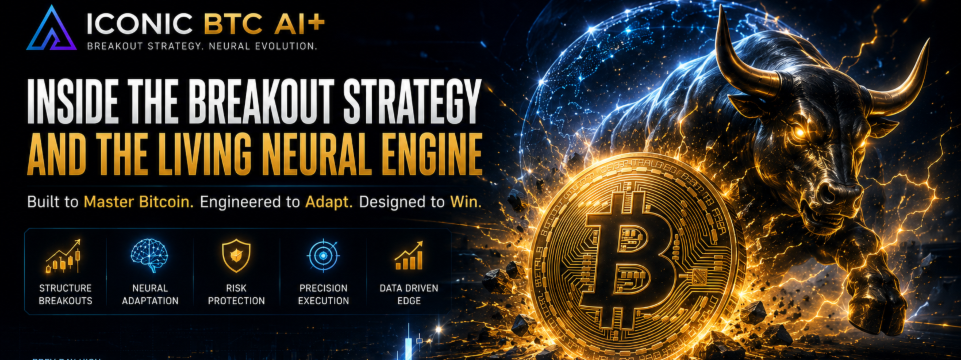
Experimente o poder do ICONIC BTC AI+. Trading de Bitcoin com Aprendizagem por Reforço (Reinforcement Learning) avançada. Sem Grid, sem Martingale.

Apenas pura precisão de rede neuronal. Tecnologia adaptável de nível institucional para o seu portefólio com o motor NeuroCore AI Engine.

Experimente o poder do ICONIC NEUROCORE AI+. Trading de Bitcoin e Ouro com Aprendizagem por Reforço (Reinforcement Learning) avançada. Sem Grid, sem Martingale.

Apenas pura precisão de rede neuronal. Tecnologia adaptável de nível institucional para o seu portefólio.

https://www.mql5.com/en/channels/01553ae460f8dc01

TG: https://t.me/iconicfxofficial

https://ifxhub.com/account/ICONICFX/iconic-btc-ai
https://ifxhub.com/account/ICONICFX/iconic-neurocore-ai
Maurice Prang
Most traders look at the market in one dimension: Price goes up. Price goes down. Enter. Exit. Repeat. But professional algorithmic trading requires a deeper understanding. Markets do not move randomly all the time - they move through regimes...
Maurice Prang
The modern financial market is not a static environment—it is a highly complex, rapidly shifting ecosystem. Traders who rely on static parameters and fixed logic are optimizing for a past that no longer exists...
Maurice Prang
Maurice Prang
“No Grid, No Martingale” Is Not a Slogan — It’s a Philosophy

A lot of systems look stable as long as you only study the surface.
Smooth equity curve. Low visible drawdown. Calm performance profile.

But in many cases, that stability is not real.
It is simply risk pushed into the future.

That is the core problem with grid systems, martingale logic, and blind averaging down.

These mechanisms do not solve the original weakness of a bad trade.
They delay the consequence.
They add exposure, increase pressure, and stack risk in the hope that the market will eventually come back and rescue the position.

For a while, that can look impressive.
And that is exactly why so many traders get fooled by it.

Because in the short term, these systems often create the illusion of control.
They smooth the curve.
They hide fragility.
They make unresolved risk look like intelligent recovery.

But the market is unforgiving when that illusion breaks.

The moment volatility expands, a trend extends further than expected, liquidity disappears, or a news event resets market structure, the truth becomes obvious:

Grid and martingale are not advanced recovery logic. They are often accumulated risk wearing a clean suit.

That is the part many traders understand too late.

A system is not robust because it can hide losses for longer.
It is robust because it can accept losses, contain damage, and survive hostile conditions without destroying itself.

That is why “No Grid, No Martingale” is not just a marketing line.
It is a mindset.
A risk philosophy.
A design standard.

It means:

capital protection comes before cosmetic smoothness
losses are limited, not multiplied
weakness is acknowledged, not hidden behind recovery tricks
risk management is architecture, not decoration
long-term survival matters more than short-term presentation

Sustainable systems do not need to prove that they are never wrong.
They need to prove that they can be wrong without escalating into structural danger.

That is what separates professional system design from performance theater.

A serious model does not ask:

“How do I rescue every losing trade at all costs?”

It asks:

“How do I protect the account when the market invalidates the original idea?”

That difference is everything.

Grid and martingale logic often rely on hope disguised as methodology.
Professional risk architecture relies on a very different principle:

Not every trade needs to be saved. But the account always needs to be protected.

At ICONIC.FX, that is part of the philosophy behind serious automation.

No artificial stability created by escalating exposure.
No hidden danger buried under recovery mechanics.
No delayed drawdown disguised as control.

Instead, the focus is on:

clean risk architecture
adaptive protection
controlled exposure
market-aware filtering
long-term resilience over short-term cosmetics

Because a system that looks strong only because it keeps absorbing more danger is not truly strong.
It simply has not been fully tested yet.

Real strength in trading is not revealed by how elegantly a system stacks wins in ideal conditions.
It is revealed by how disciplined it remains when the market stops being friendly.

That is why “No Grid, No Martingale” is not about limitation.
It is about maturity.
It is about structure.
It is about accepting a clean loss instead of defending a bad idea with increasing risk.

And that is where the line is drawn between marketing language and real philosophy.

ICONIC.FX
Built for disciplined execution, intelligent risk control, and long-term survival.
Trade with Intelligence. Trade Iconic.

Question for the community:
What do you consider more dangerous — a small visible loss, or a system that hides risk until it becomes too large to control?
Maurice Prang
Maurice Prang
Backtests Don’t Prove Intelligence - They Only Prove Historical Fit

A clean backtest can be seductive.
Smooth equity curve. Controlled drawdown. Strong profit factor. Beautiful screenshots. Clean metrics.

And that is exactly why so many traders fall in love with the wrong thing.

Because a backtest does not prove that a system is intelligent.
It does not prove that a strategy is robust.
And it definitely does not prove that a model is ready for the live market.

What it proves is much simpler:

It proves that the logic worked on a specific set of historical data.

That is all.

The problem begins when traders confuse historical compatibility with future resilience.

Markets are not static environments. They are constantly reshaped by shifting volatility, changing liquidity, macro events, participation flows, session behavior, and regime transitions. A setup that thrives in expansion can fail in compression. A trend model can perform beautifully in directional conditions and then get chopped to pieces in a range. A strategy that looks “safe” in one data window can become fragile the moment market behavior changes.

This is where the illusion of certainty starts to break.

A strong backtest can tell you that a model had structure in the past.
But it cannot, by itself, tell you whether that structure is adaptive enough for the future.

And that distinction matters.

Because the real question is never:
“How good did this system look on historical data?”

The real question is:
“How does this system behave when the market stops behaving the way it used to?”

Can it detect when momentum is weakening?
Can it recognize when volatility has shifted enough to invalidate its assumptions?
Can it reduce exposure when market quality deteriorates?
Can it avoid forcing trades during low-quality conditions?
Can it adapt when the environment changes from trend to range, from clean to noisy, from stable to event-driven?

If the answer is no, then the system may be optimized — but it is not intelligent.

That is why relying on backtests alone is dangerous.
Not because backtests are useless. They are not. Backtests are valuable tools for understanding behavior, measuring assumptions, and stress-testing core logic. But they become dangerous when they are treated like proof of live-market durability.

A backtest is a diagnostic tool.
It is not a crystal ball.

And yet, most retail systems are still built the wrong way around.

They are not designed for adaptation.
They are designed for presentation.

Parameters are tuned. Filters are tightened. Conditions are adjusted. The strategy is polished again and again until the historical equity curve looks clean enough to sell, impressive enough to market, or convincing enough to inspire false confidence.

But the better the curve looks, the more important the next question becomes:

Did the system discover an edge — or was it simply adjusted until the past looked obedient?

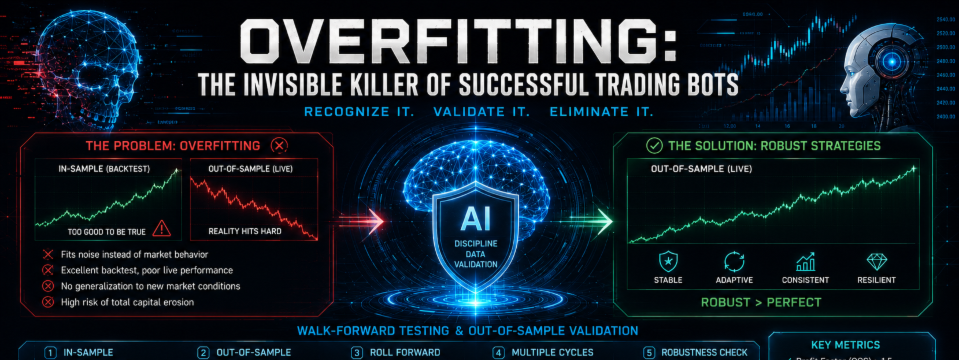
That is the heart of curve fitting.

Curve fitting is not innovation.
It is not sophistication.
It is not intelligence.

It is often just fragility wearing a suit.

A curve-fitted system appears strong because it has been trained to survive a world that no longer exists. It becomes highly compatible with past behavior, while becoming increasingly vulnerable to new behavior. It may look precise, but precision without adaptability is weakness.

Professional system design requires a different mindset.

It requires accepting that markets evolve.
It requires building for uncertainty, not just for elegance.
It requires risk architecture, not just entry logic.
It requires filters, context awareness, and the willingness to do less when conditions are poor.

That is where serious algorithmic thinking separates itself from retail fantasy.

A professional system should not just ask:

Is there a signal?

It should also ask:

What regime are we in?
Is volatility supportive or hostile?
Is liquidity clean or unstable?
Is a high-impact event about to distort execution?
Is this still a high-quality environment, or are we forcing trades into noise?
Should risk remain stable, or should exposure be reduced?

These are not cosmetic questions.
They are survival questions.

At ICONIC.FX, this is a core principle of system design.

We do not treat strong backtests as proof of intelligence.
We treat them as one layer of information. Useful, yes. Important, yes. But incomplete on their own.

What matters more is whether a system can:

recognize changing market conditions
filter weak environments
respond to volatility shifts
adjust around news-sensitive phases
manage risk dynamically
protect capital when the model and market are no longer aligned

Because intelligence in trading is not about predicting everything.
It is about responding correctly when conditions change.

And robustness is not the ability to look perfect in the past.
It is the ability to remain functional when the future stops resembling the past.

That is why risk architecture matters so much.

A system with no adaptive protection layer may still look excellent in a report. But if it cannot reduce aggression during hostile phases, pause during unstable conditions, or avoid low-quality exposure, then its apparent strength is temporary. The live market eventually exposes everything that the backtest was too polite to punish.

This is especially true when traders judge systems only by surface-level statistics.

A high win rate can hide asymmetric risk.
A smooth equity curve can hide over-optimization.
A strong historical report can hide the fact that the model was never truly built for variability.

Real robustness is deeper than cosmetics.

It lives in:

regime awareness
volatility sensitivity
capital preservation logic
quality filters
news protection
dynamic exposure control
the discipline to avoid bad trades, not just execute good ones

That is what separates a static system from an adaptive one.

A static system says:
“This is what worked before, so I will keep doing it.”

An adaptive system says:
“The market has changed. My behavior must reflect that.”

That is a completely different philosophy.

And in live trading, philosophy becomes performance.

Because once real money is on the line, the market does not reward the prettiest report.
It rewards systems that can survive uncertainty without losing structural discipline.

So yes, backtests matter.
But only when they are kept in their proper place.

They are a starting point, not a final verdict.
A layer of evidence, not absolute proof.
A reflection of historical compatibility, not a guarantee of future robustness.

If you confuse those things, you do not optimize a system.
You optimize an illusion.

And illusions are expensive in live markets.

The future will not belong to the bots with the most beautiful screenshots.
It will belong to the systems that can adapt, filter, protect, and remain structurally aligned when conditions evolve.

That is the standard.
That is the difference.
That is the mindset behind ICONIC.FX.

ICONIC.FX
Built for adaptive logic, intelligent risk control, and real-market resilience.
Trade with Intelligence. Trade Iconic.

Question for the community:
What matters more to you today: a beautiful backtest, or a system that can stay composed when the market changes its character?
Maurice Prang
Maurice Prang
Most Pending Orders Are Outdated Before They Ever Trigger

A pending order is not a promise from the market.
It is only a temporary hypothesis based on structure, volatility, trend, liquidity, and timing. That is exactly why a setup is not automatically still valid just because the order is still sitting in the market.

This is one of the biggest mistakes in algorithmic trading:
Many systems place an order based on a clean setup and then treat it as if nothing has changed. But the market is not a static chart snapshot. It is a dynamic environment where conditions can shift within minutes.

What invalidates a pending setup often happens quietly:

Trend shifts: A breakout setup loses quality when momentum fades or reverses

Volatility changes: ATR, range expansion, and compression can completely change the risk-reward profile

Liquidity shifts: A level may already have been partially consumed or structurally weakened before the order is triggered

Spread expansion: Especially around session opens, rollovers, or news, a good entry can suddenly become inefficient

Time decay: The older the setup, the higher the probability that the original market logic no longer exists

News context: A pending order placed before a high-impact event is often built on structure that becomes irrelevant within seconds

Compression or market stress: A level may still exist visually, but the quality behind it may already be gone

That is why one principle matters:

A pending order should never be evaluated in isolation.
It must be continuously checked against the current market context.

Professional systems do exactly that.
They do not just ask: “Is the order still active?”

They ask:

Is the structure still intact?
Does the trend still support the idea?
Is the distance to the level still efficient?
Do volatility, spread, and session conditions still make sense?
Is there news risk approaching?
Is the setup still fresh - or just a leftover from an old market assumption?

At ICONIC.FX, this is not a minor detail. It is part of the architecture.

That means in practice:

Outdated pending orders are removed
Setups are revalidated instead of being left untouched

Structure-based entries are only taken if the context still supports them
Quality filters protect against entries in weak market conditions
News and volatility phases actively reshape order logic
Fresh market information always overrides old conviction

Because an old pending order is rarely a sign of patience.
More often, it is a sign that a system has stopped thinking.

And that is where the real difference begins between ordinary automation and professional algorithmic design:
A basic system places orders.
A professional system observes, re-evaluates, invalidates, and rebuilds.

If you do not revalidate orders consistently, you are not trading structure.
You are trading memory.
And memory has no edge in a live market.

Good pending-order management is not just order placement. It is context discipline.
Not every unfilled order is an opportunity. Many are simply old ideas the market has already moved beyond.

ICONIC.FX
Built for adaptive execution, structural precision, and context-aware order logic.
Trade with Intelligence. Trade Iconic.
Maurice Prang
Maurice Prang
ICONIC.FX | Losing streaks are not an emotional problem. They are a mathematical signal.

Many traders misinterpret losing streaks.
They look at two, three, or four lost trades in a row and immediately think of failure, bad luck, or a "bad day." Professional system development evaluates this differently.

A losing streak is not a tragedy. It is information. It shows that market regime, volatility, liquidity structure, and model behavior are currently not aligning smoothly. And precisely at this moment, a common bot separates itself from true algorithmic architecture. A primitive EA simply continues during such a phase.

Same logic. Same risk. Same aggressiveness.
The result is almost always predictable: the damage is not contained; it is multiplied. At ICONIC.FX, this is exactly the point where a professional system must begin to think defensively.

This means:
Risk is reduced when market quality drops
Cooldowns are activated before overtrading occurs Loss-streak protection kicks in when the series becomes statistically critical Pending orders are re-evaluated instead of blindly remaining in the old context Capital protection takes precedence over activity
Because the most crucial capability of a trading algorithm is not to force the next trade immediately after a loss.

The most crucial capability is to recognize when the market currently does not suit its own logic. This is exactly why at ICONIC.FX, we do not build systems that bluntly execute signals. We build systems that evaluate market conditions, intelligently adjust risk, and consciously step back when in doubt. Losing streaks are not a sign of weakness.
They are a test for the quality of the risk architecture. Anyone who does not control their risk during such phases is not trading professionally. They are merely escalating uncertainty.

In algorithmic trading, the system that always trades does not win.

The system that wins is the one that knows when to trade less to protect more in the long run.

ICONIC.FX

Built for adaptive automation, intelligent risk control and market-regime awareness.

Trade with Intelligence. Trade Iconic.
Maurice Prang Publicado sinal MetaTrader 5
"Iconic NeuroCore AI Funded 2" está indisponível
1
Maurice Prang Publicado sinal MetaTrader 5
"Iconic NeuroCore AI Funded 1" está indisponível
1
Maurice Prang
Maurice Prang
ICONIC NEUROCORE AI: Dual-Asset Automation for Gold and Bitcoin | Backtest 2026

Most Expert Advisors are built for one market.

One symbol.
One logic.
One fixed condition.

But modern markets do not move in isolation.

Gold reacts to macro data, liquidity flows, interest rate expectations and USD strength.

Bitcoin reacts to volatility bursts, liquidation events, crypto news and aggressive momentum shifts.

Two completely different markets.
Two different volatility profiles.
One adaptive system.

That is why ICONIC NEUROCORE AI was built as a dual-asset trading system for XAUUSD and BTCUSD.

It trades both markets from a single chart, using adaptive decision logic powered by the proprietary Neurocore AI Boltzmann Neural Network Engine.

In this backtest, ICONIC NEUROCORE AI delivered a strong data profile:

- Initial Deposit: $1,000
- Total Net Profit: $1,850.64
- Profit Factor: 2.51
- Recovery Factor: 14.75
- Sharpe Ratio: 39.82
- Total Trades: 554
- Profit Trades: 87.91%
- Short Win Rate: 91.27%
- Long Win Rate: 84.59%
- Balance Drawdown Maximal: 5.89%
- Equity Drawdown Maximal: 7.36%
- History Quality: 100%
- LR Correlation: 0.99
- Symbols: 2

But the real value is not only the profit.

It is the structure behind the performance.

No Grid.
No Martingale.
No blind averaging.

Only adaptive entries, dual-asset intelligence and risk filtering designed for changing Gold and Bitcoin market conditions.

ICONIC NEUROCORE AI is not built to force trades.

It is built to evaluate context.

Because in professional algorithmic trading, the question is not only:

“Can the system enter the market?”

The real question is:

Does the system understand when the market is worth trading?

This is where adaptive automation matters.

Static EAs execute rules.
Adaptive systems evaluate regimes.

Gold requires precision.
Bitcoin requires flexibility.
Both require intelligent risk control.

Backtests are not guarantees.
But serious traders do not start with hype.

They start with data.

👉 Download the demo.
👉 Analyze the backtest.
👉 Review the risk metrics.
👉 Understand the logic before you invest.

ICONIC NEUROCORE AI on MQL5:
https://www.mql5.com/en/market/product/176243#!tab=overview

Trade Gold and Bitcoin with Intelligence.
Trade Iconic.
Maurice Prang
Maurice Prang
ICONIC BTC AI: Bitcoin Automation Built for Volatility | Backtest 2026

Most Bitcoin trading bots fail for one simple reason:

They treat BTCUSD like a normal market.

But Bitcoin is not normal.

It moves fast.
It breaks levels aggressively.
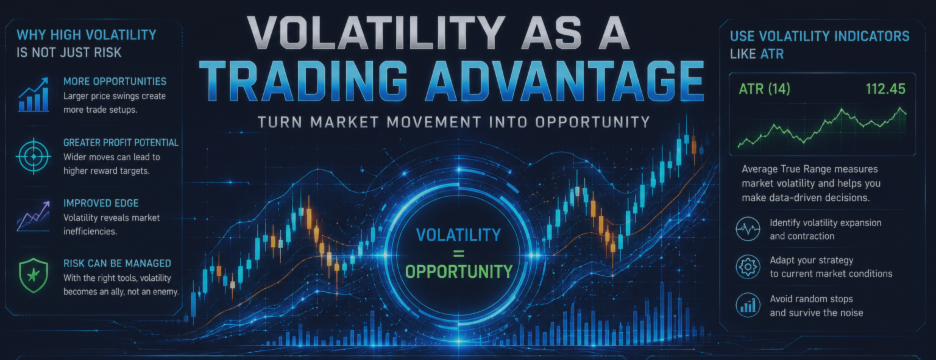
It reacts to liquidity gaps, news shocks, spread expansion and liquidation events.

A static EA keeps executing the same rules.
ICONIC BTC AI adapts.

This system was built specifically for Bitcoin’s volatility profile, using adaptive decision logic, 5 intelligence levels, News-Shield and Spread Control.

In the latest BTCUSD backtest, ICONIC BTC AI delivered:

- Initial Deposit: $500
- Total Net Profit: $9,815.22
- Profit Factor: 1.92
- Total Trades: 495
- Profit Trades: 91.72%
- Short Win Rate: 92.55%
- Long Win Rate: 90.83%
- Recovery Factor: 3.98
- Sharpe Ratio: 32.16
- History Quality: 100%
- LR Correlation: 0.96

But the real value is not just the profit.

It is the structure behind it.

No Grid.
No Martingale.
No blind averaging.

Only adaptive Bitcoin automation with intelligent trade filtering.

ICONIC BTC AI is designed to recognize when market conditions offer a structured opportunity — and when it is better to stay out.

Because in Bitcoin trading, sometimes the best trade is no trade.

This is not built for traders looking for hype.

It is built for traders who care about:

- verified data
- risk structure
- long and short performance
- adaptive execution
- professional automation
- transparent backtesting

Backtests are not guarantees.
But serious traders do not start with promises.

They start with data.

If you are still using static BTC systems, ask yourself one question:

Is your EA adapting to Bitcoin — or is it still trading yesterday’s market?

👉 Download the demo.
👉 Analyze the backtest.
👉 Test the logic before you invest.

ICONIC BTC AI on MQL5:
https://www.mql5.com/en/market/product/163970#!tab=overview

Trade Bitcoin with Intelligence.
Trade Iconic.
Maurice Prang
Maurice Prang
Gold, Bitcoin and Automation: Why Modern Trading Systems Must Understand Market Regimes

Most traders look at the market in one dimension:

Price goes up.
Price goes down.
Enter. Exit. Repeat.

But professional algorithmic trading requires a deeper understanding.

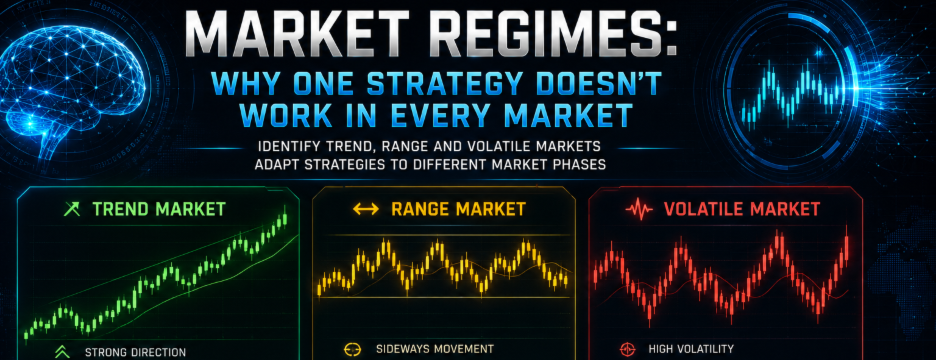
Markets do not move randomly all the time - they move through regimes.

A regime is the current “state” of the market:
high volatility, low volatility, trend expansion, liquidity compression, news-driven movement, range behavior, aggressive momentum or unstable noise.

And this is exactly where many trading systems fail.

They use the same logic in every condition.


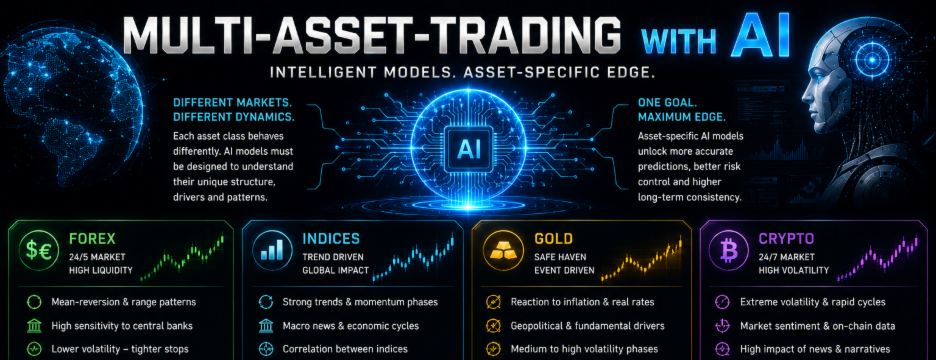
1. Gold and Bitcoin Are Not the Same Market

Gold and Bitcoin are both powerful trading assets, but they behave very differently.

XAUUSD is often influenced by:

- macroeconomic data
- interest rate expectations
- institutional liquidity
- USD strength or weakness
- session-based volatility
- geopolitical uncertainty

BTCUSD, on the other hand, has a different volatility structure:

- faster momentum bursts
- weekend liquidity gaps
- crypto-specific news shocks
- liquidation cascades
- sudden spread expansion
- emotional retail-driven movement

A static trading system often treats these markets the same way.

A professional automated system should not.

Gold requires precision.
Bitcoin requires flexibility.
Both require risk control.


2. Automation Is Not About Trading More

A common misunderstanding about automated trading is that a bot should constantly search for entries.

More trades.
More signals.
More activity.

But in reality, professional automation is not about activity.

It is about decision quality.

The strongest automated systems are not the ones that trade the most.

They are the ones that know when market conditions are not worth the risk.

A good algorithm should be able to say:

“This setup is not clean.”
“Volatility is unstable.”
“Spread conditions are not acceptable.”
“Market behavior does not match the current model.”
“Skip the trade.”

Sometimes, the best trade is no trade.


3. Why Static EAs Struggle Over Time

Many Expert Advisors are built around fixed rules.

If this indicator crosses that level, open a trade.
If price reaches this zone, execute.
If volatility hits a certain number, react.

This can work during specific market phases.

But markets evolve.

Volatility changes.
Liquidity moves.
Correlations shift.
Risk conditions expand.
Old patterns stop working.

A static EA continues executing the same logic even when the environment has changed completely.

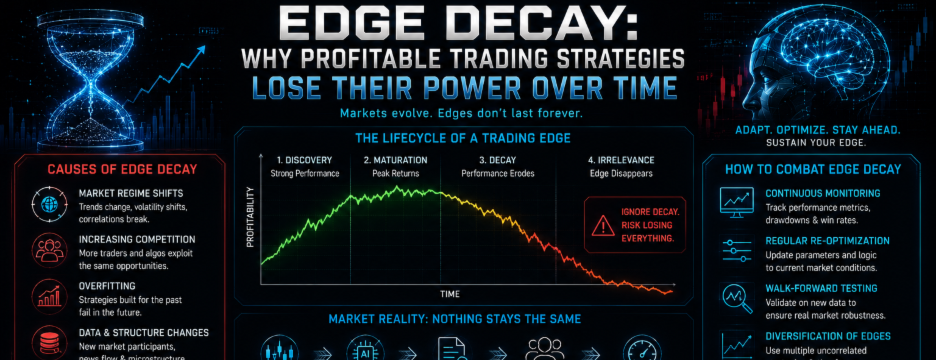
That is why many systems perform well in backtests but slowly degrade in live trading.

They were optimized for the past.

Not built for adaptation.


4. The Role of Adaptive Trading Logic

The future of algorithmic trading is not just automation.

It is adaptive automation.

My systems, Iconic Neurocore AI and Iconic BTC AI, are built around this principle.

They are powered by the proprietary Neurocore AI Boltzmann Neural Network Engine, designed to evaluate changing market behavior instead of blindly executing fixed rules.

After every completed trade, the engine analyzes:

- 36 market states
- 20 specific features
- volatility behavior
- slippage patterns
- changing Gold and Bitcoin conditions
- internal signal quality
- risk environment shifts

The objective is not to predict the future with certainty.

No system can do that.

The objective is to continuously improve decision structure and adapt to evolving market conditions.


5. Risk Architecture Comes Before Profit Potential

Many traders focus only on potential returns.

Professional traders focus first on survival.

Because without risk control, performance is meaningless.

This is why I strongly reject high-risk recovery models.

No Grid.
No Martingale.
No blind averaging.

These methods can create attractive short-term curves, but they often hide structural risk.

My philosophy is different:

- controlled exposure
- intelligent filtering
- drawdown protection
- market-state awareness
- adaptive trade selection
- risk before execution

A system should not try to force profits from every condition.

It should wait for conditions where the probability structure makes sense.


6. Bitcoin Needs Specialized Logic

Bitcoin is not just another symbol.

It has its own behavior.

It can move aggressively within seconds.
It can break technical levels with extreme force.
It can generate false breakouts during thin liquidity.
It can react violently to news and liquidation events.

That is why Iconic BTC AI is designed as a Bitcoin-focused system.

It uses 5 intelligence levels, from conservative “Skip” mode to aggressive signal conviction, supported by:

- News-Shield
- Spread Control
- volatility filtering
- adaptive conviction logic
- Bitcoin-specific risk handling

The goal is not to chase every BTC movement.

The goal is to identify when Bitcoin’s volatility offers a structured opportunity — and when it is better to stay out.


7. Gold Requires Precision and Timing

Gold is one of the most liquid and respected trading assets in the world.

But it is also unforgiving.

XAUUSD can react sharply to macro data, central bank expectations, inflation reports and USD volatility.

A weak system may confuse volatility spikes with valid momentum.

A stronger system must understand when Gold is moving with structure — and when the move is only noise.

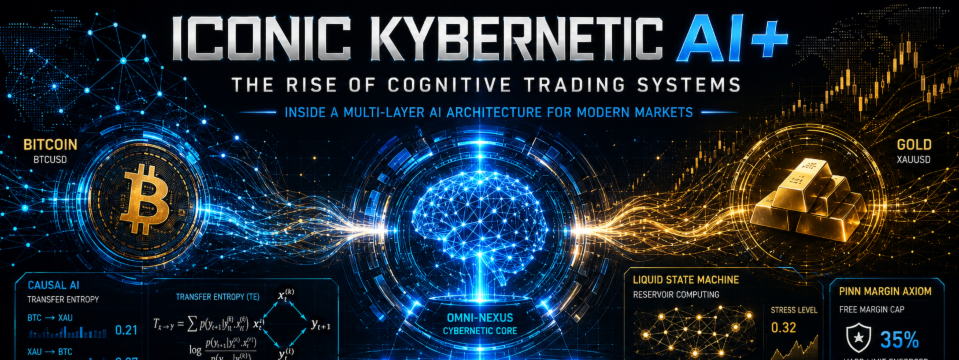
Iconic Neurocore AI is designed to trade XAUUSD and BTCUSD simultaneously from one chart, using dual-asset intelligence and adaptive risk logic.

This allows the system to evaluate two highly important markets with different volatility profiles inside one intelligent framework.


Conclusion: The Future Is Adaptive

Trading automation is not about replacing intelligence.

It is about removing emotional execution and building systems that can process market conditions faster and more consistently than a human trader.

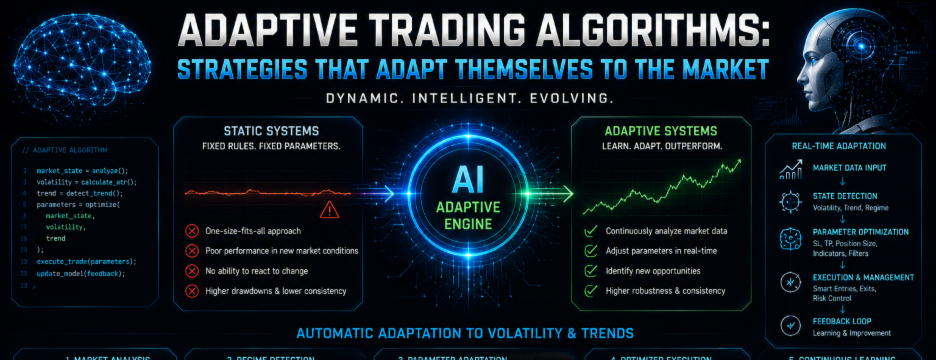
Static systems execute rules.

Adaptive systems evaluate context.

And in modern markets, context is everything.

Gold evolves.
Bitcoin evolves.
Liquidity evolves.
Volatility evolves.

So trading systems must evolve too.

That is the philosophy behind my MQL5 portfolio:

Iconic Neurocore AI
Iconic BTC AI

Built for adaptive automation, intelligent risk filtering and market-regime awareness.

In trading, promises are worthless.

Only verified data matters.

Review the strategy.
Test the demos.
Analyze the backtests.
Understand the logic before you invest.

Trade with Intelligence.
Trade Iconic.
Maurice Prang
Maurice Prang
Why Risk Architecture Matters More Than Entry Signals

Why Risk Architecture Matters More Than Entry Signals in Algorithmic Trading

Most traders are obsessed with entries.

They search for the perfect indicator, the perfect candle pattern, the perfect moment to enter the market.

But in professional algorithmic trading, the entry is only one part of the equation.

The real difference between a system that survives and a system that disappears is not the signal itself.

It is the risk architecture behind the signal.

1. A Good Entry Cannot Save a Weak System

Many Expert Advisors look impressive in ideal market conditions.

They perform well during clean trends, stable volatility or carefully selected backtest periods.

But markets are not always clean.

Volatility expands.
Liquidity disappears.
Spreads widen.
Correlations break.
News events create abnormal price behavior.

A trading system that only focuses on entries will eventually face a market environment it was not designed to handle.

This is where many static EAs fail.

They continue executing the same logic, even when the risk environment has completely changed.

2. The Market Does Not Reward Prediction Alone

A common mistake in algorithmic trading is believing that better prediction automatically means better performance.

In reality, prediction without risk control is fragile.

A system can be right often and still fail if it increases exposure at the wrong time, trades during unstable conditions or does not recognize when the market structure has changed.

That is why my development philosophy is different.

My systems, Iconic Neurocore AI and Iconic BTC AI, are not built around aggressive prediction.

They are built around adaptive decision-making and controlled exposure.

The goal is not to force trades.

The goal is to identify when the market offers a statistically reasonable environment — and when it is better to stay out.

3. Adaptive Intelligence Instead of Blind Execution

Static systems follow fixed instructions.

Adaptive systems evaluate context.

The Neurocore AI Boltzmann Neural Network Engine is designed to analyze changing market conditions after every completed trade.

It evaluates 36 market states and 20 specific features, allowing the system to adjust its internal logic as market behavior evolves.

This matters because Gold and Bitcoin do not move the same way every day.

Some sessions are trend-driven.
Some are liquidity traps.
Some are dominated by volatility spikes.
Some are simply not worth trading.

A professional system must be able to recognize the difference.

4. Why No Grid and No Martingale Matters

Many EAs attempt to hide weak logic behind dangerous recovery methods.

Grid.
Martingale.
Averaging without structural control.

These methods can make a system look smooth for a while — until one extreme market phase exposes the hidden risk.

My approach is different.

Iconic Neurocore AI and Iconic BTC AI are built with a strict rejection of high-risk recovery logic.

No Grid.
No Martingale.

Only neuronal entries supported by risk filters, market-state analysis and protective logic designed to reduce exposure during unstable conditions.

This does not eliminate risk — no trading system can do that.

But it creates a more professional foundation for long-term algorithmic trading.

5. Different Markets Require Different Risk Logic

Gold and Bitcoin are both highly attractive markets, but they behave very differently.

XAUUSD often reacts strongly to macroeconomic data, liquidity sessions and institutional positioning.

BTCUSD has a completely different volatility profile, often driven by momentum bursts, weekend liquidity gaps and crypto-specific news events.

This is why a single fixed logic is often not enough.

Iconic Neurocore AI is designed to trade XAUUSD and BTCUSD simultaneously from one chart, using dual-asset intelligence and adaptive logic.

Iconic BTC AI is built specifically for Bitcoin, with 5 intelligence levels, News-Shield and Spread Control to handle unstable crypto conditions more carefully.

6. The Future Belongs to Systems That Know When Not to Trade

Many traders judge an EA by how often it trades.

Professionals judge a system by how intelligently it filters risk.

Sometimes the strongest decision is not opening a position.

Sometimes the edge is in avoiding bad conditions.

A system that can reduce unnecessary exposure may have a much better chance of surviving changing market cycles than a system that blindly trades every signal.

This is the foundation of adaptive algorithmic trading.

Not more trades.

Better decisions.


Conclusion

The future of automated trading is not about finding one perfect entry rule.

It is about building systems that understand context, adapt to changing conditions and respect risk before execution.

In modern markets, static logic becomes outdated.

Adaptive intelligence evolves.

That is the philosophy behind my MQL5 portfolio.

Iconic Neurocore AI.
Iconic BTC AI.
Built for adaptive decision-making, intelligent filtering and long-term market evolution.

In trading, promises are worthless.

Only verified data matters.

Review the strategies.
Test the demos.
Analyze the backtests.
Understand the logic before you invest.

Trade with Intelligence.
Trade Iconic.
Maurice Prang
Maurice Prang
Static vs. Adaptive: Why AI-Driven Systems Outlast Traditional Algorithms.

In the world of algorithmic trading, there is a silent killer: Curve Fitting.

Most trading systems on the market are "static." They are built on fixed rules (e.g., "If RSI > 70 and Price touches EMA 20, Sell"). While this might work in a specific market phase, the market eventually changes. Volatility shifts, liquidity cycles rotate, and the static system—unable to adapt - begins its inevitable "drawdown of death."

This is why AI-driven systems like Iconic Neurocore and Iconic BTC AI are not just better; they are more durable.

1. The Death of Fixed Parameters
Static systems assume that market conditions stay the same. AI systems assume that change is the only constant.

My Boltzmann Neural Network Engine does not just follow a line; it interprets the "texture" of the market. It analyzes variables like volatility expansion and correlation shifts in real-time, adjusting its sensitivity before the loss even occurs.

2. Self-Evolution vs. Manual Optimization
Static Systems: When they stop working, the developer must manually "re-optimize" and find new settings. This is usually just more curve-fitting.

Iconic AI: The system learns from every single trade. It evaluates 36 different market states and 20 features. If the market for Bitcoin or Gold changes its behavior, the neural weights adapt. The bot becomes smarter with every tick, not older.

3. Filtering the "Noise"
Traditional bots often get "faked out" because they cannot distinguish between a healthy trend and a low-liquidity spike. AI-driven models use deep learning to recognize the signature of institutional moves. By detecting the "intent" behind price action rather than just the price itself, they avoid the "trap trades" that destroy static EAs.

4. Longevity through Intelligence
The reason 95% of EAs on the MQL5 Market disappear after 6 months is simple: they cannot evolve.
Our Iconic series is built for longevity. By utilizing a stochastic recurrent neural network, we ensure that the logic used today is capable of understanding the market of tomorrow.

Stop investing in "fixed ideas." Start investing in adaptive intelligence.

Check the real-world performance of self-evolving AI here:
🔗 Iconic Neurocore AI (Gold & BTC):(https://www.mql5.com/de/market/product/176243)
🔗 Iconic BTC AI (BTC Specialized): (https://www.mql5.com/en/market/product/163970)

🔗 Full Portfolio: [Explore Maurice's Profile](https://www.mql5.com/en/users/mauriceprg)

The future of trading isn't a better formula. It’s a better brain.
Maurice Prang
Maurice Prang
The Evolution of Algorithmic Trading: Why Static EAs Fail in Modern Markets.

The modern financial market is not a static environment—it is a highly complex, rapidly shifting ecosystem. Traders who rely on static parameters and fixed logic are optimizing for a past that no longer exists.

My MQL5 portfolio is built on a different philosophy: The elimination of rigid coding through adaptive, neuronal intelligence. My systems - Iconic Neurocore AI and Iconic BTC AI - are powered by the proprietary Neurocore AI Boltzmann Neural Network Engine.

1. The Technology: What is the "Boltzmann Engine"?
Unlike standard decision-tree algorithms, the Boltzmann Engine utilizes a stochastic recurrent neural network. After every completed trade, the system analyzes 36 market states and 20 specific features.

The result is a self-evolving logic:
Intelligent Adaptation: The system recognizes patterns in slippage, volatility expansion, and the shifting correlation between Gold and Bitcoin that remain invisible to the human eye.

Real-Time Optimization: It learns from every market tick, adjusting its internal weighting in under 0.3 seconds.

2. Iconic Neurocore AI (XAUUSD & BTCUSD)
Designed for the world’s most demanding assets, this system trades Gold and Bitcoin simultaneously from a single chart.

Dual-Asset Intelligence: It leverages the inverse correlation and liquidity cycles of both assets to diversify risk and maximize statistical probability.

Advanced Risk Management: Absolute rejection of high-risk methods. No Grid. No Martingale. Only pure, neuronal entries backed by a 3-tier drawdown protection.

👉 Analyze the Strategy & Backtests: [Iconic Neurocore AI](https://www.mql5.com/de/market/product/176243#!tab=overview)

3. Iconic BTC AI (The Specialist for Bitcoin)
Bitcoin requires a unique risk structure due to its specific volatility profile. This system is a pure specialist for the BTCUSD market.

5 Intelligence Levels: From "Skip" (highly conservative) to "Aggressive"—the engine autonomously decides the conviction level of every signal.

News-Shield & Spread Control: An integrated safety mechanism that halts trading during extreme slippage events or "Black Swan" news.

Continuous Evolution: With every trade, the engine becomes more precise in timing crypto cycles and identifying institutional liquidity zones.

👉 Analyze the Strategy & Backtests: [Iconic BTC AI](https://www.mql5.com/en/market/product/163970#!tab=overview)

Transparency as a Standard:
In trading, promises are worthless - only verified data matters. I invite every professional trader to scrutinize my live performance, download the demo versions, and review the detailed backtest reports on my profile.

Understand the logic before you invest. In a market driven by algorithms, intelligence is the only clinical edge that lasts.

🔗 Full Portfolio & Live Statistics:[https://www.mql5.com/en/users/mauriceprg](https://www.mql5.com/en/users/mauriceprg)

Trade with Intelligence. Trade Iconic.
Maurice Prang
Maurice Prang
Now you can track live performance on our 100k funded accounts with our ICONIC NEUROCORE AI

Check product description.

https://www.mql5.com/de/market/product/176243#!tab=overview
Maurice Prang
Maurice Prang
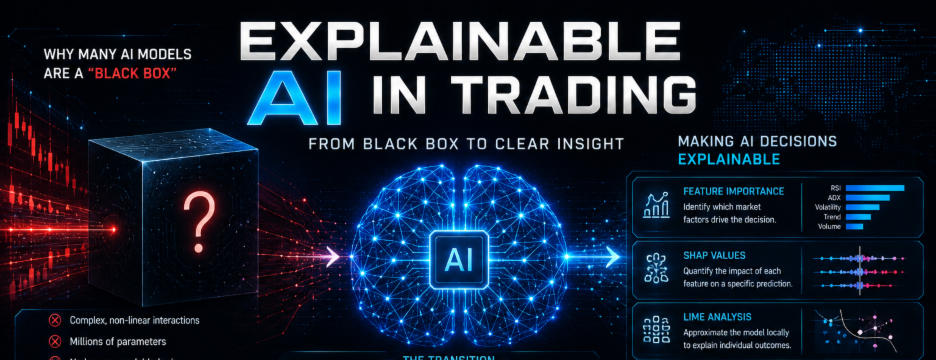
The Architecture of Alpha: Beyond "Black Box" Trading

In the world of MQL5, transparency and technological depth are often sacrificed for flashy backtests. But as the markets become more efficient, the gap between "standard" Expert Advisors and **high-frequency quantitative systems** continues to widen.

To achieve consistent results in 2026, a trading system must go beyond simple trend-following. It requires an engine that understands **market regime shifts**.

Why the "ICONIC" Series is Different

My development philosophy centers on ICONIC Quant Reinforcement AI™. Unlike traditional EAs that rely on hard-coded entry rules, my systems utilize a specialized neural network layer designed to:

Self-Correct: The engine evaluates market volatility in real-time, adjusting stop-loss and take-profit levels dynamically.
Identify Institutional Flow: By analyzing price action density, the AI distinguishes between retail "traps" and genuine institutional momentum.
Minimize Correlation Risk: The algorithms are built to perform independently of general market sentiment, focusing on mathematical edges rather than "guessing" the next move.


Ready to Upgrade Your Portfolio?

If you are tired of EAs that work for a month and then fail when the market changes, it’s time to switch to systems built for the next decade of trading.

Experience the next level of algorithmic precision:

[ICONIC NEUROCORE AI+]: My flagship system, engineered for those seeking the pinnacle of AI-driven performance.


Visit my MQL5 Market profile now to view the live signals and latest backtest reports.


*Success in trading isn't about working harder; it's about trading smarter. Let's redefine what's possible.*