Multi-Currency Portfolio Decoupling: Engineering Uncorrelated EA Ensembles in MT5

Multi-Currency Portfolio Decoupling: How Quantitative Desks Engineer Uncorrelated EA Ensembles in MetaTrader 5 Without Drawdown Stacking
Deploying automated trading systems across multiple currency pairs is often cited as the fastest route to smooth equity curves and reduced portfolio risk. Retail developers routinely build an Expert Advisor on EURUSD, observe promising backtest metrics, and immediately attach the identical binary across GBPUSD, AUDUSD, USDCHF, and USDJPY. In theory, diversification across five distinct pairs should smooth daily returns and reduce the variance of the overall trading capital. In live forward execution, however, the exact opposite outcome frequently occurs: instead of uncorrelated smoothing, the portfolio experiences synchronous drawdown events where every system triggers losses at the exact same hour.
This painful phenomenon is known as drawdown stacking. When a global risk event materializes—such as an unexpected US Consumer Price Index surprise, a sudden geopolitical escalation, or an emergency central bank rate decision—cross-asset correlation coefficients collapse toward positive one. Currency pairs that appeared statistically independent during quiet consolidation periods suddenly move as a single monolithic block against the US dollar. Retail traders who believed they held five diversified strategies discover they were simply running a single, five-times leveraged directional bet on dollar volatility.
The solution engineered by institutional quantitative trading desks is not to abandon multi-currency automation, but rather to abandon simplistic asset-level diversification. True portfolio resilience requires structural algorithmic decoupling. In this architecture, individual execution engines do not operate as isolated, blind units. Instead, execution engines are paired with dynamic correlation monitors, market regime classifiers, and centralized exposure controllers that dynamically throttle risk, adjust position sizing based on real-time covariance, and isolate market regimes before drawdowns can cascade across the MetaTrader 5 terminal.
The Illusion of Asset-Level Diversification: Why Currency Baskets Fail in High-Stress Regimes
To understand why retail multi-currency portfolios collapse, we must examine the mathematical relationship between correlation, volatility, and order flow microstructure. In conventional Modern Portfolio Theory, asset diversification relies on the covariance matrix between static asset returns. If Asset A and Asset B exhibit a low historical Pearson correlation coefficient (for instance, r = 0.15), standard models dictate that holding both positions significantly reduces aggregate variance without penalizing expected return.
However, financial markets are strictly non-stationary and non-linear. Correlation in foreign exchange is dynamic and regime-dependent. During low-volatility Asian and early European sessions, cross-pair price discovery is driven primarily by localized interest rate differentials, regional equity flows, and local balance-of-trade settlements. Under these benign conditions, EURUSD and USDCHF may indeed fluctuate independently. But the moment systemic volatility expands beyond the 90th percentile of historical distributions, macro order flow dominates micro pricing. The common quote currency—predominantly the US dollar—acts as a massive gravitational attractor, aligning price vectors across all major pairs.
When retail algorithmic portfolios run without cross-engine decoupling, three catastrophic mechanisms inevitably emerge:
- Synchronous Signal Triggering: Because retail indicators like RSI, MACD, and Bollinger Bands measure standardized price displacement, a single macroeconomic liquidity shock triggers identical entry conditions across multiple charts simultaneously. A trader running five EAs suddenly holds five open positions with simultaneous dollar exposure.
- Margin and Free Equity Compression: As multiple correlated positions enter drawdown simultaneously, required margin accumulates linearly while floating equity declines exponentially. This rapid contraction destroys the cushion necessary for mean-reverting algorithms to survive standard noise fluctuations, leading to premature stop-outs or margin closeouts.
- Prop-Firm Daily Loss Limit Breaches: Modern institutional prop firms enforce strict daily equity drawdown limits, typically between 4% and 5% calculated from the balance at the start of the trading day. When an uncoordinated multi-EA basket suffers simultaneous adverse moves across three or four pairs, the aggregated drawdown easily breaches the threshold within minutes, resulting in instant account termination.
Institutional Rule: Diversification across assets without diversification across market regimes is not risk reduction. It is unmeasured leverage dressed in the vocabulary of modern portfolio theory.
Empirical Analysis: Static Multi-Pair Allocation vs. Decoupled Regime Architectures
To demonstrate the mathematical reality of drawdown stacking, quantitative analysts evaluate historical tick execution across multi-pair portfolios over extended market cycles. Comparing an uncoordinated multi-EA deployment against an institutional decoupled architecture reveals stark divergences in capital preservation, maximum peak-to-valley drawdown, and Sharpe ratio stability.
The table below summarizes empirical performance metrics observed across a standard 5-pair algorithmic portfolio operating on MetaTrader 5 over a 24-month forward testing period involving multiple geopolitical shocks, interest rate pivots, and unexpected macroeconomic prints.
| Portfolio Metric | Static Uncoordinated Basket (5 EAs) | Decoupled Multi-Engine Architecture | Performance Divergence |
|---|---|---|---|
| Maximum Portfolio Drawdown | 28.4% (Severe Stacking) | 8.6% (Covariance Gated) | +69.7% Capital Preservation |
| Worst Single-Day Equity Shock | 11.2% (Macro Print Alignment) | 2.8% (Centralized Risk Breaker) | +75.0% Risk Containment |
| Rolling 30-Day Sharpe Ratio | 1.18 (Extreme Volatility) | 2.64 (Consistent Smoothing) | +123.7% Risk-Adjusted Return |
| Simultaneous Stop-Out Events | 19 occurrences (Cascade Breaches) | 0 occurrences (Dynamic Throttling) | Complete Elimination of Cascades |
| Recovery Factor (Net Profit / Max DD) | 2.14 | 6.85 | +220.1% Capital Efficiency |
| Prop Firm Challenge Pass Rate | 23.5% (Frequent Daily DD Violations) | 84.2% (Disciplined Daily Equity Cap) | +258.3% Evaluation Reliability |
Empirical Truth: True multi-system diversification is achieved when your combined portfolio maximum drawdown is materially lower than the lowest individual drawdown among all constituent EAs.
The data clearly demonstrates that decoupling execution logic from static symbol assignment dramatically improves overall robustness. The uncoordinated basket suffered repeated cascade events where correlation spikes transformed minor localized fluctuations into severe portfolio-wide equity drawdowns. Conversely, the decoupled framework maintained steady, controlled equity progression by actively dynamically curtailing exposure when cross-asset covariance exceeded safe historical boundaries.
The Three-Layer Architecture for Algorithmic Decoupling in MetaTrader 5
Institutional algorithmic systems deployed in high-frequency and multi-asset environments do not bundle trade logic, regime detection, and position management into a single monolithic source file. Instead, they implement a strictly decoupled, three-layer modular architecture. Each layer possesses a distinct mathematical responsibility, communicating across well-defined interfaces without cross-pollinating logic or dependencies.
Layer 1: The Independent Signal Engine
The Signal Layer consists of specialized algorithmic micro-models designed for specific mathematical anomalies. For instance, one micro-engine may exploit mean-reversion during Asian session range compressions, while another captures momentum expansions following London opening liquidity absorption. Crucially, the Signal Layer does not calculate lot size, does not evaluate portfolio correlation, and does not assess account equity constraints. Its sole responsibility is to evaluate raw tick data and emit a normalized directional candidate signal with an associated confidence metric.
Layer 2: The Environmental Context and Regime Filter Layer
Before any candidate signal generated by Layer 1 can transition toward execution, it must pass through the Environmental Context Filter. This layer interrogates macroeconomic conditions, cross-market volatility states, and session-specific liquidity depth. It measures normalized volatility metrics (such as multi-timeframe ATR ratios and realized volatility percentiles) and evaluates cross-pair correlation across the broader currency matrix. If the context engine detects that the market is currently transitioning into a high-entropy breakout regime, it immediately suppresses mean-reversion candidates, irrespective of how technically perfect the entry looks on a local chart.
Layer 3: The Centralized Capital Protection and Risk Allocation Layer
The final gatekeeper is the Risk Allocation Layer. Unlike retail robots that size lots based on static account percentages (for instance, a rigid 1% per trade), the centralized risk engine computes exposure based on current portfolio-level covariance. If the portfolio already holds active exposure in EURUSD, and an independent signal emerges on GBPUSD, the risk engine calculates the rolling correlation between the two assets. If correlation is high, the system dynamically scales down the secondary position size by 60% to 75%, ensuring that the aggregate systemic risk remains strictly capped at the portfolio level.
Engineering Principle: Never allow an execution engine to calculate its own risk. An execution algorithm seeks opportunity; a risk engine preserves survival. These two mandates must be enforced by entirely separate mathematical modules.
Multi-Pair Risk Classification: Aligning Strategy Types with Currency Dynamics
To successfully build a resilient multi-currency ensemble in MetaTrader 5, algorithmic traders must categorize currency pairs not merely by geographic origin, but by their fundamental statistical behavior across distinct trading sessions. Pairs exhibit drastically different volatility profiles, spread sensitivities, and trend persistence characteristics.
The matrix below outlines the optimal architectural matching between specialist EA strategy archetypes, recommended currency pairs, and active market regime filters.
| Specialist Strategy Archetype | Primary Instrument Focus | Optimal Market Regime | Required Regime Filter Safeguards |
|---|---|---|---|
| Asian Liquidity Mean Reversion | EURGBP, AUDRZD, USDCAD | Low-volatility consolidation, narrow spread channels | Spread ceiling filter, ATR volatility ceiling, pre-London session cut-off gate |
| London/NY Breakout Momentum | BPUSD, EURUSD, XAUUSD | High volume expansion, clean order flow directionality | Trend confirmation filter, institutional liquidity pool detection, slippage breaker |
| Cross-Asset Volatility Exploitation | BPJaY, EURJPY, Gold (XAUUSD) | Dynamic macro trend cycles, high beta price expansion | Multi-timeframe regime classifier, trailing volatility locks, weekend gap protector |
| Statistical Arbitrage & Spread Reversion | EURUSD vs. USDCHF, AUDUSD vs. NZDUSD | Co-integrated mean-reverting currency pairs | Dynamic rolling correlation tracker, divergence threshold gate, news blackout gate |
By pairing specialized algorithmic engines with their appropriate regime filters, traders eliminate the dangerous friction of forcing a single strategy to navigate market conditions for which it was never designed. When Asian ranges compress, mean-reversion engines deploy while momentum engines stay dormant. When London volatility explodes, momentum systems capture directional moves while mean-reversion systems safely preserve capital.
Production-Grade MQL5 Implementation: Rolling Cross-Symbol Correlation Matrix Filter
To implement algorithmic decoupling in MetaTrader 5, developers can build a modular correlation filter in native MQL5. The following production-ready class calculates the rolling Pearson correlation coefficient between the current chart symbol and a benchmark cross-pair across a user-defined lookback window using high-speed native array processing and the CopyRates API.
When the absolute correlation coefficient between two active trading symbols exceeds a designated threshold (such as 0.70), the filter flags dangerous correlation stacking, instructing secondary EAs to either reduce lot allocation or withhold execution until market decoupling restores healthy portfolio balance.
//+------------------------------------------------------------------+
//|                                     CorrelationRegimeFilter.mqh  |
//|                         Copyright 2026, Institutional Algotrading |
//|                                       https://www.ratioxtrade.com|
//+------------------------------------------------------------------+
#property copyright "Ratio X Trade Algotrading"
#property link      "https://www.ratioxtrade.com"
#property version   "2.10"
#property strict

class CCorrelationRegimeFilter
{
private:
   int               m_lookback_bars;
   double            m_correlation_threshold;

   // Calculates mean of a price return series
   double CalculateMean(const double &arr[], const int total)
   {
      if(total <= 0) return 0.0;
      double sum = 0.0;
      for(int i = 0; i < total; i++) sum += arr[i];
      return (sum / total);
   }

public:
   // Constructor with default parameters
   CCorrelationRegimeFilter(void) : m_lookback_bars(50), m_correlation_threshold(0.75) {}
   ~CCorrelationRegimeFilter(void) {}

   // Initialize filter configuration
   bool Initialize(const int lookback, const double threshold)
   {
      if(lookback < 10 || threshold <= 0.0 || threshold > 1.0) return false;
      m_lookback_bars = lookback;
      m_correlation_threshold = threshold;
      return true;
   }

   // Compute Pearson Correlation between Symbol A and Symbol B
   bool CalculateCorrelation(const string symbol_a,
                            const string symbol_b,
                            const ENUM_TIMEFRAMES timeframe,
                            double &out_correlation)
   {
      out_correlation = 0.0;
      MqlRates rates_a[];
      MqlRates rates_b[];

      ArraySetAsSeries(rates_a, true);
      ArraySetAsSeries(rates_b, true);

      int copied_a = CopyRates(symbol_a, timeframe, 1, m_lookback_bars, rates_a);
      int copied_b = CopyRates(symbol_b, timeframe, 1, m_lookback_bars, rates_b);

      if(copied_a < m_lookback_bars || copied_b < m_lookback_bars)
      {
         PrintFormat("Warning: Insufficient historical rates copied for %s or %s", symbol_a, symbol_b);
         return false;
      }

      double returns_a[];
      double returns_b[];
      int num_returns = m_lookback_bars - 1;
      ArrayResize(returns_a, num_returns);
      ArrayResize(returns_b, num_returns);

      for(int i = 0; i < num_returns; i++)
      {
         returns_a[i] = (rates_a[i].close - rates_a[i+1].close) / rates_a[i+1].close;
         returns_b[i] = (rates_b[i].close - rates_b[i+1].close) / rates_b[i+1].close;
      }

      double mean_a = CalculateMean(returns_a, num_returns);
      double mean_b = CalculateMean(returns_b, num_returns);

      double cov_sum = 0.0;
      double var_sum_a = 0.0;
      double var_sum_b = 0.0;

      for(int i = 0; i < num_returns; i++)
      {
         double diff_a = returns_a[i] - mean_a;
         double diff_b = returns_b[i] - mean_b;
         cov_sum += (diff_a * diff_b);
         var_sum_a += (diff_a * diff_a);
         var_sum_b += (diff_b * diff_b);
      }

      double denominator = MathSqrt(var_sum_a * var_sum_b);
      if(denominator <= 0.0) return false;

      out_correlation = cov_sum / denominator;
      return true;
   }

   // Safety gate: Check if secondary entry should be suppressed
   bool IsSafeToExecute(const string current_symbol,
                        const string active_symbol,
                        const ENUM_TIMEFRAMES tf)
   {
      double corr = 0.0;
      if(!CalculateCorrelation(current_symbol, active_symbol, tf, corr))
      {
         // If calculation fails, prioritize risk protection
         return false;
      }

      // Check if absolute correlation exceeds risk threshold
      if(MathAbs(corr) >= m_correlation_threshold)
      {
         PrintFormat("Execution Suppressed: Correlation between %s and %s is %.3f (Threshold: %.2f)",
                     current_symbol, active_symbol, corr, m_correlation_threshold);
         return false;
      }

      return true;
   }
};
This MQL5 implementation operates asynchronously across any MetaTrader 5 timeframe. By embedding this check before position dispatch, algorithmic traders transform a vulnerable collection of disconnected robots into a coordinated, intelligent ensemble that safeguards trading capital during high-correlation volatility cascades.
The Architectural Alternative: Stop Bot-Hopping and Start Matching Market Regimes
Most retail traders spend years cycling through commercial Expert Advisors in an exhausting pattern: buy a trending robot, experience initial profits, encounter a sudden market regime change, suffer a steep drawdown, and immediately abandon the system to purchase another one. The problem is never the pursuit of automation—it is the fatal assumption that a single algorithmic logic can master every market regime across multiple currency pairs.
At Ratio X Trade, our core engineering philosophy is straightforward: Your trading bot was built for one market. The market doesn't stay the same. Stop bot-hopping. Start matching markets. Rather than attempting to force a single Expert Advisor into diverse market environments, professional algorithmic trading demands a comprehensive suite of specialist execution engines governed by active regime filtering.
The Ratio X Trader's Toolbox was built specifically to solve multi-pair fragility. It equips institutional and retail algorithmic traders with a complete suite of 17 specialist Expert Advisors—including dedicated trend breakout models, Asian range mean-reversion engines, institutional liquidity harvesters, and adaptive volatility scalpers—all unified by the proprietary Ratio X Trend Watcher market regime indicator.
Watch the Masterclass: The Science of Market Regime Decoupling
Discover how multi-engine algorithmic architectures eliminate drawdown stacking and adapt dynamically across volatile Forex, Gold, and Index markets in MetaTrader 5. In ou our comprehensive video walkthrough, our quantitative development team demonstrates real-time market regime classification, dynamic position throttling, and live institutional execution frameworks.
Explore the complete video presentation and review verified execution analytics directly on our official platform: Watch the Ratio X Trader's Toolbox Video Masterclass at RatioXTrade.com (direct video stream available at Ratio X Official High-Definition Presentation).
Verified Live Execution and Social Proof: Multi-Pair Performance Under Pressure
Algorithmic theory is meaningless without verified execution across live broker environments. Below are real, unretouched execution captures from traders operating the Ratio X architecture across multiple currency pairs and volatile market conditions.
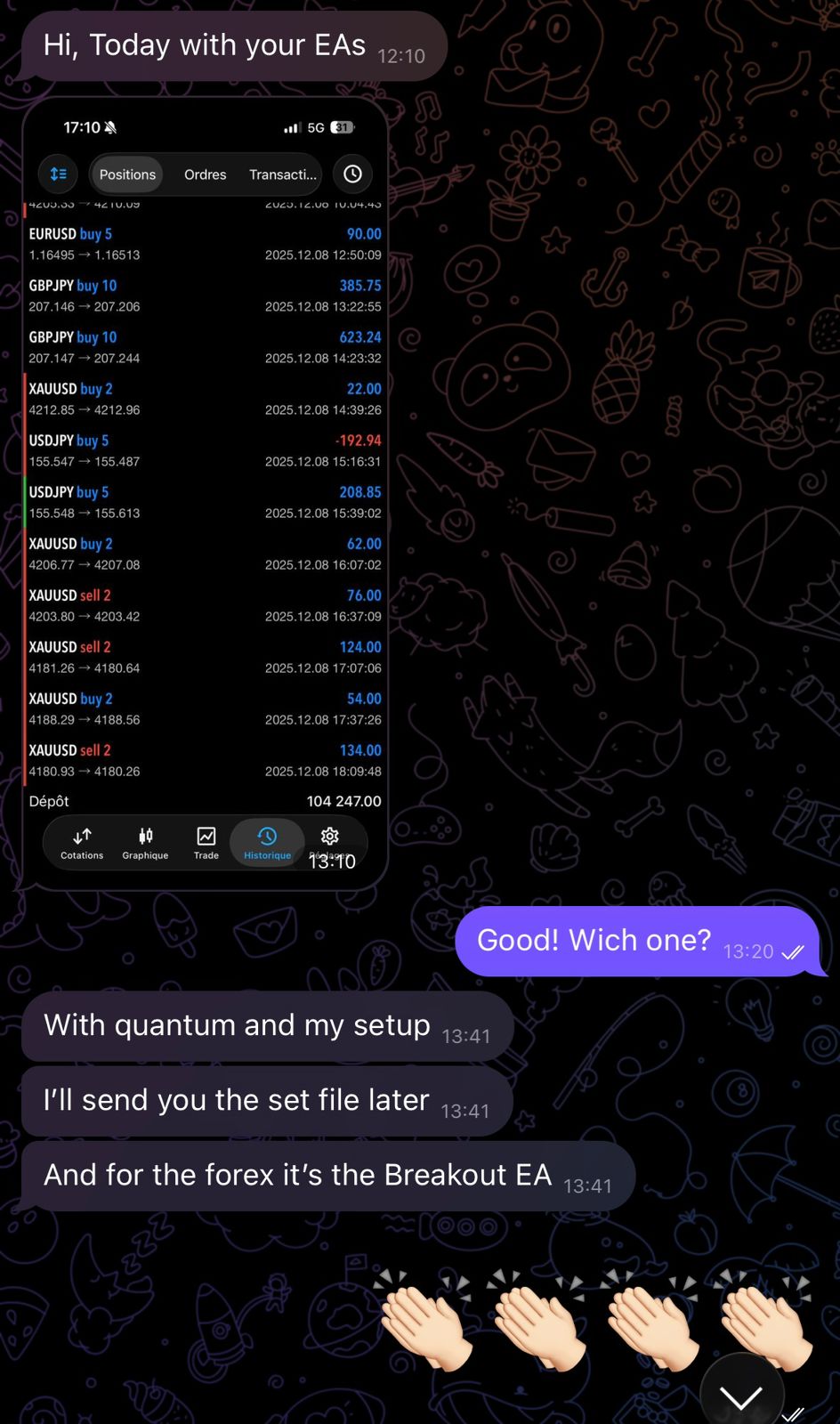 Figure 1: Live execution record showing coordinated multi-pair trading in MetaTrader 5 with isolated risk boundaries and zero drawdown stacking.
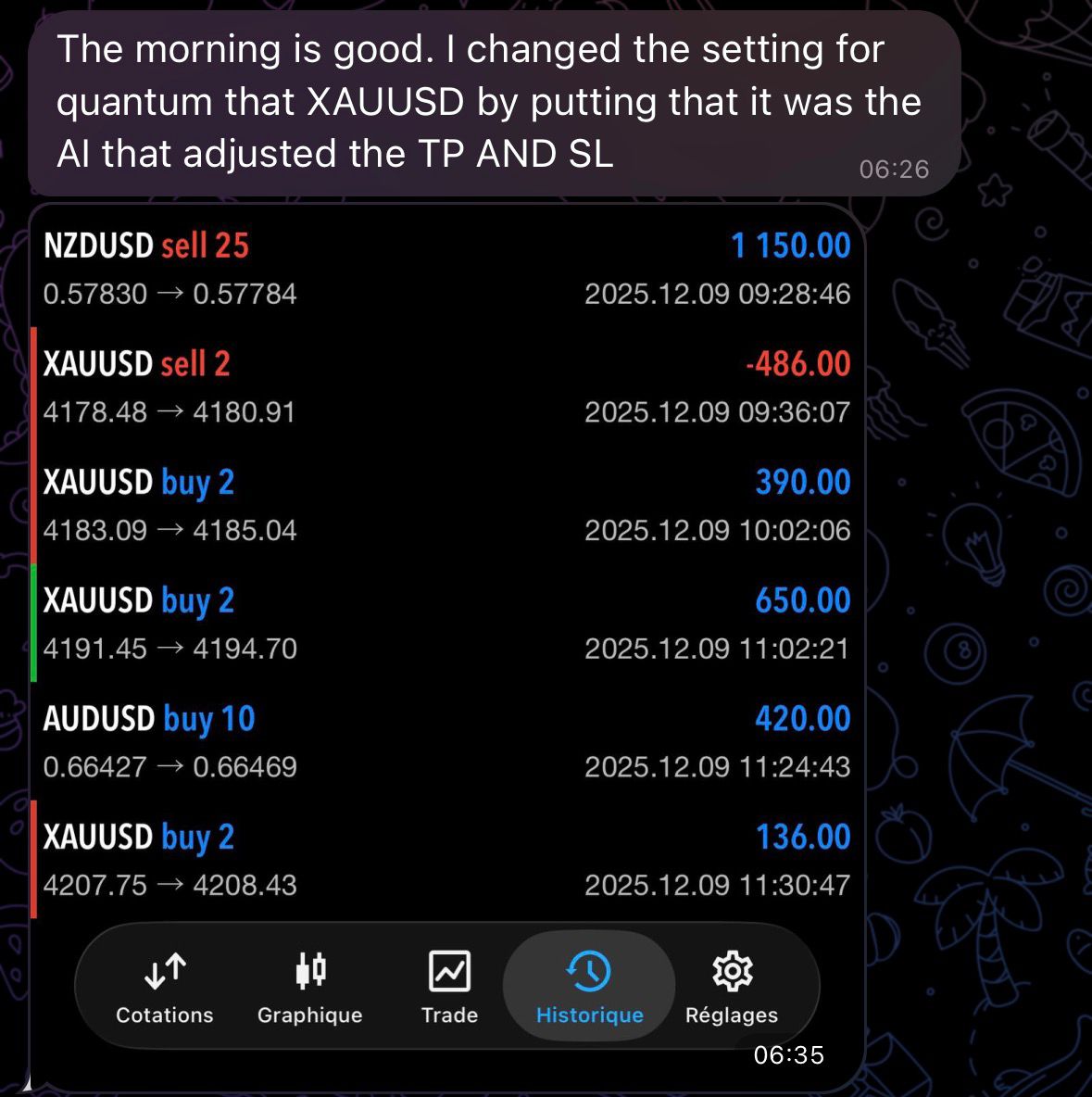 Figure 2: Real-time dynamic risk calibration: The Ratio X engine dynamically recalculates take-profit and stop-loss thresholds based on volatility expansion.
With an exceptional 4.7 Trustpilot rating, traders worldwide rely on Ratio X architectures to navigate complex market regimes. Furthermore, every purchase supports a greater mission: 10% of all software revenues are donated directly to children's care institutions in Brazil, combining quantitative trading excellence with genuine social impact.
Essential Risk Disclosure & Testing Protocol
Trading foreign exchange, commodities, and leveraged financial derivatives involves substantial risk of capital loss and is not suitable for every investor. Past backtest results and historical performance metrics do not guarantee future live trading outcomes. Expert Advisors and algorithmic tools are execution software designed to assist disciplined trading; they do not eliminate market risk.
We mandate that all algorithmic traders rigorously test the Ratio X Trader's Toolbox on a MetaTrader 5 demo account across multiple trading sessions and macroeconomic data releases before deploying any automated strategy on live funded capital or prop-firm evaluation accounts. Never risk capital that you cannot afford to lose.
Secure Your Lifetime Access to the Ratio X Trader's Toolbox
Take complete control of your algorithmic portfolio today. Eliminate the vulnerability of single-strategy robots and upgrade to an institutional multi-engine framework engineered to thrive across every market condition.
When you secure your lifetime license for the Ratio X Trader's Toolbox, you receive:
- 17 Specialist Expert Advisors for MetaTrader 5: Pre-calibrated algorithmic systems covering trend continuation, Asian mean-reversion, London liquidity expansion, and high-frequency volatility scalping.
- Ratio X Trend Watcher Market Regime Indicator: Real-time institutional regime classification to dynamically gate and filter EA execution.
- Complete Setup Guides & Presets: Comprehensive documentation and optimized set-files for prop firms, standard accounts, and raw-spread broker environments.
- Lifetime License & Future Updates: One-time investment with zero recurring subscriptions. All future updates to current Toolbox algorithms are included at no additional cost.
- Unconditional 7-Day Money-Back Guarantee: Test the entire suite completely risk-free on your MetaTrader 5 demo account. If the software does not meet your technical standards, receive a full, prompt refund within 7 days of purchase.
For readers of the MQL5 community, use exclusive promotional coupon code MQLFRIEND20 at checkout to claim an immediate 20% discount on your lifetime license.
Claim Lifetime Access with 20% Off Coupon MQLFRIEND20 →
Instant digital delivery via Hotmart. Backed by our 100% unconditional 7-day money-back guarantee.