Pure Path
- 지표
- 버전: 1.0

This document aims to provide a clear and accessible description of the ST Pure Path indicator, developed for the Metatrader platform. It is designed to assist traders, especially those with little experience, in identifying market trends and decision points visually and intuitively.
1. Visual Identification
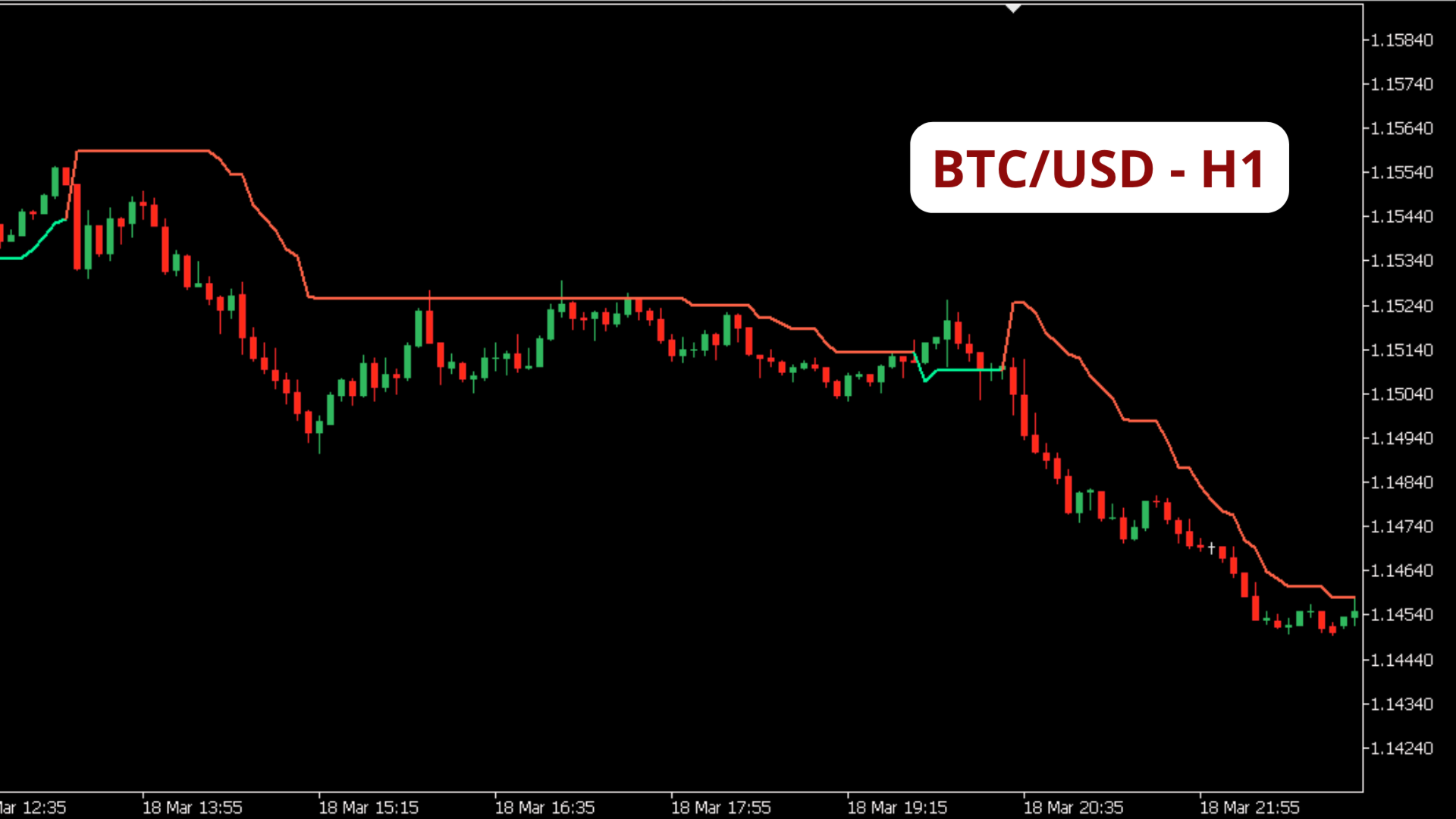
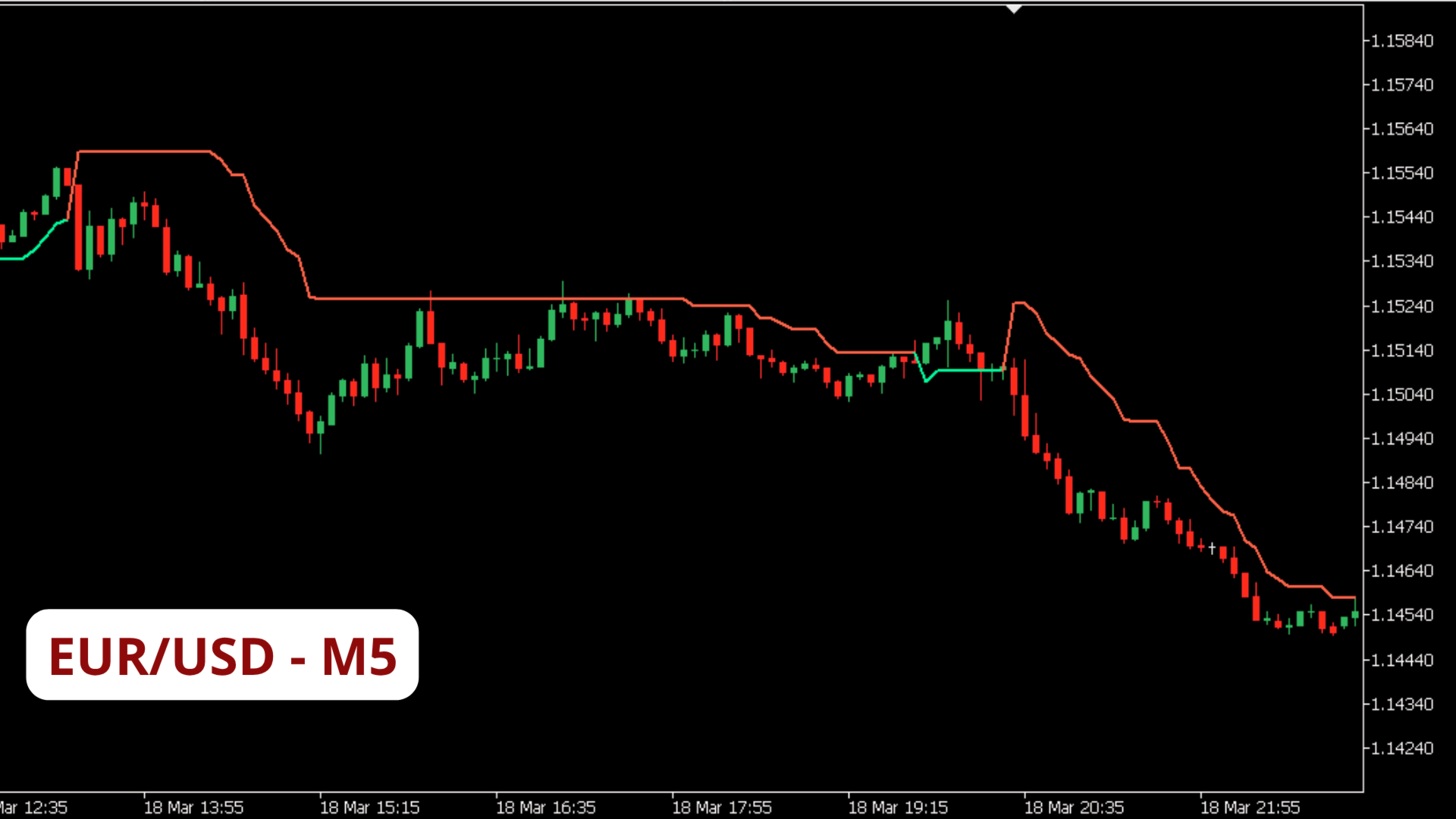
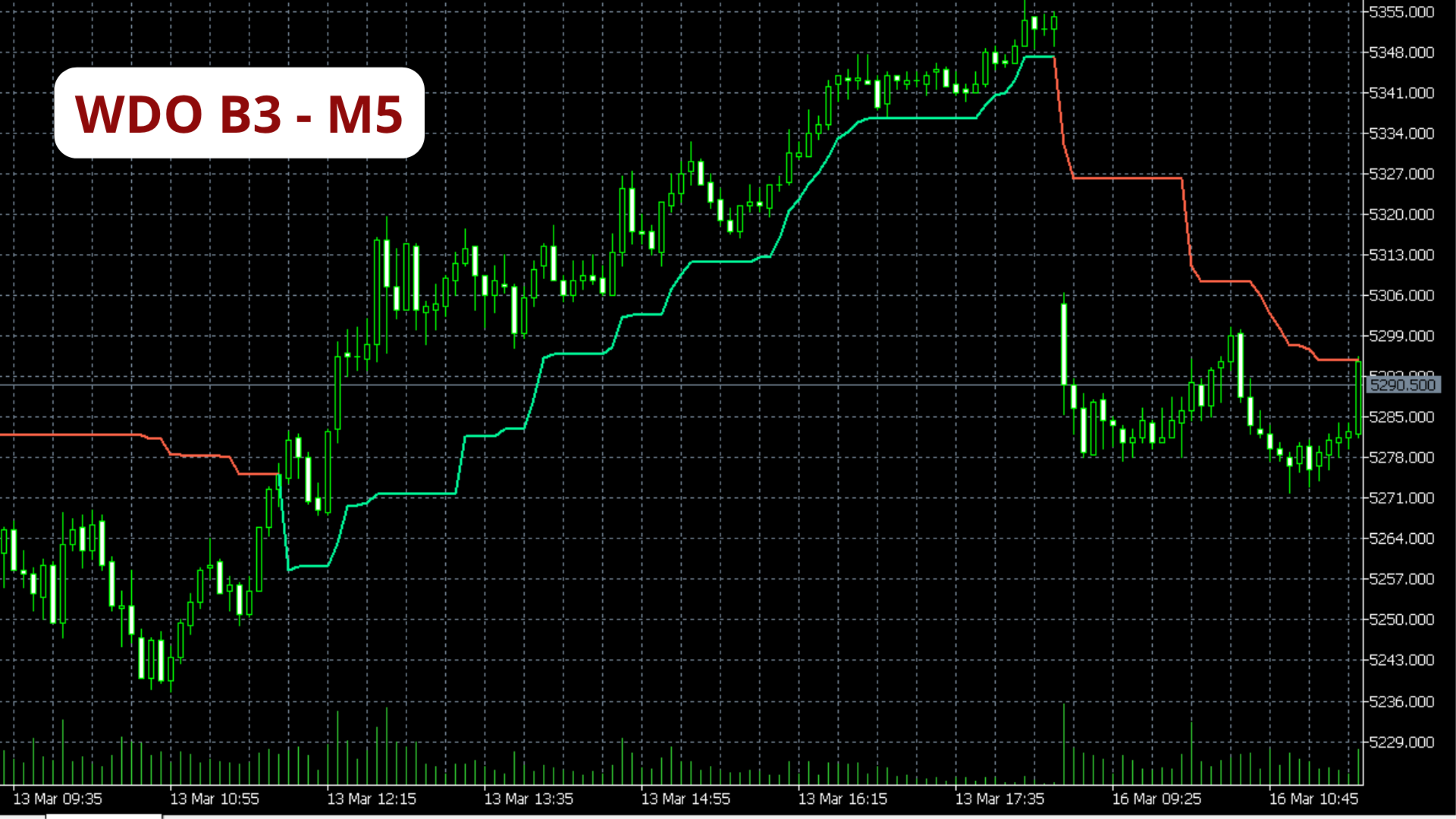
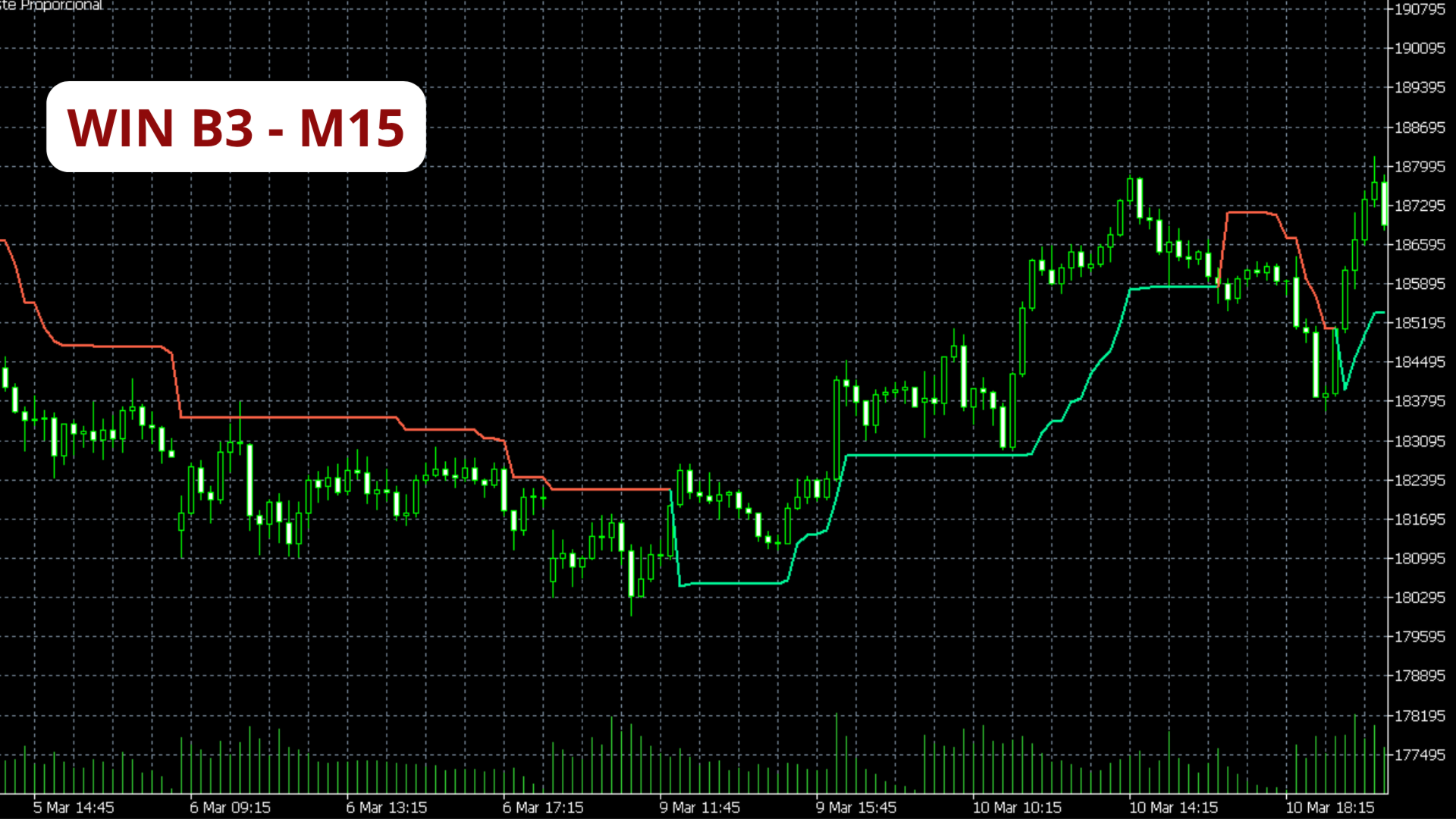
The ST Pure Path appears on the chart as a continuous, solid line, with a thickness of 2 pixels, moving in sync with the price. Its appearance resembles a ladder or steps, smoothly adapting to market movements. A fundamental characteristic is its discretion: the indicator does not clutter the chart with clouds, histograms, or invasive arrows, keeping the background clean for focused visual analysis.
Colors and Their Meanings:
| Line Color | Main Meaning | Hexadecimal Code (MT5 Standard) |
|---|---|---|
| Green | Bullish Trend | #00FA9A (MediumSpringGreen) |
| Red | Bearish Trend | #FF6347 (Tomato) |
2. Color and Position Semantics
The color and position of the ST Pure Path line relative to the candlesticks (price bars) are crucial for its interpretation:
- Green Line (Bullish Trend): When the line is green, it indicates that the market is in an uptrend. The line is positioned below the candlesticks, acting as dynamic institutional support. This means that if the price falls and touches this line, there is a good probability of finding buyers and resuming the upward movement.
- Red Line (Bearish Trend): When the line is red, it signals a downtrend. In this scenario, the line is located above the candlesticks, functioning as dynamic institutional resistance. If the price rises and touches this line, it is likely to encounter sellers and fall back down.
Distance between Price and Line:
The distance between the current price and the indicator line reflects market volatility, adjusted by an Adaptive ATR. This distance offers important insights:
- Excessive Deviation: If the price moves too far from the line (whether green or red), it may indicate trend exhaustion. This suggests that the current movement may be losing strength, and a correction or reversal may be imminent.
- Touch on the Line: A candlestick touching the indicator line (green or red) is a structure test. In the case of the green line, it's a support test; for the red line, it's a resistance test. These touches are points of interest for potential entries or exits.
3. Numerical Data on the Chart
The ST Pure Path was designed to be visually clean. Therefore, it does not display text, scores, or price labels directly on the chart. To obtain the current price, it is necessary to observe the Y-axis (right vertical) of the MetaTrader 5 platform.
4. Entry and Exit Criteria (Analysis)
Although the indicator provides clear visual signals, the interpretation for buy and sell decisions can be summarized as follows:
- Buy Signal (Bullish Context):
- When a candlestick touches the Green line (dynamic support).
- Immediately after the line changes from Red to Green (chromatic transition).
- Sell Signal (Bearish Context):
- When a candlestick touches the Red line (dynamic resistance).
- Immediately after the line changes from Green to Red (chromatic transition).
Risk Management (Stop Loss):
The Stop Loss should be placed at the exact position of the indicator line at the moment the entry candlestick is formed. This provides a clear and objective reference for capital protection.
Target Projection (Profit):
The ST Pure Path does not offer visual targets for profit. To define profit objectives, it is recommended to use complementary tools, such as Fibonacci levels, drawn from the point where the candlestick touches the indicator line.