 MetaTrader 5
 Experts
 지표
지표
 스크립트
스크립트
 라이브러리
라이브러리
 보관함
보관함
당사 팬 페이지에 가입하십시오

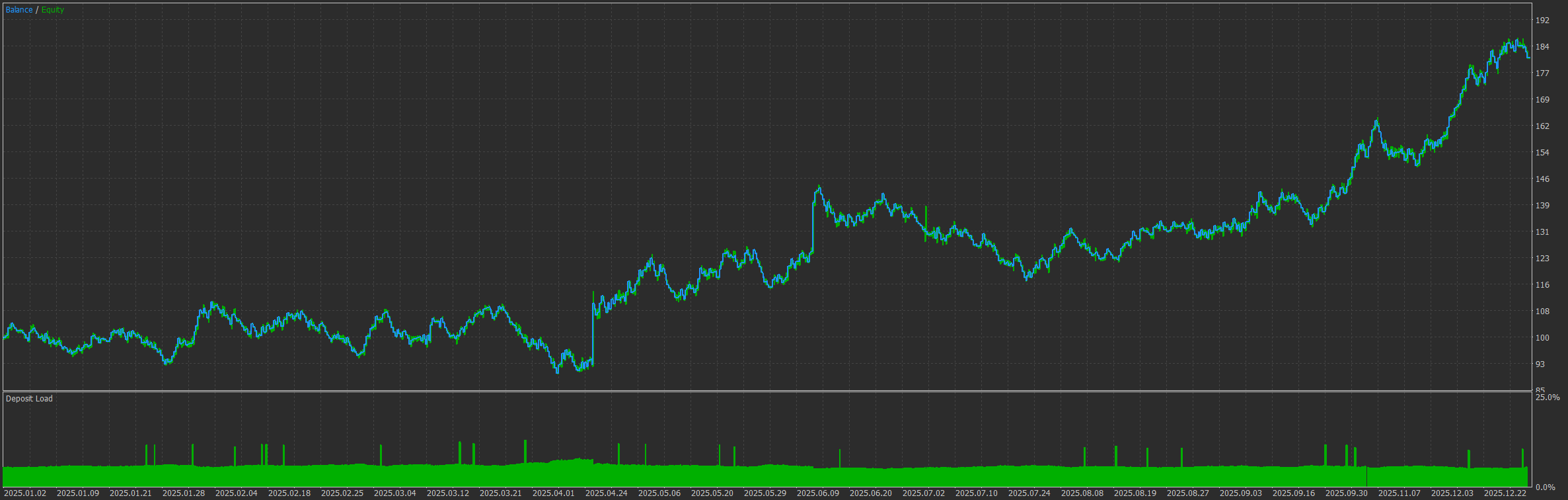
ICE (Impulse Confirmation Engine) - MetaTrader 5용 expert

- 조회수:
- 2993
- 평가:
- 게시됨:
- 업데이트됨:
-
 이 코드를 기반으로 한 로봇이나 지표가 필요하신가요? 프리랜스로 주문하세요
프리랜스로 이동
이 코드를 기반으로 한 로봇이나 지표가 필요하신가요? 프리랜스로 주문하세요
프리랜스로 이동


1. Main Architecture (The Three Pillars)
This system works through three integrated validation layers:
-
Detection (Intel): Uses the ratio of volume and candle body to ATR to detect the initial "explosion." It looks not only at the price, but also at the energy (volume) behind that price.
-
Confirmation (Defense): Uses an Adaptive Trend Filter (MA Slope) and Volatility Guard to ensure the EA doesn't trade in a "dead" market or when spreads are wild.
-
Execution (Attack): Uses three-scenario logic (Breakout, Pullback, & Velocity) to ensure the EA enters the market at the best price without losing momentum.
2. Logical Advantage
After a refactoring process, ICE now has intelligent features:
-
ATR Auto-Point Calibration: The EA automatically recognizes whether it is running on Gold (XAUUSD), Forex, or Indices without the need to adjust complex decimal settings.
//+------------------------------------------------------------------+
//| Get adaptive body ratio based on volatility                     |
//+------------------------------------------------------------------+
double GetAdaptiveBodyRatio()
  {
   if(!InpEnableAdaptive)
      return InpMinBodyRatio;

   double atr = GetATRValue();
   double atr_percent = atr / SymbolInfoDouble(CurrentSymbol, SYMBOL_BID);

// Lower body ratio requirement in high volatility
   if(atr_percent > 0.001)
      return InpMinBodyRatio * 0.8;  // High volatility
   if(atr_percent < 0.0003)
      return InpMinBodyRatio * 1.2; // Low volatility

   return InpMinBodyRatio;
} -
Momentum Velocity: The ability to enter early if the detector detects a significant price acceleration, so you don't miss the train when the trend is running fast.
// --- SKENARIO C: MOMENTUM ACCELERATION (NEW) ---
      // Jika harga bergerak cepat searah impuls meski belum breakout
      if(rates[0].close > rates[1].high && (double)rates[0].tick_volume > (GetAverageVolume(InpLookbackPeriod) * 0.8))
        {
         if(InpDebugMode)
            Print("ICE Entry: Bullish Velocity detected.");
         return true;
        }
     }
   else // BEARISH
     {
      // --- SKENARIO A: AGGRESSIVE CONTINUATION ---
      if(current_ask <= Impulse.lowest_since)
        {
         if(InpDebugMode)
            Print("ICE Entry: Bearish Breakout!");
         return true;
        }

      // --- SKENARIO B: SMART PULLBACK ---
      double range = Impulse.highest_since - Impulse.lowest_since;
      if(range > 0)
        {
         double retrace_level = (current_ask - Impulse.lowest_since) / range;

         if(retrace_level >= 0.20 && retrace_level <= 0.65)
           {
            if(rates[0].close < rates[0].open || current_ask < rates[1].low)
              {
               if(InpDebugMode)
                  PrintFormat("ICE Entry: Retrace Sell at %.2f level", retrace_level);
               return true;
              }
           }
        }
3. Trading Characteristics
| Fitur | Deskripsi |
|---|---|
| Trading Style | Aggressive Momentum / Impulse Follower |
| Ideal Timeframe | M15, M30, up to H1 |
| Risk Management | Adaptive Lot based on ATR Stop Loss |
| Session Filter | Automatically avoids Asian Session and quiet Rollover hours |
4. ICE Pro Parameter Summary
This system uses parameters optimized for modern markets:
-
Lookback Period (20): Standard for capturing short-term volatility cycles.
-
Volume Multiplier (1.3x): Minimum volume requirement for a candle to be considered an impulse.
-
Risk Per Trade (0.5% - 2%): Disciplined money management to ensure account security even in the event of a series of stop-losses.
ICE Philosophy: "Discipline in filtering out the trash, but courage in pursuing opportunities."
    //--- Enumerations
enum ENUM_TRADING_MODE
  {
   TRADING_MODE_DISABLED,
   TRADING_MODE_DEMO,
   TRADING_MODE_LIVE
  };

enum ENUM_MARKET_SESSION
  {
   SESSION_ASIAN,
   SESSION_LONDON,
   SESSION_NEWYORK,
   SESSION_PACIFIC
  };

enum ENUM_TRAILING_MODE
  {
   TRAIL_NONE,          // No trailing
   TRAIL_BREAKEVEN,     // Move to breakeven only
   TRAIL_ATR_FIXED,     // Fixed ATR trailing
   TRAIL_ATR_DYNAMIC,   // Dynamic ATR trailing
   TRAIL_HYBRID         // Hybrid trailing (breakeven + ATR)
  };

//--- Input Parameters - OPTIMIZED & CALIBRATED
input group "───────── CORE SETTINGS ───────────"
input ENUM_TRADING_MODE   InpTradingMode    = TRADING_MODE_DEMO;   // Trading mode selection (Live / Test / Visual)
input string              InpTradeSymbol    = "";                  // Trading symbol (empty = current chart symbol)
input int                 InpMagicNumber    = 888888;              // Unique magic number for order identification
input string              InpTradeComment   = "Ritz-ICE-Pro";      // Trade comment shown in terminal & history
input bool                InpDebugMode      = true;                // Enable detailed debug logging
input bool                InpEnableAdaptive = true;                // Enable adaptive logic based on market conditions

input group "───────── ICE DETECTION ───────────"
input int                 InpLookbackPeriod = 20;                  // Historical bars used for ICE pattern detection
input double              InpVolumeMultiplier = 1.3;               // Minimum volume multiplier to confirm impulse
input double              InpMinBodyRatio   = 0.5;                 // Minimum candle body-to-range ratio (impulse strength)
input double              InpClosePosition  = 0.6;                 // Minimum close position within candle range (0–1)
input int                 InpMinImpulseBars = 2;                   // Minimum bars required for a valid impulse
input int                 InpMaxImpulseBars = 5;                   // Maximum bars allowed for impulse sequence
input bool                InpUseSessionFilter = true;              // Allow trades only during active trading sessions

input group "───────── RISK MANAGEMENT ───────────"
input double              InpRiskPerTrade   = 0.1;                 // Risk per trade in percent of account balance
input bool                InpReduceAfterLoss = false;              // Reduce risk after a losing trade
input double              InpReductionFactor = 0.2;                // Risk reduction factor after loss (0.8 = -20%)
input double              InpMinEquityToTrade = 10.0;              // Minimum funds to keep trading (USD)
input double              InpMinMarginLevel   = 110.0;             // Minimum Margin Level (%)

input group "───────── TRADE EXECUTION ───────────"
input double              InpATRMultiplierSL = 1.2;                // Stop Loss distance based on ATR multiplier
input double              InpATRMultiplierTP = 1.8;                // Take Profit distance based on ATR multiplier
input int                 InpSlippagePoints  = 30;                 // Maximum allowed slippage (in points)

input group "───────── ENTRY OPTIMIZATION ───────────"
input bool                InpImmediateEntry  = true;               // Enter immediately after impulse detection
input double              InpMaxEntryBars    = 3;                  // Maximum bars to wait for entry after detection

input group "───────── SMART TRAILING ───────────"
input ENUM_TRAILING_MODE  InpTrailingMode    = TRAIL_ATR_FIXED;    // Trailing stop mode (Fixed / ATR / Hybrid)
input double              InpBreakevenAt    = 0.5;                 // Move SL to breakeven at % of TP reached
input double              InpTrailATRMulti  = 1.0;                 // ATR multiplier for trailing stop distance
input double              InpTrailActivation = 0.3;                // Profit % required to activate trailing logic
input bool                InpUseVolatilityAdjust = true;           // Dynamically adjust trailing based on volatility

//+------------------------------------------------------------------+
//|                                                                  |
//+------------------------------------------------------------------+
input group "───────── SAFETY FILTERS (CALIBRATED) ───────────"
input double              InpMaxSpread      = 40.0;                // Maximum allowed spread (points)
input int                 InpMinATRPoints   = 50;                  // Minimum ATR volatility filter (≈ 5 pips)
input int                 InpMaxATRPoints   = 1500;                // Maximum ATR volatility filter (≈ 150 pips)
input bool                InpFilterLowVolume = true;               // Block trades during low-volume conditions
=== The code is only for reference, not to be used directly without further development that you must do. If you use it directly with a real account, all risks are your own responsibility. I, as the author and originator of the idea, only provide input and ideas for this code. ==
 SessionRangeBoxes
Draws colored range boxes for the Asian, London, and New York sessions on any chart. Includes a stats panel showing average session ranges in pips and optional breakout alerts when price exits a session box.
WPR for Overbought and Oversold
Overbought and oversold indicators aim to determine where the price may experience a reversal.
 nClose Orders
Function for closing positions and deleting orders
Fractal Maturity Oscillator FMO
The FMO indicator is a technical analysis tool that measures "trend age" using fractal cycles. Its purpose is to help traders determine whether a trend is still young (safe to follow) or over-aged (high risk). A Conceptual Synthesis of Psychology, Sociology, and Life Cycles This work presents a deep analysis of human life through a numerical matrix (3, 7, 39, 49), using it as a conceptual lens for understanding psychology, sociology, and developmental cycles. It is not a conventional scientific framework. Rather, it is a synthesized model — integrating esoteric, psychological, and sociological perspectives into a unified cyclical structure. The goal is to organize and interpret human development through layered, interacting cycles.