Mlnas
- エキスパート
- バージョン: 1.0

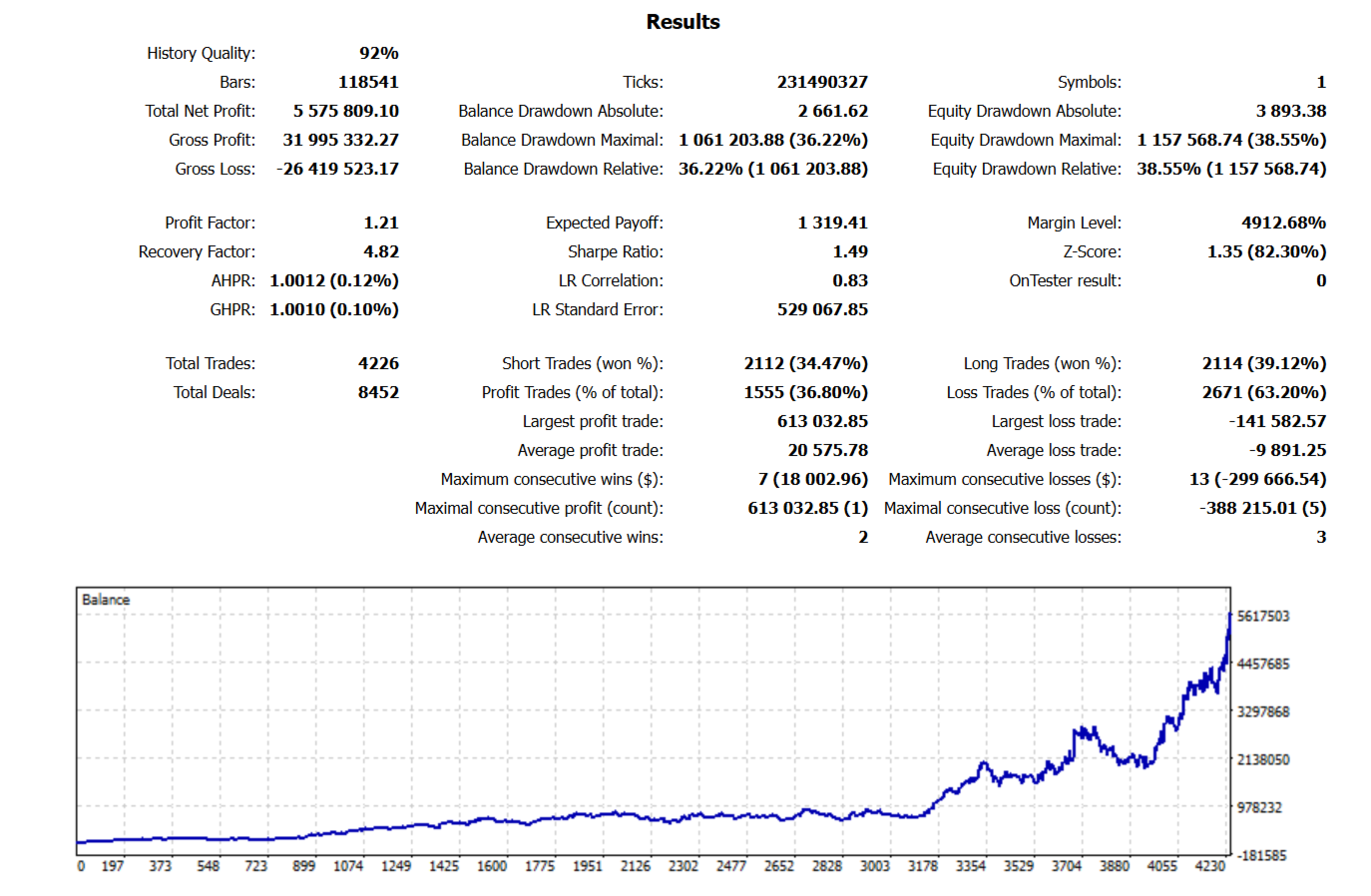
Mlnas NASDAQ DML Institutional is a fully systematic, quantitative trading architecture engineered exclusively for the NASDAQ 100 index. Unlike traditional heuristic-based Expert Advisors that suffer from static parameter decay, the Mlnas engine employs an online, continuous-learning Dynamic Machine Learning (DML) model integrated with an institutional-grade volatility targeting framework.
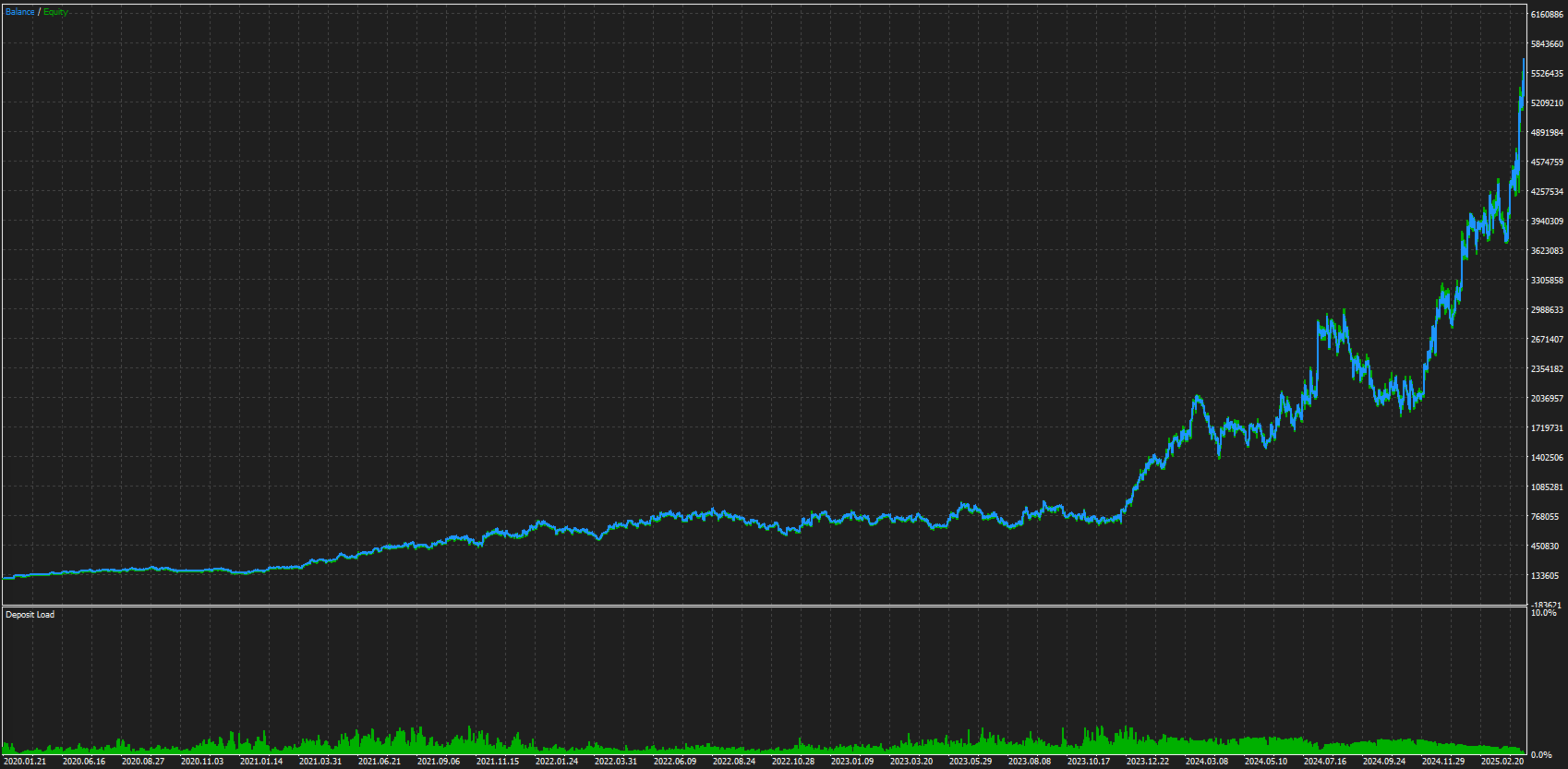
This system is designed to deliver a highly asymmetric equity curve, truncating left-tail risk while capturing unconstrained right-tail macroeconomic trends. It achieves this by mathematically homogenizing the risk profile across shifting market volatility regimes, isolating structural capital flows from high-frequency microstructural noise.
Core Algorithmic Architecture The transaction engine operates on a concurrent, four-node framework. Capital is deployed into the market only upon absolute mathematical convergence across all modules:
-
Multidimensional Time Series Momentum (TSMOM): Mitigates exposure to transient mean-reversion by evaluating structural alignment across a fractal time matrix. The algorithm extracts raw momentum vectors from the M15, H1, H4, and D1 periodicities. This ensures intraday execution strictly aligns with dominant macroeconomic liquidity blocks and avoids trading against major structural flows.
-
Dynamic Machine Learning (DML) Engine: The predictive core utilizes an online logistic regression algorithm that assigns a stochastic probability to the directional outcome of the subsequent period. The model updates its weighting vectors instantly after every closed candle via stochastic gradient descent, violently adapting to sudden regime changes without requiring offline retraining.
-
Microstructural Noise Filtration: To prevent premature liquidation driven by algorithmic liquidity sweeps, the engine deploys a dynamic volatility band system. This establishes structural invalidation frontiers, providing the exact mathematical coordinate for the initial dynamic stop-loss and replacing arbitrary point-based stops.
-
Institutional Volatility Targeting: The algorithm enforces a strict annualized volatility target (default 15%). The engine continuously calculates the realized standard deviation of the asset's logarithmic returns. During periods of extreme market distress and expansion, the system automatically deleverages, deploying fractions of the standard lot size to shield the portfolio from systemic drawdowns.
Risk Management & Execution Protocols
-
Variance-Adjusted Sizing: Transaction volume is calculated dynamically. A base risk parameter is divided by the exact tick-value distance to the microstructural invalidation level, then multiplied by the current volatility scalar. This guarantees identical Day-Zero monetary risk across all trades, regardless of index valuation.
-
Discrete Step-Trailing Stop: The system utilizes a delayed, discrete trailing mechanism. The protective order remains static to absorb standard intraday pullbacks and only begins to trail the market after securing a massive favorable excursion, locking in capital at strict mathematical intervals.
Operational Requirements
-
Instrument: NASDAQ 100 (NAS100, US100, USTEC).
-
Execution Timeframe: M15.
-
Broker Environment: A RAW ECN account classification is strictly required to minimize execution latency and spread costs. Standard or STP accounts will degrade the microstructural filtration logic.
-
Hosting: A low-latency VPS is mandatory due to the continuous online learning updates executed at the close of every M15 period.
Input Parameters Definition
-
InpBaseRisk : Base nominal risk per operation over total equity (e.g., 0.01 = 1%).
-
InpTargetVol : Annualized target volatility limit.
-
InpLearningRate : Alpha step for the DML gradient descent.
-
InpConfidenceThreshold : Minimum statistical probability required for execution.
-
InpMinSLPoints : Absolute minimum stop-loss distance to avoid spread execution.
-
InpTrailingActivation : Initial points required in profit to trigger the step-trailing protocol.