PulseFlow NAS100 Breakout
- Experts
- Versione: 1.0
- Attivazioni: 10

PulseFlow NAS100 Breakout is a long-only trading robot (Expert Advisor) for MetaTrader 5. Its default settings were made for NAS100 / US100 / USTEC CFDs and NQ / MNQ futures on H1.
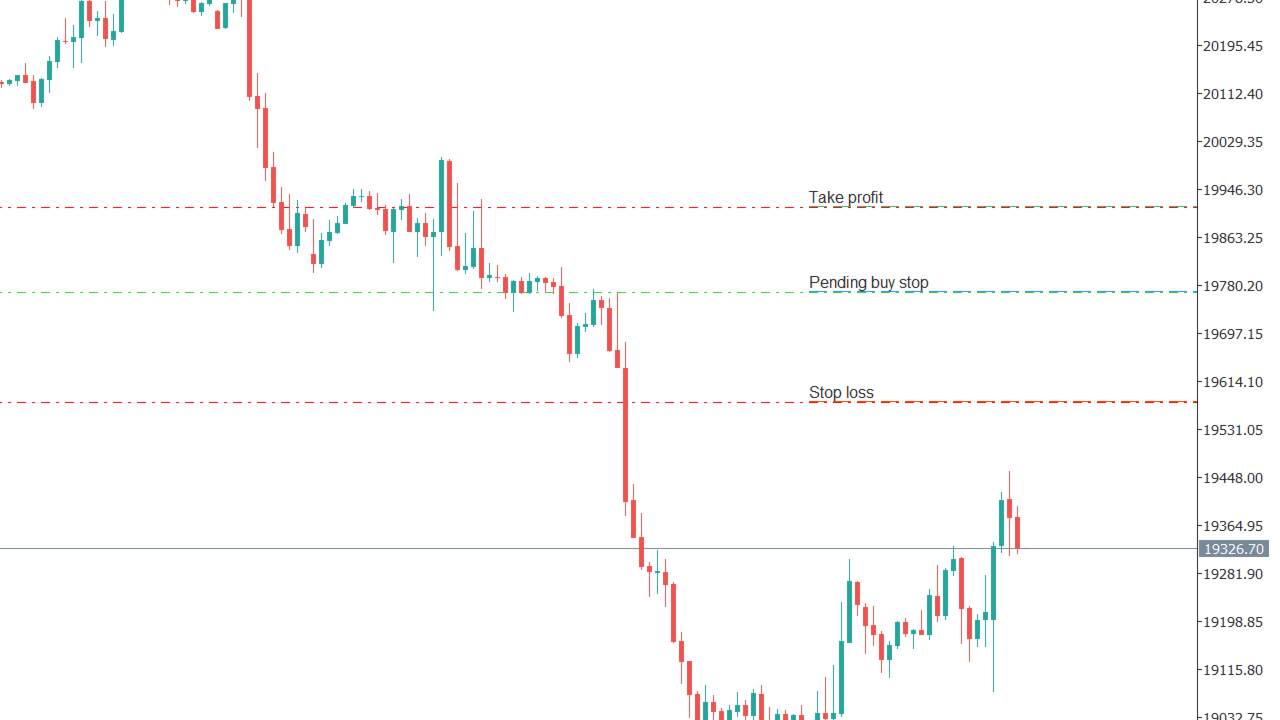
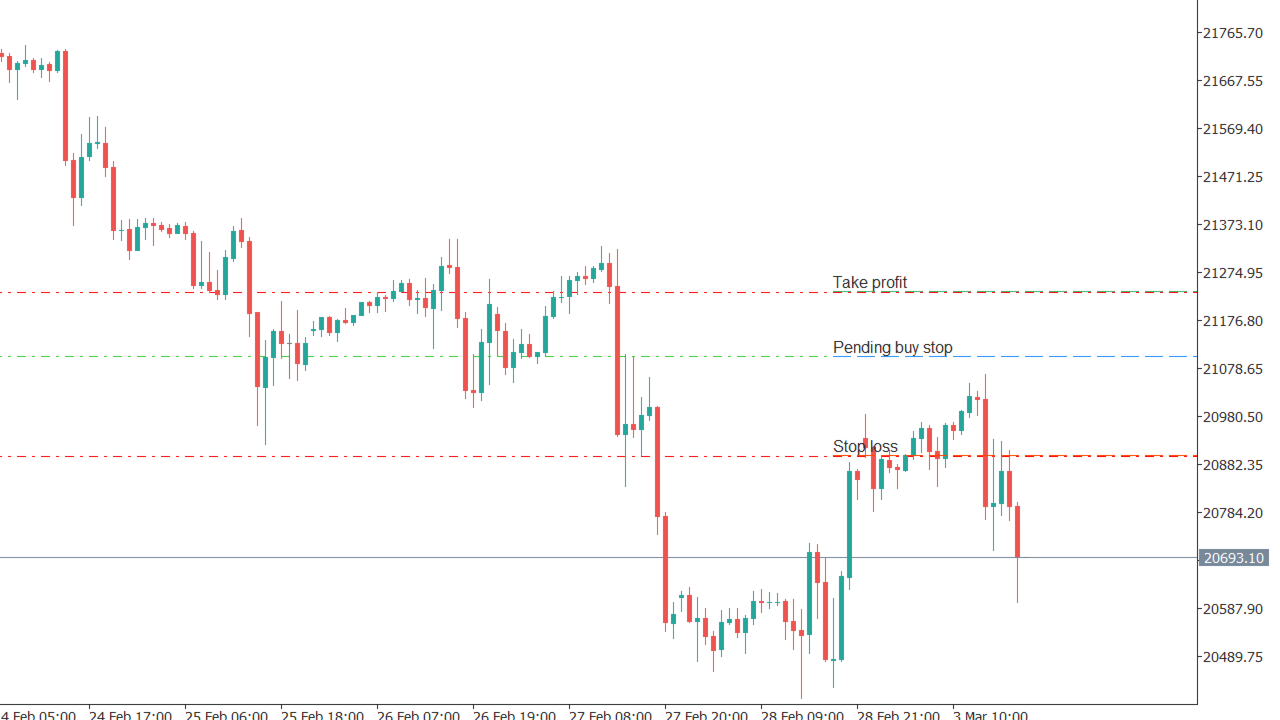
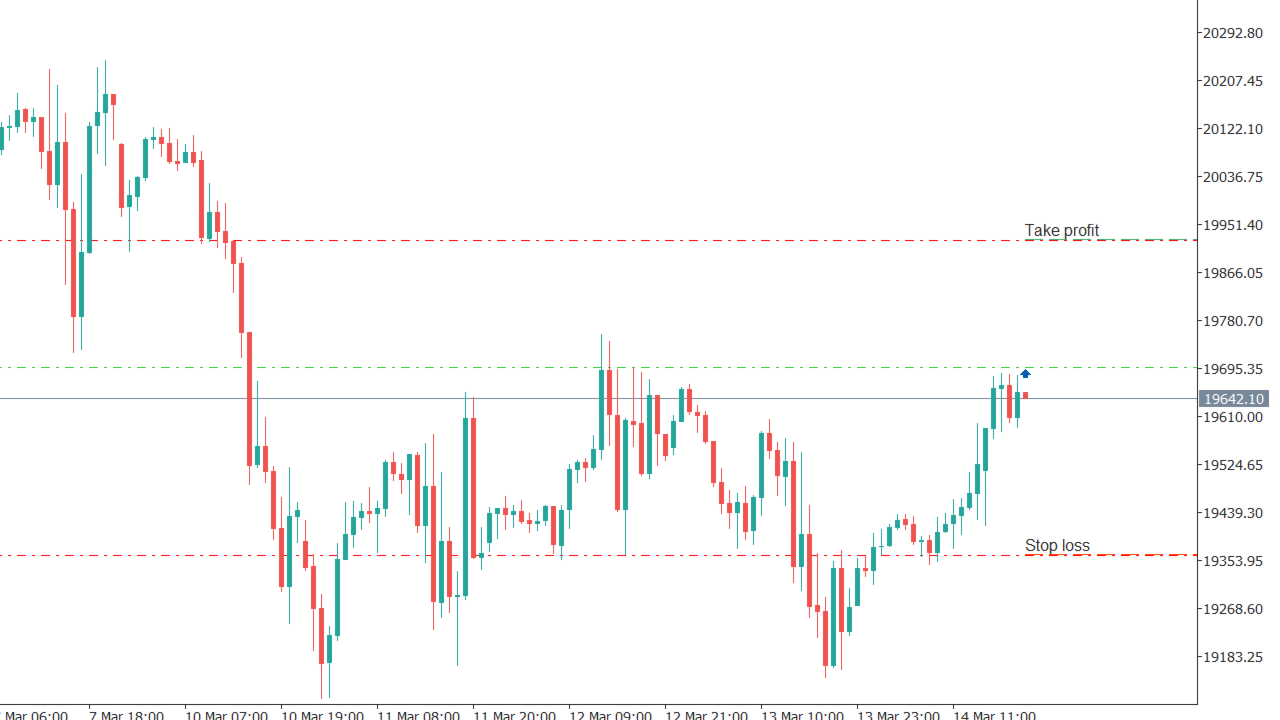
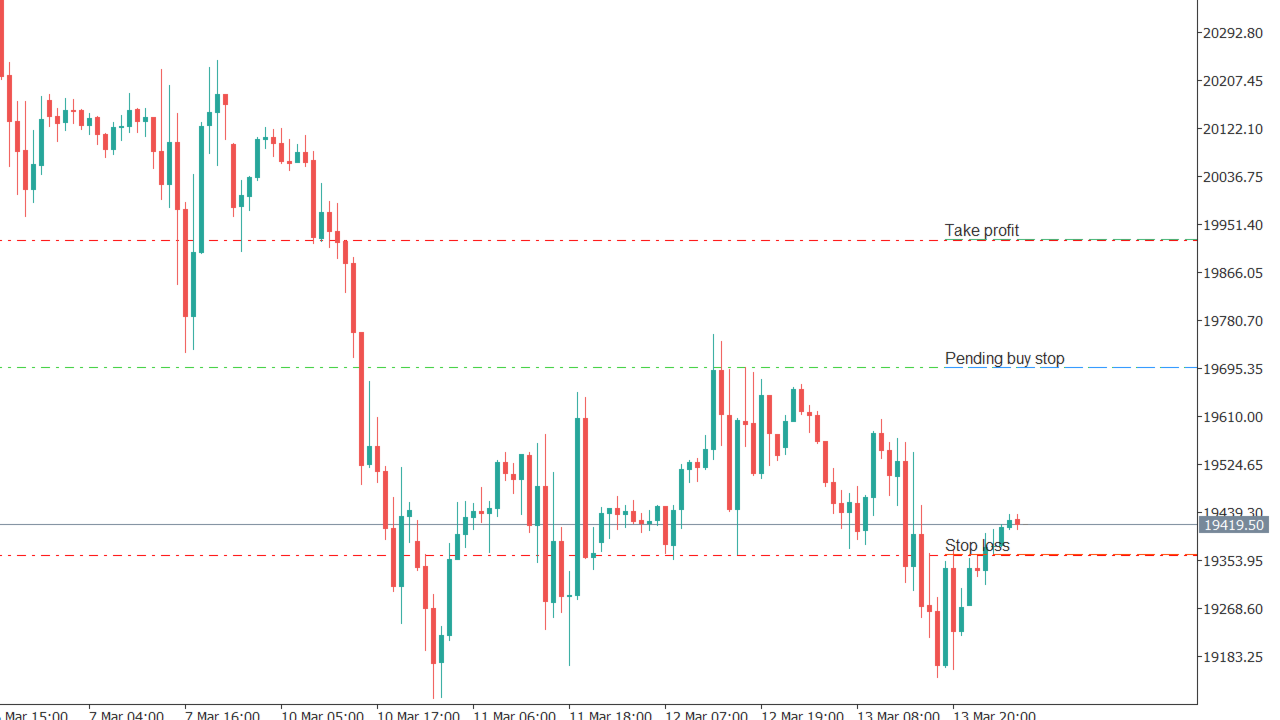
Buying right after a drop often means buying too early. This robot waits for a decline on its strategy timeframe (hourly by default) and then places a buy stop above a recent high, so it only buys if price turns back up through that high. Every order carries its stop loss from the moment it is placed, and its take profit too unless you switch the take profit off, so the planned risk of each trade is known before the order fills. The robot places, moves and cancels its own pending order and trails the stop loss of its own position.
How it trades
- It decides once per bar of the strategy timeframe (H1 by default, independent of the chart timeframe), at the first tick of each new bar. It does not trade tick by tick.
- Stop loss and take profit are sized from recent volatility, so they follow how much the market has been moving.
- While no position is open, a new setup moves the pending order to the new level. An order not filled within a set number of bars after it was placed or last moved is cancelled. An order can be moved many times before it fills or expires.
- Trailing stop: off, a fixed price distance (the default) or a multiple of volatility. It only moves the stop loss up, at most once per bar, after a profit you set.
- It trades infrequently: roughly 35 to 40 trades a year in the simulation below. Days or weeks without a trade are normal.
Risk and position size
- One position at a time per symbol and magic number. No grid, no martingale, no averaging.
- Lot size: a fixed lot (default 0.10) or a percentage of the balance risked per trade, calculated from the stop distance.
- Free margin is checked before every order and the lot is reduced if needed. The lot is adjusted to the broker's minimum, maximum and step.
- Optional maximum spread (off by default).
Broker and account handling
It respects the broker's stop and freeze levels, trading sessions (it waits while the session is closed) and the symbol's trade mode. It works on hedging and netting accounts. On a netting account it places no orders, and cancels its pending order, while a position it did not open is on the symbol, because a fill would merge with that position. It manages only its own orders, identified by magic number, and does not modify manual trades or the orders and positions of other robots. A magic number of 0 (the one used by manual trades) is not accepted and is replaced by the default. After a terminal restart it finds its own pending order and position again and does not duplicate orders. No DLLs, no web requests, no external files.
Recommended use
- NAS100, US100 or USTEC CFDs (the name depends on the broker) and NQ or MNQ futures, with the strategy timeframe on H1 (the default) and a low spread. The chart itself can be of any timeframe. This is a recommendation, not a limit: the robot runs on any symbol and any strategy timeframe.
- One lot is worth different amounts at different brokers, and a CFD lot is not the same size as a futures contract. Check the contract size and minimum lot, or use the risk percentage mode.
- The fixed trailing distance is in price units (12 = 12 index points). On other symbols, such as currency pairs, use the volatility trailing mode.
- Before its first order it needs about 300 bars of history on the strategy timeframe (about 2-3 weeks of hourly data when the tester has no earlier history).
- The broker holds the stop loss and take profit, but order expiry and the trailing stop are handled by the robot, so keep the terminal running and connected.
- Test it first in the Strategy Tester on your broker's data, over as much history as is available. It trades infrequently, so a few months give only a handful of trades.
Settings
Strategy: strategy timeframe, the lengths that define the decline and its confirmation, the lookback for the breakout level, order validity in bars, stop loss and take profit size, and the trailing stop (mode, distance, volatility multiple, activation).
Risk: lot mode, fixed lot, risk percentage, maximum spread.
General: magic number, order comment, show levels on the chart, verbose log.
On the chart
Dashed lines for the pending buy stop, the stop loss and the take profit, each with a caption ("Pending buy stop", "Stop loss", "Take profit") that has no background, so it never hides the chart, plus a one-line status in the corner. The levels can be hidden. Log messages are short (Experts tab in the terminal, Journal tab in the Strategy Tester); a verbose log is optional.
Backtest results
Default settings on NQ futures, H1, 1 contract, $2.50 commission per side and 1 tick of slippage on stop orders. Simulated outside MetaTrader 5 on back-adjusted NQ futures with 1-minute fills, not in the Strategy Tester and not on a live or demo account.
Jul 2010 - Dec 2014: 181 trades, 49.7% winners, profit factor 1.14, net +$2,890, max drawdown $2,307.
Jan 2015 - May 2019: 156 trades, 52.6% winners, profit factor 1.55, net +$11,600, max drawdown $3,272.
Jun 2019 - Sep 2026: 252 trades, 63.5% winners, profit factor 1.37, net +$40,353, max drawdown $35,604. 2023 and 2024 were losing years.
How to read these numbers:
- The default settings were fitted on Jun 2019 - Sep 2026, so that period is in-sample: the settings were chosen on it. Jul 2010 - Dec 2014 is the only period never used to choose them.
- The advantage shown is modest, and the drawdown can be large compared with the profit.
- Results on a broker's CFD in the MetaTrader 5 Strategy Tester will differ because of different data, spread and contract size.
What has been checked
- Compiled with 0 errors and 0 warnings (MetaEditor build 6230).
- Run in the MetaTrader 5 Strategy Tester on NAS100, US500, EURUSD, GBPUSD, USDJPY and XAUUSD, with several chart timeframes, on hedging and netting accounts, with no trading errors in the logs.
Limits
- Long only: it never sells short.
- No demo or live track record yet. All performance figures above are simulated.
- A buy stop or a stop loss can fill at a worse price than the order price, especially in fast markets and at gaps.
- In risk percentage mode, if the calculated lot is below the broker's minimum, the minimum lot is used, so the real risk can be higher than the percentage set. The log reports it once each time the robot starts.
Trading leveraged instruments carries a risk of loss. Simulated and past results do not predict future results. This robot executes a fixed set of rules and is not financial advice.