Session Buffer Lines
- Indicateurs
-
Fabrizio Battaglini
 Développeur MT4/MT5 spécialisé dans les Expert Advisors, les indicateurs, les utilitaires, les outils de gestion des trades, le débogage, le backtesting et l’automatisation de stratégies.
Je peux vous aider avec :
- Création et modification d’EAs
- Développement et débogage d’indicateurs - Version: 1.0
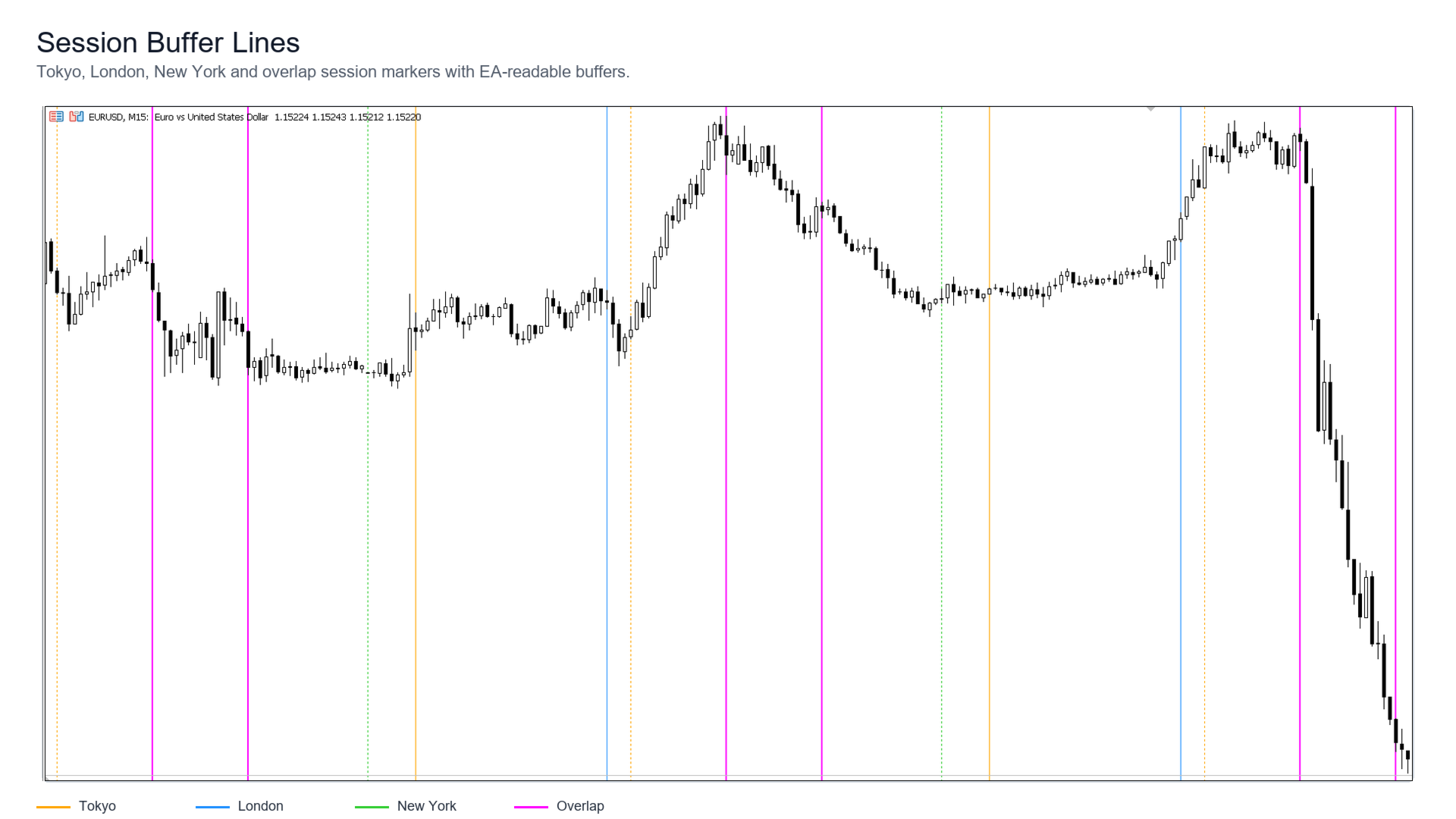
Session Buffer Lines is a lightweight MetaTrader 5 indicator that marks the main trading sessions directly on the chart and exposes session event data through indicator buffers.
Core idea: the indicator gives traders a clean session timing reference for Tokyo, London, New York and the London-New York overlap, while also providing EA-readable open and close events through iCustom().
Quick Summary
| Product type | MetaTrader 5 indicator |
| Main focus | Session timing, chart markers and EA-readable buffers |
| Sessions included | Tokyo, London, New York and London-New York overlap |
| Time basis | New York session hours with broker-server offset adjustment |
| External DLLs | Not required |
Main Features
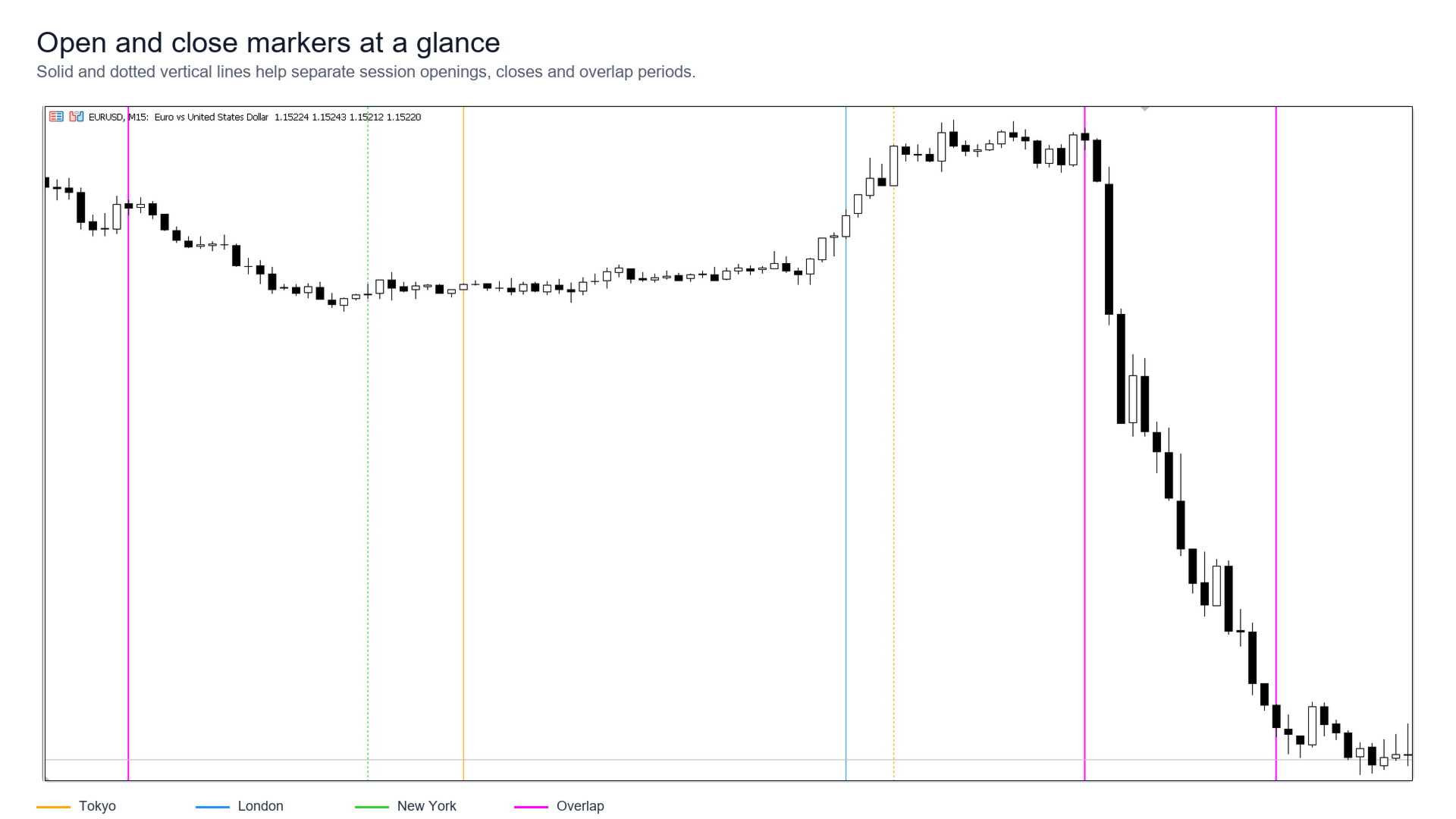
- Vertical markers for Tokyo, London, New York and overlap sessions.
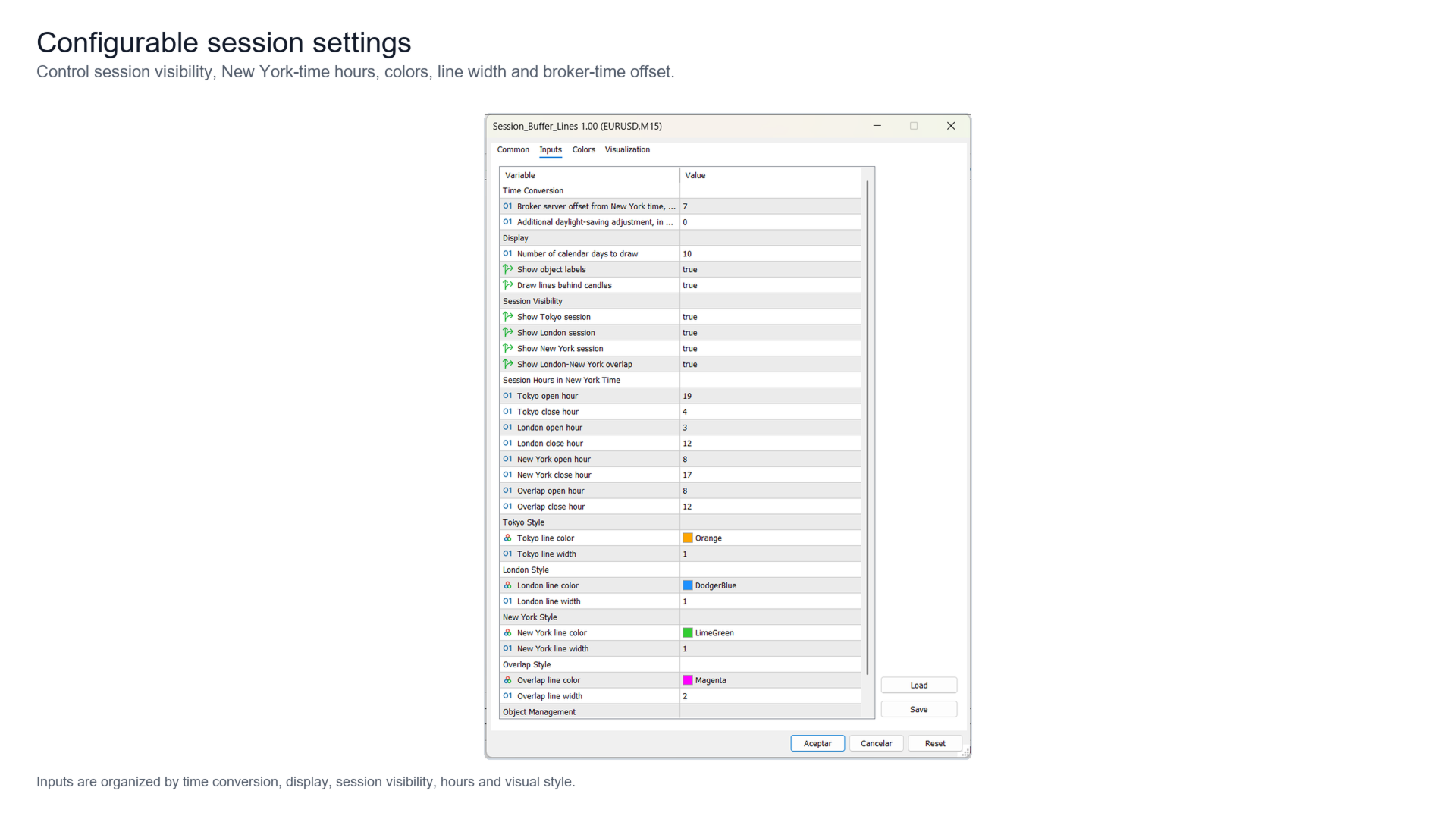
- Configurable session hours based on New York time.
- Broker-server offset and daylight-saving adjustment.
- Visibility controls for each session independently.
- Custom colors, widths and open/close visual styles.
- Optional chart object labels.
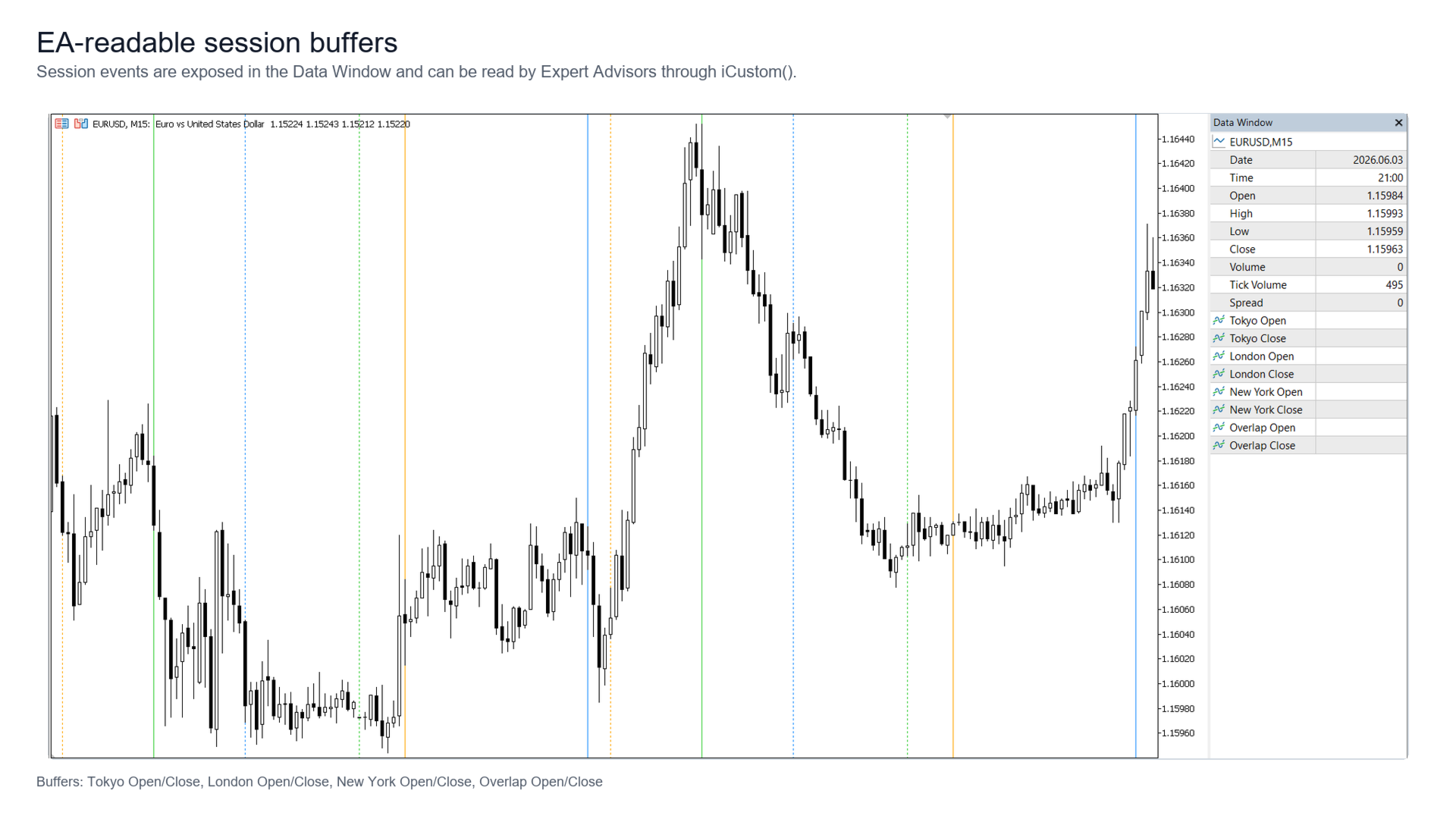
- EA-readable buffers for session open and close events.
- Lightweight implementation with no DLLs, WebRequest or external files.
Buffers For Developers
- Buffer 0: Tokyo Open
- Buffer 1: Tokyo Close
- Buffer 2: London Open
- Buffer 3: London Close
- Buffer 4: New York Open
- Buffer 5: New York Close
- Buffer 6: Overlap Open
- Buffer 7: Overlap Close
When no event is present, the buffer returns EMPTY_VALUE. When a session event is detected, the corresponding buffer receives the bar high value so an EA can detect it easily.
Frequently Asked Questions
Does the indicator generate buy or sell signals?
No. It is a visual and technical session tool. It does not generate trade entries by itself.
Can it be used from an Expert Advisor?
Yes. The buffers are designed so they can be read through iCustom() for session-aware automation or filters.
Why might the session lines look different on another broker?
Broker server time can vary. The offset and daylight-saving inputs should be adjusted so the plotted sessions match your broker's time zone.
Important Notes
- This product is an indicator, not an Expert Advisor.
- Correct session alignment depends on the broker-server offset and daylight-saving inputs.
- The indicator is intended for session timing, chart organization and EA integration, not for direct signal generation.
Support and Feedback
If this tool was useful for your workflow, an honest review helps support future updates and new releases.