Quantora Level Break EA MT5
- エキスパート
- バージョン: 1.15
- アクティベーション: 12

Quantora Level Break EA
Automated Breakout Trading for MetaTrader 5
Turn market levels into a structured trading process.
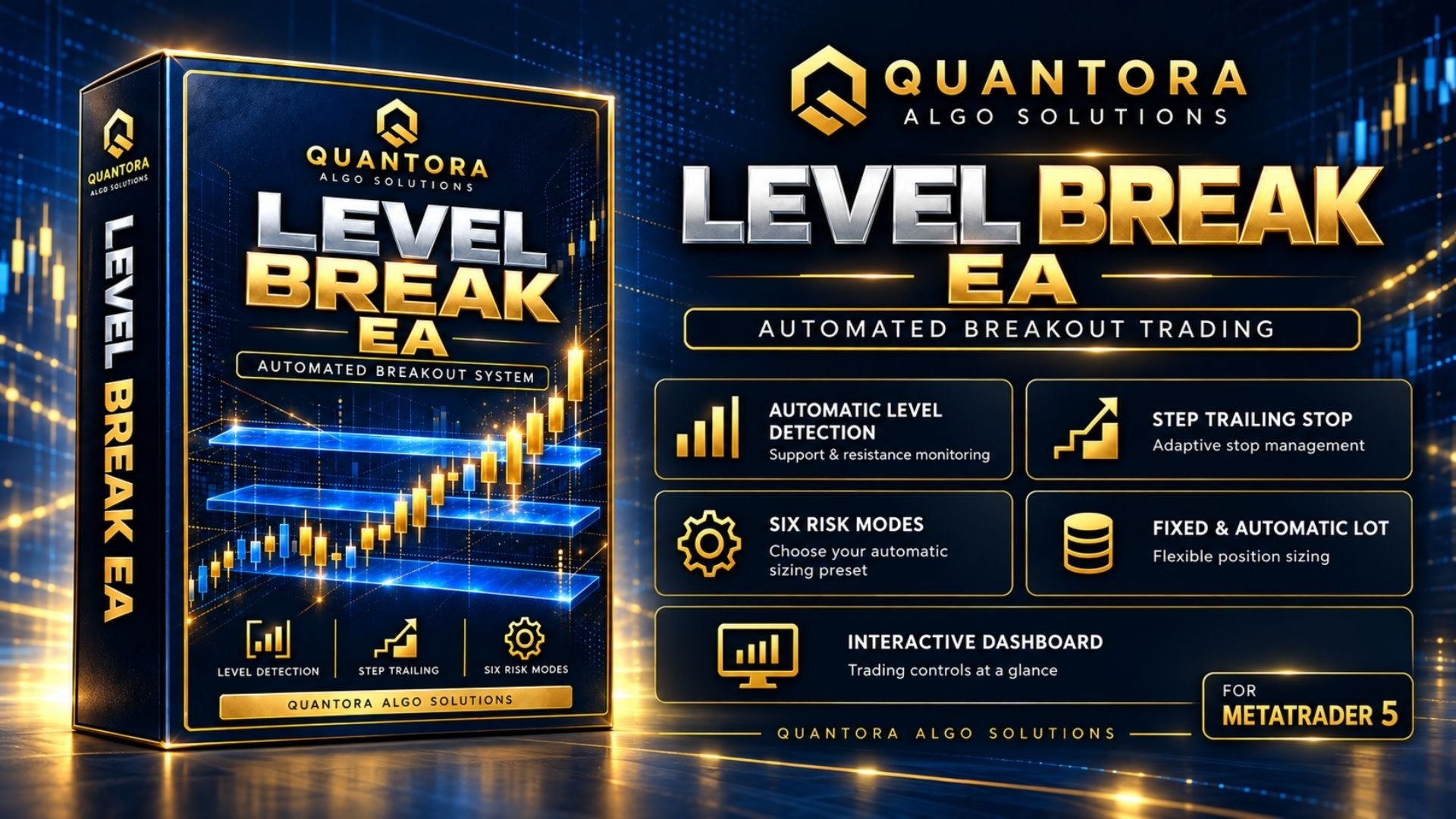
Quantora Level Break EA combines automatic support and resistance detection, breakout order placement and position management in one streamlined trading system. Its interactive dashboard gives you direct control over trading activity and lot management without exposing complex strategy settings.
Automatic Level Detection
The EA evaluates completed candles to identify qualifying support and resistance levels. It places Buy Stop and Sell Stop orders at eligible levels, allowing price movement to trigger entries.
As market structure changes, pending orders associated with invalidated levels are removed automatically. Built-in spread and broker-distance checks filter new order placement.
- Automatic support and resistance monitoring.
- Pending orders for bullish and bearish breakouts.
- Automatic removal of outdated pending orders.
- Embedded strategy parameters for a straightforward setup.
Stop Loss, Take Profit and Step Trailing
Each entry is submitted with a Stop Loss and Take Profit. When price moves favorably, the step-based trailing system progressively advances the protective stop.
Virtual trailing management supports position handling when a desired trailing level cannot be applied to the broker’s server. Virtual protection requires the terminal and EA to remain running and connected.
Fixed and Automatic Lot Management
Choose between two position-sizing methods:
- Fixed: Uses your selected lot size, subject to internal and broker volume limits.
- Automatic: Calculates volume using current account equity, the selected risk preset and the trade’s Stop Loss distance.
Automatic mode includes six selectable presets:
Very Low • Low • Moderate • Balanced • High • Aggressive
Each preset has an embedded maximum lot limit. This is an upper boundary rather than a fixed opening volume: the calculated lot may be lower depending on account equity and estimated trade risk.
Additional controls check combined Stop Loss exposure and order affordability before new entries are submitted. These controls do not eliminate trading risk or guarantee a maximum realized loss.
Interactive Trading Dashboard
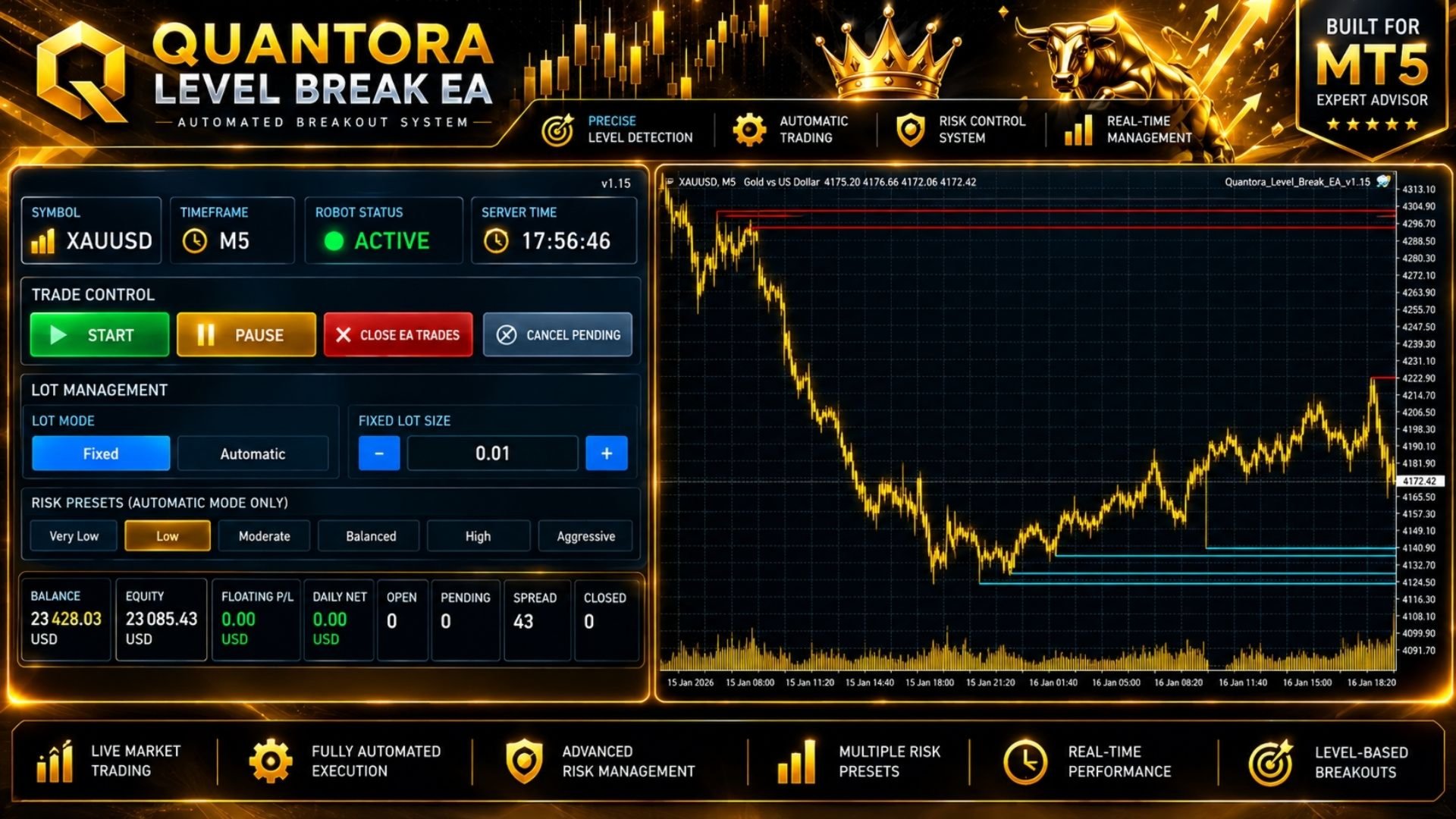
Control the EA directly from your chart through a clear, organized dashboard.
- Start: Resume automatic trading.
- Pause: Suspend new entries and cancel pending orders while open-position protection continues.
- Close EA Trades: Request closure of positions managed by the EA for the current symbol and Magic Number.
- Cancel Pending: Request cancellation of the EA’s pending orders.
- Lot Controls: Switch between Fixed and Automatic, adjust fixed lot size and select an automatic risk preset.
- Live Statistics: Monitor balance, equity, floating P/L, daily net results, open positions, pending orders and spread.
Lot-setting changes apply to future entries. Existing positions retain their protection and management. Dashboard selections apply to the current operating session; when the EA is reinitialized, its Inputs values are loaded again.
Instrument-Aware Distance Handling
The EA includes distance handling for XAUUSD and Forex pairs. Forex distances use pip-based scaling, while XAUUSD retains its dedicated price-distance configuration.
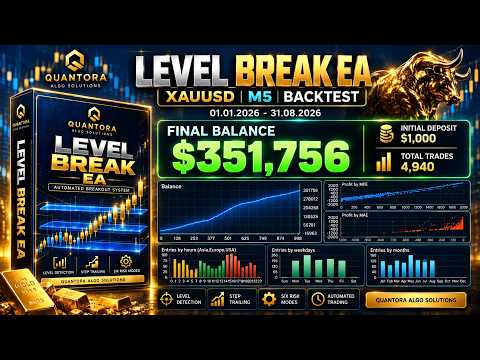
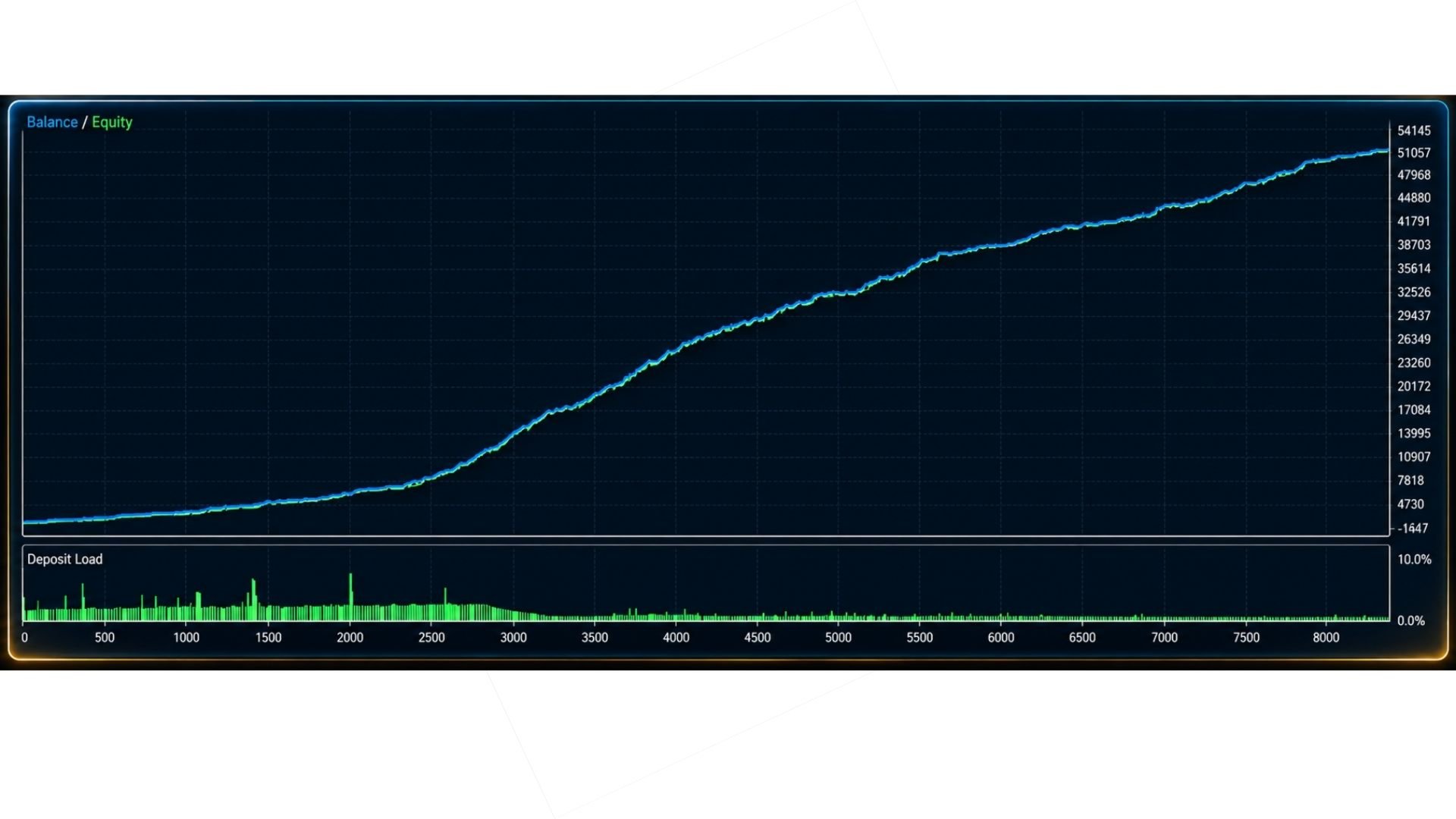
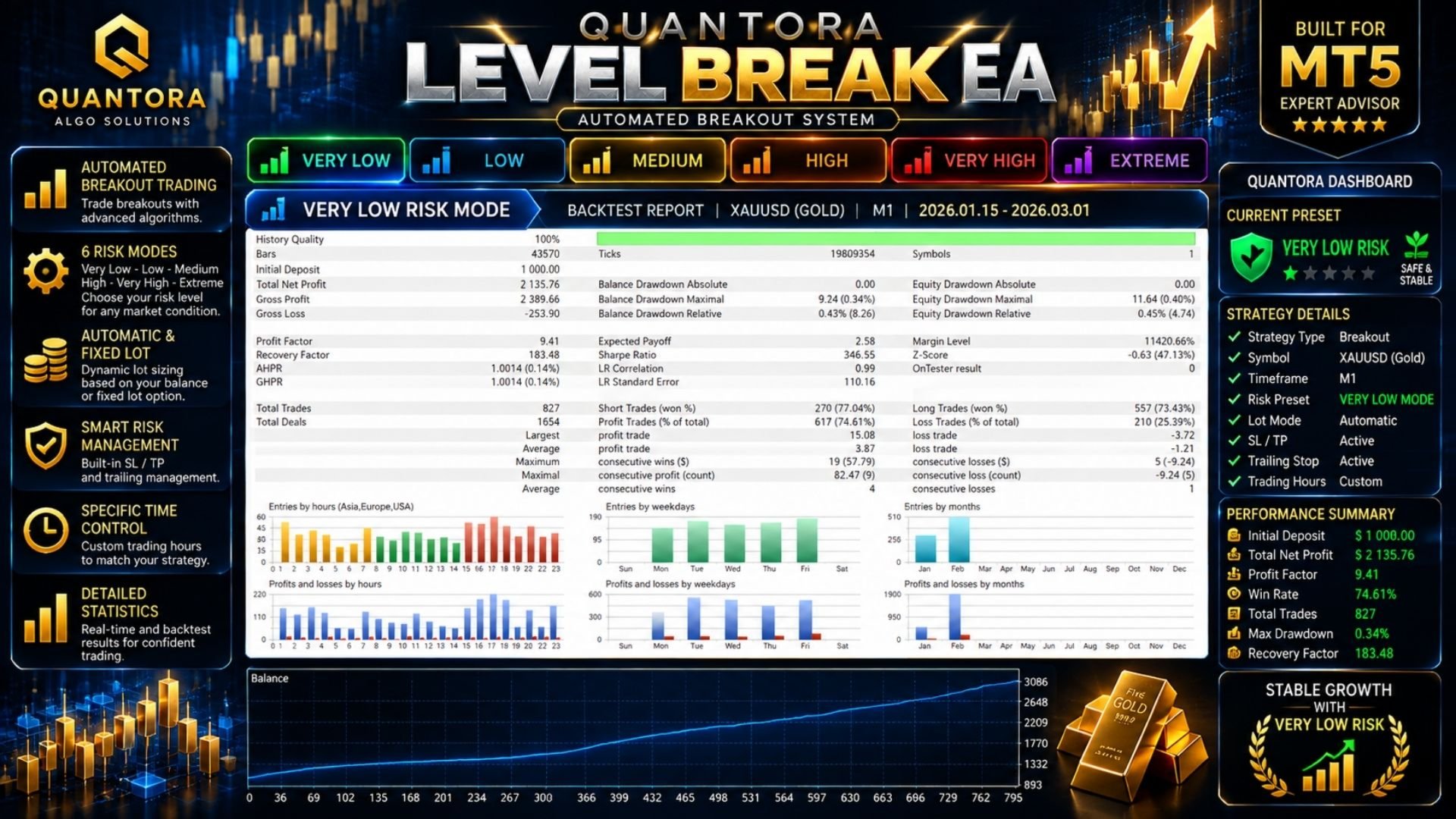
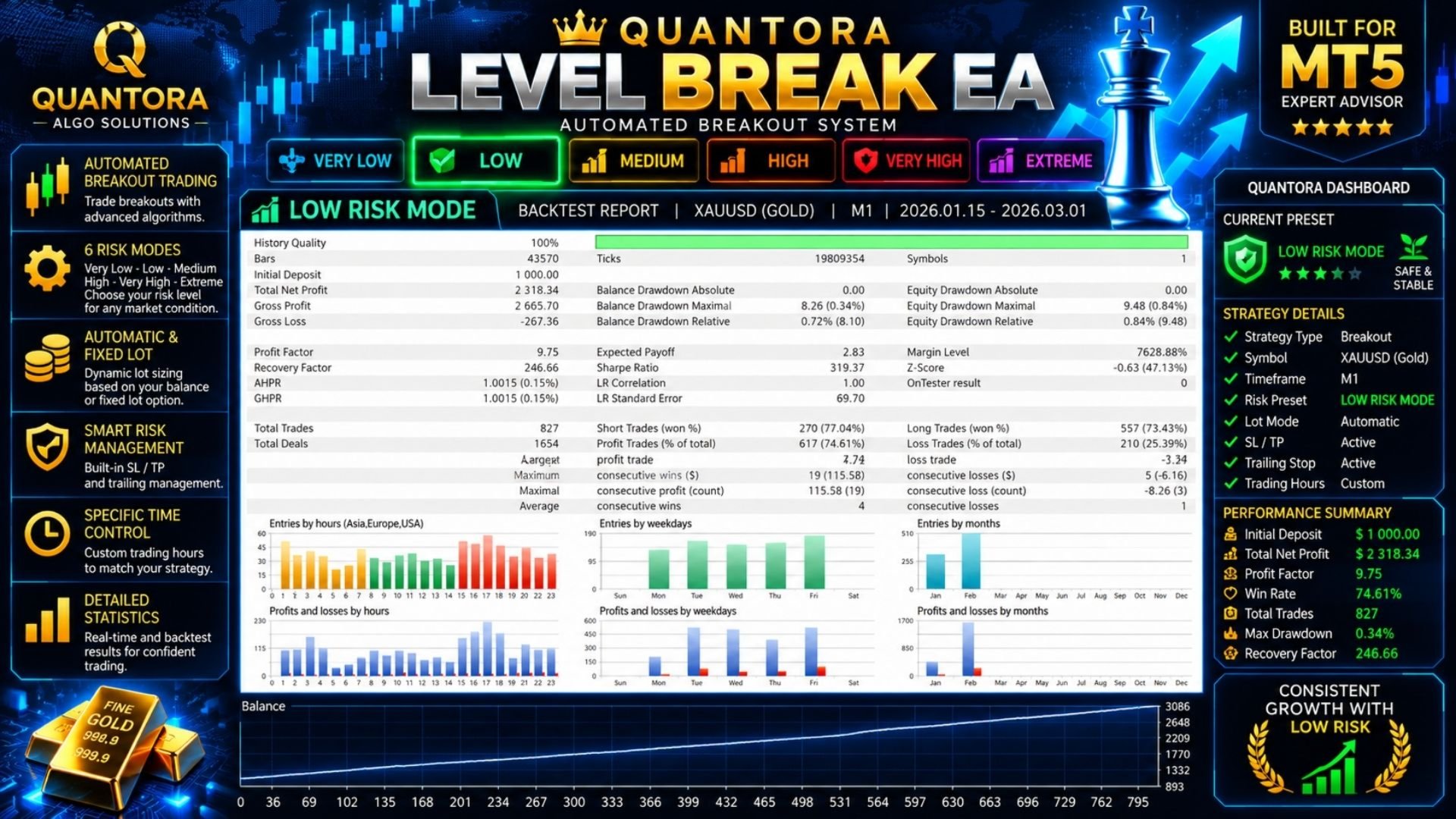
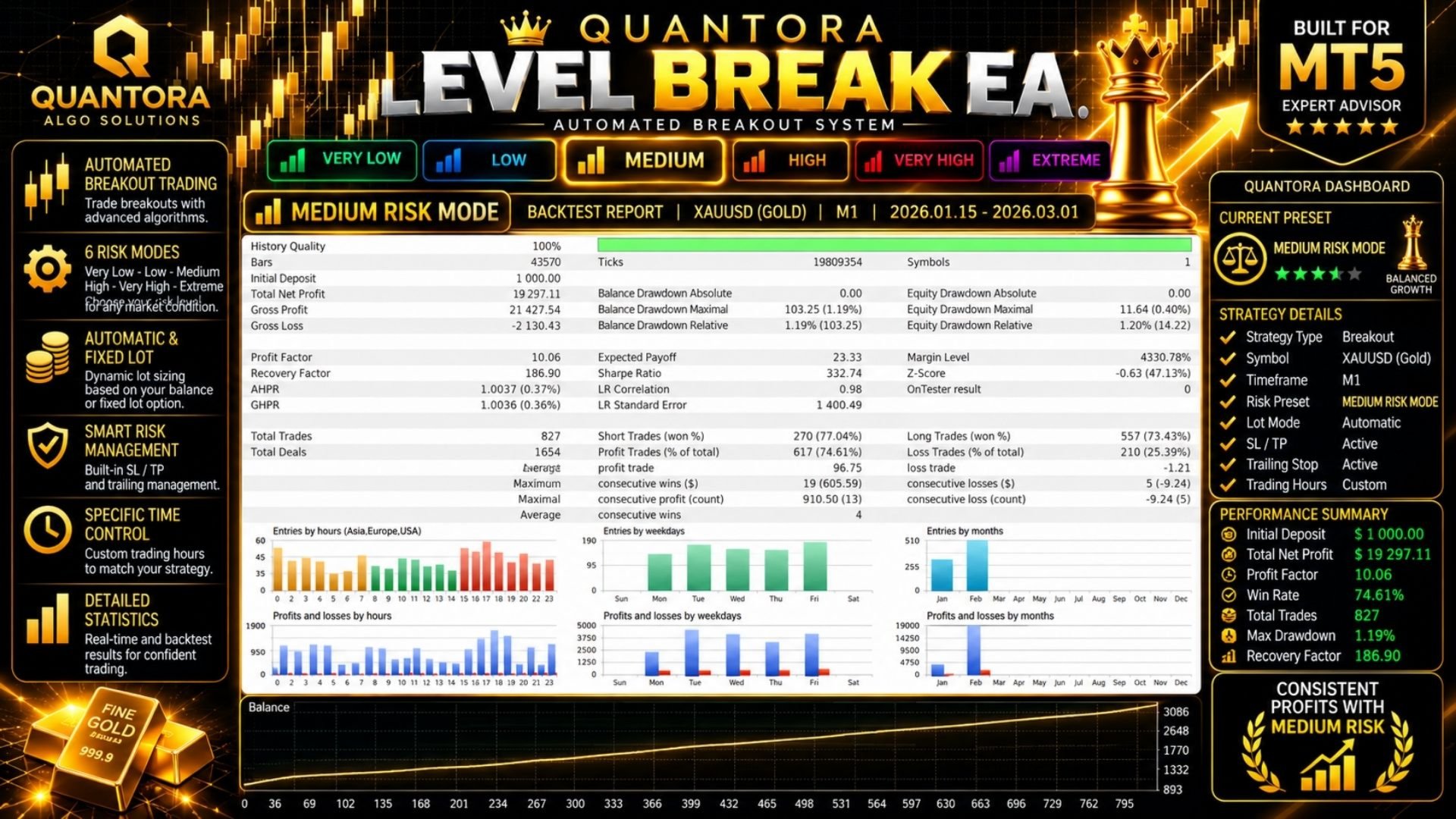
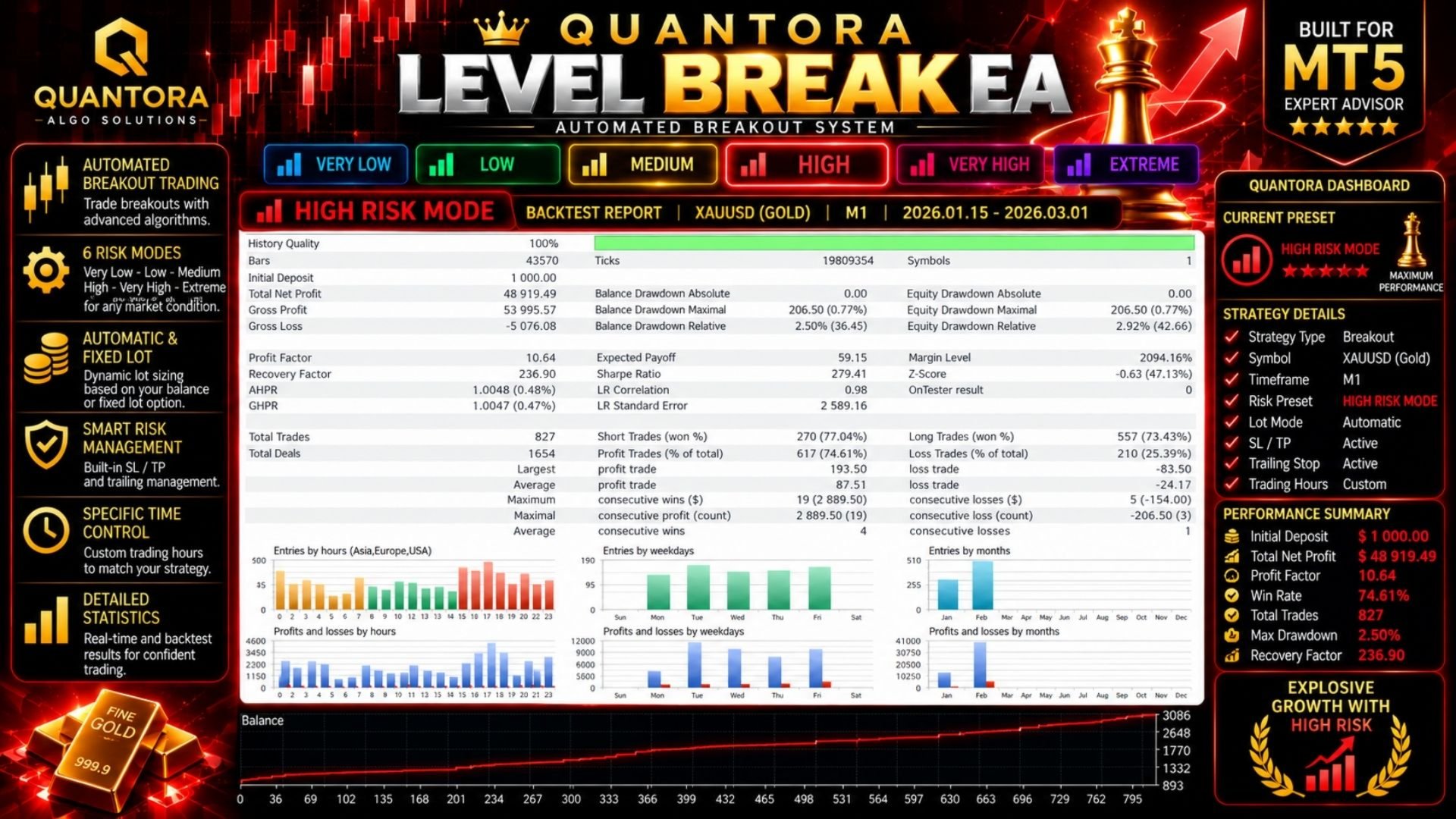
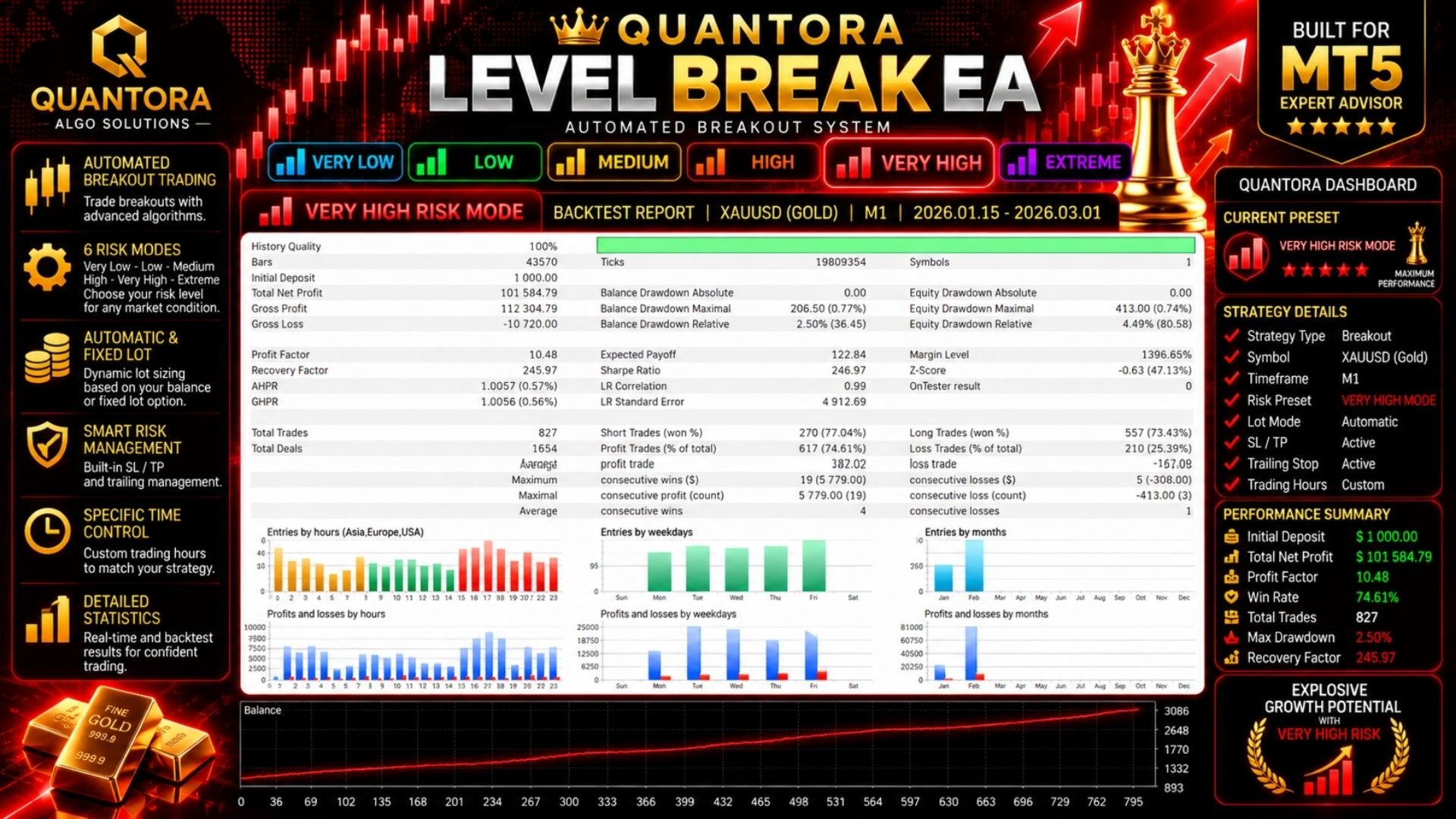
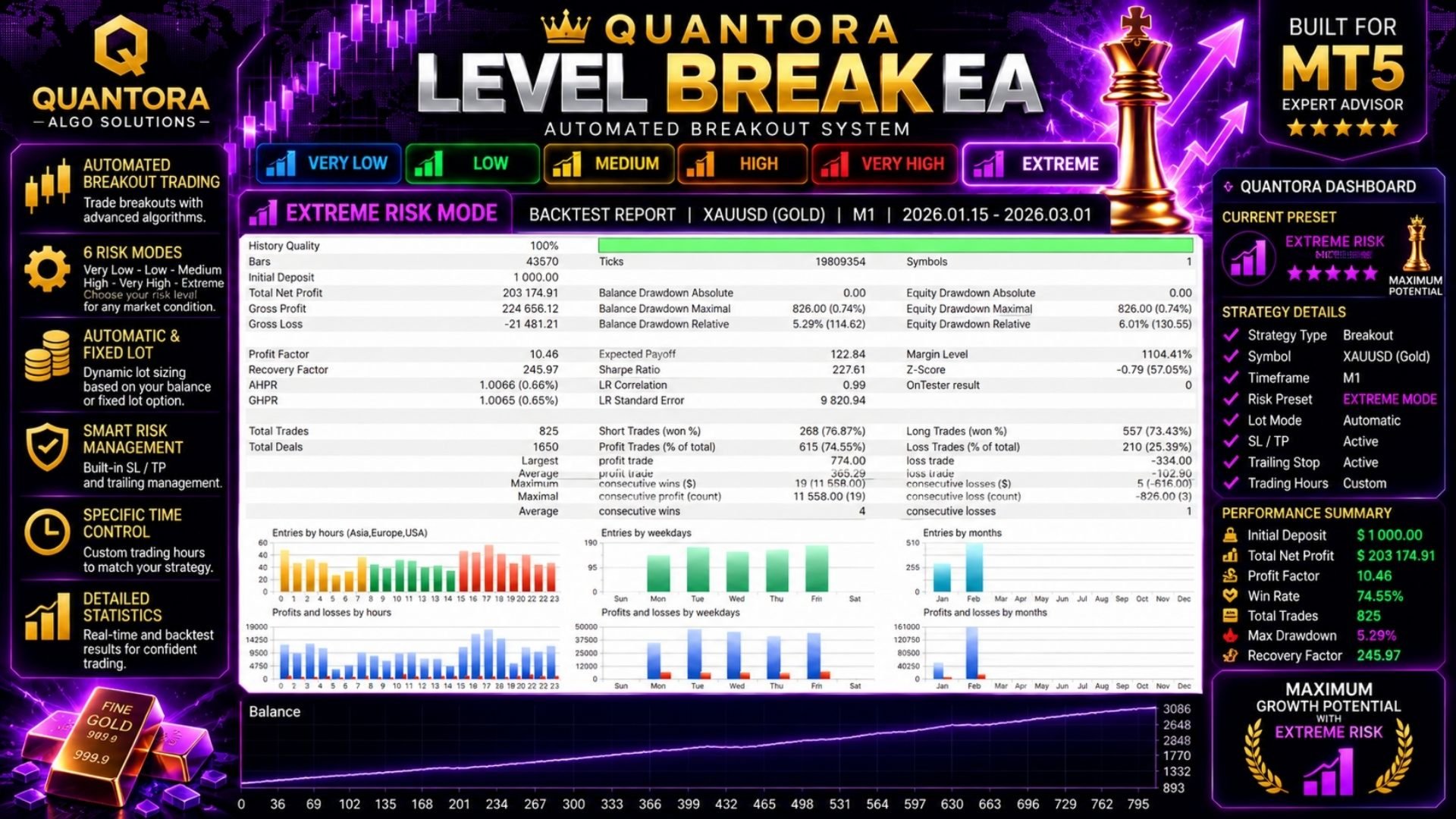
The EA operates on the attached chart’s timeframe. Published XAUUSD backtest examples use M1. Results on other instruments, timeframes and brokers must be evaluated separately.
Getting Started
- Attach the EA to your chosen symbol and timeframe.
- Select Fixed or Automatic lot management.
- Enter the fixed lot size or choose an automatic risk preset.
- Enable Algo Trading and monitor the dashboard.
Test the EA with your broker’s trading conditions before live use. Keep MetaTrader 5 running and connected, or use a suitable VPS, for continuous operation.
Quantora Algo Solutions — Automated execution. Clear control.
Backtest results describe historical simulations and do not guarantee future performance. Results vary with market conditions, spread, commissions, slippage and broker execution. Trading involves risk of capital loss.