Entry Window
- Indicateurs
- Version: 1.0
- Activations: 10

GBPUSD Entry Window
Closed-bar breakout and first-retest analysis for MetaTrader 5.
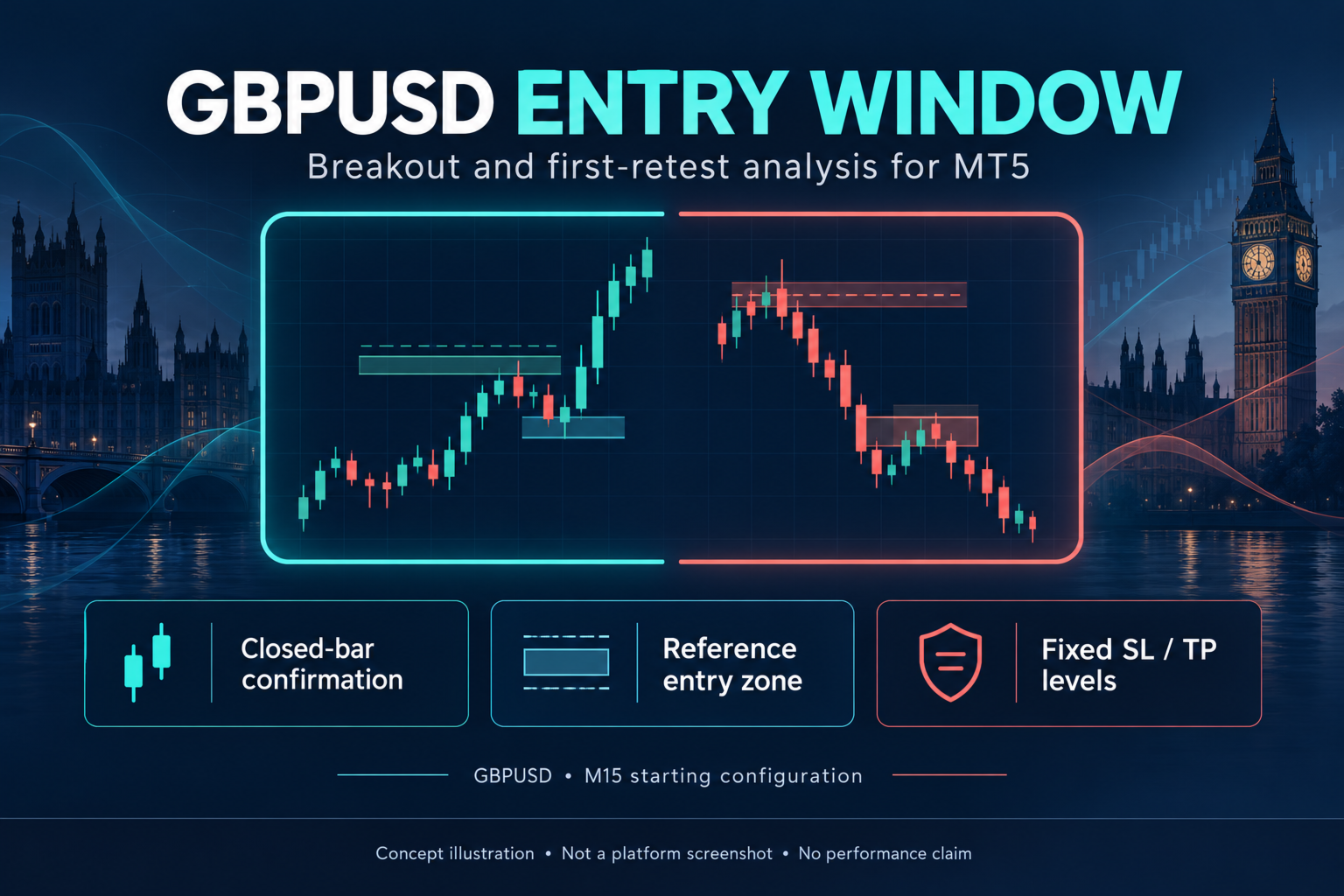
GBPUSD Entry Window organizes a potential setup around a defined price range, a confirmed retest and a reference entry zone. It displays BUY and SELL markers, fixed stop-loss and target reference levels, and the status of the latest setup. The indicator supports manual analysis and does not place or manage orders.
GBPUSD on the M15 chart is the intended starting configuration. The settings have not been established as optimal for this market or timeframe.
How a setup is selected
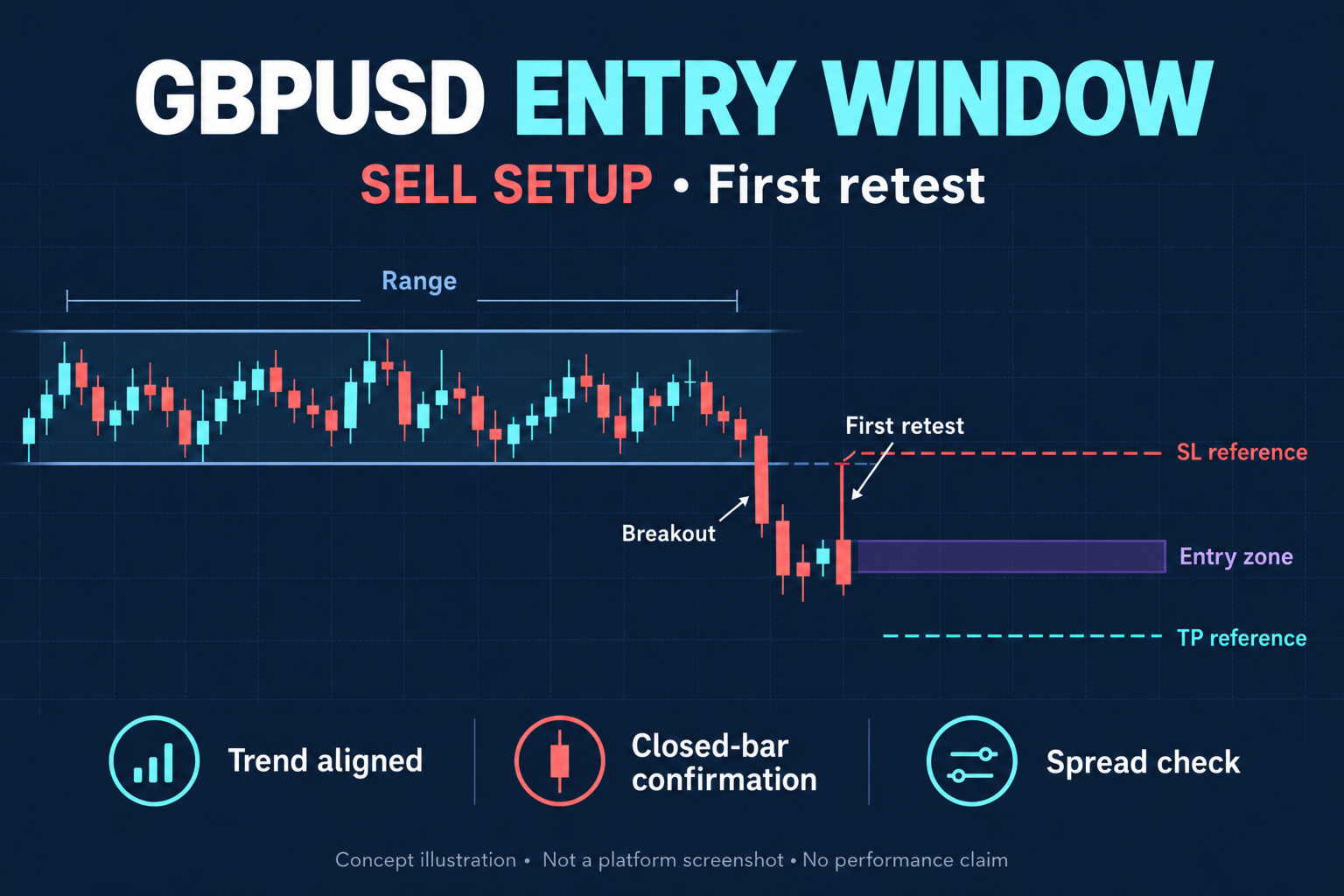
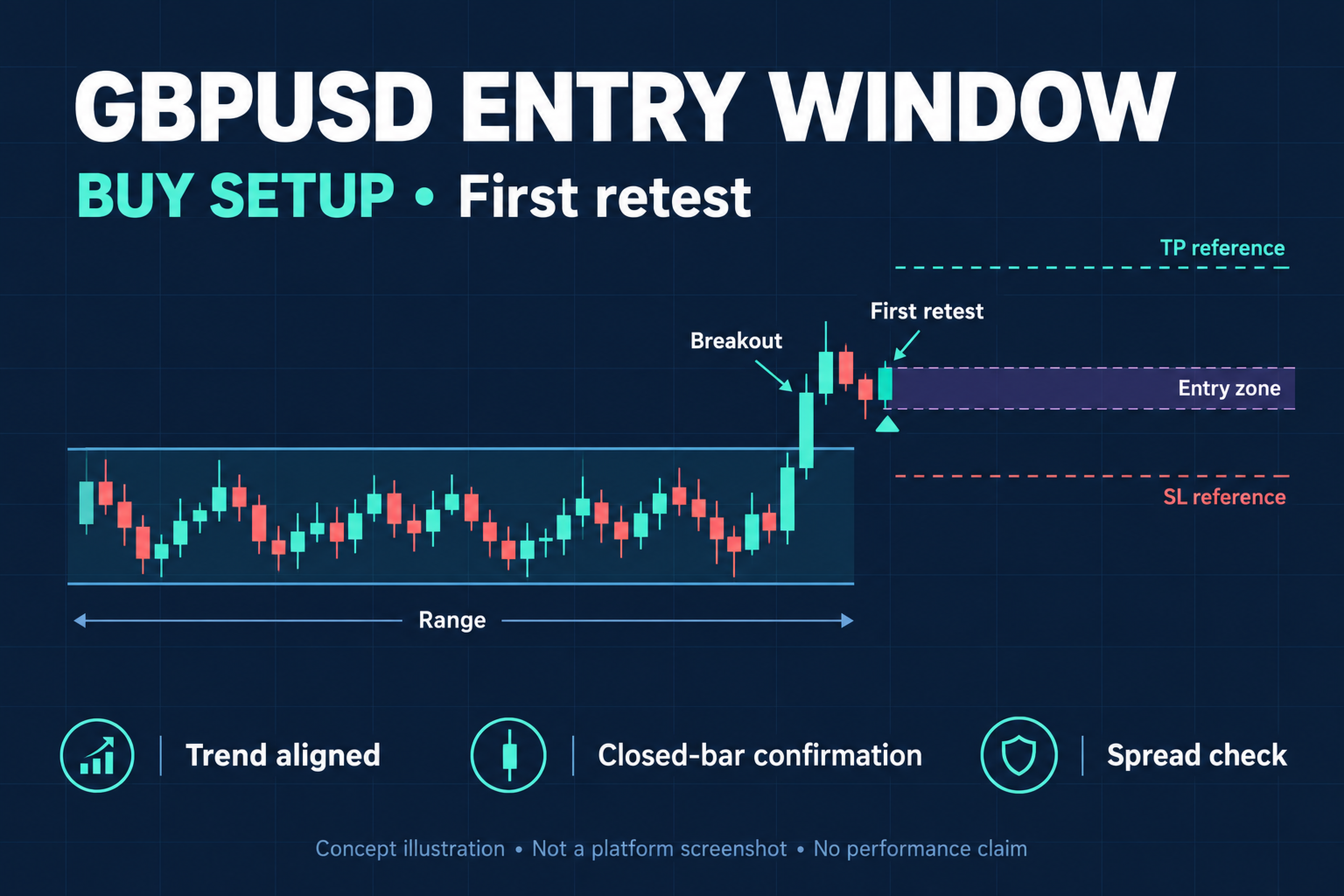
The indicator first checks for a breakout from a recent range. Moving-average alignment, moving-average slope, candle body size and closing location must meet the selected conditions. The range boundaries are then held fixed while the indicator waits for a retest.
Only the first qualifying touch of the retest area is assessed. If that candle fails the confirmation conditions, the setup is rejected. The rules limit how deeply price may move back into the range and how far the confirmation may close beyond the breakout level. BUY and SELL setups use corresponding rules in opposite directions.
What appears on the chart
- BUY and SELL arrows on closed confirmation candles.
- Range boundaries and fixed stop-loss, target and reference-price levels for the latest confirmed setup.
- A shaded reference entry window based on the selected minimum reward-to-risk ratio and the allowed price zone.
- A status panel showing the setup direction, live quote-based reward-to-risk ratio when active, and remaining setup lifetime.
- Counts of the BUY and SELL markers displayed within the selected history length.
The latest setup can be waiting for a retest, active, outside its entry window, blocked by spread, expired or ended. Historical confirmation arrows remain available within the display limit. The detailed range and entry-zone drawing follows the most recent setup.
Controls for signal frequency
Default settings allow up to two confirmed signals per broker calendar day, counting BUY and SELL together, for each indicator instance. After a confirmation, more than sixteen completed bars must pass before a new breakout can be considered. These controls restrict frequency; they do not guarantee signal accuracy.
Adjustable settings include range length, moving-average periods, volatility-based thresholds, retest tolerance, stop distance, target multiple, minimum entry reward-to-risk ratio, spread limits, setup lifetime and historical display length. Optional terminal popup alerts announce new confirmations.
Data and signal behavior
The indicator uses the chart symbol and timeframe, built-in moving averages, Average True Range and broker price data. It does not require an external data service or DLL.
Confirmation rules use closed candles. The forming candle does not receive a confirmation arrow. Live status text may change as quotes move. Changing settings or receiving corrected or extended broker history can change recalculated historical output.
Historical confirmations require a positive recorded bar spread within the configured limit. Missing or zero spread values are rejected. Bar spread is not an exact reconstruction of execution spread. The displayed reward-to-risk ratio does not include commission, swap or slippage.
Getting started
Attach the indicator to a GBPUSD M15 chart with sufficient history; approximately 700 or more bars are needed with the default settings. Review the inputs, confirm that broker spread data is available, and evaluate the behavior in visual testing before using it for trading decisions. Signal frequency varies by data, timeframe and settings; some periods may contain no signals.
Scope and limitations
This is an analytical indicator, not an automated trading system. Reference levels are not orders or predictions. A historical level touch does not establish an executable trade result. This version has no verified market-performance record, and no profit factor, win rate or future return is claimed. Trading involves the risk of loss.