Breakout Quality Matrix
- Indicateurs
- Version: 1.0
- Activations: 10

Understand the Breakout. Evaluate the Reaction. Trade with Context.
Not every breakout represents genuine market strength. Some price movements establish a new trading range, while others quickly lose momentum and return to their origin.
USDJPY Breakout Quality Matrix MT5 is a specialized trading indicator designed to examine this difference through a structured price behavior analysis.
How the Logic Works
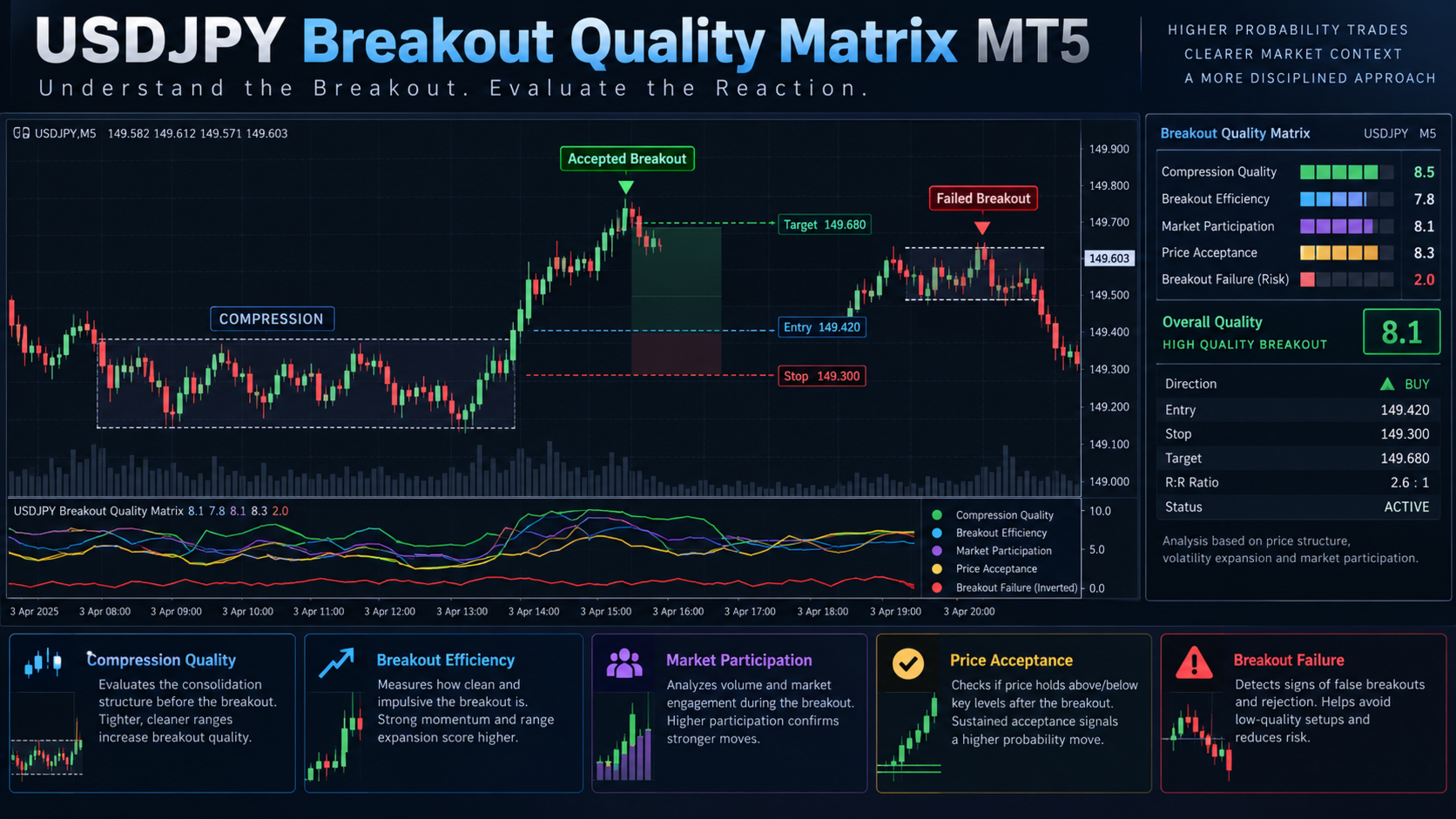
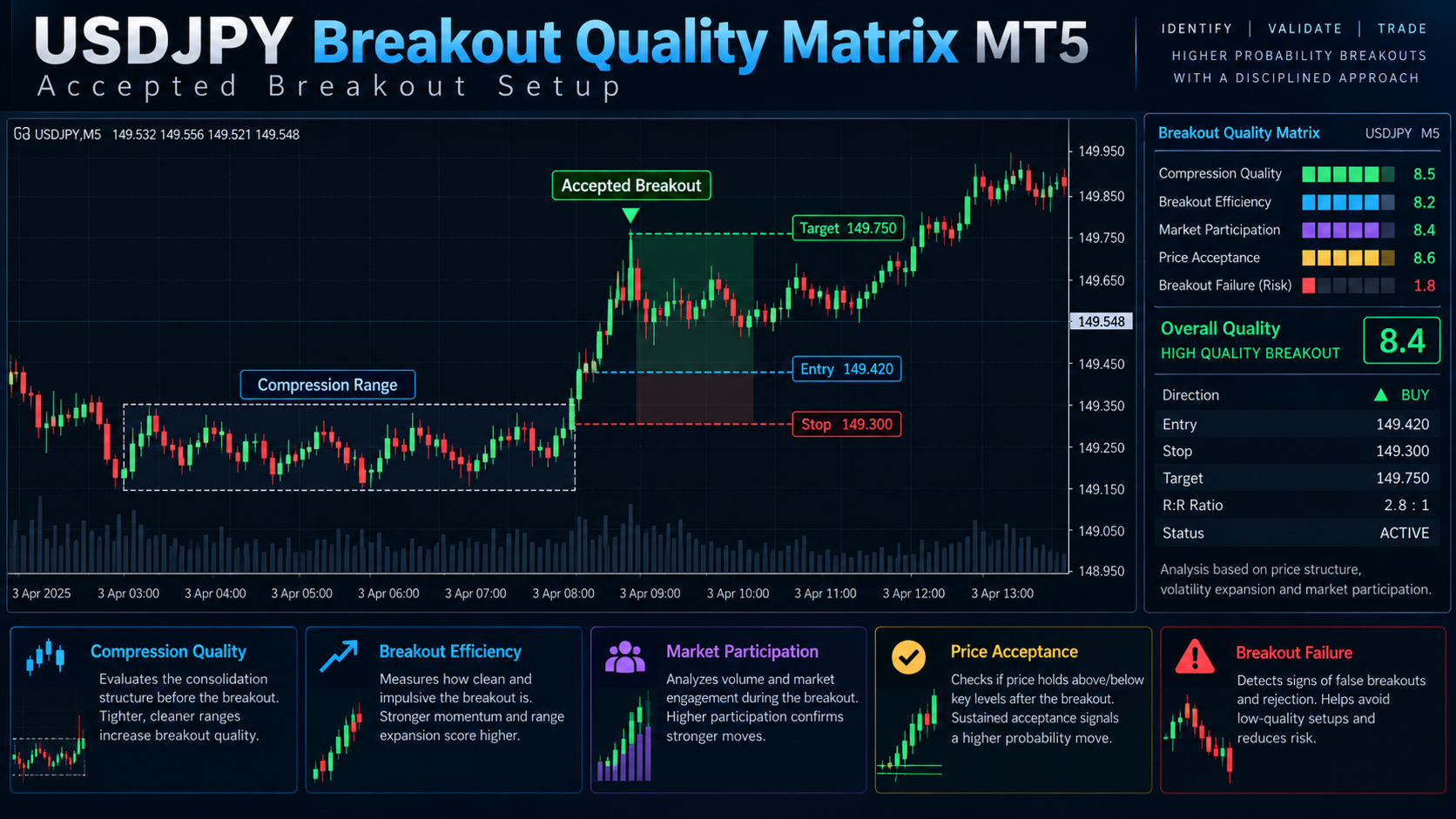
The indicator first identifies periods of price compression, where market activity becomes concentrated within a defined range.
When price escapes that structure, the system evaluates several independent characteristics:
-
Compression Quality: Measures how tightly price was contained before expansion.
-
Breakout Efficiency: Examines directional progress relative to total price movement.
-
Market Participation: Compares tick volume with recent activity.
-
Price Acceptance: Evaluates whether subsequent closed candles sustain the breakout.
-
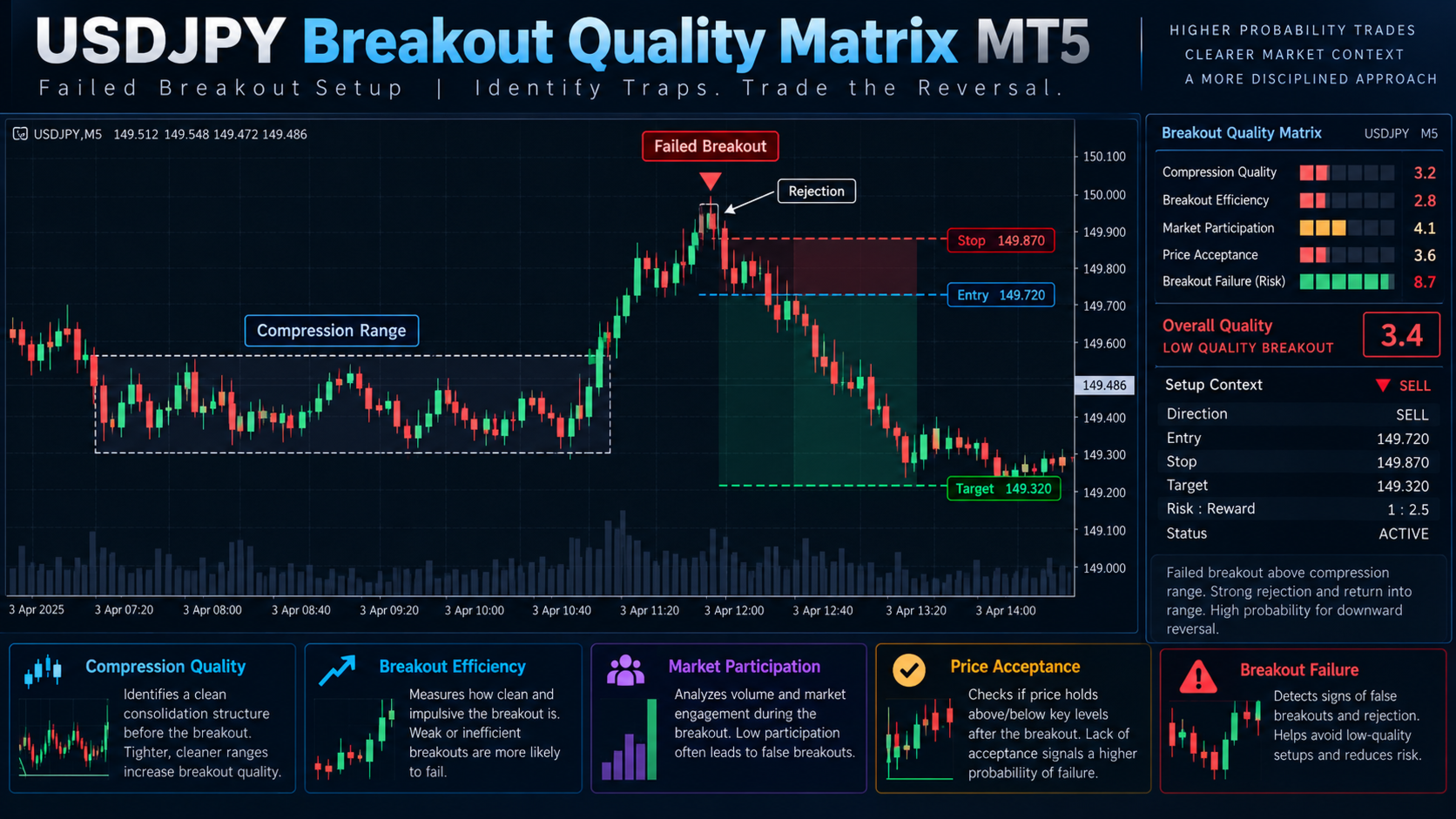
Breakout Failure: Identifies rejected expansion attempts followed by meaningful price recovery.
These measurements contribute to a quality score used to filter potential trading signals.
Signal Interpretation
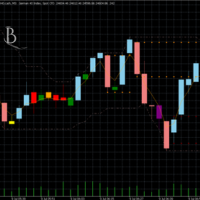
Acceptance Signals highlight conditions where price demonstrates sufficient confirmation outside the original structure.
Failure Signals identify situations where an attempted breakout loses validity and price returns toward the previous range.
Each qualified setup provides a visual signal together with reference entry, invalidation and risk-to-reward target levels.
Designed for Practical Trading
-
Dedicated to USDJPY market analysis.
-
Closed-candle signal confirmation.
-
Adjustable quality thresholds and detection parameters.
-
Historical signal visualization and chart-based information.
-
No external data subscription required.
-
Compatible with manual trading and independent strategy evaluation.
Important: This indicator is an analytical tool, not an automated trading system. Signals represent rule-based market conditions rather than guaranteed trade outcomes. Performance depends on market conditions, execution and risk management.