Paulo Henrique Sanches Bonanni / ニュースフィード
- 情報
|
1 年
経験
|
4
製品
|
2
デモバージョン
|
|
0
ジョブ
|
0
シグナル
|
0
購読者
|
PHSB Elliott EA Automated Trading Based on Elliott Wave Market Structure Trade the structure. Let the system manage the operation. The PHSB Elliott EA is a MetaTrader 5 Expert Advisor designed to automatically analyze price structure using principles inspired by Elliott Wave theory and identify potential trading opportunities during the development of impulsive movements. Instead of relying on a simple combination of traditional indicators, the EA works directly with price structure and swing

PHSB Market Vision 市場を捉える、新しい視点。 市場は常に語りかけています。重要なのは、価格が示している情報を正しく読み取ることです。 PHSB Market Vision は、市場の動きをより広く、体系的に捉えるために開発されたツールです。 価格、トレンド、ボラティリティ、出来高 という異なる要素を、ひとつのツールに統合しています。 複数のインジケーターを個別に確認するのではなく、Market Vision はこれらの情報をひとつの視覚的な構造にまとめ、同時にさまざまな角度から市場を観察できるようにします。 👁️ 価格の先を見る 価格だけでは、市場の物語の一部しか見えてきません。 価格の動き方、特定の基準との関係、ボラティリティの拡大・縮小、そして出来高に対する価格の位置は、市場分析において重要な情報を提供します。 PHSB Market Vision は、こうした情報をチャート上に整理し、より直感的に読み取れるように設計されています。 ひとつのツールに、複数の視点を統合: 📊 2つのボリンジャーバンド構造


PHSB Elliott Wave — MT5向けエリオット波動インジケーター エリオット波動を通じて市場構造を分析する PHSB Elliott Wave は、MetaTrader 5向けに開発されたインジケーターで、チャート上で**エリオット波動(Elliott Wave)**の構造を識別し、その形成過程を追跡するためのツールです。 エリオット波動理論は、時として主観的な判断になりやすい分析手法です。 PHSB Elliott Waveは、この理論を より客観的で、視覚的かつ体系的な価格構造の分析方法 として捉えられるようにすることを目的としています。 単純に個別のパターンを探すのではなく、**市場のピボット(Pivot)**の形成を追跡し、それらのポイントを基に、エリオット波動として考えられる構造を構築・検証します。 インジケーターの仕組み 市場では常に 高値と安値 が形成されています。 PHSB Elliott Waveは、これらの値動きを利用して、価格における主要な 構造的ピボット を識別します。


Gold FVG Finder EA Gold FVG Finder EA is a selective Expert Advisor for MetaTrader 5, designed for trading gold on XAUUSD M15 . The strategy is built around Fair Value Gap retests, ATR regime filtering, liquidity sweep confirmation, market structure and controlled risk management. This EA is not a grid system and it does not use martingale. The main idea is not to open trades every day at any cost. The EA waits for a specific gold market structure where an FVG continuation setup
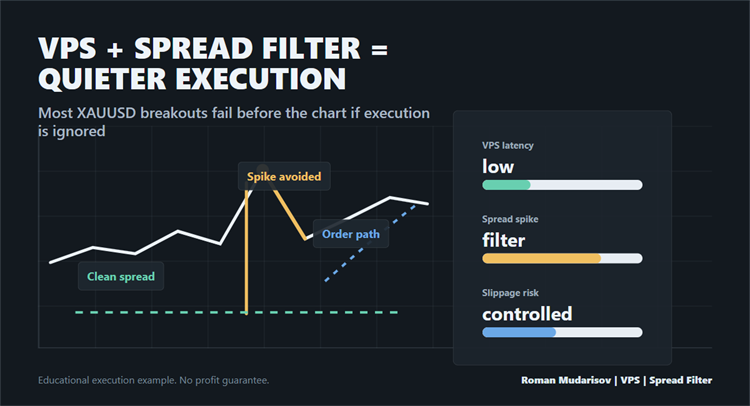
A London breakout can look clean on M15, while real results are changed by spread spikes, slow VPS, slippage, or wrong broker server time.
Before changing inputs, I check:
- Maximum spread at entry time.
- VPS latency to the broker server.
- Slippage during volatile minutes.
- Broker time and session window.
- Stop level and execution rules.
If two brokers show different results, the EA is not always the problem. Sometimes the environment is different.
What VPS or broker setup gives you the most stable XAUUSD execution?
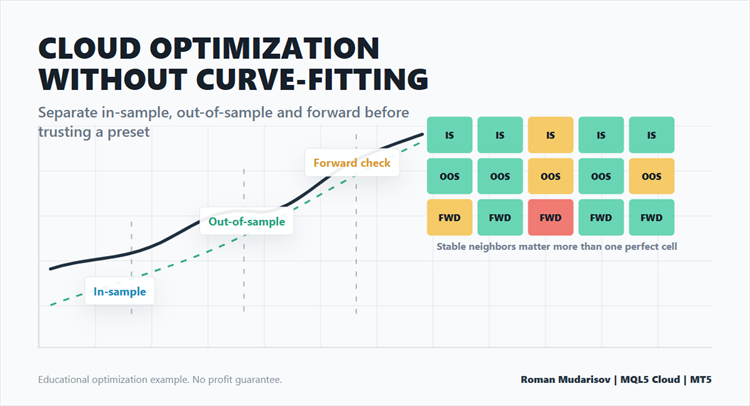
MQL5 Cloud Network helps test thousands of combinations fast, but speed does not replace validation.
For every XAUUSD preset I want to see:
- In-sample logic that still makes sense.
- Out-of-sample behavior that does not collapse.
- Forward or demo results close to the test expectations.
- Stable neighbors, not one magic parameter cell.
A strong preset should be boring: reasonable trade count, controlled drawdown, no single perfect week, and similar behavior across nearby inputs.
How do you separate optimization from curve-fitting?
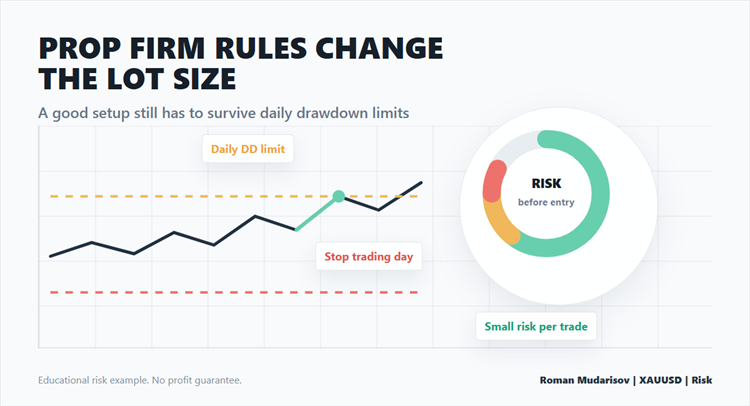
A profitable XAUUSD backtest is not enough if it can violate daily drawdown, max drawdown, or trade limits.
Before I run an EA on a challenge, I check:
- Daily DD limit and maximum drawdown.
- Risk per trade after a losing streak.
- Maximum trades per session and stop-trading rules.
- News and spread filters for volatile periods.
- Broker time and session alignment.
Small risk settings look boring, but they often keep the account alive long enough for the edge to work.
What is your strictest prop-firm rule?
In MetaTrader 5, ONNX models are useful as a confirmation layer, especially for regime detection, volatility context, or breakout quality scoring.
For a breakout robot, I prefer this order:
- Logic first: range, breakout, stop, and risk.
- Filter second: trend, volatility, and session context.
- AI last: confirmation, not a blind entry signal.
If the base idea loses before AI, the model can hide the weakness during optimization. A simple rule should survive out-of-sample before any machine learning is added.
What do you trust more: simple rules or AI filters?
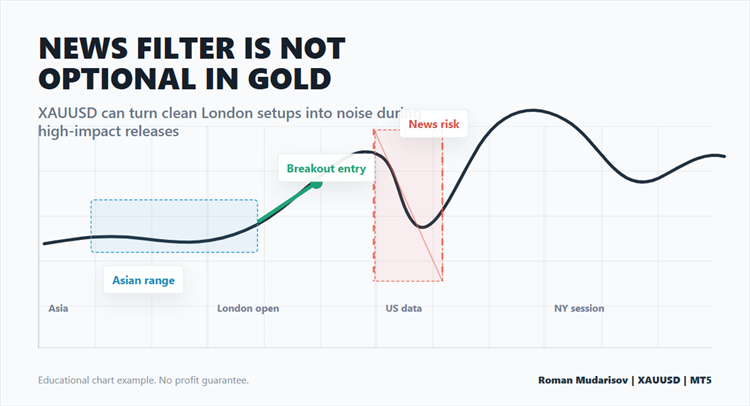
For XAUUSD, a breakout setup can be technically correct and still be a bad trade if the first impulse is news-driven.
My basic news filter is simple:
- Avoid high-impact windows before and after the release.
- Wait for spread to normalize before new entries.
- Let London confirm a real breakout after the noise.
The goal is not to catch every move. The goal is to skip conditions where execution and volatility are out of control.
Do you disable gold robots around high-impact news?
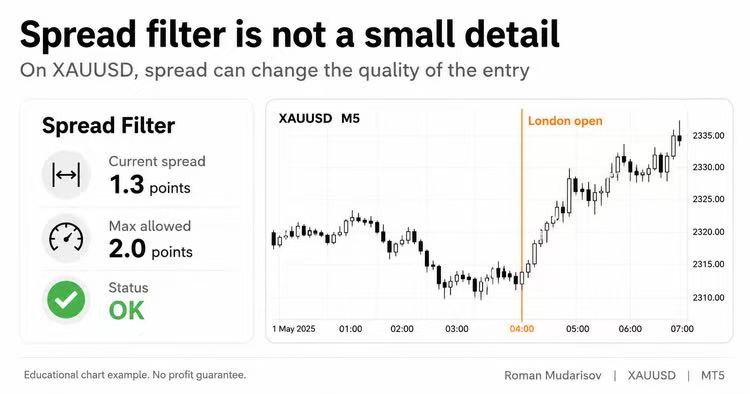
On XAUUSD, a few extra points of spread at the wrong moment can turn a normal breakout entry into a bad one.
This is especially important around London open, when volatility grows fast and liquidity can change quickly.
I prefer simple filters that protect the entry before the trade is opened.
Session range, breakout level, spread filter, risk limit, one trade per day.
Not complicated, but clear.
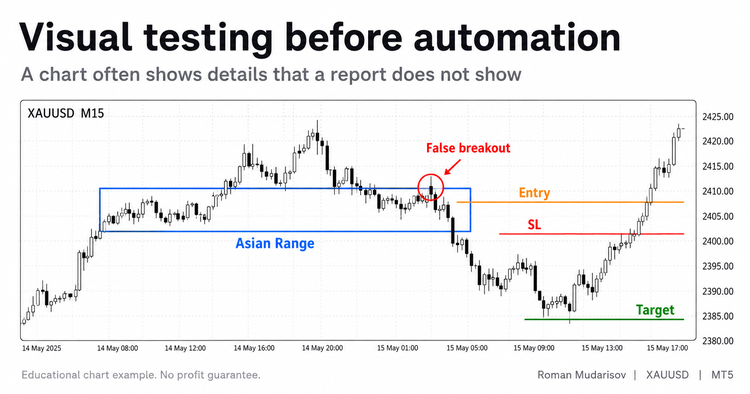
This is why I like visual testing. You can quickly notice things that are easy to miss in a clean backtest report.
Wrong session time, wide range, bad spread, false breakout, entry too close to news.
A breakout EA should not only open trades. It should also know when market conditions are not good enough.
Simple logic is easier to control.
A lot of traders expect an EA to open positions every day. I do not think this is a healthy way to trade gold.
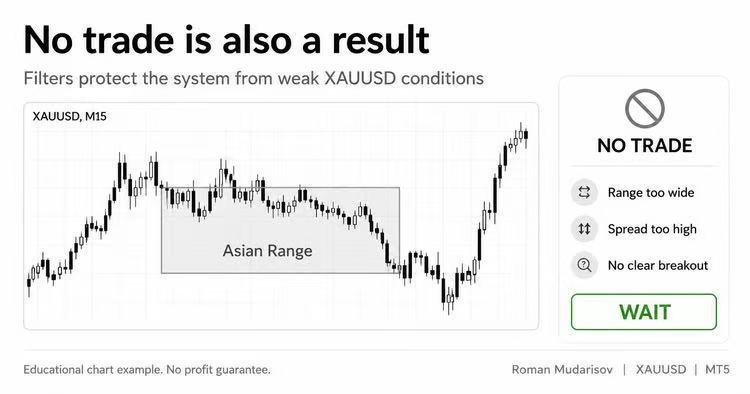
Some days the Asian range is too wide. Some days the spread is not good. Some days the breakout already happened before the trading window.
In these situations, skipping the day is better than forcing a weak entry.
For XAUUSD, discipline is often more important than frequency.