Aleksey Ivanov / プロファイル
- 情報
|
8+ 年
経験
|
32
製品
|
146
デモバージョン
|
|
0
ジョブ
|
0
シグナル
|
0
購読者
|
👑 理論物理学者、プログラマー、15年の経験を持つトレーダー。
----------------------------------------------------------------------
💰 生産された製品:
1) 🏆 市場ノイズの最適なフィルタリングを備えたインジケーター(開始位置と終了位置のポイントを選択するため)。
2) 🏆 統計的指標(世界的な傾向を決定するため)。
3) 🏆 市場調査指標(価格の微細構造を明確にし、チャネルを構築し、トレンドの逆転と引き戻しの違いを特定するため)。
---------------------------------------------------------------------
☛ ブログの詳細 https://www.mql5.com/en/blogs/post/741637
----------------------------------------------------------------------
💰 生産された製品:
1) 🏆 市場ノイズの最適なフィルタリングを備えたインジケーター(開始位置と終了位置のポイントを選択するため)。
2) 🏆 統計的指標(世界的な傾向を決定するため)。
3) 🏆 市場調査指標(価格の微細構造を明確にし、チャネルを構築し、トレンドの逆転と引き戻しの違いを特定するため)。
---------------------------------------------------------------------
☛ ブログの詳細 https://www.mql5.com/en/blogs/post/741637
Aleksey Ivanov
Channel Builder FREE https://www.mql5.com/en/market/product/34818
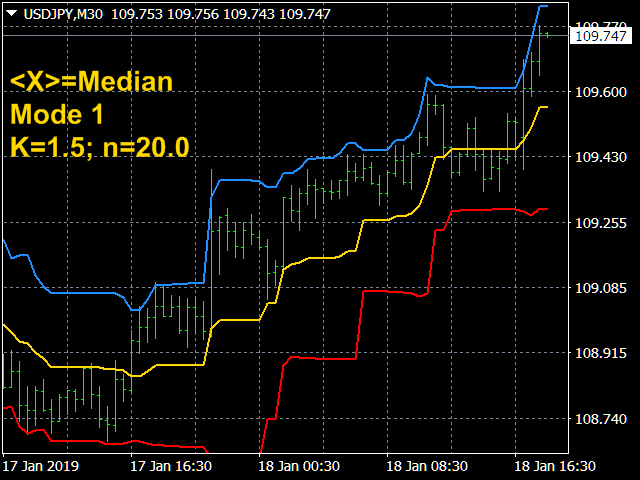
The Channel Builder (CB) or Ivanov Bands indicator is a broad generalization of the Bollinger Bands indicator. First, in CB, the mean line is calculated using various averaging algorithms. Secondly, the mean deviations calculated by Kolmogorov averaging are plotted on both sides of the middle line .
✔️The algorithms of this indicator are unique and developed by their author
Author Aleksey Ivanov https://www.mql5.com/en/users/60000382
The Channel Builder (CB) or Ivanov Bands indicator is a broad generalization of the Bollinger Bands indicator. First, in CB, the mean line is calculated using various averaging algorithms. Secondly, the mean deviations calculated by Kolmogorov averaging are plotted on both sides of the middle line .
✔️The algorithms of this indicator are unique and developed by their author
Author Aleksey Ivanov https://www.mql5.com/en/users/60000382
Aleksey Ivanov
Alligator Analysis FREE https://www.mql5.com/en/market/product/35227
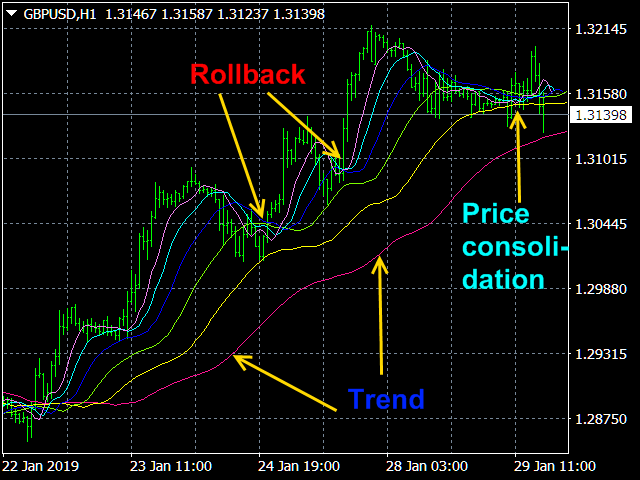
The “Alligator Analysis” (AA) indicator allows you to build various (by averaging types and by scales) “Alligators” and their combinations, i.e. allows you to analyze the state of the market based on the correlation of this state with a whole range of different "Alligators". The classic "Alligator" by Bill Williams is based on moving averages and Fibonacci numbers, which makes it one of the best indicators now. The classic "Alligator" is based on Fibonacci numbers and is a combination of three smoothed moving averages (SМMA) with periods 5, 8 and 13, which are part of the Fibonacci sequence. In this case, the moving averages are shifted forwards by 3, 5, and 8 bars, respectively, which are numbers from the same sequence (preceding the corresponding period values).
Alligators from the AA indicator is based, on the same principle as the classic “Alligator”, but on different parts of a number of Fibonacci numbers, as well as on different moving average averaging algorithms.
The indicator AA uses 6 types of averaging, where the classical averaging SMA, EMA, SMMA, LMA are supplemented by averaging the moving average by the median and averaging weighted by volume.
Line shifts can be removed. The colors of the AA indicator lines are set according to the type of color spectrum: from violet for a small smoothing period to red - for the largest period.
Author Aleksey Ivanov https://www.mql5.com/en/users/60000382
The “Alligator Analysis” (AA) indicator allows you to build various (by averaging types and by scales) “Alligators” and their combinations, i.e. allows you to analyze the state of the market based on the correlation of this state with a whole range of different "Alligators". The classic "Alligator" by Bill Williams is based on moving averages and Fibonacci numbers, which makes it one of the best indicators now. The classic "Alligator" is based on Fibonacci numbers and is a combination of three smoothed moving averages (SМMA) with periods 5, 8 and 13, which are part of the Fibonacci sequence. In this case, the moving averages are shifted forwards by 3, 5, and 8 bars, respectively, which are numbers from the same sequence (preceding the corresponding period values).
Alligators from the AA indicator is based, on the same principle as the classic “Alligator”, but on different parts of a number of Fibonacci numbers, as well as on different moving average averaging algorithms.
The indicator AA uses 6 types of averaging, where the classical averaging SMA, EMA, SMMA, LMA are supplemented by averaging the moving average by the median and averaging weighted by volume.
Line shifts can be removed. The colors of the AA indicator lines are set according to the type of color spectrum: from violet for a small smoothing period to red - for the largest period.
Author Aleksey Ivanov https://www.mql5.com/en/users/60000382
Aleksey Ivanov
Estimation moving average without lag https://www.mql5.com/en/accounting/buy/market/36945?period=0
A simple moving average (SMA) with an averaging period (2n + 1) of bars is always obtained lagging by n bars. If SMA or other types of moving averages are the basis for making trading decisions, then their strong delay does not allow to open positions in time and close positions, which leads to losses.
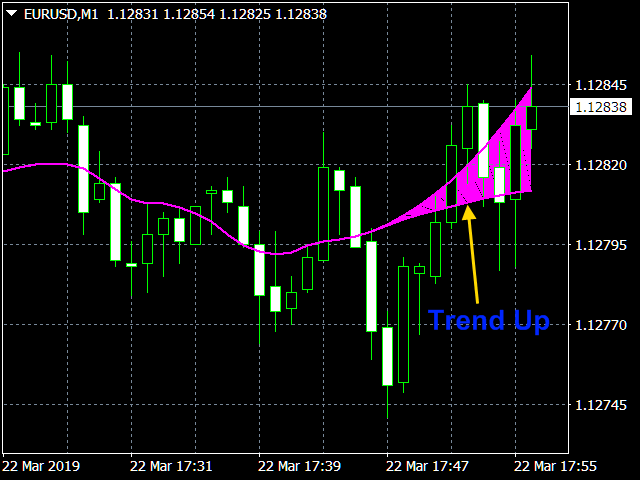
The Estimation moving average without lag (EMAWL) indicator calculates the non-lagging moving average, which is calculated at the points (Inf, n + 1) in the usual way, and at the points of the [n, 0] segment, where 0 is the last bar number, is algorithmically and there is a curvilinear sector (cover out the confidence interval) in which the line of the non-lagging moving average fits with the confidence level specified in the indicator settings. It is clear that the more the confidence probability value is taken (which by default is equal to 0.67), the wider the curvilinear sector of the confidence interval is obtained. If we take the confidence probability equal to zero, then the sector of the indicator readings at points [n, 0] will shrink to a curve, which will pass through the most probable values of the non-lagging average. Statistical studies show that the price around the non-remaining average is distributed according to the Laplace law. Knowledge of the distribution law and the algorithm for calculating the most likely non-lagging average on the [n, 0] segment allow us to calculate the confidence interval sector.
Trade using the Estimation moving average without lag indicator.
If the lower border of the figure sector of the EMAWL indicator moves to the up, then there is an uptrend and you need to open positions on Buy. If the upper boundary of the curvilinear sector of the EMAWL indicator is oriented downwards, then there is a downward trend and you need to open positions on Sell. In such cases, you can be sure of the correctness of the established trend direction with the confidence level set in the indicator settings. If the upper limit of the figure sector of the EMAWL indicator moves to the up, and the lower limit moves down, then there is a flat, which serves as a signal for closing trend positions.
Indicator settings.
Price type - applied price. Values: Close price, Open price, High price, Low price, Median price ((high + low)/2 - default), Typical price ((high + low + close)/3), Weighted price ((high + low + 2*close)/4).
The averaging method - averaging method. Values: Simple (default), Exponential, Smoothed, Linear weighted.
The averaging period - averaging period. Any integer (21 by default).
Confidence probability - Values: from 0 to 0.999 (0.67 by default).
Global shift - Global shift to start calculating indicator readings. Values: any integer (0 by default).
Paint over the confidence interval? - Values: true (by default), false.
Color of the line. – The color of the indicator line and its figure sector.
✔️The algorithms of this indicator are unique and developed by their author
Author Aleksey Ivanov https://www.mql5.com/en/users/60000382
A simple moving average (SMA) with an averaging period (2n + 1) of bars is always obtained lagging by n bars. If SMA or other types of moving averages are the basis for making trading decisions, then their strong delay does not allow to open positions in time and close positions, which leads to losses.
The Estimation moving average without lag (EMAWL) indicator calculates the non-lagging moving average, which is calculated at the points (Inf, n + 1) in the usual way, and at the points of the [n, 0] segment, where 0 is the last bar number, is algorithmically and there is a curvilinear sector (cover out the confidence interval) in which the line of the non-lagging moving average fits with the confidence level specified in the indicator settings. It is clear that the more the confidence probability value is taken (which by default is equal to 0.67), the wider the curvilinear sector of the confidence interval is obtained. If we take the confidence probability equal to zero, then the sector of the indicator readings at points [n, 0] will shrink to a curve, which will pass through the most probable values of the non-lagging average. Statistical studies show that the price around the non-remaining average is distributed according to the Laplace law. Knowledge of the distribution law and the algorithm for calculating the most likely non-lagging average on the [n, 0] segment allow us to calculate the confidence interval sector.
Trade using the Estimation moving average without lag indicator.
If the lower border of the figure sector of the EMAWL indicator moves to the up, then there is an uptrend and you need to open positions on Buy. If the upper boundary of the curvilinear sector of the EMAWL indicator is oriented downwards, then there is a downward trend and you need to open positions on Sell. In such cases, you can be sure of the correctness of the established trend direction with the confidence level set in the indicator settings. If the upper limit of the figure sector of the EMAWL indicator moves to the up, and the lower limit moves down, then there is a flat, which serves as a signal for closing trend positions.
Indicator settings.
Price type - applied price. Values: Close price, Open price, High price, Low price, Median price ((high + low)/2 - default), Typical price ((high + low + close)/3), Weighted price ((high + low + 2*close)/4).
The averaging method - averaging method. Values: Simple (default), Exponential, Smoothed, Linear weighted.
The averaging period - averaging period. Any integer (21 by default).
Confidence probability - Values: from 0 to 0.999 (0.67 by default).
Global shift - Global shift to start calculating indicator readings. Values: any integer (0 by default).
Paint over the confidence interval? - Values: true (by default), false.
Color of the line. – The color of the indicator line and its figure sector.
✔️The algorithms of this indicator are unique and developed by their author
Author Aleksey Ivanov https://www.mql5.com/en/users/60000382
Aleksey Ivanov
Iterative Moving Average https://www.mql5.com/en/accounting/buy/market/31714?period=0
Iterative Moving Average – IMA. IMA is obtained by correcting the usual MA. The correction consists in addition to MA averaged difference between the time series (X) and its MA, i.e. IMA(X)=MA(X) + MA (Х-MA(X)). Correction is done in several iterations (and, exactly, 2 iterations in this indicator) and with a change in the averaging period.
As a result, the time-series points begin to cluster around (on all sides) of the getting IMA and with a smaller delay than around the usual MA. Therefore, IMA is a more effective tool for manual and automatic trading than all types of conventional MA (SMA, EMA, SSMA, LMA). Formulas for IMA are given in the last screenshot.
Indicator Settings.
Price type. Values: Close price, Open price, High price, Low price, Median price ((high + low)/2 - default), Typical price ((high + low + close)/3), Weighted price ((high + low + 2*close)/4).
The averaging method. Values: Simple, Exponential (default), Smoothed, Linear weighted.
The main averaging period. Integer. Default is 14.
Coefficient of division of the averaging period. - The coefficient determines the period of the next iteration. Values: any positive real number, which is not zero. Default is 1.62 (Golden Ratio).
Dimensions of markers - Marker sizes to display forecast points. Values: any positive integer from 0 to 5 (1 default).
Show indicator data with arrows; false - line Type of data display. Values: true - arrows, false - line .
✔️The algorithms of this indicator are unique and developed by their author
https://www.mql5.com/en/accounting/buy/market/31714?period=0
Iterative Moving Average – IMA. IMA is obtained by correcting the usual MA. The correction consists in addition to MA averaged difference between the time series (X) and its MA, i.e. IMA(X)=MA(X) + MA (Х-MA(X)). Correction is done in several iterations (and, exactly, 2 iterations in this indicator) and with a change in the averaging period.
As a result, the time-series points begin to cluster around (on all sides) of the getting IMA and with a smaller delay than around the usual MA. Therefore, IMA is a more effective tool for manual and automatic trading than all types of conventional MA (SMA, EMA, SSMA, LMA). Formulas for IMA are given in the last screenshot.
Indicator Settings.
Price type. Values: Close price, Open price, High price, Low price, Median price ((high + low)/2 - default), Typical price ((high + low + close)/3), Weighted price ((high + low + 2*close)/4).
The averaging method. Values: Simple, Exponential (default), Smoothed, Linear weighted.
The main averaging period. Integer. Default is 14.
Coefficient of division of the averaging period. - The coefficient determines the period of the next iteration. Values: any positive real number, which is not zero. Default is 1.62 (Golden Ratio).
Dimensions of markers - Marker sizes to display forecast points. Values: any positive integer from 0 to 5 (1 default).
Show indicator data with arrows; false - line Type of data display. Values: true - arrows, false - line .
✔️The algorithms of this indicator are unique and developed by their author
https://www.mql5.com/en/accounting/buy/market/31714?period=0
Aleksey Ivanov
Signal Bands
https://www.mql5.com/en/accounting/buy/market/29171?period=0
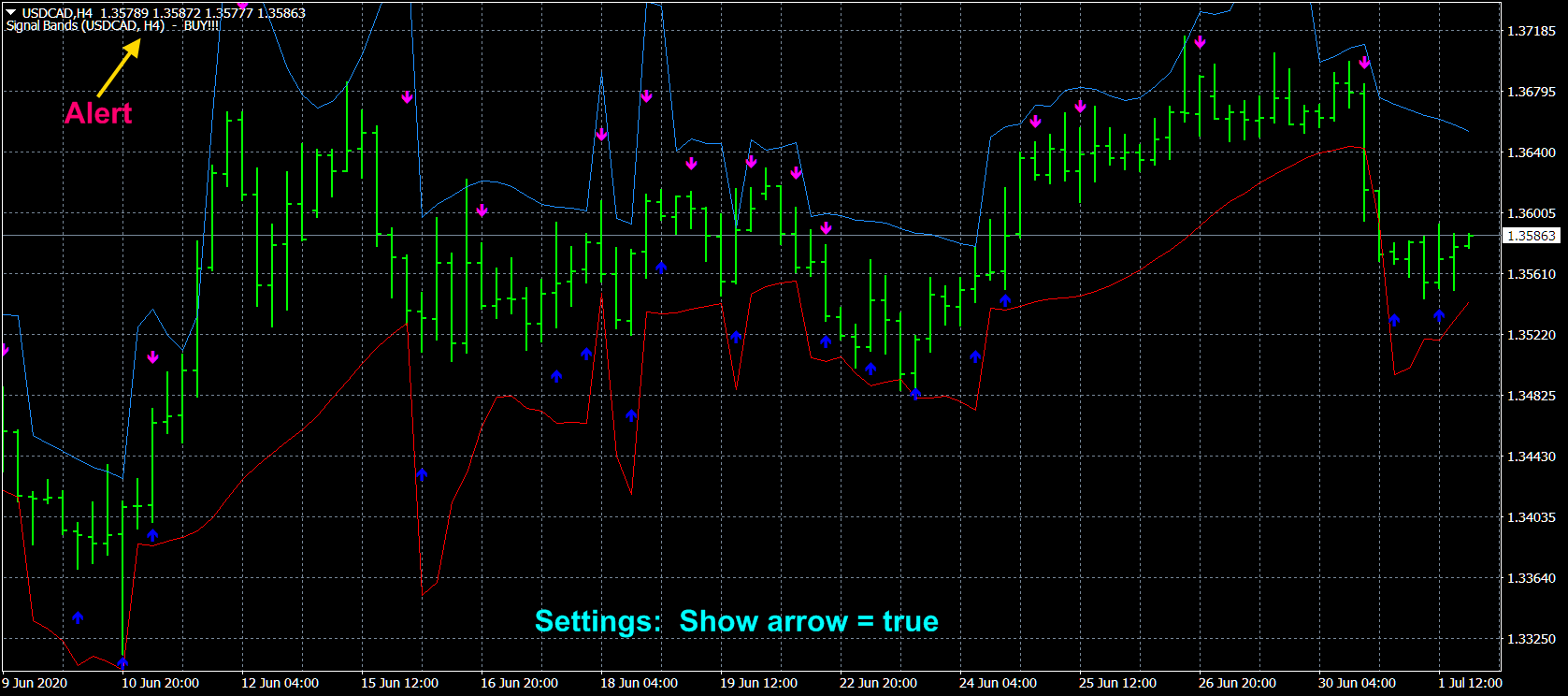
Signal Bands is a sensitive and convenient indicator, which performs deep statistical processing of information. It allows to see on one chart (1) the price trend, (2) the clear price channel and (3) latent signs of trend change. The indicator can be used on charts of any periods, but it is especially useful for scalping due to its high sensitivity to the current market state.
The functions of the indicator:
First, the Signal Bands indicator draws channels into which all price fluctuations exactly fit, so with default parameters, the price will never exceed the limits of this channel (except for the occurrence of very high peaks of signal information).
Sharp movements on channel lines (sharp peaks) indicate a change in price direction. Signals provided by such sharp peaks are often leading, i.e. they occur about 1-2 bars before the beginning of price reversal. A sharp downward peak at the bottom line of the channel down is the criterion for the reversal of the price upwards. Conversely, the sharp upward peak of the upper channel line precedes the downward price reversal.
The signals of the Signal Bands indicator are algorithmically formed based on the analysis of the current density of the price probability, which is subject to a strong asymmetry before the very moment of price direction change due to short-term price surges (which might be aiming at hitting the StopLoss of most traders) in the direction opposite to its new movement.
The indicator readings are extremely simple and do not require special explanations. Blue arrows pointing up are a buy signal, red arrows pointing down are a sell signal.
The Signal Bandsindicator can be used both for trading according to scalper strategies, and when using long-term trading strategies. The indicator has all types of alerts. The indicator does not redraw.
Indicator Settings
Price type. Values: Close price, Open price (default), High price, Low price, Median price ((high + low)/2), Typical price ((high + low + close)/3), Weighted price ((high + low + 2*close)/4).
The averaging method. Values: Simple (default), Exponential, Smoothed, Linear weighted.
The averaging period - averaging period. Integer. Default is 20.
Channel width factor - channel width factor. The real number Default is 1.0.
The factor of sensibility . - Coefficient of sensitivity to price surges. The real number. Values from 2.0 to 6.0. Default is 4.0.
Show one branch? - Show one branch? Values: true - one branch, false - two branches.
Show arrow ? (only in the mode of one branch) - Show signals with arrows. Values: true (default), false.
Line & arrow thickness. Values: any positive integer (1 default).
The Signal method - Type of trading alert. Values: No (default), Send alert, Print (in expert), Comment (in chart), Sound + Print, Sound + Comment, Sound, Push + Comment, Push, Mail + Comment, Mail.
✔️The indicator has all types of alerts.
✔️The indicator does not redraw.
✔️The algorithms of this indicator are unique and developed by their author
https://www.mql5.com/en/accounting/buy/market/29171?period=0
Signal Bands is a sensitive and convenient indicator, which performs deep statistical processing of information. It allows to see on one chart (1) the price trend, (2) the clear price channel and (3) latent signs of trend change. The indicator can be used on charts of any periods, but it is especially useful for scalping due to its high sensitivity to the current market state.
The functions of the indicator:
First, the Signal Bands indicator draws channels into which all price fluctuations exactly fit, so with default parameters, the price will never exceed the limits of this channel (except for the occurrence of very high peaks of signal information).
Sharp movements on channel lines (sharp peaks) indicate a change in price direction. Signals provided by such sharp peaks are often leading, i.e. they occur about 1-2 bars before the beginning of price reversal. A sharp downward peak at the bottom line of the channel down is the criterion for the reversal of the price upwards. Conversely, the sharp upward peak of the upper channel line precedes the downward price reversal.
The signals of the Signal Bands indicator are algorithmically formed based on the analysis of the current density of the price probability, which is subject to a strong asymmetry before the very moment of price direction change due to short-term price surges (which might be aiming at hitting the StopLoss of most traders) in the direction opposite to its new movement.
The indicator readings are extremely simple and do not require special explanations. Blue arrows pointing up are a buy signal, red arrows pointing down are a sell signal.
The Signal Bandsindicator can be used both for trading according to scalper strategies, and when using long-term trading strategies. The indicator has all types of alerts. The indicator does not redraw.
Indicator Settings
Price type. Values: Close price, Open price (default), High price, Low price, Median price ((high + low)/2), Typical price ((high + low + close)/3), Weighted price ((high + low + 2*close)/4).
The averaging method. Values: Simple (default), Exponential, Smoothed, Linear weighted.
The averaging period - averaging period. Integer. Default is 20.
Channel width factor - channel width factor. The real number Default is 1.0.
The factor of sensibility . - Coefficient of sensitivity to price surges. The real number. Values from 2.0 to 6.0. Default is 4.0.
Show one branch? - Show one branch? Values: true - one branch, false - two branches.
Show arrow ? (only in the mode of one branch) - Show signals with arrows. Values: true (default), false.
Line & arrow thickness. Values: any positive integer (1 default).
The Signal method - Type of trading alert. Values: No (default), Send alert, Print (in expert), Comment (in chart), Sound + Print, Sound + Comment, Sound, Push + Comment, Push, Mail + Comment, Mail.
✔️The indicator has all types of alerts.
✔️The indicator does not redraw.
✔️The algorithms of this indicator are unique and developed by their author
https://www.mql5.com/en/accounting/buy/market/29171?period=0
Aleksey Ivanov
Robust filter https://www.mql5.com/en/accounting/buy/market/52668?period=0
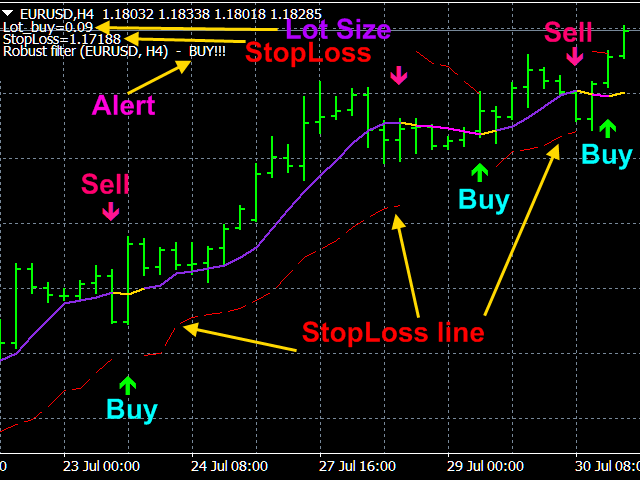
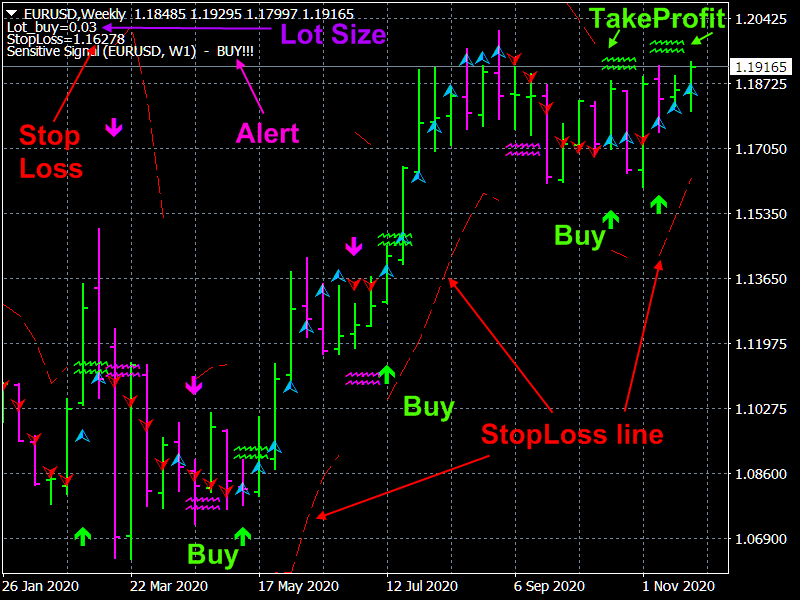
The Robust filter indicator is based on the robust filtering algorithm developed by the author using the multi-period averaged moving median.
The indicator calculates and shows:
✔️1. The direction of the trend;
✔️2. Entry and exit points of positions;
✔️3. StopLoss lines calculated from current price probability distributions and selected probability of closing an order by StopLoss before the trend reversal;
✔️4. Lot sizes based on the accepted risk level, deposit size and StopLoss position.
============================================================
✔️The indicator has all kinds of alerts.
✔️The indicator does not redraw.
✔️The indicator can be used both for trading scalper strategies and for long-term trading strategies.
The Robust filter indicator is based on the robust filtering algorithm developed by the author using the multi-period averaged moving median.
The indicator calculates and shows:
✔️1. The direction of the trend;
✔️2. Entry and exit points of positions;
✔️3. StopLoss lines calculated from current price probability distributions and selected probability of closing an order by StopLoss before the trend reversal;
✔️4. Lot sizes based on the accepted risk level, deposit size and StopLoss position.
============================================================
✔️The indicator has all kinds of alerts.
✔️The indicator does not redraw.
✔️The indicator can be used both for trading scalper strategies and for long-term trading strategies.
Aleksey Ivanov
Probabilities distribution of price (PDP) https://www.mql5.com/en/accounting/buy/market/27070?period=0
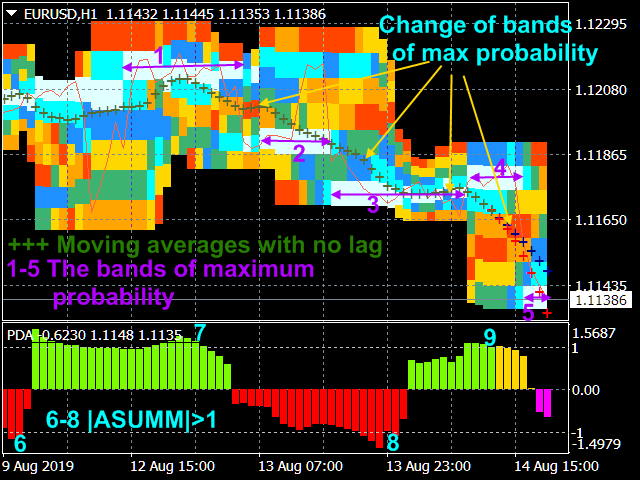
Indicator is used for:
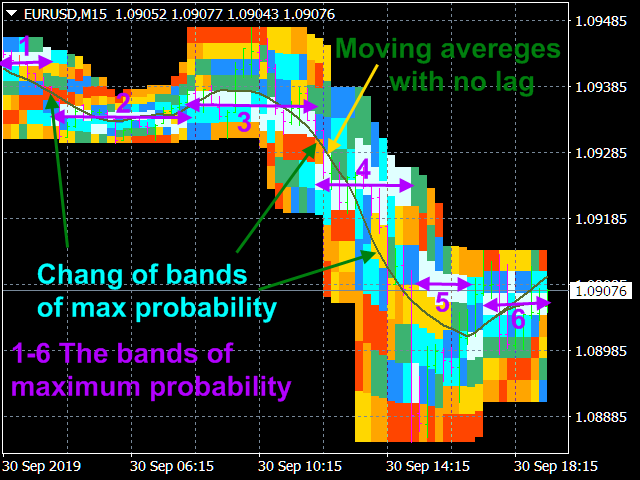
1. defining price probability distributions. This allows for a detailed representation of the channel and its borders and forecast the probability of a price appearing at each segment of its fluctuations;
2. defining the channel change moment.
✔️The algorithms of this indicator are unique and developed by their author
✔️ It has built-in management
Indicator is used for:
1. defining price probability distributions. This allows for a detailed representation of the channel and its borders and forecast the probability of a price appearing at each segment of its fluctuations;
2. defining the channel change moment.
✔️The algorithms of this indicator are unique and developed by their author
✔️ It has built-in management
Aleksey Ivanov
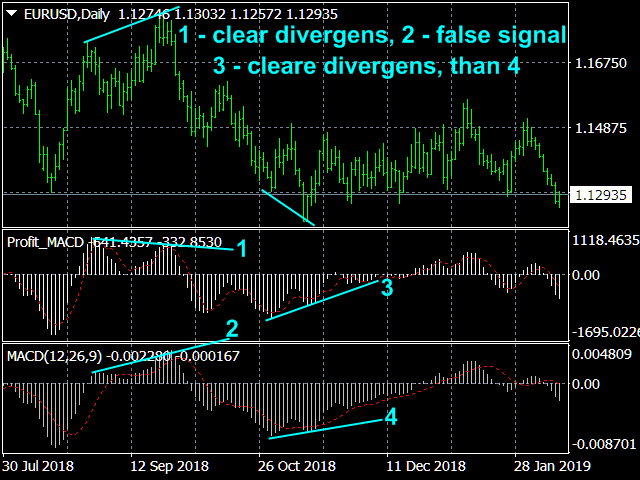
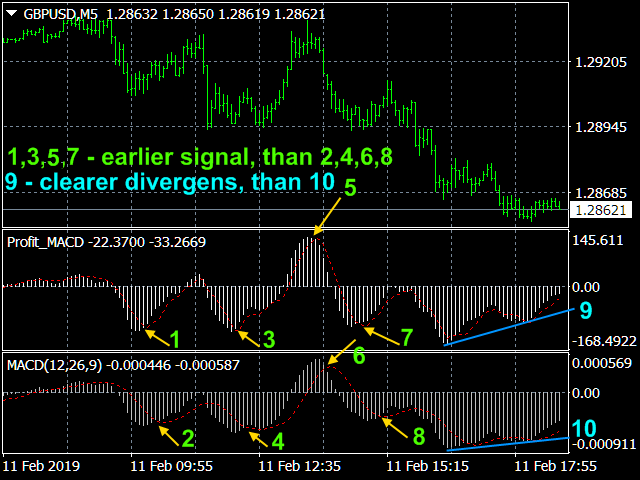
Prof MACD (MT5) https://www.mql5.com/en/accounting/buy/market/65276?period=0
✔️ One of my most profitable indicators with optimal filtering.
✔️The algorithms of this indicator are unique and developed by their author
✔️The indicator has all kinds of alerts.
✔️ The indicator does not redraw.
✔️ One of my most profitable indicators with optimal filtering.
✔️The algorithms of this indicator are unique and developed by their author
✔️The indicator has all kinds of alerts.
✔️ The indicator does not redraw.
Aleksey Ivanov
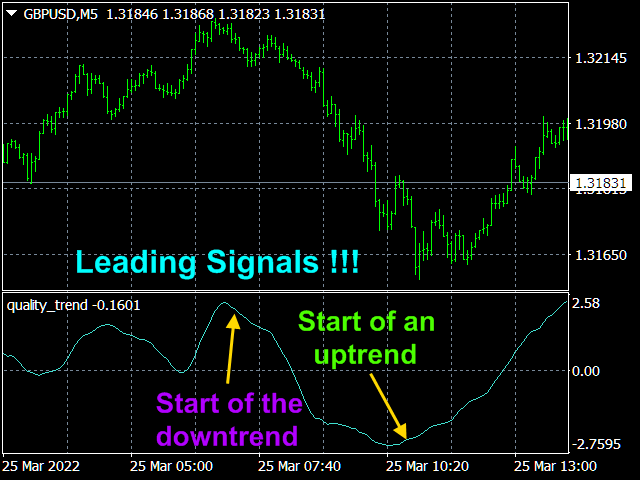
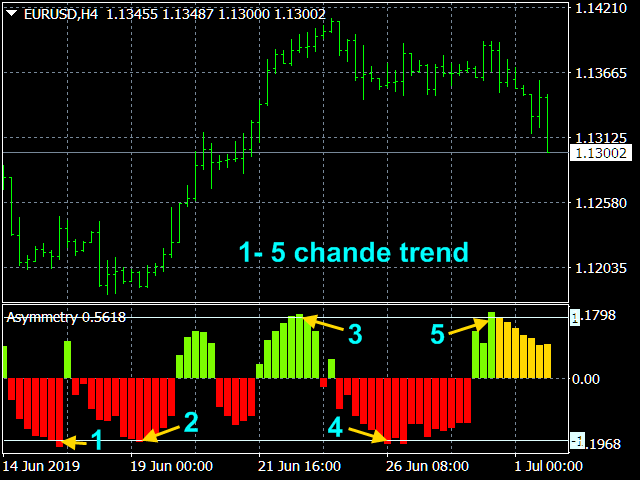
Asummetry indicator allows you to predict the beginning of a change in the direction of trends, long before their visual appearance on the price chart.
✔️The algorithms of this indicator are unique and developed by their author
Asummetry https://www.mql5.com/en/accounting/buy/market/40005?period=0
✔️The algorithms of this indicator are unique and developed by their author
Asummetry https://www.mql5.com/en/accounting/buy/market/40005?period=0
Aleksey Ivanov
Strong Trend Flat Signal
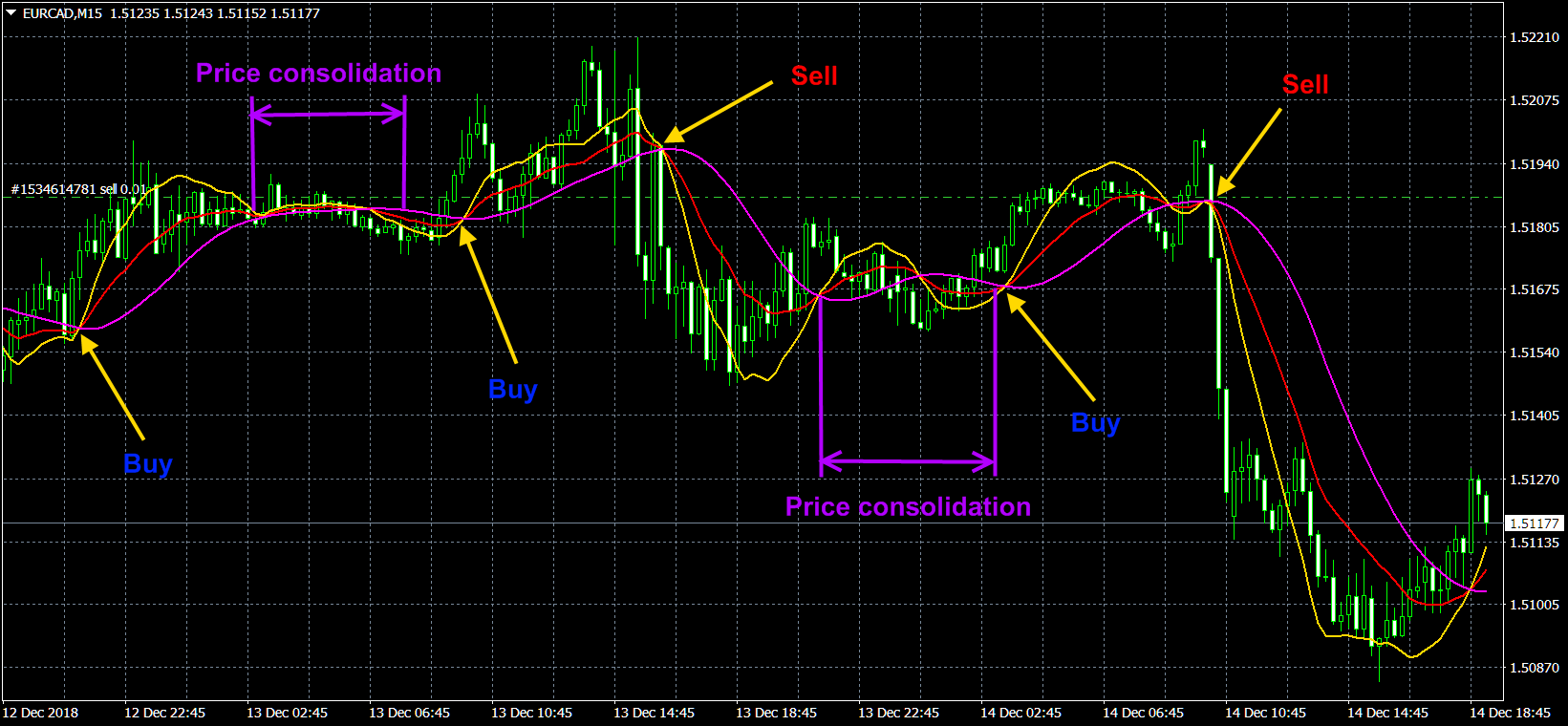
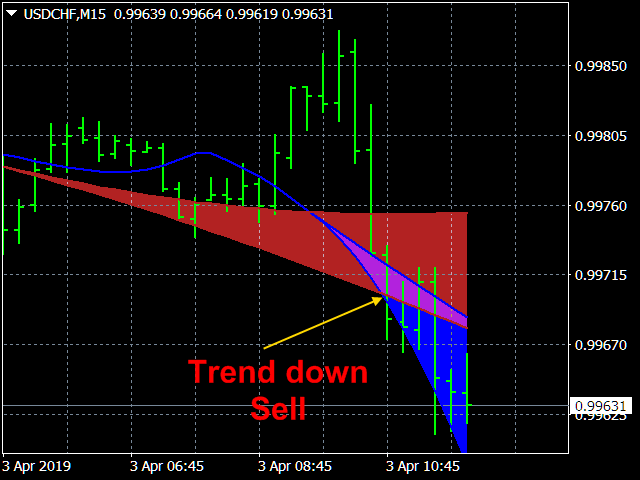
The Strong Trend Flat Signal indicator is the intersection of two, developed by the author, non-lagging moving averages with averaging periods 21 and 63.
✔️The algorithms of this indicator are unique and developed by their author
https://www.mql5.com/en/accounting/buy/market/37203?period=0
The Strong Trend Flat Signal indicator is the intersection of two, developed by the author, non-lagging moving averages with averaging periods 21 and 63.
✔️The algorithms of this indicator are unique and developed by their author
https://www.mql5.com/en/accounting/buy/market/37203?period=0
Aleksey Ivanov
Friends! What we see on the price charts as a trend is often not a trend, but arises as a result of the imposition of a large number of unidirectional price jumps, i.e. is a purely random occurrence. Such pseudo-trends especially often occur on small timeframes, where the level of noise is very high against the background of a weak regular price movement. And you can win on such random false trends only by chance. Therefore, following such false trends, as a rule, leads to losses. My indicators were designed to filter out such noise, which is not an easy task. For more information about this phenomenon and how to identify it, see the blog «True and illusory currency market trends” https://www.mql5.com/en/blogs/post/740838
Aleksey Ivanov
Probability distribution PRO
Indicator is used for:
1. defining price probability distributions. This allows for a detailed representation of the channel and its borders and forecast the probability of a price appearing at each segment of its fluctuations;
2. defining the channel change moment.
✔️The algorithms of this indicator are unique and developed by their author
Probability distribution PRO https://www.mql5.com/en/accounting/buy/market/41174?period=0
Indicator is used for:
1. defining price probability distributions. This allows for a detailed representation of the channel and its borders and forecast the probability of a price appearing at each segment of its fluctuations;
2. defining the channel change moment.
✔️The algorithms of this indicator are unique and developed by their author
Probability distribution PRO https://www.mql5.com/en/accounting/buy/market/41174?period=0
Aleksey Ivanov
The Signal Envelopes indicator uses the robust filtering method based on: (1) the moving median Buff0 = < Median> = (Max {x} + Min {x}) / 2 and (2) the averaging algorithm developed by the author Buff1 = <( ) ^ (- 3)> * ( ) ^ 4 based on the moving median. The Signal Envelopes indicator allows you to most accurately and with the minimum possible delay set the beginning of a new trend. The Signal Envelopes indicator can be used both for trading according to scalper strategies, and when using long-term trading strategies.
✔️The indicator has all kinds of alerts.
✔️ The indicator does not redraw
✔️The algorithms of this indicator are unique and developed by their author
Signal Envelopes https://www.mql5.com/en/accounting/buy/market/46593?period=0
✔️The indicator has all kinds of alerts.
✔️ The indicator does not redraw
✔️The algorithms of this indicator are unique and developed by their author
Signal Envelopes https://www.mql5.com/en/accounting/buy/market/46593?period=0
Aleksey Ivanov
The Signal Channel indicator uses a robust filtering method based on two moving medians applicable to the High and Low prices, i.e. the lines and , where <..> is the sign of linear averaging, which are shifted by certain values in an uptrend and by opposite values in a downtrend, which allows you to get a narrow channel, approximately outlining each bar. Sharp kinks of the lines of such a channel allow the most accurate and minimal possible delay to establish the beginning of a new trend movement. The possible change in the direction of the trend is also indicated by sharp narrowing of the channel lines, which, in fact, is expressed by the fall in volatility. The indicator also has an additional filtering function, upon activation of which the signal is identified only after a decrease in volatility, which makes the indicator more reliable. In addition to the main channel, inside which the most probable price fluctuations occur, an auxiliary channel is built (in dashed lines), beyond the borders of which the price does not go anymore, which serves to set stoplosses on it.
✔️ The Signal Channel indicator can be used both for trading according to scalper strategies, and when using long-term trading strategies.
✔️ It has built-in management
✔️ The indicator has all types of alerts.
✔️ The indicator does not redraw.
✔️ One of the best indicators with optimal market noise filtering.
Signal Channel https://www.mql5.com/en/accounting/buy/market/50988?period=0
✔️ The Signal Channel indicator can be used both for trading according to scalper strategies, and when using long-term trading strategies.
✔️ It has built-in management
✔️ The indicator has all types of alerts.
✔️ The indicator does not redraw.
✔️ One of the best indicators with optimal market noise filtering.
Signal Channel https://www.mql5.com/en/accounting/buy/market/50988?period=0
Aleksey Ivanov
Absolute Bands FREE https://www.mql5.com/en/market/product/33826
The Absolute Bands indicator is reminiscent of the Bollinger Bands indicator with its appearance and functions, but only more effective for trading due to the significantly smaller number of false signals issued to them. This effectiveness of the Absolute Bands indicator is due to its robust nature.
✔️ One of the best indicators with optimal market noise filtering.
Author Aleksey Ivanov https://www.mql5.com/en/users/60000382
The Absolute Bands indicator is reminiscent of the Bollinger Bands indicator with its appearance and functions, but only more effective for trading due to the significantly smaller number of false signals issued to them. This effectiveness of the Absolute Bands indicator is due to its robust nature.
✔️ One of the best indicators with optimal market noise filtering.
Author Aleksey Ivanov https://www.mql5.com/en/users/60000382
Aleksey Ivanov
StatPredict
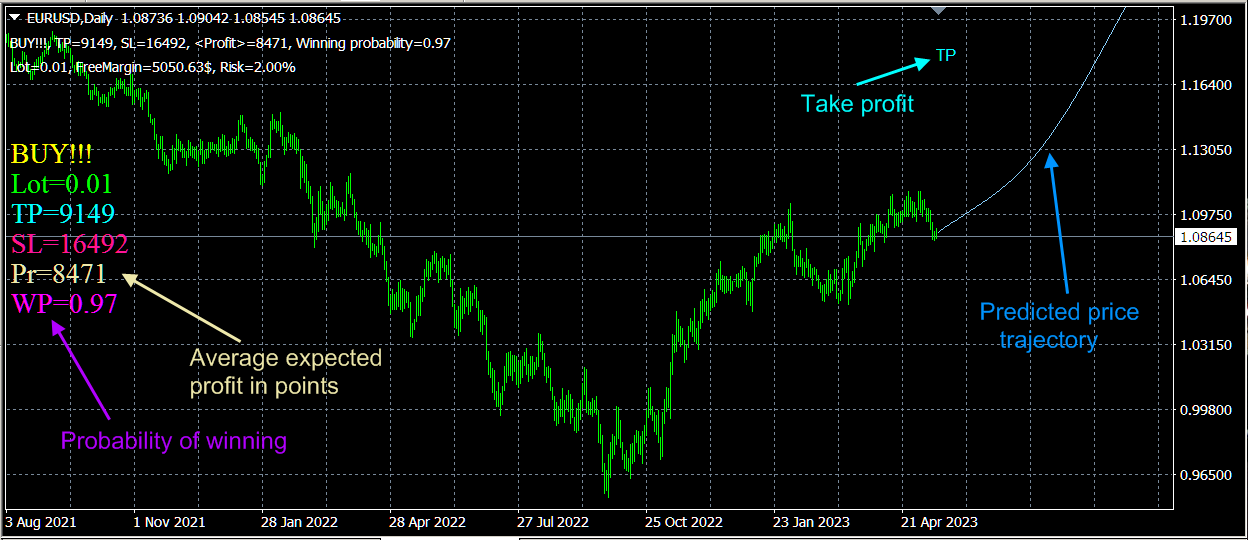
✔️The indicator predicts the price in accordance with the prevailing trend and its own small statistical price fluctuations around this trend. Using mathematical methods for predicting random processes, StatPredict indicator predicts the most probable values of the future price and calculates the confidence interval for them.
✔️StatPredict also provides the option to calculate the lot, based on the positions of the last points of the calculated channel of confidence probability, as well as the size of the deposit and the allowable risk, which are specified in the indicator settings.
✔️The algorithms of this indicator are unique and developed by their author
StatPredict https://www.mql5.com/en/market/product/38721
✔️The indicator predicts the price in accordance with the prevailing trend and its own small statistical price fluctuations around this trend. Using mathematical methods for predicting random processes, StatPredict indicator predicts the most probable values of the future price and calculates the confidence interval for them.
✔️StatPredict also provides the option to calculate the lot, based on the positions of the last points of the calculated channel of confidence probability, as well as the size of the deposit and the allowable risk, which are specified in the indicator settings.
✔️The algorithms of this indicator are unique and developed by their author
StatPredict https://www.mql5.com/en/market/product/38721
Aleksey Ivanov
Velocity of price change https://www.mql5.com/en/market/product/62315
The Velocity of price change indicator shows the average rate of price change at those characteristic time intervals where this rate was approximately constant. The robust algorithm used in Velocity of price change to smooth out the price from its random jumps, ensures the reliability of the indicator reading, which does not react to simple price volatility and its insignificant movements.
✔️The algorithms of this indicator are unique and developed by their author
Author Aleksey Ivanov https://www.mql5.com/en/users/60000382
The Velocity of price change indicator shows the average rate of price change at those characteristic time intervals where this rate was approximately constant. The robust algorithm used in Velocity of price change to smooth out the price from its random jumps, ensures the reliability of the indicator reading, which does not react to simple price volatility and its insignificant movements.
✔️The algorithms of this indicator are unique and developed by their author
Author Aleksey Ivanov https://www.mql5.com/en/users/60000382
Aleksey Ivanov
Absolute price https://www.mql5.com/en/market/product/54630
✔️ This indicator is intended for professionals assessing fundamental market trends. This indicator calculates the index of any instrument and analyzes it.
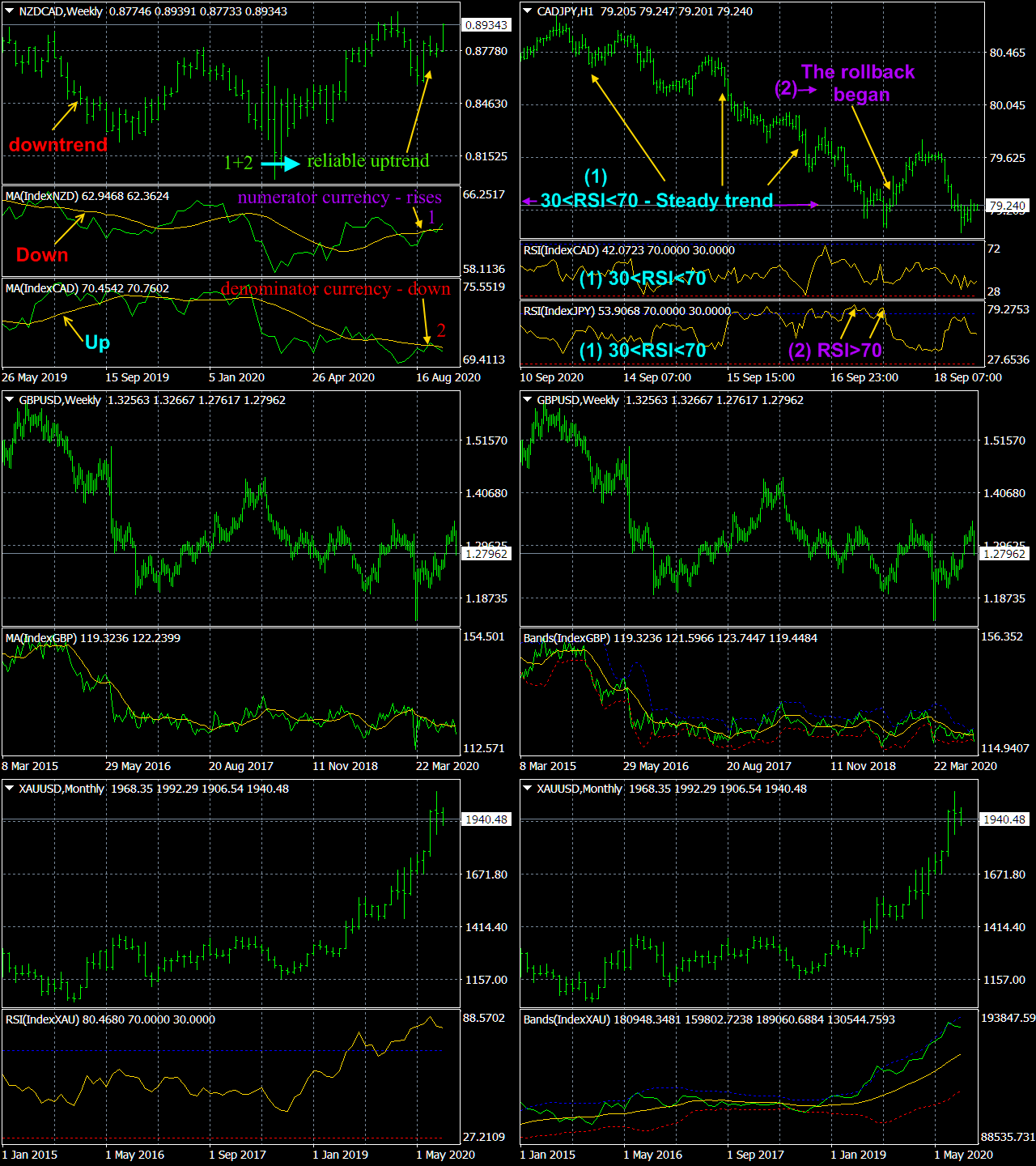
✔️ The indicator has modes for analyzing the indices themselves, namely: Moving Average; Relative Strength Index; Momentum; Commodity Channel Index; Bollinger Bands; Envelopes.
Author Aleksey Ivanov https://www.mql5.com/en/users/60000382
✔️ This indicator is intended for professionals assessing fundamental market trends. This indicator calculates the index of any instrument and analyzes it.
✔️ The indicator has modes for analyzing the indices themselves, namely: Moving Average; Relative Strength Index; Momentum; Commodity Channel Index; Bollinger Bands; Envelopes.
Author Aleksey Ivanov https://www.mql5.com/en/users/60000382
Aleksey Ivanov
TrueChannel FREE https://www.mql5.com/en/market/product/61769
The TrueChannel indicator shows us the true price movement channels. This indicator resembles Donchian Channel in its appearance, but is built on the basis of completely different principles and gives (in comparison with Donchian Channel, which is better just to use to assess volatility) more adequate trading signals.
✔️The algorithms of this indicator are unique and developed by their author
Author Aleksey Ivanov https://www.mql5.com/en/users/60000382
The TrueChannel indicator shows us the true price movement channels. This indicator resembles Donchian Channel in its appearance, but is built on the basis of completely different principles and gives (in comparison with Donchian Channel, which is better just to use to assess volatility) more adequate trading signals.
✔️The algorithms of this indicator are unique and developed by their author
Author Aleksey Ivanov https://www.mql5.com/en/users/60000382
Aleksey Ivanov
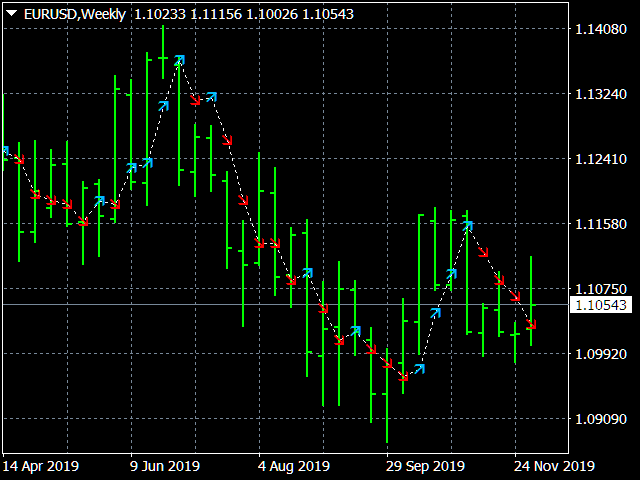
StatZigZag https://www.mql5.com/en/market/product/61091
Its indicator that allows you to get real sustainable profits in long-term trading.
✔️The algorithms of this indicator are unique and developed by their author
✔️ The StatZigZag indicator also builds a channel of maximum price fluctuations around the broken regression line, on the lower (red) line of which you can set StopLoss for buy orders, and on the upper (blue) line - StopLoss for sell orders.
Author Aleksey Ivanov https://www.mql5.com/en/users/60000382
Its indicator that allows you to get real sustainable profits in long-term trading.
✔️The algorithms of this indicator are unique and developed by their author
✔️ The StatZigZag indicator also builds a channel of maximum price fluctuations around the broken regression line, on the lower (red) line of which you can set StopLoss for buy orders, and on the upper (blue) line - StopLoss for sell orders.
Author Aleksey Ivanov https://www.mql5.com/en/users/60000382
: