Narwhal Bitcoin
- Experts
- Versione: 1.0
- Attivazioni: 5

Narwhal Bitcoin
Narwhal Bitcoin is a MetaTrader 5 Expert Advisor for automated Bitcoin trading. It combines moving averages, RSI and an optional ATR filter, with straightforward inputs and the familiar Narwhal chart panel.
How it trades
When the MA filter is enabled, the fast moving average above the slow moving average allows buy signals; below it allows sell signals. RSI adds confirmation, while the optional ATR filter checks whether price movement meets your chosen minimum.
You can restrict entry checks to new candles. If the conditions remain valid on later candles, the EA can open further trades within your chosen limits—it does not need a fresh MA crossover for every entry.
Main features
- Adjustable MA, RSI and ATR settings and timeframes.
- Separate buy and sell limits, plus a total open-trade limit.
- Optional closing of opposite trades and RSI-based exits.
- Fixed lots, percentage risk or a money amount per trade.
- Real or virtual stop loss and take profit.
- Optional trailing stop and break-even.
- Optional equity protection to close Narwhal trades at your chosen floating-loss threshold.
- Trading-day and time controls, including weekends when the broker permits trading.
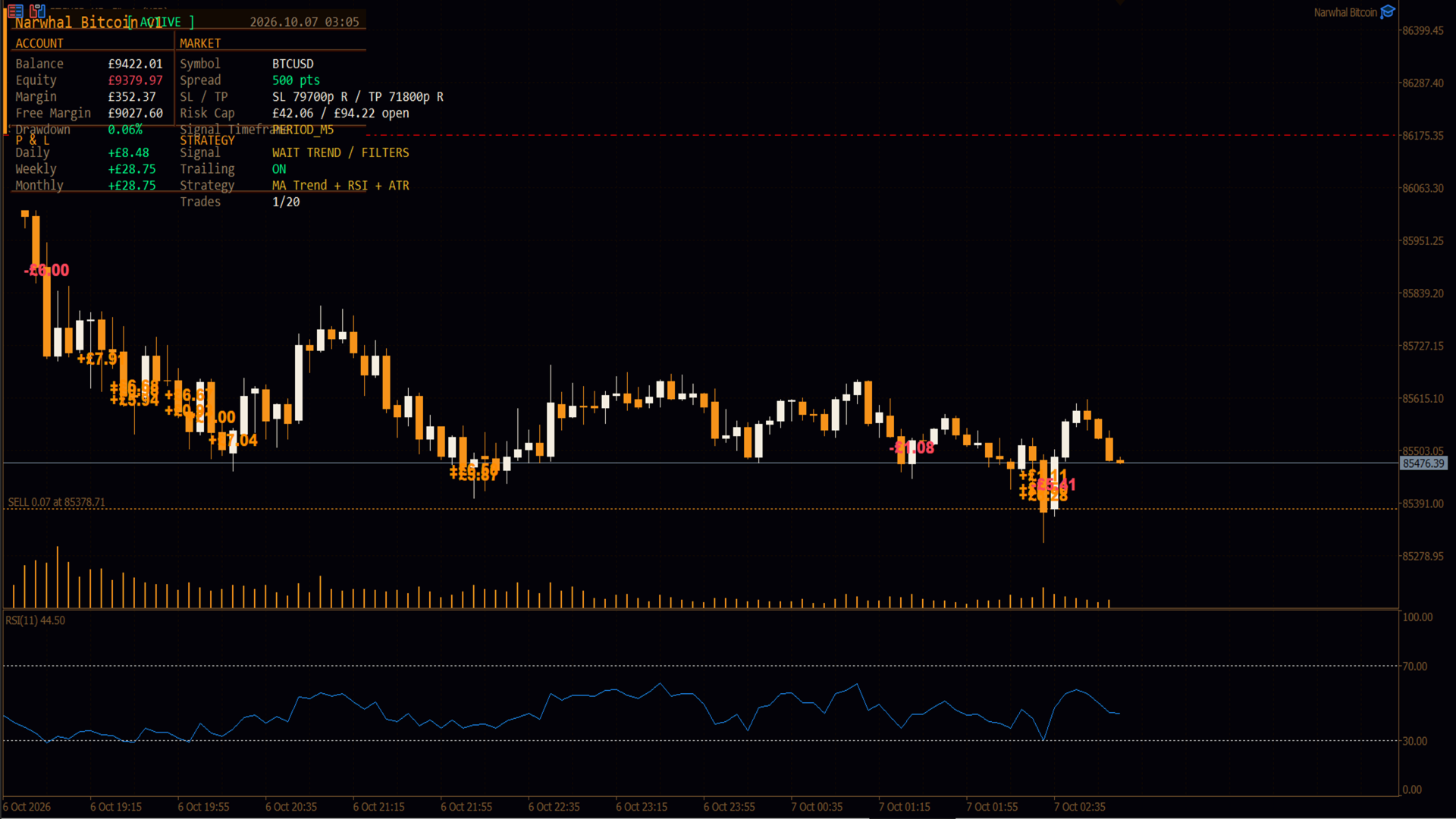
- Narwhal panel with account information, spread, trade status and daily, weekly and monthly P&L.
- Options to show or hide the MA and RSI indicators.
- Magic number 111.
Getting started
- Attach Narwhal Bitcoin to your broker’s Bitcoin chart.
- Choose your trade timeframe and indicator settings.
- Set your lot size or risk amount, SL/TP and trade limits.
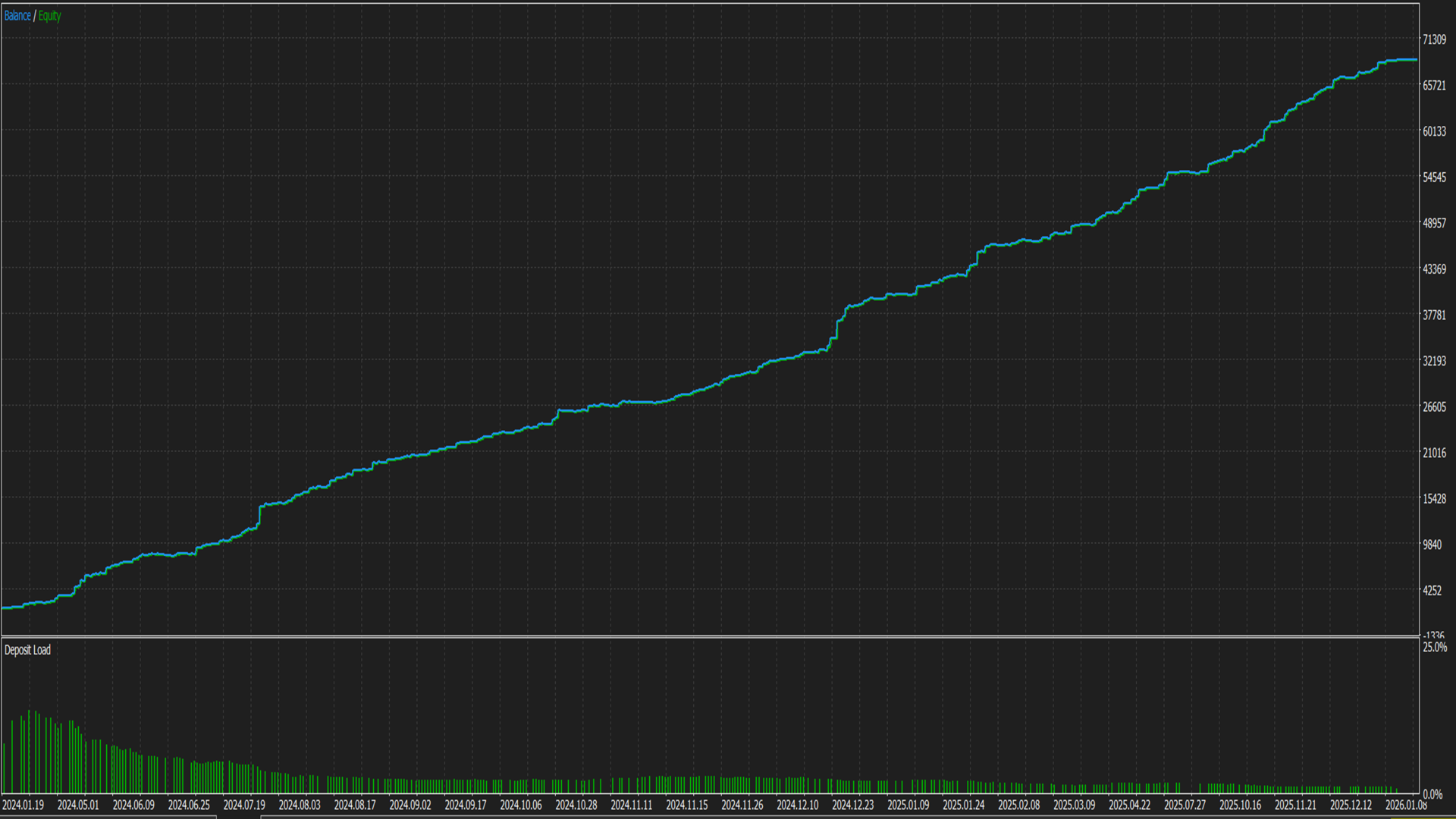
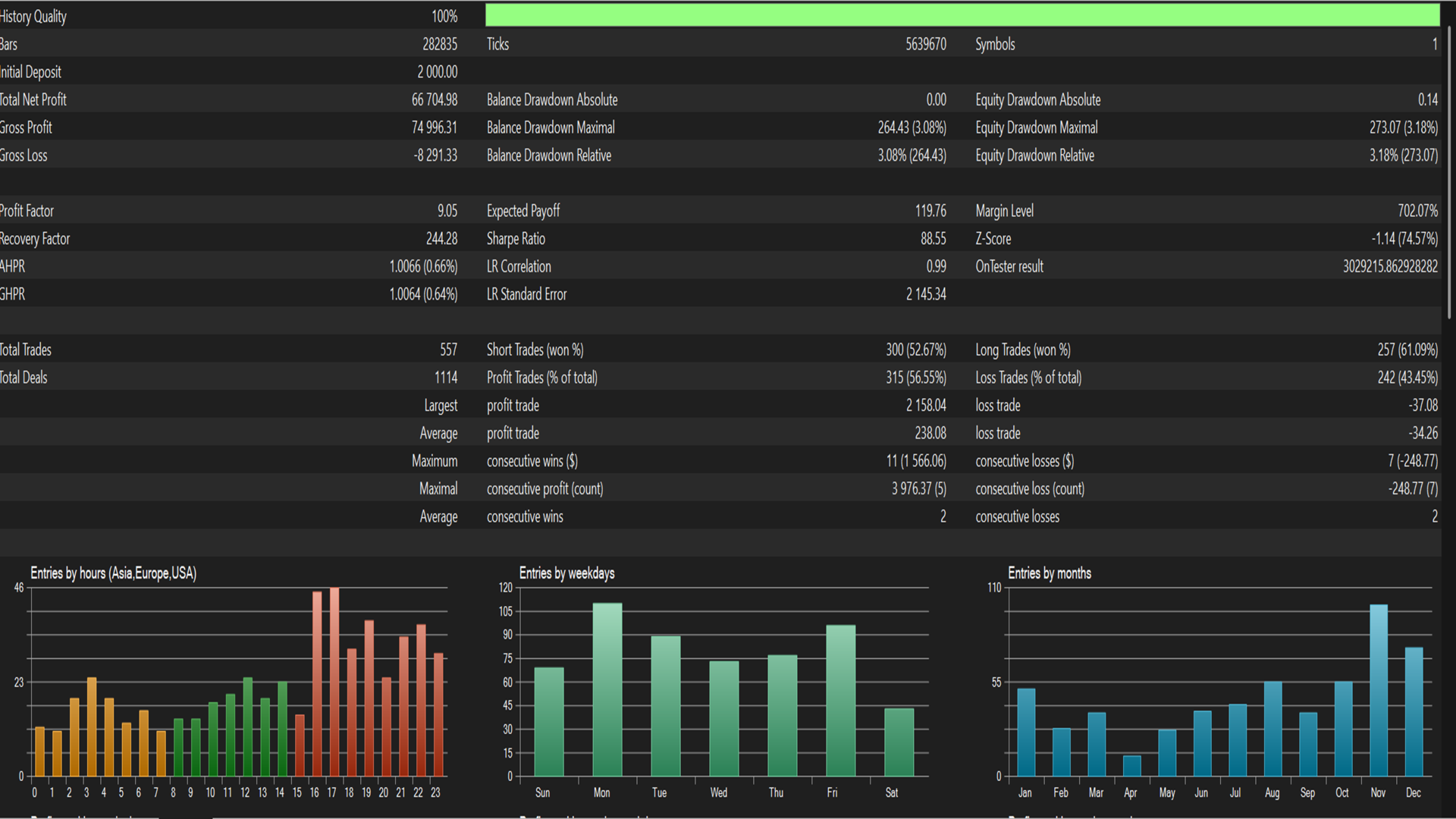
- Test the settings using Every tick based on real ticks, then forward-test on demo before considering live use.
Check your broker’s Bitcoin contract specifications: pip value, spread, lot size and minimum stop distance can differ. Virtual protection requires the EA to remain running and connected.
Important
Narwhal Bitcoin does not guarantee profits, a particular win rate or a maximum drawdown. Planned risk can differ from the final loss because of trading costs, gaps and execution conditions. An optimisation result is not a promise of future performance.