Advantages of EMA Moving Average Trading System
- Indicatori
- Versione: 1.0
- Attivazioni: 5

Advantages of EMA Moving Average Trading System:
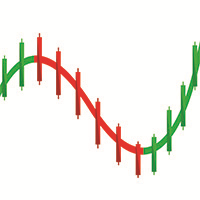
- Trend-Following Nature: EMAs effectively identify and follow market trends by giving more weight to recent prices, allowing traders to stay aligned with the dominant market direction.
- Reduced Lag: Compared to Simple Moving Averages (SMAs), EMAs react more quickly to price changes, making them better suited for dynamic market conditions.
- Flexibility: Traders can customize EMA periods to match different trading styles (e.g., short-term, medium-term, or long-term), adapting to various assets and timeframes.
- Support and Resistance Levels: EMAs often act as dynamic support or resistance zones, helping traders identify potential entry or exit points.
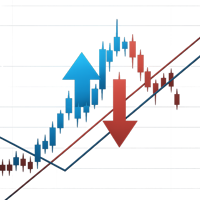
- Signal Generation: Crossovers between different EMA periods (e.g., a short-term EMA crossing above a long-term EMA) provide clear buy/sell signals, enhancing decision-making.
Disadvantages of EMA Moving Average Trading System:
- Lagging Indicator: Despite being faster than SMAs, EMAs still lag behind real-time price action, potentially leading to delayed signals, especially in fast-moving markets.
- Underperformance in Sideways Markets: In ranging or consolidating markets, EMA crossovers may generate frequent false signals, resulting in whipsaws and losses.
- Sensitivity to Parameter Selection: The effectiveness of EMAs heavily depends on the chosen periods. Poor parameter selection can lead to unreliable signals or missed opportunities.
- Over-Reliance on Trends: EMA-based systems perform best in trending markets. They may struggle to generate profitable signals in choppy or non-trending environments.
- Subjectivity in Interpretation: Traders may interpret EMA signals differently (e.g., how much crossover significance to assign), introducing subjectivity and potential inconsistency.