Vladimir Pastushak / Perfil
- Informações
|
12+ anos
experiência
|
48
produtos
|
866
versão demo
|
|
0
trabalhos
|
0
sinais
|
0
assinantes
|
🤝 Olá, meu amigo! É um prazer recebê-lo na minha página!
Meu nome é Vladimir e há mais de 20 anos venho criando ferramentas comerciais profissionais. Todas as minhas soluções são baseadas exclusivamente em ideias e desenvolvimentos próprios. Criar aplicativos comerciais não é apenas um trabalho para mim, é uma verdadeira paixão. Diariamente, testo os conceitos mais recentes e os implemento em algoritmos exclusivos para robôs comerciais.
Precisa de uma versão demo do produto para uma conta real? Manda-me uma mensagem.
💥Artigos úteis:
📌Como aprender a negociar na bolsa de valores-guia passo a passo https://www.mql5.com/en/blogs/post/768523
💝 Você já pode baixar programas profissionais gratuitamente:
🎁 VR Trade Panel MT4: https://www.mql5.com/pt/market/product/6838
🎁 VR Trade Panel MT5: https://www.mql5.com/pt/market/product/140502
💥 Ao adquirir produtos em fontes oficiais, você receberá:
1️⃣ Presentes, bônus, outros programas.
2️⃣ A possibilidade de usar os programas gratuitamente.
3️⃣ Configurações e arquivos set gratuitamente.
4️⃣ Suporte técnico gratuito.
5️⃣ Todas as atualizações gratuitamente.
💥 Visite o site do meu autor: https://trading-go.net/

Meu nome é Vladimir e há mais de 20 anos venho criando ferramentas comerciais profissionais. Todas as minhas soluções são baseadas exclusivamente em ideias e desenvolvimentos próprios. Criar aplicativos comerciais não é apenas um trabalho para mim, é uma verdadeira paixão. Diariamente, testo os conceitos mais recentes e os implemento em algoritmos exclusivos para robôs comerciais.
Precisa de uma versão demo do produto para uma conta real? Manda-me uma mensagem.
💥Artigos úteis:
📌Como aprender a negociar na bolsa de valores-guia passo a passo https://www.mql5.com/en/blogs/post/768523
💝 Você já pode baixar programas profissionais gratuitamente:
🎁 VR Trade Panel MT4: https://www.mql5.com/pt/market/product/6838
🎁 VR Trade Panel MT5: https://www.mql5.com/pt/market/product/140502
💥 Ao adquirir produtos em fontes oficiais, você receberá:
1️⃣ Presentes, bônus, outros programas.
2️⃣ A possibilidade de usar os programas gratuitamente.
3️⃣ Configurações e arquivos set gratuitamente.
4️⃣ Suporte técnico gratuito.
5️⃣ Todas as atualizações gratuitamente.
💥 Visite o site do meu autor: https://trading-go.net/

Amigos
7204
Pedidos
Enviados
Vladimir Pastushak
What is Fundamental Analysis?
Fundamental analysis is a method of evaluating the intrinsic value of an asset by examining the economic, financial, and geopolitical factors that influence its price. Unlike technical analysis that works with price charts, fundamental analysis explores the root causes of market movements: macroeconomic statistics, central bank monetary policy, corporate financials, political events, and the general state of the global economy.
Why is it needed? The primary goal of fundamental analysis is to identify long‑term trends and an instrument’s fair value. A trader who understands the fundamental backdrop does not react to random noise but relies on objective data. This makes it possible to spot overvalued or undervalued assets, anticipate reversals, and hold positions even during periods of short‑term volatility, because the decision is based not on emotion but on a deep comprehension of the market’s driving forces.
How to apply it in practice? Start by building a macroeconomic view: regularly monitor the economic calendar — GDP figures, inflation (CPI), labour market data (NFP), and meetings of the Fed, ECB, and other key regulators. For stocks, analyze quarterly earnings reports, P/E multiples, revenue dynamics, and debt levels. Combine the fundamental picture with technical analysis to select a concrete entry point. For example, if you expect monetary tightening and currency strengthening, wait for technical confirmation of a breakout of a key level. Record your fundamental expectations in a trading plan — this instills discipline and helps avoid impulsive trades.
Follow my profile (Add to friends) https://www.mql5.com/en/users/voldemar
Что такое фундаментальный анализ?
Фундаментальный анализ — это метод оценки реальной (внутренней) стоимости актива на основе изучения экономических, финансовых и геополитических факторов, влияющих на его цену. В отличие от технического анализа, который работает с графиком цены, фундаментальный анализ исследует первопричины движения рынка: макроэкономическую статистику, денежно-кредитную политику центральных банков, финансовые показатели компаний, политические события и общее состояние мировой экономики.
Для чего это нужно? Главная задача фундаментального анализа — определить долгосрочные тренды и справедливую стоимость инструмента. Трейдер, понимающий фундаментальный фон, не реагирует на случайный шум, а опирается на объективные данные. Это позволяет выявлять переоценённые или недооценённые активы, прогнозировать развороты и удерживать позиции даже в периоды краткосрочной волатильности, так как в основе решения лежит не эмоция, а глубокое понимание движущих сил рынка.
Как применить на практике? Начните с формирования макроэкономического взгляда: регулярно отслеживайте экономический календарь — данные по ВВП, инфляции (CPI), рынку труда (NFP), заседаниям ФРС, ЕЦБ и других ключевых регуляторов. Для акций анализируйте квартальные отчёты компаний, мультипликаторы P/E, динамику выручки и долговую нагрузку. Совмещайте фундаментальную картину с техническим анализом для выбора конкретной точки входа. Например, если вы ожидаете ужесточения монетарной политики и укрепления валюты, дождитесь технического подтверждения пробоя ключевого уровня. Записывайте свои фундаментальные ожидания в торговый план — это дисциплинирует и помогает избежать импульсивных сделок.
Подписывайся на мой профиль (Добавить в друзья) https://www.mql5.com/ru/users/voldemar
Fundamental analysis is a method of evaluating the intrinsic value of an asset by examining the economic, financial, and geopolitical factors that influence its price. Unlike technical analysis that works with price charts, fundamental analysis explores the root causes of market movements: macroeconomic statistics, central bank monetary policy, corporate financials, political events, and the general state of the global economy.
Why is it needed? The primary goal of fundamental analysis is to identify long‑term trends and an instrument’s fair value. A trader who understands the fundamental backdrop does not react to random noise but relies on objective data. This makes it possible to spot overvalued or undervalued assets, anticipate reversals, and hold positions even during periods of short‑term volatility, because the decision is based not on emotion but on a deep comprehension of the market’s driving forces.
How to apply it in practice? Start by building a macroeconomic view: regularly monitor the economic calendar — GDP figures, inflation (CPI), labour market data (NFP), and meetings of the Fed, ECB, and other key regulators. For stocks, analyze quarterly earnings reports, P/E multiples, revenue dynamics, and debt levels. Combine the fundamental picture with technical analysis to select a concrete entry point. For example, if you expect monetary tightening and currency strengthening, wait for technical confirmation of a breakout of a key level. Record your fundamental expectations in a trading plan — this instills discipline and helps avoid impulsive trades.
Follow my profile (Add to friends) https://www.mql5.com/en/users/voldemar
Что такое фундаментальный анализ?
Фундаментальный анализ — это метод оценки реальной (внутренней) стоимости актива на основе изучения экономических, финансовых и геополитических факторов, влияющих на его цену. В отличие от технического анализа, который работает с графиком цены, фундаментальный анализ исследует первопричины движения рынка: макроэкономическую статистику, денежно-кредитную политику центральных банков, финансовые показатели компаний, политические события и общее состояние мировой экономики.
Для чего это нужно? Главная задача фундаментального анализа — определить долгосрочные тренды и справедливую стоимость инструмента. Трейдер, понимающий фундаментальный фон, не реагирует на случайный шум, а опирается на объективные данные. Это позволяет выявлять переоценённые или недооценённые активы, прогнозировать развороты и удерживать позиции даже в периоды краткосрочной волатильности, так как в основе решения лежит не эмоция, а глубокое понимание движущих сил рынка.
Как применить на практике? Начните с формирования макроэкономического взгляда: регулярно отслеживайте экономический календарь — данные по ВВП, инфляции (CPI), рынку труда (NFP), заседаниям ФРС, ЕЦБ и других ключевых регуляторов. Для акций анализируйте квартальные отчёты компаний, мультипликаторы P/E, динамику выручки и долговую нагрузку. Совмещайте фундаментальную картину с техническим анализом для выбора конкретной точки входа. Например, если вы ожидаете ужесточения монетарной политики и укрепления валюты, дождитесь технического подтверждения пробоя ключевого уровня. Записывайте свои фундаментальные ожидания в торговый план — это дисциплинирует и помогает избежать импульсивных сделок.
Подписывайся на мой профиль (Добавить в друзья) https://www.mql5.com/ru/users/voldemar
Vladimir Pastushak
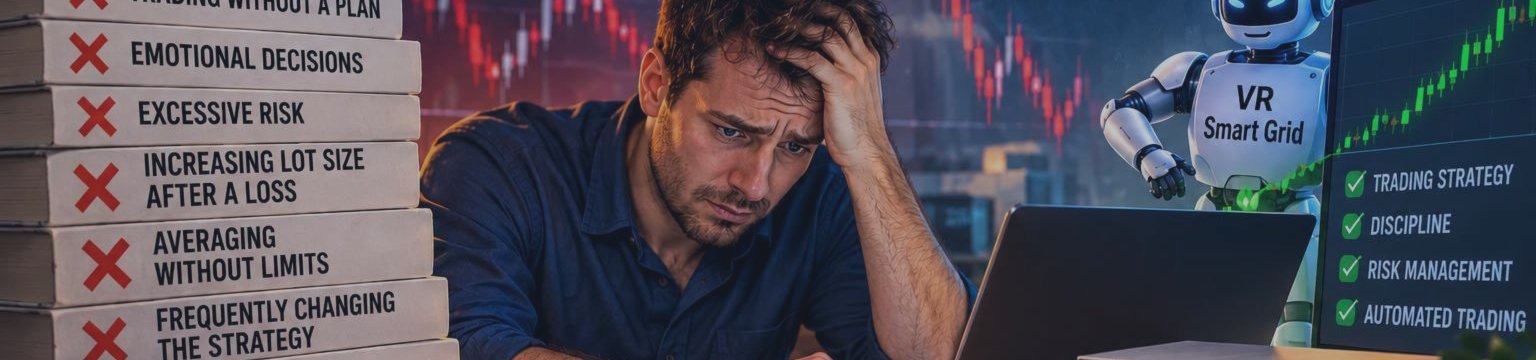
5 Trading Mistakes
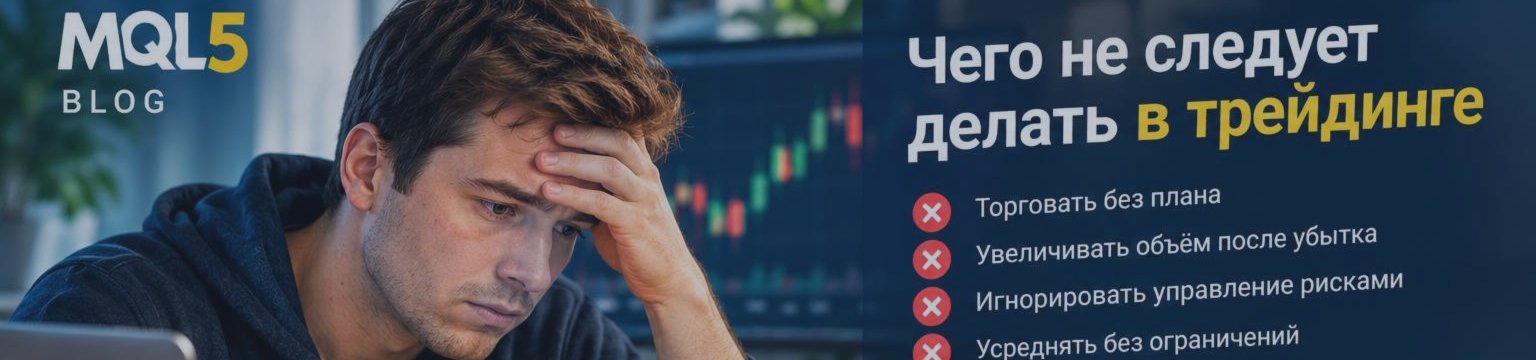
The 5 trading mistakes represent a critical list of systematic violations of discipline and logic that practically guarantee a negative result over the long term. This list includes: 1. The absence of a formalized trading system and session plan. 2. Ignoring the placement of a protective Stop Loss order. 3. Averaging down a losing position (adding volume against the trend). 4. Emotional instability (trading in a state of tilt or euphoria). 5. Gross violation of money management (risking more than 2-5% of the deposit per trade). These are not theoretical concepts but specific actions that a trader takes consciously or subconsciously, turning a mathematically profitable strategy into an instrument of account self-destruction.
Identifying and clearly fixing these five points is necessary to build an effective risk management system. If a trader does not understand where exactly their weakness lies, they cannot create countermeasures. Each point on this list represents a capital leak. For example, mistake #3 (averaging losses) is statistically the cause of the largest single losses, while mistake #1 (lack of a plan) makes trading unpredictable and deprives the trader of the ability to conduct a qualitative review of their mistakes. Awareness of these five traps allows one to separate objective market analysis from subjective cognitive biases.
Practical application of knowledge about these mistakes begins with strict self-control. First, create a checklist before opening any order. If the question "Where is the Stop Loss?" is marked with a dash in the checklist, the trade is not executed (protection against mistake #2). Second, introduce the "two stop" rule: after receiving two consecutive losses, the trading session is immediately terminated (protection against mistake #4). Third, use the built-in terminal calculator to automatically calculate position volume so as not to exceed the permissible risk of 1-2% of capital (protection against mistake #5). Only documenting each step and following the regulations allows one to neutralize the influence of these five destructive factors.
Follow my profile (Add as Friend) https://www.mql5.com/en/users/voldemar
5 ошибок в трейдинге
5 ошибок в трейдинге — это критический перечень систематических нарушений дисциплины и логики, который практически гарантированно приводит к отрицательному результату на дистанции. В данный перечень входят: 1. Отсутствие формализованной торговой системы и плана на сессию. 2. Игнорирование установки защитного стоп-приказа (Stop Loss). 3. Усреднение убыточной позиции (добавление объема против тренда). 4. Эмоциональная нестабильность (торговля в состоянии тильта или эйфории). 5. Грубое нарушение мани-менеджмента (риск более 2-5% от депозита в одной сделке). Это не теоретические понятия, а конкретные действия, которые трейдер совершает осознанно или подсознательно, превращая математически выгодную стратегию в инструмент самоуничтожения счета.
Выявление и четкая фиксация этих пяти пунктов необходимы для построения эффективной системы риск-менеджмента. Если трейдер не понимает, в чем именно заключается его слабость, он не может создать контрмеры. Каждый пункт из этого списка — это утечка капитала. Например, ошибка №3 (усреднение убытков) статистически является причиной самых крупных единоразовых потерь, а ошибка №1 (отсутствие плана) делает торговлю непредсказуемой и лишает возможности провести качественную работу над ошибками. Осознание этих пяти ловушек позволяет отделить объективный анализ рынка от субъективных когнитивных искажений.
Практическое применение знаний об этих ошибках начинается с жесткого самоконтроля. Во-первых, создайте чек-лист перед открытием каждого ордера. Если в чек-листе на вопрос "Где стоп-лосс?" стоит прочерк — сделка не совершается (защита от ошибки №2). Во-вторых, введите правило "двух стопов": при получении двух убытков подряд торговая сессия немедленно прекращается (защита от ошибки №4). В-третьих, используйте встроенный в терминал калькулятор для автоматического расчета объема позиции, чтобы не превышать допустимый риск в 1-2% от капитала (защита от ошибки №5). Только документирование каждого шага и следование регламенту позволяет нивелировать влияние этих пяти деструктивных факторов.
Подписывайся на мой профиль (Добавить в друзья) https://www.mql5.com/ru/users/voldemar
The 5 trading mistakes represent a critical list of systematic violations of discipline and logic that practically guarantee a negative result over the long term. This list includes: 1. The absence of a formalized trading system and session plan. 2. Ignoring the placement of a protective Stop Loss order. 3. Averaging down a losing position (adding volume against the trend). 4. Emotional instability (trading in a state of tilt or euphoria). 5. Gross violation of money management (risking more than 2-5% of the deposit per trade). These are not theoretical concepts but specific actions that a trader takes consciously or subconsciously, turning a mathematically profitable strategy into an instrument of account self-destruction.
Identifying and clearly fixing these five points is necessary to build an effective risk management system. If a trader does not understand where exactly their weakness lies, they cannot create countermeasures. Each point on this list represents a capital leak. For example, mistake #3 (averaging losses) is statistically the cause of the largest single losses, while mistake #1 (lack of a plan) makes trading unpredictable and deprives the trader of the ability to conduct a qualitative review of their mistakes. Awareness of these five traps allows one to separate objective market analysis from subjective cognitive biases.
Practical application of knowledge about these mistakes begins with strict self-control. First, create a checklist before opening any order. If the question "Where is the Stop Loss?" is marked with a dash in the checklist, the trade is not executed (protection against mistake #2). Second, introduce the "two stop" rule: after receiving two consecutive losses, the trading session is immediately terminated (protection against mistake #4). Third, use the built-in terminal calculator to automatically calculate position volume so as not to exceed the permissible risk of 1-2% of capital (protection against mistake #5). Only documenting each step and following the regulations allows one to neutralize the influence of these five destructive factors.
Follow my profile (Add as Friend) https://www.mql5.com/en/users/voldemar
5 ошибок в трейдинге
5 ошибок в трейдинге — это критический перечень систематических нарушений дисциплины и логики, который практически гарантированно приводит к отрицательному результату на дистанции. В данный перечень входят: 1. Отсутствие формализованной торговой системы и плана на сессию. 2. Игнорирование установки защитного стоп-приказа (Stop Loss). 3. Усреднение убыточной позиции (добавление объема против тренда). 4. Эмоциональная нестабильность (торговля в состоянии тильта или эйфории). 5. Грубое нарушение мани-менеджмента (риск более 2-5% от депозита в одной сделке). Это не теоретические понятия, а конкретные действия, которые трейдер совершает осознанно или подсознательно, превращая математически выгодную стратегию в инструмент самоуничтожения счета.
Выявление и четкая фиксация этих пяти пунктов необходимы для построения эффективной системы риск-менеджмента. Если трейдер не понимает, в чем именно заключается его слабость, он не может создать контрмеры. Каждый пункт из этого списка — это утечка капитала. Например, ошибка №3 (усреднение убытков) статистически является причиной самых крупных единоразовых потерь, а ошибка №1 (отсутствие плана) делает торговлю непредсказуемой и лишает возможности провести качественную работу над ошибками. Осознание этих пяти ловушек позволяет отделить объективный анализ рынка от субъективных когнитивных искажений.
Практическое применение знаний об этих ошибках начинается с жесткого самоконтроля. Во-первых, создайте чек-лист перед открытием каждого ордера. Если в чек-листе на вопрос "Где стоп-лосс?" стоит прочерк — сделка не совершается (защита от ошибки №2). Во-вторых, введите правило "двух стопов": при получении двух убытков подряд торговая сессия немедленно прекращается (защита от ошибки №4). В-третьих, используйте встроенный в терминал калькулятор для автоматического расчета объема позиции, чтобы не превышать допустимый риск в 1-2% от капитала (защита от ошибки №5). Только документирование каждого шага и следование регламенту позволяет нивелировать влияние этих пяти деструктивных факторов.
Подписывайся на мой профиль (Добавить в друзья) https://www.mql5.com/ru/users/voldemar
Vladimir Pastushak
VR Gap is an automated trading system for the MetaTrader platform, based on the classic market phenomenon of price gaps. The strategy is designed to work on any timeframe and assumes that the market tends to return to levels where a sharp price jump occurred, aiming to "close the window".
Core Concept and Entry Logic
The Expert Advisor operates exclusively upon the formation of a new candlestick on the chart. At the opening of each new bar, a comparison is made between two key price levels:
The closing price of the previous completed bar.
The opening price of the current forming bar.
If the absolute difference between these values exceeds a threshold set by the trader (the Minimum Gap Size parameter), a price gap is confirmed. The strategy then acts against the initial impulse, betting on a correction:
Downward Gap (opening price is lower than the previous close): A long position (Buy) is opened, anticipating a rise and the closure of the gap from above.
Upward Gap (opening price is higher than the previous close): A short position (Sell) is opened, anticipating a decline and the closure of the gap from below.
Entry is executed immediately at the market price upon the opening of the new bar. It is important to note that the EA uses a fixed volume for each trade and does not analyze additional indicators, trend filters, or news backgrounds.
Position Management and Tracking Algorithm
A distinctive feature of this implementation is the delayed placement of protective orders. At the moment a position is opened, Stop Loss and Take Profit levels are not set. Instead, the EA monitors its open trades on every subsequent tick using its magic number and symbol.
As soon as a position is found with missing Stop Loss or Take Profit levels (equal to zero), their calculation and modification take place.
Stop Loss Calculation:
The loss limitation level is fixed and defined in points within the input parameters. It is placed at a strictly defined distance from the position's opening price:
For Buy positions — below the entry price.
For Sell positions — above the entry price.
Take Profit Calculation:
The profit-taking level is not a fixed constant. The Take Profit dynamically equals the size of the gap itself, which served as the entry signal. The target is set at a distance equal to the difference between the previous bar's close and the current bar's open. This is logical, as the gap is considered fully closed at precisely this price level.
Before sending an order to modify the position, the system verifies that the new levels comply with the broker's minimum distance requirements for pending orders (stop level). If the verification passes, the position is modified, and trading enters a waiting mode for one of the orders to trigger.
Strategy Configuration Parameters
Four main input parameters are provided for adaptation to various instruments and trading styles:
Trading Volume: A fixed lot size for each opened position. The system does not use dynamic risk calculation (e.g., percentage of deposit); the lot remains constant, rounded to the allowable volume step of the symbol.
Minimum Gap Size: The key filter, measured in points. It determines how strong the price break must be for the EA to consider the signal valid. Increasing this parameter reduces trade frequency but increases the likelihood of dealing with more significant market imbalances.
Stop Loss Size: A fixed distance in points from the opening price at which a loss will be recorded if the price moves against the anticipated gap closure.
Magic Number and Slippage: An identifier to distinguish the EA's trades from other account operations and the permissible price deviation when executing market orders.
Conclusion
VR Gap represents a simple and transparent implementation of a gap trading strategy. Its strength lies in its clear mathematical logic without the use of subjective indicators. The primary risk of the strategy occurs when the gap does not close and the price continues moving in the direction of the initial impulse—in which case the position will be stopped out. This version of the EA is not intended for trading during news releases or periods of extreme volatility without prior adjustment of the Minimum Gap Size parameter to the specific instrument.
VR Gap - Expert Advisor for MetaTrader 4 https://www.mql5.com/en/code/9994
VR Gap - Expert Advisor for MetaTrader 5 https://www.mql5.com/en/code/72239
VR Gap — это автоматизированная торговая система для платформы MetaTrader, основанная на классическом рыночном явлении — ценовых разрывах (гэпах). Стратегия рассчитана на работу на любом таймфрейме и предполагает, что рынок склонен возвращаться к уровням, где произошел резкий скачок цены, с целью «закрытия окна».
Основная идея и логика входа
Советник работает исключительно по факту появления новой свечи на графике. В момент открытия каждого нового бара происходит сравнение двух ключевых ценовых уровней:
Цена закрытия предыдущего завершенного бара.
Цена открытия текущего формирующегося бара.
Если разница между этими значениями по модулю превышает заданный трейдером порог (параметр Минимальный размер гэпа), фиксируется наличие ценового разрыва. Далее стратегия действует вопреки первоначальному импульсу, делая ставку на коррекцию:
Гэп вниз (цена открытия ниже закрытия предыдущей свечи): Открывается длинная позиция (Buy) в расчете на рост и закрытие гэпа сверху.
Гэп вверх (цена открытия выше закрытия предыдущей свечи): Открывается короткая позиция (Sell) в расчете на падение и закрытие гэпа снизу.
Вход осуществляется немедленно по рыночной цене на открытии нового бара. Важно отметить, что советник использует фиксированный объем для каждой сделки и не анализирует дополнительные индикаторы, фильтры тренда или новостной фон.
Управление позицией и алгоритм сопровождения
Особенностью данной реализации является отложенная установка защитных ордеров. В момент открытия позиции Стоп-Лосс и Тейк-Профит не выставляются. Вместо этого советник на каждом последующем тике мониторит свои открытые сделки по магическому номеру и символу.
Как только обнаруживается позиция с отсутствующими уровнями Стоп-Лосса или Тейк-Профита (равными нулю), происходит их расчет и модификация.
Расчет Стоп-Лосса
Уровень ограничения убытков является фиксированным и задается во входных параметрах в пунктах. Он откладывается от цены открытия позиции на строго определенное расстояние:
Для покупок — вниз от цены входа.
Для продаж — вверх от цены входа.
Расчет Тейк-Профита
Уровень фиксации прибыли не является фиксированной константой. Тейк-Профит динамически равен величине самого гэпа, который и послужил сигналом для входа. Цель устанавливается на расстоянии, равном разнице между ценой закрытия предыдущего и открытия текущего бара. Это логично, поскольку именно на этом ценовом уровне гэп считается полностью закрытым.
Перед отправкой приказа на модификацию позиции система проверяет, чтобы новые уровни соответствовали требованиям брокера по минимальному расстоянию отложенных ордеров (уровень стоп-приказов). Если проверка пройдена, позиция модифицируется, и торговля переходит в режим ожидания срабатывания одного из ордеров.
Параметры настройки стратегии
Для адаптации под различные инструменты и стили торговли предусмотрено четыре основных входных параметра:
Торговый объем: Фиксированный размер лота для каждой открываемой позиции. Система не использует динамический расчет риска (например, процент от депозита), лот остается постоянным, округленным до допустимого шага объема символа.
Минимальный размер гэпа: Ключевой фильтр, измеряемый в пунктах. Определяет, насколько сильным должен быть разрыв цен, чтобы советник счел сигнал валидным. Увеличение этого параметра снижает частоту сделок, но повышает вероятность работы с более значимыми рыночными дисбалансами.
Размер Стоп-Лосса: Фиксированное расстояние в пунктах от цены открытия, на котором будет зафиксирован убыток, если цена пойдет против прогнозируемого закрытия гэпа.
Магический номер и Проскальзывание: Идентификатор для отделения сделок советника от других операций на счете и допустимое отклонение цены при исполнении рыночных ордеров.
VR Gap - эксперт для MetaTrader 4 https://www.mql5.com/ru/code/9994
VR Gap - эксперт для MetaTrader 5 https://www.mql5.com/ru/code/72239
Core Concept and Entry Logic
The Expert Advisor operates exclusively upon the formation of a new candlestick on the chart. At the opening of each new bar, a comparison is made between two key price levels:
The closing price of the previous completed bar.
The opening price of the current forming bar.
If the absolute difference between these values exceeds a threshold set by the trader (the Minimum Gap Size parameter), a price gap is confirmed. The strategy then acts against the initial impulse, betting on a correction:
Downward Gap (opening price is lower than the previous close): A long position (Buy) is opened, anticipating a rise and the closure of the gap from above.
Upward Gap (opening price is higher than the previous close): A short position (Sell) is opened, anticipating a decline and the closure of the gap from below.
Entry is executed immediately at the market price upon the opening of the new bar. It is important to note that the EA uses a fixed volume for each trade and does not analyze additional indicators, trend filters, or news backgrounds.
Position Management and Tracking Algorithm
A distinctive feature of this implementation is the delayed placement of protective orders. At the moment a position is opened, Stop Loss and Take Profit levels are not set. Instead, the EA monitors its open trades on every subsequent tick using its magic number and symbol.
As soon as a position is found with missing Stop Loss or Take Profit levels (equal to zero), their calculation and modification take place.
Stop Loss Calculation:
The loss limitation level is fixed and defined in points within the input parameters. It is placed at a strictly defined distance from the position's opening price:
For Buy positions — below the entry price.
For Sell positions — above the entry price.
Take Profit Calculation:
The profit-taking level is not a fixed constant. The Take Profit dynamically equals the size of the gap itself, which served as the entry signal. The target is set at a distance equal to the difference between the previous bar's close and the current bar's open. This is logical, as the gap is considered fully closed at precisely this price level.
Before sending an order to modify the position, the system verifies that the new levels comply with the broker's minimum distance requirements for pending orders (stop level). If the verification passes, the position is modified, and trading enters a waiting mode for one of the orders to trigger.
Strategy Configuration Parameters
Four main input parameters are provided for adaptation to various instruments and trading styles:
Trading Volume: A fixed lot size for each opened position. The system does not use dynamic risk calculation (e.g., percentage of deposit); the lot remains constant, rounded to the allowable volume step of the symbol.
Minimum Gap Size: The key filter, measured in points. It determines how strong the price break must be for the EA to consider the signal valid. Increasing this parameter reduces trade frequency but increases the likelihood of dealing with more significant market imbalances.
Stop Loss Size: A fixed distance in points from the opening price at which a loss will be recorded if the price moves against the anticipated gap closure.
Magic Number and Slippage: An identifier to distinguish the EA's trades from other account operations and the permissible price deviation when executing market orders.
Conclusion
VR Gap represents a simple and transparent implementation of a gap trading strategy. Its strength lies in its clear mathematical logic without the use of subjective indicators. The primary risk of the strategy occurs when the gap does not close and the price continues moving in the direction of the initial impulse—in which case the position will be stopped out. This version of the EA is not intended for trading during news releases or periods of extreme volatility without prior adjustment of the Minimum Gap Size parameter to the specific instrument.
VR Gap - Expert Advisor for MetaTrader 4 https://www.mql5.com/en/code/9994
VR Gap - Expert Advisor for MetaTrader 5 https://www.mql5.com/en/code/72239
VR Gap — это автоматизированная торговая система для платформы MetaTrader, основанная на классическом рыночном явлении — ценовых разрывах (гэпах). Стратегия рассчитана на работу на любом таймфрейме и предполагает, что рынок склонен возвращаться к уровням, где произошел резкий скачок цены, с целью «закрытия окна».
Основная идея и логика входа
Советник работает исключительно по факту появления новой свечи на графике. В момент открытия каждого нового бара происходит сравнение двух ключевых ценовых уровней:
Цена закрытия предыдущего завершенного бара.
Цена открытия текущего формирующегося бара.
Если разница между этими значениями по модулю превышает заданный трейдером порог (параметр Минимальный размер гэпа), фиксируется наличие ценового разрыва. Далее стратегия действует вопреки первоначальному импульсу, делая ставку на коррекцию:
Гэп вниз (цена открытия ниже закрытия предыдущей свечи): Открывается длинная позиция (Buy) в расчете на рост и закрытие гэпа сверху.
Гэп вверх (цена открытия выше закрытия предыдущей свечи): Открывается короткая позиция (Sell) в расчете на падение и закрытие гэпа снизу.
Вход осуществляется немедленно по рыночной цене на открытии нового бара. Важно отметить, что советник использует фиксированный объем для каждой сделки и не анализирует дополнительные индикаторы, фильтры тренда или новостной фон.
Управление позицией и алгоритм сопровождения
Особенностью данной реализации является отложенная установка защитных ордеров. В момент открытия позиции Стоп-Лосс и Тейк-Профит не выставляются. Вместо этого советник на каждом последующем тике мониторит свои открытые сделки по магическому номеру и символу.
Как только обнаруживается позиция с отсутствующими уровнями Стоп-Лосса или Тейк-Профита (равными нулю), происходит их расчет и модификация.
Расчет Стоп-Лосса
Уровень ограничения убытков является фиксированным и задается во входных параметрах в пунктах. Он откладывается от цены открытия позиции на строго определенное расстояние:
Для покупок — вниз от цены входа.
Для продаж — вверх от цены входа.
Расчет Тейк-Профита
Уровень фиксации прибыли не является фиксированной константой. Тейк-Профит динамически равен величине самого гэпа, который и послужил сигналом для входа. Цель устанавливается на расстоянии, равном разнице между ценой закрытия предыдущего и открытия текущего бара. Это логично, поскольку именно на этом ценовом уровне гэп считается полностью закрытым.
Перед отправкой приказа на модификацию позиции система проверяет, чтобы новые уровни соответствовали требованиям брокера по минимальному расстоянию отложенных ордеров (уровень стоп-приказов). Если проверка пройдена, позиция модифицируется, и торговля переходит в режим ожидания срабатывания одного из ордеров.
Параметры настройки стратегии
Для адаптации под различные инструменты и стили торговли предусмотрено четыре основных входных параметра:
Торговый объем: Фиксированный размер лота для каждой открываемой позиции. Система не использует динамический расчет риска (например, процент от депозита), лот остается постоянным, округленным до допустимого шага объема символа.
Минимальный размер гэпа: Ключевой фильтр, измеряемый в пунктах. Определяет, насколько сильным должен быть разрыв цен, чтобы советник счел сигнал валидным. Увеличение этого параметра снижает частоту сделок, но повышает вероятность работы с более значимыми рыночными дисбалансами.
Размер Стоп-Лосса: Фиксированное расстояние в пунктах от цены открытия, на котором будет зафиксирован убыток, если цена пойдет против прогнозируемого закрытия гэпа.
Магический номер и Проскальзывание: Идентификатор для отделения сделок советника от других операций на счете и допустимое отклонение цены при исполнении рыночных ордеров.
VR Gap - эксперт для MetaTrader 4 https://www.mql5.com/ru/code/9994
VR Gap - эксперт для MetaTrader 5 https://www.mql5.com/ru/code/72239
Vladimir Pastushak
Publicado o código VR Gap
VR Gap — это автоматизированная торговая система для платформы MetaTrader, основанная на классическом рыночном явлении — ценовых разрывах (гэпах). Стратегия рассчитана на работу на любом таймфрейме и предполагает, что рынок склонен возвращаться к уровням, где произошел резкий скачок цены, с целью «закрытия окна».
1
27
Vladimir Pastushak
What Is a Tick?
A tick is the elementary, minimal change in the price of a financial instrument recorded in the quote stream. Unlike a candlestick or a bar, which aggregate data over a specific time interval, a tick represents a specific transaction or the fact of a change in the best Bid or Ask price. Each tick carries two critically important parameters: direction (market buy or sell) and the volume behind this microscopic movement. Understanding the nature of a tick separates a trader who works with lagging indicators from a professional who analyzes the root cause of the movement—the order flow.
Why is it necessary in trading? Analyzing the tick stream allows you to assess the instantaneous balance of power between buyers and sellers. When the price updates a high on an uptick but subsequent ticks fail to consolidate higher, and the volume on these purchases decreases, this is an early signal of momentum exhaustion. Such data cannot be seen on a five-minute chart, where tens of thousands of ticks will be averaged into one green candle. Tick analysis is a scalper's and day trader's tool for finding an entry point with second-by-second precision and minimal slippage. It allows you to see where the real limit orders of a major participant are located.
How to apply tick analysis in practice? The MetaTrader 5 platform provides the ability to open a tick chart, where each new bar is formed not by time but by the number of executed transactions. Additionally, an indispensable source of data is the "Depth of Market" window and the tape of all trades (Time & Sales). By comparing the nature of price movement in the DOM with the aggressiveness of ticks in the tape, a trader can identify patterns of accumulation or the start of distribution. For a deeper mathematical analysis of tick history, many developers create custom indicators and Expert Advisors. Follow my profile (Add to Friends) https://www.mql5.com/en/users/voldemar
Что такое тик?
Тик — это элементарное, минимальное изменение цены финансового инструмента, зафиксированное в потоке котировок. В отличие от свечи или бара, которые агрегируют данные за определенный временной промежуток, тик представляет собой конкретную транзакцию или факт изменения лучшей цены спроса (Bid) или предложения (Ask). Каждый тик несет в себе два критически важных параметра: направление (покупка или продажа по рынку) и объем, стоящий за этим микроскопическим движением. Понимание природы тика отделяет трейдера, работающего с запаздывающими индикаторами, от профессионала, анализирующего первопричину движения — поток ордеров.
Для чего это нужно в трейдинге? Анализ тикового потока позволяет оценить мгновенный баланс сил между покупателями и продавцами. Когда цена обновляет максимум на тике вверх, но последующие тики не могут закрепиться выше, а объем на этих покупках снижается, это ранний сигнал об истощении импульса. Такие данные невозможно увидеть на пятиминутном графике, где десятки тысяч тиков будут усреднены в одну зеленую свечу. Тиковый анализ — это инструмент скальпера и дейтрейдера для поиска точки входа с точностью до секунды и минимальным проскальзыванием. Он позволяет видеть, где стоят реальные лимитные заявки крупного участника.
Как применить тиковый анализ на практике? На платформе MetaTrader 5 существует возможность открыть график тиков (Tick Chart), где каждый новый бар формируется не по времени, а по количеству совершенных сделок. Кроме того, незаменимым источником данных является окно "Стакан цен" и лента всех сделок (Time & Sales). Сопоставляя характер движения цены в стакане с агрессивностью тиков в ленте, трейдер может выявить паттерны набора позиции или начала дистрибуции. Для более глубокого математического анализа тиковой истории многие разработчики создают кастомные индикаторы и советники. Подписывайся на мой профиль (Добавить в друзья) https://www.mql5.com/ru/users/voldemar
A tick is the elementary, minimal change in the price of a financial instrument recorded in the quote stream. Unlike a candlestick or a bar, which aggregate data over a specific time interval, a tick represents a specific transaction or the fact of a change in the best Bid or Ask price. Each tick carries two critically important parameters: direction (market buy or sell) and the volume behind this microscopic movement. Understanding the nature of a tick separates a trader who works with lagging indicators from a professional who analyzes the root cause of the movement—the order flow.
Why is it necessary in trading? Analyzing the tick stream allows you to assess the instantaneous balance of power between buyers and sellers. When the price updates a high on an uptick but subsequent ticks fail to consolidate higher, and the volume on these purchases decreases, this is an early signal of momentum exhaustion. Such data cannot be seen on a five-minute chart, where tens of thousands of ticks will be averaged into one green candle. Tick analysis is a scalper's and day trader's tool for finding an entry point with second-by-second precision and minimal slippage. It allows you to see where the real limit orders of a major participant are located.
How to apply tick analysis in practice? The MetaTrader 5 platform provides the ability to open a tick chart, where each new bar is formed not by time but by the number of executed transactions. Additionally, an indispensable source of data is the "Depth of Market" window and the tape of all trades (Time & Sales). By comparing the nature of price movement in the DOM with the aggressiveness of ticks in the tape, a trader can identify patterns of accumulation or the start of distribution. For a deeper mathematical analysis of tick history, many developers create custom indicators and Expert Advisors. Follow my profile (Add to Friends) https://www.mql5.com/en/users/voldemar
Что такое тик?
Тик — это элементарное, минимальное изменение цены финансового инструмента, зафиксированное в потоке котировок. В отличие от свечи или бара, которые агрегируют данные за определенный временной промежуток, тик представляет собой конкретную транзакцию или факт изменения лучшей цены спроса (Bid) или предложения (Ask). Каждый тик несет в себе два критически важных параметра: направление (покупка или продажа по рынку) и объем, стоящий за этим микроскопическим движением. Понимание природы тика отделяет трейдера, работающего с запаздывающими индикаторами, от профессионала, анализирующего первопричину движения — поток ордеров.
Для чего это нужно в трейдинге? Анализ тикового потока позволяет оценить мгновенный баланс сил между покупателями и продавцами. Когда цена обновляет максимум на тике вверх, но последующие тики не могут закрепиться выше, а объем на этих покупках снижается, это ранний сигнал об истощении импульса. Такие данные невозможно увидеть на пятиминутном графике, где десятки тысяч тиков будут усреднены в одну зеленую свечу. Тиковый анализ — это инструмент скальпера и дейтрейдера для поиска точки входа с точностью до секунды и минимальным проскальзыванием. Он позволяет видеть, где стоят реальные лимитные заявки крупного участника.
Как применить тиковый анализ на практике? На платформе MetaTrader 5 существует возможность открыть график тиков (Tick Chart), где каждый новый бар формируется не по времени, а по количеству совершенных сделок. Кроме того, незаменимым источником данных является окно "Стакан цен" и лента всех сделок (Time & Sales). Сопоставляя характер движения цены в стакане с агрессивностью тиков в ленте, трейдер может выявить паттерны набора позиции или начала дистрибуции. Для более глубокого математического анализа тиковой истории многие разработчики создают кастомные индикаторы и советники. Подписывайся на мой профиль (Добавить в друзья) https://www.mql5.com/ru/users/voldemar
Vladimir Pastushak
What is the Stock Market?
The stock market is a centralized or decentralized system of economic relations within which the issuance, placement, and subsequent circulation of securities—stocks, bonds, bills, and derivative financial instruments—take place. In essence, it is a capital redistribution mechanism that allows companies to raise financing directly from investors, bypassing bank lending, while enabling individuals and institutional structures to become co-owners of a business or creditors of states and corporations. Unlike a commodity exchange, where physical resources are traded, the stock market operates with ownership rights and debt obligations, making it a key indicator of the state of the global economy.
What is it for? The primary function of the securities market is twofold: for issuers, it is a source of long-term capital for development without increasing the debt burden (in the case of share issuance); for investors, it is an opportunity to grow capital in proportion to the risk taken. On an economic scale, the stock market acts as a barometer: the dynamics of indices such as the S&P 500, NASDAQ Composite, or FTSE 100 instantly reflect participants' expectations regarding future corporate earnings and the monetary policy of the Fed or ECB. For a trader, understanding the market structure is necessary to distinguish speculative noise from fundamental trends driven by shifts in technological paradigms or global macroeconomic cycles.
How to Apply in Practice? Practical interaction with the stock market begins with selecting a jurisdiction and a broker that has direct access to the desired exchange platforms (NYSE, NASDAQ, LSE, HKEX). The trader then builds a trading system based either on the technical analysis of price and volume charts or on the fundamental valuation of multiples such as P/E, EV/EBITDA, and company financial statements. It is crucial to distinguish between long-term portfolio investing and active trading: the former involves holding assets for years while reinvesting dividends, whereas the latter entails short-term transactions using leverage. Entering the market without a thorough analysis of volatility and sector correlation is fraught with unjustified risk.
Follow my profile (Add to Friends) https://www.mql5.com/en/users/voldemar
The stock market is a centralized or decentralized system of economic relations within which the issuance, placement, and subsequent circulation of securities—stocks, bonds, bills, and derivative financial instruments—take place. In essence, it is a capital redistribution mechanism that allows companies to raise financing directly from investors, bypassing bank lending, while enabling individuals and institutional structures to become co-owners of a business or creditors of states and corporations. Unlike a commodity exchange, where physical resources are traded, the stock market operates with ownership rights and debt obligations, making it a key indicator of the state of the global economy.
What is it for? The primary function of the securities market is twofold: for issuers, it is a source of long-term capital for development without increasing the debt burden (in the case of share issuance); for investors, it is an opportunity to grow capital in proportion to the risk taken. On an economic scale, the stock market acts as a barometer: the dynamics of indices such as the S&P 500, NASDAQ Composite, or FTSE 100 instantly reflect participants' expectations regarding future corporate earnings and the monetary policy of the Fed or ECB. For a trader, understanding the market structure is necessary to distinguish speculative noise from fundamental trends driven by shifts in technological paradigms or global macroeconomic cycles.
How to Apply in Practice? Practical interaction with the stock market begins with selecting a jurisdiction and a broker that has direct access to the desired exchange platforms (NYSE, NASDAQ, LSE, HKEX). The trader then builds a trading system based either on the technical analysis of price and volume charts or on the fundamental valuation of multiples such as P/E, EV/EBITDA, and company financial statements. It is crucial to distinguish between long-term portfolio investing and active trading: the former involves holding assets for years while reinvesting dividends, whereas the latter entails short-term transactions using leverage. Entering the market without a thorough analysis of volatility and sector correlation is fraught with unjustified risk.
Follow my profile (Add to Friends) https://www.mql5.com/en/users/voldemar
Vladimir Pastushak
Grid trading robots
Grid robots are automated trading systems that place a structured set of orders across different price levels and manage positions through incremental scaling. The core idea is to profit from price fluctuations without the need to predict exact market direction.
These systems are widely used in algorithmic trading due to their adaptability. They perform well in ranging markets and help smooth entry timing. However, their effectiveness depends heavily on proper configuration and strict risk control. Without this, grid strategies can significantly increase drawdown.
Modern implementations have evolved beyond classical grids. For example, VR Lollipop combines grid logic with trend-following behavior, dynamic trailing stops, and breakeven protection. This hybrid approach improves stability and reduces exposure to strong adverse trends.
Subscribe to my profile (Add as a friend) https://www.mql5.com/en/users/voldemar
Роботы-гриды на основе сетей
Роботы-гриды — это автоматические торговые системы, которые формируют сетку ордеров на разных уровнях цены и управляют позицией за счет поэтапного входа в рынок. Основная идея заключается в извлечении прибыли из колебаний цены без необходимости точно угадывать направление движения.
Такие системы активно применяются в алгоритмической торговле благодаря своей универсальности. Они позволяют работать во флэте, частично компенсировать просадки и автоматизировать процесс принятия решений. Однако ключевой фактор успеха — грамотная настройка параметров и контроль рисков. Без этого сетка может привести к значительной нагрузке на депозит.
На практике важно учитывать, что современные решения эволюционировали. Например, VR Lollipop использует не просто сетку, а гибридный подход: наращивает позиции по тренду, применяет динамический трейлинг и переводит сделки в безубыток. Это снижает риски классических сеточных стратегий и делает торговлю более устойчивой.
Подписывайся на мой профиль (Добавить в друзья) https://www.mql5.com/ru/users/voldemar
Grid robots are automated trading systems that place a structured set of orders across different price levels and manage positions through incremental scaling. The core idea is to profit from price fluctuations without the need to predict exact market direction.
These systems are widely used in algorithmic trading due to their adaptability. They perform well in ranging markets and help smooth entry timing. However, their effectiveness depends heavily on proper configuration and strict risk control. Without this, grid strategies can significantly increase drawdown.
Modern implementations have evolved beyond classical grids. For example, VR Lollipop combines grid logic with trend-following behavior, dynamic trailing stops, and breakeven protection. This hybrid approach improves stability and reduces exposure to strong adverse trends.
Subscribe to my profile (Add as a friend) https://www.mql5.com/en/users/voldemar
Роботы-гриды на основе сетей
Роботы-гриды — это автоматические торговые системы, которые формируют сетку ордеров на разных уровнях цены и управляют позицией за счет поэтапного входа в рынок. Основная идея заключается в извлечении прибыли из колебаний цены без необходимости точно угадывать направление движения.
Такие системы активно применяются в алгоритмической торговле благодаря своей универсальности. Они позволяют работать во флэте, частично компенсировать просадки и автоматизировать процесс принятия решений. Однако ключевой фактор успеха — грамотная настройка параметров и контроль рисков. Без этого сетка может привести к значительной нагрузке на депозит.
На практике важно учитывать, что современные решения эволюционировали. Например, VR Lollipop использует не просто сетку, а гибридный подход: наращивает позиции по тренду, применяет динамический трейлинг и переводит сделки в безубыток. Это снижает риски классических сеточных стратегий и делает торговлю более устойчивой.
Подписывайся на мой профиль (Добавить в друзья) https://www.mql5.com/ru/users/voldemar
Vladimir Pastushak
What is Scalping?
Scalping is a high-frequency trading strategy focused on generating profits from small price movements over very short periods. Trades typically last from a few seconds to several minutes, with the primary objective of accumulating numerous small gains while minimizing risks.
This strategy is used to improve trading efficiency and enhance capital profitability. It is especially effective in highly liquid markets, where tight spreads and fast order execution are essential. Scalping enables traders to capitalize on short-term volatility and respond quickly to market changes.
In practice, scalping relies on technical analysis, including support and resistance levels, volume indicators, moving averages, and oscillators. Successful implementation requires discipline, strict risk management, and a reliable trading platform. Подписывайся на мой профиль (Добавить в друзья) https://www.mql5.com/en/users/voldemar
Что такое скальпинг?
Скальпинг — это высокочастотная торговая стратегия, основанная на извлечении прибыли из небольших ценовых колебаний в течение короткого времени. Сделки удерживаются от нескольких секунд до нескольких минут, а основной целью трейдера является получение множества небольших прибылей при минимальных рисках.
Скальпинг используется для повышения эффективности торговли и увеличения доходности капитала. Он особенно актуален на высоколиквидных рынках, где обеспечивается минимальный спред и высокая скорость исполнения ордеров. Эта стратегия позволяет трейдерам извлекать выгоду из краткосрочной волатильности и оперативно реагировать на изменения рыночной конъюнктуры.
На практике скальпинг применяется с использованием технического анализа, включая уровни поддержки и сопротивления, индикаторы объёма, скользящие средние и осцилляторы. Для успешной торговли необходимы дисциплина, строгий риск-менеджмент и качественная торговая платформа. Подписывайся на мой профиль (Добавить в друзья) https://www.mql5.com/ru/users/voldemar
Scalping is a high-frequency trading strategy focused on generating profits from small price movements over very short periods. Trades typically last from a few seconds to several minutes, with the primary objective of accumulating numerous small gains while minimizing risks.
This strategy is used to improve trading efficiency and enhance capital profitability. It is especially effective in highly liquid markets, where tight spreads and fast order execution are essential. Scalping enables traders to capitalize on short-term volatility and respond quickly to market changes.
In practice, scalping relies on technical analysis, including support and resistance levels, volume indicators, moving averages, and oscillators. Successful implementation requires discipline, strict risk management, and a reliable trading platform. Подписывайся на мой профиль (Добавить в друзья) https://www.mql5.com/en/users/voldemar
Что такое скальпинг?
Скальпинг — это высокочастотная торговая стратегия, основанная на извлечении прибыли из небольших ценовых колебаний в течение короткого времени. Сделки удерживаются от нескольких секунд до нескольких минут, а основной целью трейдера является получение множества небольших прибылей при минимальных рисках.
Скальпинг используется для повышения эффективности торговли и увеличения доходности капитала. Он особенно актуален на высоколиквидных рынках, где обеспечивается минимальный спред и высокая скорость исполнения ордеров. Эта стратегия позволяет трейдерам извлекать выгоду из краткосрочной волатильности и оперативно реагировать на изменения рыночной конъюнктуры.
На практике скальпинг применяется с использованием технического анализа, включая уровни поддержки и сопротивления, индикаторы объёма, скользящие средние и осцилляторы. Для успешной торговли необходимы дисциплина, строгий риск-менеджмент и качественная торговая платформа. Подписывайся на мой профиль (Добавить в друзья) https://www.mql5.com/ru/users/voldemar
Vladimir Pastushak
Leverage: what you need to know!
Leverage is borrowed capital provided by a broker that allows a trader to open positions much larger than their own deposit. For example, with 1:100 leverage, every $100 of your own funds controls $10,000 in the market.
This tool is used to maximize potential returns when you have limited trading capital. However, the same multiplication applies to losses. In practice, leverage requires strict risk management: always determine position size based on stop-loss distance, never risk more than 1-2% per trade, and avoid over-leveraging. The real danger is that a small adverse price move can trigger a margin call or stop out, wiping out your account almost instantly.
Subscribe to my profile (Add as friend) https://www.mql5.com/en/users/voldemar
Кредитное плечо: что нужно знать!
Кредитное плечо (leverage) — это заемные средства, которые брокер предоставляет трейдеру для увеличения объема открываемой позиции относительно его собственного депозита. Например, при плече 1:100 на каждые 1000 рублей трейдера брокер добавляет 99 000, позволяя оперировать суммой в 100 000 рублей.
Этот инструмент нужен для того, чтобы при ограниченном капитале получать доступ к крупным сделкам и, соответственно, к потенциально высокой прибыли. Однако точно так же пропорционально возрастают и убытки. Практическое применение требует жесткого контроля рисков: всегда рассчитывайте максимальный размер позиции, используйте стоп-лоссы и никогда не рискуйте более 1-2% депозита на одну сделку. Опасность плеча кроется в эффекте «снежного кома» — одна неудачная сделка при плече 1:500 может уничтожить счет за считанные минуты.
Подписывайся на мой профиль (Добавить в друзья) https://www.mql5.com/ru/users/voldemar
Leverage is borrowed capital provided by a broker that allows a trader to open positions much larger than their own deposit. For example, with 1:100 leverage, every $100 of your own funds controls $10,000 in the market.
This tool is used to maximize potential returns when you have limited trading capital. However, the same multiplication applies to losses. In practice, leverage requires strict risk management: always determine position size based on stop-loss distance, never risk more than 1-2% per trade, and avoid over-leveraging. The real danger is that a small adverse price move can trigger a margin call or stop out, wiping out your account almost instantly.
Subscribe to my profile (Add as friend) https://www.mql5.com/en/users/voldemar
Кредитное плечо: что нужно знать!
Кредитное плечо (leverage) — это заемные средства, которые брокер предоставляет трейдеру для увеличения объема открываемой позиции относительно его собственного депозита. Например, при плече 1:100 на каждые 1000 рублей трейдера брокер добавляет 99 000, позволяя оперировать суммой в 100 000 рублей.
Этот инструмент нужен для того, чтобы при ограниченном капитале получать доступ к крупным сделкам и, соответственно, к потенциально высокой прибыли. Однако точно так же пропорционально возрастают и убытки. Практическое применение требует жесткого контроля рисков: всегда рассчитывайте максимальный размер позиции, используйте стоп-лоссы и никогда не рискуйте более 1-2% депозита на одну сделку. Опасность плеча кроется в эффекте «снежного кома» — одна неудачная сделка при плече 1:500 может уничтожить счет за считанные минуты.
Подписывайся на мой профиль (Добавить в друзья) https://www.mql5.com/ru/users/voldemar
Vladimir Pastushak
What Are Grid Robots?
A grid robot (or grid Expert Advisor) is an automated trading system based on placing a network of pending orders (limit or stop orders) at fixed intervals from each other. Unlike trend-following strategies, a grid robot profits from price fluctuations within a specified price corridor or even against the trend by collecting profit from each small wave. The core principle is simple: Buy Limit and Sell Limit orders are placed at a specific step above and below the current price. When one order is triggered, the robot places an opposite order at the same level, closing the grid loop and locking in micro-profits from the price's return movement.
Why is this necessary in practical trading? The Forex market spends approximately 70-80% of its time in a flat or sideways range. During such periods, trend strategies drain deposits due to false breakouts and frequent stop-outs. A grid robot turns this market disadvantage into an advantage. It does not predict direction; it exploits the price's inherent tendency to retrace at least a few pips. The primary goal of using a grid is to achieve a stable mathematical expectation on low-volatility instruments or during consolidation phases. The VR Smart Grid advisor stands out among its peers due to its flexible configuration of grid steps and volumes, as well as the ability to incorporate dynamic protection mechanisms against sharp, non-retracing movements.
How to apply a grid in practice? The first rule is strict risk management. Grid strategies tend to accumulate drawdown when the price moves beyond the calculated grid boundaries without returning. Apply them exclusively to instruments with pronounced cyclicality and low spreads. Robot configuration begins with determining the pair's historical fluctuation range. The grid step should be larger than the daily ATR (Average True Range) on the selected timeframe to avoid overloading the grid too quickly, yet smaller than the average retracement size. Always use a limit on the number of simultaneously open orders and an "equity stop-loss" function. Without these settings, a grid transforms from a profit tool into a guaranteed account burner. One of the best market solutions for automating this approach is the VR Smart Grid advisor, which has proven its algorithmic stability and backtesting reliability.
Subscribe to my profile (Add Friend) https://www.mql5.com/en/users/voldemar
Что такое роботы-гриды?
Робот-грид (или сеточный советник) — это автоматизированная торговая система, основанная на размещении сети отложенных ордеров (лимитных или стоповых) на фиксированном расстоянии друг от друга. В отличие от стратегий, следующих за трендом, грид-робот зарабатывает на колебаниях цены внутри установленного ценового коридора или даже против тренда, собирая прибыль с каждой небольшой волны. Суть работы проста: на определенном шаге выше и ниже текущей цены выставляются ордера Buy Limit и Sell Limit. При срабатывании одного из них робот выставляет противоположный ордер на том же уровне, замыкая сетку и фиксируя микроприбыль от движения цены в обратную сторону.
Для чего это нужно в практике трейдинга? Рынок Форекс проводит около 70-80% времени в состоянии флэта или бокового движения. В такие периоды трендовые стратегии сливают депозит из-за ложных пробоев и частых стоп-лоссов. Грид-робот превращает этот недостаток рынка в преимущество. Он не прогнозирует направление, он использует свойство цены всегда возвращаться хотя бы на несколько пунктов назад. Основная цель применения грида — получение стабильного математического ожидания на низковолатильных инструментах или в периоды консолидации. Советник VR Smart Grid выделяется среди аналогов тем, что позволяет гибко настраивать не только шаг сетки и объем, но и внедрять элементы динамической защиты от резких безоткатных движений.
Как применить грид на практике? Первое правило — жесткое управление рисками. Грид-стратегии склонны к накоплению просадки при выходе цены за пределы расчетной сетки без возврата. Применяйте их исключительно на инструментах с выраженной цикличностью и низким спредом. Настройка робота начинается с определения исторического диапазона колебаний пары. Шаг сетки должен быть больше дневного ATR (Average True Range) на выбранном таймфрейме, чтобы не загружать сетку слишком часто, но меньше среднего размера коррекций. Обязательно используйте ограничение по количеству одновременно открытых ордеров и функцию «стоп-лосс по эквити». Без этих настроек грид превращается из инструмента заработка в инструмент гарантированного слива. Одним из лучших решений на рынке для автоматизации такого подхода является советник VR Smart Grid, зарекомендовавший себя стабильностью алгоритма и возможностью тестирования на исторических данных.
Подписывайся на мой профиль (Добавить в друзья) https://www.mql5.com/ru/users/voldemar
A grid robot (or grid Expert Advisor) is an automated trading system based on placing a network of pending orders (limit or stop orders) at fixed intervals from each other. Unlike trend-following strategies, a grid robot profits from price fluctuations within a specified price corridor or even against the trend by collecting profit from each small wave. The core principle is simple: Buy Limit and Sell Limit orders are placed at a specific step above and below the current price. When one order is triggered, the robot places an opposite order at the same level, closing the grid loop and locking in micro-profits from the price's return movement.
Why is this necessary in practical trading? The Forex market spends approximately 70-80% of its time in a flat or sideways range. During such periods, trend strategies drain deposits due to false breakouts and frequent stop-outs. A grid robot turns this market disadvantage into an advantage. It does not predict direction; it exploits the price's inherent tendency to retrace at least a few pips. The primary goal of using a grid is to achieve a stable mathematical expectation on low-volatility instruments or during consolidation phases. The VR Smart Grid advisor stands out among its peers due to its flexible configuration of grid steps and volumes, as well as the ability to incorporate dynamic protection mechanisms against sharp, non-retracing movements.
How to apply a grid in practice? The first rule is strict risk management. Grid strategies tend to accumulate drawdown when the price moves beyond the calculated grid boundaries without returning. Apply them exclusively to instruments with pronounced cyclicality and low spreads. Robot configuration begins with determining the pair's historical fluctuation range. The grid step should be larger than the daily ATR (Average True Range) on the selected timeframe to avoid overloading the grid too quickly, yet smaller than the average retracement size. Always use a limit on the number of simultaneously open orders and an "equity stop-loss" function. Without these settings, a grid transforms from a profit tool into a guaranteed account burner. One of the best market solutions for automating this approach is the VR Smart Grid advisor, which has proven its algorithmic stability and backtesting reliability.
Subscribe to my profile (Add Friend) https://www.mql5.com/en/users/voldemar
Что такое роботы-гриды?
Робот-грид (или сеточный советник) — это автоматизированная торговая система, основанная на размещении сети отложенных ордеров (лимитных или стоповых) на фиксированном расстоянии друг от друга. В отличие от стратегий, следующих за трендом, грид-робот зарабатывает на колебаниях цены внутри установленного ценового коридора или даже против тренда, собирая прибыль с каждой небольшой волны. Суть работы проста: на определенном шаге выше и ниже текущей цены выставляются ордера Buy Limit и Sell Limit. При срабатывании одного из них робот выставляет противоположный ордер на том же уровне, замыкая сетку и фиксируя микроприбыль от движения цены в обратную сторону.
Для чего это нужно в практике трейдинга? Рынок Форекс проводит около 70-80% времени в состоянии флэта или бокового движения. В такие периоды трендовые стратегии сливают депозит из-за ложных пробоев и частых стоп-лоссов. Грид-робот превращает этот недостаток рынка в преимущество. Он не прогнозирует направление, он использует свойство цены всегда возвращаться хотя бы на несколько пунктов назад. Основная цель применения грида — получение стабильного математического ожидания на низковолатильных инструментах или в периоды консолидации. Советник VR Smart Grid выделяется среди аналогов тем, что позволяет гибко настраивать не только шаг сетки и объем, но и внедрять элементы динамической защиты от резких безоткатных движений.
Как применить грид на практике? Первое правило — жесткое управление рисками. Грид-стратегии склонны к накоплению просадки при выходе цены за пределы расчетной сетки без возврата. Применяйте их исключительно на инструментах с выраженной цикличностью и низким спредом. Настройка робота начинается с определения исторического диапазона колебаний пары. Шаг сетки должен быть больше дневного ATR (Average True Range) на выбранном таймфрейме, чтобы не загружать сетку слишком часто, но меньше среднего размера коррекций. Обязательно используйте ограничение по количеству одновременно открытых ордеров и функцию «стоп-лосс по эквити». Без этих настроек грид превращается из инструмента заработка в инструмент гарантированного слива. Одним из лучших решений на рынке для автоматизации такого подхода является советник VR Smart Grid, зарекомендовавший себя стабильностью алгоритма и возможностью тестирования на исторических данных.
Подписывайся на мой профиль (Добавить в друзья) https://www.mql5.com/ru/users/voldemar
Vladimir Pastushak
How to Avoid a Stop Out
A Stop Out is the forced closure of a trader's positions by the broker when the margin level drops below a critical threshold, typically between 20% and 50%. This process is triggered automatically to prevent the account from falling into a negative balance. It is neither a penalty nor a punishment, but a protective mechanism designed to shield both the trader and the broker from losses exceeding the deposited capital. At the moment of a Stop Out, the terminal selects the most unprofitable open position and liquidates it, aiming to restore the margin level to a safe zone. Understanding the mechanics of this event is the first step toward ensuring you never see this notification in your trading platform.
The primary objective of risk management is the preservation of capital for future trades. A Stop Out is a direct consequence of ignoring money management principles and trading without loss limiters. If a trader fails to set a Stop Loss or opens a volume significantly exceeding the account's capacity (excessive leverage), any adverse price movement consumes the free margin. Once free margin reaches zero and the account level falls to the broker's set threshold, liquidation occurs. Preventing a Stop Out allows a trader to withstand temporary market noise and volatility, giving the trade an opportunity to turn profitable or, at the very least, to close at the planned Stop Loss level with a controlled loss.
Practical application of Stop Out prevention relies on three non-negotiable rules. First: position sizing calculation. One should never risk more than 1-2% of the deposit on a single trade. Prior to market entry, the lot size must be calculated so that the distance to the Stop Loss in points, multiplied by the point value, does not exceed the planned percentage of capital at risk. Second: mandatory use of a Stop Loss. An order placed immediately after opening a position transforms uncontrolled drawdown into a planned, mathematically expected outcome. Third: constant monitoring of the margin level. In the MetaTrader terminal, the "Level" percentage value should remain well above 1000% when positions are open. If this level approaches 200-300%, it signals the need to either reduce volume or partially close a losing position without waiting for the broker's automatic system to intervene.
Adhering to these rules makes a Stop Out an almost impossible event in your trading routine, shifting it from a threat to a mere reminder of discipline. Add me as a friend (Add to Friends) https://www.mql5.com/en/users/voldemar
Как не получить стоп аут?
Стоп аут (Stop Out) — это принудительное закрытие позиций трейдера брокером при достижении уровня маржи ниже критического значения, обычно 20-50%. Процесс запускается автоматически, чтобы предотвратить возникновение отрицательного баланса на счете. Это не штраф и не наказание, а механизм защиты как трейдера, так и брокера от убытков, превышающих внесенный депозит. В момент стоп аута терминал выбирает самую убыточную позицию и закрывает ее, стремясь вернуть уровень маржи в безопасную зону. Понимание физики этого процесса — первый шаг к тому, чтобы никогда не видеть это сообщение в своем торговом терминале.
Главная цель управления рисками заключается в сохранении депозита для будущих сделок. Стоп аут — это прямое следствие игнорирования правил мани менеджмента и торговли без ограничителей убытков. Если трейдер не устанавливает стоп-лосс или открывает объем, значительно превышающий возможности счета (завышенное кредитное плечо), любое движение цены против открытой позиции съедает свободную маржу. Как только свободная маржа становится равна нулю, а уровень счета падает до установленного брокером порога, система производит ликвидацию. Предотвращение стоп аута позволяет пережить временные рыночные шумы и волатильность, давая сделке шанс выйти в плюс или хотя бы закрыться по стоп-лоссу с контролируемым убытком.
Применение защиты от стоп аута на практике сводится к трем железобетонным правилам. Первое: расчет объема позиции. Нельзя рисковать более чем 1-2% от депозита в одной конкретной сделке. Перед входом в рынок рассчитывается размер лота таким образом, чтобы расстояние до стоп-лосса в пунктах при умножении на стоимость пункта не превышало запланированный процент потери капитала. Второе: обязательное использование стоп-лосса. Ордер, выставленный сразу после открытия позиции, превращает неконтролируемое падение счета в плановый, математически ожидаемый исход. Третье: постоянный мониторинг уровня маржи. В терминале MetaTrader значение «Уровень» в процентах должно быть значительно выше 1000% при открытых позициях. Если уровень приближается к 200-300%, это сигнал либо к сокращению объема, либо к частичной фиксации убытка без ожидания работы автоматики брокера.
Соблюдение этих правил делает стоп аут практически невозможным событием в вашей торговой практике, переводя его из разряда угроз в разряд напоминаний о дисциплине. Подписывайся на мой профиль (Добавить в друзья) https://www.mql5.com/ru/users/voldemar
A Stop Out is the forced closure of a trader's positions by the broker when the margin level drops below a critical threshold, typically between 20% and 50%. This process is triggered automatically to prevent the account from falling into a negative balance. It is neither a penalty nor a punishment, but a protective mechanism designed to shield both the trader and the broker from losses exceeding the deposited capital. At the moment of a Stop Out, the terminal selects the most unprofitable open position and liquidates it, aiming to restore the margin level to a safe zone. Understanding the mechanics of this event is the first step toward ensuring you never see this notification in your trading platform.
The primary objective of risk management is the preservation of capital for future trades. A Stop Out is a direct consequence of ignoring money management principles and trading without loss limiters. If a trader fails to set a Stop Loss or opens a volume significantly exceeding the account's capacity (excessive leverage), any adverse price movement consumes the free margin. Once free margin reaches zero and the account level falls to the broker's set threshold, liquidation occurs. Preventing a Stop Out allows a trader to withstand temporary market noise and volatility, giving the trade an opportunity to turn profitable or, at the very least, to close at the planned Stop Loss level with a controlled loss.
Practical application of Stop Out prevention relies on three non-negotiable rules. First: position sizing calculation. One should never risk more than 1-2% of the deposit on a single trade. Prior to market entry, the lot size must be calculated so that the distance to the Stop Loss in points, multiplied by the point value, does not exceed the planned percentage of capital at risk. Second: mandatory use of a Stop Loss. An order placed immediately after opening a position transforms uncontrolled drawdown into a planned, mathematically expected outcome. Third: constant monitoring of the margin level. In the MetaTrader terminal, the "Level" percentage value should remain well above 1000% when positions are open. If this level approaches 200-300%, it signals the need to either reduce volume or partially close a losing position without waiting for the broker's automatic system to intervene.
Adhering to these rules makes a Stop Out an almost impossible event in your trading routine, shifting it from a threat to a mere reminder of discipline. Add me as a friend (Add to Friends) https://www.mql5.com/en/users/voldemar
Как не получить стоп аут?
Стоп аут (Stop Out) — это принудительное закрытие позиций трейдера брокером при достижении уровня маржи ниже критического значения, обычно 20-50%. Процесс запускается автоматически, чтобы предотвратить возникновение отрицательного баланса на счете. Это не штраф и не наказание, а механизм защиты как трейдера, так и брокера от убытков, превышающих внесенный депозит. В момент стоп аута терминал выбирает самую убыточную позицию и закрывает ее, стремясь вернуть уровень маржи в безопасную зону. Понимание физики этого процесса — первый шаг к тому, чтобы никогда не видеть это сообщение в своем торговом терминале.
Главная цель управления рисками заключается в сохранении депозита для будущих сделок. Стоп аут — это прямое следствие игнорирования правил мани менеджмента и торговли без ограничителей убытков. Если трейдер не устанавливает стоп-лосс или открывает объем, значительно превышающий возможности счета (завышенное кредитное плечо), любое движение цены против открытой позиции съедает свободную маржу. Как только свободная маржа становится равна нулю, а уровень счета падает до установленного брокером порога, система производит ликвидацию. Предотвращение стоп аута позволяет пережить временные рыночные шумы и волатильность, давая сделке шанс выйти в плюс или хотя бы закрыться по стоп-лоссу с контролируемым убытком.
Применение защиты от стоп аута на практике сводится к трем железобетонным правилам. Первое: расчет объема позиции. Нельзя рисковать более чем 1-2% от депозита в одной конкретной сделке. Перед входом в рынок рассчитывается размер лота таким образом, чтобы расстояние до стоп-лосса в пунктах при умножении на стоимость пункта не превышало запланированный процент потери капитала. Второе: обязательное использование стоп-лосса. Ордер, выставленный сразу после открытия позиции, превращает неконтролируемое падение счета в плановый, математически ожидаемый исход. Третье: постоянный мониторинг уровня маржи. В терминале MetaTrader значение «Уровень» в процентах должно быть значительно выше 1000% при открытых позициях. Если уровень приближается к 200-300%, это сигнал либо к сокращению объема, либо к частичной фиксации убытка без ожидания работы автоматики брокера.
Соблюдение этих правил делает стоп аут практически невозможным событием в вашей торговой практике, переводя его из разряда угроз в разряд напоминаний о дисциплине. Подписывайся на мой профиль (Добавить в друзья) https://www.mql5.com/ru/users/voldemar
Vladimir Pastushak
Important! What You Need to Know About Swaps! Who is Gnawing at Your Profit.
A Swap in Forex and CFD trading is a set fee for rolling over an open trading position to the next value date, essentially holding it overnight. It is not a brokerage commission in the traditional sense but rather a reflection of the difference between the interest rates (refinancing rates) of the central banks whose currencies make up the traded pair. In essence, when you hold a position longer than one day, you are either borrowing one currency (paying interest on the loan) or lending the other (receiving a deposit rate). The difference between these rates forms the swap, which is either debited from your account or credited to it.
Why does a trader need a thorough understanding of swap mechanics? Firstly, for accurate risk management in medium-term and long-term strategies. Ignoring swaps while holding a position for weeks or months can turn apparent price profit into a net loss, as daily deductions cumulatively "eat away" a significant portion of the price movement. Secondly, understanding swaps allows for the use of a Carry Trade strategy, where a trader deliberately buys a currency with a high interest rate against one with a low rate, profiting not only from potential exchange rate growth but also from the daily positive interest differential.
How can you apply this knowledge in practice? The first and most important rule is always check the swap table (Contract Specifications) for the specific instrument in your trading terminal before entering a trade. Pay special attention to Wednesday: on the night from Wednesday to Thursday, a triple swap is charged. This covers the weekend (Saturday and Sunday) when the interbank market is closed, but position settlements still occur. If your strategy involves frequent intraday trades, swaps are irrelevant to you. However, if you hold positions, look for Swap-Free (Islamic) accounts or consider instruments with a positive swap in the direction of your long-term trend. Remember: swap is either a silent ally or an invisible enemy of your deposit.
Follow my profile (Add to Friends) https://www.mql5.com/en/users/voldemar
Важно! Что нужно знать о свопах! Кто грызет твою прибыль.
Своп (Swap) в контексте трейдинга на рынке Forex и CFD — это установленная плата за перенос открытой торговой позиции через ночь, то есть на следующие сутки. Это не комиссия брокера в классическом понимании, а отражение разницы процентных ставок (ставок рефинансирования) центральных банков двух валют, входящих в торгуемую пару. По сути, когда вы удерживаете позицию дольше одного дня, вы либо занимаете одну валюту (платите за кредит), либо размещаете другую (получаете депозитный процент), а разница этих ставок как раз и формирует своп, который либо списывается с вашего счета, либо начисляется на него.
Для чего трейдеру необходимо досконально понимать механику начисления свопов? Во-первых, для корректного расчета риск-менеджмента при среднесрочных и долгосрочных стратегиях. Игнорирование свопов при удержании позиции неделями или месяцами может превратить кажущуюся прибыль в убыток, так как ежедневные списания суммарно «съедят» значительную часть движения цены. Во-вторых, знание свопов позволяет использовать стратегию Carry Trade, когда трейдер сознательно покупает валюту с высокой процентной ставкой против валюты с низкой ставкой, получая не только потенциальный рост курса, но и ежедневный положительный доход от разницы ставок.
Как применить это знание на практике? Первое и главное правило — всегда проверяйте таблицу свопов (Specification) конкретного инструмента в вашем торговом терминале до входа в сделку. Обратите особое внимание на среду: в ночь со среды на четверг начисляется тройной своп, компенсирующий выходные дни (субботу и воскресенье), когда межбанковский рынок закрыт, а расчеты по позициям продолжаются. Если ваша стратегия предполагает частые сделки внутри дня, свопы для вас несущественны. Однако если вы удерживаете позиции, ищите счета Swap-Free (бессвоповые/исламские) или рассматривайте инструменты с положительным свопом в направлении вашего долгосрочного тренда. Помните: своп — это либо тихий союзник, либо невидимый враг вашего депозита.
Подписывайся на мой профиль (Добавить в друзья) https://www.mql5.com/ru/users/voldemar
A Swap in Forex and CFD trading is a set fee for rolling over an open trading position to the next value date, essentially holding it overnight. It is not a brokerage commission in the traditional sense but rather a reflection of the difference between the interest rates (refinancing rates) of the central banks whose currencies make up the traded pair. In essence, when you hold a position longer than one day, you are either borrowing one currency (paying interest on the loan) or lending the other (receiving a deposit rate). The difference between these rates forms the swap, which is either debited from your account or credited to it.
Why does a trader need a thorough understanding of swap mechanics? Firstly, for accurate risk management in medium-term and long-term strategies. Ignoring swaps while holding a position for weeks or months can turn apparent price profit into a net loss, as daily deductions cumulatively "eat away" a significant portion of the price movement. Secondly, understanding swaps allows for the use of a Carry Trade strategy, where a trader deliberately buys a currency with a high interest rate against one with a low rate, profiting not only from potential exchange rate growth but also from the daily positive interest differential.
How can you apply this knowledge in practice? The first and most important rule is always check the swap table (Contract Specifications) for the specific instrument in your trading terminal before entering a trade. Pay special attention to Wednesday: on the night from Wednesday to Thursday, a triple swap is charged. This covers the weekend (Saturday and Sunday) when the interbank market is closed, but position settlements still occur. If your strategy involves frequent intraday trades, swaps are irrelevant to you. However, if you hold positions, look for Swap-Free (Islamic) accounts or consider instruments with a positive swap in the direction of your long-term trend. Remember: swap is either a silent ally or an invisible enemy of your deposit.
Follow my profile (Add to Friends) https://www.mql5.com/en/users/voldemar
Важно! Что нужно знать о свопах! Кто грызет твою прибыль.
Своп (Swap) в контексте трейдинга на рынке Forex и CFD — это установленная плата за перенос открытой торговой позиции через ночь, то есть на следующие сутки. Это не комиссия брокера в классическом понимании, а отражение разницы процентных ставок (ставок рефинансирования) центральных банков двух валют, входящих в торгуемую пару. По сути, когда вы удерживаете позицию дольше одного дня, вы либо занимаете одну валюту (платите за кредит), либо размещаете другую (получаете депозитный процент), а разница этих ставок как раз и формирует своп, который либо списывается с вашего счета, либо начисляется на него.
Для чего трейдеру необходимо досконально понимать механику начисления свопов? Во-первых, для корректного расчета риск-менеджмента при среднесрочных и долгосрочных стратегиях. Игнорирование свопов при удержании позиции неделями или месяцами может превратить кажущуюся прибыль в убыток, так как ежедневные списания суммарно «съедят» значительную часть движения цены. Во-вторых, знание свопов позволяет использовать стратегию Carry Trade, когда трейдер сознательно покупает валюту с высокой процентной ставкой против валюты с низкой ставкой, получая не только потенциальный рост курса, но и ежедневный положительный доход от разницы ставок.
Как применить это знание на практике? Первое и главное правило — всегда проверяйте таблицу свопов (Specification) конкретного инструмента в вашем торговом терминале до входа в сделку. Обратите особое внимание на среду: в ночь со среды на четверг начисляется тройной своп, компенсирующий выходные дни (субботу и воскресенье), когда межбанковский рынок закрыт, а расчеты по позициям продолжаются. Если ваша стратегия предполагает частые сделки внутри дня, свопы для вас несущественны. Однако если вы удерживаете позиции, ищите счета Swap-Free (бессвоповые/исламские) или рассматривайте инструменты с положительным свопом в направлении вашего долгосрочного тренда. Помните: своп — это либо тихий союзник, либо невидимый враг вашего депозита.
Подписывайся на мой профиль (Добавить в друзья) https://www.mql5.com/ru/users/voldemar
Vladimir Pastushak
Ready to Trade on a Real Account?
This is the question that marks the transition from an observer to a participant. However, in a professional context, I interpret it differently. It is not the moment you open the terminal and click Buy/Sell with live funds. It is the final stage of the "Preparation — Analysis — Adaptation" cycle. If you are asking yourself this question, the correct answer should be: "Not yet, but I have a precise plan of action to become ready." The first paragraph of any discussion on this topic must conclude with a firm statement: there is no rush. The market will be there tomorrow, but your deposit will evaporate quickly if the protocol is ignored.
Why is it essential to delay this transition and ignore the emotional impulse? Solely for the preservation of capital and mental stability. A demo account is the only environment where a 10% drawdown does not trigger a cortisol spike and the urge to "revenge trade." The purpose of a demo account is not to see how quickly you can double virtual millions. Its function is to calibrate your perception of risk. You must execute your trading system with the precision of muscle memory. When a stop-loss on a demo account is perceived not as a tragedy but as a planned business expense, only then should you consider a real account. Until that moment, any live deposit is tuition, not income.
How to apply this in practice? The algorithm is rigid and admits no exceptions. The first step is broker selection. This is the foundation. Do not chase the loudest name or the tightest spread without certainty regarding the jurisdiction's reliability and order execution quality. If you are unsure of a reputable broker, feel free to contact me for a recommendation—I will advise you on what to look for first to avoid dealing desks. The second step is opening a demo account specifically with that chosen broker to acclimate to the terminal specifics and quote feed. The third step involves a minimum of three months of demo trading with a detailed journal. Only when the statistics show a stable equity curve without critical dips should you transition to a cent or minimum real account.
Follow my profile (Add to Friends) https://www.mql5.com/en/users/voldemar
Готов торговать на реальном счет?
Это вопрос, который маркирует переход из состояния "наблюдатель" в состояние "участник". Но в контексте профессиональной торговли я трактую его иначе. Это не момент открытия терминала и нажатия кнопки Buy/Sell на живые деньги. Это завершающая стадия цикла "Подготовка — Анализ — Адаптация". Если вы задаете этот вопрос себе, правильный ответ на него должен звучать так: "Нет, пока не готов, но я знаю точный план действий, чтобы стать готовым". Первый абзац любого обсуждения этой темы должен заканчиваться утверждением: спешить некуда, рынок никуда не денется, а вот ваш депозит — очень даже денется, если не соблюдать протокол.
Для чего нужно отложить этот переход и не реагировать на эмоциональный зуд? Исключительно для сохранения капитала и психики. Учебный (демо) счет — это единственное место, где убыток в 10% не вызывает кортизолового удара и желания "отыграться". Функция демо-счета не в том, чтобы увидеть, как быстро вы можете удвоить виртуальный миллион. Его функция — откалибровать ваше восприятие риска. Вы должны довести исполнение своей торговой системы до автоматизма, до состояния мышечной памяти. Когда стоп-лосс на учебном счете воспринимается не как трагедия, а как запланированный бизнес-расход, тогда и только тогда появляется повод задуматься о реальном счете. До этого момента любой реальный депозит — это плата за обучение, а не заработок.
Как применить это знание на практике? Алгоритм жесткий и не терпит исключений. Первый шаг — выбор брокера. Это фундамент. Не стоит гнаться за самым громким именем или самым узким спредом, если нет уверенности в надежности юрисдикции и качестве исполнения ордеров. Если вы не знаете проверенного брокера с многолетней историей без скрытых комиссий, вы можете обратиться ко мне за рекомендацией — я подскажу, на что смотреть в первую очередь, чтобы не попасть в "кухню". Второй шаг — открытие учебного счета именно у выбранного брокера, чтобы привыкнуть к специфике его терминала и скорости котировок. Третий шаг — минимум три месяца торговли на демо с ведением подробного дневника сделок. И только когда статистика покажет стабильную кривую доходности без критических просадок, можно переходить на центовый или минимальный реальный счет.
Подписывайся на мой профиль (Добавить в друзья) https://www.mql5.com/ru/users/voldemar
This is the question that marks the transition from an observer to a participant. However, in a professional context, I interpret it differently. It is not the moment you open the terminal and click Buy/Sell with live funds. It is the final stage of the "Preparation — Analysis — Adaptation" cycle. If you are asking yourself this question, the correct answer should be: "Not yet, but I have a precise plan of action to become ready." The first paragraph of any discussion on this topic must conclude with a firm statement: there is no rush. The market will be there tomorrow, but your deposit will evaporate quickly if the protocol is ignored.
Why is it essential to delay this transition and ignore the emotional impulse? Solely for the preservation of capital and mental stability. A demo account is the only environment where a 10% drawdown does not trigger a cortisol spike and the urge to "revenge trade." The purpose of a demo account is not to see how quickly you can double virtual millions. Its function is to calibrate your perception of risk. You must execute your trading system with the precision of muscle memory. When a stop-loss on a demo account is perceived not as a tragedy but as a planned business expense, only then should you consider a real account. Until that moment, any live deposit is tuition, not income.
How to apply this in practice? The algorithm is rigid and admits no exceptions. The first step is broker selection. This is the foundation. Do not chase the loudest name or the tightest spread without certainty regarding the jurisdiction's reliability and order execution quality. If you are unsure of a reputable broker, feel free to contact me for a recommendation—I will advise you on what to look for first to avoid dealing desks. The second step is opening a demo account specifically with that chosen broker to acclimate to the terminal specifics and quote feed. The third step involves a minimum of three months of demo trading with a detailed journal. Only when the statistics show a stable equity curve without critical dips should you transition to a cent or minimum real account.
Follow my profile (Add to Friends) https://www.mql5.com/en/users/voldemar
Готов торговать на реальном счет?
Это вопрос, который маркирует переход из состояния "наблюдатель" в состояние "участник". Но в контексте профессиональной торговли я трактую его иначе. Это не момент открытия терминала и нажатия кнопки Buy/Sell на живые деньги. Это завершающая стадия цикла "Подготовка — Анализ — Адаптация". Если вы задаете этот вопрос себе, правильный ответ на него должен звучать так: "Нет, пока не готов, но я знаю точный план действий, чтобы стать готовым". Первый абзац любого обсуждения этой темы должен заканчиваться утверждением: спешить некуда, рынок никуда не денется, а вот ваш депозит — очень даже денется, если не соблюдать протокол.
Для чего нужно отложить этот переход и не реагировать на эмоциональный зуд? Исключительно для сохранения капитала и психики. Учебный (демо) счет — это единственное место, где убыток в 10% не вызывает кортизолового удара и желания "отыграться". Функция демо-счета не в том, чтобы увидеть, как быстро вы можете удвоить виртуальный миллион. Его функция — откалибровать ваше восприятие риска. Вы должны довести исполнение своей торговой системы до автоматизма, до состояния мышечной памяти. Когда стоп-лосс на учебном счете воспринимается не как трагедия, а как запланированный бизнес-расход, тогда и только тогда появляется повод задуматься о реальном счете. До этого момента любой реальный депозит — это плата за обучение, а не заработок.
Как применить это знание на практике? Алгоритм жесткий и не терпит исключений. Первый шаг — выбор брокера. Это фундамент. Не стоит гнаться за самым громким именем или самым узким спредом, если нет уверенности в надежности юрисдикции и качестве исполнения ордеров. Если вы не знаете проверенного брокера с многолетней историей без скрытых комиссий, вы можете обратиться ко мне за рекомендацией — я подскажу, на что смотреть в первую очередь, чтобы не попасть в "кухню". Второй шаг — открытие учебного счета именно у выбранного брокера, чтобы привыкнуть к специфике его терминала и скорости котировок. Третий шаг — минимум три месяца торговли на демо с ведением подробного дневника сделок. И только когда статистика покажет стабильную кривую доходности без критических просадок, можно переходить на центовый или минимальный реальный счет.
Подписывайся на мой профиль (Добавить в друзья) https://www.mql5.com/ru/users/voldemar
Vladimir Pastushak
What is the Cryptocurrency Market?
The cryptocurrency market is a global, decentralized digital environment for the purchase, sale, and exchange of crypto-assets, operating without a single issuing center or primary regulator. Unlike traditional stock exchanges with fixed trading hours, this market operates 24/7 and is based on distributed ledger technology (blockchain). Its key distinction lies in extremely high volatility, which is simultaneously a source of elevated risk and potential for generating excess returns.
What is its purpose? The primary utilitarian function of the market is to provide liquidity for digital assets and price discovery for instruments such as Bitcoin, Ethereum, and thousands of altcoins. From a macroeconomic perspective, this market serves as an alternative settlement system and a hedge against inflationary risks during periods of fiat currency weakening. For a private trader, it represents an additional asset class with low correlation to traditional indices (such as the S&P 500 or oil), allowing for portfolio diversification and the application of specific arbitrage strategies.
How to apply this in practice? In applied trading, the cryptocurrency market requires a different approach to risk management compared to Forex or traditional stock markets. It is necessary to consider metrics such as exchange wallet Netflow, futures open interest, and the BTC dominance index. Practical application involves analyzing support and resistance levels on higher timeframes (D1, W1) and utilizing orders targeting liquidity clusters. Analytics and trading automation are of decisive importance here. For in-depth market cycle analysis and strategy backtesting, many traders prefer to use specialized software, and products based on professional algorithmic solutions show strong results in this field.
Follow my profile (Add to friends) https://www.mql5.com/en/users/voldemar
Что такое криптовалютный рынок?
Криптовалютный рынок представляет собой глобальную, децентрализованную цифровую среду для покупки, продажи и обмена криптоактивов, функционирующую без единого эмиссионного центра или главного регулятора. В отличие от традиционных фондовых площадок с фиксированным временем работы, этот рынок работает в режиме 24/7, базируясь на технологии распределенного реестра (блокчейн). Его ключевое отличие заключается в крайне высокой волатильности, которая одновременно является источником повышенного риска и потенциала для получения сверхдоходности.
Для чего это нужно? Основная утилитарная функция рынка — обеспечение ликвидности цифровых активов и ценовой дискавери (обнаружение справедливой цены) для инструментов вроде Bitcoin, Ethereum и тысяч альткоинов. С макроэкономической точки зрения, этот рынок служит альтернативной системой расчетов и хеджирования инфляционных рисков в периоды ослабления фиатных валют. Для частного трейдера это дополнительный класс активов с низкой корреляцией к традиционным индексам (S&P 500 или нефть), что позволяет диверсифицировать инвестиционный портфель и применять специфические арбитражные стратегии.
Как применить это на практике? В прикладном трейдинге криптовалютный рынок требует иного подхода к риск-менеджменту, нежели Форекс или ММВБ. Здесь необходимо учитывать такие метрики, как Netflow биржевых кошельков, открытый интерес по фьючерсам и индекс доминирования BTC. Практическое применение сводится к анализу уровней поддержки/сопротивления на старших таймфреймах (D1, W1) и использованию ордеров на кластеризацию ликвидности. Аналитика и автоматизация торговли здесь имеют решающее значение. Для глубокого анализа рыночных циклов и тестирования стратегий многие трейдеры предпочитают использовать специализированное программное обеспечение, и здесь хорошие результаты демонстрируют продукты, собранные на базе профессиональных алгоритмических решений.
Подписывайся на мой профиль (Добавить в друзья) https://www.mql5.com/ru/users/voldemar
The cryptocurrency market is a global, decentralized digital environment for the purchase, sale, and exchange of crypto-assets, operating without a single issuing center or primary regulator. Unlike traditional stock exchanges with fixed trading hours, this market operates 24/7 and is based on distributed ledger technology (blockchain). Its key distinction lies in extremely high volatility, which is simultaneously a source of elevated risk and potential for generating excess returns.
What is its purpose? The primary utilitarian function of the market is to provide liquidity for digital assets and price discovery for instruments such as Bitcoin, Ethereum, and thousands of altcoins. From a macroeconomic perspective, this market serves as an alternative settlement system and a hedge against inflationary risks during periods of fiat currency weakening. For a private trader, it represents an additional asset class with low correlation to traditional indices (such as the S&P 500 or oil), allowing for portfolio diversification and the application of specific arbitrage strategies.
How to apply this in practice? In applied trading, the cryptocurrency market requires a different approach to risk management compared to Forex or traditional stock markets. It is necessary to consider metrics such as exchange wallet Netflow, futures open interest, and the BTC dominance index. Practical application involves analyzing support and resistance levels on higher timeframes (D1, W1) and utilizing orders targeting liquidity clusters. Analytics and trading automation are of decisive importance here. For in-depth market cycle analysis and strategy backtesting, many traders prefer to use specialized software, and products based on professional algorithmic solutions show strong results in this field.
Follow my profile (Add to friends) https://www.mql5.com/en/users/voldemar
Что такое криптовалютный рынок?
Криптовалютный рынок представляет собой глобальную, децентрализованную цифровую среду для покупки, продажи и обмена криптоактивов, функционирующую без единого эмиссионного центра или главного регулятора. В отличие от традиционных фондовых площадок с фиксированным временем работы, этот рынок работает в режиме 24/7, базируясь на технологии распределенного реестра (блокчейн). Его ключевое отличие заключается в крайне высокой волатильности, которая одновременно является источником повышенного риска и потенциала для получения сверхдоходности.
Для чего это нужно? Основная утилитарная функция рынка — обеспечение ликвидности цифровых активов и ценовой дискавери (обнаружение справедливой цены) для инструментов вроде Bitcoin, Ethereum и тысяч альткоинов. С макроэкономической точки зрения, этот рынок служит альтернативной системой расчетов и хеджирования инфляционных рисков в периоды ослабления фиатных валют. Для частного трейдера это дополнительный класс активов с низкой корреляцией к традиционным индексам (S&P 500 или нефть), что позволяет диверсифицировать инвестиционный портфель и применять специфические арбитражные стратегии.
Как применить это на практике? В прикладном трейдинге криптовалютный рынок требует иного подхода к риск-менеджменту, нежели Форекс или ММВБ. Здесь необходимо учитывать такие метрики, как Netflow биржевых кошельков, открытый интерес по фьючерсам и индекс доминирования BTC. Практическое применение сводится к анализу уровней поддержки/сопротивления на старших таймфреймах (D1, W1) и использованию ордеров на кластеризацию ликвидности. Аналитика и автоматизация торговли здесь имеют решающее значение. Для глубокого анализа рыночных циклов и тестирования стратегий многие трейдеры предпочитают использовать специализированное программное обеспечение, и здесь хорошие результаты демонстрируют продукты, собранные на базе профессиональных алгоритмических решений.
Подписывайся на мой профиль (Добавить в друзья) https://www.mql5.com/ru/users/voldemar
Vladimir Pastushak
What is a Broker's Commission?
What is a broker's commission? It is a mandatory fee charged by a brokerage firm for executing your trade orders in the financial markets. Unlike the spread, which is the market difference between Bid and Ask prices, the commission represents a direct payment to the intermediary for access to liquidity and the technical processing of the transaction. Ignoring this expense item is a fundamental mistake made by novice traders, as it can turn a potentially profitable strategy into a losing one.
Why is it necessary to account for commissions? Calculating the commission directly impacts the mathematical expectancy of a trading system. This is especially critical for intraday and scalping strategies where the number of transactions is high. For example, suppose you make 50 trades a day with an average take profit of 5 pips. With a round-turn commission of just 1 pip, you are effectively giving 20% of your gross profit to the broker. Without factoring in this parameter, it is impossible to objectively evaluate the true effectiveness of your trading or correctly adjust the Risk/Reward ratio.
How to apply this knowledge in practice? First, before trading on a live account, thoroughly review the broker's tariff plan and the contract specifications of the instrument. The commission may be fixed per lot or variable based on volume. Second, integrate the commission calculation into your risk management. When planning a trade, your profit target should not only cover the spread but also exceed the commission paid by at least two to three times. Third, utilize trading account analytics. Regularly compare your Gross P/L with Net P/L. If the difference between them consumes more than 15-20% of your income, you should reconsider either your trade frequency or your broker. To automate this tedious report analysis, traders often use specialized scripts and utilities. As an option, one of the best ways to keep expenses under control is using advanced dashboards that display not only the balance but also the accumulated commission fees for the session in real time.
Add me as a friend (Follow my profile) https://www.mql5.com/en/users/voldemar
Что такое комиссия брокера?
Что такое комиссия брокера? Это обязательная плата, взимаемая брокерской компанией за исполнение ваших торговых поручений на финансовых рынках. В отличие от спреда, который является рыночной разницей между ценами Bid и Ask, комиссия представляет собой фиксированное или процентное вознаграждение непосредственно посреднику за доступ к ликвидности и техническую обработку сделки. Игнорирование этой статьи расходов — одна из фундаментальных ошибок начинающего трейдера, превращающая потенциально прибыльную стратегию в убыточную.
Для чего нужно учитывать комиссию? Расчет комиссии напрямую влияет на математическое ожидание торговой системы. Особенно критично это для внутридневных и скальпинговых стратегий, где количество транзакций велико. Предположим, вы совершаете 50 сделок в день со средним тейк-профитом в 5 пунктов. При комиссии всего в 1 пункт на круг вы отдаете брокеру 20% валовой прибыли. Без учета этого параметра невозможно объективно оценить реальную эффективность торговли и корректно настроить соотношение Risk/Reward.
Как применить знание о комиссии на практике? Во-первых, перед началом торговли на реальном счете необходимо изучить тарифный план брокера и спецификацию инструмента. Комиссия может быть фиксированной за лот или плавающей в зависимости от объема. Во-вторых, встройте расчет комиссии в свой риск-менеджмент. При планировании сделки цель по прибыли должна не просто покрывать спред, но и минимум в два-три раза превышать сумму уплаченной комиссии. В-третьих, используйте аналитику торгового счета. Регулярно сравнивайте свой Gross P/L с Net P/L. Если разница между ними съедает более 15-20% дохода, стоит пересмотреть либо частоту сделок, либо брокера. Для автоматизации этого утомительного анализа отчетов трейдеры часто используют специализированные скрипты и утилиты. Как вариант, один из лучших способов держать расходы под контролем — использование продвинутых информационных панелей, которые в реальном времени показывают не только баланс, но и накопленную сумму комиссий за сессию.
Подписывайся на мой профиль (Добавить в друзья) https://www.mql5.com/ru/users/voldemar
What is a broker's commission? It is a mandatory fee charged by a brokerage firm for executing your trade orders in the financial markets. Unlike the spread, which is the market difference between Bid and Ask prices, the commission represents a direct payment to the intermediary for access to liquidity and the technical processing of the transaction. Ignoring this expense item is a fundamental mistake made by novice traders, as it can turn a potentially profitable strategy into a losing one.
Why is it necessary to account for commissions? Calculating the commission directly impacts the mathematical expectancy of a trading system. This is especially critical for intraday and scalping strategies where the number of transactions is high. For example, suppose you make 50 trades a day with an average take profit of 5 pips. With a round-turn commission of just 1 pip, you are effectively giving 20% of your gross profit to the broker. Without factoring in this parameter, it is impossible to objectively evaluate the true effectiveness of your trading or correctly adjust the Risk/Reward ratio.
How to apply this knowledge in practice? First, before trading on a live account, thoroughly review the broker's tariff plan and the contract specifications of the instrument. The commission may be fixed per lot or variable based on volume. Second, integrate the commission calculation into your risk management. When planning a trade, your profit target should not only cover the spread but also exceed the commission paid by at least two to three times. Third, utilize trading account analytics. Regularly compare your Gross P/L with Net P/L. If the difference between them consumes more than 15-20% of your income, you should reconsider either your trade frequency or your broker. To automate this tedious report analysis, traders often use specialized scripts and utilities. As an option, one of the best ways to keep expenses under control is using advanced dashboards that display not only the balance but also the accumulated commission fees for the session in real time.
Add me as a friend (Follow my profile) https://www.mql5.com/en/users/voldemar
Что такое комиссия брокера?
Что такое комиссия брокера? Это обязательная плата, взимаемая брокерской компанией за исполнение ваших торговых поручений на финансовых рынках. В отличие от спреда, который является рыночной разницей между ценами Bid и Ask, комиссия представляет собой фиксированное или процентное вознаграждение непосредственно посреднику за доступ к ликвидности и техническую обработку сделки. Игнорирование этой статьи расходов — одна из фундаментальных ошибок начинающего трейдера, превращающая потенциально прибыльную стратегию в убыточную.
Для чего нужно учитывать комиссию? Расчет комиссии напрямую влияет на математическое ожидание торговой системы. Особенно критично это для внутридневных и скальпинговых стратегий, где количество транзакций велико. Предположим, вы совершаете 50 сделок в день со средним тейк-профитом в 5 пунктов. При комиссии всего в 1 пункт на круг вы отдаете брокеру 20% валовой прибыли. Без учета этого параметра невозможно объективно оценить реальную эффективность торговли и корректно настроить соотношение Risk/Reward.
Как применить знание о комиссии на практике? Во-первых, перед началом торговли на реальном счете необходимо изучить тарифный план брокера и спецификацию инструмента. Комиссия может быть фиксированной за лот или плавающей в зависимости от объема. Во-вторых, встройте расчет комиссии в свой риск-менеджмент. При планировании сделки цель по прибыли должна не просто покрывать спред, но и минимум в два-три раза превышать сумму уплаченной комиссии. В-третьих, используйте аналитику торгового счета. Регулярно сравнивайте свой Gross P/L с Net P/L. Если разница между ними съедает более 15-20% дохода, стоит пересмотреть либо частоту сделок, либо брокера. Для автоматизации этого утомительного анализа отчетов трейдеры часто используют специализированные скрипты и утилиты. Как вариант, один из лучших способов держать расходы под контролем — использование продвинутых информационных панелей, которые в реальном времени показывают не только баланс, но и накопленную сумму комиссий за сессию.
Подписывайся на мой профиль (Добавить в друзья) https://www.mql5.com/ru/users/voldemar
Понарошку
2026.04.09
Меня трейдинг разочаровал , на первых порах я зарабатывал ,у меня была система за три месяца чуть больше 50% зарабатывал . Потом пошли убытки . Подозреваю что я поперек дороги стал кому то .Метатрейдер продает статистику крупным игрокам , маркетмейкерам и подобным .
Vladimir Pastushak
VR Smart Grid Trading Strategy: What Are Its Advantages?
VR Smart Grid is an algorithmic trading system based on a combination of grid placement of pending orders and Volume Profile analysis. Unlike classical linear martingale or simple fixed-step grids, this strategy adapts the distance between levels and lot size depending on current market volatility and historical volume density. This allows for the construction of a dynamic structure that does not merely average a position but accounts for the statistical probability of price rejection from significant liquidity levels.
The primary purpose of VR Smart Grid is to extract profit from flat and moderately trending movements without requiring precise price direction forecasting. The strategy is essential for traders who understand the limitations of linear indicators and wish to work with market microstructure. Instead of opening a single trade with a hard stop loss, the system distributes risk across a grid of orders, where each level is confirmed by prior major player activity. This turns market noise and volatility into mathematically expected entry points.
Practical application requires calibration for the specific trading instrument and timeframe. The trader sets a base grid step tied to the Average Daily Range (ADR) or ATR values. The key differentiator is the VR (Volume Ratio) module, which compresses the grid in high-volume nodes (where reversal probability is higher) and expands it in price vacuum zones. This minimizes the number of "stuck" orders. To calculate the optimal grid depth and number of steps, traders often rely on specialized Expert Advisors that allow for visual control of maximum interest zones. Follow my profile (Add to Friends) https://www.mql5.com/en/users/voldemar
Торговая стратегия VR Smart Grid: в чём её преимущества?
VR Smart Grid — это алгоритмическая торговая система, основанная на комбинации сеточного выставления отложенных ордеров и анализа объемных зон (Volume Profile). В отличие от классического линейного мартингейла или простых сеток с фиксированным шагом, данная стратегия адаптирует расстояние между уровнями и размер лота в зависимости от текущей рыночной волатильности и исторической плотности объемов. Это позволяет строить динамическую структуру, которая не просто усредняет позицию, а учитывает статистическую вероятность отскока цены от значимых уровней ликвидности.
Основное предназначение VR Smart Grid — извлечение прибыли из флэтового и умеренно-трендового движения без необходимости точного прогнозирования направления цены. Стратегия необходима трейдерам, которые понимают ограниченность линейных индикаторов и хотят работать с рыночной микроструктурой. Вместо открытия одной сделки с жестким стоп-лоссом, система распределяет риск по сетке ордеров, где каждый уровень подтвержден предыдущей активностью крупного игрока. Это превращает шум и волатильность в математически ожидаемые точки входа.
Практическое применение требует калибровки под конкретный торговый инструмент и таймфрейм. Трейдер устанавливает базовый шаг сетки, привязываясь к среднему дневному диапазону (ADR) или значениям ATR. Ключевым отличием является модуль VR (Volume Ratio), который сжимает сетку в зонах высокого объема (где вероятность разворота выше) и расширяет в зонах ценового вакуума. Это минимизирует количество "зависших" ордеров. Для расчета оптимальной глубины сетки и количества ступеней трейдеры часто используют специализированные советники, позволяющие визуально контролировать зоны максимального интереса. Подписывайся на мой профиль (Добавить в друзья) https://www.mql5.com/ru/users/voldemar
VR Smart Grid is an algorithmic trading system based on a combination of grid placement of pending orders and Volume Profile analysis. Unlike classical linear martingale or simple fixed-step grids, this strategy adapts the distance between levels and lot size depending on current market volatility and historical volume density. This allows for the construction of a dynamic structure that does not merely average a position but accounts for the statistical probability of price rejection from significant liquidity levels.
The primary purpose of VR Smart Grid is to extract profit from flat and moderately trending movements without requiring precise price direction forecasting. The strategy is essential for traders who understand the limitations of linear indicators and wish to work with market microstructure. Instead of opening a single trade with a hard stop loss, the system distributes risk across a grid of orders, where each level is confirmed by prior major player activity. This turns market noise and volatility into mathematically expected entry points.
Practical application requires calibration for the specific trading instrument and timeframe. The trader sets a base grid step tied to the Average Daily Range (ADR) or ATR values. The key differentiator is the VR (Volume Ratio) module, which compresses the grid in high-volume nodes (where reversal probability is higher) and expands it in price vacuum zones. This minimizes the number of "stuck" orders. To calculate the optimal grid depth and number of steps, traders often rely on specialized Expert Advisors that allow for visual control of maximum interest zones. Follow my profile (Add to Friends) https://www.mql5.com/en/users/voldemar
Торговая стратегия VR Smart Grid: в чём её преимущества?
VR Smart Grid — это алгоритмическая торговая система, основанная на комбинации сеточного выставления отложенных ордеров и анализа объемных зон (Volume Profile). В отличие от классического линейного мартингейла или простых сеток с фиксированным шагом, данная стратегия адаптирует расстояние между уровнями и размер лота в зависимости от текущей рыночной волатильности и исторической плотности объемов. Это позволяет строить динамическую структуру, которая не просто усредняет позицию, а учитывает статистическую вероятность отскока цены от значимых уровней ликвидности.
Основное предназначение VR Smart Grid — извлечение прибыли из флэтового и умеренно-трендового движения без необходимости точного прогнозирования направления цены. Стратегия необходима трейдерам, которые понимают ограниченность линейных индикаторов и хотят работать с рыночной микроструктурой. Вместо открытия одной сделки с жестким стоп-лоссом, система распределяет риск по сетке ордеров, где каждый уровень подтвержден предыдущей активностью крупного игрока. Это превращает шум и волатильность в математически ожидаемые точки входа.
Практическое применение требует калибровки под конкретный торговый инструмент и таймфрейм. Трейдер устанавливает базовый шаг сетки, привязываясь к среднему дневному диапазону (ADR) или значениям ATR. Ключевым отличием является модуль VR (Volume Ratio), который сжимает сетку в зонах высокого объема (где вероятность разворота выше) и расширяет в зонах ценового вакуума. Это минимизирует количество "зависших" ордеров. Для расчета оптимальной глубины сетки и количества ступеней трейдеры часто используют специализированные советники, позволяющие визуально контролировать зоны максимального интереса. Подписывайся на мой профиль (Добавить в друзья) https://www.mql5.com/ru/users/voldemar
Vladimir Pastushak
What is a Margin Call?
A margin call is a broker's demand to a trader to increase the collateral (margin) to the minimum level when the current value of open positions falls below a set threshold. In simple terms: if losses on leveraged trades approach the size of your own funds, the broker warns you to either deposit more money or close positions.
This mechanism is needed to protect both parties. For the trader, a margin call signals a critical level of risk, allowing timely reduction of losses or addition of funds. For the broker, it guarantees that their lent funds will not be lost due to the client's inability to cover losses. Without margin calls, leveraged trading would become a risk-free gamble with someone else's money, which is unviable on any market.
In practice, strict money management helps avoid margin calls: do not risk more than 1-2% of your deposit per trade, set stop-losses, and monitor your margin level in the terminal. If a margin call occurs – do not try to "revenge trade", but lock in the loss and analyze the reasons. Keep free margin as a buffer for volatility.
Subscribe to my profile (Add as friend) https://www.mql5.com/en/users/voldemar
Что такое маржин-колл?
Маржин-колл — это требование брокера к трейдеру пополнить залоговое обеспечение (маржу) до минимального уровня, когда текущая стоимость открытых позиций опускается ниже установленного порога. Простыми словами: если убытки по сделкам с кредитным плечом приближаются к размеру ваших собственных средств, брокер предупреждает о необходимости довнести деньги или закрыть позиции.
Этот механизм нужен для защиты обеих сторон. Трейдеру маржин-колл сигнализирует о критическом уровне риска, позволяя вовремя сократить убытки или добавить средств. Брокеру — гарантия того, что его кредитные средства не будут потеряны из-за неспособности клиента покрыть убытки. Без маржин-колла торговля с плечом превратилась бы в безрисковую игру на чужие деньги, что нежизнеспособно на любом рынке.
На практике избежать маржин-колла помогает строгий мани-менеджмент: не используйте более 1-2% депозита на одну сделку, устанавливайте стоп-лоссы и следите за уровнем маржи в терминале. Если маржин-колл произошел — не пытайтесь «отыграться», а зафиксируйте убыток и проанализируйте причины. Держите свободную маржу с запасом на случай волатильности.
Подписывайся на мой профиль (Добавить в друзья) https://www.mql5.com/ru/users/voldemar
A margin call is a broker's demand to a trader to increase the collateral (margin) to the minimum level when the current value of open positions falls below a set threshold. In simple terms: if losses on leveraged trades approach the size of your own funds, the broker warns you to either deposit more money or close positions.
This mechanism is needed to protect both parties. For the trader, a margin call signals a critical level of risk, allowing timely reduction of losses or addition of funds. For the broker, it guarantees that their lent funds will not be lost due to the client's inability to cover losses. Without margin calls, leveraged trading would become a risk-free gamble with someone else's money, which is unviable on any market.
In practice, strict money management helps avoid margin calls: do not risk more than 1-2% of your deposit per trade, set stop-losses, and monitor your margin level in the terminal. If a margin call occurs – do not try to "revenge trade", but lock in the loss and analyze the reasons. Keep free margin as a buffer for volatility.
Subscribe to my profile (Add as friend) https://www.mql5.com/en/users/voldemar
Что такое маржин-колл?
Маржин-колл — это требование брокера к трейдеру пополнить залоговое обеспечение (маржу) до минимального уровня, когда текущая стоимость открытых позиций опускается ниже установленного порога. Простыми словами: если убытки по сделкам с кредитным плечом приближаются к размеру ваших собственных средств, брокер предупреждает о необходимости довнести деньги или закрыть позиции.
Этот механизм нужен для защиты обеих сторон. Трейдеру маржин-колл сигнализирует о критическом уровне риска, позволяя вовремя сократить убытки или добавить средств. Брокеру — гарантия того, что его кредитные средства не будут потеряны из-за неспособности клиента покрыть убытки. Без маржин-колла торговля с плечом превратилась бы в безрисковую игру на чужие деньги, что нежизнеспособно на любом рынке.
На практике избежать маржин-колла помогает строгий мани-менеджмент: не используйте более 1-2% депозита на одну сделку, устанавливайте стоп-лоссы и следите за уровнем маржи в терминале. Если маржин-колл произошел — не пытайтесь «отыграться», а зафиксируйте убыток и проанализируйте причины. Держите свободную маржу с запасом на случай волатильности.
Подписывайся на мой профиль (Добавить в друзья) https://www.mql5.com/ru/users/voldemar
Vladimir Pastushak
VR Trade Panel is a professional trading solution that allows you to effectively manage positions using trend lines. The unique functionality allows you to set Stop Loss and Take Profit at both dynamic levels (sloping lines) and fixed values. This ensures maximum flexibility and convenience when trading. Thanks to the simplicity of the interface and the detailed [guide], it will be easier for beginners to learn the basics of trading and start practicing. The ability to automate many processes and advanced functionality allows experienced users to reduce time for routine operations and focus on market analysis.
You can download the pilot version of 2025 directly in your terminal using the name of the VR Trade Panel.
VR Trade Panel — профессиональное решение для трейдинга, позволяющее эффективно управлять позициями с помощью трендовых линий. Уникальная функциональность позволяет устанавливать Stop Loss и Take Profit как на динамических уровнях (наклонных линиях), так и фиксированных значениях. Это обеспечивает максимальную гибкость и удобство при торговле. Благодаря простоте интерфейса и подробному [руководству], новичкам будет легче освоить основы торговли и начать практиковаться. Возможность автоматизации многих процессов и расширенный функционал позволяют опытным пользователям сократить время на рутинные операции и сосредоточиться на анализе рынков.
Скачать пилотную версию 2025 года можно напрямую в Вашем терминале по имени панели VR Trade Panel
You can download the pilot version of 2025 directly in your terminal using the name of the VR Trade Panel.
VR Trade Panel — профессиональное решение для трейдинга, позволяющее эффективно управлять позициями с помощью трендовых линий. Уникальная функциональность позволяет устанавливать Stop Loss и Take Profit как на динамических уровнях (наклонных линиях), так и фиксированных значениях. Это обеспечивает максимальную гибкость и удобство при торговле. Благодаря простоте интерфейса и подробному [руководству], новичкам будет легче освоить основы торговли и начать практиковаться. Возможность автоматизации многих процессов и расширенный функционал позволяют опытным пользователям сократить время на рутинные операции и сосредоточиться на анализе рынков.
Скачать пилотную версию 2025 года можно напрямую в Вашем терминале по имени панели VR Trade Panel
Vladimir Pastushak
What is a Trading Terminal?
A trading terminal is specialized software that provides a trader with access to financial markets for analyzing quotes, placing orders, and managing risks. Unlike a broker’s web interface, a terminal is installed on a computer or mobile device and offers advanced features: real-time streaming charts, dozens of technical indicators, built-in scripts, and automated advisors.
What is it for? The terminal is a trader’s primary working tool. It allows not only viewing current prices but also conducting full-scale technical analysis, building support and resistance levels, using volume data (when connected to exchanges), and executing orders within milliseconds. Without a terminal, effective speculation in volatile markets (currencies, futures, NYSE, NASDAQ, CME stocks) is virtually impossible.
How to apply it in practice? After installing a terminal (e.g., MetaTrader 4/5, cTrader, TradingView Desktop), you connect to your broker account. Then: open a chart of the desired instrument, set the timeframe, add indicators (moving averages, stochastic, RSI). Practical work begins with placing pending or market orders — enter the lot size, stop-loss, and take-profit via the dedicated panel. The terminal automatically tracks positions, shows floating profit, and allows you to close a trade with one click. Use a demo account to practice strategies — this is a mandatory step before real trading.
Subscribe to my profile (Add as Friend) https://www.mql5.com/en/users/voldemar
Что такое торговый терминал?
Торговый терминал — это специализированное программное обеспечение, которое предоставляет трейдеру доступ к финансовым рынкам для анализа котировок, размещения заявок и управления рисками. В отличие от веб-интерфейса брокера, терминал устанавливается на компьютер или мобильное устройство и предлагает расширенные возможности: потоковые графики в реальном времени, десятки технических индикаторов, встроенные скрипты и автоматические советники.
Для чего это нужно? Терминал является основным рабочим инструментом трейдера. Он позволяет не только видеть текущие цены, но и проводить полноценный технический анализ, строить уровни поддержки и сопротивления, использовать объёмные данные (при подключении к биржам) и исполнять ордера за миллисекунды. Без терминала эффективная спекуляция на волатильных рынках (валюты, фьючерсы, акции NYSE, NASDAQ, CME) практически невозможна.
Как применить в практике? После установки терминала (например, MetaTrader 4/5, cTrader, TradingView Desktop) вы подключаетесь к счёту у брокера. Далее: открываете график интересующего инструмента, настраиваете таймфрейм, добавляете индикаторы (скользящие средние, стохастик, RSI). Практическая работа начинается с размещения отложенных или рыночных ордеров — через специальную панель вводите объём лота, стоп-лосс и тейк-профит. Терминал автоматически отслеживает позиции, показывает плавающую прибыль и позволяет быстро закрыть сделку одной кнопкой. Для отработки стратегий используйте демо-счёт — это обязательный этап перед реальной торговлей.
Подписывайся на мой профиль (Добавить в друзья) https://www.mql5.com/ru/users/voldemar
A trading terminal is specialized software that provides a trader with access to financial markets for analyzing quotes, placing orders, and managing risks. Unlike a broker’s web interface, a terminal is installed on a computer or mobile device and offers advanced features: real-time streaming charts, dozens of technical indicators, built-in scripts, and automated advisors.
What is it for? The terminal is a trader’s primary working tool. It allows not only viewing current prices but also conducting full-scale technical analysis, building support and resistance levels, using volume data (when connected to exchanges), and executing orders within milliseconds. Without a terminal, effective speculation in volatile markets (currencies, futures, NYSE, NASDAQ, CME stocks) is virtually impossible.
How to apply it in practice? After installing a terminal (e.g., MetaTrader 4/5, cTrader, TradingView Desktop), you connect to your broker account. Then: open a chart of the desired instrument, set the timeframe, add indicators (moving averages, stochastic, RSI). Practical work begins with placing pending or market orders — enter the lot size, stop-loss, and take-profit via the dedicated panel. The terminal automatically tracks positions, shows floating profit, and allows you to close a trade with one click. Use a demo account to practice strategies — this is a mandatory step before real trading.
Subscribe to my profile (Add as Friend) https://www.mql5.com/en/users/voldemar
Что такое торговый терминал?
Торговый терминал — это специализированное программное обеспечение, которое предоставляет трейдеру доступ к финансовым рынкам для анализа котировок, размещения заявок и управления рисками. В отличие от веб-интерфейса брокера, терминал устанавливается на компьютер или мобильное устройство и предлагает расширенные возможности: потоковые графики в реальном времени, десятки технических индикаторов, встроенные скрипты и автоматические советники.
Для чего это нужно? Терминал является основным рабочим инструментом трейдера. Он позволяет не только видеть текущие цены, но и проводить полноценный технический анализ, строить уровни поддержки и сопротивления, использовать объёмные данные (при подключении к биржам) и исполнять ордера за миллисекунды. Без терминала эффективная спекуляция на волатильных рынках (валюты, фьючерсы, акции NYSE, NASDAQ, CME) практически невозможна.
Как применить в практике? После установки терминала (например, MetaTrader 4/5, cTrader, TradingView Desktop) вы подключаетесь к счёту у брокера. Далее: открываете график интересующего инструмента, настраиваете таймфрейм, добавляете индикаторы (скользящие средние, стохастик, RSI). Практическая работа начинается с размещения отложенных или рыночных ордеров — через специальную панель вводите объём лота, стоп-лосс и тейк-профит. Терминал автоматически отслеживает позиции, показывает плавающую прибыль и позволяет быстро закрыть сделку одной кнопкой. Для отработки стратегий используйте демо-счёт — это обязательный этап перед реальной торговлей.
Подписывайся на мой профиль (Добавить в друзья) https://www.mql5.com/ru/users/voldemar
Vladimir Pastushak
What is a Demo Account?
A demo account is a simulated trading environment provided by a broker that replicates real market conditions using virtual funds. It fully mirrors quotes, spreads, swaps, and order execution, but involves no risk of losing real money.
Why is it needed? A demo account serves as a tool for learning and testing. Beginners master the platform, learn order placement mechanics, risk management, and trading psychology without financial consequences. Experienced traders use demo accounts to refine new strategies, test Expert Advisors, or evaluate trading conditions before going live.
How to apply it in practice? Open a demo account with a chosen broker (usually free and takes one minute). Set an initial capital comparable to your future real deposit. Trade for at least a month, strictly following risk management (e.g., no more than 2% risk per trade). Keep a trade journal and analyze mistakes. Only after achieving consistent profitability over time, switch to live trading with a minimal amount.
Subscribe to my profile (Add as Friend) https://www.mql5.com/en/users/voldemar
Что такое демо-счёт?
Демо-счёт — это учебная торговая среда, предоставляемая брокером, которая имитирует реальные рыночные условия с использованием виртуальных денег. Он полностью повторяет котировки, спреды, свопы и исполнение ордеров, но не предполагает риска потери реальных средств.
Для чего это нужно? Демо-счёт служит инструментом для обучения и тестирования. Начинающие трейдеры осваивают платформу, изучают механику размещения ордеров, управление капиталом и психологию торговли без финансовых последствий. Опытные трейдеры используют демо-счёт для отработки новых стратегий, проверки советников или тестирования торговых условий перед переходом на реальный счёт.
Как применить в практике? Откройте демо-счёт у выбранного брокера (обычно это бесплатно и занимает минуту). Задайте стартовый капитал, сопоставимый с вашим будущим реальным депозитом. Торгуйте не менее месяца, строго соблюдая риск-менеджмент (например, не более 2% риска на сделку). Ведите журнал сделок, анализируйте ошибки. Только после стабильной прибыли на дистанции переходите к реальным торгам с минимальной суммой.
Подписывайся на мой профиль (Добавить в друзья) https://www.mql5.com/ru/users/voldemar
A demo account is a simulated trading environment provided by a broker that replicates real market conditions using virtual funds. It fully mirrors quotes, spreads, swaps, and order execution, but involves no risk of losing real money.
Why is it needed? A demo account serves as a tool for learning and testing. Beginners master the platform, learn order placement mechanics, risk management, and trading psychology without financial consequences. Experienced traders use demo accounts to refine new strategies, test Expert Advisors, or evaluate trading conditions before going live.
How to apply it in practice? Open a demo account with a chosen broker (usually free and takes one minute). Set an initial capital comparable to your future real deposit. Trade for at least a month, strictly following risk management (e.g., no more than 2% risk per trade). Keep a trade journal and analyze mistakes. Only after achieving consistent profitability over time, switch to live trading with a minimal amount.
Subscribe to my profile (Add as Friend) https://www.mql5.com/en/users/voldemar
Что такое демо-счёт?
Демо-счёт — это учебная торговая среда, предоставляемая брокером, которая имитирует реальные рыночные условия с использованием виртуальных денег. Он полностью повторяет котировки, спреды, свопы и исполнение ордеров, но не предполагает риска потери реальных средств.
Для чего это нужно? Демо-счёт служит инструментом для обучения и тестирования. Начинающие трейдеры осваивают платформу, изучают механику размещения ордеров, управление капиталом и психологию торговли без финансовых последствий. Опытные трейдеры используют демо-счёт для отработки новых стратегий, проверки советников или тестирования торговых условий перед переходом на реальный счёт.
Как применить в практике? Откройте демо-счёт у выбранного брокера (обычно это бесплатно и занимает минуту). Задайте стартовый капитал, сопоставимый с вашим будущим реальным депозитом. Торгуйте не менее месяца, строго соблюдая риск-менеджмент (например, не более 2% риска на сделку). Ведите журнал сделок, анализируйте ошибки. Только после стабильной прибыли на дистанции переходите к реальным торгам с минимальной суммой.
Подписывайся на мой профиль (Добавить в друзья) https://www.mql5.com/ru/users/voldemar
: