Occata edge
- Experts
- Sylvain Sebastien Frissong
- Versão: 1.0
- Ativações: 10
EMA Distance Entry Engine
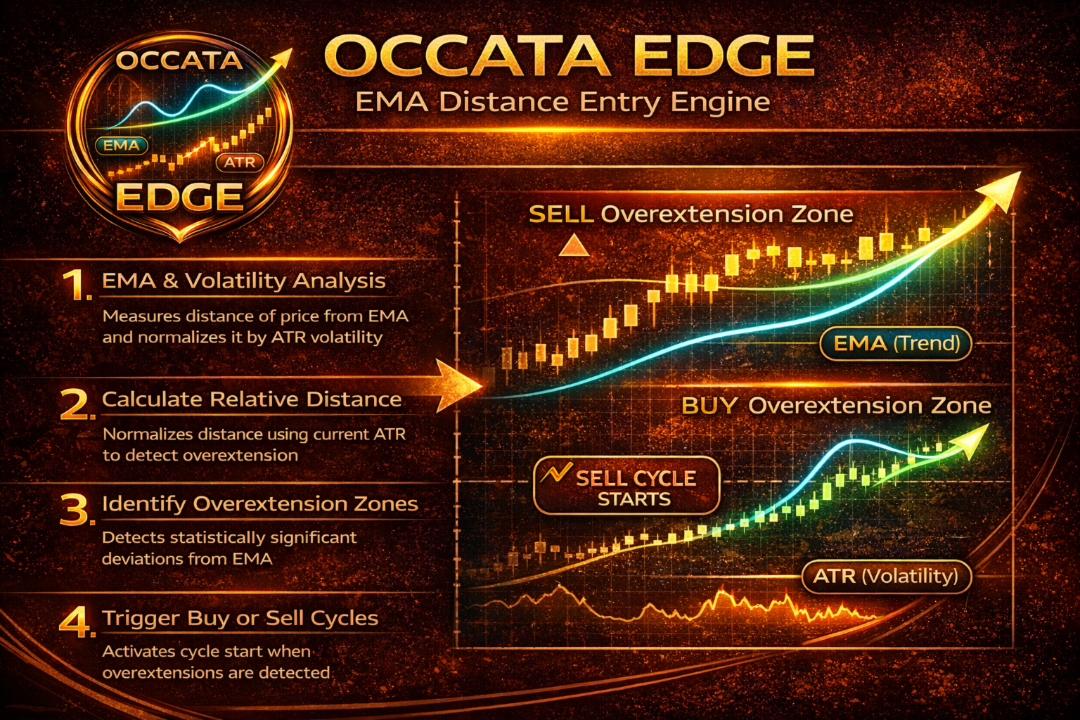
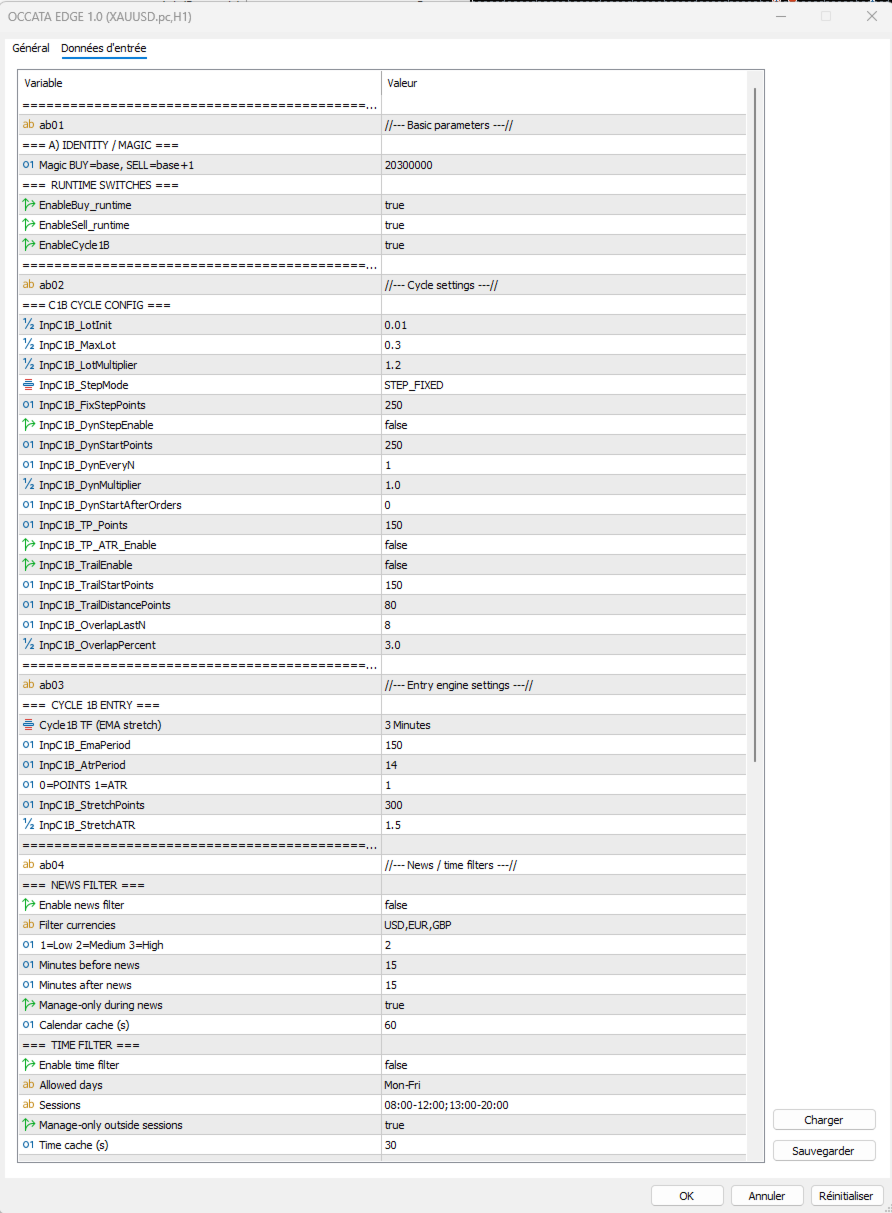
OCCATA EDGE is a specialized version of the OCCATA trading framework built around an EMA distance detection engine combined with ATR volatility analysis.
This Expert Advisor is designed to detect price overextension relative to a moving average, identifying moments where the market has moved too far from its equilibrium.
By combining trend detection through EMA and volatility measurement via ATR, the system identifies potential rebalancing zones where price may statistically revert or stabilize.
For recommended settings, installation instructions and usage tips, please contact me directly after your purchase.
System ArchitectureOCCATA EDGE retains the robust architecture of the OCCATA framework:
• EMA distance entry engine
• basket cycle management
• adaptive grid system
• global take-profit management
• drawdown reduction via overlap system
This modular structure ensures stability, flexibility, and efficient cycle management.
EMA Distance Entry EngineThe core of OCCATA EDGE is the EMA Distance Engine.
The robot continuously measures the distance between the current price and a selected Exponential Moving Average (EMA).
This distance is then normalized using ATR volatility measurements to determine whether the price deviation is statistically significant.
The system identifies two primary situations:
Price Overextension Above EMA
When price moves significantly above the EMA beyond the ATR-adjusted threshold:
→ the market is considered overextended upward
This can trigger a SELL cycle.
Price Overextension Below EMA
When price moves significantly below the EMA beyond the ATR-adjusted threshold:
→ the market is considered overextended downward
This can trigger a BUY cycle.
Signal FilteringTo avoid false signals and excessive trading, the entry engine includes several internal protections:
• volatility normalization using ATR
• minimum distance threshold from EMA
• single decision per candle logic
• market condition filtering
This ensures that trades are only triggered during meaningful deviations from equilibrium.
Basket ManagementOnce a trade is triggered, the EA starts a cycle-based basket management system.
Additional positions may be added according to the configured grid logic.
The EA calculates a weighted average entry price across all open positions and manages exits through a global basket take-profit target.
This allows the system to recover from temporary market fluctuations while maintaining a structured exit objective.
Adaptive STEP SystemOCCATA EDGE includes the Adaptive STEP system.
Instead of using a fixed grid distance, the spacing between positions dynamically adjusts according to current market volatility measured by ATR.
This allows the grid to remain coherent across different market regimes:
• tighter spacing during calm markets
• wider spacing during volatile conditions
This helps reduce excessive exposure during strong price movements.
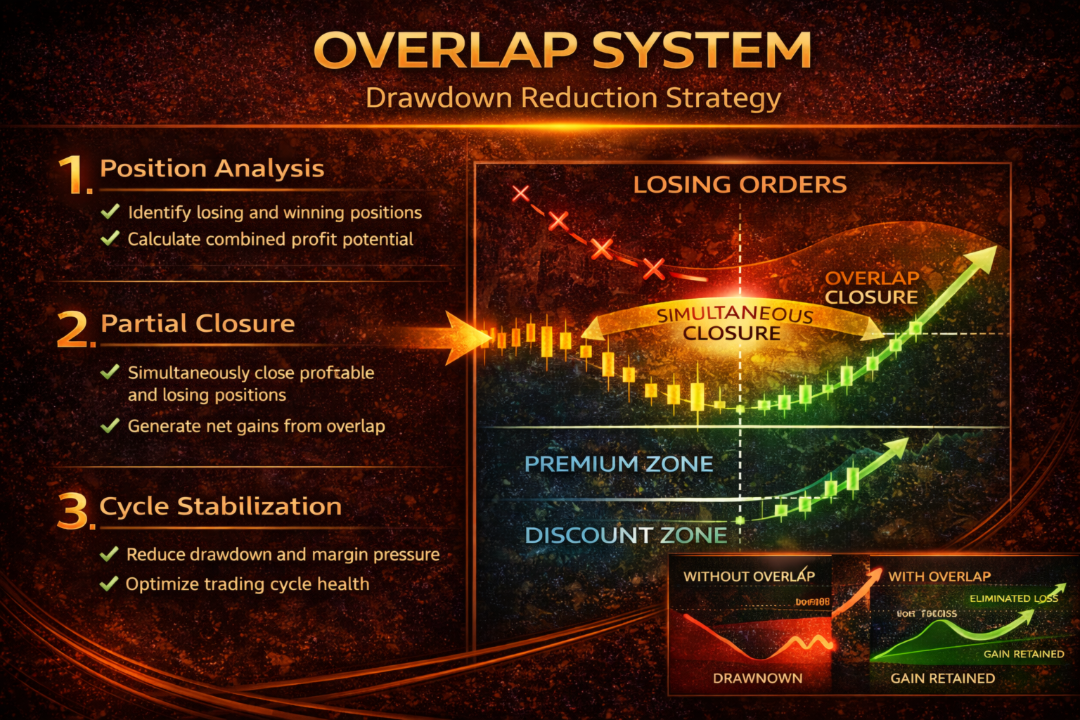
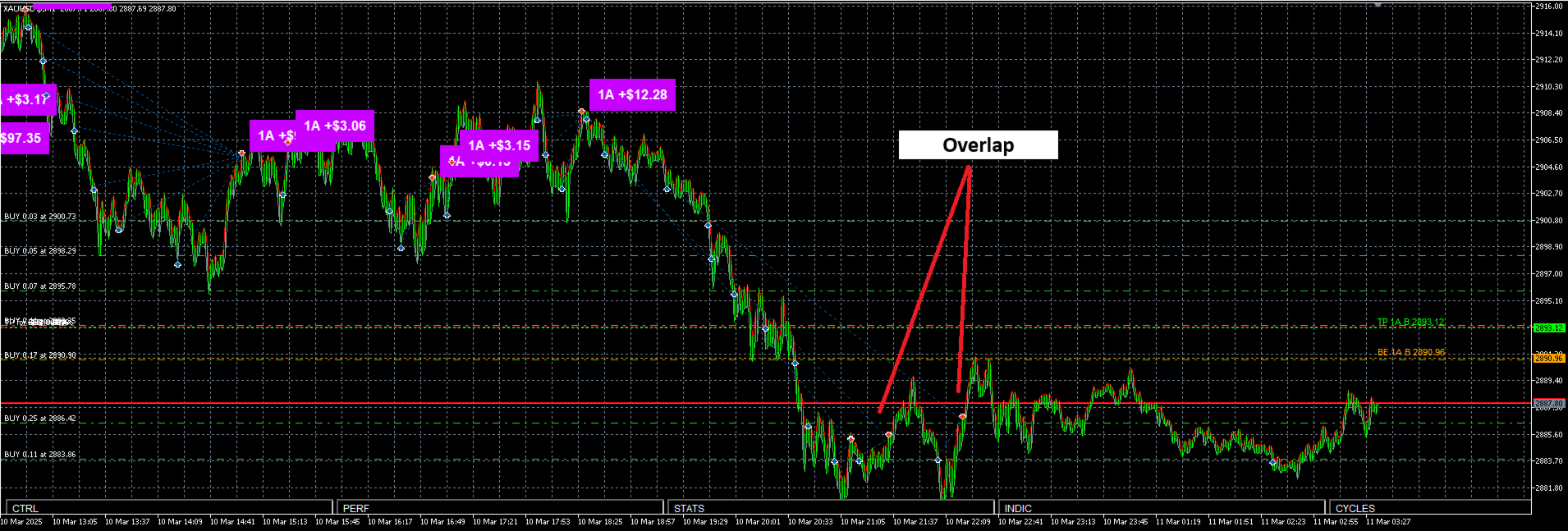
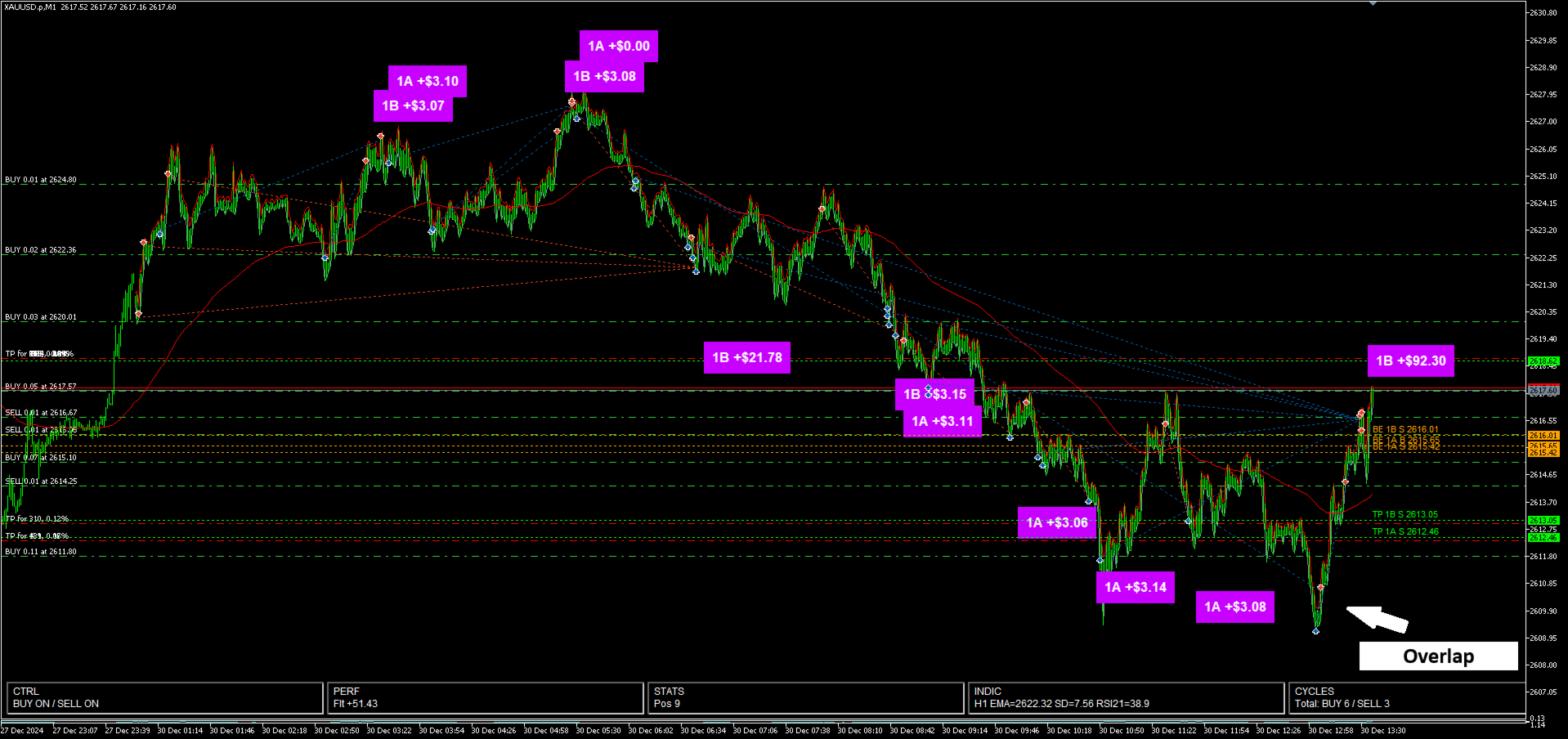
Overlap Drawdown ReductionThe EA also integrates the Overlap system, designed to actively reduce drawdown during basket cycles.
The algorithm analyzes profitable and losing positions within the cycle and may close selected combinations simultaneously to:
• reduce floating losses
• stabilize the cycle
• release margin pressure
This mechanism improves the overall resilience of the trading cycle.
Fast OptimizationBecause OCCATA EDGE focuses on a single entry engine, it offers faster optimization and clearer parameter tuning compared to multi-engine systems.
This allows traders to efficiently explore parameter combinations and adapt the strategy to different market conditions.
Recommended Account TypesOCCATA EDGE uses a basket-based trading logic with multiple positions.
For optimal execution conditions, it is recommended to use:
• ECN / PRIME accounts
• CENT accounts
These account types usually provide lower spreads and better execution quality for cycle-based strategies.
DisclaimerOCCATA EDGE is designed for automated trading and capital management but requires proper configuration and risk awareness.
Like any algorithmic trading system, performance depends on parameters, market conditions, and available capital.