Thunder Divergence
- インディケータ
- バージョン: 1.0
- アクティベーション: 10

Thunder Divergence is a multi-engine divergence indicator designed to detect high-probability reversal zones by comparing price action with underlying momentum behavior. It allows you to switch between three core engines—RSI, Momentum, and DeMarker—while normalising all outputs to a consistent 0–100 scale. This makes signals visually uniform and easier to interpret across different market conditions.
Test in strategy tester before purchase
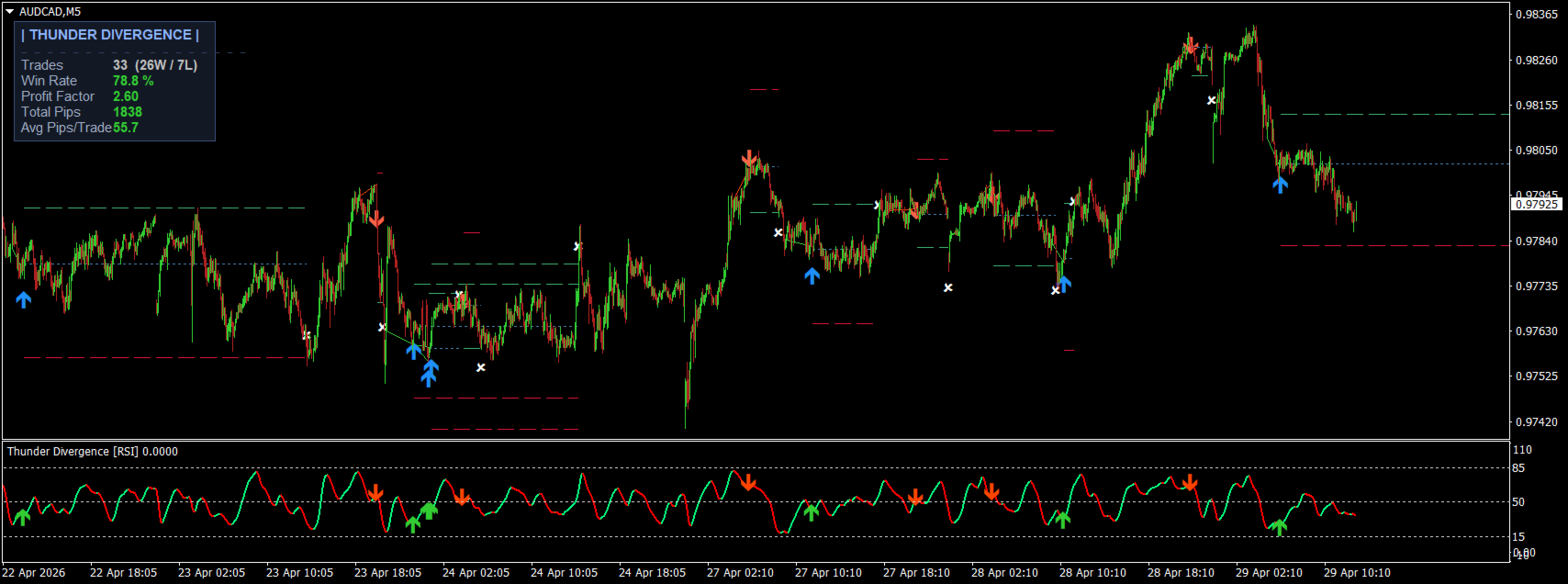
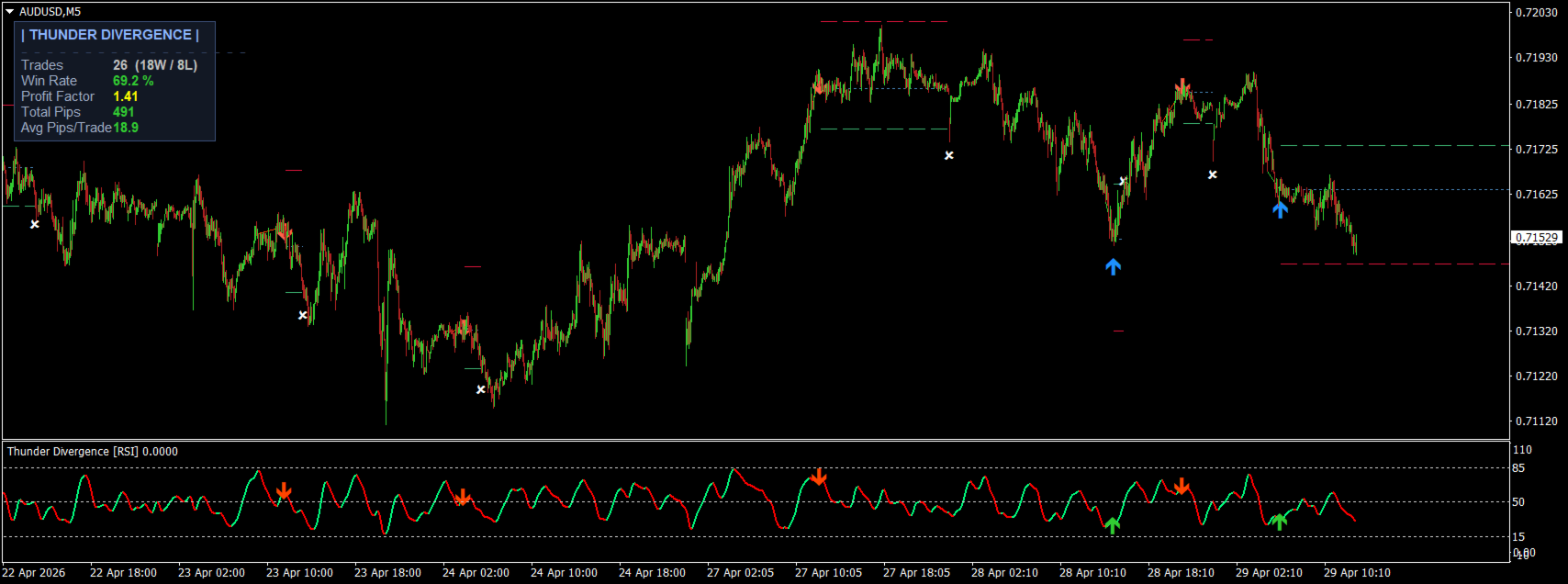
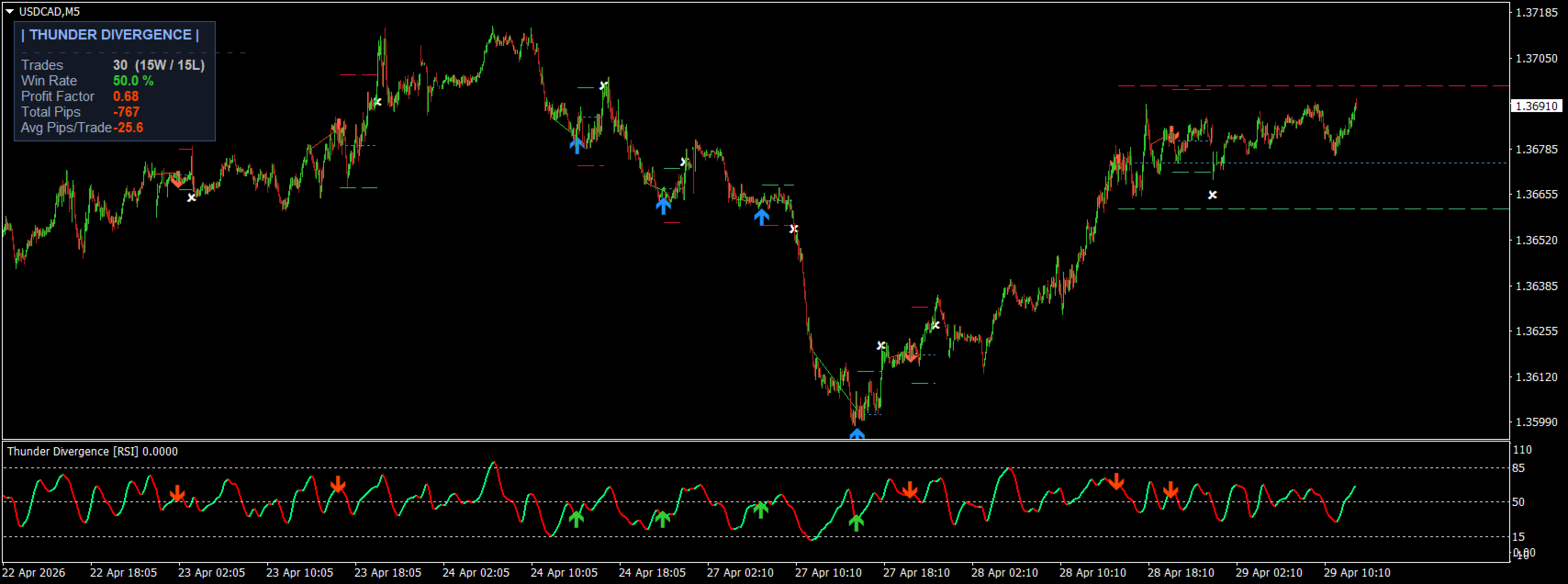
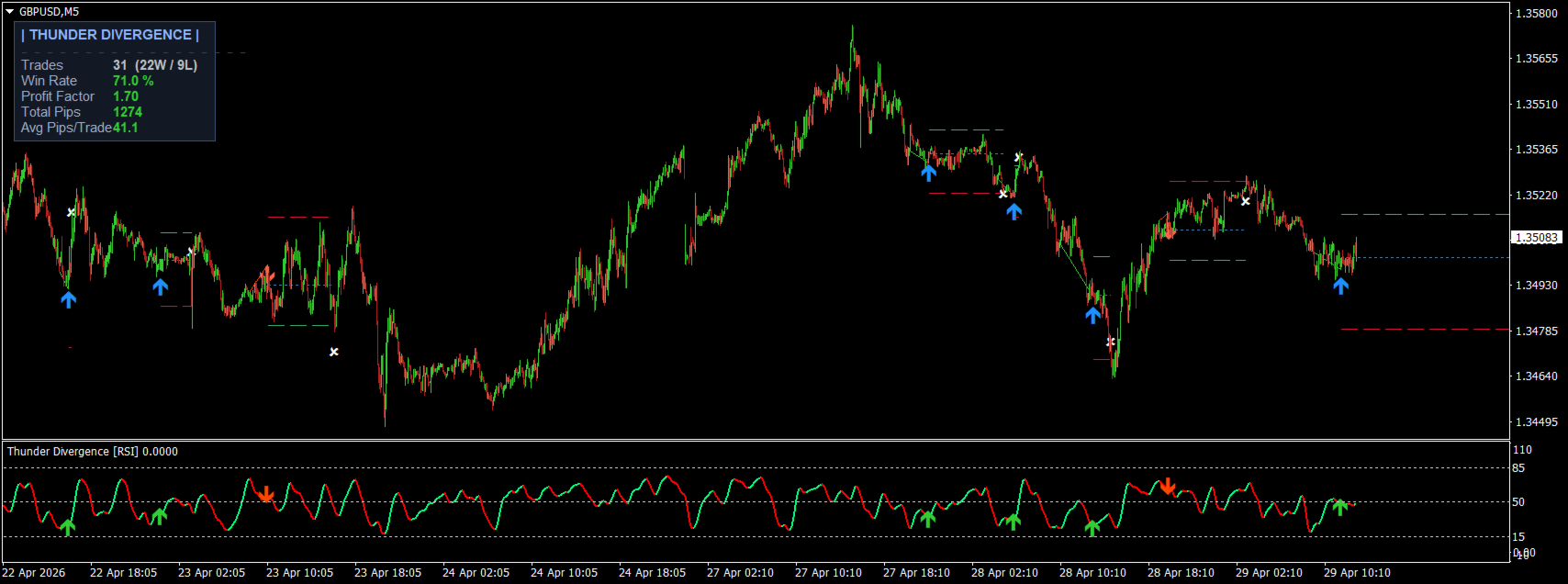
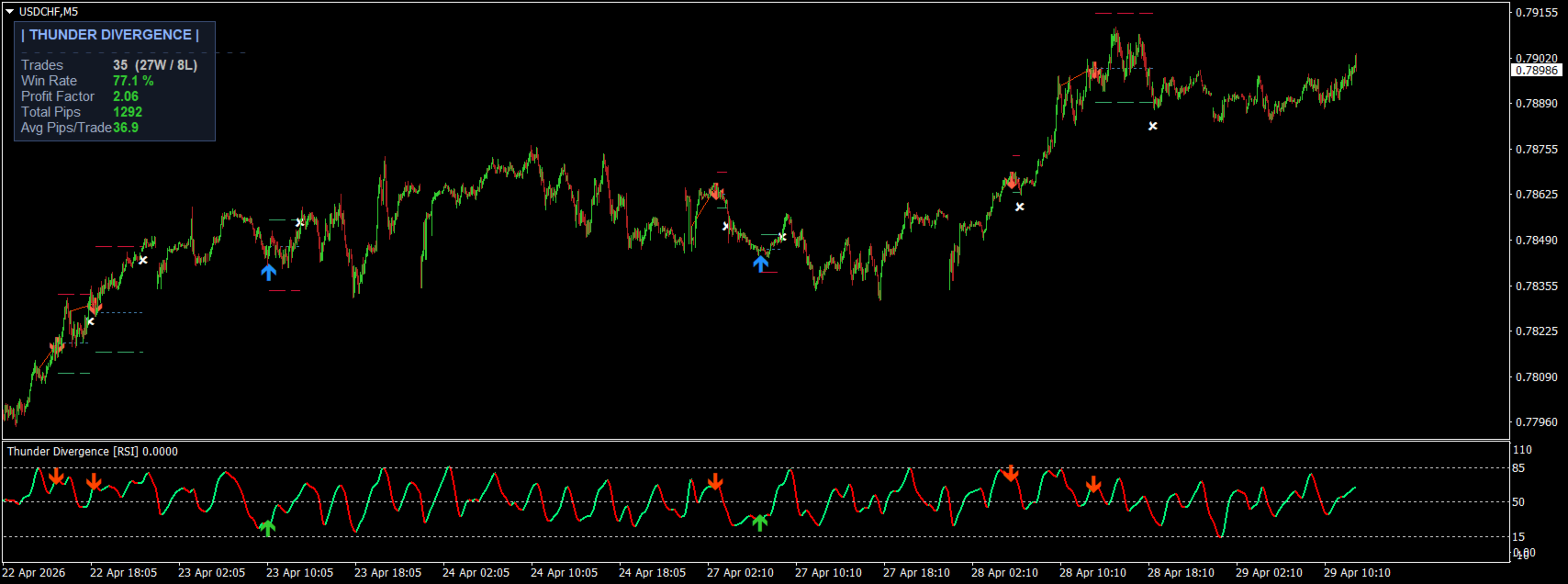
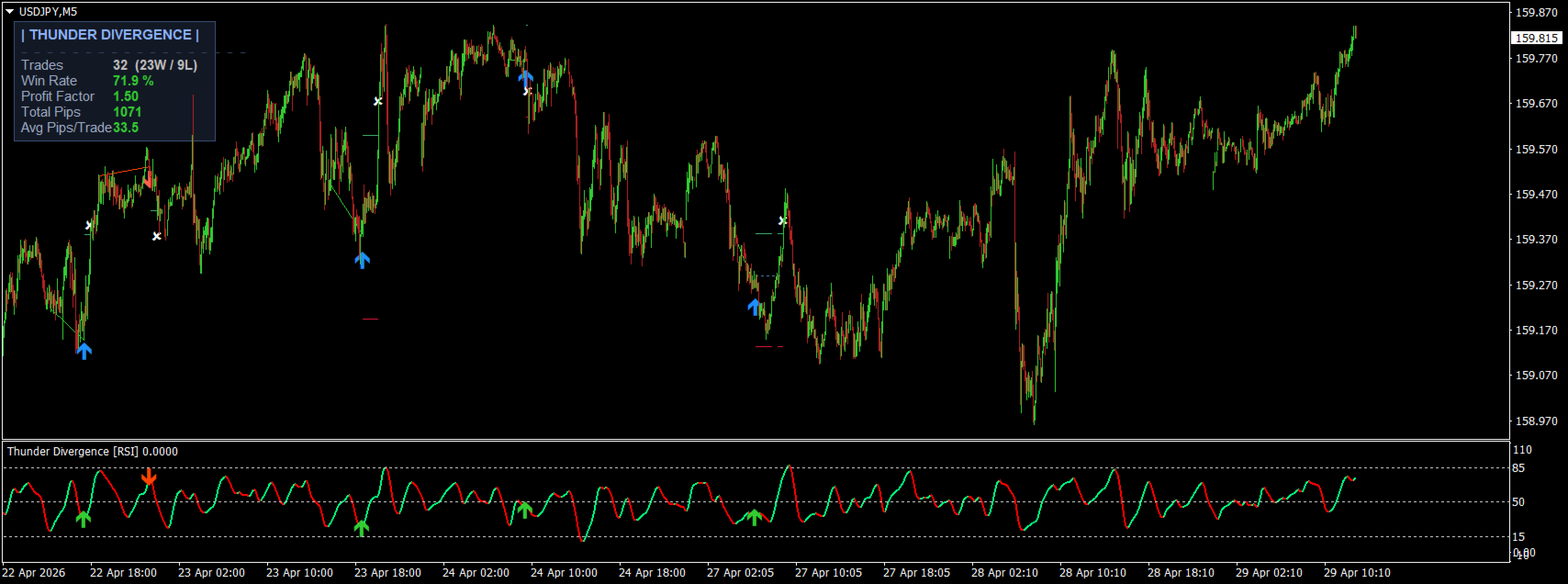
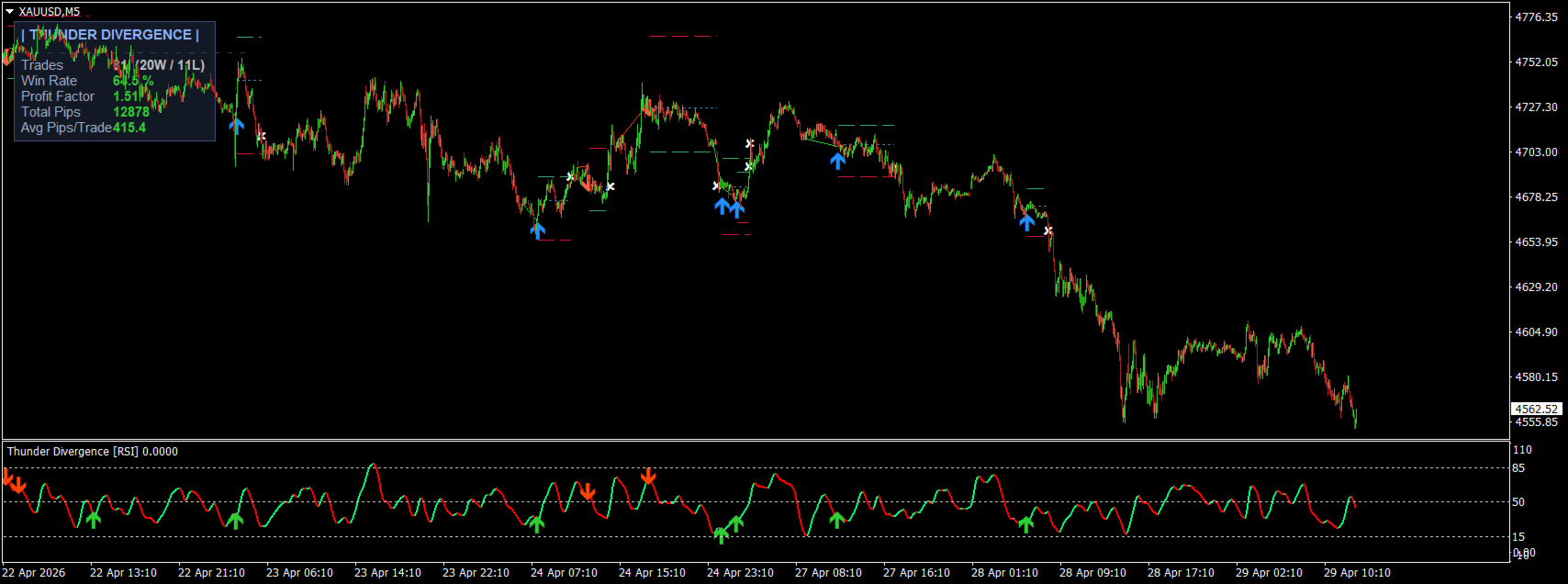
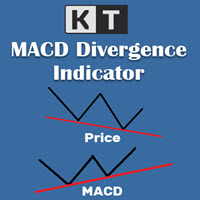
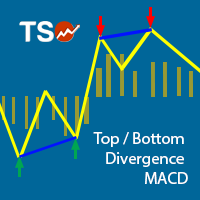
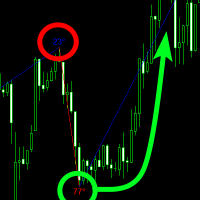
The indicator identifies classical divergence by comparing swing highs and lows in price against corresponding peaks and troughs in the selected oscillator. Bullish divergence forms when price makes a lower low while the indicator forms a higher low, suggesting weakening bearish pressure. Bearish divergence forms when price makes a higher high while the indicator prints a lower high, indicating fading bullish momentum. These signals are plotted using arrows and optional trendlines on both the chart and indicator window.
A key feature is the extreme filter, which ensures higher-quality signals by requiring the first swing to occur in overbought or oversold zones. This helps eliminate weak or mid-range divergences that often fail. You can fine-tune sensitivity using smoothing and lookback parameters, allowing adaptation to scalping or swing trading styles.
The built-in alert system notifies you of new divergence signals via popup, sound, or email. In addition, the indicator includes a trade simulation engine, which automatically tests each signal using ATR-based stop loss and take profit levels. It visually plots entries, exits, and trade paths, while a performance panel displays win rate, profit factor, and total pips—giving immediate feedback on strategy effectiveness.
How to use:
Focus on divergence signals near key support/resistance or market structure zones. Use bullish divergence for potential buy setups and bearish divergence for sells. For best results, combine with trend filters or higher timeframe bias. The simulation panel helps you quickly validate whether current settings suit your market and timeframe.