Nikkei DualSense Engine
- Uzmanlar
-
Hwang Yunhyeong
 I am a quantitative developer who has studied the trading market and traded directly for nearly 10 years.
I was not a successful trader from the beginning. - Sürüm: 2.20
- Etkinleştirmeler: 5
Why choose one side of Nikkei when you can read both?
After watching Nikkei move again and again, one thing became clear.
Markets do not simply rise or fall.
A sharp decline can suddenly find support.
A powerful rally can lose momentum within minutes.
A low can break — and immediately recover.
A high can look ready to escape — and suddenly reject.
The real challenge was never simply predicting whether Nikkei would go up or down.
The real challenge was recognizing:
Is this move continuing?
Or is the market beginning to reverse?
Then came another question.
What if that decision could be made without fear, hesitation or emotion — using the same rules every single time?
That question became:
NIKKEI DUALSENSE ENGINE v2.2It does not predict first.
It lets the market prove itself first.
A falling price is not automatically a BUY.
A rising price is not automatically a SELL.
DualSense waits.
The LONG Engine looks for:
Decline → Low Retest → Support → Rebound → Entry
The SHORT Engine looks for:
Rally → High Retest → Resistance → Reversal → Entry
Price moves first.
The market reveals its structure.
Then the engine responds.
Catch the reversal.
Not the falling knife.
Because Nikkei has two sides.
And each side deserves its own logic.
DualSense is not simply one algorithm with BUY and SELL reversed.
It contains two independent decision engines.
One is built to recognize the behavior of support after bearish pressure.
The other is built to recognize resistance after bullish pressure.
When one side of the market becomes quiet, the other engine can continue watching for its own conditions.
LONG and SHORT can operate independently.
Or together.
DualSense trades what happens AFTER the move.Many systems try to predict the beginning of a move.
DualSense takes another approach.
It first observes what the market has already done.
Then it asks:
Is the decline still accelerating?
Is the low continuing to break?
Is price starting to hold around the low?
Has the market tested the same support area repeatedly?
Is a lower wick developing?
Has an actual rebound begun?
The SHORT Engine performs the opposite analysis around market highs.
DualSense is therefore not based on one candle or one indicator.
It is built around a sequence:
Move.
Retest.
Hold.
Confirm.
Execute.
Entering is easy. Waiting is difficult.Anyone can enter a market that is moving.
The difficult part is waiting until there is a reason to enter.
DualSense turns that waiting process into code.
If the setup is incomplete, it waits.
If the move is unusually violent, it waits.
If volatility is insufficient, it waits.
If trading cost becomes unfavorable, it waits.
After taking profit, it does not immediately chase the same price again.
Additional entries also require sufficient price distance.
Because:
More opportunities do not automatically mean better opportunities.
Entry is only the beginning.One of the core components of DualSense is its Basket Management Engine.
After the first position is opened, the system continues evaluating the market.
Where is the current average entry?
Is the market still moving against the basket?
Has recovery begun?
Did price recover through the average?
Is the recovery maintaining momentum?
Has a recovery wave failed?
Has price around the average become uncertain?
The market continues changing after entry.
So DualSense continues making decisions after entry.
The basket can transition between:
Accumulation
Recovery
Uncertain
The result is not merely an entry algorithm.
It is a complete position-management process.
Profit creates another decision.Reaching profit does not mean the engine stops thinking.
DualSense includes a dedicated Profit Lock mechanism.
Once favorable movement reaches a predefined level, the system begins tracking how much of that move has been achieved and whether momentum is being lost.
The objective is not simply to automate entry.
It is to automate the decisions that come after entry as well.
It checks whether the market can actually move.A valid signal means little if the market does not have enough range.
DualSense analyzes recent higher-timeframe volatility before allowing a new basket.
It can compare the available market range with the configured target.
It also evaluates:
Absolute Spread
and
Spread Relative to Market Volatility
The engine therefore asks two questions:
Is there a setup?
and
Is this an environment where that setup can operate?
You control how selective the engine becomes.Not every trader wants the same trading frequency.
DualSense v2.2 provides independent LONG and SHORT Filter Strength controls.
Lower settings allow the engine to evaluate more opportunities.
Higher settings make the engine more selective.
You can independently adjust the personality of both sides of the system.
Fixed Lot or Compound EngineDualSense includes an optional balance-based Compound Engine.
You control:
-
Base Entry Lot
-
Compound ON / OFF
-
Compound Level
-
Compound Start Balance
-
Balance Step
-
Lot Addition per Step
Prefer fixed exposure?
Turn compound sizing off.
Prefer position size to evolve with account balance?
Enable the Compound Engine.
The choice belongs to the trader.
Automatic Order SplittingWhen the calculated target volume exceeds the broker's maximum allowed volume per order, DualSense automatically divides the requested volume into valid order sizes.
The engine calculates the target.
Then it adapts execution to the broker's volume rules.
LONG. SHORT. Everything between them.Nikkei moves fast.
And speed creates emotion.
Traders chase.
They enter too early.
They exit too quickly.
They change their plan when a position goes against them.
They chase another trade immediately after taking profit.
DualSense does not trade that way.
When Nikkei moves, it watches.
When support develops, the LONG Engine wakes up.
When resistance develops, the SHORT Engine wakes up.
When the required conditions are absent, the engine does nothing.
When the structure is complete,
it executes.
The strongest Nikkei engine I have built so far.v2.2 was not created by simply adding more indicators.
It was built by repeatedly studying how Nikkei behaves before and after short-term reversals.
The goal was straightforward:
Reduce unnecessary entries.
Demand stronger confirmation.
Manage what happens after entry.
And connect every part of the process into one system.
LONG and SHORT.
Entry and exit.
Accumulation and recovery.
Volatility and trading cost.
Fixed sizing and compound sizing.
They no longer operate as disconnected features.
They work together as one engine.
NIKKEI DUALSENSE ENGINE v2.2See both sides of the market.
Wait for confirmation.
Execute without emotion.
Two directions.
Two senses.
One engine.
Core Features
-
Designed around JP225 / Nikkei
-
Independent LONG + SHORT Engines
-
LONG / SHORT individual ON/OFF
-
Support Retest Detection
-
Resistance Retest Detection
-
Rebound Confirmation
-
Downward Reversal Confirmation
-
Wick Structure Analysis
-
Multiple Support / Resistance Touch Detection
-
Shock Move Filter
-
Higher-Timeframe Volatility Guard
-
Spread Guard
-
Controlled Additional Entry Distance
-
Average-Price Basket Management
-
Accumulation / Recovery / Uncertain Phases
-
Basket Take Profit
-
Profit Lock
-
Strategy Stop
-
Emergency Server Stop
-
Fresh-Move Re-entry Logic
-
Independent LONG / SHORT Filter Strength
-
Balance-Based Compound Engine
-
Automatic Order Splitting
-
Broker Session Protection
-
Real-Time Dashboard
Built for the movement of Nikkei.
NIKKEI DUALSENSE ENGINE v2.2
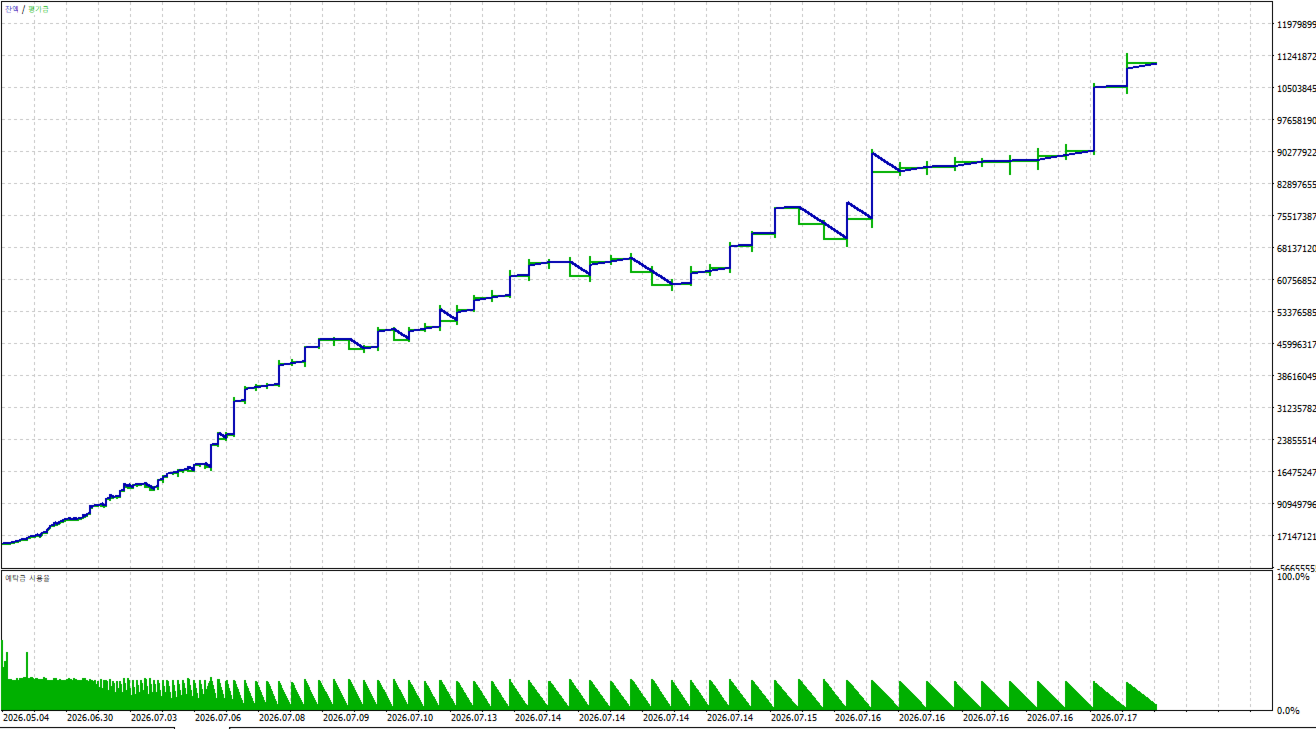
Historical Strategy Tester results do not guarantee future performance. Actual results may vary depending on market conditions, broker execution, spread, slippage and user configuration.