Rejection Candles
- Indicatori
- Versione: 1.0

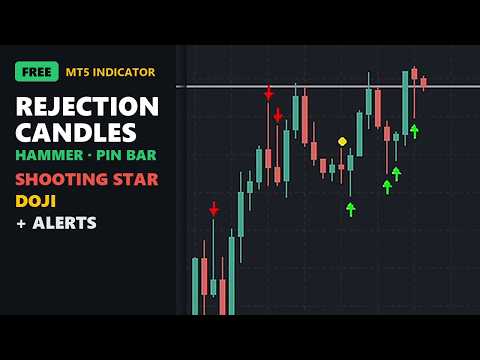
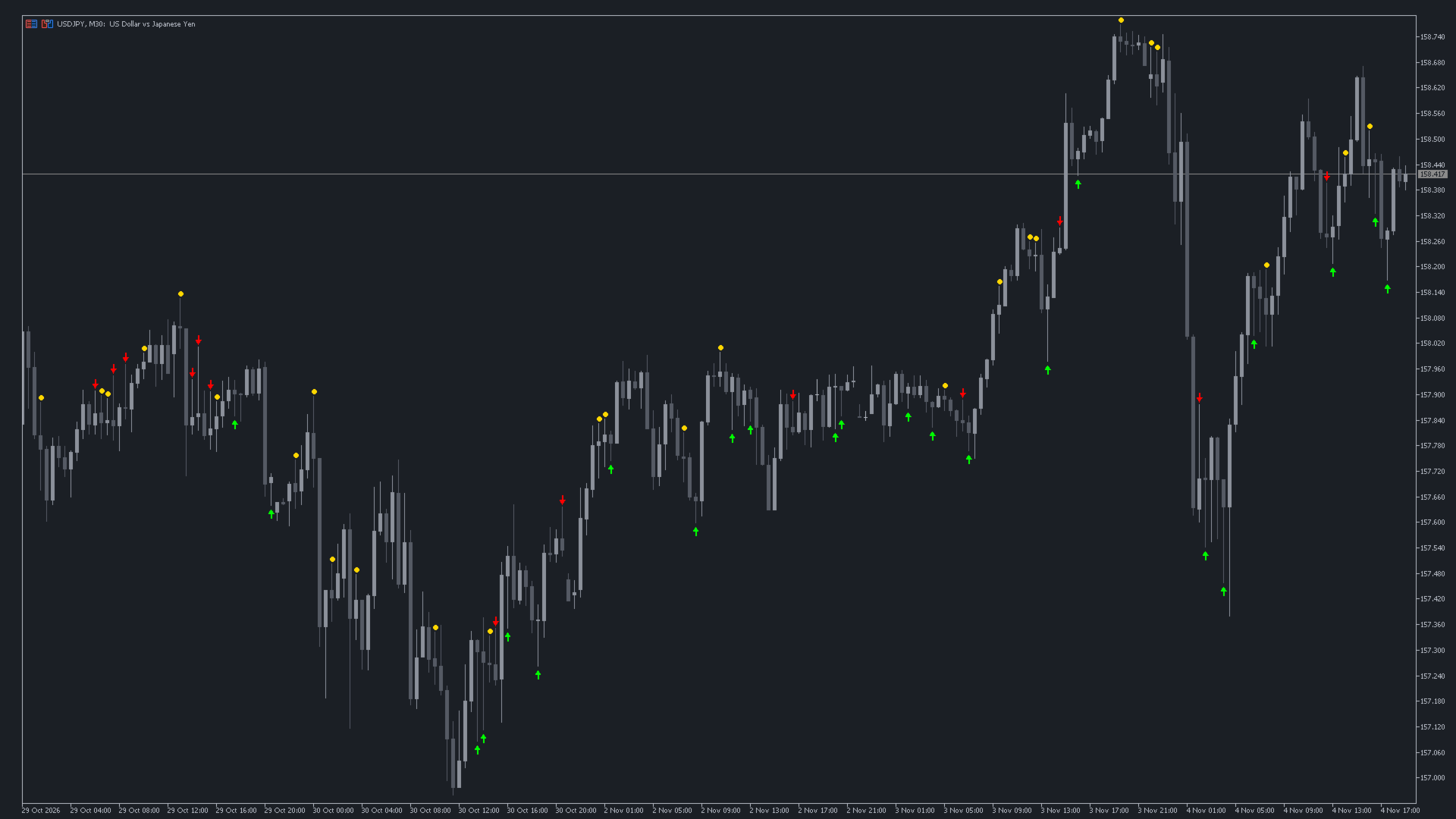
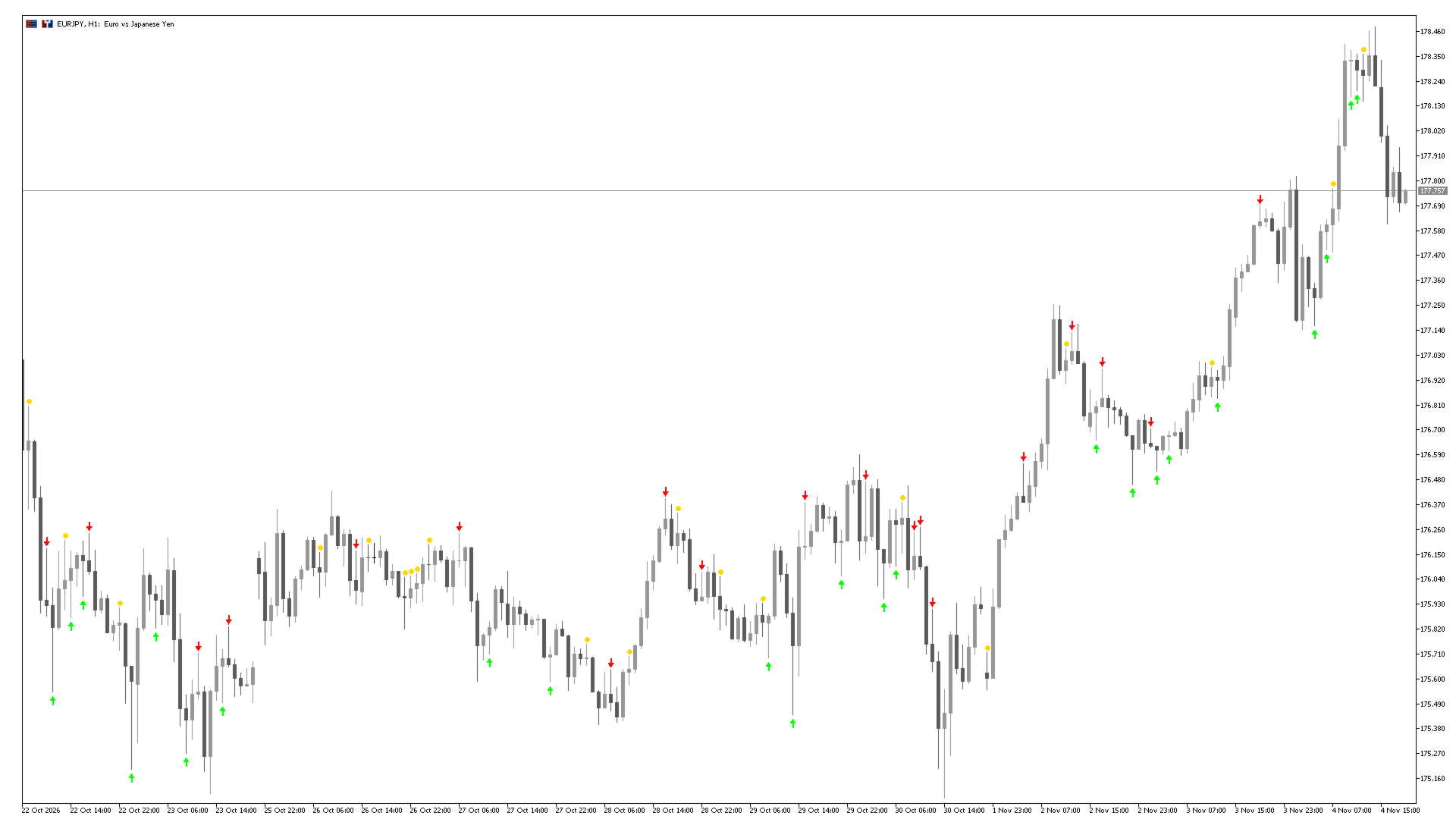
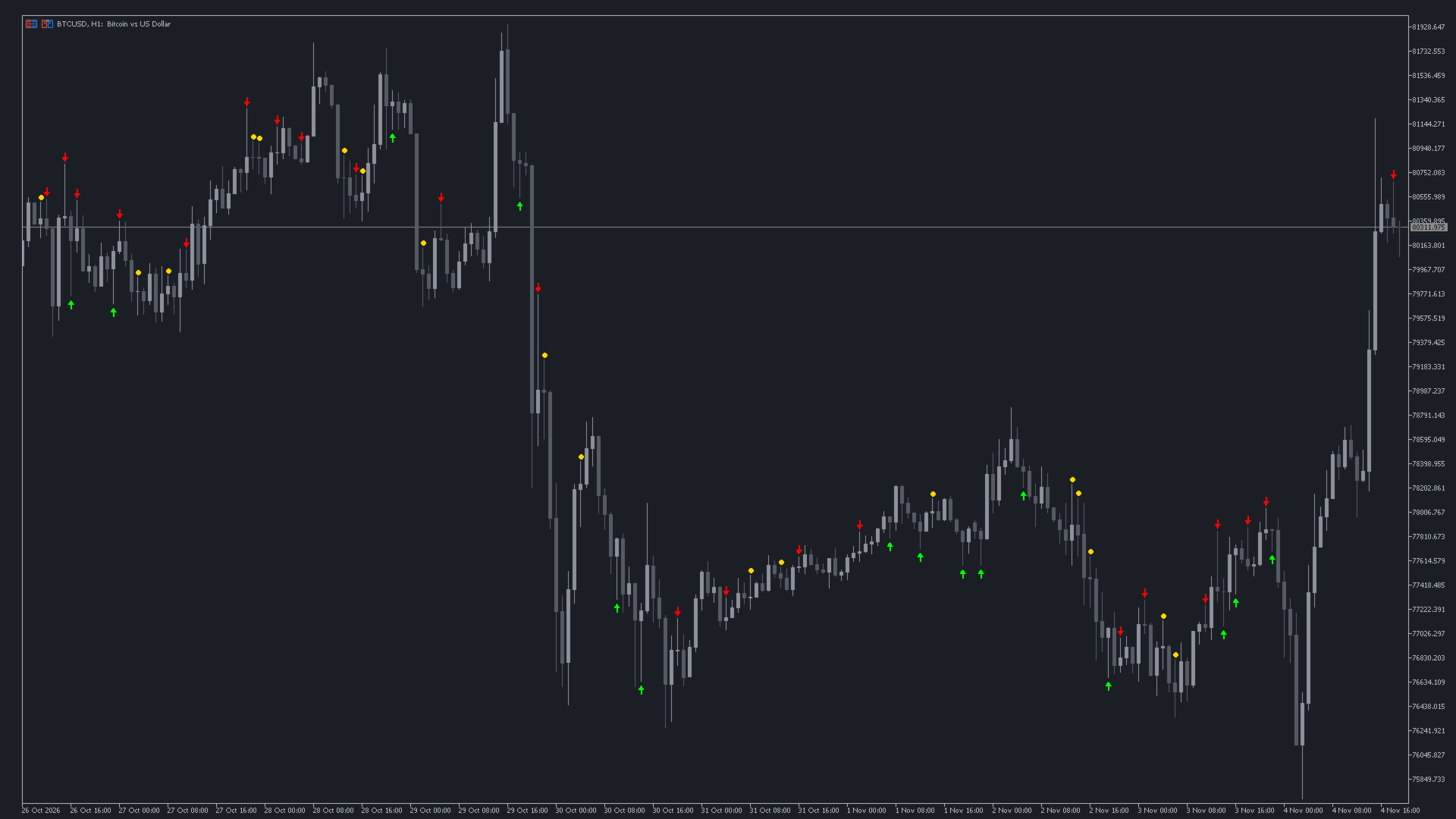
Rejection Candles marks candles where price was pushed one way and thrown back: a small body with a long wick. It works on any symbol and any timeframe.
What it marks
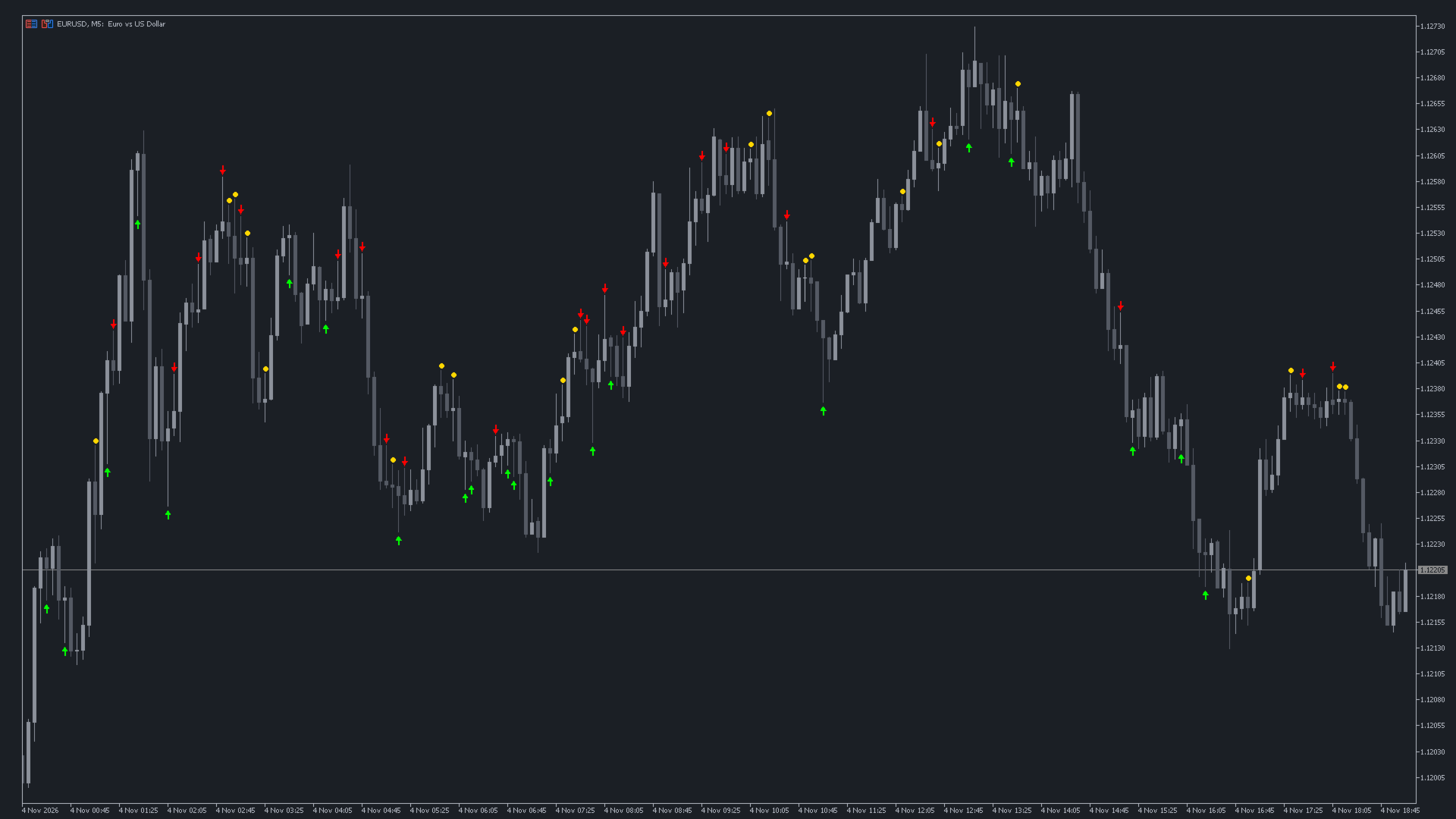
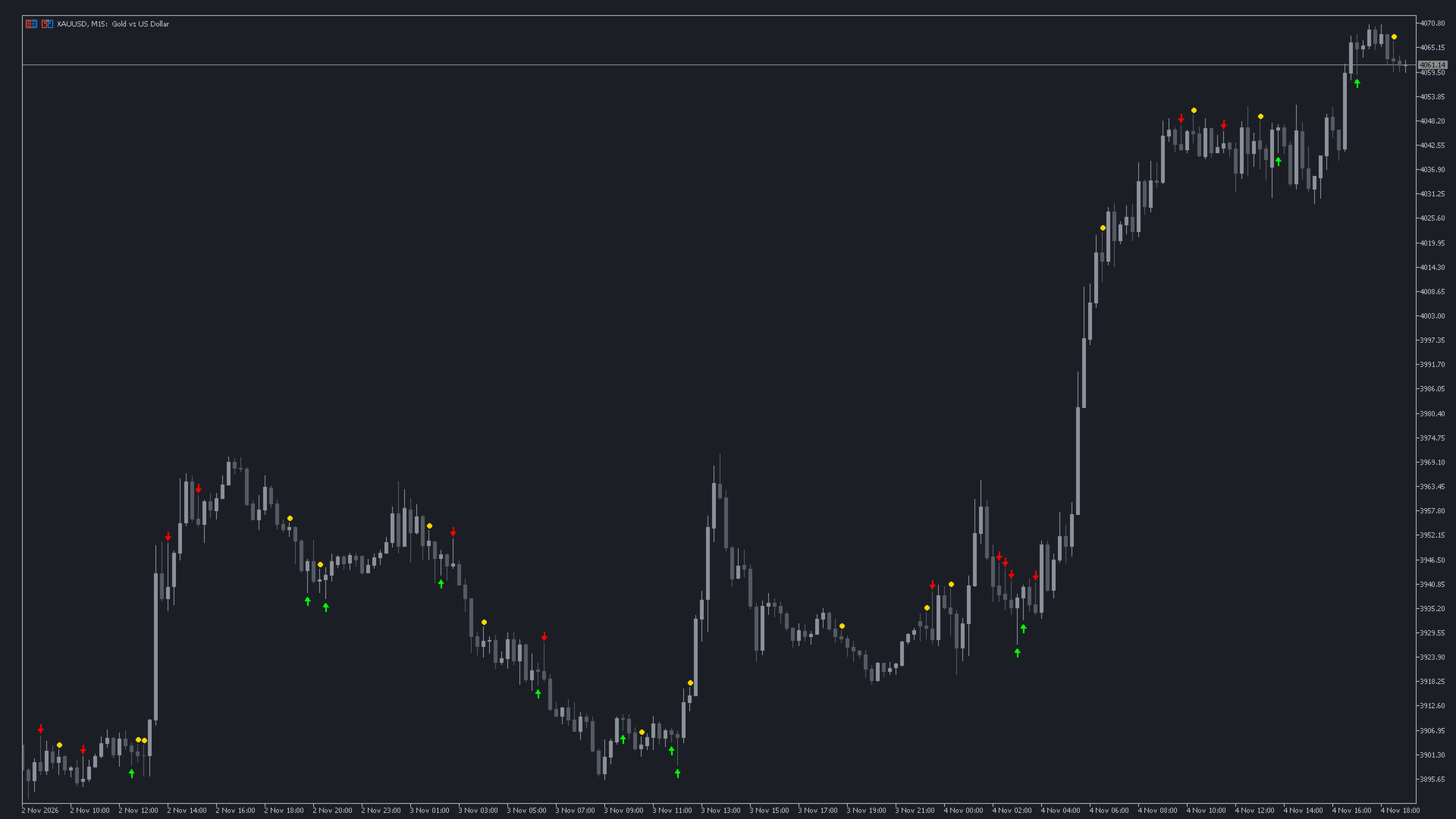
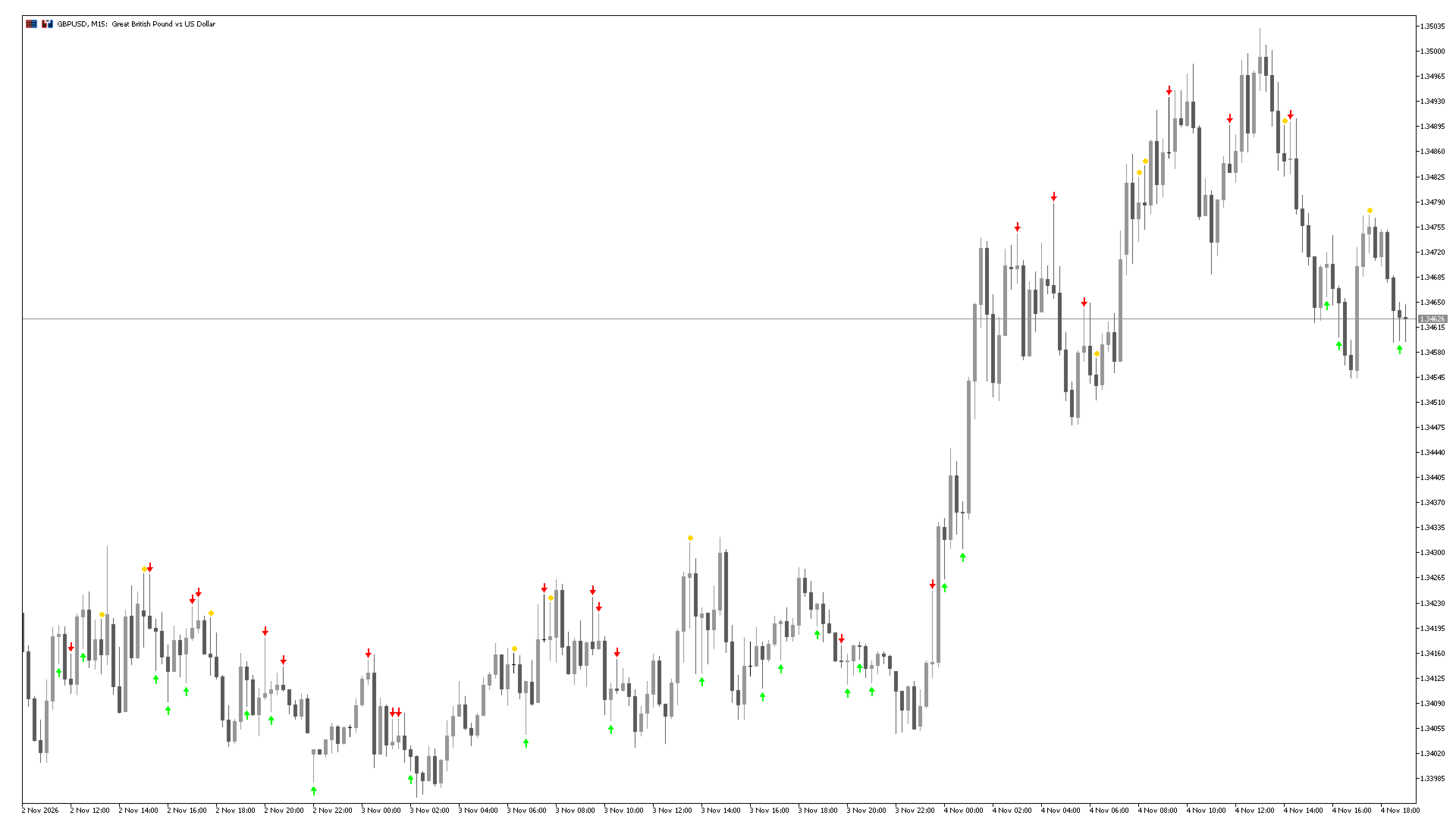
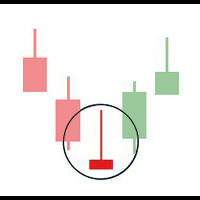
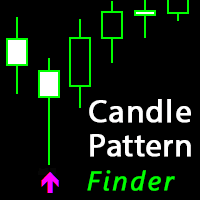
- Rejection from below (green arrow under the candle): hammer, dragonfly doji, bullish pin bar. The long wick is the lower one.
- Rejection from above (red arrow over the candle): inverted hammer, shooting star, gravestone doji. The long wick is the upper one.
- Rejection from both sides (gold dot, optional): long-legged doji and spinning top, with two long wicks.
How a candle qualifies
- A small body: at most 30% of the candle's range by default.
- A long rejection wick: at least half the candle, and at least twice the opposite wick.
- Not a tiny candle: its range must be at least half the average range (ATR) of the candles before it.
- Optional: only at a swing extreme, so a rejection from below must make a new low of the last 10 candles and a rejection from above a new high.
- Every number is an input, so you can make the rules stricter or looser.
Alerts
- Pop-up, sound, push notification to your phone and e-mail, once per new marked candle.
- The alert names the pattern, for example: EURUSD M5: rejection from BELOW - Hammer / pin bar.
Good to know
- Only closed candles are marked, so an arrow never appears or disappears while a candle is forming.
- It runs light on many charts at the same time.
- It works on dark and light chart themes, and follows the chart as you scroll and zoom. Arrow size, distance and colours are adjustable.
- The indicator is free. It does not open or manage trades.
- It has no output buffers and draws no chart objects that other programs can read.
- It does not calculate in the Strategy Tester's non-visual mode. Use it on a chart, or in the tester's visual mode.
- Rejection Candles Pro adds confirmation by Stochastic, a moving average and the next higher timeframe's trend.
- A rejection candle shows where price was turned back. It is not a prediction that price will keep moving that way. Use it together with your own analysis and risk management.