Push Scalping
- Indicators
-
Lam Tran
 Thanks for your interest in "Marsu Signal”
 - Version: 1.30
- Activations: 5
Push Scalping - Indicator for MetaTrader 5
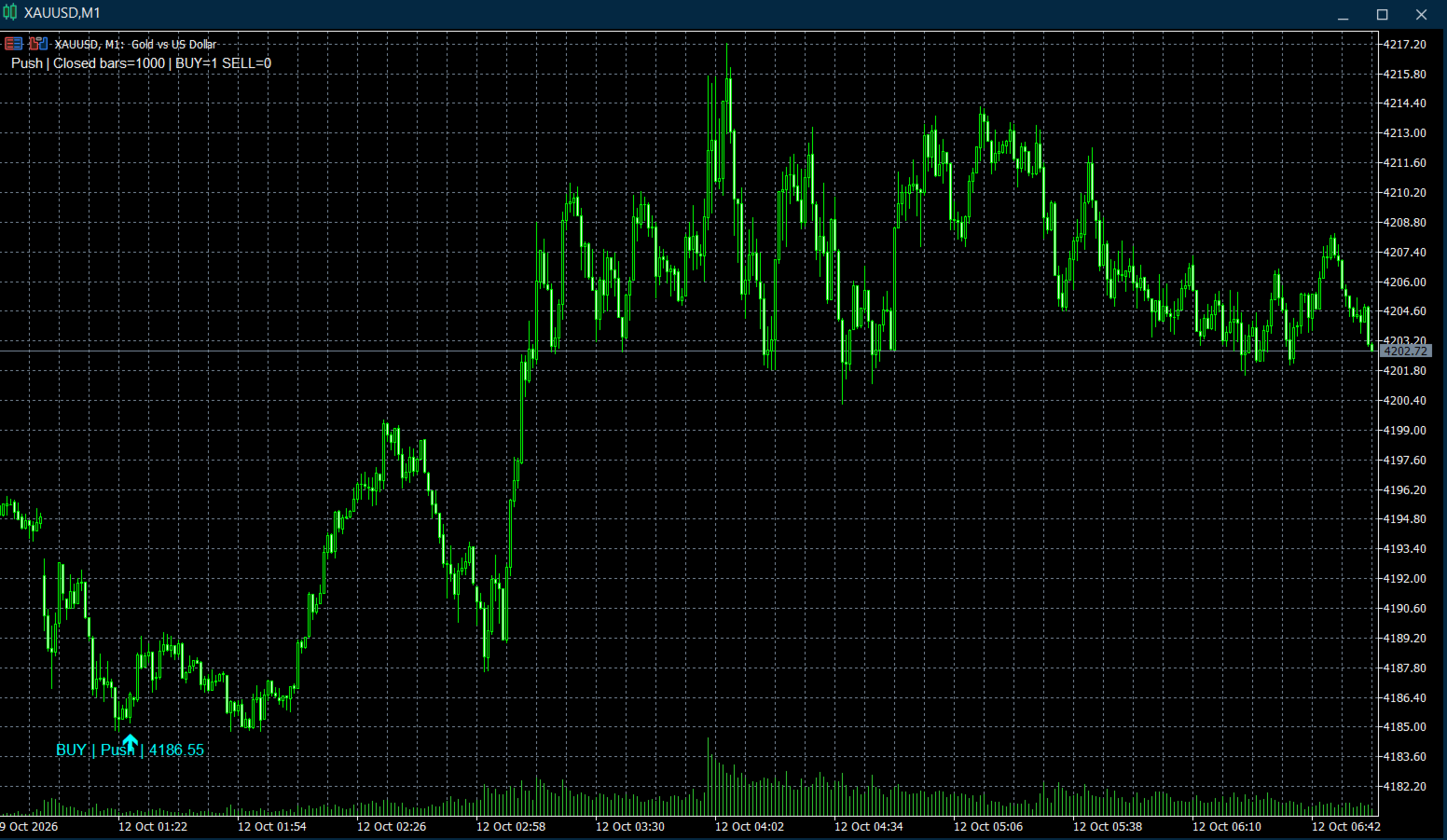
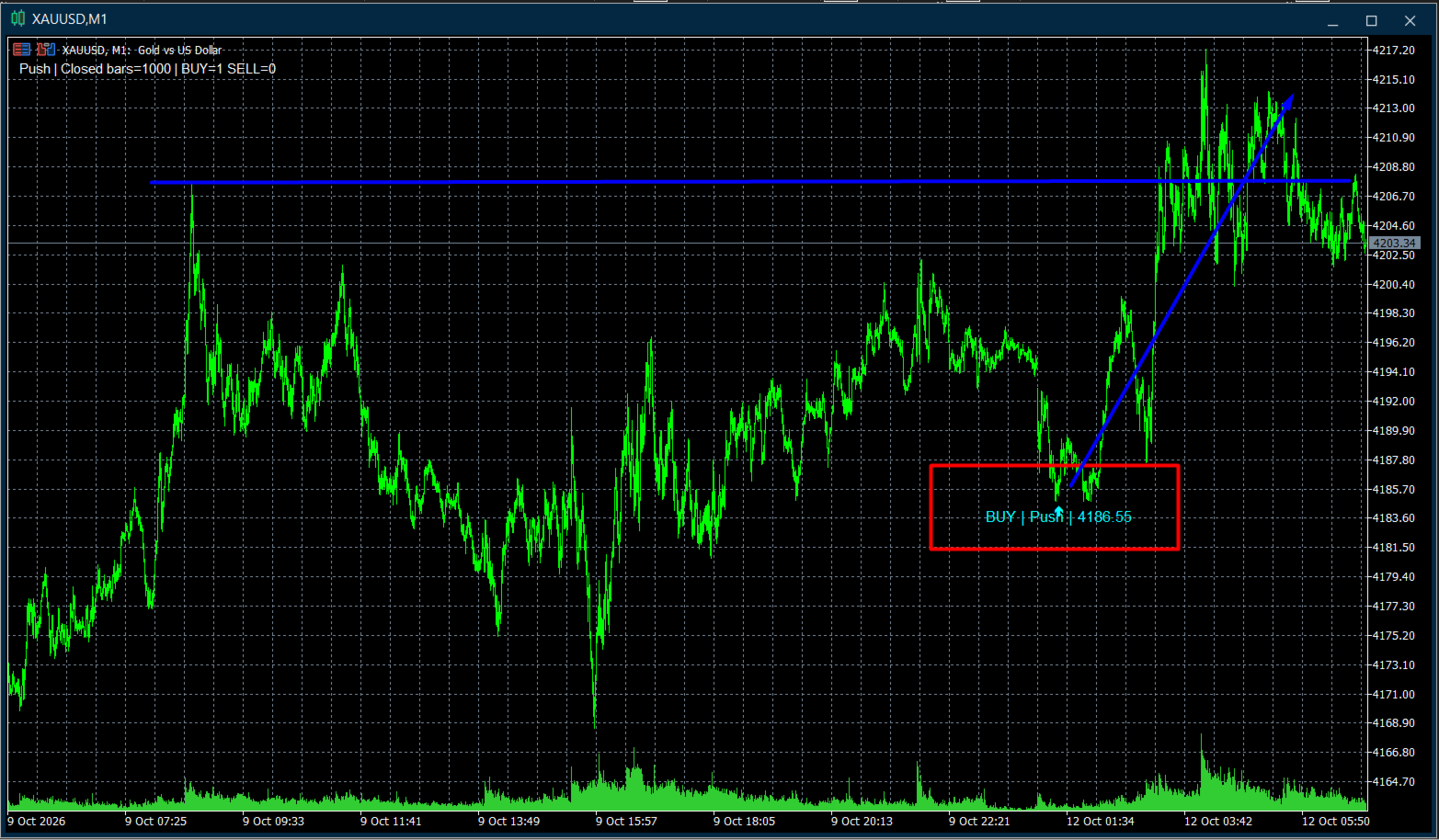
Push is an indicator that helps identify BUY/SELL signals on MetaTrader 5, combining reversal conditions with the Push signal set. The signal only appears when the system confirms a closed candle and is displayed directly on the price chart.
Overview
Push Scalping is designed to assist in observing short-term reversal setups through the consensus between momentum, structure, and the Push filter.
Push Scalping was developed in the context of use with XAUUSD. The indicator uses data from the symbol and the timeframe attached to the chart; its effectiveness on each market and timeframe needs to be tested individually.
Push Scalping was developed in the context of using scalping with XAUUSD on the m1, m5, or m15 timeframes; its effectiveness on each market and higher timeframes needs to be tested individually.
Confirmation on Closed Candle:
The indicator does not signal on a running candle. Condition checking occurs after the candle is complete, avoiding the use of temporary signals that may change during candle formation.
This is not a guarantee that all historical data will remain constant in all situations. Broker data editing, history reloading, or input changes may cause the indicator to recalculate results.
Instructions for use:
Install the indicator into the Indicators folder of MT5.
Apply Push Scalping to the chart you want to monitor.
Wait for the indicator to finish calculating the history.
Select the appropriate Push filter and history range.
Observe the signal on the closed candle.
Enable alerts if you need to monitor without constantly looking at the chart.
The displayed history is the history of valid signal conditions, not the history of executed orders or profit reports.
Limitations and Risk Warnings:
Push Scalping is an analytical and decision-making support tool, not an automated trading EA.
The indicator does not guarantee profits, win rates, or eliminate market risk. Results depend on data, market conditions, timeframes, transaction costs, and the user's risk management practices.