Forex Market Gap Trading
How i can increasing gap trading for 1 minute trading for Binary Market. In live market there have lots of gap in 1 min chart. I want to trade in Binary option live market for 1 minute candle. What will be the strategy for it?
Files:
Screenshot_2025-07-22_165740.png
16 kb
- Cheap VPS for the best forex trading experience - VPS for MetaTrader 4/5
- Problem statement
- Collateral Symbols - For Advanced Users - Trading Operations
In my personal opinion there are no strategy for it.
Gaps on 1 minute timeframe, like all on your charts, are too little to be traded and you can't make a profit from them at the net of spread and commission.
You should focus on bigger gaps, at least 4-5 times of what you pay for commissions, in that case it can become interesting.
1 min gap would most probably be a waste of time ,too small . Market open gap is more viable but the fact you are talking one minute sounds like you want action so you probably wouldn't have the patience for opening market gap .
Victor Paul Hamilton #: 1 min gap would most probably be a waste of time ,too small . Market open gap is more viable but the fact you are talking one minute sounds like you want action so you probably wouldn't have the patience for opening market gap .
I did a script that shows the daily open price gappage.
I will fix the labels. There a nice feature as it tells you how big the gap is but there a little hard to see
#property copyright "Copyright 2025 Jason Smith."
#property version   "1.0"
#property indicator_chart_window
#property script_show_inputs

//--- Inputs
input int      lookbackDays = 10;       // Days to analyze (1-20)
input int      lineWidth = 1;          // Line thickness (1-5)
input bool     showLabels = true;      // Show gap size labels
input color    gapUpColor = clrGreen;  // Color for gap-up zones
input color    gapDownColor = clrRed;  // Color for gap-down zones

//+------------------------------------------------------------------+
//| Initialization                                                   |
//+------------------------------------------------------------------+
int OnInit()
{
   IndicatorSetString(INDICATOR_SHORTNAME, "GapLevels(" + string(lookbackDays) + ")");
   return INIT_SUCCEEDED;
}

//+------------------------------------------------------------------+
//| Deinitialization                                                 |
//+------------------------------------------------------------------+
void OnDeinit(const int reason)
{
   DeleteObjectsByPrefix("Gap_");
}

//+------------------------------------------------------------------+
//| Main calculation                                                 |
//+------------------------------------------------------------------+
int OnCalculate(const int rates_total,
                const int prev_calculated,
                const datetime &time[],
                const double &open[],
                const double &high[],
                const double &low[],
                const double &close[],
                const long &tick_volume[],
                const long &volume[],
                const int &spread[])
{
   if (prev_calculated == rates_total)
      return rates_total;

   DeleteObjectsByPrefix("Gap_");

   for (int day = 1; day <= lookbackDays && day <= 20; day++)
   {
      double prevClose = iClose(NULL, PERIOD_D1, day);
      double todayOpen = iOpen(NULL, PERIOD_D1, day - 1);
      if (prevClose == 0 || todayOpen == 0)
         continue;

      double gapSize = todayOpen - prevClose;

      if (gapSize > 0)
         DrawGapLevel(day, prevClose, todayOpen, gapUpColor, "Up");
      else if (gapSize < 0)
         DrawGapLevel(day, prevClose, todayOpen, gapDownColor, "Down");
   }

   return rates_total;
}

//+------------------------------------------------------------------+
//| Draw gap zone rectangle and label                                |
//+------------------------------------------------------------------+
void DrawGapLevel(int day, double prevClose, double todayOpen, color clr, string type)
{
   string prefix = "Gap_" + IntegerToString(day) + "_" + type + "_";
   datetime startTime = iTime(NULL, PERIOD_D1, day);
   datetime endTime = iTime(NULL, PERIOD_D1, day - 1);

   // Rectangle for gap
   string rectName = prefix + "Zone";
   if (ObjectCreate(0, rectName, OBJ_RECTANGLE, 0, startTime, prevClose, endTime, todayOpen))
   {
      ObjectSetInteger(0, rectName, OBJPROP_COLOR, clr);
      ObjectSetInteger(0, rectName, OBJPROP_BGCOLOR, clr);
      ObjectSetInteger(0, rectName, OBJPROP_WIDTH, lineWidth);
      ObjectSetInteger(0, rectName, OBJPROP_BACK, true);
      ObjectSetInteger(0, rectName, OBJPROP_FILL, true);
   }

   // Label for gap size
   if (showLabels)
   {
      string labelName = prefix + "Label";
      double gapSize = todayOpen - prevClose;
      string text = "Day " + IntegerToString(day) + ": " + (gapSize > 0 ? "+" : "") + DoubleToString(gapSize, _Digits);

      if (ObjectCreate(0, labelName, OBJ_TEXT, 0, endTime, (prevClose + todayOpen) / 2))
      {
         ObjectSetString(0, labelName, OBJPROP_TEXT, text);
         ObjectSetInteger(0, labelName, OBJPROP_COLOR, clr);
         ObjectSetInteger(0, labelName, OBJPROP_ANCHOR, ANCHOR_CENTER);
      }
   }
}

//+------------------------------------------------------------------+
//| Delete all objects with specific prefix                          |
//+------------------------------------------------------------------+
void DeleteObjectsByPrefix(string prefix)
{
   int total = ObjectsTotal(0);
   for (int i = total - 1; i >= 0; i--)
   {
      string name = ObjectName(0, i);
      if (StringFind(name, prefix) == 0)
         ObjectDelete(0, name);
   }
}
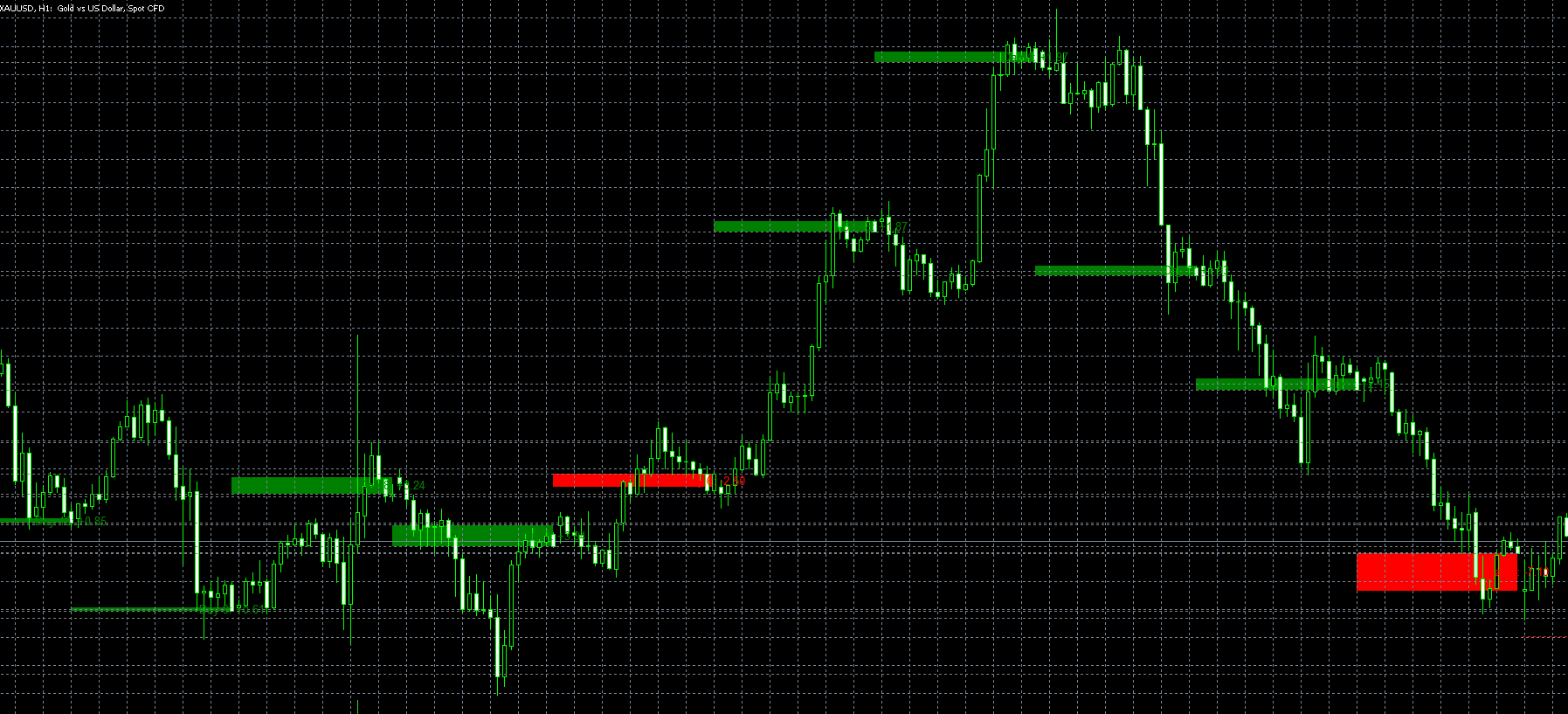
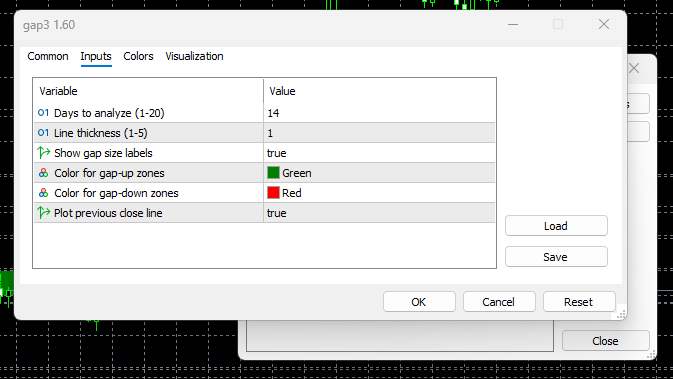
The script doesn’t really apply to the 1-minute gap idea.
Its so you can see the gap easier at market open. M1
In the OP's pic, 6 intraday price gaps are manually shown, and the OP is trading M1 binary FX option contracts. Therefore, this is not a market open strategy.
In my experience, binary FX options included a 30 second trading lockout immediately prior to contract expiration, i.e., the last half of the M1 bar is untradeable. If this is the case here, it could present a problem for scalping the close of any bar--even if liquidity is high and spread is low.

You are missing trading opportunities:
- Free trading apps
- Over 8,000 signals for copying
- Economic news for exploring financial markets
Registration
Log in
You agree to website policy and terms of use
If you do not have an account, please register