Todas as encomendas
 Regras
Termos de Referência
Below is a detailed breakdown of how the “volume-spike reversal” Expert Advisor (EA) operates based on the demonstration, along with an outline for how a developer might implement it. It is organized into sections covering the robot’s logic, inputs, confluences, trade management, and important considerations.
1. OVERVIEW OF THE ROBOT
-
Core Principle
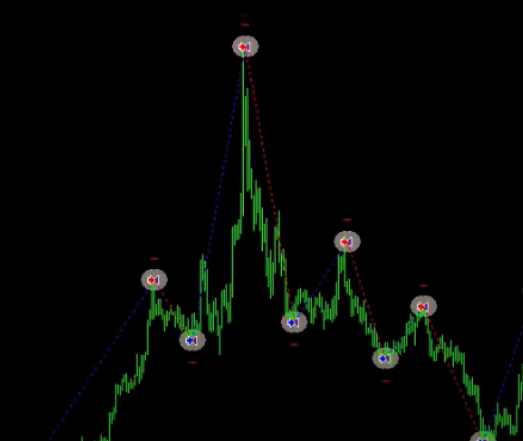
- The EA detects massive one-off volume spikes in tick data that signal large institutional orders (often from governments, central banks, etc.).
- These large orders come in suddenly and can quickly reverse an ongoing trend.
-
High Accuracy Reversal Detection
- The robot seeks to consistently catch turning points with a nearly 100% accuracy rate in backtests.
- It pairs volume spikes with other confluence factors (e.g., support/resistance, trendlines, channel lines).
- Because entries can be extremely precise, it often trades with very tight stop-losses (or exits upon the next reversal signal in some cases).
-
Continuous (Always-in-the-Market) Trades
- The EA immediately reverses position when a new spike-based reversal is detected.
- One trade’s exit is effectively the next trade’s entry—so the robot flips between buy and sell signals continuously.
-
Small Account, High Return Potential
- The demonstration showed how even a 0.1-lot size on a $100 account could yield significant returns over a short period, given ideal conditions.
- Real-world caution: This is highly broker- and feed-dependent, but it highlights the potential for a high R:R ratio when executed properly.
-
Time-of-Day & Broker Data
- The EA relies on a high-speed broker feed with reliable, consistent volume data.
- Large orders (and thus volume spikes) often appear during high-liquidity sessions or news events.
- Part of the approach involves filtering trades to only be taken when large institutional orders are more likely.
2. LOGIC FOR DETECTING REVERSALS
2.1 Volume Spike Detection
- The EA monitors tick-by-tick volume changes (rather than standard candlestick volume alone).
- When a sudden, large single-tick volume jump is detected (significantly larger than average), the EA flags a potential reversal signal.
- Implementation Detail:
- Maintain a rolling average or threshold of typical tick volume.
- Compare each new tick’s volume to the threshold; if it exceeds by a multiple (e.g., 2×, 3×, 5×), trigger an alert.
2.2 Price Spike / Candlestick Pattern Confirmation
- Large institutional orders often create a spike candle (or effectively two opposing candles back-to-back).
- The EA checks for sudden intra-candle (tick-level) movements in the opposite direction of the current trend.
- Implementation Detail:
- Observe if, within the last few ticks, price travels a sizable distance in the opposite direction.
- Merge or analyze short-term tick data to detect the formation of a large wick.
2.3 Confluence with Other Technical Factors
- The EA looks for additional reversal cues that line up with the volume spike:
- Support/Resistance Zones (horizontal or diagonal).
- Trendline Bounces or Channel Boundaries.
- Pivot Points (optional).
- Implementation Detail:
- The EA can auto-calculate or store known S/R levels.
- If the sudden spike occurs near a support or resistance level, it adds confidence to the signal.
2.4 Time-of-Day Filter (Optional)
- Large-volume institutional moves often cluster around major session opens or scheduled news releases.
- Implementation Detail:
- Allow the EA to only trade within specified hours (e.g., London open, New York overlap).
3. TRADE ENTRY LOGIC
-
Identify Current Trend
- The EA needs to know whether the market is in an uptrend or downtrend, often via moving averages or by reference to the last open trade.
-
Volume/Price Spike Trigger
- Once the EA detects a volume spike “contradicting” the current trend, it checks for confluences.
- If confluences are met, it prepares to reverse position.
-
Enter Trade
- Close any open position that’s in the opposite direction.
- Open a new position in the direction indicated by the big order flow (the volume spike).
-
Stop-Loss Placement
- Some demonstrations show a tight, fixed or ATR-based stop-loss just beyond the spike candle’s wick.
- Alternatively, the strategy can exit only on the next reversal signal, relying less on a traditional SL.
- Implementation Detail:
- Option A: Hard-coded small SL placed just beyond the spike’s high/low.
- Option B: No SL, exit on next reversal signal.
- Option C: ATR-based SL (e.g., 0.5× ATR(14)).
-
Take-Profit or Exit Mechanism
- The primary mechanism is the next volume-spike reversal signal.
- Alternatively, a developer can add a trailing stop or partial profit logic for safety.
4. TRADE MANAGEMENT & POSITION SIZING
-
Money Management
- The demonstration suggests very high gains with small capital, but real-world usage requires responsible risk parameters (e.g., 1–2% risk per trade).
-
Continuous / Always-in-the-Market
- The EA flips from buy to sell with each new reversal signal, maintaining near-constant market exposure.
-
Drawdown Management
- Given the high success rate in backtests, drawdowns can be minimal.
- In live conditions, consider adding a global max drawdown fail-safe (e.g., halting trading if account drops more than 10%).
5. ADDITIONAL IMPLEMENTATION CONSIDERATIONS
-
Broker Selection
- Reliable tick volume data is crucial. If the broker’s data feed is inconsistent, the EA may not perform as intended.
- Execution speed and low latency are important to catch sudden moves.
-
Latency & Execution
- Since entries depend on single ticks, minimal slippage and fast execution are needed.
- Hosting on a VPS close to the broker’s server is recommended.
-
Spread Widening / News Events
- Large spikes often coincide with news. Spread can widen, possibly causing slippage on entries.
- The EA might filter out trades if the spread exceeds a specified threshold.
-
Data Handling
- Maintain a buffer of the last X tick volumes to compute an average or median volume in real time.
- Account for edge cases (connection drops, zero-volume ticks, etc.).
-
User Inputs & Parameters
- Volume Spike Threshold (e.g., 2× or 3× average volume).
- Confluence Methods (enabling/disabling S/R lines, pivot lines, trendlines, etc.).
- Time-of-Day Filter (start hour, end hour).
- Stop-Loss Method (none, fixed, ATR-based, or exit-on-next-reversal).
- Position Sizing (lot size or % of account risk).
- Broker-Data Filters (max allowed spread, min tick volume, etc.).
-
Backtesting & Visualization
- True tick-by-tick backtesting with high-quality data is time-consuming but necessary to replicate real volume behavior.
- Summaries are often more practical than watching each tick in a full year’s simulation.
6. STEP-BY-STEP OUTLINE FOR A DEVELOPER
A. INPUT PARAMETERS
- Volume Spike Threshold
- double volumeSpikeMultiplier (e.g., 2.0, 3.0, 5.0)
- Allowed Trading Hours
- int startHour, int endHour
- Stop-Loss Method
- enum StopLossType { NONE, FIXED, ATR, NEXT_REVERSAL }
- double fixedStopPips (if using FIXED)
- int atrPeriod, double atrMultiplier (if using ATR)
- Position Sizing
- double lotSize (fixed) or double riskPerTrade (e.g., 1–2%)
- Broker Execution Filter
- double maxAllowedSpread
- Confluence Options
- Toggles for S/R detection, trendlines, pivot points, etc.
B. INITIALIZATION (On EA Start)
- Load/Calculate S/R and Trendlines (if auto-detection is used).
- Initialize Volume Arrays
- Keep track of recent tick volumes to compute the rolling average.
C. ON TICK EVENT (CORE LOGIC)
-
Check Time Filter
- If outside the specified trading hours, do nothing.
-
Collect Tick Data
- Gather current price and current volume.
- Update rolling average volume.
-
Check Volume Spike
- If currentVolume >= volumeSpikeMultiplier * averageVolume , flag a potential reversal.
-
Check Price Action Reversal
- Confirm whether there is a rapid move in the opposite direction compared to the recent short-term trend.
-
Check Confluence
- See if price is near any S/R or trendline area that aligns with the spike.
-
Determine Final Signal
- If conditions are valid, confirm the reversal signal in the opposite direction of the prior trend.
-
Trade Execution
- Close any open position that conflicts with the new direction.
- Open a new position in the spike’s direction.
- Set stop-loss if applicable (fixed, ATR-based, or none if using next reversal exit).
D. TRADE MANAGEMENT (ONGOING)
-
Check Next Reversal for Exit
- If StopLossType == NEXT_REVERSAL , exit occurs only upon the next signal.
-
Trailing Stop / Partial Exit (Optional)
- If desired, allow trailing stops or partial closes.
-
Risk Management
- Optionally, reduce or pause trading if floating losses exceed a certain threshold.
E. LOGGING & DEBUGGING
-
Log Every Potential Spike
- Record timestamp, tick volume, and price when a spike is detected.
-
Log Rejection Reasons
- If a spike fails confluence checks, log why it was skipped.
-
Performance Metrics
- Track consecutive winners/losers, net profit, etc.
7. RECAP OF KEY POINTS
- Main Edge: Rapid detection of high-volume reversals using tick data.
- Confluence: Key for filtering out false signals (S/R, trendlines).
- Stop-Loss: Often very tight or replaced by a “flip on next reversal” approach.
- Data Quality: Requires reliable tick data; standard M1 or M5 volume is insufficient.
- Always in the Market: Flips between buy and sell upon each new reversal trigger.
8. NEXT STEPS
-
Implement the Tick Logic
- Focus on precise detection of volume spikes and quick triggers.
-
Add Confluence Checks
- Ensure robust S/R or trendline routines if automated.
-
Test Thoroughly on Demo
- Compare performance across multiple broker data feeds.
-
Optimize
- Adjust thresholds for volume, confluence, stop methods, etc., to match real-world data conditions.
Final Note
This EA concept illustrates what can be done by combining tick-level volume spike detection with tight confluence checks. Developers should maintain realistic expectations about real-world latency, broker differences, and potential slippage, but the framework above provides a road map for replicating the strategy’s core logic:
- Detect sudden institutional-sized volume surges.
- Confirm with support/resistance or trendlines.
- Enter quickly with tight stops or a continuous reversal approach.
- Keep position sizing and risk management at the forefront.