Algo Sentinel
- Experts
- Versione: 1.8
- Attivazioni: 5

Algo Sentinel is a transparent, rules-based Expert Advisor for Gold (XAUUSD). Its core engine
trades fresh breakouts of the previous day's high or low in the direction of the H1 and daily
trend, holds the position for a few days while the move develops, and exits on a hard stop, a
target, or a time limit. Every position carries a stop loss from the first tick. There is no
grid, no martingale, no averaging and no hidden recovery logic: what you see in the Strategy
Tester is what runs on your account.
https://www.mql5.com/en/channels/algosentinelea
DEFAULT PROFILE: DAILY LEVEL BREAKOUT (H1)
- Entry: an H1 bar closes beyond the previous day's, week's or month's high (long) or low
(short) plus a 0.25 x ATR(24) buffer, with a convincing body (at least 30 % of the bar's
range), in the direction of the H1 EMA 200 and the daily EMA 150 regime. Optional: retest entries, an
entry-hour window, a second instance of the engine on M30 (dual-engine set file).
- Filter: no entry after an over-extended day (previous day range vs daily ATR), spread spike
and spread-cost filters, news filter, Friday cut-off, one entry per direction per day.
- Exit: stop loss at 5 x ATR(H1), break-even at 1 R, take profit at 4 R, time exit after
96 H1 bars. Holding time is a few days; the EA is in the market roughly a third of the time.
- Sizing: risk % of balance (or equity, or fixed lot) from the real stop distance.
OPTIONAL ENGINES (OFF BY DEFAULT, SWITCHABLE)
- Session Range Breakout (M15): Asian range validated against the daily ATR, first clean
breakout in the London/New York window with the H1 trend, fixed R target.
- Trend Pullback (H1): EMA 50/200 trend with ADX, entry on a pullback to the EMA 20 that
closes back with the trend, swing stop, 3 R target, ATR trailing.
- Gold Scalper (M5, experimental) and *Basket / grid engine (M1, experimental, high risk;
time-window scalper with uniform-lot recovery adds, configurable hours, entry mode, target,
order cap and basket stop)*: provided for advanced users who want to experiment; they are not
part of the recommended profile. Grid recovery without a basket stop can lose the whole
account in one strong move; the set file ships with the stop enabled.
RISK AND ACCOUNT PROTECTION
- Daily loss limit, optional daily profit target, optional max drawdown from peak balance
(state survives restarts), max positions, max entries per day, and a per-trade risk cap that is
on by default: a signal is skipped when the minimum lot would risk more than 2 % of the balance.
- Daily trend regime filter (D1 EMA); long/short switches.
- Spread filter (spike limit and cost limit), trading-hours window, Friday cut-off, Friday flat.
- Economic calendar news filter (high / medium impact, minutes before and after) with an
optional close-all before high-impact events.
- Session clock in server time or UTC with automatic broker offset detection.
- Push notifications and terminal alerts on every open and close.
- Break-even, partial close and ATR trailing, all configurable in R multiples.
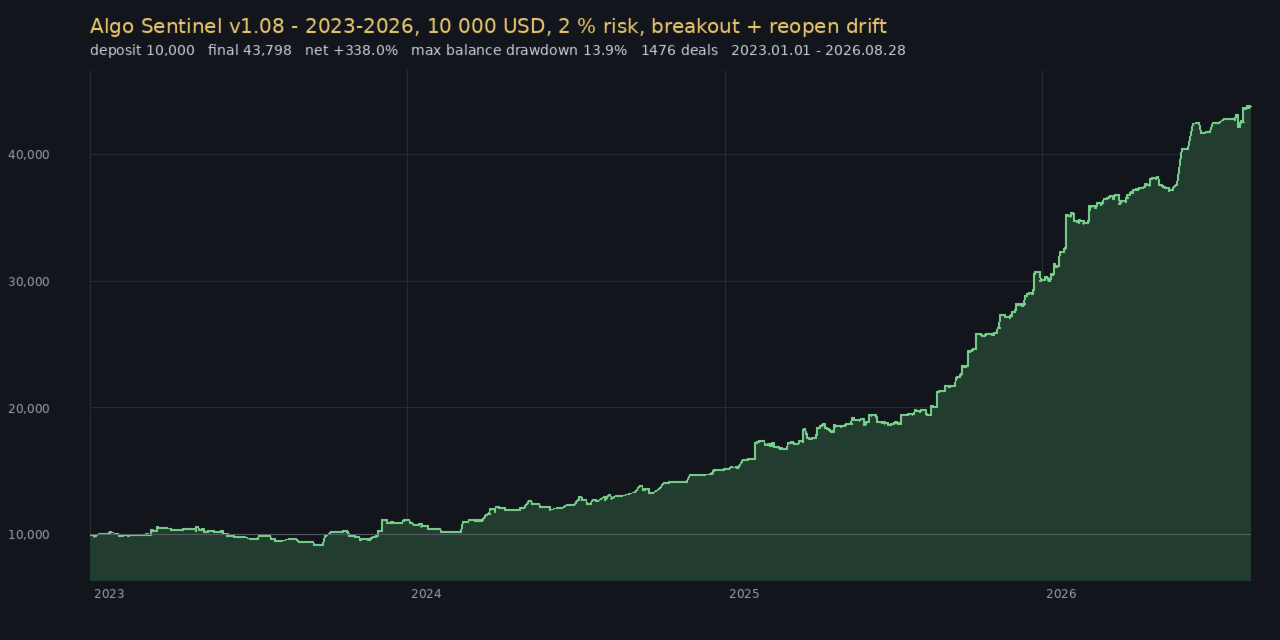
- Risk profiles in one dropdown, from very low (1 % per trade) to maximum (20 %), each labelled
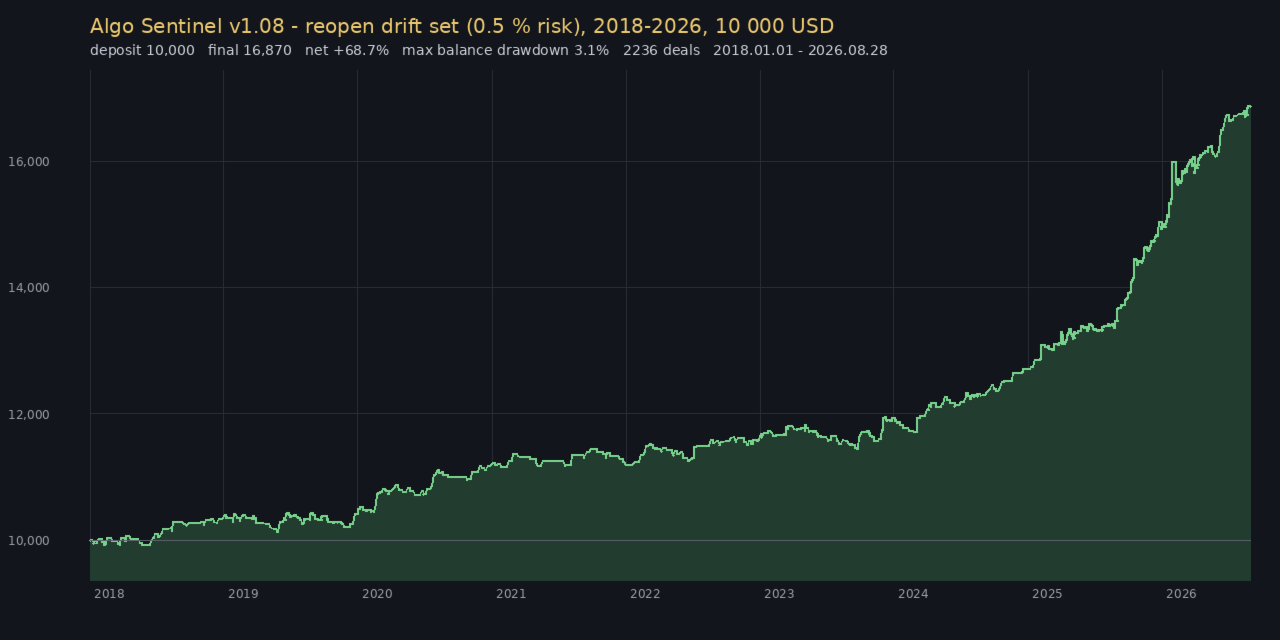
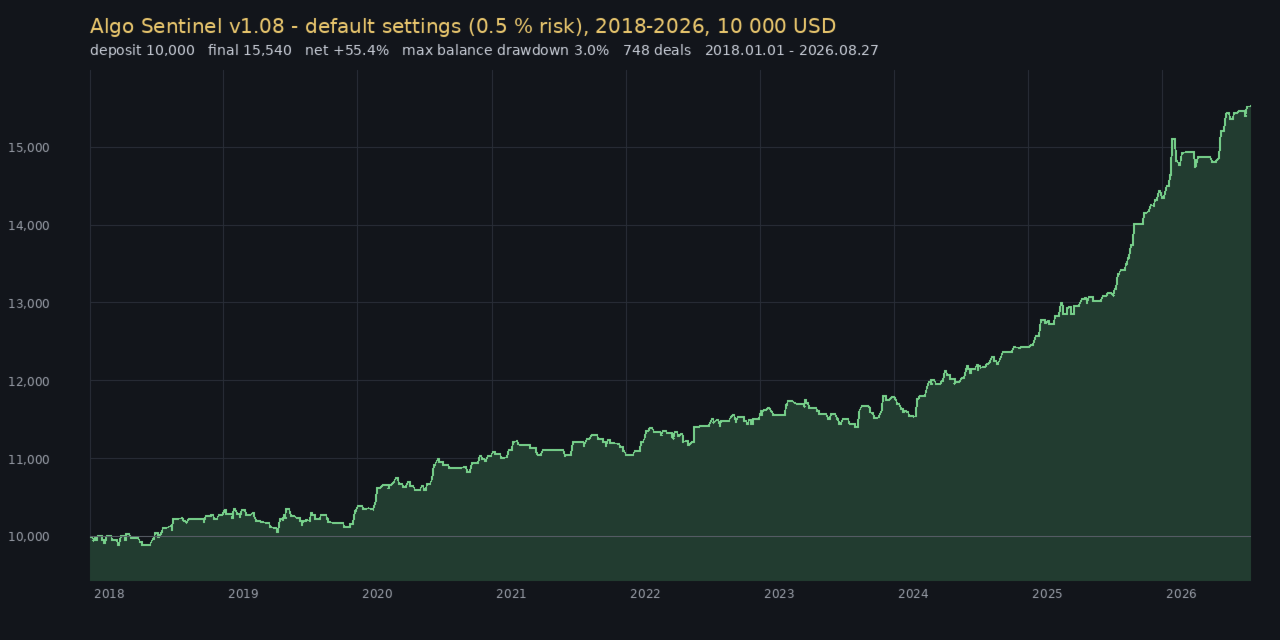
with its measured typical and 1-in-20 drawdown; or fully custom (the shipped default is 0.5 %).
- Works on hedging and netting accounts, any broker digits, any leverage (measured identical from
1:20 to 1:500, so EU retail leverage changes nothing). On-chart panel shows
spread, engines, daily P/L, drawdown and why trading is paused.
WHAT THIS EA DOES NOT DO
Honesty matters more here than a bigger number, so three limits are stated up front.
- Gold only. The engine is ATR-relative and will run on any symbol, but it has no edge on
anything else: over 2018-2026 on H1 it produces a profit factor of 1.05 on EUR/USD, 1.02 on
GBP/USD and 1.20 on USD/JPY with 400+ trades - that is noise, not a strategy.
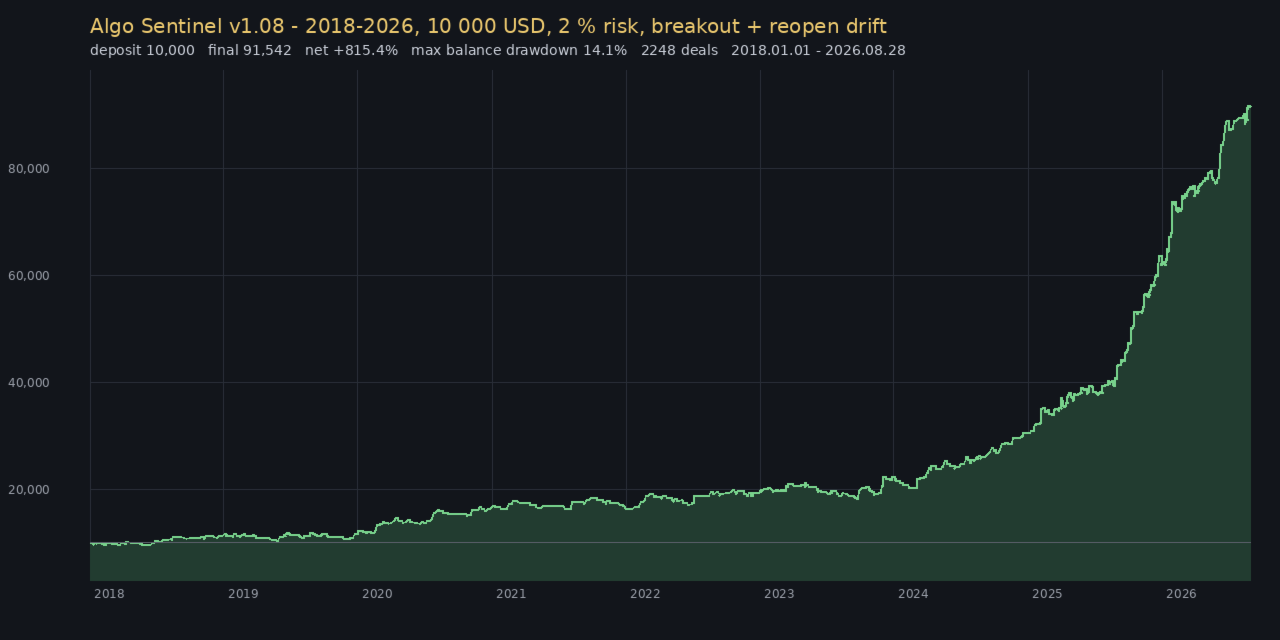
- The evidence window is 2018-2026. On 2013-2017 gold data the same strategy makes 50 trades
in four and a half years and breaks even, and if its spread-cost filter is switched off so it
trades normally, it loses (profit factor 0.92 over 192 trades). No parameter setting changes
that: of 121 combinations tested on that period, the best one breaks even.
- Tested on UTC+2/UTC+3 broker data only. The daily, weekly and monthly breakout levels are
your broker's own D1/W1/MN1 bars, so "the previous day" is defined by your broker's server
midnight. Every number here comes from RoboForex server time; on a broker whose server runs on
a different time zone the daily level is a different bar, and we have not measured that case.
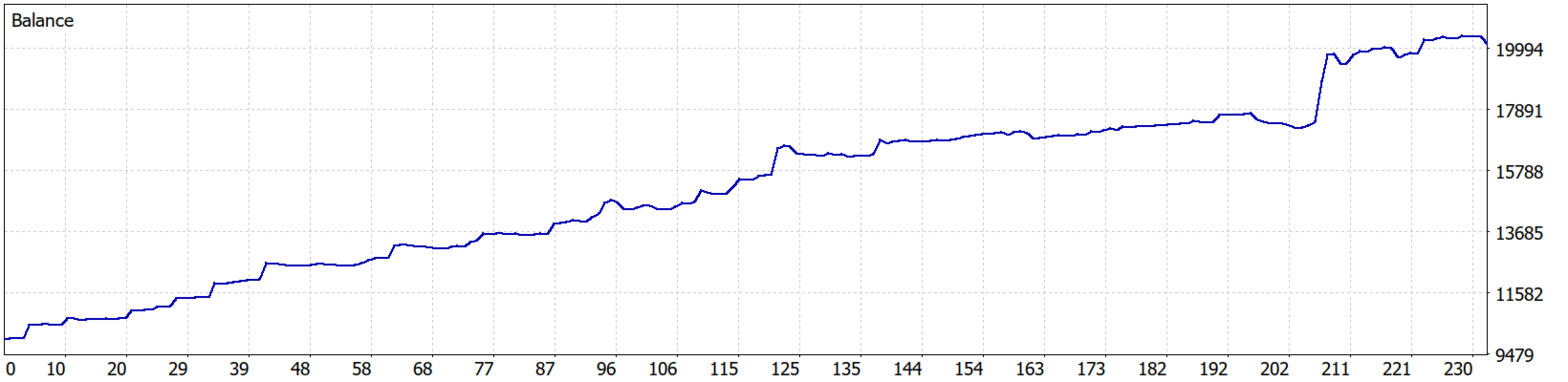
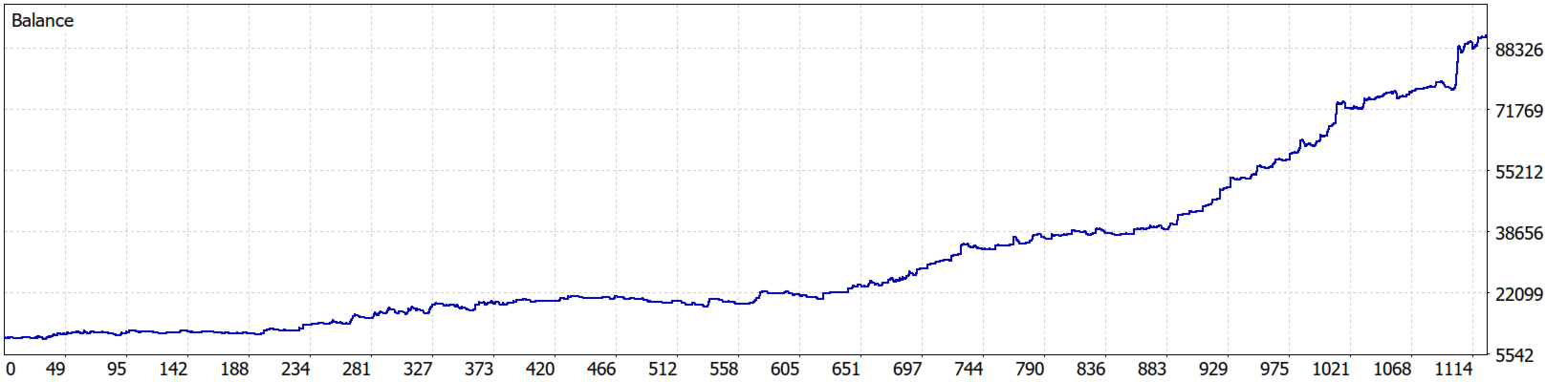
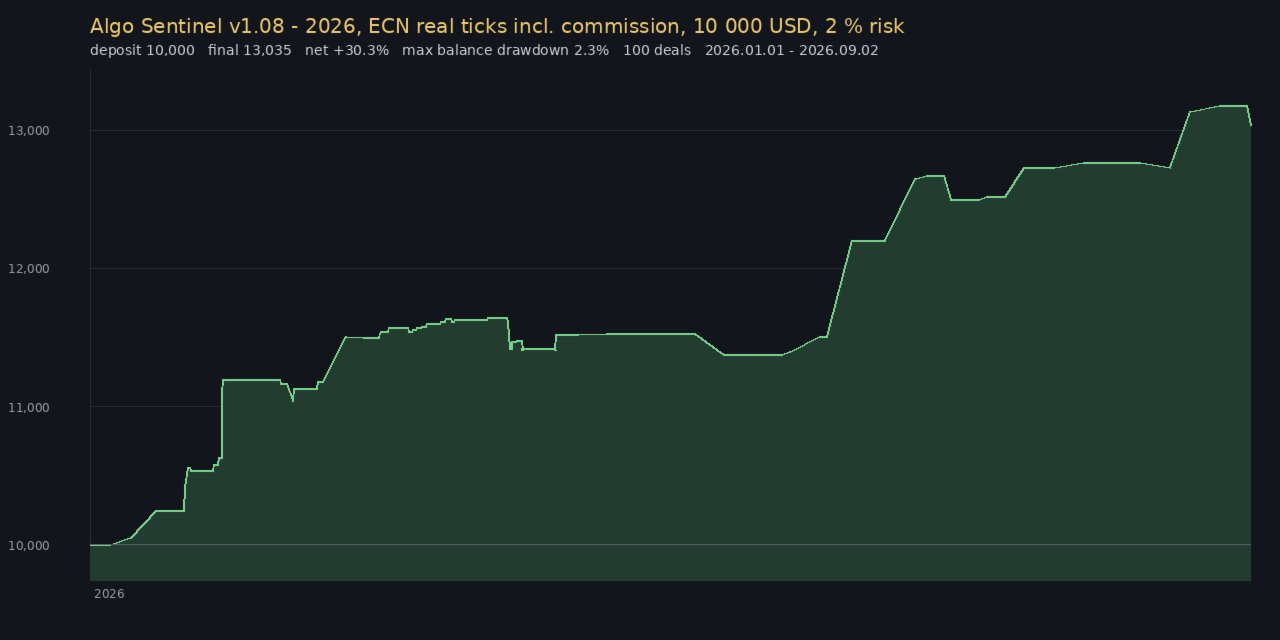
Expect four or five flat or slightly negative months a year: in 2026 two months made the year
and four lost about one percent each.
- It sits out markets it cannot pay for. The cost filter blocks entries when the spread is
above 15 % of ATR(M15). That is what kept the EA flat through 2013-2017, and it will do the
same in a future quiet gold market. Expect long stretches without trades rather than trades
that force an edge that is not there.
REQUIREMENTS AND RECOMMENDATIONS
- Symbol: XAUUSD (GOLD). Chart timeframe: H1 (the EA loads M15, H1, D1, W1 and MN1 data itself).
- Account size: the default stop is 5 x ATR(H1). At 2026 gold volatility one 0.01 lot carries
roughly 130 USD of risk. For the default 0.5 % risk use about 25 000 USD on a standard
account, or a cent account from about 250 USD. Smaller standard accounts trade at the minimum
lot; the EA shows the real risk per trade in the journal and on the panel, and
InpMaxRiskPerTradePct can skip oversized trades.
- Low-spread ECN/raw account and a VPS are recommended (positions are held for days, so
swap costs matter: prefer a broker with low gold swaps or swap-free conditions).
- Server time defaults assume a UTC+2/UTC+3 broker; switch the session clock to UTC otherwise.
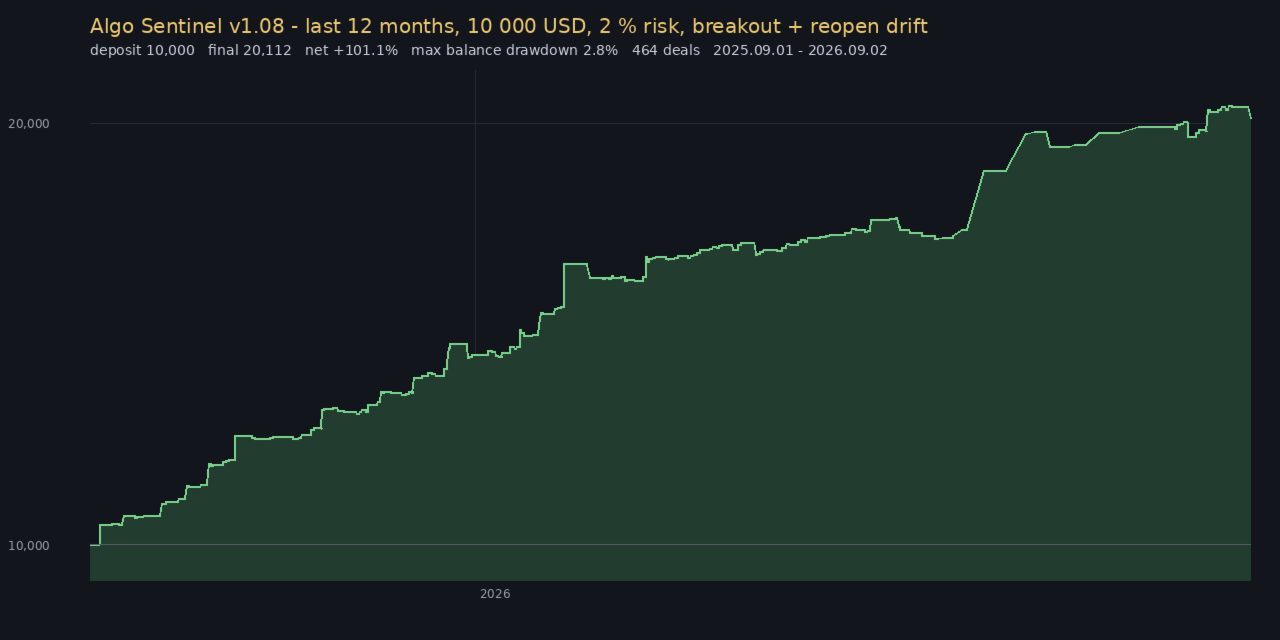
- Backtest with "Every tick based on real ticks" or "1 minute OHLC" over several years; the
strategy trades about 45 times a year, so short tests say little.
Important: trading gold carries a high level of risk. Backtest results are no guarantee of
future results. Use the demo version and forward test on a demo account before going live.