Eusebiu Dascalu / Perfil
- Información
|
no
experiencia
|
1
productos
|
1054
versiones demo
|
|
0
trabajos
|
1
señales
|
0
suscriptores
|
Llevo más de 15 años involucrado en los mercados financieros, con un gran interés tanto en los mercados tradicionales como en los de criptomonedas.
Me apasiona especialmente el oro (XAUUSD), un mercado que sigo y en el que opero activamente debido a su volatilidad, estructura y comportamiento único.
Mi trabajo se centra en ideas de trading, análisis del comportamiento del mercado y el desarrollo de soluciones algorítmicas prácticas para condiciones de mercado reales.
Me apasiona especialmente el oro (XAUUSD), un mercado que sigo y en el que opero activamente debido a su volatilidad, estructura y comportamiento único.
Mi trabajo se centra en ideas de trading, análisis del comportamiento del mercado y el desarrollo de soluciones algorítmicas prácticas para condiciones de mercado reales.
Amigos
365
Solicitudes
Enviadas
Eusebiu Dascalu
Ha publicado el producto
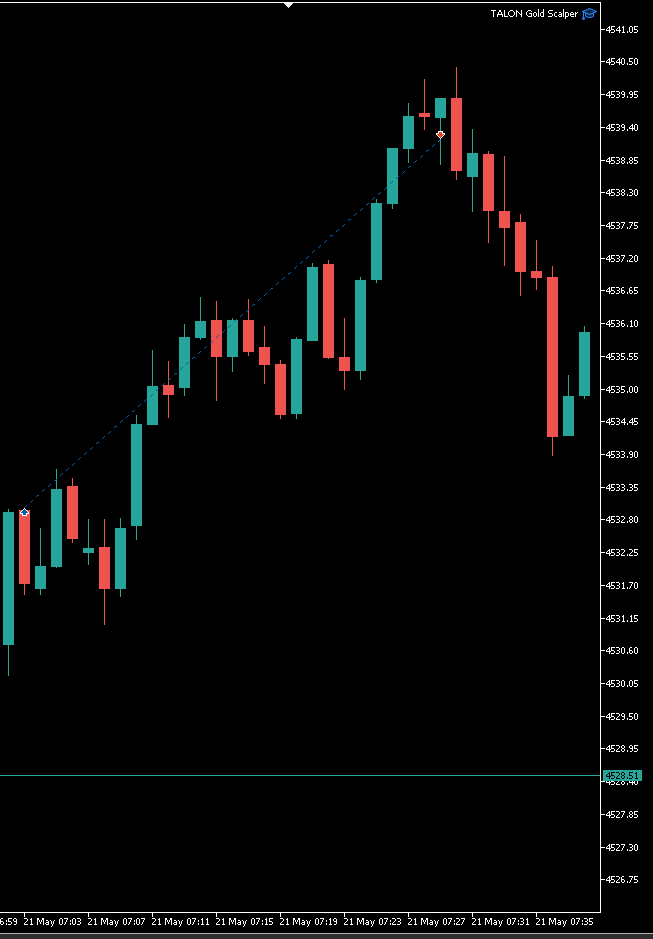
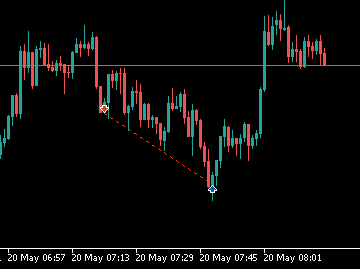
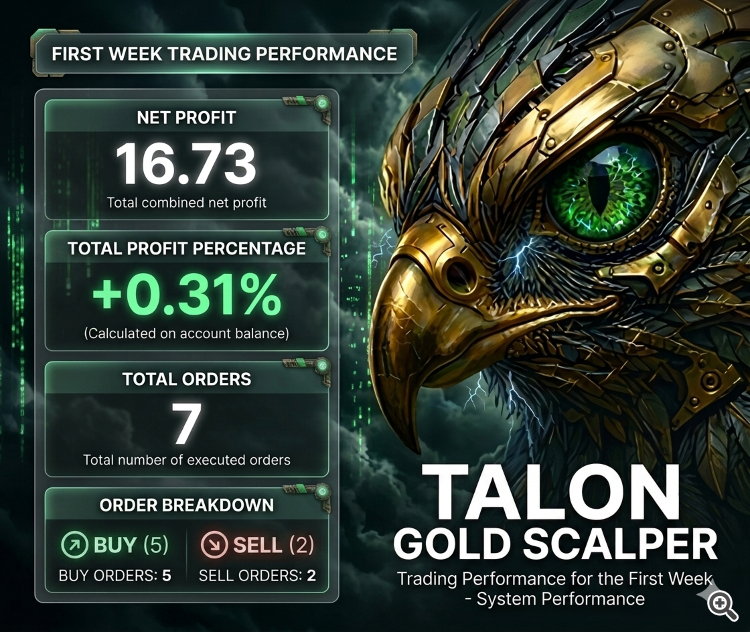
TALON Gold Scalper Señal en vivo VT Markets: HAGA CLIC AQUÍ TALON Gold Scalper es un sistema de trading automatizado diseñado para XAUUSD (Oro), centrado en los movimientos del mercado a corto plazo. El EA opera utilizando un análisis interno multi-marco de tiempo, independiente del marco de tiempo del gráfico. Está construido como una estrategia de negociación de corta duración, con el objetivo de capturar los movimientos de precios intradía, manteniendo una reducción controlada. El sistema ha
Eusebiu Dascalu
Hunter Nas100 had an incredible day on Monday. Unfortunately, it’s currently undergoing re-optimization.
Eusebiu Dascalu
Mostrar todos los comentarios (6)
Eusebiu Dascalu
Backtesting vs Reality: Why the "Golden Curve" Often Fails in Live Trading
In the world of algorithmic trading, backtesting is considered the ultimate proving ground. A smooth upward equity curve, minimal drawdown, and consistent profits can make any Expert Advisor (EA) look like a masterpiece. But once deployed on a live account, the system often starts behaving differently—sometimes even collapsing entirely.
Why does this happen? Let's break down the main reasons why simulator results don't always translate into real-world profits.
1. The Illusion of Historical Data (Modeling Quality)
A backtest is only as good as the data it’s built on. Many traders rely on standard data that:
Lacks tick precision: Simulations based on "1-minute OHLC" are often irrelevant.
Ignores variable spreads: In the strategy tester, the spread is usually fixed; in reality, on pairs like XAUUSD or EURUSD, it can explode during news events.
Reality Check: On Mt5, any backtest with less than 99% Modeling Quality (using "Every tick based on real ticks") is just an optimistic estimate, not proof.
2. The Over-Optimization Trap (Curve Fitting)
This is the occupational hazard of EA developers. You tweak the parameters until the chart looks flawless.. But in doing so, you've created a system adapted to yesterday's market noise, not tomorrow's market structure.
Red Flags: Too many parameters, an overly smooth equity curve, and the complete absence of stagnation periods.
The Solution: Use Walk-Forward Analysis (WFA) to see how your strategy performs on "unseen" data that wasn't used during the optimization phase.
3. The Broker: Your Invisible Partner (or Enemy)
The MetaTrader simulator assumes ideal conditions. In reality, your performance heavily depends on your broker's infrastructure:
Slippage: The difference between the requested price and the executed price can wipe out your entire mathematical edge.
Latency: Milliseconds matter, especially for scalping algorithms.
Stop Levels: Some live accounts enforce minimum distance restrictions for SL/TP, which the simulator easily ignores.
4. Execution vs. Simulation
In a backtest, a 10-lot order is executed instantly at the exact displayed price. In the real market:
Your order might only be partially filled.
During extreme volatility, the price can "gap" right past your Stop Loss.
Golden Rule: The smaller your target profit (in pips), the more poor execution will destroy your edge.
5. Market Regime Changes
Markets are living entities. A trading robot built strictly for a strong trending market will get slaughtered in a ranging period. Backtesting tends to average out these periods, hiding the fact that your strategy might be completely unprofitable in the current volatility conditions.
Reality Check: The market is not static, but your backtest is. A robust algorithm needs to survive, not just win under ideal conditions.
6. The Human Factor (Psychological Blind Spots)
Backtesting gives you confidence—sometimes a dangerous amount of it. When you see perfect historical results, you expect the exact same performance live. But when that first real 15-20% drawdown hits, many traders panic and:
Manually interfere with open trades.
Turn off the EA right before a winning streak.
Change parameters mid-run.
Final Thoughts: Bridging the Gap
Backtesting is not useless—it is absolutely essential. But it should be treated as a filter to eliminate bad strategies, not as a guarantee of future wealth. To succeed on Mt5 and in live trading:
Use high-quality tick data.
Forward Test: Run the EA on a Demo or live Cent account for at least a month before scaling up your lot size.
Simplicity wins: A strategy with 3 parameters is usually much more robust than one with 20.
Accept the drawdown: If your backtest shows a 10% maximum drawdown, be mentally prepared to endure 15% in live trading.
The goal isn't to build a system that won in the past, but one that has the resilience to survive the future.
In the world of algorithmic trading, backtesting is considered the ultimate proving ground. A smooth upward equity curve, minimal drawdown, and consistent profits can make any Expert Advisor (EA) look like a masterpiece. But once deployed on a live account, the system often starts behaving differently—sometimes even collapsing entirely.
Why does this happen? Let's break down the main reasons why simulator results don't always translate into real-world profits.
1. The Illusion of Historical Data (Modeling Quality)
A backtest is only as good as the data it’s built on. Many traders rely on standard data that:
Lacks tick precision: Simulations based on "1-minute OHLC" are often irrelevant.
Ignores variable spreads: In the strategy tester, the spread is usually fixed; in reality, on pairs like XAUUSD or EURUSD, it can explode during news events.
Reality Check: On Mt5, any backtest with less than 99% Modeling Quality (using "Every tick based on real ticks") is just an optimistic estimate, not proof.
2. The Over-Optimization Trap (Curve Fitting)
This is the occupational hazard of EA developers. You tweak the parameters until the chart looks flawless.. But in doing so, you've created a system adapted to yesterday's market noise, not tomorrow's market structure.
Red Flags: Too many parameters, an overly smooth equity curve, and the complete absence of stagnation periods.
The Solution: Use Walk-Forward Analysis (WFA) to see how your strategy performs on "unseen" data that wasn't used during the optimization phase.
3. The Broker: Your Invisible Partner (or Enemy)
The MetaTrader simulator assumes ideal conditions. In reality, your performance heavily depends on your broker's infrastructure:
Slippage: The difference between the requested price and the executed price can wipe out your entire mathematical edge.
Latency: Milliseconds matter, especially for scalping algorithms.
Stop Levels: Some live accounts enforce minimum distance restrictions for SL/TP, which the simulator easily ignores.
4. Execution vs. Simulation
In a backtest, a 10-lot order is executed instantly at the exact displayed price. In the real market:
Your order might only be partially filled.
During extreme volatility, the price can "gap" right past your Stop Loss.
Golden Rule: The smaller your target profit (in pips), the more poor execution will destroy your edge.
5. Market Regime Changes
Markets are living entities. A trading robot built strictly for a strong trending market will get slaughtered in a ranging period. Backtesting tends to average out these periods, hiding the fact that your strategy might be completely unprofitable in the current volatility conditions.
Reality Check: The market is not static, but your backtest is. A robust algorithm needs to survive, not just win under ideal conditions.
6. The Human Factor (Psychological Blind Spots)
Backtesting gives you confidence—sometimes a dangerous amount of it. When you see perfect historical results, you expect the exact same performance live. But when that first real 15-20% drawdown hits, many traders panic and:
Manually interfere with open trades.
Turn off the EA right before a winning streak.
Change parameters mid-run.
Final Thoughts: Bridging the Gap
Backtesting is not useless—it is absolutely essential. But it should be treated as a filter to eliminate bad strategies, not as a guarantee of future wealth. To succeed on Mt5 and in live trading:
Use high-quality tick data.
Forward Test: Run the EA on a Demo or live Cent account for at least a month before scaling up your lot size.
Simplicity wins: A strategy with 3 parameters is usually much more robust than one with 20.
Accept the drawdown: If your backtest shows a 10% maximum drawdown, be mentally prepared to endure 15% in live trading.
The goal isn't to build a system that won in the past, but one that has the resilience to survive the future.
: