Why is the currency rate different?
Depends whether your broker is ECN or market maker. ECN is largest liquidity pool. But banks do not necessarily cling to it. Forex market is sort of cluttered, there are many spots where a pair is quoted. Even big indices like Dow are not quoted the same way. Brokers may call it DJI30, WS30, USIND like that, and they pretend it's The Dow, but under the hood it is all mimicked, time-lagged and smoothed out, and they may treat you like they will if it comes to terms. There's even no guarantee that you will be served the price you've seen in the chart.
Market makers under the hood classify customers into two categories. You start with A, the loser class, where you are expected to make loss on long terms. This is also where you start in demo. Here you'll always get the chart's bid and ask, respective to your lag of course. So if you open a position at 21:00:00,000, say, they serve you the chart's quote from 21:00:00,375 (ping 50 ms + some server processing lag). This may be in your favour or against it (aka slippage). Should you turn out to be profitable this way, and about 80% are not, your broker is likely to put you into class B. This is the time the broker begins to take you serious, and so will hedge your position. And guess what happens to your slippage thereafter.
ECN: As far as I know it's a conglomeration of liquidity providers, not necessarily banks, just all kinds of institutions. Think of a worldwide network, a web inside the web all cobbled together with fiberglass. Banks may or may not follow quotes from it. Eventually they do, but ECN is lightning fast. This is what scalpers aim at, providing a bridge between fast and slow liquidity pools. ECN brokers usually work with commissions but low spreads. This is all I know as I don't have experience with it, but you're free to receive more opinions of course. To add some grain of salt, I've read that 96% of Forex traders eventually lose.
https://www.thebalance.com/why-do-forex-traders-lose-money-1344936
Market makers under the hood classify customers into two categories. You start with A, the loser class, where you are expected to make loss on long terms. This is also where you start in demo. Here you'll always get the chart's bid and ask, respective to your lag of course. So if you open a position at 21:00:00,000, say, they serve you the chart's quote from 21:00:00,375 (ping 50 ms + some server processing lag). This may be in your favour or against it (aka slippage). Should you turn out to be profitable this way, and about 80% are not, your broker is likely to put you into class B. This is the time the broker begins to take you serious, and so will hedge your position. And guess what happens to your slippage thereafter.
ECN: As far as I know it's a conglomeration of liquidity providers, not necessarily banks, just all kinds of institutions. Think of a worldwide network, a web inside the web all cobbled together with fiberglass. Banks may or may not follow quotes from it. Eventually they do, but ECN is lightning fast. This is what scalpers aim at, providing a bridge between fast and slow liquidity pools. ECN brokers usually work with commissions but low spreads. This is all I know as I don't have experience with it, but you're free to receive more opinions of course. To add some grain of salt, I've read that 96% of Forex traders eventually lose.
https://www.thebalance.com/why-do-forex-traders-lose-money-1344936
from a logical point of view, there is no other institution, there are only banks ,any money must go through the bank ,unless it's illegal, something like a black market, any financial institution but not a bank, MUST operate with banks, each transaction MUST be performed by the bank, so I do not understand you're writing, all the money is in banks
from a logical point of view, there is no other institution, there are only banks ,any money must go through the bank ,unless it's illegal, something like a black market, any financial institution but not a bank, MUST operate with banks, each transaction MUST be performed by the bank, so I do not understand you're writing, all the money is in banks
Depends whether your broker is ECN or market maker. ECN is largest liquidity pool. But banks do not necessarily cling to it. Forex market is sort of cluttered, there are many spots where a pair is quoted. Even big indices like Dow are not quoted the same way. Brokers may call it DJI30, WS30, USIND like that, and they pretend it's The Dow, but under the hood it is all mimicked, time-lagged and smoothed out, and they may treat you like they will if it comes to terms. There's even no guarantee that you will be served the price you've seen in the chart.
Depends whether your broker is ECN or market maker. ECN is largest liquidity pool. But banks do not necessarily cling to it. Forex market is sort of cluttered, there are many spots where a pair is quoted. Even big indices like Dow are not quoted the same way. Brokers may call it DJI30, WS30, USIND like that, and they pretend it's The Dow, but under the hood it is all mimicked, time-lagged and smoothed out, and they may treat you like they will if it comes to terms. There's even no guarantee that you will be served the price you've seen in the chart.
Taking this to a worse extent... Based on the OP's location, he is likely trading a CFD (contract for difference). The price discrepancy in the OP is a prime example of the risk inherent in trading CFD's─they are not connected to any global interbank market, centralized exchange, nor asset (Understanding Contracts for Difference (CFDs): Uses and Examples). The pool of participants is limited to private liquidity providers, retail traders, and one or more retail CFD broker-dealers. Therefore, every CFD dealer-broker maintains its own pricing which is derived from the limited pool of participants involved.
This is why all FX trades in the U.S. must ultimately be cleared in the global interbank market. IMHO, this is a good thing floating in a sea of otherwise overly restrictive things in the U.S.
As a potential caveat, it's very well possible that a scalper can find a highly volatile price feed with a CFD broker-dealer and exploit it─assuming that trade execution remains solid.
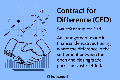
- www.investopedia.com

- Free trading apps
- Over 8,000 signals for copying
- Economic news for exploring financial markets
You agree to website policy and terms of use
Why is the currency rate different?
I checked in the central bank and it turns out that the rates are different, why?
Can anyone explain this to me?