Valeriy Brusilovskyy / Profil
- Bilgiler
|
9+ yıl
deneyim
|
0
ürünler
|
0
demo sürümleri
|
|
0
işler
|
0
sinyaller
|
0
aboneler
|
I have more than 18 years of trading experience. Except of forex trading also I worked with vanil options.
When I traded in divergences I had got 60-80% profit each year. Constantly I'm searching a new currency pairs that will be useful for my method of trading. I put currency pairs to demo-account only after their showing of good results (4-6 pips of expected value) in tester. I started to use pair in real account only after, at least, three months of successful trading (at least 3-4 pips of expected value). In the same time I don't stop to monitor the price movement of well-recommended currency pairs. Based on the results I change algorithm, time of trading and if it's necessary I change position size or even I can take of the pair from active trade.
In that moment I successfully drive a trade in six accounts.
If you are still not sure about me, please take a look on the indicators of all of my signals - https://www.mql5.com/en/signals/author/valera309
I can't wait to start working with you.
Please don't hesitate to address to me I always answer for all questions!
Sincerely yours, Valery!
When I traded in divergences I had got 60-80% profit each year. Constantly I'm searching a new currency pairs that will be useful for my method of trading. I put currency pairs to demo-account only after their showing of good results (4-6 pips of expected value) in tester. I started to use pair in real account only after, at least, three months of successful trading (at least 3-4 pips of expected value). In the same time I don't stop to monitor the price movement of well-recommended currency pairs. Based on the results I change algorithm, time of trading and if it's necessary I change position size or even I can take of the pair from active trade.
In that moment I successfully drive a trade in six accounts.
If you are still not sure about me, please take a look on the indicators of all of my signals - https://www.mql5.com/en/signals/author/valera309
I can't wait to start working with you.
Please don't hesitate to address to me I always answer for all questions!
Sincerely yours, Valery!
Arkadaşlar
977
İstekler
Giden
Valeriy Brusilovskyy
Danske Bank: Трамп может вернуть рынки в состояние эйфории
После первоначальной эйфории от победы Трампа, обещавшего агрессивные фискальные и налоговые меры, а также ослабление регулирования, наступило затишье, связанное с тем, что рынки так и не получили больше информации о том, какие же меры, в конечном итоге, будут предложены новой администрацией. Последняя куда больше активности проявила в части иммиграционной политики и поддержания неопределенности в части будущих взаимоотношений США с основными торговыми партнерами.
В Danske Bank, однако, полагают, что вскоре затишье будет нарушено, и видят потенциал для восстановления оптимизма по поводу экономической политики 45 американского президента США. Во-первых, Трамп, наконец, получил утверждение (13 февраля) Стивена Мнучина на пост главы Казначейства США, а также обещал 28 февраля предоставить детали своей налоговой реформы. Таковая, вероятно, будет представлять собой некую комбинацию послаблений в налогах для корпораций и налога на доходы и корректировку налогов на импорт. Кроме того, Трамп движется в сторону отмены законодательного акта Додда — Франка и в прошлую пятницу подписал указ с требованием к главам регулирующих органов совместно с главой Казначейства США в течение 120 дней представить предложения по дерегулированию финансового сектора.
Конечно, масштабы реформы налогов и ее эффект полны неопределенности, но анонсирование налоговых послаблений произойдет на общем позитивном фоне — последние данные сигнализируют о том, что экономика США растет темпами выше трендовых. Ключевым вопросом для инвесторов является то, как повлияет прояснение планов новой администрации на инструменты с фиксированной доходностью. Пока доходность десятилетних американских облигаций, несмотря на продолжающийся рост рисковых активов, держится в узком диапазоне вблизи 2.40%. Одной из причин, по которой мы не наблюдаем роста доходностей, вероятно, является позиционирование участников рынка, однако возможно, что свою роль играет и рост спроса на американские гособлигации со стороны иностранных инвесторов — доходность по немецким и японским облигациям остается крайне низкой в свете политики ЕЦБ и Банка Японии, и в условиях растущей инфляции более высокая доходность в США привлекает долгосрочных инвесторов.
Стоит, однако, отметить, что прояснение перспектив экономической политики Трампа, вероятно, окажет влияние на оценку перспектив ставок ФРС — значительная часть членов FOMC не учитывает реализацию фискальных мер в своих прогнозах. Danske не думает, что у FOMC есть достаточно ясности относительно перспектив действий Белого Дома, чтобы повысить ставку на заседании 15 марта (вероятность, исходя из фьючерсов на ставку, составляет 40%), но риски, как считают в банке, смещены в пользу большего числа повышений ставки в этом году, нежели в данный момент учтено рынком.
Аналитики Danske Bank отмечают, что изменения в оценках перспектив ставок в США, как и в конце прошлого года, вероятно, повлияют на настрой в отношении немецких облигаций, и полагают, что доходностью по десятилетним бундесам к концу 2017 подымется до 0.90%, тогда как по аналогичным американским облигациям она достигнет 3.0%. Таким образом, возвращения темы рефляции не предполагает изменения в ожиданиях Danske относительно перспектив евро/доллара, тем более что долгосрочные модели справедливой стоимости говорят о значительной недооцененности евро. Аналитическая модель MEVA (Medium-Term Valuation*) предполагает, что справедливый курс евро к доллару составляет 1.27, модель, основанная на паритете покупательной способности, указывает на уровни в районе 1.29.
После первоначальной эйфории от победы Трампа, обещавшего агрессивные фискальные и налоговые меры, а также ослабление регулирования, наступило затишье, связанное с тем, что рынки так и не получили больше информации о том, какие же меры, в конечном итоге, будут предложены новой администрацией. Последняя куда больше активности проявила в части иммиграционной политики и поддержания неопределенности в части будущих взаимоотношений США с основными торговыми партнерами.
В Danske Bank, однако, полагают, что вскоре затишье будет нарушено, и видят потенциал для восстановления оптимизма по поводу экономической политики 45 американского президента США. Во-первых, Трамп, наконец, получил утверждение (13 февраля) Стивена Мнучина на пост главы Казначейства США, а также обещал 28 февраля предоставить детали своей налоговой реформы. Таковая, вероятно, будет представлять собой некую комбинацию послаблений в налогах для корпораций и налога на доходы и корректировку налогов на импорт. Кроме того, Трамп движется в сторону отмены законодательного акта Додда — Франка и в прошлую пятницу подписал указ с требованием к главам регулирующих органов совместно с главой Казначейства США в течение 120 дней представить предложения по дерегулированию финансового сектора.
Конечно, масштабы реформы налогов и ее эффект полны неопределенности, но анонсирование налоговых послаблений произойдет на общем позитивном фоне — последние данные сигнализируют о том, что экономика США растет темпами выше трендовых. Ключевым вопросом для инвесторов является то, как повлияет прояснение планов новой администрации на инструменты с фиксированной доходностью. Пока доходность десятилетних американских облигаций, несмотря на продолжающийся рост рисковых активов, держится в узком диапазоне вблизи 2.40%. Одной из причин, по которой мы не наблюдаем роста доходностей, вероятно, является позиционирование участников рынка, однако возможно, что свою роль играет и рост спроса на американские гособлигации со стороны иностранных инвесторов — доходность по немецким и японским облигациям остается крайне низкой в свете политики ЕЦБ и Банка Японии, и в условиях растущей инфляции более высокая доходность в США привлекает долгосрочных инвесторов.
Стоит, однако, отметить, что прояснение перспектив экономической политики Трампа, вероятно, окажет влияние на оценку перспектив ставок ФРС — значительная часть членов FOMC не учитывает реализацию фискальных мер в своих прогнозах. Danske не думает, что у FOMC есть достаточно ясности относительно перспектив действий Белого Дома, чтобы повысить ставку на заседании 15 марта (вероятность, исходя из фьючерсов на ставку, составляет 40%), но риски, как считают в банке, смещены в пользу большего числа повышений ставки в этом году, нежели в данный момент учтено рынком.
Аналитики Danske Bank отмечают, что изменения в оценках перспектив ставок в США, как и в конце прошлого года, вероятно, повлияют на настрой в отношении немецких облигаций, и полагают, что доходностью по десятилетним бундесам к концу 2017 подымется до 0.90%, тогда как по аналогичным американским облигациям она достигнет 3.0%. Таким образом, возвращения темы рефляции не предполагает изменения в ожиданиях Danske относительно перспектив евро/доллара, тем более что долгосрочные модели справедливой стоимости говорят о значительной недооцененности евро. Аналитическая модель MEVA (Medium-Term Valuation*) предполагает, что справедливый курс евро к доллару составляет 1.27, модель, основанная на паритете покупательной способности, указывает на уровни в районе 1.29.
Valeriy Brusilovskyy
Американский сланцевый бум может увязнуть в песке
За последние недели спрос на гранулированный песок для гидроразрыва резко повысился на фоне роста активности американских сланцевых производителей. Это вызвало беспокойство по поводу того, что предложение ключевого компонента для бурения может отстать от спроса в этом году. Растущий спрос на проппант объясняется резким увеличением числа активных буровых на сланцевых месторождениях США. На прошлой неделе количество установок достигло 591, максимального с октября 2015 года значения, почти вдвое восстановившись от уровней семимесячной давности. Аналитики Raymond James прогнозируют, что к концу 2018 года число буровых приблизится к 1 тыс.
Американские производители помещают проппант и другие материалы в скважины для разрыва сланцевой породы и добычи нефти. Скважины становятся все глубже и шире, что требует большего количества гранулированного песка. Индустрия проппанта оказалась под серьезным давлением в период недавнего обвала цен. Производители массово урезали расходы и расторгали (или пересматривали) контракты на поставку, подписанные в период бума. Акции некоторых крупных поставщиков проппантов резко обвалились на фоне скептицизма инвесторов. Но сейчас такие компании, как Fairmount Santrol Holdings и U.S. Silica Holdings, возвращаются к жизни и жаждут новых долгосрочных контрактов в условиях повсеместного оптимизма в отношении роста цен на черное золото.
В январе эксперты Raymond James предположили, что спрос на гранулированный песок достигнет рекордных уровней в этом году и составит 55 млн тонн, а к 2018 превысил 80 млн тонн, что на 60% выше, чем в 2014. По большей части этот прогноз основан на том, что производителям теперь требуется больше проппанта на каждую скважину. В начале прошлого года Tudor, Pickering, Holt & Co применил модель спроса, в рамках которой оценки на 2017 и 2018 годы оказались существенно недооцененными. В декабре банк пересмотрел свой прогноз и теперь ожидает рекордного роста спроса в 2018. Сокращение поставок и логистические трудности могут отправить цены на проппант к уровням 2014 года, когда в Штатах насчитывалось 1500 активных буровых.
Тейлор Робинсон, президент PLG Consulting, которая помогает компаниям решать проблемы с транспортировкой, отмечает, что спрос на гранулированный песок «существенно» повысился за последние шесть недель, и в ближайшие месяцы будет демонстрировать активный рост. «Полагаю, люди оценивают потенциальные показатели спроса и впервые обеспокоены тем, что песка может не хватить для удовлетворения спроса. Нефтепроизводители судорожно заключают долгосрочные контракты, чтобы не оказаться застигнутыми врасплох. Люди готовятся к новой волне», - поясняет Робинсон.
Рост спроса подтолкнет цены на песок вверх на 60%, и в течение ближайших 18 месяцев они достигнут $40 за тонну. На сегодняшний день затраты на проппанты составляют около $25 за тонну, а до обвала нефтяных котировок достигали $70. По мнению Криса Кина из Rangeland Energy LLC, реальный повод для беспокойства – это логистические трудности, возникающие при транспортировке больших объемов песка. Некоторые производители используют один грузовой состав (75 и более вагонов) на одну скважину. При таких объемах необходимы другие варианты транспортировки. Иначе эта проблема может подорвать рост добычи, считает Кин.
За последние недели спрос на гранулированный песок для гидроразрыва резко повысился на фоне роста активности американских сланцевых производителей. Это вызвало беспокойство по поводу того, что предложение ключевого компонента для бурения может отстать от спроса в этом году. Растущий спрос на проппант объясняется резким увеличением числа активных буровых на сланцевых месторождениях США. На прошлой неделе количество установок достигло 591, максимального с октября 2015 года значения, почти вдвое восстановившись от уровней семимесячной давности. Аналитики Raymond James прогнозируют, что к концу 2018 года число буровых приблизится к 1 тыс.
Американские производители помещают проппант и другие материалы в скважины для разрыва сланцевой породы и добычи нефти. Скважины становятся все глубже и шире, что требует большего количества гранулированного песка. Индустрия проппанта оказалась под серьезным давлением в период недавнего обвала цен. Производители массово урезали расходы и расторгали (или пересматривали) контракты на поставку, подписанные в период бума. Акции некоторых крупных поставщиков проппантов резко обвалились на фоне скептицизма инвесторов. Но сейчас такие компании, как Fairmount Santrol Holdings и U.S. Silica Holdings, возвращаются к жизни и жаждут новых долгосрочных контрактов в условиях повсеместного оптимизма в отношении роста цен на черное золото.
В январе эксперты Raymond James предположили, что спрос на гранулированный песок достигнет рекордных уровней в этом году и составит 55 млн тонн, а к 2018 превысил 80 млн тонн, что на 60% выше, чем в 2014. По большей части этот прогноз основан на том, что производителям теперь требуется больше проппанта на каждую скважину. В начале прошлого года Tudor, Pickering, Holt & Co применил модель спроса, в рамках которой оценки на 2017 и 2018 годы оказались существенно недооцененными. В декабре банк пересмотрел свой прогноз и теперь ожидает рекордного роста спроса в 2018. Сокращение поставок и логистические трудности могут отправить цены на проппант к уровням 2014 года, когда в Штатах насчитывалось 1500 активных буровых.
Тейлор Робинсон, президент PLG Consulting, которая помогает компаниям решать проблемы с транспортировкой, отмечает, что спрос на гранулированный песок «существенно» повысился за последние шесть недель, и в ближайшие месяцы будет демонстрировать активный рост. «Полагаю, люди оценивают потенциальные показатели спроса и впервые обеспокоены тем, что песка может не хватить для удовлетворения спроса. Нефтепроизводители судорожно заключают долгосрочные контракты, чтобы не оказаться застигнутыми врасплох. Люди готовятся к новой волне», - поясняет Робинсон.
Рост спроса подтолкнет цены на песок вверх на 60%, и в течение ближайших 18 месяцев они достигнут $40 за тонну. На сегодняшний день затраты на проппанты составляют около $25 за тонну, а до обвала нефтяных котировок достигали $70. По мнению Криса Кина из Rangeland Energy LLC, реальный повод для беспокойства – это логистические трудности, возникающие при транспортировке больших объемов песка. Некоторые производители используют один грузовой состав (75 и более вагонов) на одну скважину. При таких объемах необходимы другие варианты транспортировки. Иначе эта проблема может подорвать рост добычи, считает Кин.
Valeriy Brusilovskyy
United States: Reflation?
Data released this week point to a rebound in activity and inflation. Yet it is too early to interpret them as the first signs of the reflation that some are expecting. Granted, inflation has made an impressive rebound, retail sales are reassuringly robust, and the turnaround in surveys, notably in the manufacturing sector, is encouraging. Yet we shouldn’t over-interpret these results nor forget the risks.
Last summer, consumer price inflation was limited to about 1% yearon-year, whereas in January 2016, it surged to 2.5%, more or less in line with the Fed’s target. This target is not based on the consumer price index (CPI) but rather on the less volatile personal consumption expenditures price index (PCE). In the past, PCE inflation of 2% – the Fed’s target – has corresponded to CPI inflation of about 2.5%. As in the eurozone1 , the upturn in inflation must be seen above all as the result of the rebound in oil prices. The energy component of the CPI declined by about 10% year-on-year in summer 2016 but in January 2017, it rose by more than 11%. Last summer, energy was holding down inflation by roughly 0.7 percentage points, whereas today it is lifting inflation by about 0.8 pp. This perfectly explains the acceleration in prices. Core inflation, which excludes food and energy prices, has held at 2.3%, virtually the same level since last summer.
In February, the energy price base effect will be just as strong as in January, and it will not fade off until March, and then only gradually. If oil prices were to level off at current levels, the contribution of the energy component wouldn’t normalise until May, fluctuating between 0.2 and 0.4 pp through the end of the year. Inflation would continue to be driven upwards by energy, albeit to a lesser extent. As to core prices, they depend primarily on wages.
Despite its dynamic momentum, the job market has still failed to generate sustained wage growth. The US economy has been creating jobs since October 2010, more than 15 million overall in a little over six years. Yet wages have stuck to a soft trend. The average hourly wages of non-supervisory and production workers – our preferred measurement – only increased 2.4%. In 2006-2007, when the unemployment rate was as low as it is today (4.8%), wages were growing at a pace of nearly 4%. This is probably due to residual underemployment. Despite the job market’s impressive performance in recent years, there is still a large job gap. If from late 2007, job creation had been strong enough to absorb new entrants on the job market (net of those quitting it), non-farm payroll employment would be about 6.5 million higher than it is currently. Although this helps calm fears about an inflationary surge, it also calls for strong demand in order to normalise the labour market.
In this respect, recent retail sales trends are very encouraging. Reported in value terms, this data are volatile. To isolate volume effects from price effects, we have to focus only on “core” retail sales. The control group excludes vehicle and fuel sales as well as food services and building materials, and thus follows more closely the consumption of goods as defined in the national accounts. Those core sales have accelerated in recent months, rising to an annualised quarterly rate of 3.5% in January, from 1.2% in September 2016.
For the moment, manufacturing production has picked up, but not at such a robust pace. In January, output rose 2.2% (annualised 3- month rate) after a year of virtual stagnation. But prospects are definitely encouraging. First, the decline in inventory is bound to trigger a rebound in production. The inventory to sales ratio slipped from 1.40 in May to 1.35 in December. Second, surveys have picked up strongly since the beginning of the year. In January, manufacturing ISM rose to 56, a cumulative gain of 6.6 points in five months, driven by solid components for production (+12.1) and new orders (+11.5).
Surveys by the New York and Philadelphia Feds point to another upsurge in February. Our NEM composite index – using weighted data reconstructed according to the ISM calculation method – gained 1.6 points between January and February. This is a spectacular turnaround from last summer’s trough, and in February, the NEM index hit 55.3, the highest level since year-end 2014, when US industrial output began to feel the strains of the drop-off in oil prices and the dollar’s rebound.
Seen in this light, we can see the expected rebound as a catching-up movement after the sluggish growth reported by the US economy between year-end 2015 and mid-2016. A welcome performance, but nothing miraculous.
Since Donald Trump’s election, mortgage rates have increased by about 65 basis points, enough to raise fears of a slowdown in construction. So yes, we are witnessing a cyclical rally. Yet the main explanations might be nothing more than temporary factors. Moreover, the strong dollar does not leave much room for a rebound in the manufacturing sector, whose external competitiveness is also undermined by the upturn in unit labour costs. It is too early to begin popping the corks.
Data released this week point to a rebound in activity and inflation. Yet it is too early to interpret them as the first signs of the reflation that some are expecting. Granted, inflation has made an impressive rebound, retail sales are reassuringly robust, and the turnaround in surveys, notably in the manufacturing sector, is encouraging. Yet we shouldn’t over-interpret these results nor forget the risks.
Last summer, consumer price inflation was limited to about 1% yearon-year, whereas in January 2016, it surged to 2.5%, more or less in line with the Fed’s target. This target is not based on the consumer price index (CPI) but rather on the less volatile personal consumption expenditures price index (PCE). In the past, PCE inflation of 2% – the Fed’s target – has corresponded to CPI inflation of about 2.5%. As in the eurozone1 , the upturn in inflation must be seen above all as the result of the rebound in oil prices. The energy component of the CPI declined by about 10% year-on-year in summer 2016 but in January 2017, it rose by more than 11%. Last summer, energy was holding down inflation by roughly 0.7 percentage points, whereas today it is lifting inflation by about 0.8 pp. This perfectly explains the acceleration in prices. Core inflation, which excludes food and energy prices, has held at 2.3%, virtually the same level since last summer.
In February, the energy price base effect will be just as strong as in January, and it will not fade off until March, and then only gradually. If oil prices were to level off at current levels, the contribution of the energy component wouldn’t normalise until May, fluctuating between 0.2 and 0.4 pp through the end of the year. Inflation would continue to be driven upwards by energy, albeit to a lesser extent. As to core prices, they depend primarily on wages.
Despite its dynamic momentum, the job market has still failed to generate sustained wage growth. The US economy has been creating jobs since October 2010, more than 15 million overall in a little over six years. Yet wages have stuck to a soft trend. The average hourly wages of non-supervisory and production workers – our preferred measurement – only increased 2.4%. In 2006-2007, when the unemployment rate was as low as it is today (4.8%), wages were growing at a pace of nearly 4%. This is probably due to residual underemployment. Despite the job market’s impressive performance in recent years, there is still a large job gap. If from late 2007, job creation had been strong enough to absorb new entrants on the job market (net of those quitting it), non-farm payroll employment would be about 6.5 million higher than it is currently. Although this helps calm fears about an inflationary surge, it also calls for strong demand in order to normalise the labour market.
In this respect, recent retail sales trends are very encouraging. Reported in value terms, this data are volatile. To isolate volume effects from price effects, we have to focus only on “core” retail sales. The control group excludes vehicle and fuel sales as well as food services and building materials, and thus follows more closely the consumption of goods as defined in the national accounts. Those core sales have accelerated in recent months, rising to an annualised quarterly rate of 3.5% in January, from 1.2% in September 2016.
For the moment, manufacturing production has picked up, but not at such a robust pace. In January, output rose 2.2% (annualised 3- month rate) after a year of virtual stagnation. But prospects are definitely encouraging. First, the decline in inventory is bound to trigger a rebound in production. The inventory to sales ratio slipped from 1.40 in May to 1.35 in December. Second, surveys have picked up strongly since the beginning of the year. In January, manufacturing ISM rose to 56, a cumulative gain of 6.6 points in five months, driven by solid components for production (+12.1) and new orders (+11.5).
Surveys by the New York and Philadelphia Feds point to another upsurge in February. Our NEM composite index – using weighted data reconstructed according to the ISM calculation method – gained 1.6 points between January and February. This is a spectacular turnaround from last summer’s trough, and in February, the NEM index hit 55.3, the highest level since year-end 2014, when US industrial output began to feel the strains of the drop-off in oil prices and the dollar’s rebound.
Seen in this light, we can see the expected rebound as a catching-up movement after the sluggish growth reported by the US economy between year-end 2015 and mid-2016. A welcome performance, but nothing miraculous.
Since Donald Trump’s election, mortgage rates have increased by about 65 basis points, enough to raise fears of a slowdown in construction. So yes, we are witnessing a cyclical rally. Yet the main explanations might be nothing more than temporary factors. Moreover, the strong dollar does not leave much room for a rebound in the manufacturing sector, whose external competitiveness is also undermined by the upturn in unit labour costs. It is too early to begin popping the corks.
Valeriy Brusilovskyy
Key Points:
A breakout is likely and this should be to the upside.
Long-term channel should remain intact.
The pair should reverse to the centre of the channel.
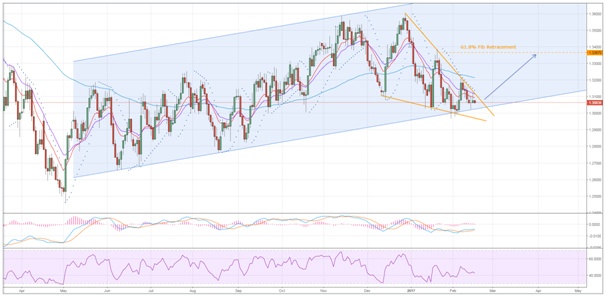
The Loonie is fast approaching a critical point where it must decide where exactly it wants to end up. On the one hand, it could finally break free of the ascending channel that has largely constrained its movements over the past months. On the other hand, a breakout from the near-term wedge could mean we see a rally back to the centre of this long-standing channel. As a result, it’s worth delving into some of the technicals to get a feel for what we can expect moving forward.
First and foremost, it’s quite clear on the daily chart that the narrowing price action of the falling wedge should lead to a breakout in one direction or the other in the very near-term. As a result of this particular wedge, the pair should be predisposed to breaking out on the upside which would also respect the downside constraint of the long-term channel. Due to this coincidence, a rally is looking much more likely than a downside breakout from a technical perspective at least.
Moreover, moving higher would, generally speaking, be inline with some of the other technical signals. Specifically, the MACD oscillator remains bullish and it wouldn’t take much in the way of buying pressure to invert the Parabolic SAR’s bias to follow suit. Additionally, both the RSI and stochastics are in neutral territory which means there is plenty of room to rally before fears that the Loonie is becoming overbought would arise.
The main deterrent that could prevent the bulls from staging a comeback is the EMA bias. As shown above, the 12, 20, and 100 day moving averages are all in a highly bearish configuration which would tend to indicate losses are set to extend moving ahead. However, on the balance of things, there seems to be more evidence suggestive of a reversal back to the centre of the channel rather than a breakout from the lower constraint of this objectively robust structure.
On the fundamental front, despite the USD’s rather baffling response to yesterday’s strong data, the outlook for the US economy is looking firmer than it has in some time. Combined with optimism over Trump’s tax policy and the jump in probability for a US rate hike to 44% in March, the market should continue to move backto the greenback which would be in line with the technical forecast.
Ultimately, keep an eye on this pair as the week draws to a close and early next week as there is likely to be at least one or two sessions remaining before a reversal is required. Furthermore, be alert for any update on that ‘phenomenal’ tax plan as it is likely to generate some waves.
https://www.fxstreet.com/analysis/whats-next-for-the-loonie-201702160510
A breakout is likely and this should be to the upside.
Long-term channel should remain intact.
The pair should reverse to the centre of the channel.
The Loonie is fast approaching a critical point where it must decide where exactly it wants to end up. On the one hand, it could finally break free of the ascending channel that has largely constrained its movements over the past months. On the other hand, a breakout from the near-term wedge could mean we see a rally back to the centre of this long-standing channel. As a result, it’s worth delving into some of the technicals to get a feel for what we can expect moving forward.
First and foremost, it’s quite clear on the daily chart that the narrowing price action of the falling wedge should lead to a breakout in one direction or the other in the very near-term. As a result of this particular wedge, the pair should be predisposed to breaking out on the upside which would also respect the downside constraint of the long-term channel. Due to this coincidence, a rally is looking much more likely than a downside breakout from a technical perspective at least.
Moreover, moving higher would, generally speaking, be inline with some of the other technical signals. Specifically, the MACD oscillator remains bullish and it wouldn’t take much in the way of buying pressure to invert the Parabolic SAR’s bias to follow suit. Additionally, both the RSI and stochastics are in neutral territory which means there is plenty of room to rally before fears that the Loonie is becoming overbought would arise.
The main deterrent that could prevent the bulls from staging a comeback is the EMA bias. As shown above, the 12, 20, and 100 day moving averages are all in a highly bearish configuration which would tend to indicate losses are set to extend moving ahead. However, on the balance of things, there seems to be more evidence suggestive of a reversal back to the centre of the channel rather than a breakout from the lower constraint of this objectively robust structure.
On the fundamental front, despite the USD’s rather baffling response to yesterday’s strong data, the outlook for the US economy is looking firmer than it has in some time. Combined with optimism over Trump’s tax policy and the jump in probability for a US rate hike to 44% in March, the market should continue to move backto the greenback which would be in line with the technical forecast.
Ultimately, keep an eye on this pair as the week draws to a close and early next week as there is likely to be at least one or two sessions remaining before a reversal is required. Furthermore, be alert for any update on that ‘phenomenal’ tax plan as it is likely to generate some waves.
https://www.fxstreet.com/analysis/whats-next-for-the-loonie-201702160510
Valeriy Brusilovskyy
Talking Points:
Asian stocks had a mixed session on Thursday
Toshiba continued to weigh on the Nikkei’s fortunes, but Chinese stocks gained
The Dollar slipped a little from one-month highs despite elevated rate-rise expectations
Thursday was a mixed session for Asian markets, with Wall Street’s enduring pep unable to prevent a slip for the Nikkei.
The Japanese benchmark was again hit by the woes of heavyweight Toshiba. It fell more than 8% on Wednesday and slipped by about half that amount on Thursday. This was thanks to reports that it may delay the sale of its flash-memory chip unit, chasing revenue following a huge hit at its US nuclear operations.
South Korea’s Kospi couldn’t hold early gains, although stocks in both Hong Kong and mainland China managed to stay up. Australia’s ASX ended a little higher. Regional data was sparse but what there was attracted interest.
Australia’s official employment stats for January beat forecasts again, but investors asked questions over the rise in part-time employment at the expense of full-time positions. Levels of foreign direct investment slid sharply in China. The statistics agency was quick to blame this on “one offs,” such as a high base of comparison and the timing of China’s New Year break. However, Beijing has been making strenuous efforts to try and attract investment this year.
Elsewhere Federal Reserve Chair Janet Yellen left the door to higher interest rates very much open in this week’s two-day testimony to Congress. Speaking on Wednesday her colleague William Dudley of the New York Fed indicated that a rise could come soon. None of this did the US Dollar much good in what was a pretty torpid Asia/Pacific foreign exchange session. It slipped a little against the Yen and the Australian Dollar, albeit from around one-month highs.
Gold prices ticked up despite the scent of higher US rates in market nostrils, probably gaining as the greenback slipped a little. Crude oil prices were steady, seemingly caught between ongoing confidence in production cuts from major producers and rising US inventory and supply.
The rest of the session will offer investors the official account of the last European Central Bank policy meeting. After that it’s all about the US, with housing starts, weekly jobless claims and the Philadelphia Fed’s business outlook all on the schedule.
Asian stocks had a mixed session on Thursday
Toshiba continued to weigh on the Nikkei’s fortunes, but Chinese stocks gained
The Dollar slipped a little from one-month highs despite elevated rate-rise expectations
Thursday was a mixed session for Asian markets, with Wall Street’s enduring pep unable to prevent a slip for the Nikkei.
The Japanese benchmark was again hit by the woes of heavyweight Toshiba. It fell more than 8% on Wednesday and slipped by about half that amount on Thursday. This was thanks to reports that it may delay the sale of its flash-memory chip unit, chasing revenue following a huge hit at its US nuclear operations.
South Korea’s Kospi couldn’t hold early gains, although stocks in both Hong Kong and mainland China managed to stay up. Australia’s ASX ended a little higher. Regional data was sparse but what there was attracted interest.
Australia’s official employment stats for January beat forecasts again, but investors asked questions over the rise in part-time employment at the expense of full-time positions. Levels of foreign direct investment slid sharply in China. The statistics agency was quick to blame this on “one offs,” such as a high base of comparison and the timing of China’s New Year break. However, Beijing has been making strenuous efforts to try and attract investment this year.
Elsewhere Federal Reserve Chair Janet Yellen left the door to higher interest rates very much open in this week’s two-day testimony to Congress. Speaking on Wednesday her colleague William Dudley of the New York Fed indicated that a rise could come soon. None of this did the US Dollar much good in what was a pretty torpid Asia/Pacific foreign exchange session. It slipped a little against the Yen and the Australian Dollar, albeit from around one-month highs.
Gold prices ticked up despite the scent of higher US rates in market nostrils, probably gaining as the greenback slipped a little. Crude oil prices were steady, seemingly caught between ongoing confidence in production cuts from major producers and rising US inventory and supply.
The rest of the session will offer investors the official account of the last European Central Bank policy meeting. After that it’s all about the US, with housing starts, weekly jobless claims and the Philadelphia Fed’s business outlook all on the schedule.
Valeriy Brusilovskyy
EUR/USD extends overnight recovery move further beyond 1.0600 handle
The EUR/USD pair extended overnight recovery move from nearly 5-week lows and held on to its strength back above 1.0600 handle.
Currently trading around 1.0620-25 region, the pair on Wednesday ended four days of losing streak and was primarily driven by a sharp pull-back in the greenback led by cautious comments from the Fed Chair Janet Yellen, who said “economic performance has been quite disappointing". The comments prompted investors to trim their long-dollar positions despite of upbeat US economic reports released on Wednesday, which dragged the pair to 1.0520 region, its lowest level since Jan. 11.
On Thursday, a mild retracement in the US treasury bond yields further weighed on the greenback and is now helping the pair to hold comfortably above 1.0600 handle.
Today's economic docket features the release of ECB monetary policy meeting minutes, while from the US initial jobless claims, building permits, housing starts and Philly Fed manufacturing index would be looked upon for fresh impetus.
Technical levels to watch
Immediate resistance on the upside is pegged near 1.0635-40 region above which the pair is likely to aim towards 1.0675-80 horizontal resistance ahead of 1.0700 round figure mark. On the flip side, weakness back below 1.0600 handle now seems to find support near 1.0575 area, which if broken seems to drag the pair back towards 1.0525-20 support area (yesterday’s lows).
The EUR/USD pair extended overnight recovery move from nearly 5-week lows and held on to its strength back above 1.0600 handle.
Currently trading around 1.0620-25 region, the pair on Wednesday ended four days of losing streak and was primarily driven by a sharp pull-back in the greenback led by cautious comments from the Fed Chair Janet Yellen, who said “economic performance has been quite disappointing". The comments prompted investors to trim their long-dollar positions despite of upbeat US economic reports released on Wednesday, which dragged the pair to 1.0520 region, its lowest level since Jan. 11.
On Thursday, a mild retracement in the US treasury bond yields further weighed on the greenback and is now helping the pair to hold comfortably above 1.0600 handle.
Today's economic docket features the release of ECB monetary policy meeting minutes, while from the US initial jobless claims, building permits, housing starts and Philly Fed manufacturing index would be looked upon for fresh impetus.
Technical levels to watch
Immediate resistance on the upside is pegged near 1.0635-40 region above which the pair is likely to aim towards 1.0675-80 horizontal resistance ahead of 1.0700 round figure mark. On the flip side, weakness back below 1.0600 handle now seems to find support near 1.0575 area, which if broken seems to drag the pair back towards 1.0525-20 support area (yesterday’s lows).
Valeriy Brusilovskyy
EUR/USD продолжает восстановление над 1.0600
EUR/USD продолжает восстанавливаться от почти 5-недельных минимумов и по-прежнему уверенно держится над отметкой 1.0600.
Сейчас пара торгуется в районе 1.0620-25 после того, как вчера прервала 4-дневную полосу снижения на фоне резкого отката доллара в ответ на осторожные комментарии главы ФРС Йеллен о том, что «экономические показатели несколько разочаровывают».
Это замечание побудило инвесторов сократить длинную позицию по USD, несмотря на позитивную статистику США, опубликованную вчера, и в итоге пара оказалась в районе минимальных с 11 января значений на 1.0520.
Еще одним фактором давления на доллар стало небольшое снижение доходности трежерис.
Сопротивление отмечено на 1.0635-40, 1.0675-80 и 1.0700 (психологический уровень). Поддержка проходит на 1.0600, 1.0575 и 1.0525-20 (вчерашние минимумы).
EUR/USD продолжает восстанавливаться от почти 5-недельных минимумов и по-прежнему уверенно держится над отметкой 1.0600.
Сейчас пара торгуется в районе 1.0620-25 после того, как вчера прервала 4-дневную полосу снижения на фоне резкого отката доллара в ответ на осторожные комментарии главы ФРС Йеллен о том, что «экономические показатели несколько разочаровывают».
Это замечание побудило инвесторов сократить длинную позицию по USD, несмотря на позитивную статистику США, опубликованную вчера, и в итоге пара оказалась в районе минимальных с 11 января значений на 1.0520.
Еще одним фактором давления на доллар стало небольшое снижение доходности трежерис.
Сопротивление отмечено на 1.0635-40, 1.0675-80 и 1.0700 (психологический уровень). Поддержка проходит на 1.0600, 1.0575 и 1.0525-20 (вчерашние минимумы).
Valeriy Brusilovskyy
China inflation rises to new multi-month highs
Asia Mid-Session Market Update: China inflation rises to new multi-month highs; Risk trade dented by NSA Flynn resignation
US Session Highlights
- (US) NY Fed Jan Survey of Consumer Expectations: inflation expectations highest since summer 2015; household spending expectations lowest since Jan 2016 - OPEC Sec Gen Barkindo: prelim numbers show a very high level of compliance with supply cut agreement - press
- (US) Pres Trump: US will be seeking to “tweak” the terms of its trade relationship with Canada.
US markets on close: Dow +0.7%, S&P500 +0.5%, Nasdaq +0.5%
- Best Sector in S&P500: Financials
- Worst Sector in S&P500: Telecom
- Biggest gainers: GT +5.9%, REGN +4.4%, NUE +4.3%, CCI +3.0%, STX +2.9%
- Biggest losers: NVDA -4.6%, ATVI -3.2%, GPS -3.0%, EQT -2.8%, EXPE -2.6%
- At the close: VIX 11.1 (+0.2pts); Treasuries: 2-yr 1.21% (flat), 10-yr 2.43% (+3bps), 30-yr 3.03% (+2bps)
US movers afterhours
- GUID: Reports Q4 $0.09 v $0.06e, R$29.5M v $28.7Me; Guides initial FY17 $0.28-0.36 to $ v $0.29e, R$112-118M v $115Me; +3.9% afterhours
- CSOD: Reports Q4 $0.00 v -$0.03e, R$109.9M v $109Me; Guides Q1 R$109-111M v $112Me; +3.9% afterhours
- BKD: Reports Q4 -$1.45 (unclear if comp) v $0.47e, R$1.21B v $1.22Be (2 est); -5.3% afterhours
- HIBB: Guides Q4 $0.53-0.55 v $0.68e, R$247M v $255Me; SSS - 2.2%; -5.4% afterhours
- AMKR: Reports Q4 $0.42 v $0.27e, R$1.02B v $1.03Be (1 est)- Guides Q1 -$0.11 to 0.05 v $0.11e, R$860-940M v $970Me, gross margin 13-17%; -10.9% afterhours
Politics
- (US) President Trump's National Security Adviser Michael Flynn resigned; Keith Kellogg is now acting National Security Adviser - financial press
- (US) Federal judge in Virginia also rules against upholding President Trump's executive order on immigration - press
- (US) Steven Mnuchin confirmed by US Senate as the next US Treasury Secretary in 53-47 vote
Asia Key economic data:
- (CN) CHINA JAN CPI M/M: 1.0% (11-month high) V 0.2% PRIOR; Y/Y: 2.5% (32-month high) V 2.4%E
- (CN) CHINA JAN PPI Y/Y: 6.9% V 6.5%E (5th straight increase and highest since Aug 2011)
- (JP) JAPAN DEC FINAL INDUSTRIAL PRODUCTION M/M: 0.7% V 0.5% PRELIM; Y/Y: 3.2% V 3.0% PRELIM
- (AU) AUSTRALIA JAN NAB BUSINESS CONFIDENCE: 10 (19-month high) V 6 PRIOR; CONDITIONS: 16 (9-year high) V 10 PRIOR
- (NZ) New Zealand Jan Food Prices M/M: +2.8% v -0.8% prior (First rise in 5 months)
- (NZ) New Zealand Jan REINZ median home price y/y: +9.4% v +11% prior; Home sales y/y: -14.7% v -10.7% prior
Asia Session Notable Observations, Speakers and Press
- "Re-flation Trump trade" sent US equities to record highs on Monday, but risk is on the back foot in the latter part of the Asia session. After days of DOJ investigations, National Security Advisor Michael Flynn has submitted his resignation after acknowledging he gave "incomplete information regarding phone calls with the Russian ambassador" about US sanctions prior to inauguration, potentially sending the US administration into damage control mode. White House press Sec Spicer will hold a press conference on Tuesday and may be faced with questions about the timing when the cabinet became aware of compromising intel on Flynn, particularly in light of Pres Trump stating Flynn had his confidence as recently as Monday. S&P futures are down slightly, Gold is up $5 from the lows above $1,330, and USD/JPY is off by 40pips below 113.30.
- China released its January CPI and PPI numbers that topped expectations while hitting multi-year highs. PPI remained especially notable as it rose for the 4th month and reached the highs not seen since 2011. CPI increase was more heavily skewed to food inflation (2.7% v 2.4% prior) as non-food component slowed to 0.7% v 2.0% prior. China Stats Bureau noted the CPI was skewed by the Lunar New Year effect, since it came in January this year as opposed to February of last year. Also of note in China, US financial press report indicating US Commerce Sec may not choose to name the country a currency manipulator, but rather designate the practice of currency manipulation as an unfair subsidy when employed by any state.
- AUD benefited from strong NAB Business Conditions reaching multi-year highs. NAB economist noted the employment index improvement was expecially notable since it had previously "stubbornly muted". Comments from UBS economist said the NAB data puts RBA into "rate hike territory".
- Toshiba remains in focus on Japan. After confirming several recent press reports estimating rougly ¥700B charge related to Westinghouse writedown, the company has once again postponed its earnings release as it continues to work with its auditor on the review. A Nikkei report earlier today also noted the company may not be able to continue as a "going concern", potentially requiring bankruptcy proceedings and/or state bailout.
China:
- (CN) US said to consider new currency strategy to pressure China from undervaluing currency to boost exports - financial press
- (CN) China NBS: Jan CPI boosted due to Lunar New Year factors
- (CN) China National Development Reform Commission (NDRC): Expect to invest more than CNY800B in railway improvements in 2017 v CNY801.5B in 2016 - Chinese press
Japan:
- (JP) BOJ Gov Kuroda: Will not alter monetary policy just because global yields are rising
- (JP) Japan Fin Min Aso: PM Abe has proposed an economic dialogue to US president Trump - press
Australia/New Zealand:
- (AU) UBS economist: Latest NAB Business confidence data suggests conditions have moved into "rate hike territory" - AFR
- (NZ) Westpac: New Zealand housing prices showed marked slowdown in Jan - press
- (NZ) New Zealand Jan REINZ median home price y/y: +9.4% v +11% prior; Home sales y/y: -14.7% v -10.7% prior
Asian Equity Indices/Futures (00:00ET)
- Nikkei -0.6%, Hang Seng flat, Shanghai Composite -0.2%, ASX200 -0.1%, Kospi -0.3%
- Equity Futures: S&P500 -0.1%; Nasdaq -0.1%; Dax -0.1%; FTSE100 -0.1%
FX ranges/Commodities/Fixed Income (00:00ET)
- EUR 1.0590-1.0625; JPY 113.25-113.80; AUD 0.7635-0.7690; NZD 0.7165-0.7195
- Apr Gold +0.3% at $1,230/oz; Mar Crude Oil +0.3% at $53.06/brl; Mar Copper +0.3% at $2.79/lb
- SPDR Gold Trust ETF daily holdings rise 4.2 tonnes to 840.9 tonnes; 8th consecutive increase; Highest since Dec 15th
- (CN) PBOC SETS YUAN MID POINT AT 6.8806 V 6.8898 PRIOR
- (CN) PBOC to inject combined CNY130B v CNY100B on Feb 2nd in 7-day, 14-day and 28-day reverse repos
- (JP) Japan MoF sells ¥2.17T in 0.1% 5-year JGB bonds; avg yield -0.089% v -0.116% prior; bid-to-cover 4.26x v 3.66x prior
- (AU) Australia MoF (AOFM) sells A$150M in 1.25% 2022 Bonds; avg yield: 4785%; bid-to-cover: 4.83x
Asia equities/Notables/movers by sector
- Consumer discretionary: 1958.HK BAIC Motor Corp Ltd +2.0% (guidance); 3389.HK Hengdeli Holdings +1.0% (guidance); TWE.AU Treasury Wine -4.7% (H1 result); DMP.AU Domino ’ s Pizza +2.5% ; COH.AU Cochlear -3.7% (H1 result); NCK.AU Nick Scali +10.4% (H1 result); JBH.AU JB Hi-Fi -3.1%
(Credit Suisse cuts rating); 7936.JP Asics Corp -10.3%, 6098.JP Recruit Holdings +1.4% (9-month result); 9041.JP Kintetsu Corp -1.2%, 2501.JP Sapporo Holdings -6.0% (9-month result); 2587.JP Suntory Beverage & Food -2.9%, 2503.JP Kirin Holdings Co -3.5% (FY16/17 result)
- Financials: 1109.HK China Resources Land +1.2% (Jan result); CGF.AU Challenger Financial Services Group -2.4% (H1 result); OCBC.SG Oversea-Chinese Banking Corp -3.4% (Q4 result); NOBL.SG Noble Group +9.1% (potential strategic investment)
- Industrials: RIC.AU Ridley Corp -3.3% (H1 result); AZJ.AU Aurizon Holdings -3.4% (Macquarie cuts rating); 6479.JP Minebea +17.2% (9-month result)
- Technology: 7731.JP Nikon Corp -13.9% (9-month result); 6728.JP Ulvac Inc +17.3% (Nomura raises rating); 6773.JP Pioneer Corp -6.6% (9-month result); 6502.JP Toshiba Corporation
-7.8% (May issue first-ever risk warning; May delay earnings, in disagreement with auditors)
- Materials: 1090.HK DaMing International Holdings +3.2% (guidance); 5706.JP Mitsui Mining & Smelting +13.4% (9-month result); 486.HK RUSAL -4.4% (Onexim sold stake)
https://www.fxstreet.com/analysis/china-inflation-rises-to-new-multi-month-highs-201702140720
Asia Mid-Session Market Update: China inflation rises to new multi-month highs; Risk trade dented by NSA Flynn resignation
US Session Highlights
- (US) NY Fed Jan Survey of Consumer Expectations: inflation expectations highest since summer 2015; household spending expectations lowest since Jan 2016 - OPEC Sec Gen Barkindo: prelim numbers show a very high level of compliance with supply cut agreement - press
- (US) Pres Trump: US will be seeking to “tweak” the terms of its trade relationship with Canada.
US markets on close: Dow +0.7%, S&P500 +0.5%, Nasdaq +0.5%
- Best Sector in S&P500: Financials
- Worst Sector in S&P500: Telecom
- Biggest gainers: GT +5.9%, REGN +4.4%, NUE +4.3%, CCI +3.0%, STX +2.9%
- Biggest losers: NVDA -4.6%, ATVI -3.2%, GPS -3.0%, EQT -2.8%, EXPE -2.6%
- At the close: VIX 11.1 (+0.2pts); Treasuries: 2-yr 1.21% (flat), 10-yr 2.43% (+3bps), 30-yr 3.03% (+2bps)
US movers afterhours
- GUID: Reports Q4 $0.09 v $0.06e, R$29.5M v $28.7Me; Guides initial FY17 $0.28-0.36 to $ v $0.29e, R$112-118M v $115Me; +3.9% afterhours
- CSOD: Reports Q4 $0.00 v -$0.03e, R$109.9M v $109Me; Guides Q1 R$109-111M v $112Me; +3.9% afterhours
- BKD: Reports Q4 -$1.45 (unclear if comp) v $0.47e, R$1.21B v $1.22Be (2 est); -5.3% afterhours
- HIBB: Guides Q4 $0.53-0.55 v $0.68e, R$247M v $255Me; SSS - 2.2%; -5.4% afterhours
- AMKR: Reports Q4 $0.42 v $0.27e, R$1.02B v $1.03Be (1 est)- Guides Q1 -$0.11 to 0.05 v $0.11e, R$860-940M v $970Me, gross margin 13-17%; -10.9% afterhours
Politics
- (US) President Trump's National Security Adviser Michael Flynn resigned; Keith Kellogg is now acting National Security Adviser - financial press
- (US) Federal judge in Virginia also rules against upholding President Trump's executive order on immigration - press
- (US) Steven Mnuchin confirmed by US Senate as the next US Treasury Secretary in 53-47 vote
Asia Key economic data:
- (CN) CHINA JAN CPI M/M: 1.0% (11-month high) V 0.2% PRIOR; Y/Y: 2.5% (32-month high) V 2.4%E
- (CN) CHINA JAN PPI Y/Y: 6.9% V 6.5%E (5th straight increase and highest since Aug 2011)
- (JP) JAPAN DEC FINAL INDUSTRIAL PRODUCTION M/M: 0.7% V 0.5% PRELIM; Y/Y: 3.2% V 3.0% PRELIM
- (AU) AUSTRALIA JAN NAB BUSINESS CONFIDENCE: 10 (19-month high) V 6 PRIOR; CONDITIONS: 16 (9-year high) V 10 PRIOR
- (NZ) New Zealand Jan Food Prices M/M: +2.8% v -0.8% prior (First rise in 5 months)
- (NZ) New Zealand Jan REINZ median home price y/y: +9.4% v +11% prior; Home sales y/y: -14.7% v -10.7% prior
Asia Session Notable Observations, Speakers and Press
- "Re-flation Trump trade" sent US equities to record highs on Monday, but risk is on the back foot in the latter part of the Asia session. After days of DOJ investigations, National Security Advisor Michael Flynn has submitted his resignation after acknowledging he gave "incomplete information regarding phone calls with the Russian ambassador" about US sanctions prior to inauguration, potentially sending the US administration into damage control mode. White House press Sec Spicer will hold a press conference on Tuesday and may be faced with questions about the timing when the cabinet became aware of compromising intel on Flynn, particularly in light of Pres Trump stating Flynn had his confidence as recently as Monday. S&P futures are down slightly, Gold is up $5 from the lows above $1,330, and USD/JPY is off by 40pips below 113.30.
- China released its January CPI and PPI numbers that topped expectations while hitting multi-year highs. PPI remained especially notable as it rose for the 4th month and reached the highs not seen since 2011. CPI increase was more heavily skewed to food inflation (2.7% v 2.4% prior) as non-food component slowed to 0.7% v 2.0% prior. China Stats Bureau noted the CPI was skewed by the Lunar New Year effect, since it came in January this year as opposed to February of last year. Also of note in China, US financial press report indicating US Commerce Sec may not choose to name the country a currency manipulator, but rather designate the practice of currency manipulation as an unfair subsidy when employed by any state.
- AUD benefited from strong NAB Business Conditions reaching multi-year highs. NAB economist noted the employment index improvement was expecially notable since it had previously "stubbornly muted". Comments from UBS economist said the NAB data puts RBA into "rate hike territory".
- Toshiba remains in focus on Japan. After confirming several recent press reports estimating rougly ¥700B charge related to Westinghouse writedown, the company has once again postponed its earnings release as it continues to work with its auditor on the review. A Nikkei report earlier today also noted the company may not be able to continue as a "going concern", potentially requiring bankruptcy proceedings and/or state bailout.
China:
- (CN) US said to consider new currency strategy to pressure China from undervaluing currency to boost exports - financial press
- (CN) China NBS: Jan CPI boosted due to Lunar New Year factors
- (CN) China National Development Reform Commission (NDRC): Expect to invest more than CNY800B in railway improvements in 2017 v CNY801.5B in 2016 - Chinese press
Japan:
- (JP) BOJ Gov Kuroda: Will not alter monetary policy just because global yields are rising
- (JP) Japan Fin Min Aso: PM Abe has proposed an economic dialogue to US president Trump - press
Australia/New Zealand:
- (AU) UBS economist: Latest NAB Business confidence data suggests conditions have moved into "rate hike territory" - AFR
- (NZ) Westpac: New Zealand housing prices showed marked slowdown in Jan - press
- (NZ) New Zealand Jan REINZ median home price y/y: +9.4% v +11% prior; Home sales y/y: -14.7% v -10.7% prior
Asian Equity Indices/Futures (00:00ET)
- Nikkei -0.6%, Hang Seng flat, Shanghai Composite -0.2%, ASX200 -0.1%, Kospi -0.3%
- Equity Futures: S&P500 -0.1%; Nasdaq -0.1%; Dax -0.1%; FTSE100 -0.1%
FX ranges/Commodities/Fixed Income (00:00ET)
- EUR 1.0590-1.0625; JPY 113.25-113.80; AUD 0.7635-0.7690; NZD 0.7165-0.7195
- Apr Gold +0.3% at $1,230/oz; Mar Crude Oil +0.3% at $53.06/brl; Mar Copper +0.3% at $2.79/lb
- SPDR Gold Trust ETF daily holdings rise 4.2 tonnes to 840.9 tonnes; 8th consecutive increase; Highest since Dec 15th
- (CN) PBOC SETS YUAN MID POINT AT 6.8806 V 6.8898 PRIOR
- (CN) PBOC to inject combined CNY130B v CNY100B on Feb 2nd in 7-day, 14-day and 28-day reverse repos
- (JP) Japan MoF sells ¥2.17T in 0.1% 5-year JGB bonds; avg yield -0.089% v -0.116% prior; bid-to-cover 4.26x v 3.66x prior
- (AU) Australia MoF (AOFM) sells A$150M in 1.25% 2022 Bonds; avg yield: 4785%; bid-to-cover: 4.83x
Asia equities/Notables/movers by sector
- Consumer discretionary: 1958.HK BAIC Motor Corp Ltd +2.0% (guidance); 3389.HK Hengdeli Holdings +1.0% (guidance); TWE.AU Treasury Wine -4.7% (H1 result); DMP.AU Domino ’ s Pizza +2.5% ; COH.AU Cochlear -3.7% (H1 result); NCK.AU Nick Scali +10.4% (H1 result); JBH.AU JB Hi-Fi -3.1%
(Credit Suisse cuts rating); 7936.JP Asics Corp -10.3%, 6098.JP Recruit Holdings +1.4% (9-month result); 9041.JP Kintetsu Corp -1.2%, 2501.JP Sapporo Holdings -6.0% (9-month result); 2587.JP Suntory Beverage & Food -2.9%, 2503.JP Kirin Holdings Co -3.5% (FY16/17 result)
- Financials: 1109.HK China Resources Land +1.2% (Jan result); CGF.AU Challenger Financial Services Group -2.4% (H1 result); OCBC.SG Oversea-Chinese Banking Corp -3.4% (Q4 result); NOBL.SG Noble Group +9.1% (potential strategic investment)
- Industrials: RIC.AU Ridley Corp -3.3% (H1 result); AZJ.AU Aurizon Holdings -3.4% (Macquarie cuts rating); 6479.JP Minebea +17.2% (9-month result)
- Technology: 7731.JP Nikon Corp -13.9% (9-month result); 6728.JP Ulvac Inc +17.3% (Nomura raises rating); 6773.JP Pioneer Corp -6.6% (9-month result); 6502.JP Toshiba Corporation
-7.8% (May issue first-ever risk warning; May delay earnings, in disagreement with auditors)
- Materials: 1090.HK DaMing International Holdings +3.2% (guidance); 5706.JP Mitsui Mining & Smelting +13.4% (9-month result); 486.HK RUSAL -4.4% (Onexim sold stake)
https://www.fxstreet.com/analysis/china-inflation-rises-to-new-multi-month-highs-201702140720
Valeriy Brusilovskyy
EUR/USD: импульс роста угас
Похоже, что импульс роста EUR/USD угас в районе дневных максимумов 1.0620/25, при этом пара проигнорировала блок статистики из Германии.
Как стало известно, окончательные показатели инфляции CPI и HICP за январь подтвердили предварительные оценки (1,9% г/г). Тем временем предв. ВВП по итогам 4 кв. вырос на 0,4% кв/кв и 1,2% г/г против предыдущих показателей 0,1% и 1,5%, соответственно, не оправдав прогнозов.
Далее сегодня игроки будут ждать выступления в Конгрессе с полугодовым докладом главы ФРС Йеллен. К ней присоединятся коллеги по ЦБ Лэкер (голосует в 2018 г., ястреб), Каплан (голосует, центрист) и Локхарт (срок полномочий которого истекает в конце месяца). Европа опубликует перед этим результаты исследования ZEW и данные по ВВП и промпроизводству.
Ключевые уровни по EUR/USD
Сейчас пара торгуется с повышением на 0.19% в районе 1.0619. Сопротивление отмечено на 1.0670 (максимум 10 февраля), 1.0704 (20-дневная sma) и 1.0752 (100- дневная sma). Поддержка проходит на 1.0590 (минимум 13 февраля), 1.0587 (минимум 19 января) и 1.0452 (минимум 11 января).
http://www.fxstreet.ru.com/news/forex-news/article.aspx?storyid=ba19c936-974e-402f-ae58-2aeec4a4a37b
Похоже, что импульс роста EUR/USD угас в районе дневных максимумов 1.0620/25, при этом пара проигнорировала блок статистики из Германии.
Как стало известно, окончательные показатели инфляции CPI и HICP за январь подтвердили предварительные оценки (1,9% г/г). Тем временем предв. ВВП по итогам 4 кв. вырос на 0,4% кв/кв и 1,2% г/г против предыдущих показателей 0,1% и 1,5%, соответственно, не оправдав прогнозов.
Далее сегодня игроки будут ждать выступления в Конгрессе с полугодовым докладом главы ФРС Йеллен. К ней присоединятся коллеги по ЦБ Лэкер (голосует в 2018 г., ястреб), Каплан (голосует, центрист) и Локхарт (срок полномочий которого истекает в конце месяца). Европа опубликует перед этим результаты исследования ZEW и данные по ВВП и промпроизводству.
Ключевые уровни по EUR/USD
Сейчас пара торгуется с повышением на 0.19% в районе 1.0619. Сопротивление отмечено на 1.0670 (максимум 10 февраля), 1.0704 (20-дневная sma) и 1.0752 (100- дневная sma). Поддержка проходит на 1.0590 (минимум 13 февраля), 1.0587 (минимум 19 января) и 1.0452 (минимум 11 января).
http://www.fxstreet.ru.com/news/forex-news/article.aspx?storyid=ba19c936-974e-402f-ae58-2aeec4a4a37b
Valeriy Brusilovskyy
US Dollar Rally May Resume as Fed Chair Yellen Speaks
Talking Points:
Aussie Dollar buoyed by upbeat data, Yen corrects upward
US Dollar rally may resume after Fed Chair Yellen speaks
Eurozone GDP, UK CPI figures may pass without fanfare
The Australian Dollar outperformed in overnight trade, buoyed by supportive economic data. The Japanese Yen likewise traded higher in a move that looked corrective after yesterday’s slump against the spectrum of G10 FX majors.
The US Dollar was also in digestion mode, edging lower against its top counterparts having advanced to a monthly high against a backdrop of rising Treasury yields and steepening Fed rate hike projections yesterday. That move appeared to reflect pre-positioning for upcoming commentary from Janet Yellen.
The FOMC Chair begins two days of testimony before members of Congress. If she hints that December’s projection calling for three rate hikes remains unchanged despite continued uncertainty about the trajectory of fiscal policy, the greenback’s push upward may resume.
UK CPI data headlines the economic calendar in European trading hours. The headline year-on-year inflation rate is expected to hit 1.9 percent, the highest since June 2014. That may not offer much of a lasting lift to the British Pound considering the BOE’s apparent reluctance to tighten policy however.
The same goes for a revised set of fourth-quarter Eurozone GDP figures. The ECB looks firmly committed to a dovish posture despite recent improvements in economic news-flow, suggesting the Euro will find it difficult to capitalize even if the data appears upbeat at surface level.
Talking Points:
Aussie Dollar buoyed by upbeat data, Yen corrects upward
US Dollar rally may resume after Fed Chair Yellen speaks
Eurozone GDP, UK CPI figures may pass without fanfare
The Australian Dollar outperformed in overnight trade, buoyed by supportive economic data. The Japanese Yen likewise traded higher in a move that looked corrective after yesterday’s slump against the spectrum of G10 FX majors.
The US Dollar was also in digestion mode, edging lower against its top counterparts having advanced to a monthly high against a backdrop of rising Treasury yields and steepening Fed rate hike projections yesterday. That move appeared to reflect pre-positioning for upcoming commentary from Janet Yellen.
The FOMC Chair begins two days of testimony before members of Congress. If she hints that December’s projection calling for three rate hikes remains unchanged despite continued uncertainty about the trajectory of fiscal policy, the greenback’s push upward may resume.
UK CPI data headlines the economic calendar in European trading hours. The headline year-on-year inflation rate is expected to hit 1.9 percent, the highest since June 2014. That may not offer much of a lasting lift to the British Pound considering the BOE’s apparent reluctance to tighten policy however.
The same goes for a revised set of fourth-quarter Eurozone GDP figures. The ECB looks firmly committed to a dovish posture despite recent improvements in economic news-flow, suggesting the Euro will find it difficult to capitalize even if the data appears upbeat at surface level.
Valeriy Brusilovskyy
Weekly Review and Outlook: Stocks Surged But Approaching Key Resistance, Dollar's Near Term Fate Uncertain
US stocks soared to new record high last week on resurgence of talk of president Donald Trump's expansive policies. In particular, bulls regained control after Trump said he would announce "phenomenal" tax reforms within two or three weeks. DJIA closed the week up 197.9 pts, or 0.99% at 20269.37. S&P 500 gained 18.7 pts or 0.81% for the week to close at 2316.10. NASDAQ rose 67.4 pts or 1.19% to close at 5734.13. All three major indices closed at record highs. The developments helped lift treasury yield from intra-week selloff. 10 year yield closed at 2.409 after dipping to 2.325, comparing to prior week's close at 2.491. Dollar was given a boost and ended as the second strongest major currency, next to Sterling. The Dollar index closed at 100.71, up from prior week's close at 99.73. Fed chair Janet Yellen's testimony to Congress will be a major focus this week. But Trump's tweets and any economy-related announcements will be the things that move markets.
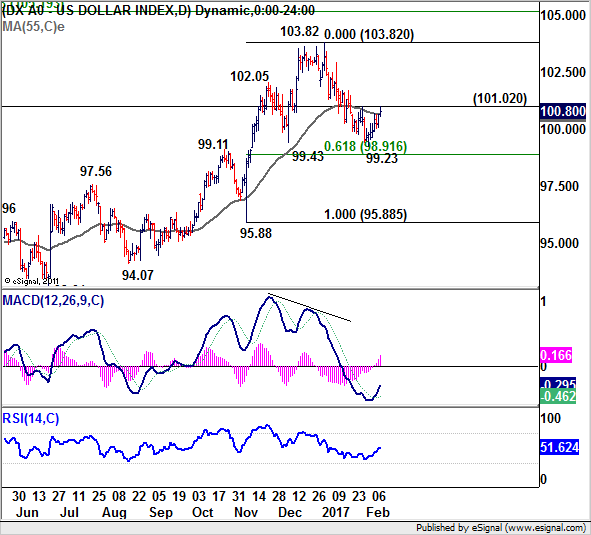
Dollar Index Could Have Bottomed at 99.23
With the dollar index depended key support zone. There is growing prospect of a near term reversal. Despite dipping to 99.23 earlier this month, the index quickly recovered back above 99.43 support. Now, firstly, daily MACD has crossed above signal line already, acting as a early sign of bottoming. Secondly, the structure of the fall from 103.82 to 99.23 is consistent with the view that it's a correction. Immediate focus this week is on 101.02 resistance. Decisive break there will confirm that the correction has completed and turn outlook bullish for a test on 103.82 high. Rejection from 101.02 would bring another fall, possibly to 61.8% retracement of 95.88 to 103.82 at 98.91.
Yields Stayed in Consolidation
Dollar's near term fate will also depend on developments in treasury yields. Or at least, should be in sync with benchmark yields to confirm underlying momentum. 10 year yield defended 55 day EMA last week and recovered. So far, structure of the price actions from 2.621 is consistent with the view that it's a consolidation pattern. More upside is in favor this week in TNX. But the real obstacle is in 2.555 resistance. Decisive break there will very likely bring resumption of up trend from 1.336. Though, rejection from 2.555 will extend the consolidation from 2.621 with another falling leg.
Overbought DJIA Approaches Double Resistance Level
Meanwhile, there is an important factor that would limit the strength in yield and dollar, or even reverse last week's move. DJIA did extended its record run. However, firstly, it's now close to long term projection level at 61.8% projection of 10404.49 to 18351.36 from 15450.56 at 20361.72. Secondly, it's also close to the long term upper channel line. Thirdly, weekly RSI is clearly in overbought region. At this point, we don't seen any ground for powering through fibonacci and channel resistance. Hence, while we're staying bullish in stocks, we'll be very cautious in the next two weeks. And, a pull back in stocks will most likely pressure yields and Dollar again.
US stocks soared to new record high last week on resurgence of talk of president Donald Trump's expansive policies. In particular, bulls regained control after Trump said he would announce "phenomenal" tax reforms within two or three weeks. DJIA closed the week up 197.9 pts, or 0.99% at 20269.37. S&P 500 gained 18.7 pts or 0.81% for the week to close at 2316.10. NASDAQ rose 67.4 pts or 1.19% to close at 5734.13. All three major indices closed at record highs. The developments helped lift treasury yield from intra-week selloff. 10 year yield closed at 2.409 after dipping to 2.325, comparing to prior week's close at 2.491. Dollar was given a boost and ended as the second strongest major currency, next to Sterling. The Dollar index closed at 100.71, up from prior week's close at 99.73. Fed chair Janet Yellen's testimony to Congress will be a major focus this week. But Trump's tweets and any economy-related announcements will be the things that move markets.
Dollar Index Could Have Bottomed at 99.23
With the dollar index depended key support zone. There is growing prospect of a near term reversal. Despite dipping to 99.23 earlier this month, the index quickly recovered back above 99.43 support. Now, firstly, daily MACD has crossed above signal line already, acting as a early sign of bottoming. Secondly, the structure of the fall from 103.82 to 99.23 is consistent with the view that it's a correction. Immediate focus this week is on 101.02 resistance. Decisive break there will confirm that the correction has completed and turn outlook bullish for a test on 103.82 high. Rejection from 101.02 would bring another fall, possibly to 61.8% retracement of 95.88 to 103.82 at 98.91.
Yields Stayed in Consolidation
Dollar's near term fate will also depend on developments in treasury yields. Or at least, should be in sync with benchmark yields to confirm underlying momentum. 10 year yield defended 55 day EMA last week and recovered. So far, structure of the price actions from 2.621 is consistent with the view that it's a consolidation pattern. More upside is in favor this week in TNX. But the real obstacle is in 2.555 resistance. Decisive break there will very likely bring resumption of up trend from 1.336. Though, rejection from 2.555 will extend the consolidation from 2.621 with another falling leg.
Overbought DJIA Approaches Double Resistance Level
Meanwhile, there is an important factor that would limit the strength in yield and dollar, or even reverse last week's move. DJIA did extended its record run. However, firstly, it's now close to long term projection level at 61.8% projection of 10404.49 to 18351.36 from 15450.56 at 20361.72. Secondly, it's also close to the long term upper channel line. Thirdly, weekly RSI is clearly in overbought region. At this point, we don't seen any ground for powering through fibonacci and channel resistance. Hence, while we're staying bullish in stocks, we'll be very cautious in the next two weeks. And, a pull back in stocks will most likely pressure yields and Dollar again.
Valeriy Brusilovskyy
Dear Colleagues, I want to sum up the results of the last week trade.
Cycle Tickmill Night
Total profit for week - 69.75$
Account growth percentage - 6.3%
I made 4 trade deals in EUR/JPY - all in profit,
USD/CAD 2 trade deals 1 in profit, 1 - in loss
EUR/AUD 1 deal in profit
AUD/CAD 1 deal in profit
Cycle Vipro
Total profit for week - 67.1$
Account growth percentage - 6.35%
EUR/JPY - 4 profit deals
AUD/CAD - 3 profit deals
USD/CAD - 1 profit, 1 loss
EUR/AUD - 1 profit
GBP/AUD - 1 profit
Oil - 1 loss
UK Tickmill Night
Total profit for week - 34.74$
Account growth percentage - 5.6%
EUR/JPY - 4 profit deals
AUD/CAD - 1 profit deal
EUR/AUD - 1 profit, 1 loss
USD/CAD - 1 profit, 1 loss
Oil - 1 loss
Cycle ICMarkets
Total profit for week - 56.58$
Account growth percentage - 5.9%
AUD/CAD - 1 profit deal
EURJPY - 4 profit
USD/CAD - zero profit deal
EUR/AUD - 2 profit
EUR/GBP - 1 loss
Thank you for your trust!
Cycle Tickmill Night
Total profit for week - 69.75$
Account growth percentage - 6.3%
I made 4 trade deals in EUR/JPY - all in profit,
USD/CAD 2 trade deals 1 in profit, 1 - in loss
EUR/AUD 1 deal in profit
AUD/CAD 1 deal in profit
Cycle Vipro
Total profit for week - 67.1$
Account growth percentage - 6.35%
EUR/JPY - 4 profit deals
AUD/CAD - 3 profit deals
USD/CAD - 1 profit, 1 loss
EUR/AUD - 1 profit
GBP/AUD - 1 profit
Oil - 1 loss
UK Tickmill Night
Total profit for week - 34.74$
Account growth percentage - 5.6%
EUR/JPY - 4 profit deals
AUD/CAD - 1 profit deal
EUR/AUD - 1 profit, 1 loss
USD/CAD - 1 profit, 1 loss
Oil - 1 loss
Cycle ICMarkets
Total profit for week - 56.58$
Account growth percentage - 5.9%
AUD/CAD - 1 profit deal
EURJPY - 4 profit
USD/CAD - zero profit deal
EUR/AUD - 2 profit
EUR/GBP - 1 loss
Thank you for your trust!
Valeriy Brusilovskyy
Tax and Trade Promises Won’t Carry Last Week’s Dollar, Equities Trend
Though the event risk this past week was varied, the effective fundamental motivation was once again derived from trade and competitive policies. Details of these programs are not scheduled, but evaluations by domestic and foreign sources may decide the market’s conviction.
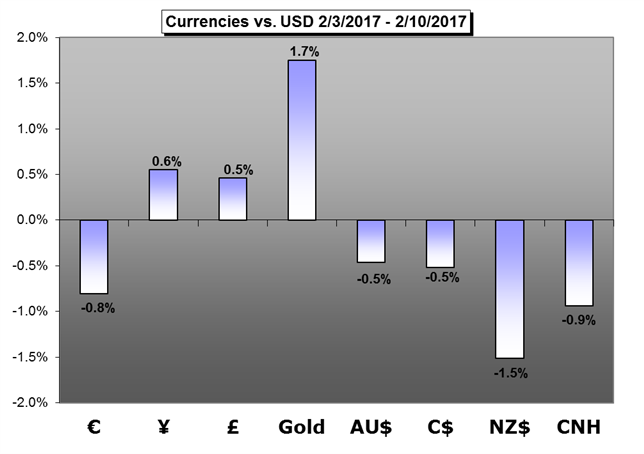
The Dollar was one of this past week’s best performers – and not just relative to other currencies. An ambitious rally from recent congestion was impressive, but its momentum is dubious. Motivation behind the drive was clear in unilateral improvement in US financial conditions via policy change.
The Euro may fall as underlying monetary policy trends reassert themselves, highlighting the contrast between a dovish ECB and most of its G10 FX counterparts.
The British Pound continues to be evidence of the growth that can be had when a currency aggressively depreciates.
The Australian Dollar has lacked the will to rise meaningfully despite supportive economic and political news. That means rates still dominate, which could spell trouble ahead.
The offshore Yuan (USD/CNH) remained stronger than PBOC’s guided levels as well as the onshore Yuan (USD/CNY) this week, though the spreads against both have narrowed to around 100 pips on Friday from more than 600 pips on Monday.
Gold prices rallied higher again this week with the precious metal up 0.87% to trade at 1230 ahead of the New York close on Friday.
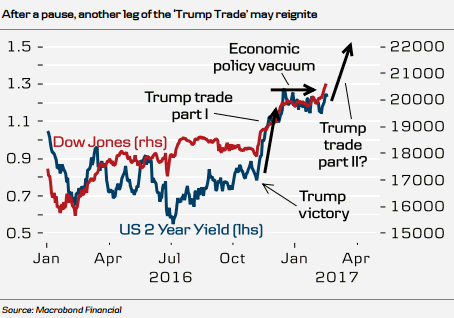
The bid for global equities continues, led by the United States on the back of renewed strength in the ‘Trump Trade’.
Though the event risk this past week was varied, the effective fundamental motivation was once again derived from trade and competitive policies. Details of these programs are not scheduled, but evaluations by domestic and foreign sources may decide the market’s conviction.
The Dollar was one of this past week’s best performers – and not just relative to other currencies. An ambitious rally from recent congestion was impressive, but its momentum is dubious. Motivation behind the drive was clear in unilateral improvement in US financial conditions via policy change.
The Euro may fall as underlying monetary policy trends reassert themselves, highlighting the contrast between a dovish ECB and most of its G10 FX counterparts.
The British Pound continues to be evidence of the growth that can be had when a currency aggressively depreciates.
The Australian Dollar has lacked the will to rise meaningfully despite supportive economic and political news. That means rates still dominate, which could spell trouble ahead.
The offshore Yuan (USD/CNH) remained stronger than PBOC’s guided levels as well as the onshore Yuan (USD/CNY) this week, though the spreads against both have narrowed to around 100 pips on Friday from more than 600 pips on Monday.
Gold prices rallied higher again this week with the precious metal up 0.87% to trade at 1230 ahead of the New York close on Friday.
The bid for global equities continues, led by the United States on the back of renewed strength in the ‘Trump Trade’.
Valeriy Brusilovskyy
Евро ничего не угрожает, даже если Марин Ле Пен победит на выборах
Эксперты из Barclays и UniCredit отмечают, что шансы настроенного против единой валюты кандидата Марин Ле Пен победить во втором раунде 7 мая ничтожно малы, но даже если это случится, она не сумеет заручиться поддержкой большинства на голосовании в июне. Кроме того, большинство валютных стратегов и экономистов отмечают, что без мощной поддержки Парламента она не сможет объявить референдум по этому вопросу.
С другой стороны, опыт показывает, что в современной политике возможны все даже самые маловероятные события, поэтому в Commerzbank AG советуют не расслабляться раньше времени и на всякий случай готовиться к оттоку капитала из Франции и других периферийных стран, таких как Италия. На минувшей неделе единая валюта потеряла 1.5% по отношению к доллару из-за сгустившейся политической неопределенности, при этом аналитики Credit Agricole SA и Morgan Stanley рекомендовали клиентам продавать евро.
Ниже приводятся комментарии экономистов и стратегов на эту тему:
Credit Agricole
«Согласно результатам опросов Ле Пен должна проиграть во втором раунде Макрону или Фийону, этим отчасти объясняется относительная устойчивость евро», - отмечает Валентин Маринов. Конечно, это спокойствие может быть ложным, но в любом случае победа Ле Пен не должна автоматически приравниваться к выходу Франции из зоны евро. «Это долгий и сложный процесс, требующий внесения поправок в конституцию», - поясняет Маринов. Банк считает, что вероятность победы Ле Пен во втором раунде не превышает 35%.
Barclays
«Если Бенуа Амон или Жан-Люк Меланшон не примкнут к Ле Пен, то у нее практически нет шансов победить во втором раунде президентских выборов», - уверен Франсуа Кабо. В любом случае, ее партия даже отдаленно не сможет получить абсолютное большинство в нижней палате парламента на всеобщих выборах в июне. Ей придется согласиться на коалицию и, соответственно, она не сможет строго придерживаться своих заявлений и выполнить все свои обещания. «Более того, прежде чем выйти из Европы нужно изменить конституцию и преодолеть довольно высокие барьеры, в том числе получить одобрение парламента», - поясняет Кабо.
UniCredit
По словам Эрика Нильсена, лондонского экономиста банка, у Ле Пен, безусловно, есть шансы победить. «Все опросы без исключения пророчат ей переход во второй раунд, а когда два кандидата остаются один на один, случится может все что угодно», - поясняет он. «И все же вероятность выхода Франции из Еврозоны невысока», - считает он, поскольку Ле Пен вряд ли сумеет набрать большинство голосов в парламенте, который в основном поддерживает евро.
Commerzbank
Йорг Кремер из франкфуртского отделения Commerzbank, считает, что у Ле Пен 20% шанс выиграть во втором раунде. Победа Ле Пен теоретически может привести к выходу Франции из Еврозоны. А без политической и экономической поддержки французов монетарный союз просто не выживет. Новость о победе Ле Пен спровоцирует массовое бегство капитала не только из Франции, но и из других периферийных стран, в первую очередь из Италии. Придется ввести контроль над потоками капитала и объявить банковские каникулы, что станет началом конца для Еврозоны.
Nomura Holdings
«Ни один из опросов ни в одной стране, которая в этом году идет на выборы, не предполагает высокую вероятность победы протестных кандидатов», - отмечает Эндрю Гейтс из лондонского подразделения банка. С другой стороны, даже в случае победы анти-эгалитарным политикам преодолеть серьезные законодательные препятствия, чтобы исполнить свои анти-европейские замыслы. В Nomura считают, что новым президентом Франции станет Эммануэль Макрон. Но его партия вряд ли наберет большинство голосов в Национальной ассамблее, это значит, что придется формировать коалицию, а власть президента сведется к функциям премьер-министра.
Вероятность победы Ле Пен невысока, но она все-таки есть, и сбрасывать ее со счетов не стоит. Но опять-таки она будет вынуждена формировать коалицию, которая, скорее всего, не позволит ей объявить референдум о выходе Франции из Еврозоны. Не исключено, что все закончится судебными разбирательствами на эту тему. «Мы полагаем, что суд, в конечном счете, решит в пользу референдума, учитывая прецеденты и мощную общественную поддержку такой формы волеизъявления».
JPMorgan Chase & Co.
«Существует высокая вероятность того, Ле Пен выйдет во второй раунд, но, скорее всего, проиграет его с большим отрывом, не зависимо от того, кто будет ее соперником», - отмечает Рафаэль Бран-Агуерр. Даже в случае победы парламентское большинство ей не набрать, а это значит, что придется формировать коалицию.
Эксперты из Barclays и UniCredit отмечают, что шансы настроенного против единой валюты кандидата Марин Ле Пен победить во втором раунде 7 мая ничтожно малы, но даже если это случится, она не сумеет заручиться поддержкой большинства на голосовании в июне. Кроме того, большинство валютных стратегов и экономистов отмечают, что без мощной поддержки Парламента она не сможет объявить референдум по этому вопросу.
С другой стороны, опыт показывает, что в современной политике возможны все даже самые маловероятные события, поэтому в Commerzbank AG советуют не расслабляться раньше времени и на всякий случай готовиться к оттоку капитала из Франции и других периферийных стран, таких как Италия. На минувшей неделе единая валюта потеряла 1.5% по отношению к доллару из-за сгустившейся политической неопределенности, при этом аналитики Credit Agricole SA и Morgan Stanley рекомендовали клиентам продавать евро.
Ниже приводятся комментарии экономистов и стратегов на эту тему:
Credit Agricole
«Согласно результатам опросов Ле Пен должна проиграть во втором раунде Макрону или Фийону, этим отчасти объясняется относительная устойчивость евро», - отмечает Валентин Маринов. Конечно, это спокойствие может быть ложным, но в любом случае победа Ле Пен не должна автоматически приравниваться к выходу Франции из зоны евро. «Это долгий и сложный процесс, требующий внесения поправок в конституцию», - поясняет Маринов. Банк считает, что вероятность победы Ле Пен во втором раунде не превышает 35%.
Barclays
«Если Бенуа Амон или Жан-Люк Меланшон не примкнут к Ле Пен, то у нее практически нет шансов победить во втором раунде президентских выборов», - уверен Франсуа Кабо. В любом случае, ее партия даже отдаленно не сможет получить абсолютное большинство в нижней палате парламента на всеобщих выборах в июне. Ей придется согласиться на коалицию и, соответственно, она не сможет строго придерживаться своих заявлений и выполнить все свои обещания. «Более того, прежде чем выйти из Европы нужно изменить конституцию и преодолеть довольно высокие барьеры, в том числе получить одобрение парламента», - поясняет Кабо.
UniCredit
По словам Эрика Нильсена, лондонского экономиста банка, у Ле Пен, безусловно, есть шансы победить. «Все опросы без исключения пророчат ей переход во второй раунд, а когда два кандидата остаются один на один, случится может все что угодно», - поясняет он. «И все же вероятность выхода Франции из Еврозоны невысока», - считает он, поскольку Ле Пен вряд ли сумеет набрать большинство голосов в парламенте, который в основном поддерживает евро.
Commerzbank
Йорг Кремер из франкфуртского отделения Commerzbank, считает, что у Ле Пен 20% шанс выиграть во втором раунде. Победа Ле Пен теоретически может привести к выходу Франции из Еврозоны. А без политической и экономической поддержки французов монетарный союз просто не выживет. Новость о победе Ле Пен спровоцирует массовое бегство капитала не только из Франции, но и из других периферийных стран, в первую очередь из Италии. Придется ввести контроль над потоками капитала и объявить банковские каникулы, что станет началом конца для Еврозоны.
Nomura Holdings
«Ни один из опросов ни в одной стране, которая в этом году идет на выборы, не предполагает высокую вероятность победы протестных кандидатов», - отмечает Эндрю Гейтс из лондонского подразделения банка. С другой стороны, даже в случае победы анти-эгалитарным политикам преодолеть серьезные законодательные препятствия, чтобы исполнить свои анти-европейские замыслы. В Nomura считают, что новым президентом Франции станет Эммануэль Макрон. Но его партия вряд ли наберет большинство голосов в Национальной ассамблее, это значит, что придется формировать коалицию, а власть президента сведется к функциям премьер-министра.
Вероятность победы Ле Пен невысока, но она все-таки есть, и сбрасывать ее со счетов не стоит. Но опять-таки она будет вынуждена формировать коалицию, которая, скорее всего, не позволит ей объявить референдум о выходе Франции из Еврозоны. Не исключено, что все закончится судебными разбирательствами на эту тему. «Мы полагаем, что суд, в конечном счете, решит в пользу референдума, учитывая прецеденты и мощную общественную поддержку такой формы волеизъявления».
JPMorgan Chase & Co.
«Существует высокая вероятность того, Ле Пен выйдет во второй раунд, но, скорее всего, проиграет его с большим отрывом, не зависимо от того, кто будет ее соперником», - отмечает Рафаэль Бран-Агуерр. Даже в случае победы парламентское большинство ей не набрать, а это значит, что придется формировать коалицию.
: