


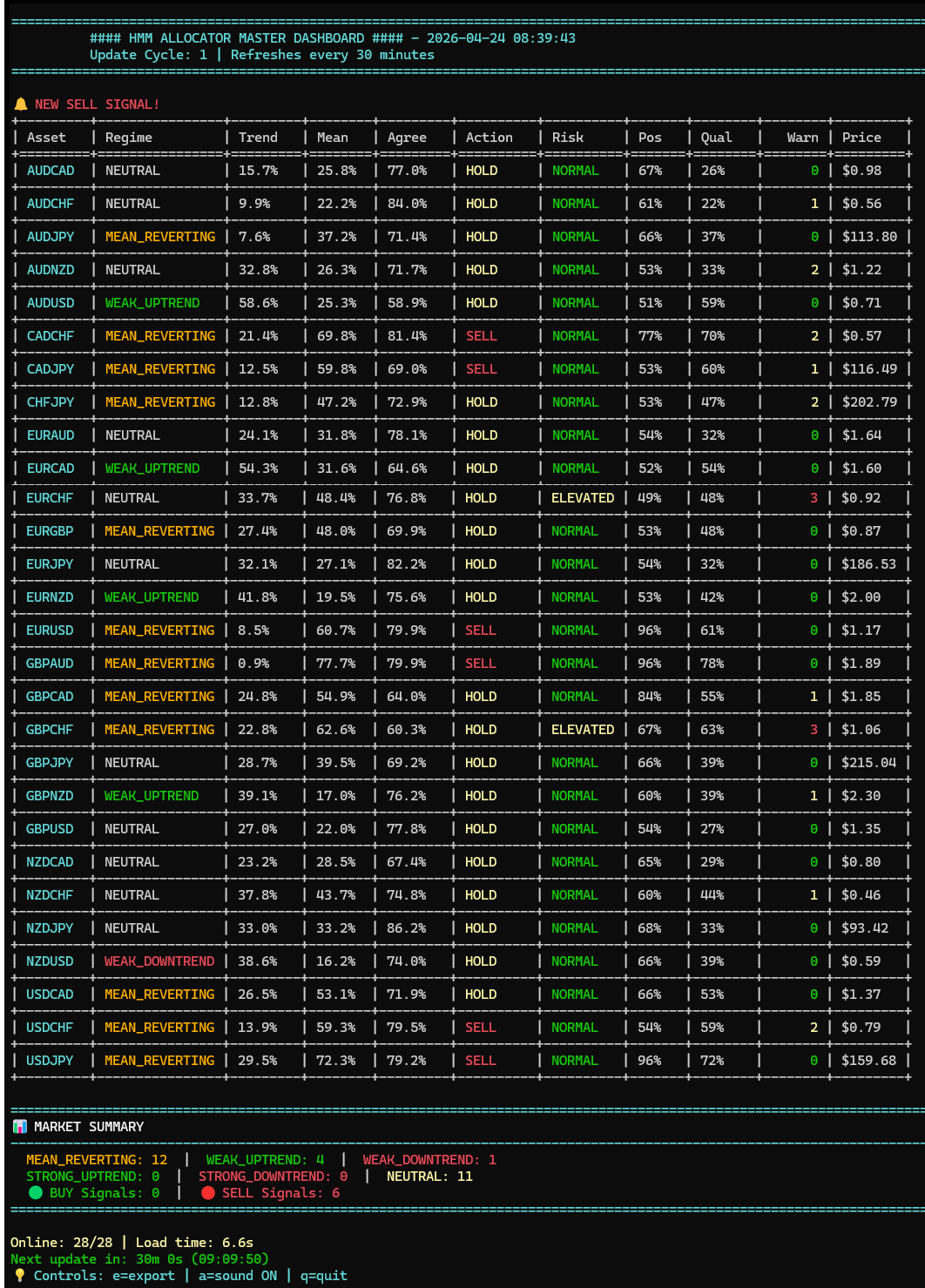
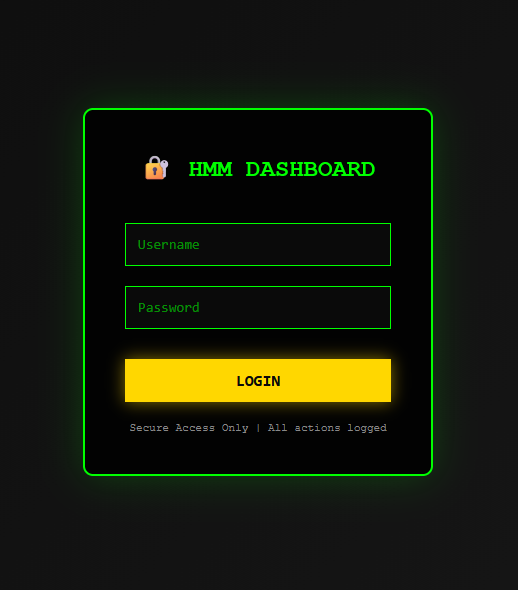
This dashboard is the viewing center for your entire HMM trading system.
Ive been upgrading the HMM, the python bot and the dashboard.
Dashboard Summary -
This dashboard does NOT pull indicator data from MT5.
Instead, it pulls PRE-ANALYZED TRADING SIGNALS from 28 running HMM allocator instances via their JSON APIs (ports 5001-5028).
Each allocator runs its own HMM model, analyzes market regimes, and outputs decisions like "SELL" with 65% mean allocation.
The dashboard aggregates all 28 outputs into a single table, allowing you to scan the entire forex market in 6 seconds for trading opportunities instead of manually checking 28 separate python tabs.
It's a command center for your HMM system, not an indicator dashboard.
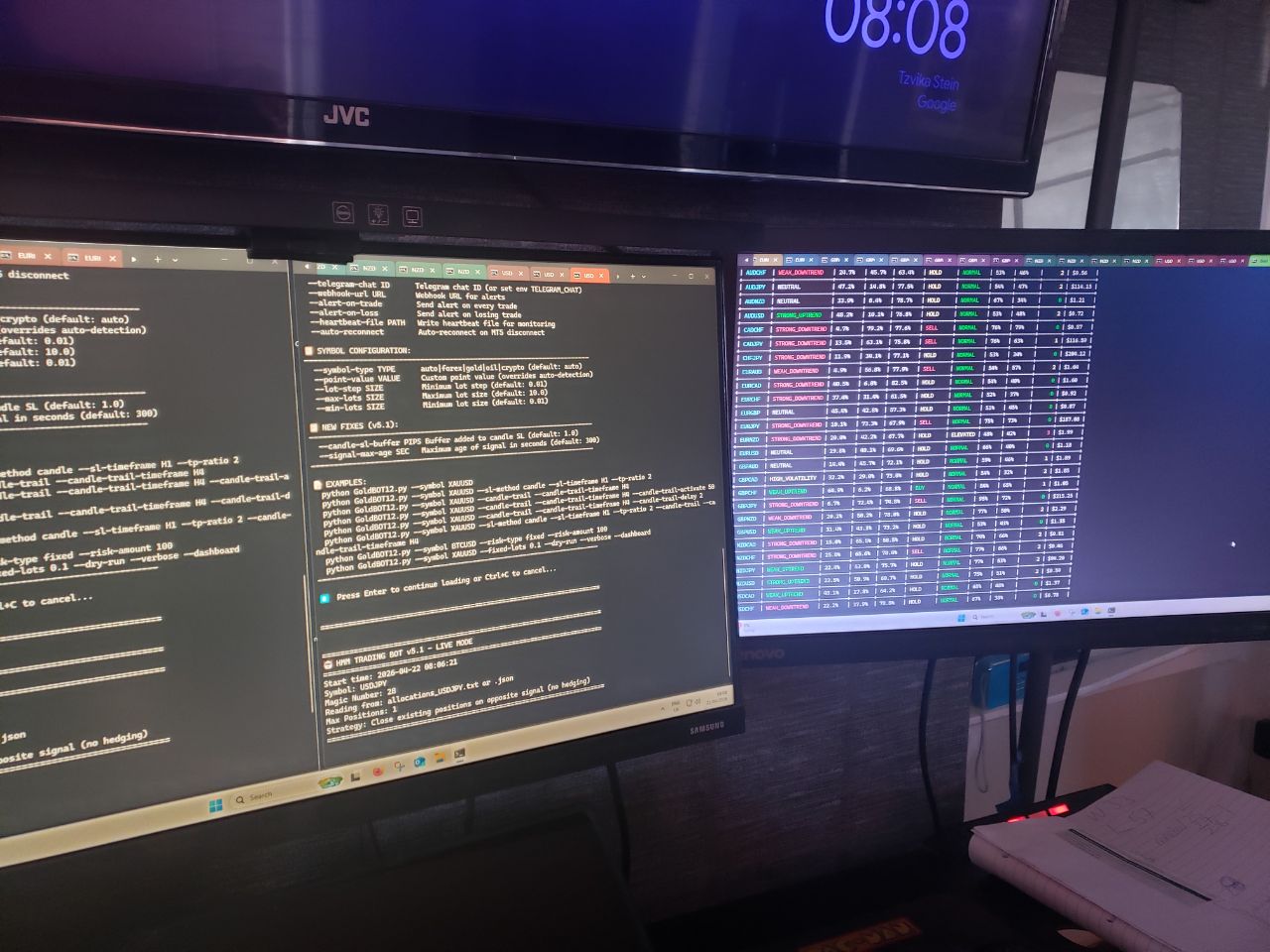
Yes, there is a separate trading bot that reads the exact same JSON files that the dashboard displays and automatically executes the trades.
While the dashboard just visualizes the signals (e.g., "SELL USDJPY with 77% position size"), the trading bot takes those signals and actually places the orders in MT5.
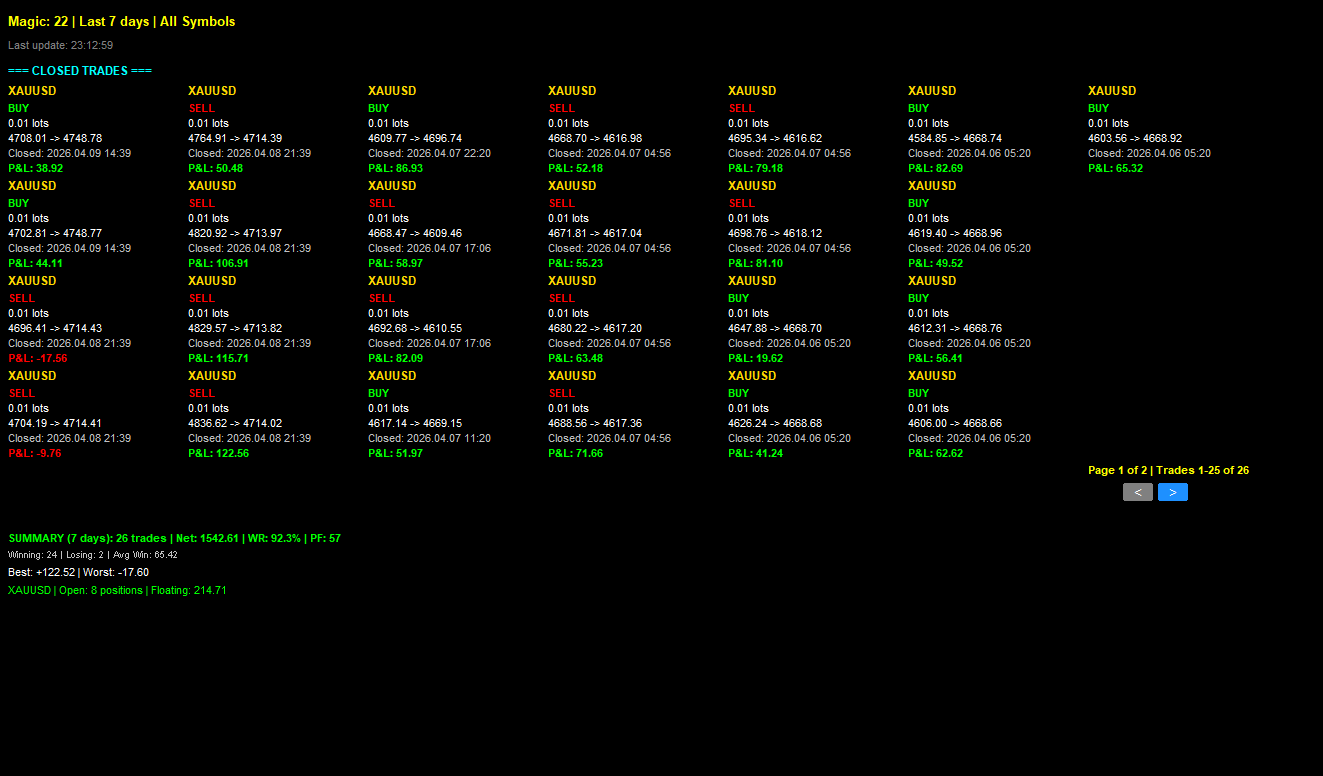
It reads the allocations_USDJPY.json file written by the HMM allocator, calculates the correct lot size based on your risk settings (1% of account, fixed lots, or signal-adaptive), sets stop losses and take profits using methods like candle-based or volatility-based levels, manages open positions with trailing stops and breakeven protection, logs every trade to a SQLite journal with full performance analytics, and provides its own web dashboard for monitoring and manual override.
So the master dashboard shows you what the HMM allocators are thinking, and the trading bot does the actual buying and selling based on those thoughts.
This is a production-ready, multi-asset Hidden Markov Model (HMM) market regime allocator that runs 28 parallel instances across all major forex pairs, each analyzing 5 timeframes (D1 through M5) with weighted consensus to output 7 distinct market regimes (STRONG/UPTREND, DOWNTREND, MEAN_REVERTING, etc.).
What makes this system institutionally unique is its proprietary CANARY drift detection – a shadow HMM that runs alongside the production model, using KL divergence and state disagreement metrics to detect market regime changes in real-time, automatically reducing position sizes by 50% when models disagree.
Unlike typical retail systems that react to price, this HMM anticipates regime shifts before they occur.
What is a Hidden Markov Model (HMM)?
A Hidden Markov Model (HMM) is a sophisticated statistical framework used to model systems that transition between unobserved (hidden) states, where each state generates observable data according to its own probability distribution.
In financial markets, an HMM assumes that the market exists in one of several latent regimes—such as a high-volatility trend, a low-volatility range, or a mean-reverting environment—and that price movements are the observable emissions from these hidden states.
The model continuously calculates the probability of being in each regime based on historical price data and transition probabilities between states.
Unlike traditional lagging indicators that simply react to price, an HMM infers the current market condition probabilistically, allowing it to anticipate regime shifts rather than just confirm them after they occur.
This makes HMMs particularly valuable for adaptive trading systems, as they quantify uncertainty and provide a mathematical foundation for regime-dependent strategy selection.
The model's parameters—state transition matrices, emission distributions, and initial state probabilities—are typically estimated using the Baum-Welch algorithm, while the most likely sequence of hidden states is decoded using the Viterbi algorithm.
For traders, the output is not a simple buy/sell signal but a nuanced probability distribution across market regimes, enabling more informed risk management and position sizing decisions.
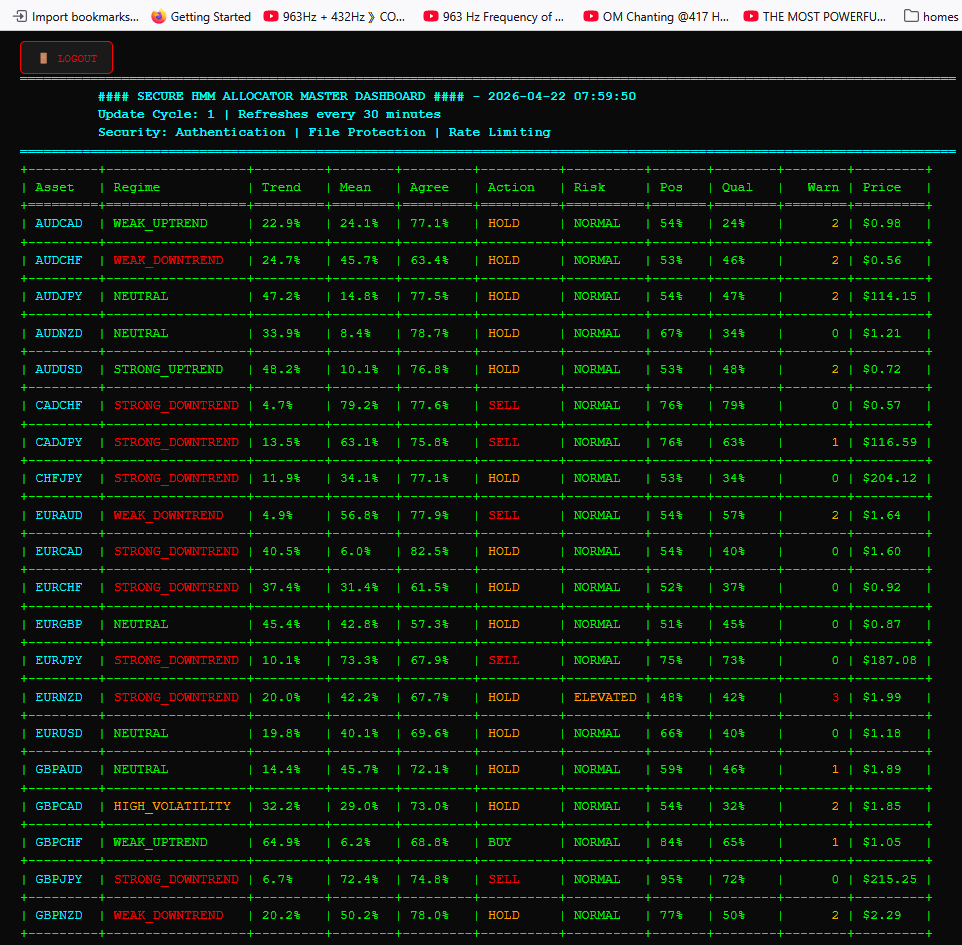


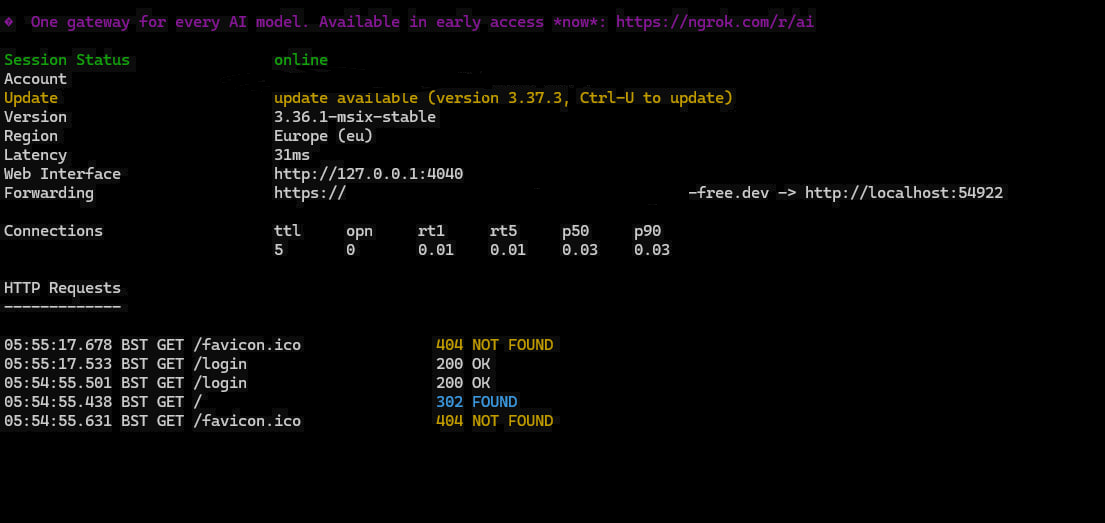



component already supports remote delivery. Each instance exposes a JSON API, the master
dashboard aggregates all pairs into a single browser-viewable table, and adding
authentication (via FastAPI's built-in security) turns it into a paid service accessible
worldwide through ngrok or Cloudflare Tunnel. Subscribers pay a monthly fee ($49–$299) for live regime signals, CANARY drift alerts,
and actionable BUY/SELL recommendations with position sizing—all without installing any
software or MT5. Critically, the asset list is not limited to forex. The system is symbol-agnostic,
meaning the same 28-instance architecture can be redeployed for crypto (BTCUSD, ETHUSD,
SOLUSD), indices (SPX500, NAS100, DAX40, FTSE100), energy (WTI, BRENT, NATGAS),
commodities (XAUUSD, XAGUSD, COPPER), or stocks (AAPL, MSFT, NVDA, TSLA). Each symbol gets its own HMM instance, its own JSON API on a dedicated port, and full
CANARY drift protection. This transforms a single forex system into a multi-asset
subscription business where you sell access to "HMM Signals for Crypto," "HMM Signals for
Indices," or an "All-Asset Premium Pass"—each with its own dashboard and pricing tier,
all powered by the same proven HMM + CANARY engine.