ZhiJun Zhang / Profile
- Information
|
10+ years
experience
|
0
products
|
0
demo versions
|
|
0
jobs
|
0
signals
|
0
subscribers
|
In this article we are going to analyze the NRTR indicator and create a trading system based on this indicator. We are going to develop a module of trading signals that can be used in creating strategies based on a combination of NRTR with additional trend confirmation indicators.
The article is an intermediate step for those who still writes in MQL4 and has no desire to switch to MQL5. We continue to search for opportunities to write code in MQL4 style. This time, we will look into the macro substitution of the #define preprocessor.
The article is based on 'The Mathematics of Money Management' by Ralph Vince. It provides the description of empirical and parametric methods used for finding the optimal size of a trading lot. Also the article features implementation of trading modules for the MQL5 Wizard based on these methods.
The article describes the way to create a custom strategy tester and a custom analyzer of the optimization passes. After reading it, you will understand how the math calculations mode and the mechanism of so-called frames work, how to prepare and load custom data for calculations and use effective algorithms for their compression. This article will also be interesting to those interested in ways of storing custom information within an expert.
If you have newly switched to MQL5, then this article will be useful. First, the access to the indicator data and series is done in the usual MQL4 style. Second, this entire simplicity is implemented in MQL5. All functions are as clear as possible and perfectly suited for step-by-step debugging.
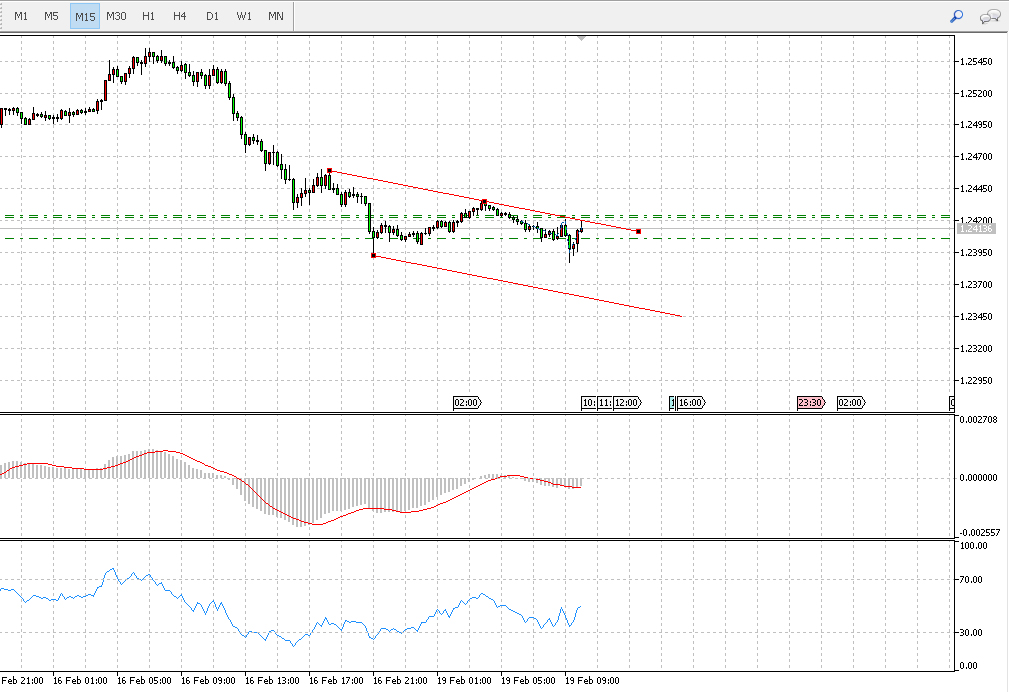
Price trends form price channels that can be observed on financial symbol charts. The breakout of the current channel is one of the strong trend reversal signals. In this article, I suggest a way to automate the process of finding such signals and see if the channel breakout pattern can be used for creating a trading strategy.
The article deals with automatic construction of support/resistance lines using local tops and bottoms of price charts. The well-known ZigZag indicator is applied to define these extreme values.
There are ten basic errors of a newcomer intrading: trading at market opening, undue hurry in taking profit, adding of lots in a losing position, closing positions starting with the best one, revenge, the most preferable positions, trading by the principle of 'bought for ever', closing of a profitable strategic position on the first day, closing of a position when alerted to open an opposite position, doubts.
All categories classifying trading strategies are fully arbitrary. The classification below is to emphasize the basic differences between possible approaches to trading.
Trading in financial markets is associated with a whole range of risks that should be taken into account in the algorithms of trading systems. Reducing such risks is the most important task to make a profit when trading.