Abdalla Mohamed Mahmoud Taha
  • Information
9+ years
experience
0
products
0
demo versions
0
jobs
0
signals
0
subscribers
my name Abdalla Mohamed, I have more than 11 years experience in forex market .

I am very professional scalping trader and I own research and studies on the pairs of the British pound

, i have signals providers at MT4 / MT5 , available through the MQL5.com Market.
Abdalla Mohamed Mahmoud Taha
Added topic transfer ea from mt4 to mt5
can any one help me to make my mt4 ea work at mt5 ?????? 
Abdalla Mohamed Mahmoud Taha
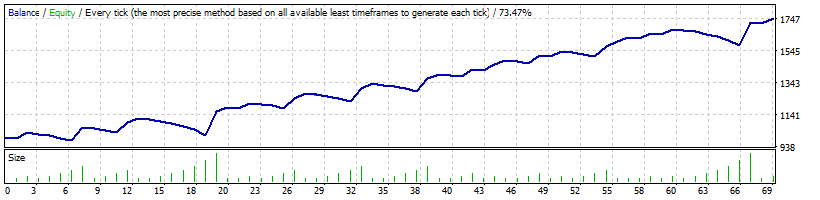
this is my myfxbook account
Abdalla Mohamed Mahmoud Taha
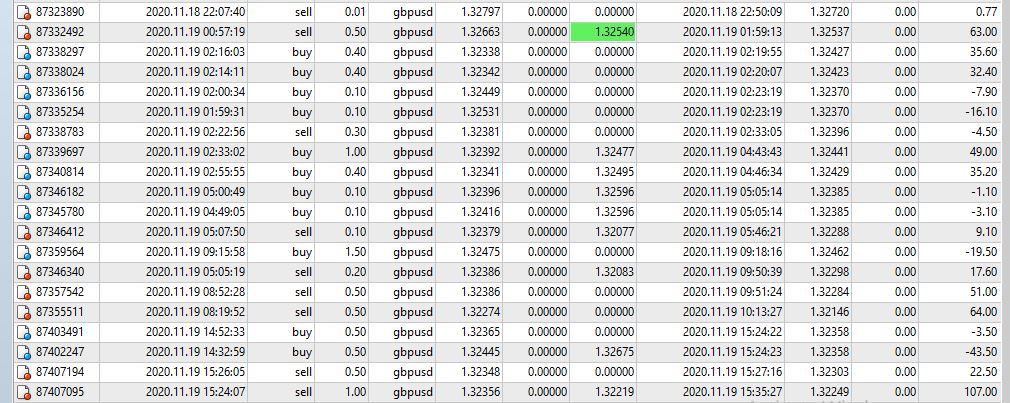
Profit today from GbpUsd at 19 November
Abdalla Mohamed Mahmoud Taha
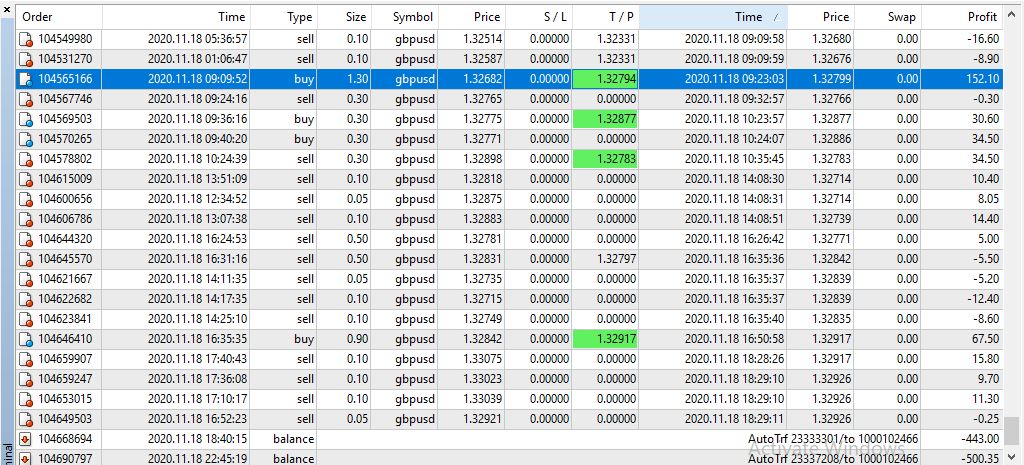
My Profit from GbpUsd at 18 November
Abdalla Mohamed Mahmoud Taha
My Profit from GbpUsd at 17 November
Abdalla Mohamed Mahmoud Taha
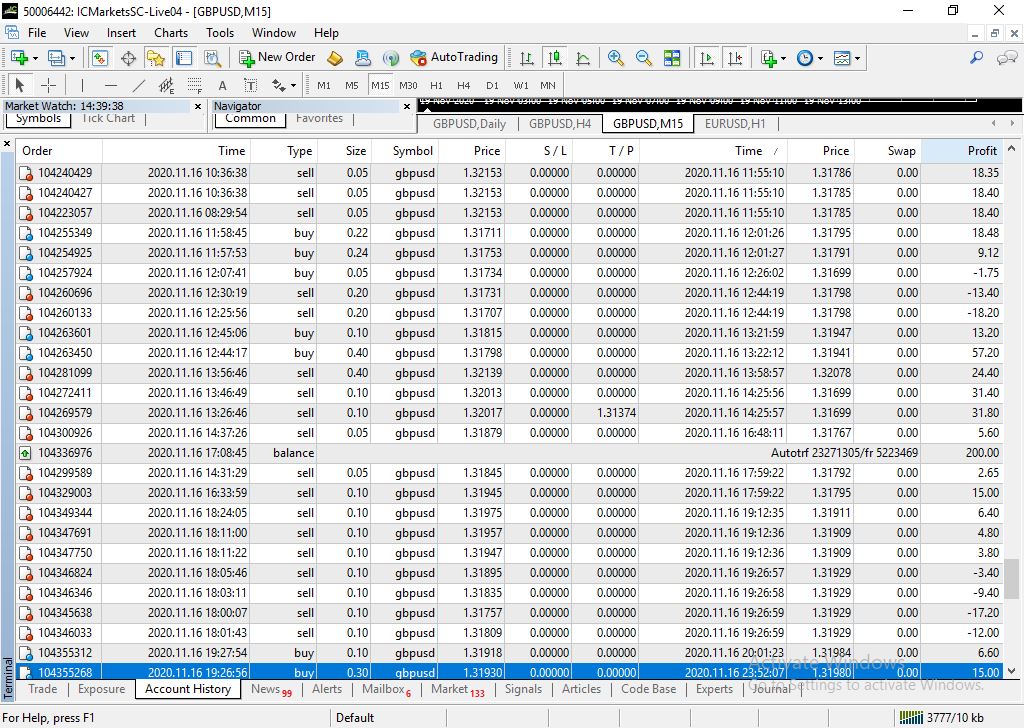
My Profit from GbpUsd at 16 November
Abdalla Mohamed Mahmoud Taha
Added topic when rank return again
dear if any signal make more than 50 % in the first month rank   will disappear  can any one tell me when rank will return ?? 
Abdalla Mohamed Mahmoud Taha
How to Trade the News Using the Straddle Trade Strategy

What if there was a way to make money quickly even if you had no idea whether the market would move up or down?

It’s possible as long as there is sufficient price volatility.

And when can you get this volatility? When news like economic data or central bank announcements is released!

The first thing to consider is which news reports to trade.
Earlier, we discussed the biggest moving news releases.

Ideally, you would want to only trade those reports because there is a high probability the market will make a big move after their release.

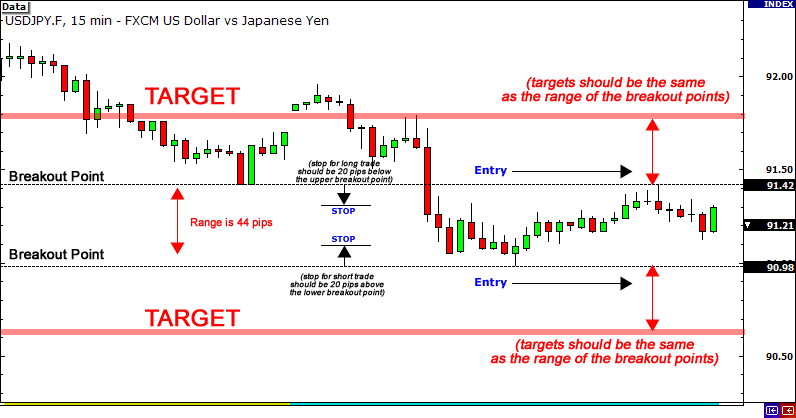
The next thing you should do is take a look at the range at least 20 minutes before the actual news release.

The high of that range will be your upper breakout point, and the low of that range will be your lower breakout point.
Note that the smaller the range is the more likely it is you will see a big move from the news report.

The breakout points will be your entry levels.

This is where you want to set your orders. Your stops should be placed approximately 20 pips below and above the breakout points, and your initial targets should be about the same as the range of the breakout levels.

Straddle Trade
This is known as a straddle trade.

You are looking to play BOTH sides of the trades.

It doesn’t matter which direction the price moves, the straddle strategy will have you positioned to take advantage of it.

Now that you’re prepared to enter the market in either direction, all you have to do is wait for the news to come out.

Sometimes you may get triggered in one direction only to find that you get stopped out because the price quickly reverses in the other direction.

However, your other entry will get triggered and if that trade wins, you should recoup your initial losses and come out with a small profit.

A best-case scenario would be that only one of your trades gets triggered and the price continues to move in your favor so that you don’t incur any losses.

Either way, if done correctly you should still end up positive for the day.

One thing that makes a non-directional bias approach attractive is that it eliminates any emotions.
You just want to profit when the move happens.

This allows you to take advantage of more trading opportunities because you will be triggered either way.

As most news events tend to have a limited impact on longer-term price action, setting realistic profit targets should help to increase the number of winning trades.

There are many more strategies for trading the news, but the concepts mentioned in this lesson should always be part of your routine whenever you are working out an approach to taking advantage of news report movements.
Abdalla Mohamed Mahmoud Taha
Set Trading Goals That Work!

Goals are important! Not only do they represent expectations and aspirations, goals also serve as a bridge from reality to the ideal.

The moment you set a goal, you face reality by acknowledging the need to address your shortcomings or maybe simply fulfill your desire to do better.

I mean, you wouldn’t set a goal of finishing a full marathon if you’ve already done it, right? Of course, achieving that goal would be possible if you put some work in your running in the first place.

By putting in a substantial amount of effort that consequently leads to progress, goals keep you grounded when you see that it’s the little things that can make a big difference in the long run.

Small things like adding a minute to your jogging routine, drinking only a cup of coffee instead of your usual two, or moving your stop loss a pip or two above breakeven could have huge rewards down the road.

You then become more aware of yourself and realize your strengths. In this aspect, goals keep you motivated as each step you take gives you a better glimpse of what you’ll be like if you push yourself a little further.

Imagining yourself achieving success gets you closer to the real thing! Just ask Arnold Schwarzenegger who credits his seven Mr. Universe titles to his workout routine which included him just standing in the corner, visualizing himself winning again.

However, proper goal-setting is not as easy as it sounds.

Some traders often become too preoccupied with their desired outcomes, such as making a truckload of pips or bouncing back from their losses, that they overlook the realistic aspect of these goals.

You have to think about whether your goals are achievable depending on your trade plan, your risk management, and even your own personality.

Another reason why some traders fail to achieve their goals is the lack of concrete follow through. It’s not enough to set a particular weekly profit target, think happy thoughts, and expect it to magically become a reality.

Keep in mind that goals must be accompanied by specific steps to attain it, must be realistic, and must be action-oriented.

To facilitate this, one must also figure out which type of goal to aim for.

For beginner traders, it would be wise to set out on goals that focus on the process, as opposed to the outcome.

These types of goals help reinforce and shape your trading skills, so that you learn to trade properly. Whether or not you end up in a loss doesn’t matter – the point is that you trade the right way and focus on the process.

Examples of such process goals can pertain to certain aspects of trading like risk management (choosing the correct lot size) and execution (closing trades when they hit your stop loss). In the long run, it will be highly beneficial to your development as a trader.

On the other hand, if you are a more experienced trader, having outcome-oriented goals may prove to be more effective. Having a monetary or pip target can help remind you of what must be done in order to achieve the goal.

Remember though, you must first have the necessary skills and experience to actually know what process you must go through in order to hit your target.

No matter which type of goal you decide to choose, the goal should help you improve as a trader. The purpose of a goal is not only for you to achieve it; it should breed motivation, learning, and confidence.

By setting goals and striving to achieve them, you can accelerate your forex trading development exponentially.
Abdalla Mohamed Mahmoud Taha
GBP Weekly Forecast – Brexit Negotiations to Keep the Pound Supported?

Pound bulls remain optimistic that a Brexit deal could be reached. Will we see concrete developments this week?

Check out the top catalysts that might influence your pound trades:

Inflation numbers (Oct 21, 6:00 am GMT)
Dining discounts helped drag consumer prices near their five-year lows in August
The weakness was mostly expected, so traders focused on the risk rally ahead of the Fed’s policy statement
Analysts see the monthly prices rising by 0.3% in September, while the annual figure could remain at a 0.2% growth
Subdued prices can fan discussions of more QE or negative interest rates from the Bank of England (BOE)
Other lower-tier economic releases
Public borrowing (Oct 21, 6:00 am GMT) to clock in at 42.4B vs. 35.9B in September
CBI industrial order trends (Oct 22, 10:00 am GMT) to improve from -48 to -42 in October
GfK consumer confidence (Oct 22, 11:01 pm GMT) seen weakening from -25 to -28 in October
Retail sales (Oct 23, 6:00 am GMT) to see a 1.3% dip (from 0.8% growth) in September
Annualized retail sales could slow down from 2.8% to 1.0%
Manufacturing PMI (Oct 23, 8:30 am GMT) could show manufacturing slowdown (from 54.1 to 53.2) in October
Services PMI (Oct 23, 8:30 am GMT) to print at 53.4 after a 56.1 reading in September
Brexit updates
Ongoing Brexit negotiations should keep the pound somewhat supported throughout the week
U.K. PM Boris Johnson has so far kept the door open for negotiations after his self-imposed October 15 deadline
Bloomberg has reported that U.K. policymakers could take out controversial parts of the Internal Market Bill
Any hints of PM Johnson pulling the plug on negotiations could weigh on the pound
Technical snapshot
The pound has lost value against all of its major counterparts except the Aussie in the last seven days
GBP weakened the most against the dollar, yen, and the Kiwi
Abdalla Mohamed Mahmoud Taha
Turn Your Trading Weaknesses into Strengths

Suppose you’ve just experienced a huge losing streak. What will you likely do next? Are you the type of trader who becomes so depressed that you are unable to take clear forex trading signals, or are you the type of trader who’s able to easily shrug it off?

No matter how long you have been trading, there is always the risk of experiencing performance anxiety.

When things do not go your way, there is a chance that you’ll become overly pessimistic and see the situation as a sign that you are a failure. As a result, your trading performance dwindles even more, eventually leading you to quit.

This is obviously a problem. But like all problems, there is also a solution. Instead of focusing your weaknesses, look at it under a new light – a process called positive reevaluation.

For illustrative purposes, let’s take a trader who has a habit of using stops that are way too tight because he’s afraid of losing too much.

As of late, he’s getting stopped out a lot and ends up with a long losing streak. This makes him even more terrified of putting trades on and losing more money. He now finds himself stuck in a very vicious cycle that’s freezing him up.
You could say that this forex trader’s attitude towards trading is negative, but through the process of positive reevaluation, he can actually use this underlying weakness as a strength.

Rather than focusing on the fear of losing, the trader can use this fear to positively reevaluate his trading and see it as a position-sizing problem. He can cut down on his position sizes so he can take even smaller risks while at the same time widening his stops.

If you can twist a perceived negative thought, tendency, or trait into a positive one, you can get it to work for you rather than against you.

Let’s say that as a trader, you’re easily overcome with emotion when your trade starts to go against you. As a result, you tend to widen your stop when your forex trade is losing.

A bit of positive reevaluation can help you shift focus away from how this tendency holds you back and towards how it can help you.

Since you know that these emotions sprout when market conditions become unfavorable for your trade, when you find yourself wanting to widen your stops, you can actually use it as a signal to cut losses or trim your position.
Basically, instead of letting it take over you, you end up using your emotions as a signal to make better trading decisions.

So you see, looking at a problem from a different angle can go a long way in helping you improve your forex trading. It can offer you new insights on how to approach a problem, and heck, it can even help you turn your perceived weaknesses into strengths!
Abdalla Mohamed Mahmoud Taha
Evening Doji Star

An Evening Doji Star consists of a long bullish candle, followed by a Doji that gaps up, then a third bearish candle that gaps down and closes well within the body of the first candle.

An Evening Doji Star is a three candle bearish reversal pattern similar to the Evening Star.

The only difference is that the Evening Doji Star needs to be a Doji candle for the second candle

To identify an Evening Doji Star pattern, look for the following criteria:

The first candle should be a tall white candle in an upward price trend.
The second candle should be a doji whose body gaps above the first and third candles. Shadows are ignored.
The third candle is a tall black candle that closes at or below the midpoint of the first candle
Meaning

This Evening Doji Star acts as a bearish reversal of the upward price trend because price rises into the pattern and breaks out downward.

A downward breakout occurs when price closes below the bottom of the three-candlestick pattern.

Since the price in the last candle is already near the low, a downward breakout is expected.
Abdalla Mohamed Mahmoud Taha
Is it always right to start with a demo account?

I have seen hundreds of posts recommending that everyone starts with a demo account until they can prove they have an edge and can trade profitably. Some members have even been trading on a demo account for more than two years - you can get a diploma spending two years on an education. The reason I ask is that most members do not consider the opportunity cost of the time each of us spends learning this subject of trading in general, or Forex trading in particular. For sure, most members will spend a minimum of 200 hours (that is only 5 x 40 hour weeks) trying to learn how to be profit-making, but when all that time is spent on a demo account, I am challenging whether it is money well saved instead of money well spent.

I will elaborate. If you earn $25 an hour and you have spent 200 hours doing the School of Pipsology, setting up a broker account, making an outline and detailed trading strategy, then a plan, then opening the demo account and placing a minimum of 200 trades to calculate your edge and theoretical profit, it has cost you $25 x 200 = $5,000 in lost opportunity cost. When you look at it that way, would it not be equally smart to allocate just 10% of that opportunity cost and open a $500 trading account, be really careful and just trade at 1/2% of bank and know that your trading plan, trade journal, entry logs, exit reasons and trade management can all be improved in parallel instead of waiting two years to find out if this is really for you?