Newdigital
Sergey Golubev
Sergey Golubev
Люди на улице (Россия) очень агрессивные - все норовят уколоть или унизить. В точности как в интернете ... может это они безденежья? Я вроде тоже не богатый ... Надо ходить без очков - плохо видно, зато "весь в себе".

===============

Тут мне вспомнился мой друг Сабаджин. Он косовский албанец. Подружились мы в 1999 году в Восточном Тиморе. У меня с ним полностью противоположный взгляд на устройство мира и на его страну Косова (которую я считаю регионом Сербии под названием Косово) ... полностью и диаметрально противоположные взгляды на все. Я, наверное, был первым русским, кто имел хорошего друга от-туда в те времена.

Сабаджин не раз спасал мне жизнь, подставляя себя.

Он мне говорит - "приезжайте к нам в Косова с семьей погостить". А ему отвечаю "нет, лучше уж вы к нам". :)

Он не может слушать русскую современную музыку ... отходит к окну - и плачет. 40-летний мужик - и плачет. Сербы тогда убили всех мужчин в его городе - он один остался. Он говорит, что он то понимает, что русские - это не сербы, но объяснить это другим косоварам невозможно.

- Когда уезжали домой из Восточного Тимора - он мне сказал "давай поссоримся. ударь меня, и я тебе врежу, только сильно врежу, чтоб все вокруг видели".
- Я спросил - "почему?".
- Он сказал - "ты тут один русский, а наших тут человек 10, ты уедешь к себе домой в Россию, а мы все - к себе в Косова. И меня с семьей просто убьют за то, что у меня есть русский друг".

Я ему врезал, он мне ... и так минут 10.

Когда я приехал домой в Россию - то получил email от него из Косово с одним словом по английски - СПАСИБО.
И я понял что он жив.

============

Почему люди иногда такие агрессивные?
Wagdy Abdelrahman
Wagdy Abdelrahman
I had a farm in Omaha’: Warren Buffett dishes out investment advice

A piece of advice from the Sage of Omaha? Find a good investment and hold onto it, don’t get swayed by daily ups and downs, and don’t listen to anyone else around you.

Easy to say if you are Warren Buffett, but in an excerpt from his annual letter to investors on Forbes, the billionaire investor says anyone can learn a lot from two small investments he made around two decades ago. The first is a 40-acre farm 50 miles north of Omaha that he bought for $280,000, much less than what a failed bank had lent against that farm years previously. What did he know about the farm? It had no downside and potentially substantial upside, though with the occasional bad crop.

“Now, 28 years later, the farm has tripled its earnings and is worth five times or more what I paid,” says the chairman and CEO of Berkshire Hathaway BRK.B -0.06% BRK.A , who admits he knows nothing about farming.

Another investment he made in 1993 was a New York retail property next to New York University, which was being sold by Resolution Trust Corp. in the wake of a bubble. Buffett said again he did a simple analysis: The property had been under-managed; its income would increase when several vacant stores were leased out; the biggest tenant was underpaying rent; and its its location was superb. He and a small group bought it, and annual distributions now exceed 35% of the initial investment.

Buffett says sure, income from the farm and the NYU property will go down in the coming decades. But the investments will be solid enough for his children and grandchildren.

Here are the five lessons he says the average investor can learn from these two simple investments:

You don’t have to be an expert to achieve satisfactory investment returns. Recognize your limitations, keep things simple and “don’t swing for the fences.” Don’t believe in or look for a quick profit.
Focus on the future productivity of the assets you are considering. Unless you can make a rough estimate of its future earnings, move on. You can’t evaluate everything, but you have to understand the actions you’re going take.
Avoid speculation, such as focusing on the prospective price change of an asset. “Half of all coin-flippers will win their first toss; none of those winners has an expectation of profit if he continues to play the game,” says the Sage.
Think about what that asset will produce, not about daily valuations. “Games are won by players who focus on the playing field — not by those whose eyes to the scoreboard,” says Buffett.
“Forming macro opinions or listening to the macro or market predictions of others is a waste of time” and even “dangerous, because it may blur your vision of the facts that are truly important,” he says.
How does Buffett buy stocks? He looks at whether he can sensibly estimate an earnings range for five years out or more. If the answer is yes, he’ll buy it if he can get it at a reasonable price in relation to the bottom boundary of his estimate. If he can’t estimate future earnings, he moves on.

“In the 54 years we have worked together, we have never forgone an attractive purchase because of the macro or political environment, or the views of other people. In fact, these subjects never come up when we make decisions,” he says.

And nonprofessional investors? The good news is that they don’t need to know how to predict future-earnings power, as American businesses have done well over time and will keep headed in that direction, he predicts. The nonprofessional should not be trying to pick “winners” all the time, but “own a cross-section of businesses that in aggregate are bound to do well. A low-cost S&P 50o index fund will achieve this goal.”

His final bit of advice for the nonprofessional? Accumulate shares over a long period, and never sell when the news is bad and stocks are well off their highs.I had a farm in Omaha’: Warren Buffett dishes out investment advice

A piece of advice from the Sage of Omaha? Find a good investment and hold onto it, don’t get swayed by daily ups and downs, and don’t listen to anyone else around you.

Easy to say if you are Warren Buffett, but in an excerpt from his annual letter to investors on Forbes, the billionaire investor says anyone can learn a lot from two small investments he made around two decades ago. The first is a 40-acre farm 50 miles north of Omaha that he bought for $280,000, much less than what a failed bank had lent against that farm years previously. What did he know about the farm? It had no downside and potentially substantial upside, though with the occasional bad crop.

“Now, 28 years later, the farm has tripled its earnings and is worth five times or more what I paid,” says the chairman and CEO of Berkshire Hathaway BRK.B -0.06% BRK.A , who admits he knows nothing about farming.

Another investment he made in 1993 was a New York retail property next to New York University, which was being sold by Resolution Trust Corp. in the wake of a bubble. Buffett said again he did a simple analysis: The property had been under-managed; its income would increase when several vacant stores were leased out; the biggest tenant was underpaying rent; and its its location was superb. He and a small group bought it, and annual distributions now exceed 35% of the initial investment.

Buffett says sure, income from the farm and the NYU property will go down in the coming decades. But the investments will be solid enough for his children and grandchildren.

Here are the five lessons he says the average investor can learn from these two simple investments:

You don’t have to be an expert to achieve satisfactory investment returns. Recognize your limitations, keep things simple and “don’t swing for the fences.” Don’t believe in or look for a quick profit.
Focus on the future productivity of the assets you are considering. Unless you can make a rough estimate of its future earnings, move on. You can’t evaluate everything, but you have to understand the actions you’re going take.
Avoid speculation, such as focusing on the prospective price change of an asset. “Half of all coin-flippers will win their first toss; none of those winners has an expectation of profit if he continues to play the game,” says the Sage.
Think about what that asset will produce, not about daily valuations. “Games are won by players who focus on the playing field — not by those whose eyes to the scoreboard,” says Buffett.
“Forming macro opinions or listening to the macro or market predictions of others is a waste of time” and even “dangerous, because it may blur your vision of the facts that are truly important,” he says.
How does Buffett buy stocks? He looks at whether he can sensibly estimate an earnings range for five years out or more. If the answer is yes, he’ll buy it if he can get it at a reasonable price in relation to the bottom boundary of his estimate. If he can’t estimate future earnings, he moves on.

“In the 54 years we have worked together, we have never forgone an attractive purchase because of the macro or political environment, or the views of other people. In fact, these subjects never come up when we make decisions,” he says.

And nonprofessional investors? The good news is that they don’t need to know how to predict future-earnings power, as American businesses have done well over time and will keep headed in that direction, he predicts. The nonprofessional should not be trying to pick “winners” all the time, but “own a cross-section of businesses that in aggregate are bound to do well. A low-cost S&P 50o index fund will achieve this goal.”

His final bit of advice for the nonprofessional? Accumulate shares over a long period, and never sell when the news is bad and stocks are well off their highs.
1
Rodrigo Malacarne
Rodrigo Malacarne
For those who trade Bitcoins:For those who trade Bitcoins:
Sergey Golubev
Sergey Golubev
Этот мой пост удалили (не отредактировали, а просто снесли), поэтому дублирую его тут в несколько измененном варианте. Это мое видение русской части форума.

=================

Про русскоязычную часть форума .... этот форум не может быть форумом только про одну страну.
Это - международный форум, и здесь должно быть комфортно всем национальностям и мнениям. Никакое мнение здесь не будет никогда превалировать над другими. Аминь

================

С добрым утром
bota mircea
bota mircea
EUR USD is assessed without conviction

CPI Index , IFO helps Euro , but the feeling is still moderate

On Friday the dollar went on the defensive once the sales of homes already built in the U.S., which fell in January to a pace of 4.62 million units annualized , relative disastrous vis-a -vis the estimates, but understandable if we think white magic frost U.S. . Over the weekend, G20 encouragement to the growth and appeal to monetary policy changes were graded also for EUR / USD .

Euro zone inflation was higher than the median forecast nuanced , but 0.8 % is actually well below half the ECB target . And Germany , confirming the confidence indicator afeceri environment IFO best perception of the past three years reinforces the impression of advance at least 2 speeds within the euro area . Events in Ukraine helped risk assets , but the brakes to the real estate lending in China are the Dollar , meaning more serious warnings to the trend for rising time , the EURUSD .
1
Sergey Golubev
Sergey Golubev
дранг нах... вестен
типа пускай идут ...
Sergey Golubev
Sergey Golubev
评论给主题 Una lectura interesante.
Manual de bolsa práctica para el pequeño inversor (Spanish Edition) Este manual está dirigido a todas aquellas personas que disfrutan invirtiendo sus ahorros en los mercados de capitales, pero que sin
Una lectura interesante.
Sergey Golubev
Sergey Golubev
评论给主题 Algo Interesante
Liliana Gelman, Argentina
Algo Interesante
Fooled by Randomness: The Hidden Role of Chance in Life and in the Markets
Rogerio Figurelli
Rogerio Figurelli
评论给主题 Por que os indicadores técnicos falham?
rafaeltoscano : Olá figurelli, li este artigo que você recomendou, muito bom, principalmente pra quem não é dessa área como eu kkkkkk, mas pro Malacarne já deve ser ultrapassado, como ele disse
周小川在G20会议上提出7%至8%的增长速度适合中国
Sergey Golubev
Sergey Golubev
评论给主题 报刊评论
周小川在G20会议上提出7%至8%的增长速度适合中国 星期一, 二月 24 2014, 03:29 GMT 中国央行行长周小川在悉尼表示,中国将致力于平衡GDP增长、结构改革和稳定之间的关系。7%-8%的增长速度不仅适合于中国,也有利于促进全球经济增长、使全球环境更可持续。 2月22日至23日,二十国集团(G20)财长和央行行长会议在澳大利亚悉尼举行。
ADIKALARAJ
ADIKALARAJ
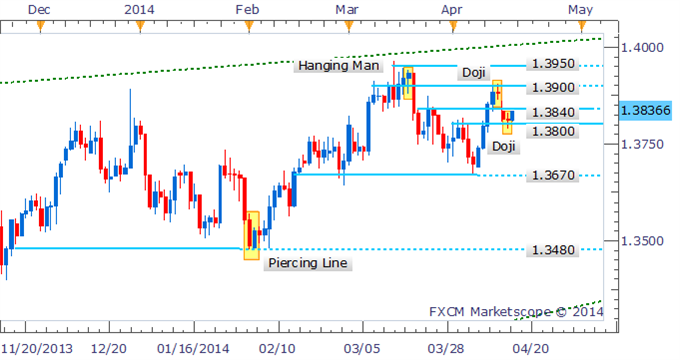
Trade Implications – EURUSD:

We typically go against the crowd; if everyone has sold we prefer to buy. Yet retail traders are often their most short at important tops and their most long at significant lows. The caveat is clear: the sentiment and price extreme is only clear in hindsight.

The fact that these extremes are happening as the pair reverses off of important technical resistance nonetheless suggests that the EURUSD may soon reverse lower. A larger shift towards crowd buying would help confirm the EUR top; our sentiment-based Momentum2 strategy may soon sell if the pair does indeed turn lower.Trade Implications – EURUSD:

We typically go against the crowd; if everyone has sold we prefer to buy. Yet retail traders are often their most short at important tops and their most long at significant lows. The caveat is clear: the sentiment and price extreme is only clear in hindsight.

The fact that these extremes are happening as the pair reverses off of important technical resistance nonetheless suggests that the EURUSD may soon reverse lower. A larger shift towards crowd buying would help confirm the EUR top; our sentiment-based Momentum2 strategy may soon sell if the pair does indeed turn lower.
ADIKALARAJ
ADIKALARAJ
Trade Implications – Gold: One-sided US Dollar positioning suggests that the Greenback may be near an important turning point. Yet outperformance in Gold prices give us pause in calling for a reversal of recent gains. Our bias would change if trading crowds bought into any XAUUSD declines.

Retail FX traders remain short Gold against the US Dollar for the first time since the metal set an important top near $1430 over six months ago. Our trading bias remains bullish XAUUSD above $1280.Trade Implications – Gold: One-sided US Dollar positioning suggests that the Greenback may be near an important turning point. Yet outperformance in Gold prices give us pause in calling for a reversal of recent gains. Our bias would change if trading crowds bought into any XAUUSD declines.

Retail FX traders remain short Gold against the US Dollar for the first time since the metal set an important top near $1430 over six months ago. Our trading bias remains bullish XAUUSD above $1280.
Sergey Golubev
Sergey Golubev
Bitcoin spikes almost 200% on Mt. Gox withdrawal rumors (based on investing article)

Bitcoin prices spiked almost 200% on the Tokyo-based Mt. Gox Exchange on Sunday to hit an intraday high above $300, amid speculation withdrawals on the troubled exchange will soon resume.

BTC/USD rallied to a session high of $348.98 on Mt. Gox, before trimming gains to trade at $278.00 during U.S. morning hours, up 151.4%.

Investors returned to the market after a rumor posted on internet message board website Reddit said that Mt. Gox was in the process of testing Bitcoin withdrawals again.

Prices on Mt. Gox plunged to $91.50 on February 21 as investors were disappointed with a lack of concrete details regarding progress made on resuming withdrawals on the struggling exchange.

Mt. Gox was forced to halt all Bitcoin withdrawals on February 7 due to a technical issue, leading to steep declines as traders shied away from the virtual currency.

Elsewhere, the price of a Bitcoin last traded at $627.95 on Slovenia-based BitStamp, up 10.3%, while prices on BTC-e jumped 10% to trade at $610.00.

BitStamp is the world’s largest second-largest Bitcoin exchange, while Bulgaria-based BTC-e is the third-biggest by volume.

According to the CoinDesk Bitcoin Price Index, which averages prices from the major exchanges, prices of the crypto-currency picked up 2.3% to trade at $618.60.

Bitcoin is digital cash for the internet and it is not backed by a government or central bank to regulate or issue it. It can be used to purchase goods and services from stores and online retailers.

Prices of the virtual currency soared to an all-time high of $1,241.10 on November 29.
Sergey Golubev
Sergey Golubev
Жизнь у б o г a

С праздником
Sergey Golubev
Sergey Golubev
评论给主题 Indicators: FP channel
How to Trade Gold Yearly Pivot Points (adapted from dailyfx article ) Commodity pit traders have used pivot points for decades to determine potential support and resistance areas, Gold yearly pivot