Quantflex killer adaptive engine
- Experts
- Version: 3.17
- Mise à jour: 7 septembre 2026
- Activations: 12

QUANTFLEX KILLER ADAPTIVE ENGINE
Adaptive Trading. Structured Risk. Continuous Learning.
QUANTFLEX KILLER ADAPTIVE ENGINE is an advanced automated trading system specially designed for XAUUSD (Gold) and also suitable for a wide range of Forex currency pairs.
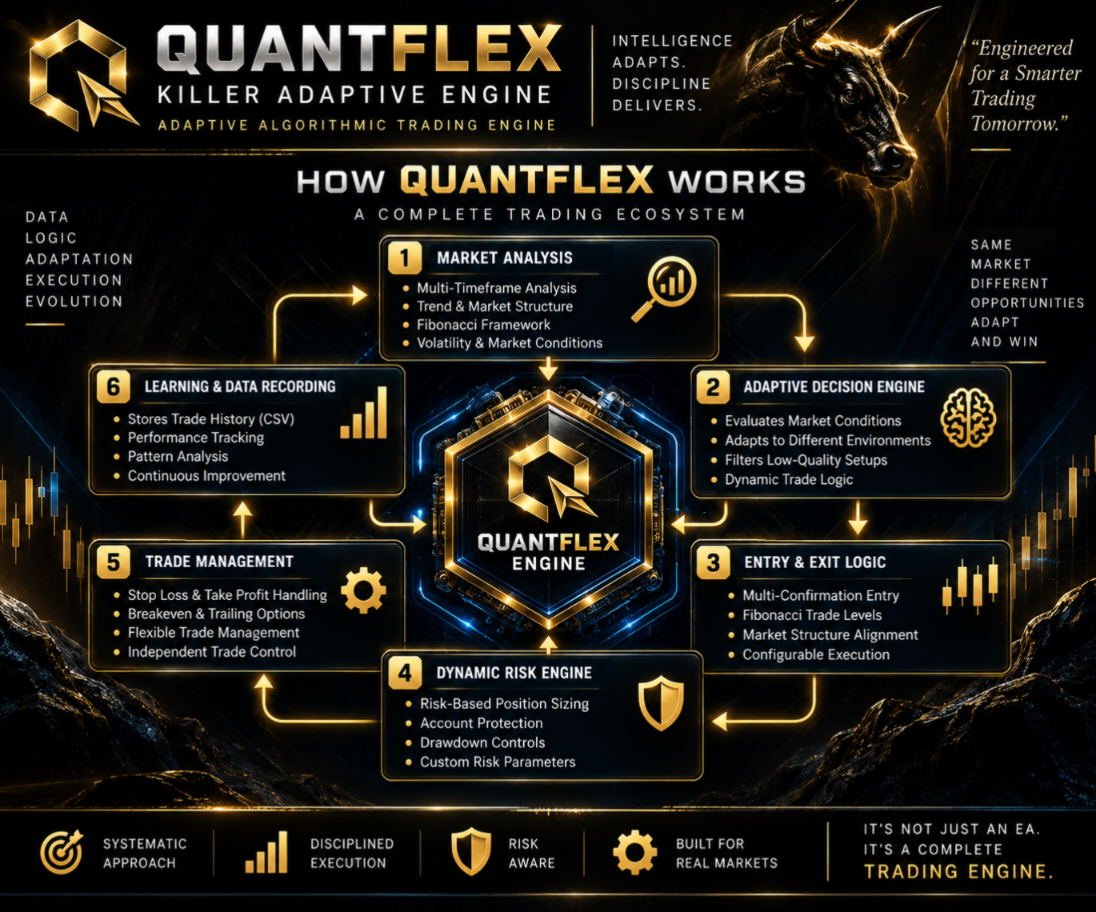
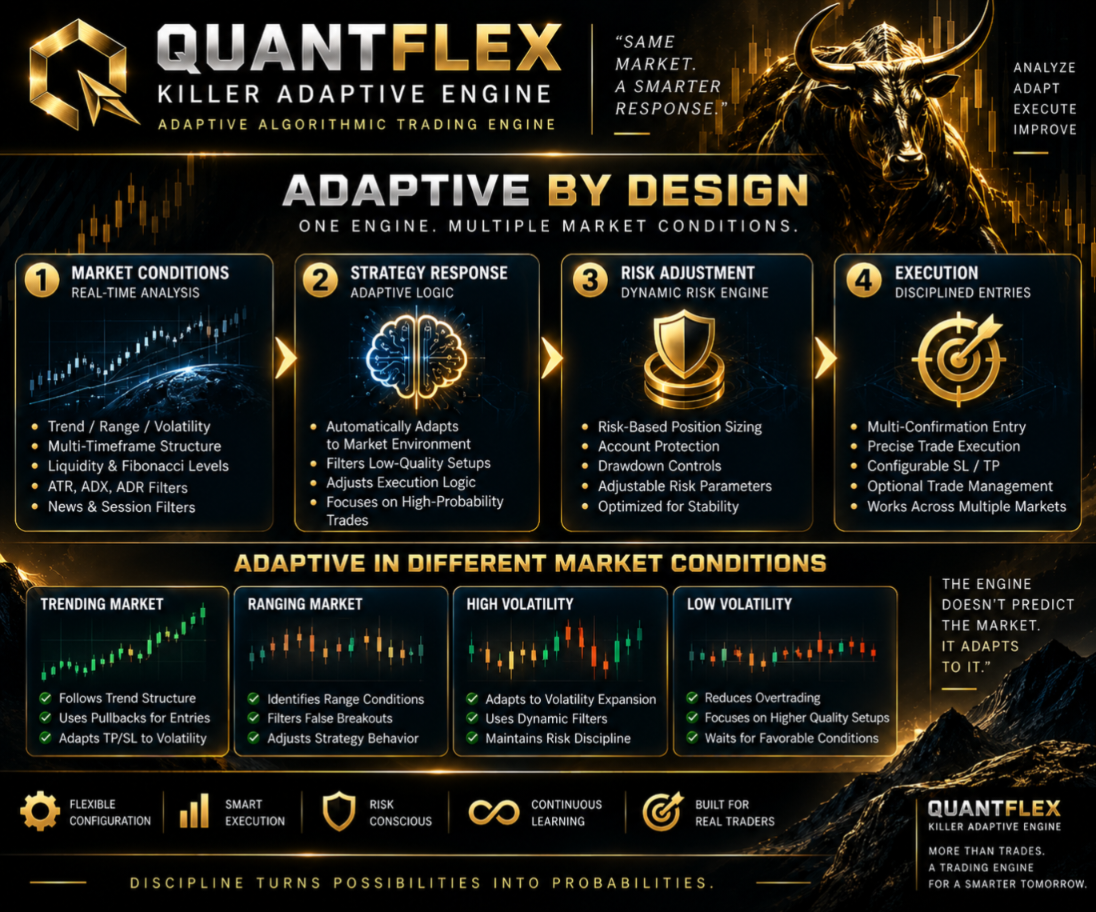
The EA is built around a structured multi-timeframe trading framework combining market bias, Fibonacci-based price levels, volatility analysis, trend-strength confirmation, rejection behaviour, trade-quality evaluation and adaptive trade management.
What makes QUANTFLEX different is that it is not designed around a simple fixed-entry/fixed-exit algorithm. The system contains an adaptive learning architecture that evaluates completed trades and market behaviour over time, allowing the trade-management parameters to adapt within controlled boundaries.
The EA is designed for traders who want systematic execution without manually monitoring every setup, while still retaining extensive control over the major trading and risk parameters through customizable inputs.
No trading system can guarantee profits. Past backtest performance does not guarantee future results.
WHY QUANTFLEX?
QUANTFLEX was developed with one primary objective: to create a systematic trading engine that can evaluate market conditions, identify qualified setups and manage trades without relying on emotional decision-making.
The system does not depend on a single indicator or a single confirmation.
Instead, multiple layers of analysis work together before a trade can qualify.
The architecture combines:
Higher-timeframe market bias
Fibonacci-based trading levels
M5 entry confirmation
ATR volatility analysis
ADX trend-strength analysis
ADR market-range analysis
Trade Quality Score
Economic news filtering
Risk-based position sizing
Adaptive TP/SL behaviour
Virtual/shadow trade learning
Historical trade analysis
Position and trade-state management
Persistent learning/state storage
Broker and symbol-aware execution
This multi-layer approach is designed to reduce dependence on any single market condition.
SPECIALIZED FOR GOLD, SUITABLE FOR FOREX
QUANTFLEX is specially designed and optimized with Gold trading in mind, particularly XAUUSD, where volatility and intraday price movement can create significant trading opportunities.
At the same time, the EA contains symbol-aware logic intended to support Forex trading across major and other suitable currency pairs.
Examples include:
XAUUSD / Gold
EURUSD
GBPUSD
USDJPY
AUDUSD
USDCHF
USDCAD
and other suitable Forex symbols depending on broker specifications and market conditions.
Performance can differ substantially between symbols. A configuration that performs well on Gold should not automatically be assumed to produce identical results on every Forex pair.
For this reason, users should test the EA on their preferred symbol and broker before committing significant capital.
MULTI-TIMEFRAME MARKET ANALYSIS
QUANTFLEX does not rely exclusively on the timeframe of the chart to determine the complete market context.
The system uses multiple timeframes for different analytical purposes.
The architecture includes:
H4: Higher-timeframe directional bias
H2: Fibonacci range and structural analysis
M5: Entry and rejection confirmation
This allows the EA to separate broader market direction from lower-timeframe execution.
The purpose is to avoid treating every short-term price movement as an independent trading opportunity.
FIBONACCI-BASED TRADE LEVELS
The EA uses Fibonacci-derived levels as structured areas for potential trade opportunities.
The system can evaluate levels including:
0.000
0.236
0.500
0.618
0.660
0.786
1.000
These levels are not treated as automatic buy or sell buttons.
Additional confirmation is required according to the EA's trading logic.
This allows the system to evaluate the surrounding market structure and confirmation conditions before executing a position.
ENTRY CONFIRMATION
A Fibonacci level alone does not automatically create a trade.
The EA evaluates lower-timeframe price behaviour and confirmation conditions before entering.
The entry engine can evaluate:
Price rejection
Directional bias
Fibonacci location
Volatility conditions
Trend strength
Market range conditions
Trade Quality Score
Other internal confirmation requirements
This layered approach is designed to avoid treating every touch of a level as a valid setup.
ATR VOLATILITY FILTER
Average True Range is used as part of the market-condition analysis.
ATR provides the EA with information about current market volatility and helps the system distinguish between different volatility environments.
This is particularly relevant for Gold because XAUUSD can transition rapidly between relatively quiet and highly volatile conditions.
ADX TREND-STRENGTH FILTER
The EA also incorporates ADX-based trend-strength analysis.
ADX is not used as a standalone trading system.
Instead, it forms one component of the broader confirmation process.
The purpose is to help the EA evaluate whether current market conditions provide sufficient directional strength for the strategy's requirements.
ADR MARKET-RANGE ANALYSIS
Average Daily Range analysis is incorporated to provide additional context regarding the market's expected daily movement.
This helps the system evaluate whether current price movement is occurring within an appropriate market-range environment.
TRADE QUALITY SCORE
QUANTFLEX includes a Trade Quality Score system designed to evaluate the overall quality of a potential setup.
Instead of relying on one confirmation, multiple conditions can contribute to the quality assessment.
The objective is to distinguish stronger setups from weaker market conditions.
ADAPTIVE LEARNING SYSTEM
One of the core features of QUANTFLEX is its adaptive learning architecture.
The system records information from completed trades and uses historical trade behaviour as part of its adaptive process.
The learning architecture can evaluate information such as:
Entry price
Exit price
Stop Loss
Take Profit
Trade volume
Profit/loss
Trade quality
Market regime
ATR conditions
ADX conditions
Spread
Holding time
MFE
MAE
Other trade-state information
The purpose is not to promise perfect prediction.
The purpose is to allow the system to learn from its own trading history and adapt selected trade-management behaviour within predefined boundaries.
LEARNING WARM-UP
The adaptive system does not immediately assume that a newly installed EA has enough personal trading history to make meaningful adjustments.
A learning warm-up period is incorporated into the architecture.
The system can use an initial series of completed trades to build its own historical reference before relying more heavily on adaptive behaviour.
This is designed to make the learning process more controlled rather than allowing extremely limited early data to dominate the system.
VIRTUAL / SHADOW TRADE LEARNING
QUANTFLEX also contains virtual/shadow trade functionality.
This allows the system to evaluate hypothetical trade outcomes without necessarily exposing the account to an additional live position.
The purpose is to increase the amount of market-behaviour information available to the adaptive system while maintaining the distinction between actual executed trades and virtual observations.
ADAPTIVE TP / SL MANAGEMENT
The EA contains adaptive trade-management logic for TP and SL behaviour.
The adaptive engine does not have unrestricted authority to change parameters without limits.
Adaptive values are controlled by predefined boundaries and the EA's configuration.
This creates a controlled adaptive environment rather than allowing unlimited parameter drift.
RISK-BASED LOT CALCULATION
QUANTFLEX supports risk-based position sizing.
The objective is to calculate trading volume according to the configured risk parameters and the characteristics of the trade.
The EA is therefore not dependent on one permanently fixed lot size.
Users can configure their preferred risk settings according to their account and trading requirements.
Because broker contract specifications differ, the final executable volume is also subject to the broker's minimum volume, maximum volume, volume step and other trading restrictions.
CUSTOMIZABLE INPUTS
QUANTFLEX is designed with non-locked user inputs.
This means clients are not forced to use one permanent configuration.
Depending on the available parameter, users can customize settings according to their own trading style, account size and risk tolerance.
Important configurable areas can include:
Risk percentage
Gold baseline distance
Forex baseline distance
Risk/reward configuration
Fibonacci trade levels
ATR settings
ADX settings
ADR settings
Trade Quality Score settings
News-filter settings
Learning settings
Adaptive settings
Daily drawdown protection
Trading permissions
Magic number
Trade-management parameters
Other available EA controls
Users should understand each parameter before modifying it.
Changing parameters can materially change the EA's behaviour and performance.
GOLD AND FOREX BASELINE
The EA uses instrument-specific baseline settings.
For Gold, the baseline is designed around the characteristics of XAUUSD.
For Forex, the EA uses a Forex-specific baseline.
The baseline can be customized by the user through the available input parameters.
This allows users to adapt the EA to different instruments rather than forcing one universal numerical distance onto every market.
NEWS FILTER
QUANTFLEX includes an economic-news filtering mechanism designed to account for high-impact scheduled economic events.
This is particularly relevant for instruments such as Gold and major Forex pairs because major economic releases can produce rapid volatility, spread expansion and abnormal price movement.
News-filter behaviour should be configured according to the user's preferred trading approach.
DAILY DRAWDOWN PROTECTION
Risk management is a central part of the system.
The EA includes daily drawdown protection designed to help prevent trading activity from continuing indefinitely after a predefined daily loss threshold has been reached.
Users can configure the relevant protection settings according to their own risk requirements.
This can also be useful for traders operating under external risk-management rules, including certain prop-firm environments.
However, each prop firm has its own rules and restrictions, so users must independently verify compatibility.
PERSISTENT STATE AND LEARNING DATA
The EA is designed to maintain important trading and learning information rather than relying exclusively on temporary chart memory.
Persistent state management helps the system retain relevant information across normal terminal restarts and recovery situations.
This is particularly important for an adaptive system because losing its historical learning state could affect subsequent adaptive calculations.
BROKER AND SYMBOL AWARE EXECUTION
QUANTFLEX is designed to work with broker-specific trading specifications rather than assuming identical conditions everywhere.
The execution layer can account for characteristics such as:
Minimum lot size
Maximum lot size
Volume step
Volume limits
Price digits
Contract specifications
Execution conditions
Symbol-specific trading rules
The EA should therefore be tested on the actual broker and account where it will be deployed.
Broker conditions can materially affect results.
MARKET VALIDATION AND EXECUTION SAFETY
The execution system is designed to respect the symbol's permitted trading volume.
Where the calculated risk-based volume exceeds the broker's permitted volume, the executable volume can be constrained to the maximum valid amount rather than submitting an invalid trading request.
This helps improve compatibility across different broker environments and symbol specifications.
ACCOUNT CONTROL
QUANTFLEX gives the trader control over important account-level risk settings rather than forcing one universal risk profile.
Users can choose a configuration appropriate to:
Smaller accounts
Standard accounts
Larger accounts
Conservative trading
Moderate-risk trading
More aggressive configurations
However, a larger account does not automatically make an aggressive risk configuration safe.
Risk should always be selected according to the user's financial capacity and broker conditions.
WHO IS QUANTFLEX FOR?
QUANTFLEX is designed for traders who:
Prefer automated systematic trading
Want structured market analysis
Trade Gold or Forex
Want configurable risk management
Prefer multi-timeframe analysis
Want adaptive trade management
Do not want to manually monitor every setup
Understand that algorithmic trading involves risk
Are willing to backtest and forward-test before using significant capital
It can be suitable for experienced traders as well as technically comfortable users who understand MT5 and automated trading.
It is not designed as a “set it and forget it” guarantee of profit.
WHO SHOULD NOT USE IT?
This EA is not appropriate for someone expecting guaranteed monthly income, guaranteed profits or zero drawdown.
It should not be used with money that the trader cannot afford to lose.
Users who do not understand leverage, margin, drawdown, lot sizing and broker execution conditions should first learn these concepts before deploying an automated trading system.
RECOMMENDED DEPLOYMENT
For live trading, a stable MT5 environment is recommended.
A VPS is strongly recommended for users who require continuous execution, especially when the EA is intended to operate throughout the trading session.
Users should avoid repeatedly restarting terminals, changing accounts or modifying critical parameters during active trading unless they understand the consequences.
Before live deployment, test the EA on:
Your broker
Your intended symbol
Your intended account type
Your intended leverage
Your intended risk settings
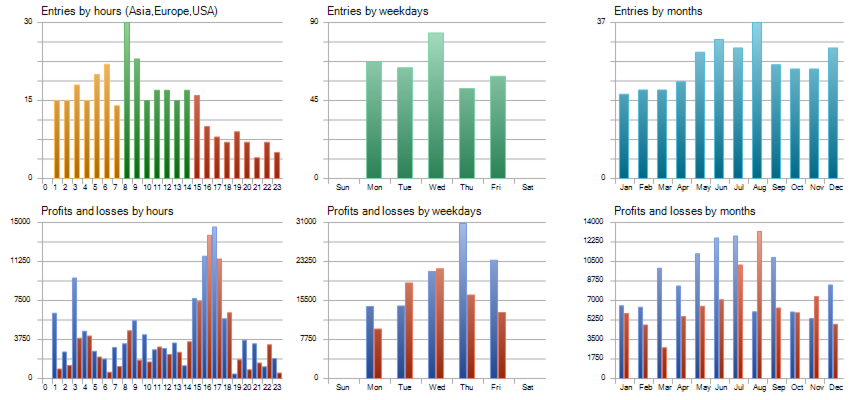
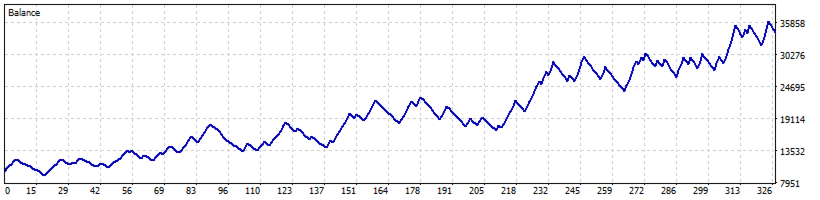
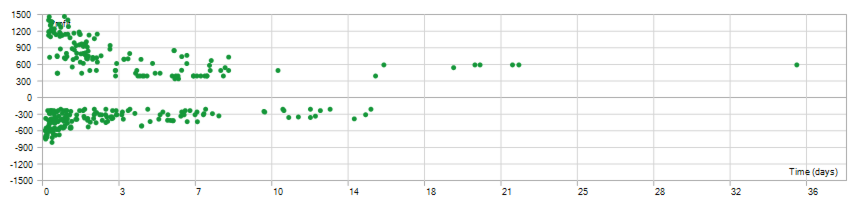
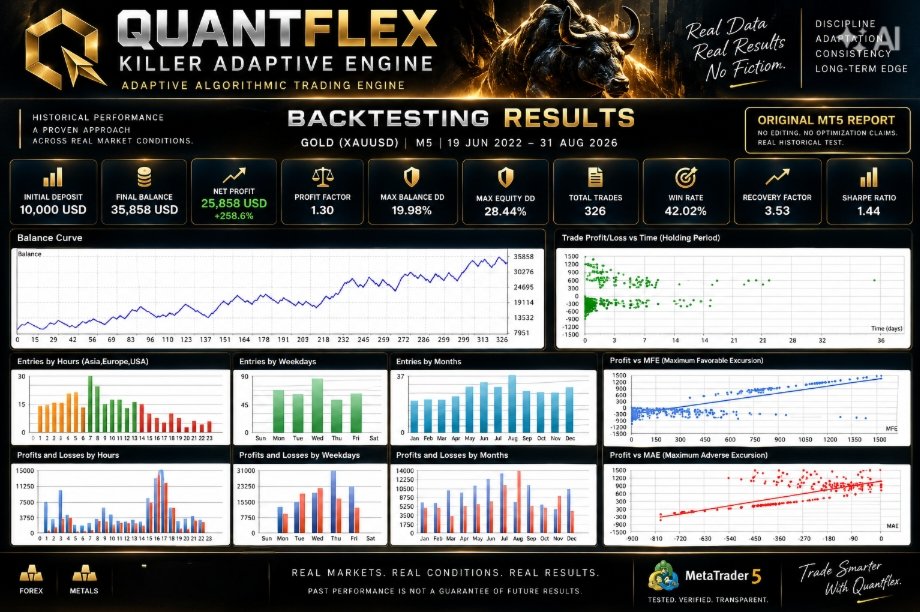
BACKTESTING
Backtesting is strongly recommended before live deployment.
Users should test the EA using realistic conditions and, where possible, broker-specific historical data.
Backtest results can differ from live results because of:
Spread
Commission
Swap
Slippage
Liquidity
Execution speed
Price feed
Contract specifications
Market conditions
VPS/terminal conditions
Therefore, historical performance should be treated as research information rather than a promise of future results.
IMPORTANT ACCOUNT REQUIREMENTS
REQUIREMENT
RECOMMENDATION
Primary Instrument
XAUUSD / Gold
Additional Instruments
Forex currency pairs
Primary Design
Specially designed for Gold; suitable for Forex
Minimum Account Balance
$500 recommended starting balance
Recommended Balance
$1,000+ for more practical risk-management flexibility
Recommended Leverage
1:100 minimum recommended; 1:200–1:500 generally more practical for margin flexibility
Account Type
MT5 Hedging or Netting account, subject to broker/execution compatibility
Broker Type
Regulated/established broker with stable MT5 execution, competitive spreads, reliable liquidity and transparent contract specifications
Execution
Low-latency and stable execution recommended
Spread
Low and stable spread strongly recommended, especially for Gold
VPS
Strongly recommended for live automated trading
Risk
Use conservative risk; higher leverage does not mean higher recommended risk
Important: The minimum balance is a recommended starting level, not a guarantee that the EA will be profitable at that balance. The actual minimum practical balance depends on the broker's contract size, minimum lot, margin requirements, spread, leverage and the user's selected risk settings.
BROKER COMPATIBILITY
QUANTFLEX is not tied to one specific broker.
It is intended for MT5 brokers that provide stable execution and standard trading access to Gold and/or Forex symbols supported by the EA.
Broker selection matters.
Users should preferably choose a broker offering:
Stable MT5 infrastructure
Competitive spreads
Reliable liquidity
Consistent execution
Suitable minimum and maximum volume specifications
Reasonable commission structure
Transparent contract specifications
Reliable server uptime
Different brokers can produce different results even when the same EA settings are used.
PRICING AND EARLY ACCESS
QUANTFLEX is being introduced with launch pricing designed to give early users access before future pricing adjustments.
Launch availability is limited.
The introductory pricing may be increased after the initial batch of copies/licenses is sold.
Early customers therefore receive access at the current launch pricing before future pricing revisions.
The product's price does not represent a guarantee of performance.
IMPORTANT USER NOTICE
QUANTFLEX is an automated trading software product. It does not provide investment advice, portfolio management or guaranteed returns.
Users remain fully responsible for their trading account, selected settings, risk level and broker relationship.
Always test the EA before using significant capital.
Do not assume that a successful backtest will produce the same result in live trading.
Do not increase risk simply because previous trades were profitable.
Do not use excessive leverage or position sizing.
RISK DISCLOSURE
Trading Gold and Forex involves substantial risk of loss.
XAUUSD can experience rapid price movements, high volatility, spread expansion, slippage, liquidity changes, market gaps and unexpected price behaviour. Forex markets can also experience significant volatility around economic releases, central-bank decisions and geopolitical events.
Leverage can magnify both profits and losses. A highly leveraged account can experience substantial drawdown from relatively small market movements.
Past performance, historical backtests, optimization results and simulated results do not guarantee future performance.
Live results may differ from backtests because of differences in spread, commission, swap, slippage, execution speed, liquidity, price feed, broker specifications, account type, leverage and technical infrastructure.
The adaptive learning system does not guarantee that future trades will improve. Learning from historical trades cannot eliminate market uncertainty or unexpected conditions.
Risk-management features can reduce exposure under defined circumstances, but they cannot guarantee that losses will remain below a specific amount in every market condition.
No Expert Advisor can guarantee profits or eliminate trading risk.
Use only capital you can afford to lose.
By purchasing or using QUANTFLEX KILLER ADAPTIVE ENGINE, the user acknowledges that automated trading involves financial risk and that responsibility for account configuration and trading decisions remains with the user.