|
no
experiencia
|
0
productos
|
0
versiones demo
|
|
0
trabajos
|
0
señales
|
0
suscriptores
|
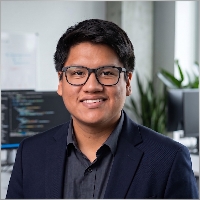
Senior Software Engineer
en
Tecgraf/Ondeb
Most retail trading algorithms fail not because of a bad strategy, but due to poor memory management, execution lag, and sloppy matrix calculations.
As a senior C++ software engineer, I bridge the gap between institutional-grade software architecture and retail quantitative trading. My expertise lies in stripping away the subjectivity of retail trading and translating pure mathematics, low-latency execution engines.
What I guarantee in every architecture I build:
- Execution Stability: Deeply optimized C++ logic to prevent terminal crashes and memory leaks.
- Strict Quant Math: Converting visual/subjective strategies into objective, array-based Boolean logic.
- No Black Boxes: 100% transparent Object-Oriented Programming (OOP) with clean, maintainable code.
- Capital Protection: Failsafe routing modules (handling Broker Error 130, requotes, and slippage organically).
If you need a robust algorithmic foundation that executes exactly as designed, let's analyze your logic.
As a senior C++ software engineer, I bridge the gap between institutional-grade software architecture and retail quantitative trading. My expertise lies in stripping away the subjectivity of retail trading and translating pure mathematics, low-latency execution engines.
What I guarantee in every architecture I build:
- Execution Stability: Deeply optimized C++ logic to prevent terminal crashes and memory leaks.
- Strict Quant Math: Converting visual/subjective strategies into objective, array-based Boolean logic.
- No Black Boxes: 100% transparent Object-Oriented Programming (OOP) with clean, maintainable code.
- Capital Protection: Failsafe routing modules (handling Broker Error 130, requotes, and slippage organically).
If you need a robust algorithmic foundation that executes exactly as designed, let's analyze your logic.


