Discussing the article: "Quantum Neural Network in MQL5 (Part III): A Virtual Quantum Processor Based on Qubits"
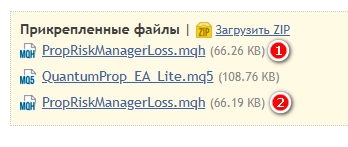
There is a duplicate PropRiskManagerLoss.mqh file in the archive:
It appears that the file HybridQuantumNeuralV3.mqh is missing, preventing QuantumProp_EA_Lite.mq5 from compiling without errors.
There is a duplicate PropRiskManagerLoss.mqh file in the archive:
It appears that the file HybridQuantumNeuralV3.mqh is missing, preventing QuantumProp_EA_Lite.mq5 from compiling without errors.
Thank you very much! I’ve just spotted it myself and have sent it for review with the correct file)
An article entitled ‘Quantum Neural Network on MQL5 (Part III): A Virtual Quantum Processor with Qubits’ has been published:
Author: Yevgeniy Koshtenko
Yevgeniy, this looks like a really good, professional product. We’ll test it and provide feedback. Could you tell me, is there any way to get this training model to use a GPU for training, as is the case with the LSTM model in Python, for example? Perhaps you’ve already looked into this, so as not to waste time. If not, we can think about it together, as hardware performance is important in this model – and rightly so. A high-quality model with in-depth analysis simply has to be demanding on the hardware.
Good morning.
I haven’t been able to replicate the test described in the article, or even produce a similar graph.
Could you please let us know the parameters and the symbol?
Thank you.

- Free trading apps
- Over 8,000 signals for copying
- Economic news for exploring financial markets
You agree to website policy and terms of use
Check out the new article: Quantum Neural Network in MQL5 (Part III): A Virtual Quantum Processor Based on Qubits.
In the second part of our research, we developed a system that uses mathematical analogues of quantum effects: resonance (cosine), interference (sine), decoherence (exponential). However, this remained only an imitation. Formally, it looked elegant, but in essence it was not quantum.
Over time, it became clear that the model is elegant, but it does not capture the essence of quantum processing — superposition, entanglement, and the irreversibility of measurements. We operated with functions, not principles.
Classical approaches remain limited:
A key breakthrough is the transition to virtual qubits
In the second version, a full-fledged quantum processor is used instead of analogues: 3 qubits, an 8-dimensional state space, gates and measurements. The architecture has been revised: now every operation obeys the laws of quantum mechanics - unitarity, normalization, behavior during measurements.
Author: Yevgeniy Koshtenko