 MetaTrader 5
 Sistemi Esperti
 Indicatori
 Script
 Librerie
 Archiviazione
Unisciti alla nostra fan page

Dynamic Session Range Sweep Detector with Liquidity Zone Marking - indicatore per MetaTrader 5

- Visualizzazioni:
- 23
- Valutazioni:
- Pubblicato:
-
 Ti stai perdendo delle opportunità di trading:
- App di trading gratuite
- Oltre 8.000 segnali per il copy trading
- Notizie economiche per esplorare i mercati finanziari
Registrazione AccediAccetti la politica del sito e le condizioni d’uso
Se non hai un account, registrati -
 Hai bisogno di un robot o indicatore basato su questo codice? Ordinalo su Freelance
Vai a Freelance
Hai bisogno di un robot o indicatore basato su questo codice? Ordinalo su Freelance
Vai a Freelance
Rilevatore dinamico a scansione dell'intervallo di sessione
L'idea alla base
Gli intervalli di sessione non sono solo dei riquadri da tracciare su un grafico: rappresentano la liquidità. La sessione asiatica registra un range massimo-minimo ristretto e, una volta che i desk di Londra o New York entrano in attività, il prezzo molto spesso viene scambiato all’interno di quell’intervallo su un lato prima di invertire la tendenza, spazzando via gli stop situati appena oltre di esso. Questo indicatore monitora direttamente tale comportamento: misura l’intervallo di ciascuna sessione man mano che si forma, lo blocca nel momento in cui la sessione chiude, e poi osserva ogni barra successiva alla ricerca di una coda che superi il livello bloccato e chiuda nuovamente al suo interno. È proprio questa condizione di “chiusura all’interno” a qualificare un vero e proprio “sweep” piuttosto che un semplice breakout, ed è la parte che la maggior parte degli strumenti per l’intervallo di sessione presenti nel Code Base tralascia completamente.
Funziona su qualsiasi simbolo e timeframe, poiché le ore di sessione sono definite come semplici input dell’ora del server piuttosto che codificate in modo rigido per un singolo strumento. Detto questo, offre i risultati migliori sui grafici intraday — da M5 a M30 — dove i confini delle ore di sessione sono definiti in modo netto barra per barra. Su timeframe più elevati, una singola barra può trovarsi a cavallo di un confine di sessione, il che rende poco chiaro il punto esatto in cui si è chiuso il range.
Come interpretarlo
- Le finestre di sessione — InpAsianStartHour/EndHour, InpLondonStartHour/EndHour e InpNewYorkStartHour/EndHour, tutte espresse in ora del server. L’indicatore calcola i massimi e minimi correnti per ciascuna sessione mentre la relativa finestra è aperta.
- L’intervallo fissato — nel momento in cui scade l’ora di fine di una sessione, il suo massimo/minimo viene congelato e tracciato come un rettangolo sul grafico. Tutto ciò che segue quel punto viene confrontato con questo livello fisso, non con uno mobile.
- La conferma dello sweep: una barra deve superare il livello bloccato di almeno InpMinSweepPips e chiudersi nuovamente sul lato corretto di esso. Una freccia verso il basso indica un massimo raggiunto tramite sweep (tendenza ribassista); una freccia verso l’alto indica un minimo raggiunto tramite sweep (tendenza rialzista). Una rottura che chiude oltre il livello è un vero breakout, non uno sweep, e viene deliberatamente lasciata senza indicazione.
- La zona di reazione — un rettangolo ombreggiato della larghezza di InpSweepZoneBars dal punto di sweep, che indica l’area in cui tipicamente si concentrano gli ingressi di inversione o il posizionamento degli stop dopo uno sweep confermato.
Variabili esterne (input)
| Input | Predefinito | Scopo |
|---|---|---|
| InpAsianStartHour / InpAsianEndHour | 0 / 7 | Intervallo di tempo in cui viene misurato l'intervallo della sessione asiatica, ora del broker/server. |
| InpLondonStartHour / InpLondonEndHour | 7 / 13 | Intervallo di tempo in cui viene misurata la sessione di Londra. |
| InpNewYorkStartHour / InpNewYorkEndHour | 13 / 21 | Finestra su cui viene misurato l'intervallo della sessione di New York. |
| InpLookbackDays | 5 | Numero di giorni di dati storici delle sessioni che l’indicatore analizza alla ricerca di sweep. Valore volutamente ridotto per limitare l’ingombro degli oggetti sul grafico. |
| InpMinSweepPips | 2,0 | Penetrazione minima oltre un livello bloccato, in pip, necessaria affinché una coda venga considerata uno sweep anziché un rumore posizionato proprio sul bordo. |
| InpSweepZoneBars | 6 | Larghezza, in barre, della zona di reazione ombreggiata tracciata dopo uno sweep confermato. |
| InpShowSessionBoxes / InpShowSweepZones | true / true | Attiva o disattiva in modo indipendente i rettangoli che indicano l’intervallo della sessione e le zone di reazione ombreggiate. |
| InpAlertOnSweep | false | Genera un avviso sul terminale nel momento in cui viene confermata una nuova scansione. |
| InpAsianBoxColor / InpLondonBoxColor / InpNewYorkBoxColor | Argento / Grigio / Grigio scuro | Colore del bordo del rettangolo che delimita l'intervallo bloccato per ciascuna sessione; i colori sono distinti in modo che le sessioni sovrapposte rimangano leggibili. |
| InpZoneColor | Gainsboro | Colore di riempimento della zona di reazione ombreggiata. |
| InpSweepUpArrowCode / InpSweepDownArrowCode | 233 / 234 | Codici Wingdings per le frecce di segnale rialziste (freccia rivolta verso il basso) e ribassiste (freccia rivolta verso l'alto). |
Uso consigliato
Funziona su qualsiasi simbolo, ma è più significativo sugli strumenti che mostrano effettivamente un comportamento di liquidità basato sulle sessioni: le principali coppie FX e l’oro ne sono gli esempi più evidenti. Verificate l'ora del server del vostro broker rispetto agli orari di apertura effettivi di Asia, Londra e New York prima di fidarvi degli input predefiniti relativi all’ora; lo scostamento varia a seconda del broker e cambia con i passaggi all’ora legale in ciascuna zona, quindi un intervallo che dovrebbe chiudersi all’apertura di Londra può finire per chiudersi un’ora prima o dopo se gli input non vengono adeguati.
I segnali non vengono ridisegnati: uno "sweep" viene contrassegnato solo dopo la chiusura della sua barra di conferma, quindi nulla di quanto tracciato sul grafico si sposta a posteriori. Sui timeframe inferiori (M1–M5) potrebbe essere necessario aumentare leggermente il valore di InpMinSweepPips, poiché il rumore dello spread proprio al margine di una sessione potrebbe altrimenti essere registrato come uno sweep che in realtà non lo è.
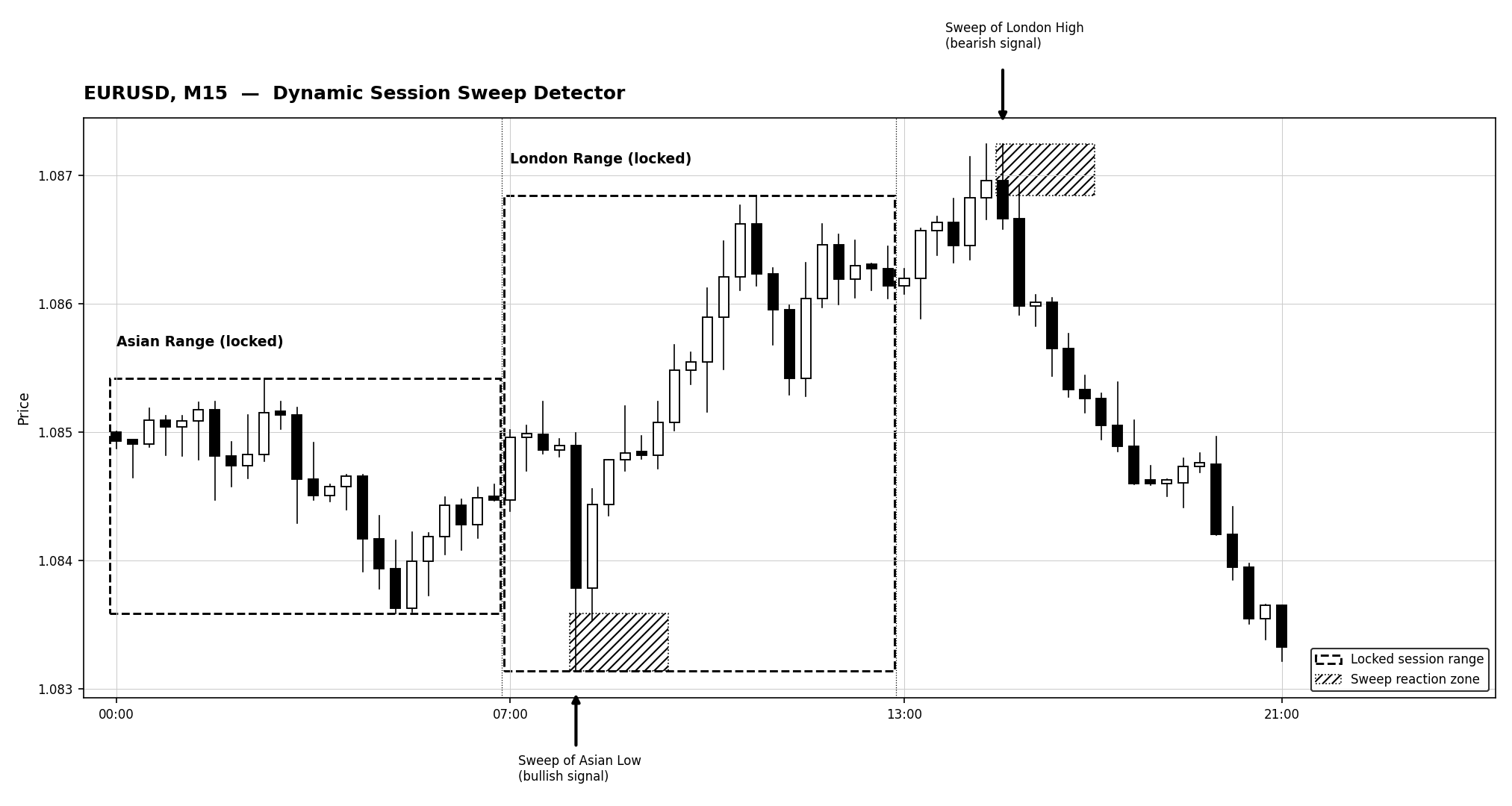
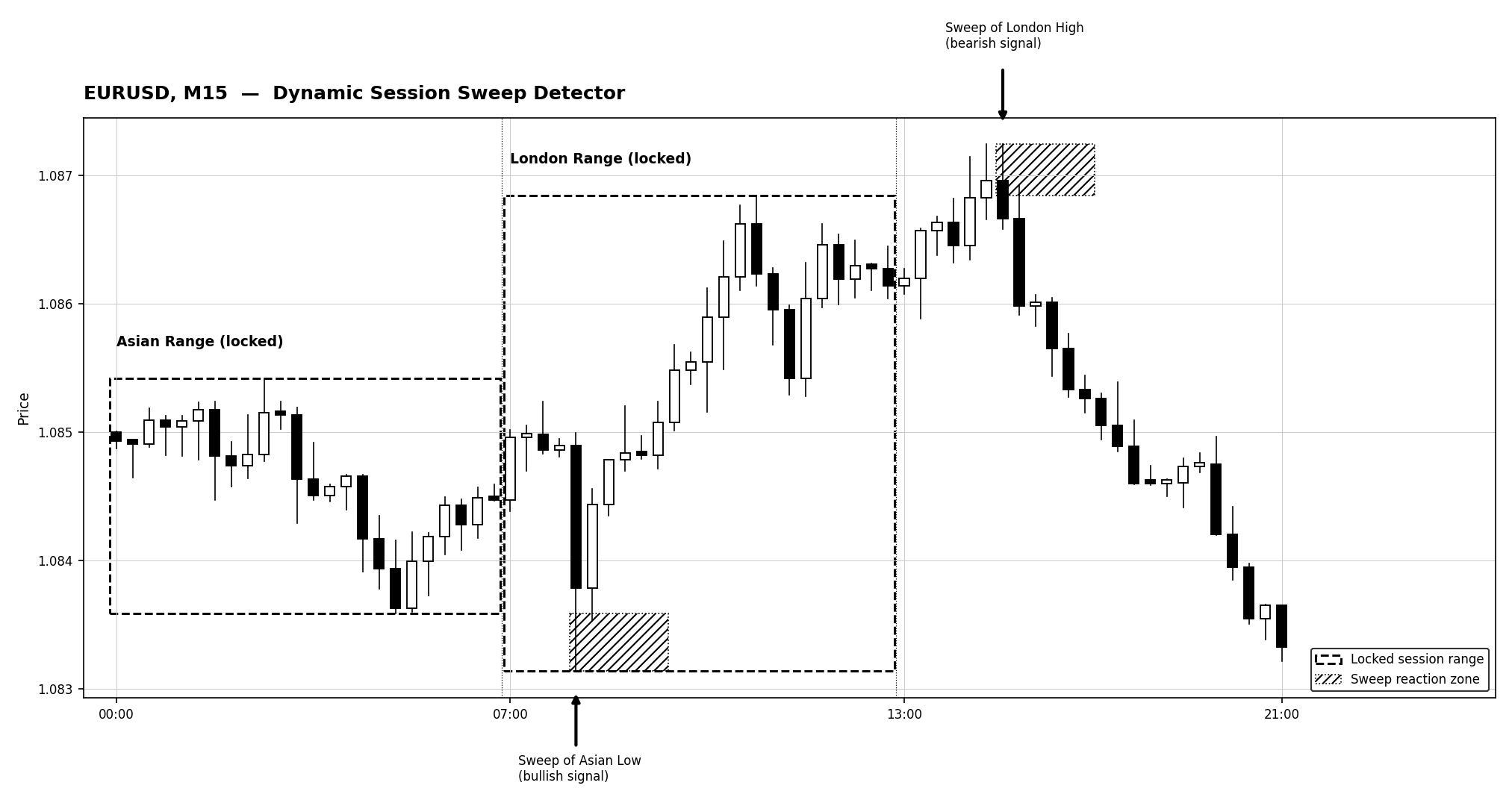
Fig. 1. Intervalli fissati delle sessioni asiatica e londinese, con uno sweep rialzista confermato dal minimo asiatico e uno sweep ribassista confermato dal massimo londinese, ciascuno contrassegnato dalla propria zona di reazione. Reso in scala di grigi secondo le linee guida per le immagini del Code Base.
Tradotto dall’inglese da MetaQuotes Ltd.
Codice originale https://www.mql5.com/en/code/76305
 EdgeMeter - does your entry signal beat the spread?
Valuta se un segnale di ingresso superi effettivamente i costi di transazione, prima che tu passi settimane a sviluppare un EA basato su di esso. Fornisce il risultato netto al netto dei costi, una statistica t affidabile su campioni non sovrapposti e un controllo casuale. Non emette alcun ordine.
Adaptive Volume Profile Node Tracker
Crea un profilo di volume mobile e adattivo alla volatilità su una finestra di analisi storica configurabile e traccia il Punto di Controllo (POC), i massimi e minimi dell'Area di Valore e i nodi di volume massimo e minimo statisticamente significativi (HVN/LVN) direttamente sul grafico.
Heiken Ashi ATR Blend
Heiken Ashi ATR Blend combines smoothed Heiken Ashi candles, ATR-based volatility filtering, and fast/slow EMA trend confirmation to identify potential trend-change signals.
Wolfe Wave Dashboard
Indicatore professionale MQL5 (finestra separata) che analizza automaticamente più simboli e intervalli di tempo, individua i pattern Wolfe Wave validi più recenti (rialzisti/ribassisti), li visualizza in un pannello di controllo interattivo e consente di aprire il grafico con un solo clic, con la rappresentazione completa del pattern.