Eusebiu Dascalu
- Self-Employed Trader al Independent
- Romania
- 2196
|
no
esperienza
|
2
prodotti
|
625
versioni demo
|
|
0
lavori
|
0
segnali
|
0
iscritti
|
Sono attivo nei mercati finanziari da oltre 15 anni, con un forte interesse sia per i mercati tradizionali che per quelli delle criptovalute.
Nutro una particolare passione per l'oro (XAUUSD), un mercato che seguo e negozio attivamente per via della sua volatilità, struttura e comportamento unici.
Il mio lavoro si concentra su idee di trading, analisi del comportamento del mercato e sviluppo di soluzioni algoritmiche pratiche per le reali condizioni di mercato.
Nutro una particolare passione per l'oro (XAUUSD), un mercato che seguo e negozio attivamente per via della sua volatilità, struttura e comportamento unici.
Il mio lavoro si concentra su idee di trading, analisi del comportamento del mercato e sviluppo di soluzioni algoritmiche pratiche per le reali condizioni di mercato.


Eusebiu Dascalu



· 3
Mostra tutti i commenti (6)
MOjo1986
2026.08.07
StarTrader
Eusebiu Dascalu
2026.08.11
thanks!
Rajesh Kumar Nait
2026.08.18
jForex


Eusebiu Dascalu


· 5
Davoud Mokhtari
2026.07.14
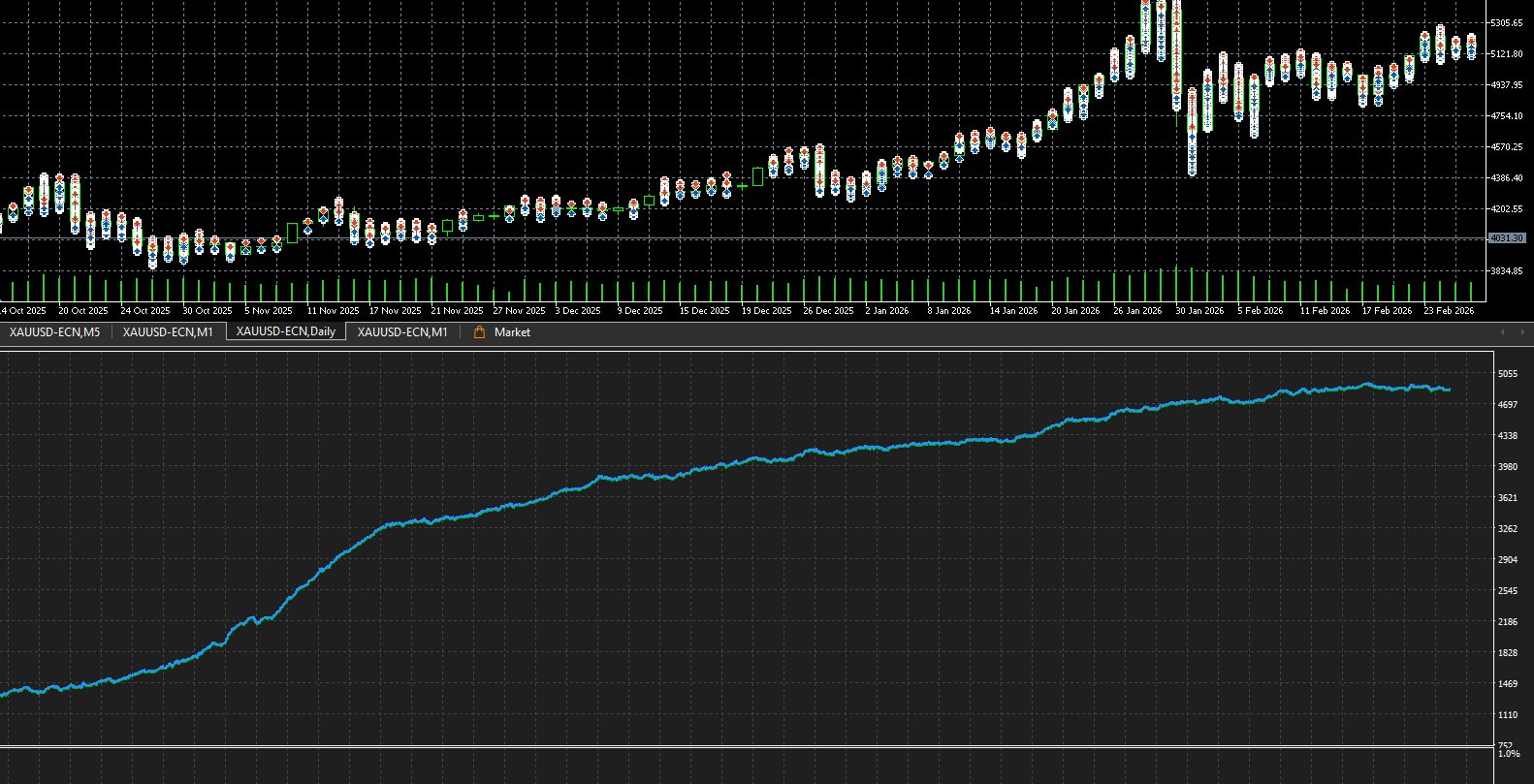
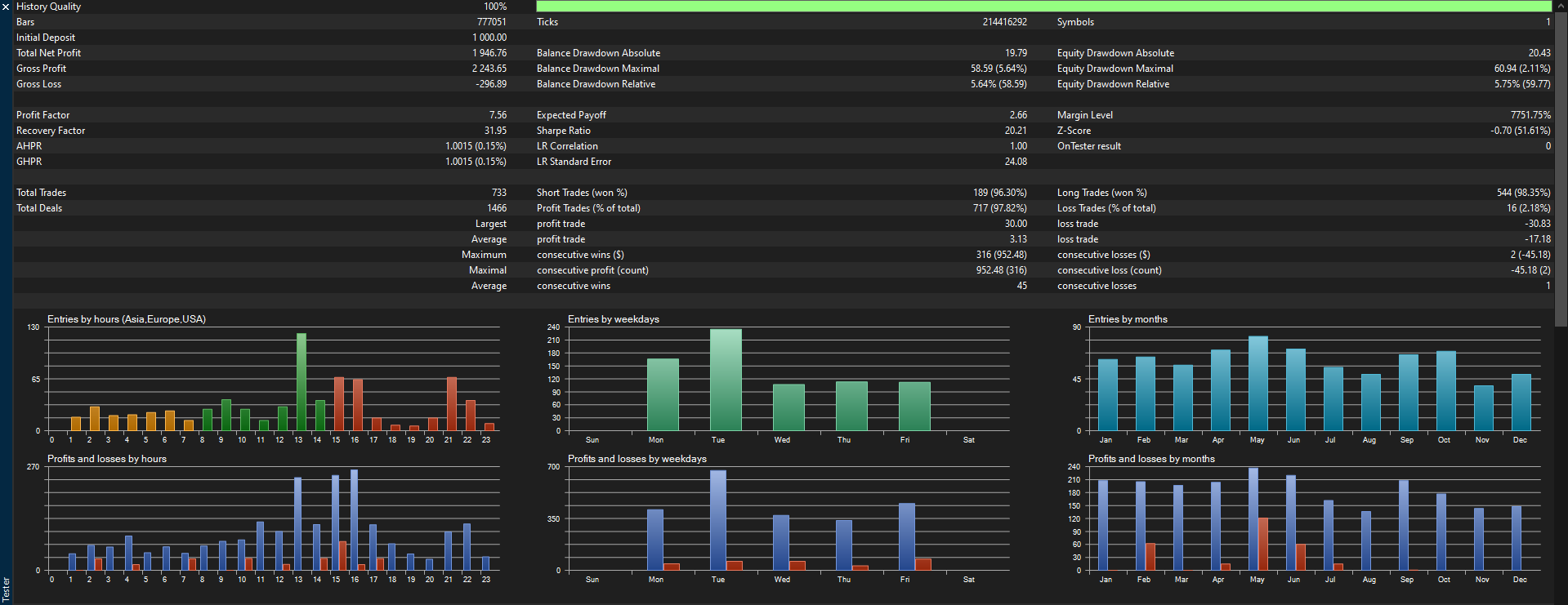
Interesting results, but a few numbers stand out to me and I'd be curious how you'd explain them: 1. Sharpe of 20.21 and LR Correlation of 1.00. An LR correlation of 1.00 means the equity curve is mathematically a straight line. Combined with a Sharpe of 20, that's not a return profile that exists in live trading — a very strong real system sits around Sharpe 2. 2. The win/loss asymmetry. Average win is $3.13, average loss is $17.18 — a 5.5:1 ratio against you. At a 97.82% win rate that's profitable, but the break-even win rate is 84.6%. That means the system stops working the moment the win rate slips 13 points. Systems with this shape don't degrade gradually; they hold the line and then break in one regime shift. 3. Maximum consecutive wins of 316. That's 43% of all 733 trades in a single unbroken winning streak with zero losses. The worst moment in the entire test was two consecutive losses. The system has never actually been under pressure, so the drawdown figure tells us very little. 4. 777,051 M1 bars is roughly 2 years. That's one market regime. There's no evidence here of behaviour across a rate cycle, a crisis, or a volatility shift. 5. Fixed lots, not compounding. Drawdown stays at ~$58 while the account grows from 1,000 to 2,947 — so the 5.64% DD figure is measured early and becomes ~2% later. It reads better than it is. None of this means the system doesn't work — it clearly made money over those two years, and to your credit there's no grid or martingale in the deal count. But the reported metrics are describing an untested curve rather than a validated edge. If you have a 10+ year backtest, an out-of-sample period, or a Monte Carlo on the trade sequence, that would say far more than these numbers do. Genuinely interested if you have them.

Eusebiu Dascalu

· 2
playgold
2026.06.27
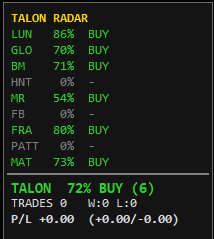
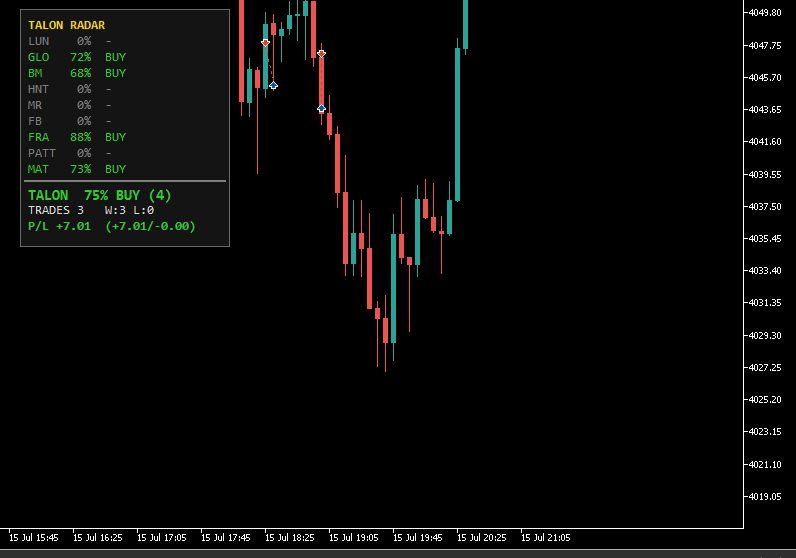
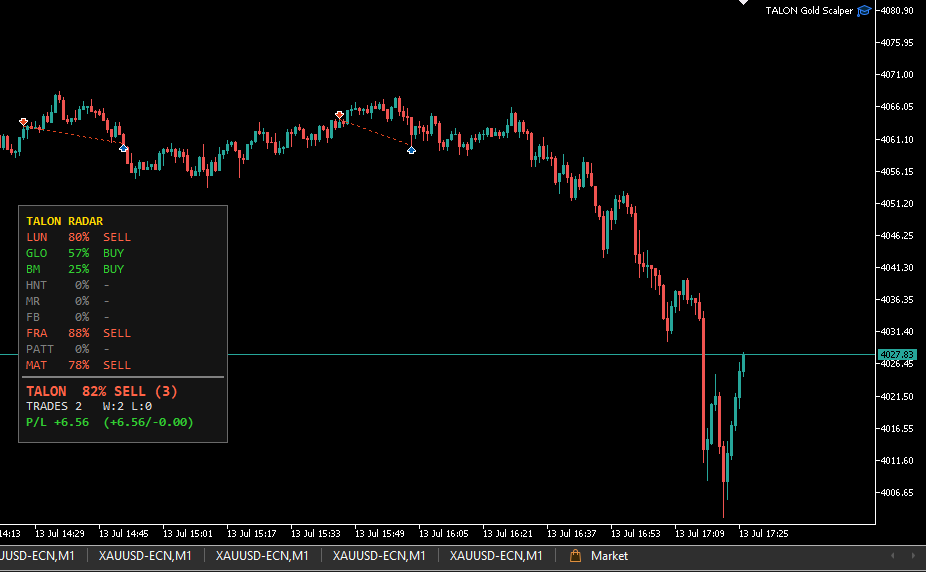
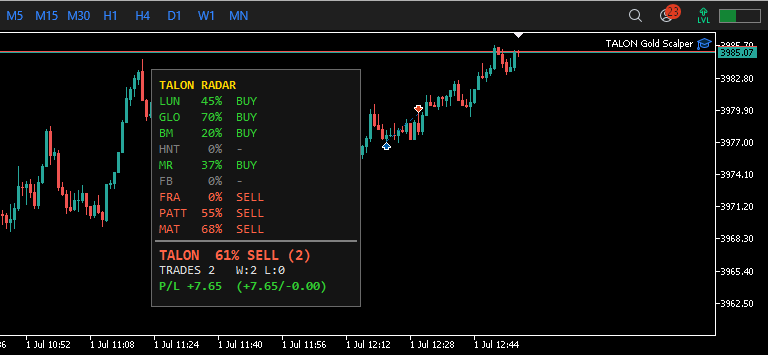
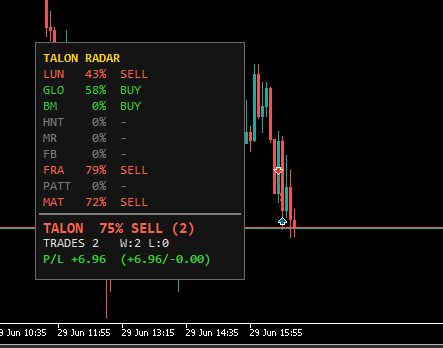
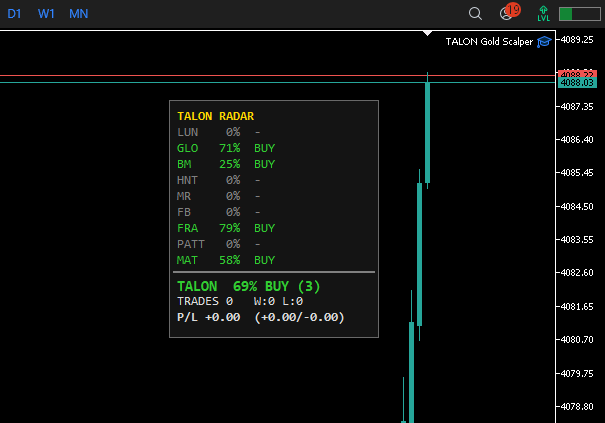
What exactly do these percentages show, and will they be right when the actual instance runs in MQL5 VPS and the local instance only runs sporadically and isn't allowed to trade?
Eusebiu Dascalu
2026.06.27
Shows the probability of entering a trade in that category. Each parameter and indicator has a specific weight in the decision-making process. When the probability reaches 100%, the trade should be executed. it is for informational purposes only
Eusebiu Dascalu
· 4
Maswidi04
2026.06.29
I sent my screen shoot on your DM, because i cannot post here.
On my observation demo account performance result as following: Version 1.5
Installation platform: Local PC (24 hours running set)
Observation period: (01/06/2026 ~ 26/06/2026)
Trading days: 20 days
Total Entry: 23, Profit : 16 (69.6%), Loss : 7 (30.4%)
Profit/Loss (USD) ; Profit : 67.38 US$; Loss : 145.60 US$
Last P/L Status : (minus) 77.78 US$ My brief opinion, need for more strategy improvement to make profitable as the profitable entry has already 69,6% My next plan, I will upgrade to Version 1.7 and expect positive improvement
On my observation demo account performance result as following: Version 1.5
Installation platform: Local PC (24 hours running set)
Observation period: (01/06/2026 ~ 26/06/2026)
Trading days: 20 days
Total Entry: 23, Profit : 16 (69.6%), Loss : 7 (30.4%)
Profit/Loss (USD) ; Profit : 67.38 US$; Loss : 145.60 US$
Last P/L Status : (minus) 77.78 US$ My brief opinion, need for more strategy improvement to make profitable as the profitable entry has already 69,6% My next plan, I will upgrade to Version 1.7 and expect positive improvement
Eusebiu Dascalu

· 4
Eusebiu Dascalu
2026.06.23
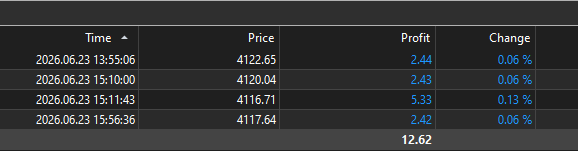
it was not relevant. each transaction is doubled because it trades both VPS and chart. The signal will return soon on another account.