Farkhat Guzairov / Profile
- Information
|
10+ years
experience
|
4
products
|
290
demo versions
|
|
0
jobs
|
0
signals
|
0
subscribers
|
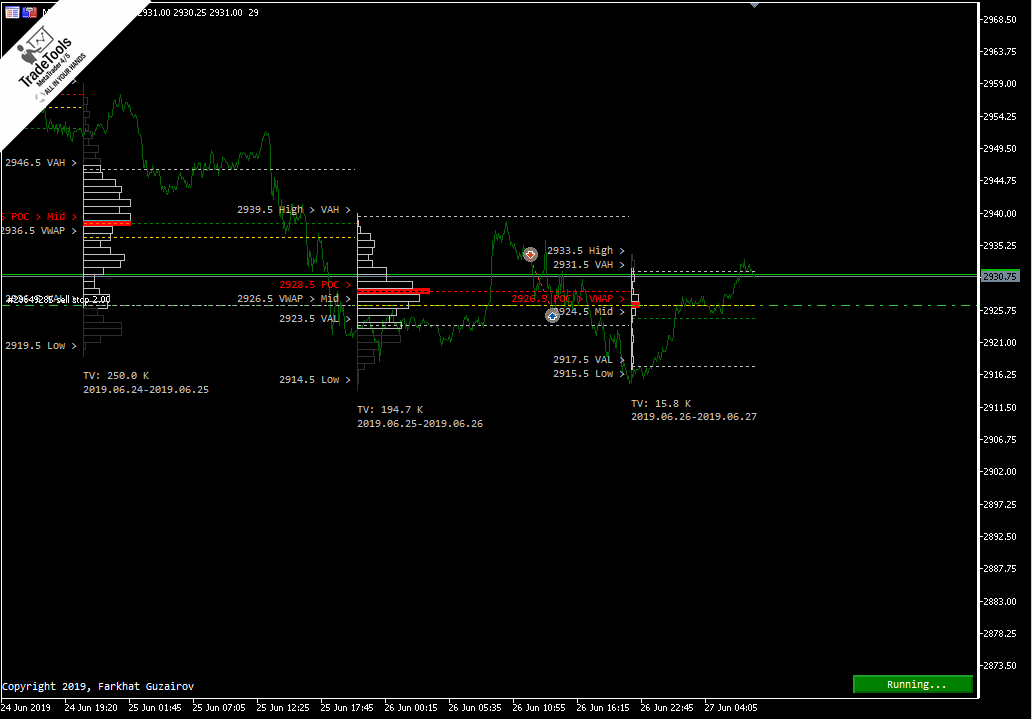
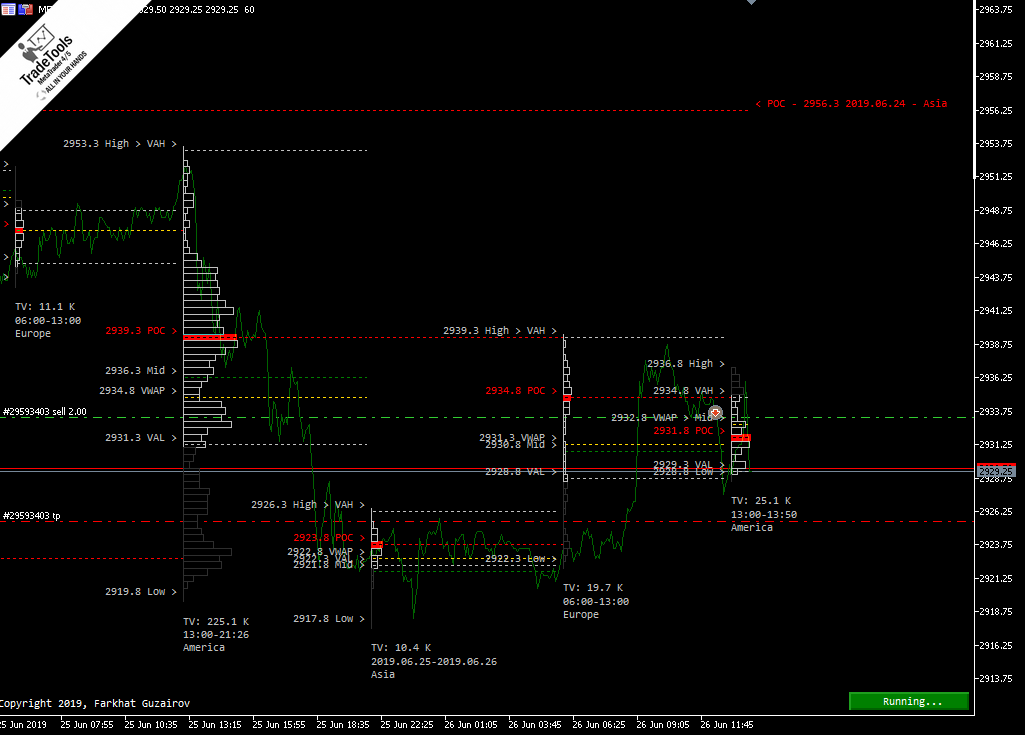
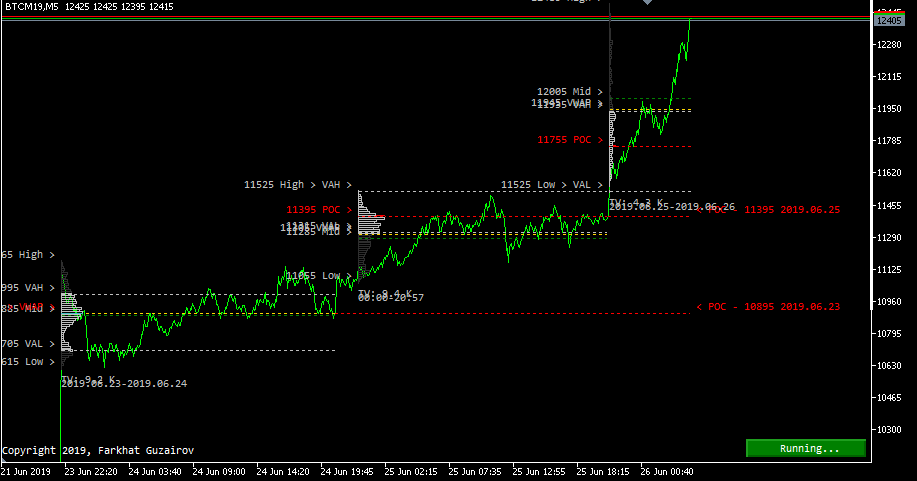
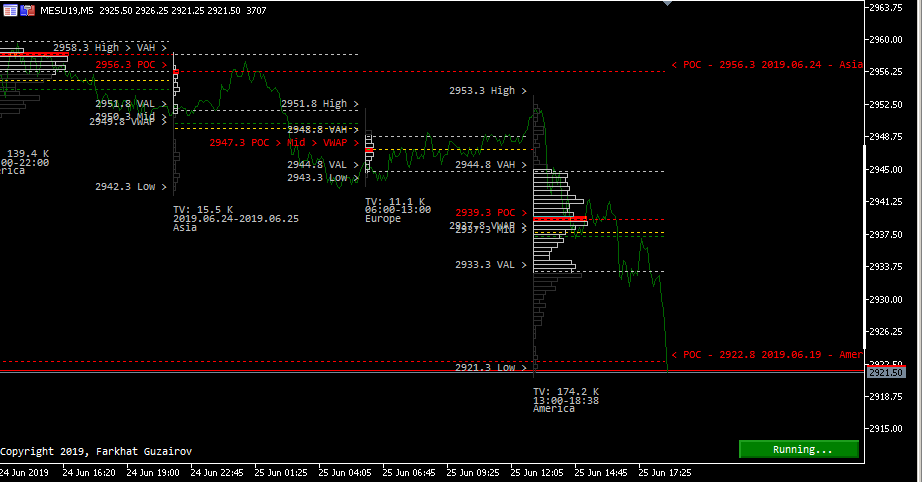
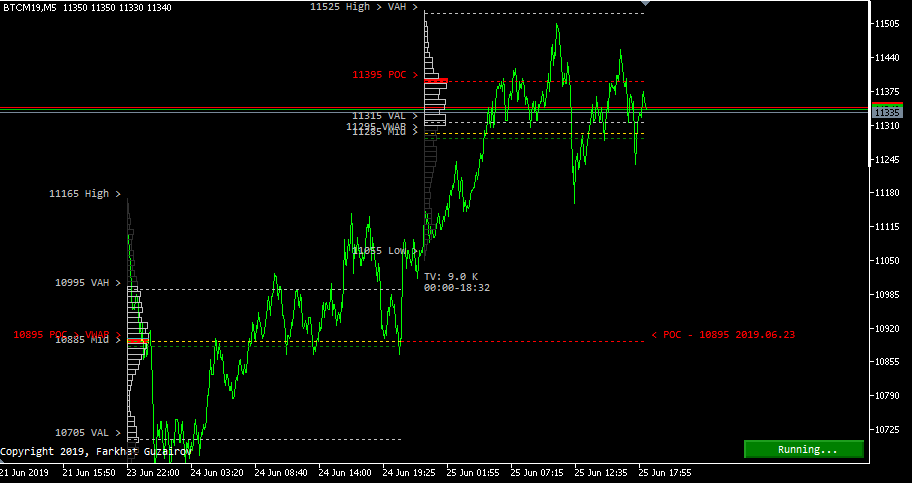
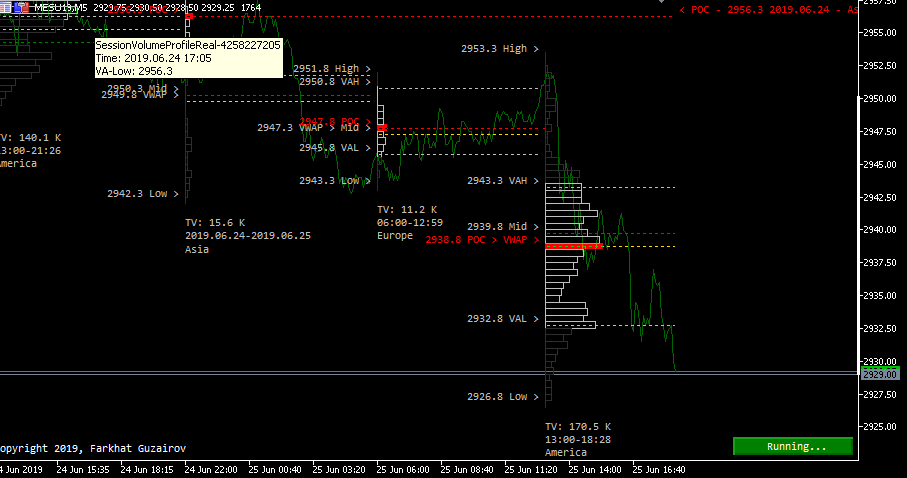
Intraday Volume Profile analyze short-term information about price and volume, help you visualize the movement of price and volume. In short-term trading on Forex, usually use 5-, 15-, 30-, 60-minute and etc. intraday charts when trading on a market day. It is possible to use as an additional tool for intraday scalping . The volume profile provides an excellent visual image of supply / demand for each price for the selected timeframe. Representing the Point of Control ( POC ), which
Session Volume Profile is an advanced graphical representation that displays trading activity during Forex trading sessions at specified price levels. The Forex market can be divided into four main trading sessions: the Australian session, the Asian session, the European session and the favorite trading time - the American (US) session. POC - profile can be used as a support and resistance level for intraday trading. VWAP - Volume Weighted Average Price. ATTENTION ! For
Конечно же я рад такому раскладу, но неужели в Маркете не появилось ничего нового?
В общем я рад и в тоже время недоумеваю.
https://fx-on.com/
The article describes the library allowing you to increase the efficiency of working with HTTP requests in MQL5. Execution of WebRequest in non-blocking mode is implemented in additional threads that use auxiliary charts and Expert Advisors, exchanging custom events and reading shared resources. The source codes are applied as well.
The article discusses the methods for building and training ensembles of neural networks with bagging structure. It also determines the peculiarities of hyperparameter optimization for individual neural network classifiers that make up the ensemble. The quality of the optimized neural network obtained in the previous article of the series is compared with the quality of the created ensemble of neural networks. Possibilities of further improving the quality of the ensemble's classification are considered.
We continue to build ensembles. This time, the bagging ensemble created earlier will be supplemented with a trainable combiner — a deep neural network. One neural network combines the 7 best ensemble outputs after pruning. The second one takes all 500 outputs of the ensemble as input, prunes and combines them. The neural networks will be built using the keras/TensorFlow package for Python. The features of the package will be briefly considered. Testing will be performed and the classification quality of bagging and stacking ensembles will be compared.