• Informazioni
1 anno
esperienza
6
prodotti
10
versioni demo
0
lavori
0
segnali
0
iscritti
Vladimir Lovec
Screenshot pubblicati
US500.b, D1RL Crates, S.L.
Vladimir Lovec
Vladimir Lovec Ieri
“Santa Claus rally.”
Vladimir Lovec
Screenshot pubblicati
US100.b, D1RL Crates, S.L.
Vladimir Lovec
Vladimir Lovec Ieri
“Santa Claus rally.”
Vladimir Lovec
Screenshot pubblicati
XPDUSD.b, W1RL Crates, S.L.
Vladimir Lovec
Vladimir Lovec Sabato
“Santa Claus rally.”
Vladimir Lovec
Screenshot pubblicati
US100.b, W1RL Crates, S.L.
Vladimir Lovec
Vladimir Lovec Sabato
“Santa Claus rally.”
Vladimir Lovec
Vladimir Lovec
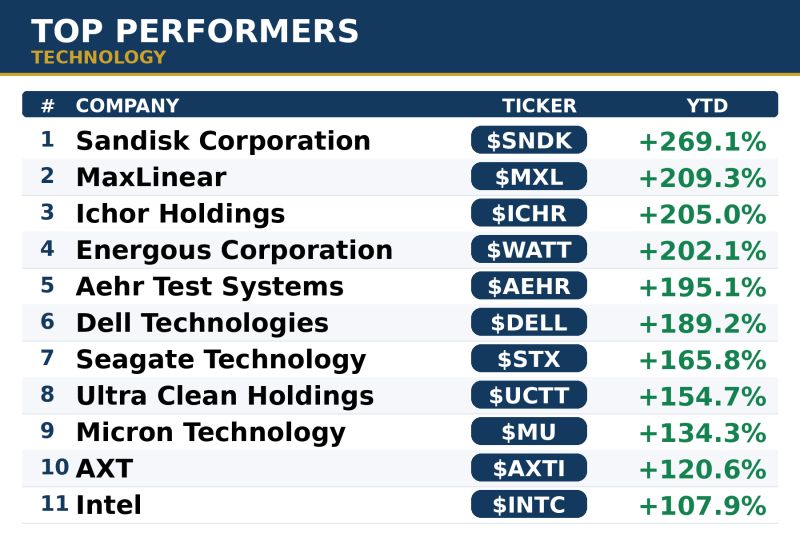
Metals stole the show in 2025. Silver and Gold crushed the field, while many equity sectors struggled to keep pace. If you benchmarked performance against the S&P 500, odds are you had a banner year.
Vladimir Lovec
Screenshot pubblicati
US500.b, D1RL Crates, S.L.
Vladimir Lovec
Vladimir Lovec Sabato
“Santa Claus rally.”
Vladimir Lovec
Vladimir Lovec
“Santa Claus rally.” The standard definition of its timeframe is the last five trading days at year-end and the first two trading days of the ensuing year. Although this year’s start date is the Christmas Eve half-day, as is typical, it seems that traders are revving up their sleighs in adnce.


It has become customary to see traders assign higher probabilities to above-market outcomes for the S&P 500 (SPX). We have posited that it might represent “FOMO insurance”, where skeptical or underinvested institutional investors utilize upside calls to hedge their risk of underperformance. Of course, it could simply be that after a three-year bull market traders simply expect that the market is more likely to rise than fall on any given day and over any given period. I suspect that both factors are at work. Regardless, the propensity for an asymmetric upside probability distribution certainly continues through to the Santa Claus rally period.


Regarding the implied volatilities, remember that the normal term structure of volatility rises over time, and that in this case, we are looking mainly at a period when volatility tends to be suppressed. As for the rising peak outcomes, if one expects the market to rise on Day 1, it is reasonable to use a higher starting point on Day 2.

Bottom line, traders are pricing in a modest rally into the end of the year and the start of next. Quite frankly, I was expecting a bit more optimism – perhaps even a run at 7,000. In any case, unless we get some significant market-moving news, the adage “don’t short a dull tape” should resonate with traders between now and year-end.
Vladimir Lovec
Screenshot pubblicati
US500.b, W1RL Crates, S.L.
Vladimir Lovec
Vladimir Lovec Sabato
“Santa Claus rally.”
Vladimir Lovec
Vladimir Lovec
The Nasdaq falling below its 50-day moving average for the first time in months coincides with a notable shift in macro expectations and market tone. Rate-cut probabilities dropped sharply after Chairman Powell challenged the idea of being early in an extended easing cycle, with the expected path of policy now reduced to roughly 75 basis points of additional easing through 2026. The AI-driven rally also sits at the center of current concerns. At the October 30th high, the Nasdaq stood nearly 16% above its 200-day moving average—a level that, in recent years, has often preceded meaningful pullbacks. Examples from July 2024 and February 2025 highlight how similar stretches aligned with abrupt corrections. NVIDIA’s upcoming earnings add another key catalyst. A strong report followed by price weakness would be interpreted by some as evidence of fragility in broader market sentiment. The overall picture reflects shifting macro pressures, stretched technical conditions, and renewed focus on how sensitive major indices may be to changes in expectations.
Vladimir Lovec
Screenshot pubblicati
US500.b, W1RL Crates, S.L.
Vladimir Lovec
Vladimir Lovec
E-mini S&P (December) / E-mini NQ (December)

S&P, yesterday’s close: Settled at 6661.50, up 21.75

NQ, yesterday’s close: Settled at 24,721.75, up 126.00

E-mini S&P and E-mini NQ traded constructively yesterday, with higher lows than Tuesday and higher lows intraday than overnight. Price action finished firm, despite the Fed Minutes showing a deep divide on a December cut, and deteriorating odds of a rate cut due to the lack of economic data before the December 10th decision. With the E-mini S&P closing about 1% from the low on the week, this set the stage for NVDA’s highly anticipated earnings report. The company blew the doors off in a fitting fashion that only NVDA could, reporting $57.01 billion in revenue versus $55.19 billion, $1.30 EPS versus $1.25, and Q4 guidance of $63.7-$66.3 billion versus $62 billion. The stock is +5% this morning, and has lifted the entire market with the E-mini S&P +1% and the E-mini NQ +1.5% overnight.

It will now be critical for NVDA, the AI names that benefit from the report, and the market as a whole to stick the landing. We cannot see another failed rebound. Today must finish higher than it was overnight, even if marginally, and Friday must finish the week strongly. In comes historically backward-looking jobs data with the September Nonfarm Payroll Report due at 7:30 am CT, along with accompanying Fed comments throughout the day.

Yesterday’s path testing the lows was constructive. Now, we must see a constructive extension of this rally. Overnight strength tested unchanged on the week in the E-mini S&P and major three-star resistance at 6755.25-6758.50. This is a level we must see a close above tomorrow in order to begin neutralizing the weakness from this week. It would be normal for a healthy consolidation through the first part of today. Price action can dip below our Pivot and point of balance, and respond to our listed supports, but ultimately through the first hour we want to see the tape above these levels at…
Mary Ola
Mary Ola 2025.11.21
hmmm
Mary Ola
Mary Ola 2025.11.21
let connect, you know much about this trading more than me
Vladimir Lovec
Vladimir Lovec 2025.12.09
Yes. Good.
Vladimir Lovec
Screenshot pubblicati
US100.b, W1RL Crates, S.L.
Vladimir Lovec
Vladimir Lovec
When stocks and bonds fell in unison, the pros adopted the Total Portfolio Approach. Here’s how it works.

The old 60/40 playbook has broken down. Big investors now manage risk and return as one connected system – not separate buckets.
The Total Portfolio Approach lets capital flow wherever risk, liquidity, and opportunity line up.
Retail investors can’t copy a big sovereign wealth fund exactly – but goal-based, flexible investing will get them pretty close.
For years, Strategic Asset Allocation (SAA) was all the rage in investing.

You’d just decide on a long-term mix – say, the classic 60/40 portfolio, with 60% in stocks and 40% in bonds – and rebalance every so often to keep the levels in check. It was steady, disciplined, and comforting in its simplicity.

But a few years ago, markets shifted.

Inflation surged, and everyone suddenly saw that bonds don’t always rise when stocks fall. Sometimes, those two assets fall together. And that made the old 60/40 balance seem, well, not at all balanced.

That tough lesson has led some of the world’s biggest investors to toy with a new way of thinking – one that treats the portfolio as a single, living system instead of rigid parts. It’s called the Total Portfolio Approach (TPA). And there’s a lesson in this for retail investors.

So, what exactly is the Total Portfolio Approach?
If SAA is like sticking to a rigid football formation no matter what, TPA is real-time coaching. It looks at how the entire team is performing and makes changes mid-game – swapping players, adjusting tactics, moving toward the best opportunities.

Rather than saying “we must have exactly 60% in stocks”, TPA investors ask: how much risk are we talking overall? What’s pulling its weight? How do these assets work together?

Capital flows to wherever offers the best returns for the risk taken. If infrastructure looks better than stocks, money moves. If private credit tops corporate bonds, funds shimmy. It’s dynamic, opportunity-driven, and definitely not set-it-and-forget-it.

Here’s an example. Let’s say a sovereign wealth fund notices that stocks look expensive, but private infrastructure projects – toll roads, renewable energy farms – offer attractive long-term returns with less volatility. Under the old model, they’d be stuck if their stock allocation was already at target. Under TPA, though, they can simply adapt, adjusting their allocations to fit the opportunity.

For the professional funds that make this shift, the whole workplace changes. Investment committees stop being organized by asset class – the stock team versus the bond team – rather, they collaborate to maximize the portfolio’s overall return. Every decision is measured against actual goals like funding people’s retirements or building sovereign wealth, rather than maintaining arbitrary benchmarks for how much money sits in each bucket.

Why the change?
The switch to TPA didn’t happen overnight. It’s the result of more than a decade of frustration with static, hard-coded diversification.

First, interest rates stayed near zero for years after the global financial crisis. That made borrowing cheap and risk-taking easy – great for buying homes and stocks – but terrible for the part of your portfolio that’s meant to protect you. Bonds were no longer providing income or acting as a buffer, because when yields are that low, their prices have nowhere to go but down when rates rise.

Second, when inflation surged in 2022, stocks and bonds fell together. The 60/40 portfolio relies on bonds zigging when stocks zag. Instead, both zigged off a cliff at the same time – exposing just how vulnerable the old strategy can be.

Third, the world became risky in a new way. Powerful governments began using trade as a weapon, wars affected key energy routes, and supply chains that had become densely concentrated in certain parts of the world were suddenly able to spread shocks faster than ever.

A portfolio frozen to old assumptions just couldn’t dodge punches that came from so many new directions.

Big players saw it happening. Canada’s big CPP and OTPP pension funds, New Zealand’s Super Fund, and Australia’s Future Fund all started experimenting with TPA years ago. And when 2022 hit, they looked very smart indeed.

TPA lets investors act fast when conditions shift and to spot the risks they didn’t mean to take. When AI stocks boom, every asset-class team might unknowingly pile into similar exposures – tech stocks, AI-driven infrastructure, AI-linked private credit – creating hidden risk. TPA makes those overlaps visible.

Where’s the money going?
When the world’s biggest pools of money start thinking this way, the ripple effects are huge.

More money flows into private markets and alternatives. Because TPA investors aren’t constrained by those set allocations, they can chase returns in private equity, infrastructure, private credit, and whatever else takes their fancy. Everything essentially competes on the same playing field: a real estate opportunity in Singapore competes directly with tech stocks in Silicon Valley – and the assets that offer better risk-adjusted returns win the capital.

Correlations matter more. TPA investors obsess about diversification – not just owning different stuff, but about how assets move in relation to each other.

Liquidity becomes a weapon: investors who manage their cash well can strike when others can’t. That drives lots of demand for liquid alternatives: flexible funds that offer private-market-like returns.

But there are risks, of course. When everyone allocates fast, herding happens fast, too. If global funds are all using similar data and models to decide what’s attractive, they can end up crowding into the same trades – piling into infrastructure one year, private credit the next – and then all rushing for the exits when conditions change. That can amplify swings instead of smoothing them.

And what does this mean for regular investors?
You’re probably not running a sovereign wealth fund with hundreds of billions of dollars to manage – but you can absolutely steal the best moves from those giants.

The retail investing version of this is called “Goals-Based Investing”. To use it, you focus on what you need your money to do, and forget about hitting some arbitrary “60% stocks” target.

Instead, get specific about what you’re actually saving for – retirement in 15 years, buying a home in three years, your kid’s university expenses in ten years. Prioritize goals like Maslow’s hierarchy of needs: food, shelter, and medical care come before aspirational stuff like that dream sailboat.

Your entire financial life is already one big portfolio. That includes your investments, sure, but also your home equity, your salary, and even the benefits you’ll draw in retirement. Your earning power is an asset too. So when you’re eyeing a new investment, don’t ask “do I have enough stocks?” Ask “will this improve my whole financial picture?”

Stay flexible, adapt when the world does, and adjust your portfolio when markets throw you opportunities or threaten big losses. Don’t be stubborn about percentages you dreamed up five years ago when the world was completely different.

And sure, you don’t have a team of PhD mathematicians or access to private infrastructure deals. But you do have one key advantage: clarity on what matters most to you.
Vladimir Lovec
Screenshot pubblicati
US100.b, W1RL Crates, S.L.
Vladimir Lovec
Vladimir Lovec 2025.11.18
It looks like the Nasdaq 100 is in for a minor correction.
Vladimir Lovec
Hai lasciato un feedback allo sviluppatore per il lavoro Нужен индикатор и панель.
Vladimir Lovec Prodotto pubblicato

An indicator for better perception and recognition of the current trend direction, the beginning and end of corrections. It is recommended for manual trading, but it is possible to integrate it into an Expert Advisor for automated trading. The dots around the price indicate the current trend direction, the color of the candles themselves indicates the presence or absence of a correction. It is recommended to enter a position in the direction of the current trend after the end of corrections

Vladimir Lovec Prodotto pubblicato

Multi-timeframe Parabolic SAR panel for a better visual perception of the market situation and assessment of the trend, trend reversals. Used exclusively!!! on the daily timeframe. The panel indicates the direction of SAR movement on the current (daily), as well as on the weekly (medium-term) and monthly (long-term) timeframes. It is possible to customize the display colors for each individual timeframe. General Step and Maximum settings for the entire panel

Vladimir Lovec
Vladimir Lovec
Hello!

Robot Lovec MT5.

Designed exclusively for working with the trend on the daily chart D1.

I offer you an Advisor, my own development. The settings are universal for all currency pairs. Most instruments are suitable, especially trending currency pairs with JPY, CHF, GBP. And also futures and indices. Entries are made exclusively at the opening of the candle, which gives the same ideal execution as in the tester and without slippage. Exit from the transaction based on a combination of conditions. The Advisor loves trends. Where it brings the main profit! No martingale, no averaging or order grids. Only one transaction, at one time. It is possible to install Magic Number , and conduct parallel trading on several pairs.

Robot Lovec MT5.

Designed exclusively for working with the trend on the daily chart D1.

When 1-2 Parabolic SAR points appear, the robot turns on the position.

Keeping it for about 10 days.

Automatically turns off the position. When a reverse fractal is formed.

When turning on the robot, you also need to check

the presence of a trend on Parabolic SAR on the weekly chart W1

traded instrument.
Vladimir Lovec Prodotto pubblicato

Hello! Robot Lovec Trend MT4. Designed exclusively for working with the trend on the weekly chart W1. I offer you an Advisor, my own development. The settings are universal for all currency pairs. Most instruments are suitable, especially trending currency pairs with JPY, CHF, GBP. And also futures and indices. Entries are made exclusively at the opening of the candle, which gives the same ideal execution as in the tester and without slippage. Exit from the transaction based on a set of

Vladimir Lovec
Hai lasciato un feedback allo sviluppatore per il lavoro Parabolic-SAR-Franctal-2.28 Для МТ5.
12