


Seyedmajid Masharian / Profil
forex trader
à
home
Seyedmajid Masharian
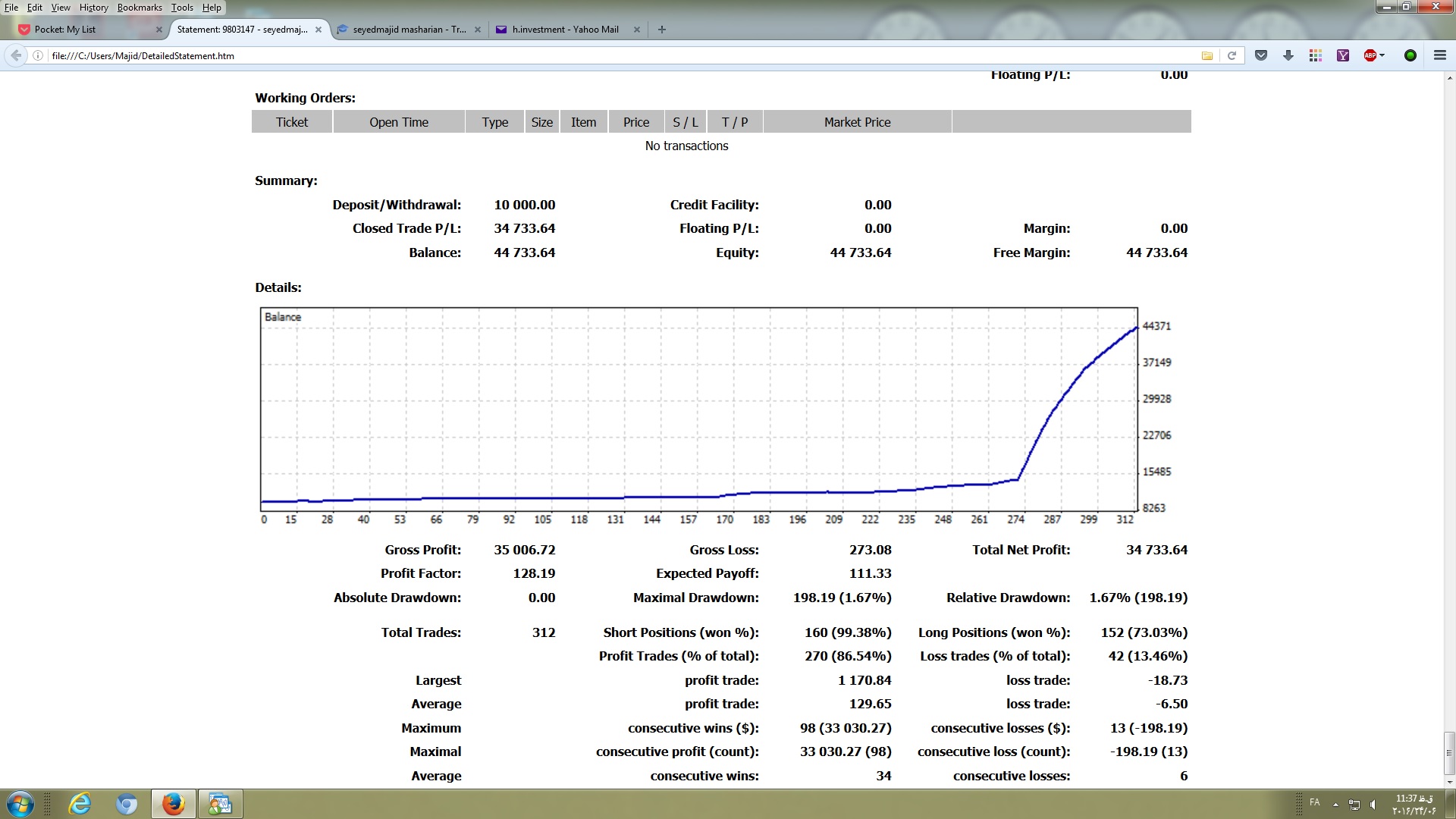
WOULD YOU LIKE TO KNOW ONE OF MY BIGGEST EXPERIENCES DURING 7.5 YEARS OF TRADING ....
DO NOT MAKE ATTENTION TO ANY CHART BELOW D1...
AS SOON AS YOU SWITCH TO BIGGER TIME FRAMES LIKE D1 AND WEEKLY YOU WILL BE APPROACHING
TO MAKE A CONSISTENT LOW RISK PROFITS MONTH AFTER MONTH...
http://www.learntotradethemarket.com/forex-currency-trading-blog/trading-higher-time-frames-in-forex-trading
DO NOT MAKE ATTENTION TO ANY CHART BELOW D1...
AS SOON AS YOU SWITCH TO BIGGER TIME FRAMES LIKE D1 AND WEEKLY YOU WILL BE APPROACHING
TO MAKE A CONSISTENT LOW RISK PROFITS MONTH AFTER MONTH...
http://www.learntotradethemarket.com/forex-currency-trading-blog/trading-higher-time-frames-in-forex-trading
Seyedmajid Masharian
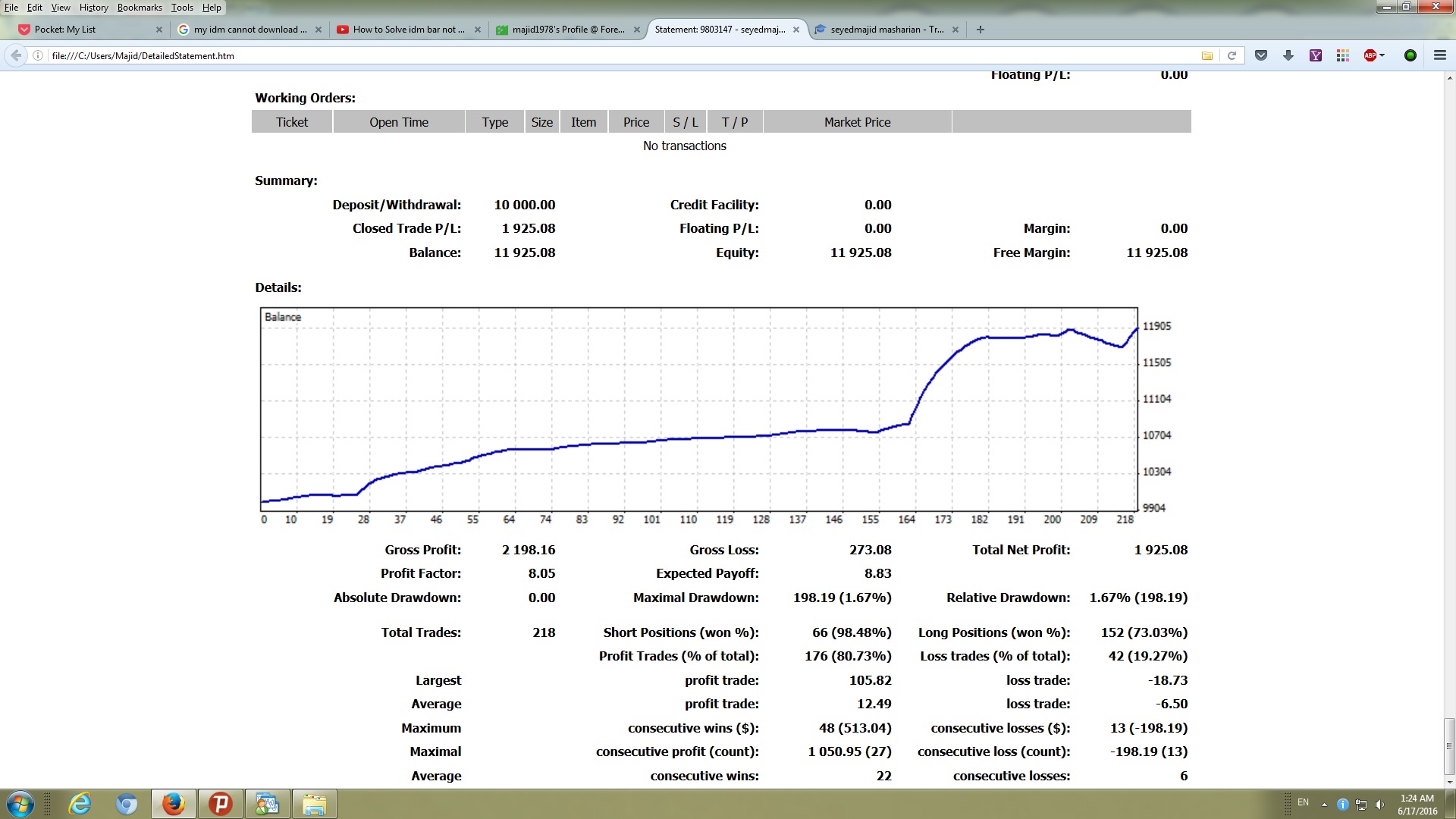
DO YOU KNOW ONE OF THE BIGGEST MISTAKES OF RETAIL TRADERS INCLUDING ME... ?
STAY FOR LONG TIME IN LOSING TRADES AND CUT THEIR PROFITS TOO SOON WITH A LITTLE PROFIT
DO IT VISE VERSA AND SEE YOUR ACCOUNT GROWING GREATLY...
LEAVE YOUR COMMENTS PLEASE
STAY FOR LONG TIME IN LOSING TRADES AND CUT THEIR PROFITS TOO SOON WITH A LITTLE PROFIT
DO IT VISE VERSA AND SEE YOUR ACCOUNT GROWING GREATLY...
LEAVE YOUR COMMENTS PLEASE
Seyedmajid Masharian
FIRST-LOOK-Inside-the-FEDERAL-RESERVE,-USD,-CASH,-GOLD-monetary-SYSTEM-Americas-Money-Vault-PART-1
https://www.youtube.com/watch?v=-38idGW6bW8
Seyedmajid Masharian
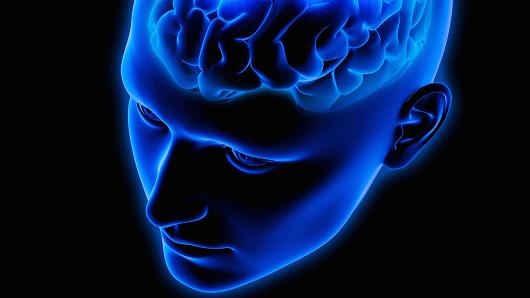
How a trader's brain REALLY works
http://www.cnbc.com/2014/07/11/how-a-traders-brain-really-workscommentary.html
Seyedmajid Masharian
Brain scans could be used to predict financial bubbles
Some shares have new owners every second. Today much of the buying and selling is done by computers, but some still rely on human intuition – the gut feeling of the experienced trader.
“Nobody can predict the market, but traders are expected to,” Richard Taffler, professor of finance at the University of Warwick said. “This creates anxiety.” So emotions must play an important role in driving financial markets. Understanding what happens in the brains of traders as prices move up and down could possibly tell us something about the markets future developments.
In a study published in the Proceedings of the National Academy of Sciences, Alec Smith at the California Institute of Technology and his colleagues conducted group-behaviour experiments. For each of the 16 rounds, they had between 11 and 23 students, who played a game that simulated a market situation. For every round of the game, Smith monitored the brain activity of three of the participants with functional magnetic resonance imaging (fMRI), which highlights parts of the brain based upon increase or decrease in activity of that region.
The market game starts with an asset at an arbitrary value. As the market develops over time the asset price increases. The experiment is setup such that a market bubble always forms, and then it bursts causing the asset to return to the initial value in a very short time.
Smith and his colleagues found that activity in a brain region called the “nucleus accumbens” (NA) correlates the market price – so if the price goes up, NA gets more active. “This brain region was previously associated with emotions, fear and pleasure,” Smith said. “It makes sense we find this region active.”
In the next step the researchers compared the participants who, at the end of the market game, turned out to be high or low earners to relate the brain activity to a specific trading outcome.
The difference is that low earners buy around peak price, while high earners sell their shares around peak price. The researchers suspected the cause for this behaviour may lie in the “anterior insular cortex”, located behind the forehead. The insular cortex is active during bodily discomfort – when you feel pain, anxiety or disgust. The anterior region is also activated by financial risk.
Smith found that around the time when prices are about to hit the peak (that is, a bubble is starting to form), which is also the point where decisions of high and low earners start to diverge, insular activity increases in high earners, but shows no change in low earners.
The upshot is, if you could measure the brain activity underlying certain emotions of an active and successful trader in a critical market situation, you could predict how prices may change. “We think that irrational exuberance is likely to play part in price bubbles”, Smith said, explaining why they focused on the brain region involved in a lot of emotional processing.
Richard Taffler, professor of finance from the University of Warwick, isn’t sure that such predictions are possible. “It is not clear how we get from undergraduate students, in a confined laboratory environment, without a real potential of loss to a real world market situation,” he said.
Alec insists the behavioural game is not too much of an abstraction from reality and we can use it learn about the principles of price bubbles. Instead, Taffler proposes that we should observe and learn from behaviour and price development in real-world market bubbles to capture the complexity of the market.
“It is not clear that you can use the traditional scientific approach to analyse social behaviour”, Taffler said.
On the other hand, the experimental setup does not only give insight into market research, they could help understand other cases in which human groups badly judge the value of actions or events. The next step is probably not to connect every Wall Street trader to an fMRI. This study is only a proof of principle. And anyway, fMRI scanners are too expensive, even for bankers' deep pockets.
Some shares have new owners every second. Today much of the buying and selling is done by computers, but some still rely on human intuition – the gut feeling of the experienced trader.
“Nobody can predict the market, but traders are expected to,” Richard Taffler, professor of finance at the University of Warwick said. “This creates anxiety.” So emotions must play an important role in driving financial markets. Understanding what happens in the brains of traders as prices move up and down could possibly tell us something about the markets future developments.
In a study published in the Proceedings of the National Academy of Sciences, Alec Smith at the California Institute of Technology and his colleagues conducted group-behaviour experiments. For each of the 16 rounds, they had between 11 and 23 students, who played a game that simulated a market situation. For every round of the game, Smith monitored the brain activity of three of the participants with functional magnetic resonance imaging (fMRI), which highlights parts of the brain based upon increase or decrease in activity of that region.
The market game starts with an asset at an arbitrary value. As the market develops over time the asset price increases. The experiment is setup such that a market bubble always forms, and then it bursts causing the asset to return to the initial value in a very short time.
Smith and his colleagues found that activity in a brain region called the “nucleus accumbens” (NA) correlates the market price – so if the price goes up, NA gets more active. “This brain region was previously associated with emotions, fear and pleasure,” Smith said. “It makes sense we find this region active.”
In the next step the researchers compared the participants who, at the end of the market game, turned out to be high or low earners to relate the brain activity to a specific trading outcome.
The difference is that low earners buy around peak price, while high earners sell their shares around peak price. The researchers suspected the cause for this behaviour may lie in the “anterior insular cortex”, located behind the forehead. The insular cortex is active during bodily discomfort – when you feel pain, anxiety or disgust. The anterior region is also activated by financial risk.
Smith found that around the time when prices are about to hit the peak (that is, a bubble is starting to form), which is also the point where decisions of high and low earners start to diverge, insular activity increases in high earners, but shows no change in low earners.
The upshot is, if you could measure the brain activity underlying certain emotions of an active and successful trader in a critical market situation, you could predict how prices may change. “We think that irrational exuberance is likely to play part in price bubbles”, Smith said, explaining why they focused on the brain region involved in a lot of emotional processing.
Richard Taffler, professor of finance from the University of Warwick, isn’t sure that such predictions are possible. “It is not clear how we get from undergraduate students, in a confined laboratory environment, without a real potential of loss to a real world market situation,” he said.
Alec insists the behavioural game is not too much of an abstraction from reality and we can use it learn about the principles of price bubbles. Instead, Taffler proposes that we should observe and learn from behaviour and price development in real-world market bubbles to capture the complexity of the market.
“It is not clear that you can use the traditional scientific approach to analyse social behaviour”, Taffler said.
On the other hand, the experimental setup does not only give insight into market research, they could help understand other cases in which human groups badly judge the value of actions or events. The next step is probably not to connect every Wall Street trader to an fMRI. This study is only a proof of principle. And anyway, fMRI scanners are too expensive, even for bankers' deep pockets.
Seyedmajid Masharian
بدانید چه می کنید،
به آن چه می کنید باور داشته باشید
و آن را خوب انجام دهید.
موفقیت و پیروزی همراه شماخواهد بود.
know what you are doing
believe on what you are doing
and do it well...
success and victory will be with you...
به آن چه می کنید باور داشته باشید
و آن را خوب انجام دهید.
موفقیت و پیروزی همراه شماخواهد بود.
know what you are doing
believe on what you are doing
and do it well...
success and victory will be with you...
Seyedmajid Masharian
MAN IN THE MIRROR ...
MICHAEL JACKSON
http://www.vevo.com/watch/michael-jackson/man-in-the-mirror/USSM20301092
MICHAEL JACKSON
http://www.vevo.com/watch/michael-jackson/man-in-the-mirror/USSM20301092
Seyedmajid Masharian
Afficher tous les commentaires (4)
Pg Md Radzuan Pg Hashim
2016.08.03
i traded small lot with small profit. 10cents profit a day is way even more enough. do any people kind enough to drop 10cents infront our eyes everyday? the answer is "NO". No matter how much you profit in FX trading consider a great gift from god almighty. agree, don't be greed!!

Seyedmajid Masharian
DON'T LET YOUR EMOTIONS DRIVE YOUR TRADES !!!
STICK TO YOUR STRATEGY AND MONEY MANAGEMENT...
AND MAKE CONSISTENT MONEY FROM THE BIGGEST MARKET AROUND THE WORLD $$$
STICK TO YOUR STRATEGY AND MONEY MANAGEMENT...
AND MAKE CONSISTENT MONEY FROM THE BIGGEST MARKET AROUND THE WORLD $$$
Seyedmajid Masharian
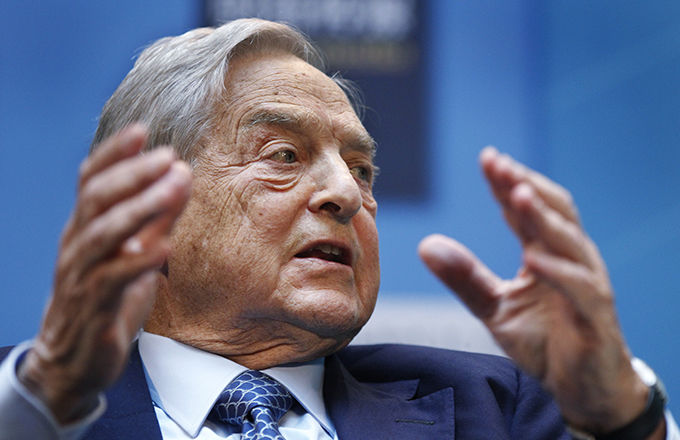
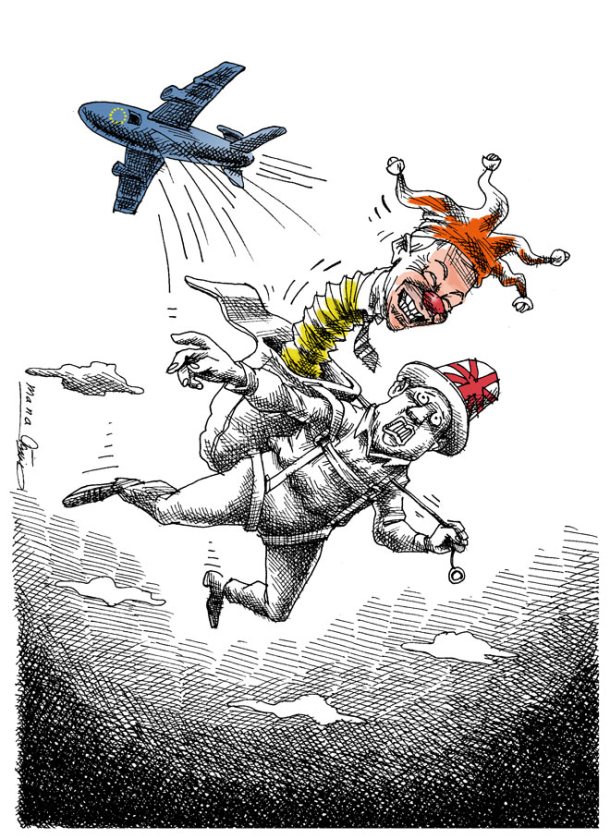
Billionaire George Soros has predicted Europe will disintegrate, but in an orderly fashion.
Days after warning about the economic fallout from Brexit, noted billionaire and international financier George Soros issued a warning about an “irreversible" and "disorderly disintegration” for Europe that will leave the continent “worse off than where it would have been had the EU not been brought into existence.”
Writing in an Op-Ed for Project Syndicate, Soros detailed the causes and consequences of Britain’s decision to leave the European Union. According to him, the European migration crisis and the Brexit debate fed on each other. Scenes of chaotic crowds at Calais stoked British fears of immigration from other EU member states. At the same time, the Union’s delay of a firm policy regarding migrants further perpetuated “scenes of chaos like the one at Calais,” strengthening the case for Britain to leave Europe. (See also: Soros Failed to Short Pound for Brexit.)
Immigration has been a favorite cause for Soros. Through his Open Society Foundation, Soros has disbursed millions of dollars to non-governmental organizations to promote open borders and “reform global capitalism.” Last year, Hungarian Prime Minister Viktor Orban accused Soros of fomenting an immigrant crisis in Europe. NGOs funded by Soros were “drawing a living from the immigration crisis,” said Orban, who also claimed that he was defending European Christianity from Muslim refugees.
A loss of common values and a common market are some of the consequences of Britain’s referendum, according to Soros. Politically, the vote could end up splitting Europe and Britain. “Brexit will open the floodgates for other anti-European forces within the Union,” he wrote, pointing to calls for France’s exit (Frexit) and Netherlands’ exit (Nexit) from the European Union.
He also drew attention to the economic pain that Brexit will cause for exporters who lose access to the European market. Soros singled out the 10% drop in Italy’s stock market as indicative of the country’s “vulnerability to a full-blown banking crisis”: “None of this bodes well for a serious program of eurozone reform, which would have to include a genuine banking union, a limited fiscal union, and much stronger mechanisms of democratic accountability.”
In another piece for The Guardian, Soros had forecast “an immediate and dramatic impact on financial markets, investment prices, and jobs,” in a Brexit aftermath. Talking to the Wall Street Journal earlier, Soros had said that he did not expect Britain to leave the EU. However, his personal fund, which has approximately $30 billion under management, had taken a long position on gold based on filings.
Read more: Soros Predicts A Disorderly Disintegration For Europe | Investopedia http://www.investopedia.com/articles/markets/062716/soros-predicts-disorderly-disintegration-europe.asp#ixzz4CszTuUr5
Follow us: Investopedia on Facebook
http://www.investopedia.com/articles/markets/062716/soros-predicts-disorderly-disintegration-europe.asp?utm_source=facebook.com&utm_medium=social&utm_campaign=fb_main_page
Days after warning about the economic fallout from Brexit, noted billionaire and international financier George Soros issued a warning about an “irreversible" and "disorderly disintegration” for Europe that will leave the continent “worse off than where it would have been had the EU not been brought into existence.”
Writing in an Op-Ed for Project Syndicate, Soros detailed the causes and consequences of Britain’s decision to leave the European Union. According to him, the European migration crisis and the Brexit debate fed on each other. Scenes of chaotic crowds at Calais stoked British fears of immigration from other EU member states. At the same time, the Union’s delay of a firm policy regarding migrants further perpetuated “scenes of chaos like the one at Calais,” strengthening the case for Britain to leave Europe. (See also: Soros Failed to Short Pound for Brexit.)
Immigration has been a favorite cause for Soros. Through his Open Society Foundation, Soros has disbursed millions of dollars to non-governmental organizations to promote open borders and “reform global capitalism.” Last year, Hungarian Prime Minister Viktor Orban accused Soros of fomenting an immigrant crisis in Europe. NGOs funded by Soros were “drawing a living from the immigration crisis,” said Orban, who also claimed that he was defending European Christianity from Muslim refugees.
A loss of common values and a common market are some of the consequences of Britain’s referendum, according to Soros. Politically, the vote could end up splitting Europe and Britain. “Brexit will open the floodgates for other anti-European forces within the Union,” he wrote, pointing to calls for France’s exit (Frexit) and Netherlands’ exit (Nexit) from the European Union.
He also drew attention to the economic pain that Brexit will cause for exporters who lose access to the European market. Soros singled out the 10% drop in Italy’s stock market as indicative of the country’s “vulnerability to a full-blown banking crisis”: “None of this bodes well for a serious program of eurozone reform, which would have to include a genuine banking union, a limited fiscal union, and much stronger mechanisms of democratic accountability.”
In another piece for The Guardian, Soros had forecast “an immediate and dramatic impact on financial markets, investment prices, and jobs,” in a Brexit aftermath. Talking to the Wall Street Journal earlier, Soros had said that he did not expect Britain to leave the EU. However, his personal fund, which has approximately $30 billion under management, had taken a long position on gold based on filings.
Read more: Soros Predicts A Disorderly Disintegration For Europe | Investopedia http://www.investopedia.com/articles/markets/062716/soros-predicts-disorderly-disintegration-europe.asp#ixzz4CszTuUr5
Follow us: Investopedia on Facebook
http://www.investopedia.com/articles/markets/062716/soros-predicts-disorderly-disintegration-europe.asp?utm_source=facebook.com&utm_medium=social&utm_campaign=fb_main_page
Seyedmajid Masharian
George Soros Trading Techniques
http://www.howtotradeforexmarkets.com/best-traders/64-george-soros-trading-techniques
Seyedmajid Masharian
Adjusting Your Trading Expectations In Volatile & Possibly Illiquid Markets
https://www.dailyfx.com/forex/fundamental/article/special_report/2016/06/23/Adjusting-Your-Trading-Expectations-In-Volatile-Possibly-Illiquid-Markets_srepTY.html
Seyedmajid Masharian
Soros on Brexit: Sterling will suffer if Britain leaves EU
https://www.theguardian.com/commentisfree/2016/jun/20/brexit-crash-pound-living-standards-george-soros
Seyedmajid Masharian
Brexit Deal Could Bring a Bid to GBP
https://www.dailyfx.com/forex/fundamental/forecast/weekly/gbp/2016/02/19/Brexit-Deal-Could-Bring-a-Bid-to-GBP-TOFjs.html
: